Reports from early Apple Watch Series 12 and Apple Watch Ultra 4 owners describe an unwelcome routine: the screen shows the Apple logo, the watch restarts, and whatever was happening moments earlier is interrupted. The accounts cover a broad range of situations, from interacting with Siri AI and changing a watch face to opening Maps or the App Store, beginning a phone call, and recording a workout. Some people say the restart happened while the watch appeared to be doing nothing at all.
The important detail is not merely that a small number of new devices have rebooted. At least four owners have posted diagnostic files that appear to identify the same failure pattern: a timeout involving the Apple Neural Engine. That commonality makes the reports more notable than isolated anecdotes, while still falling well short of a confirmed explanation or a measure of how many watches are affected.
What owners are seeing
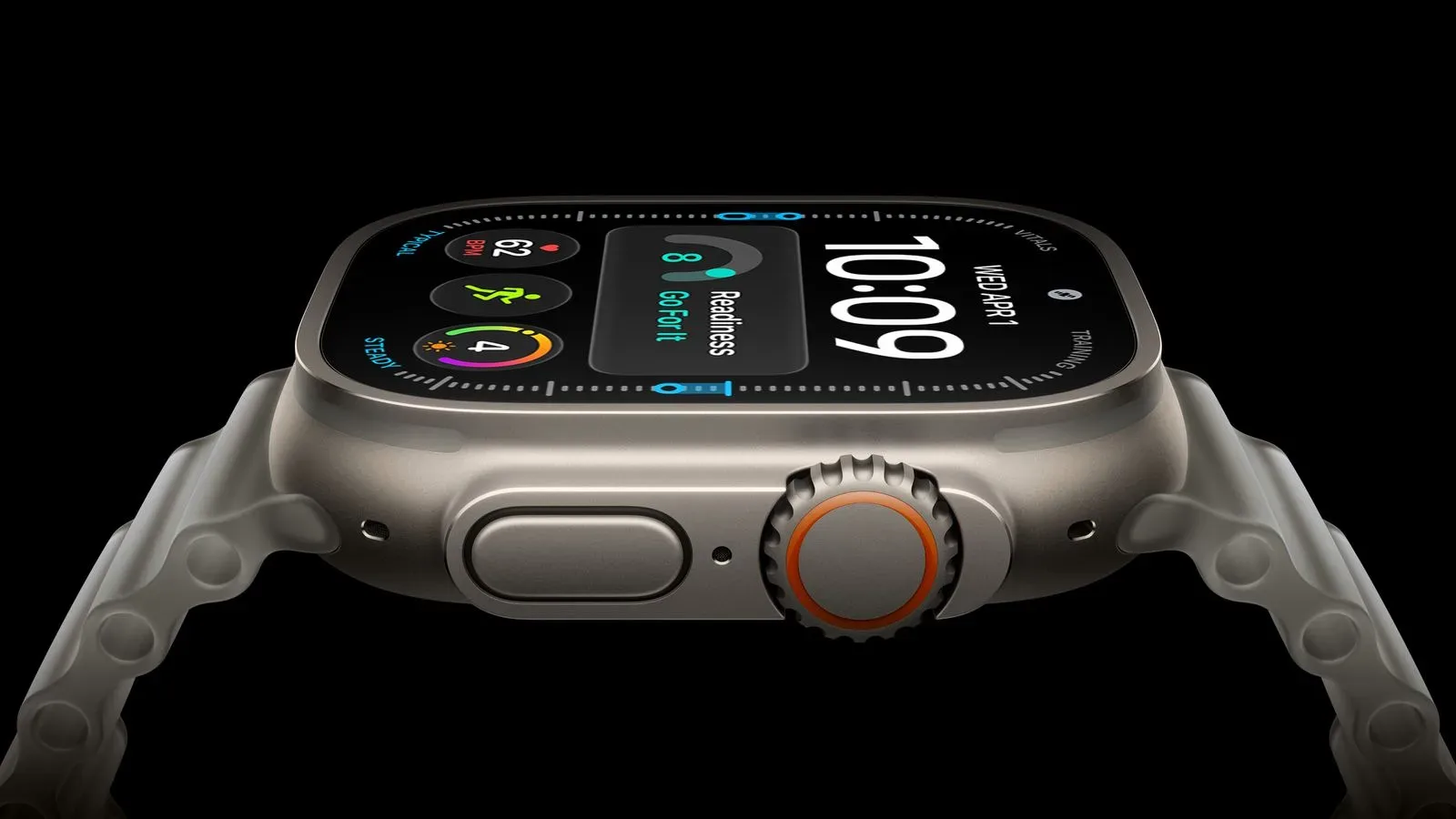
Roughly 30 owners had reported random restarts in one discussion thread at the time of reporting, with similar complaints also appearing on Reddit and Apple Community Support. The affected models named in these reports are the Apple Watch Series 12 and Apple Watch Ultra 4, both of which launched on Friday.
The restart does not seem to be limited to one app or one obvious action. That matters because a repeatable failure in a single app can sometimes point toward that app alone. Here, the accounts span system-facing activities and built-in services, including watch-face editing, Maps, the App Store, calls, workout recording, and Siri AI. Reports of a reboot while idle broaden the picture further: users are not describing only a button sequence that reliably makes the watch fail.
For a wearable, unexpected restarts can be more disruptive than they first sound. A restart can break the flow of a call, interrupt a navigation check, or end the immediate usefulness of the screen during an activity. In the case of workouts, the practical concern is that the watch may restart during tracking rather than when the wearer has time to deal with it. The available reports establish interruption, but they do not establish what data, if any, is retained after an individual reboot.
Why the diagnostic logs matter
Several shared panic-full logs reportedly show the same Neural Engine timeout. A panic-full log is diagnostic information produced when the operating system encounters a severe failure. It is more useful than a simple description of a restart because it can preserve clues about the condition that led the system to stop operating normally.
In the posted examples, the Apple Neural Engine appears to stop responding for about two seconds. A firmware watchdog then triggers a kernel panic, forcing the watch to restart.
Those terms sound dramatic, but they describe a protective chain of events:
- Apple Neural Engine: the processing component referenced in the logs. The reports connect it with the timeout; they do not establish the underlying reason it timed out.
- Timeout: a component did not respond within the amount of time the system expected.
- Firmware watchdog: a monitoring mechanism that can intervene when it detects that a required component has become unresponsive.
- Kernel panic: a critical operating-system failure condition. Rather than continuing in an unreliable state, the system restarts.
This sequence is consistent across the shared logs, but it should be read carefully. A log pointing to a Neural Engine timeout does not, by itself, prove whether the root cause is software, firmware, an interaction elsewhere in the system, or a hardware fault. It does show why simply calling these events “random reboots” may be incomplete: the available diagnostic evidence suggests at least some of them follow a specific critical-error path.
Why resetting may not settle the question
Owners report the behavior on both the original watchOS 27.0 build and the day-one update installed during setup. Some say they erased the watch and configured it as new, yet continued to encounter restarts. One Series 12 owner also reported that a replacement unit showed the same Neural Engine panic.
That combination is significant as a troubleshooting clue, not as a final diagnosis. A clean setup is often used to rule out settings, restored personal data, or a particular configuration carried over from another device. If the same crash signature appears after that process, it weakens the idea that every case is caused only by an individual user’s setup. Likewise, a reported replacement with the same panic makes a one-off defective unit a less satisfying explanation for that person’s experience.
Neither detail proves a universal software problem. A replacement report is still one account, and the reports do not provide a controlled comparison across all affected and unaffected watches. But the persistence across software builds, clean setups, and at least one replacement is a reason to avoid assuming that a reset will necessarily fix the problem.
What is confirmed, what is reported, and what remains unknown
There is a meaningful difference between the evidence in hand and conclusions that would go beyond it.
- Confirmed by the reports: Some Series 12 and Ultra 4 owners say their watches restart unexpectedly; the reported circumstances vary; and at least four shared panic-full logs show the same apparent Neural Engine timeout and watchdog-led restart sequence.
- Reported but not independently established here: The approximate scale of user complaints across discussion spaces, plus individual accounts of resets and replacement hardware experiencing the issue.
- Unknown: The total number of affected watches, the rate of occurrence, a reliable trigger, whether all reports share the same cause, and whether any particular version of watchOS resolves it.
Apple had not acknowledged the issue at the time of reporting. Until there is an official response or an update that addresses the behavior, it is not possible to say whether the problem is widespread in the statistical sense, or to promise a fix. Thirty forum reports can signal an issue worth monitoring, particularly when several logs resemble one another, but they do not reveal the denominator: how many Series 12 and Ultra 4 watches are in use without the problem.
Practical implications for current owners
For owners who encounter these restarts, the most useful immediate distinction is between a single unexplained reboot and a recurring pattern. The reports suggest that people experiencing repeated failures may want to note what they were doing when the Apple logo appeared, whether the watch had recently been updated or set up again, and whether the same broad activity seems connected. That kind of record can make an intermittent fault easier to describe accurately.
It is also sensible not to treat a factory erase as a guaranteed answer. The supplied accounts include owners for whom a fresh setup did not end the behavior. Resetting may still be an available troubleshooting step, but the reports do not support presenting it as a demonstrated fix for this particular reboot pattern.
Those relying on the watch during calls, navigation checks, or workout sessions should recognize the uncertainty. The reported failures occurred in all of those contexts, and an unexpected restart can arrive without an obvious interaction. The evidence does not support a workaround such as avoiding one specific app, because the reports span multiple tasks and include apparently idle devices.
The issue also lands in a period when device-side AI processing is increasingly visible to users. A Neural Engine reference in a crash log will naturally draw attention because Siri AI is among the activities mentioned in the reports. Still, a mention in diagnostic logs is not proof that Siri AI itself causes every reboot. The more careful reading is that the recurring log signature identifies an area of the system worth attention, while the actual cause remains unresolved.
A familiar lesson in reading early-device reports
Early reports are valuable precisely because they can reveal a pattern before a company comments publicly. They are also easy to overread. The strongest part of this story is the overlap between user experiences and the recurring error visible in several diagnostic logs. The weakest part is any attempt to turn that evidence into a firm claim about scale, cause, or remedy.
That distinction is useful beyond smartwatches. A reported crash signature can be a stronger signal than a vague complaint, but it is still not the same as an engineering finding or a confirmed software fix. Readers following device reliability news may also be interested in how hardware features can bring practical trade-offs elsewhere, as explored in this look at the iPhone 18 Pro’s variable-aperture repair consideration.
For now, the appropriate status is straightforward: unexpected-reboot reports involving Apple Watch Series 12 and Ultra 4 models are accumulating, and several posted logs point to the same apparent Neural Engine timeout. Apple has not yet publicly addressed the reports, and neither a reliable trigger nor a verified solution has been established.