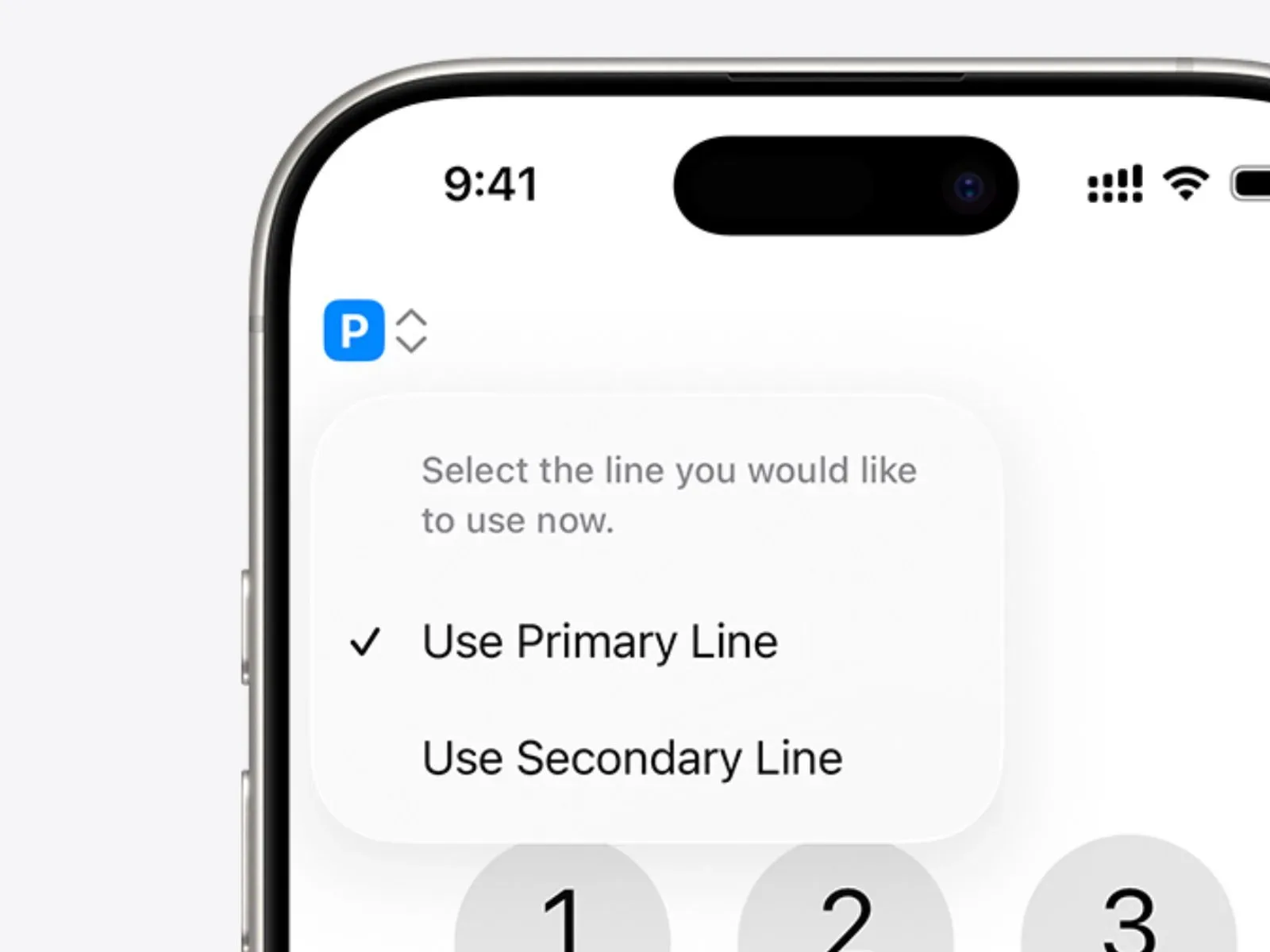
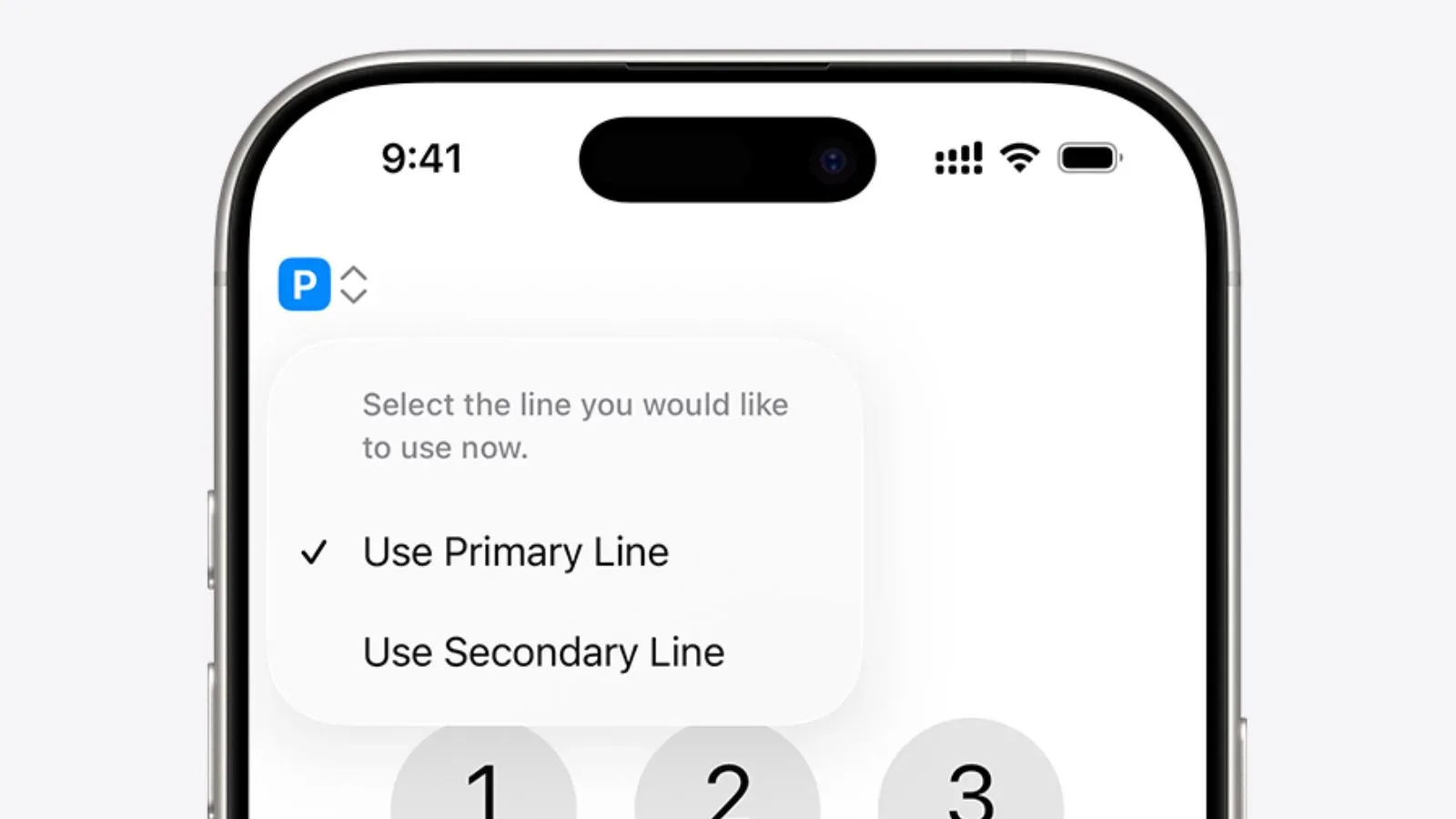
Keeping a work number and a personal number on one iPhone is convenient right up until an app outside Apple’s own calling and contacts tools needs to understand the difference. Apple has now advanced a request intended to reduce that gap: a proposal for third-party iPhone calling and contact apps to work with selected dual-SIM information already maintained by iOS has reached Phase III of Apple’s EU interoperability process.
That status matters because it means the request has moved beyond assessment and project planning. Apple is now developing and releasing a solution. It does not mean that every requested capability is confirmed, nor does it provide a release date or define the eventual implementation. But it is a notable step toward making alternative contact and calling apps behave more consistently with the phone’s built-in choices.
The proposal was submitted on August 9 by developer Airelec Clima. Its focus is narrow but practical: expose the user-facing labels assigned to cellular lines, let eligible apps read and alter the preferred line saved for an individual contact, and—where available—identify which line was used for a call in call history.
The dual-SIM friction this is meant to solve
A dual-SIM setup means one iPhone has two cellular services available. The details of how those services are provisioned are not the point of this request. What matters here is that iOS can retain separate lines and let a person give them recognizable names such as Work and Personal.
Those names are useful because telephone numbers alone are a poor interface for a decision people make repeatedly: which identity should be used for this call? A person may want calls to a colleague to use a work number, while friends and family are contacted from a personal one. The saved preference is valuable precisely because it removes a small but consequential choice at the moment a call is made.
At present, third-party apps do not have a supported means to read those custom line labels. They also cannot read or change the preferred cellular line iOS saves for each contact. In plain terms, an alternative contacts app may be able to help manage people, but it cannot necessarily show the same work-versus-personal language the user already chose in iOS, or update the same calling preference used by Apple’s Contacts and Phone apps.
The proposed interoperability work aims to close that specific disconnect rather than handing apps the keys to every cellular detail. If implemented as requested, an eligible third-party contact app could let someone select their work line for a colleague and have that preference shared with Apple’s own contacts and phone tools. Likewise, a person would see familiar labels rather than needing to decode which of two lines is which in each separate app.
Three requested pieces of information
The request covers three related functions. Together, they could create a more coherent experience for apps that organize contacts or handle calls, though Apple has not said whether all three will ultimately arrive.
- Cellular-line labels: Apps could access the names a user assigns to lines, such as “Work” and “Personal.” This is the clearest way to present a choice in language the owner already understands.
- Per-contact preferred line: Apps could read and change the preferred cellular service iOS stores for a contact. The important element is interoperability: a preference chosen in a third-party contact app could also be used by Apple’s Contacts and Phone apps.
- Call-history line context: Where the information exists, an app could determine which cellular line was used for a call. An alternative calling app could consequently show whether an incoming call reached the work or personal number.
Each feature addresses a distinct moment. Labels help before a call, when choosing a line. A saved preference handles the default decision for a specific person. Call-history context helps after the fact, when looking back at activity and trying to distinguish calls associated with the two numbers.
That division is worth stressing because “better dual-SIM support” can sound much broader than the actual request. This is not a stated request for sensitive carrier-account information, SIM credentials, or a complete set of cellular controls. It is about enough information to distinguish one service from another in an app’s interface and to keep a contact-level calling choice aligned across apps.
What apps would not be asking to access
The developer has specifically said the request does not seek sensitive SIM identifiers or subscription credentials. Instead, the intended access is limited to a line label and an identifier that differentiates one cellular service from another.
That scope is an important technical boundary. A label is human-readable context: it tells an app what the person calls the line. An identifier in this setting is a way for software to tell that one cellular service is different from another, allowing it to associate the right preference or history entry with the right line. Neither is presented as access to subscription credentials or sensitive SIM identity data.
There is also a practical distinction between knowing which line an entry belongs to and gaining unrestricted access to cellular-service details. The former lets a calling or contacts interface make a clear distinction between work and personal activity. The latter would be far beyond what the request describes.
Why the EU process is central to the change
This request was filed through Apple’s interoperability process in the European Union. That mechanism exists in connection with the EU’s Digital Markets Act, or DMA. The law requires Apple to provide third parties with access to operating-system features that are available to Apple’s own services and devices, with the aim of allowing competing products to work more seamlessly with the platform.
In this case, the relevant comparison is straightforward: Apple’s own Contacts and Phone apps can work with the user’s line labels and saved contact preferences, while third-party apps currently lack a supported way to do the same. The request seeks access that would let eligible developers build around the same iOS-held context rather than forcing users to manage parallel, potentially inconsistent choices.
Interoperability does not automatically mean all apps receive every possible capability without constraints. The reporting here identifies eligible apps as the potential recipients, while the final details remain unknown. Apple has not disclosed exactly how it will implement the solution, a timeline for release, or whether the final outcome will include every element sought in the request.
Although the request is being considered through an EU mechanism, the eventual changes could be offered more broadly. That is possibility rather than a confirmed rollout plan, so iPhone users outside the EU should not treat Phase III as a promise of access in a particular region.
What Phase III confirms—and what it doesn’t
Apple’s Phase III designation is the firmest development in this story. It signals that the request has passed the earlier assessment and planning work and is in the development-and-release stage. For developers interested in dual-line-aware contact or calling experiences, that is more substantial than an open request sitting in review.
It is not, however, a product announcement. There is no confirmed iOS version, no stated launch window, no published API design, and no guarantee that the requested label access, contact preference controls, and call-history information will all be delivered together—or at all.
That uncertainty has practical consequences. A third-party app cannot yet promise that it will mirror iOS dual-SIM behavior simply because Apple has started work. Developers will need the final solution and its eligibility requirements before they can build dependable features around it. Users likewise should not expect an immediate change to existing apps.
Still, the direction is meaningful. The value is not merely that another app could display two labels. It is that an app could potentially participate in one shared decision system: the same Work or Personal names, and the same contact-specific line preference, across Apple’s tools and eligible alternatives. Avoiding duplicate settings is the central usability gain.
How this could matter in day-to-day use
Consider a contact app used to organize colleagues and clients. If it can display iOS’s existing line labels, the user can select the right number without remembering which service is designated for work. If it can update the preferred line for that person, a decision made while editing the contact would carry through to Apple’s Contacts and Phone apps rather than being trapped inside one app.
Call history is a separate but equally understandable use case. When someone maintains distinct work and personal numbers, a log that can indicate the line used for an incoming call could make later review less ambiguous. The proposal only asks for this information where it is available, which is a meaningful caveat: the request does not claim universal call-history line data in every circumstance.
For app makers, the potential benefit is a more complete interface without the need to ask users to recreate information iOS already holds. For users, the benefit would be consistency, with fewer opportunities for work/personal line preferences to diverge among multiple apps.
This is also a reminder that small operating-system hooks can shape whether competing apps feel like first-class options. A contacts or calling app can have its own design and workflow, but a missing connection to a user’s established cellular-line choices creates friction at exactly the point the app is meant to help: placing and understanding calls.
Apple’s progress on the request arrives as the company continues to face interoperability obligations under the DMA. Readers following the company’s wider platform services can also see our coverage of reported iCloud, Apple Music and Apple Pay issues.
The key takeaway for iPhone users and developers
The immediate news is procedural but consequential: Apple is actively developing a response to an EU interoperability request for selected dual-SIM data and preferences in third-party calling and contacts apps. The eventual result could make “Work” and “Personal” more than labels confined to Apple’s own interfaces.
For now, the sensible reading is cautious. The request has advanced, not launched. No schedule has been provided, no final feature list has been confirmed, and the geographic scope is unresolved. But the intended outcome is clear: eligible third-party apps may be able to recognize a user’s two cellular lines, honor the same contact-level line preference used by Apple’s own apps, and provide clearer call-history context without receiving sensitive SIM identifiers or subscription credentials.