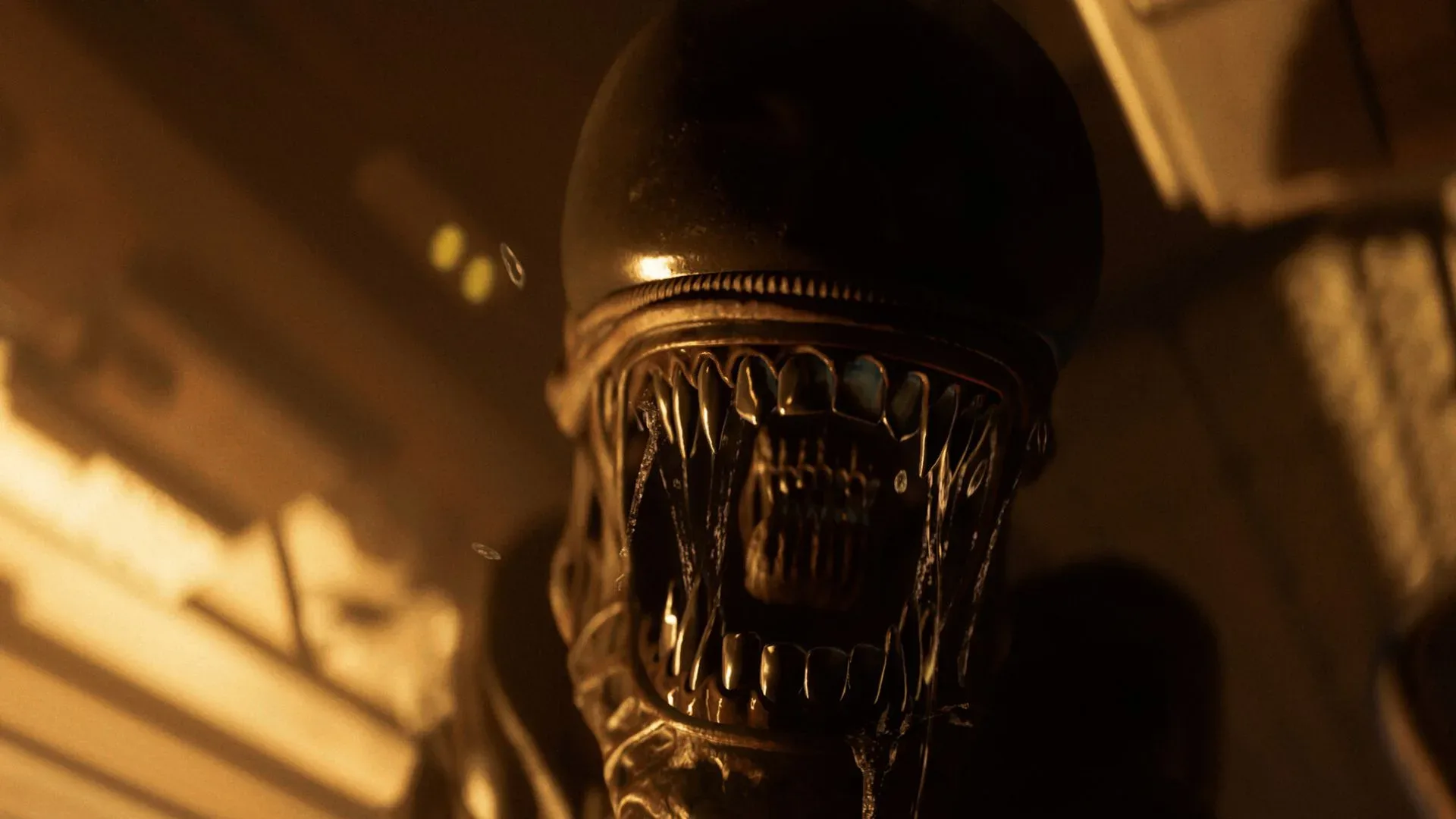
Alien: Isolation 2 is due in 2027, and its creative direction is becoming clearer: the sequel intends to remain a survival-horror game built around the threat of a single xenomorph rather than broadening into a more combat-led science-fiction adventure.
Creative director Al Hope has said the team sees more room to explore in the period and atmosphere associated with the first Alien film. The key idea is not simply a familiar setting, but the particular kind of fear created when one creature is an overwhelming problem. In that framing, the xenomorph is not background decoration, a routine opponent, or an enemy meant to be cleared from a room. It is the reason every route, objective, and moment of exposure can feel dangerous.
That is a meaningful statement of intent for a follow-up to 2014’s Alien: Isolation. The original put players in the role of Amanda Ripley, an engineer and the daughter of Ellen Ripley, as she pursued information about her mother’s disappearance aboard Sevastopol station. Its premise tied personal investigation to a hostile environment and an iconic creature that was designed to feel far beyond the player’s control.
What “survival horror” means for Isolation 2
Survival horror is a broad label, but Hope’s comments point to a specific version of it. In a survival-horror structure, the central tension comes from vulnerability: players must make decisions while under pressure and without the comfort of easily overpowering whatever is hunting them. The objective is not merely to win a fight. It is to get through a situation.
For Alien: Isolation 2, the stated emphasis on “just one alien” is especially important. A single persistent threat can carry a great deal of dramatic weight if the game is structured to make encounters consequential. A corridor is no longer just a corridor if moving through it risks being found. A task becomes more stressful when it requires attention, time, and exposure. Even the possibility of the creature’s presence can change how players read an environment.
Hope described that one-alien premise as an “incredible challenge” and an “incredible experience.” The distinction matters. Challenge in this context does not necessarily mean a higher enemy count or more elaborate combat demands. It can mean the anxiety of navigating a place where the player has limited certainty and an exceptionally dangerous obstacle is nearby.
That approach also connects the sequel to the original film’s scale. The team’s interest lies in returning players to a window of the timeline where the alien itself is enough to dominate the experience. For a franchise with a large universe, that is a deliberately narrow focus—and, potentially, a useful one. Horror often benefits from constraints. Keeping the danger concentrated can make the player’s relationship with it more immediate.
Blake takes over from Amanda Ripley
While Amanda Ripley remains an important part of the series’ foundation, Alien: Isolation 2 will center on a new protagonist named Blake. Hope was explicit that players will not be playing as Amanda in the sequel.
Related coverage includes Alien: Isolation 2 Will Keep Its Focus on Pure Survival Horror.
Blake works for Weyland-Yutani and has not encountered the creature before. That is a crucial starting point for a survival-horror protagonist. Amanda entered the first game with a personal reason to investigate Sevastopol and a direct connection to the larger Ripley story. Blake’s position, by contrast, begins within the company and with a lack of firsthand experience of the xenomorph.
The practical implication is that the sequel has room to establish its danger through Blake’s own perspective instead of assuming she already understands what is in front of her. That does not reveal how the story will unfold, nor does it confirm how Blake will respond once the threat becomes clear. But it gives the game a clean dramatic baseline: a company manager goes looking for something connected to Sevastopol, only to enter a situation involving a creature she has never faced.
There is still an Amanda connection in the premise. Blake has arrived on LV-921 in search of a laboratory that Amanda jettisoned from Sevastopol station. The lab is not empty; a xenomorph is there too. That setup creates a direct narrative bridge between the two games without putting Amanda back in the playable lead role.
Andrea Deck, who voiced Amanda Ripley, has already been heard during a press demonstration for the sequel. Her presence suggests that Amanda’s story and the events around Sevastopol still matter to the new game, even as Blake becomes the character at the center of play. What has not been detailed is the precise nature of Amanda’s role, how much of the sequel she will occupy, or what form her connection to Blake’s mission will take.
Why the laboratory matters
The jettisoned laboratory gives Isolation 2 a concrete object of pursuit. Rather than beginning with an abstract corporate mission, Blake is looking for a specific piece of Sevastopol’s aftermath on a specific planet. It also makes the setting a continuation of consequences rather than a disconnected new incident.
Weyland-Yutani’s place in Blake’s biography adds another layer to that setup. Blake is a manager for the company, and the object she seeks is connected to a lab that was sent away from Sevastopol. Those facts do not establish her personal motives or the company’s full intentions, so it would be premature to treat her as either a hero or an antagonist. They do, however, put her directly inside the corporate side of the story from the outset.
For horror, that can be a strong point of tension. Blake’s knowledge is limited, but her employment places her near an organization whose interests are inherently relevant to the laboratory she is pursuing. The game can let the player discover the stakes alongside a character who is professionally connected to the mission but personally unprepared for the monster involved.
A sequel built around scale, not escalation
Sequels often face an expectation to become larger: more enemies, more spectacle, and more direct power for the player. Hope’s description suggests Alien: Isolation 2 is choosing a different kind of escalation. The goal appears to be depth of threat rather than sheer quantity of threats.
One xenomorph can be terrifying because it cannot be treated as disposable. The creature’s importance is not diluted by turning it into one unit in a crowd. Instead, its presence can shape the entire experience: when players move, what they risk, which places feel safe, and whether any apparent quiet is actually reassuring.
That does not confirm specific systems, weapons, save mechanics, or level design for the sequel. None of those details have been established here. But the creative premise offers a useful lens for reading future reveals. If the project is committed to pure survival horror, its most important questions will likely concern vulnerability, pursuit, environmental pressure, and the ways Blake must operate while a xenomorph remains a credible disaster rather than a standard obstacle.
The first game’s legacy also reaches beyond its own story. Its save-station imagery later appeared in Alien: Romulus, a reminder that the game’s visual language has been recognized within the wider franchise. The sequel’s stated desire to revisit the tone and era of the first Alien therefore has an established foundation, even as it introduces a different lead and a new location.
What remains unknown
There is plenty still to learn before the 2027 release. The available information establishes the release year, Blake’s role and destination, the presence of a xenomorph in the lab, and the team’s survival-horror philosophy. It does not establish platforms, a more precise launch date, the full plot, or the gameplay tools available to Blake.
It also leaves open questions about the laboratory’s significance, Amanda’s involvement beyond the voice appearance heard in the demonstration, and how the events on LV-921 fit into the larger Alien timeline. Those uncertainties are not a weakness in the current reveal; they are simply the boundaries of what has been confirmed.
For now, the clearest promise is refreshingly focused. Alien: Isolation 2 is not presenting the xenomorph as something players should outgun. It is presenting the creature as the problem that makes every other problem worse. With Blake entering LV-921 without prior contact with it, the sequel has a new vantage point for a familiar terror—and a 2027 date to prove that one alien can still be more than enough.
Players who enjoy uncovering small science-fiction game details while waiting for new releases may also appreciate the recently found Konami Code Easter egg in Star Wars Jedi: Survivor.