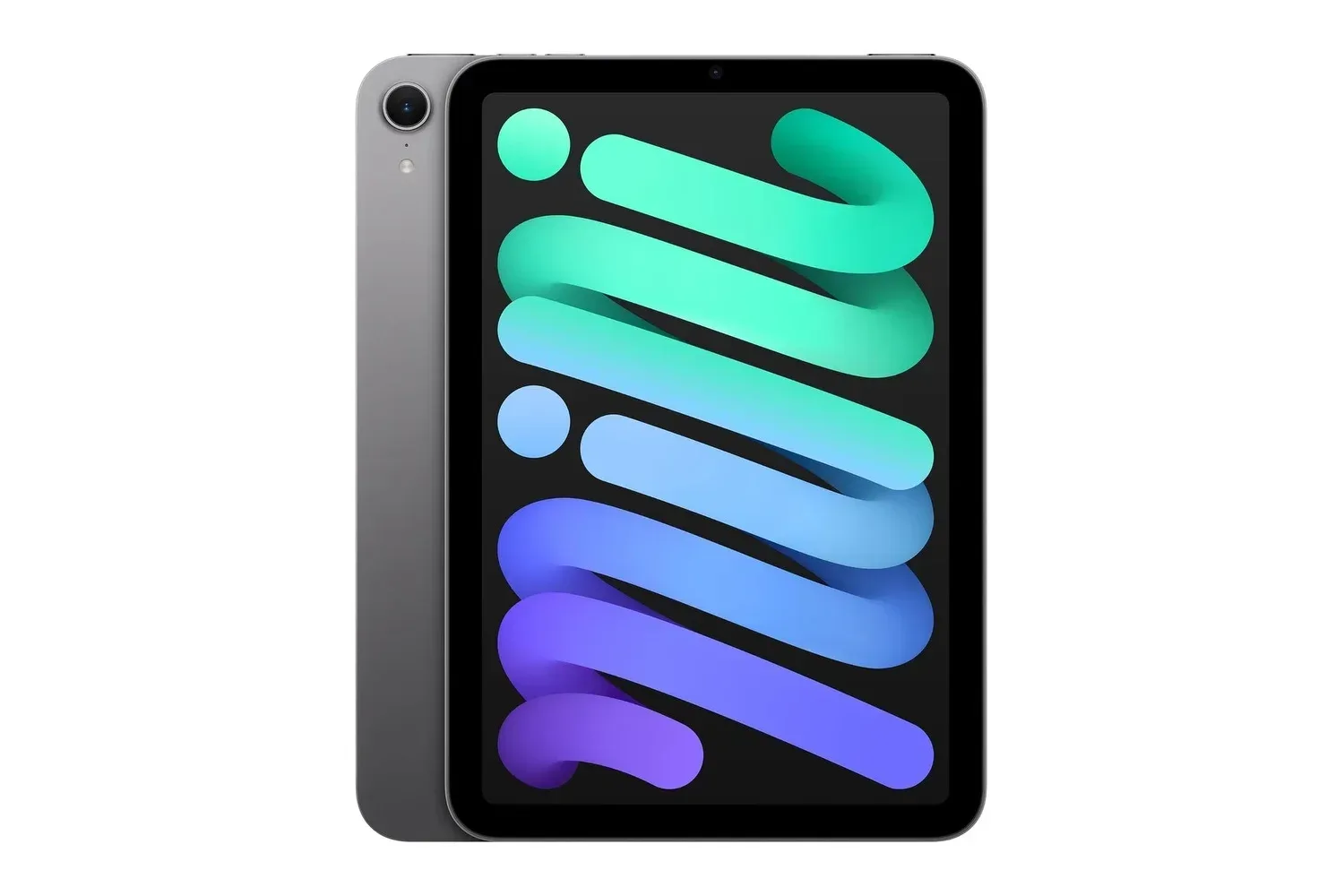
Apple’s A17 Pro-equipped iPad mini is currently listed at $499, a $100 reduction from its stated regular $599 price. That is a 17% cut for the 128GB model, bringing a particularly compact iPad closer to the price range where its gaming credentials become harder to overlook.
The iPad mini is not a dedicated game handheld, and Apple’s tablet controls will not replace physical sticks and buttons for everyone. But its combination of an 8.3-inch screen, an A17 Pro chip and a body weighing less than a pound makes a distinct proposition: a portable screen that can also be a reader, video device, sketchbook, camera and general-purpose tablet.
For shoppers who want a small tablet rather than the largest possible display, the price cut is the headline. The rest of the specification explains what that $499 is paying for—and which details deserve a closer look before treating the listing as an automatic buy.
The portable appeal is the point
An 8.3-inch Liquid Retina display sits at the center of the iPad mini’s appeal. Bigger tablets can offer more room for split-screen apps, document work or elaborate touch controls. The mini instead favors a size that is easier to carry and can be held in one hand. That makes it suited to reading, browsing, streaming and taking notes away from a desk.
For games, the compact dimensions create an understandable trade-off. A smaller tablet is more manageable in a bag and less tiring to hold than a much larger slate, while offering more screen area than a phone. Yet touch interfaces can cover portions of that screen, and the device’s small footprint does not itself add console-style controls. Players should think about the games they actually use: touch-first games may make direct use of the form factor, while games that benefit from precise physical inputs may call for an appropriate external controller.
The display supports True Tone and the wider P3 color gamut. True Tone is a display feature intended to adjust the screen’s color balance to surrounding light, while P3 refers to a wider range of reproducible colors than a basic standard color space. In practical terms, these are presentation features aimed at making photos, video, artwork and game visuals look more richly colored and natural. They should not be confused with a promise that every app or game will use those capabilities in exactly the same way.
What the A17 Pro changes
The A17 Pro is the chip that gives this iPad mini its stronger case as a small, capable device rather than simply a lightweight screen. It is positioned to handle everyday applications alongside demanding games and creative work, with graphics performance intended to support smoother play.
A chip, or system-on-a-chip, brings together a device’s primary processing and graphics components. That matters in a tablet because the same hardware has to juggle operating-system tasks, app activity, visual effects, games and creative software. The source material describes the A17 Pro as enabling smooth performance in daily work and more demanding applications; it does not establish a performance comparison against a particular console, PC or another iPad. Shoppers should therefore view the processor as a strong all-purpose component, not as a guarantee that every game will have the same graphics settings or behavior as it does on another platform.
Related coverage includes Apple iPad mini With A17 Pro Is Listed at $499 on Amazon.
The A17 Pro also supports Apple Intelligence on the iPad mini. The described tools include help with writing, summarizing and organizing, as well as notification summaries and a more capable Siri. These are productivity-oriented benefits rather than gaming features, but they illustrate the broader role of the device: it can be a play screen when time allows, then turn to school, work, messages and planning without changing hardware.
That broad utility is important when assessing value. A specialized gaming device can be the right answer for players who chiefly want traditional controls and a focused library. The iPad mini’s pitch is different. It is a general tablet that has the performance for games, a compact display for entertainment and software access spanning games, streaming and productivity tools.
Storage is the practical question behind the deal
This $499 listing is for the 128GB configuration. Apple also offers 256GB and 512GB storage options. Storage capacity affects how much room is available for apps, game downloads, photos and offline video, so it is one of the first decisions buyers should make before focusing only on the discount percentage.
For a user who reads, streams and keeps a measured app library, 128GB may be a sensible starting point. For somebody planning to download many games, shoot 4K video or retain a substantial photo library locally, the higher capacities may be worth considering. The supplied information does not give file-size estimates or pricing for those configurations, so there is no basis to declare one universally better value. The useful approach is simply to identify what will live on the tablet rather than assume the entry capacity is either excessive or inadequate.
Connectivity is also built around current standards. The iPad mini has Wi-Fi 6E, described as maintaining a fast wireless connection, and USB-C. Its USB-C connection supports data transfer up to 10Gbps. USB-C names the connector format, while 10Gbps is the stated maximum transfer rate; actual transfer behavior can depend on the device, cable and files involved. Still, the presence of USB-C makes moving compatible data and using compatible accessories more straightforward than relying on an older proprietary connector.
Anyone building out a wider Apple setup may also want to compare this listing with other currently discounted Apple hardware. Our look at price reductions across M5 MacBook, Mac mini and Mac Studio models provides useful context for shoppers deciding whether their next purchase should prioritize a portable tablet or a full computer.
Pencil support broadens the tablet’s role
The iPad mini supports Apple Pencil Pro and the USB-C Apple Pencil. That distinction matters because Pencil Pro is the model described with squeeze controls for changing tools, rotation for altering brush-stroke angle and Find My support if it goes missing. These features point toward drawing, handwritten notes and digital journaling, not merely tapping around a screen.
For a creative user, the mini’s portable size may be an advantage: it is easier to bring along as a quick sketching or note-taking device. For someone whose priority is a broad digital canvas, the smaller 8.3-inch display could be a limiting factor. Neither answer is universal. It depends on whether portability or workspace is the bigger concern.
It is also worth separating Pencil support from what is included in the $499 tablet listing. The provided information says the iPad mini supports both Pencil options, but does not say that a Pencil is bundled with the device. Buyers should confirm the contents of the particular listing and account for accessories separately.
Cameras, calls and battery expectations
The iPad mini includes 12MP cameras on the front and rear. The rear camera can capture 4K video and scan documents, while the front camera uses Center Stage for video calls. Center Stage is designed to help keep the user in frame during a call. These are useful tablet functions, especially for someone who wants one small device for casual recording, document capture and communication, though the information provided gives no basis for comparing image quality with a phone or dedicated camera.
Apple’s stated estimate is about 10 hours of Wi-Fi web browsing or video viewing before a recharge. That is a useful reference point, but it is not a universal gaming runtime. Browsing and video playback are specific workloads; demanding games, network activity, brightness settings and accessories can all change how a battery is used. Shoppers planning long gaming sessions away from a charger should treat the figure as an estimate for the listed activities, rather than a promise for every use case.
Touch ID is integrated into the top button for unlocking the tablet and using Apple Pay. Color choices are Space Gray, Blue, Purple and Starlight. These are secondary considerations next to storage, software needs and preferred size, but they reinforce the iPad mini’s identity as a personal device designed to travel easily in a small backpack or purse.
Who the $499 iPad mini listing suits
- Portable-game players: Those who want a small screen for App Store games and streaming alongside ordinary tablet tasks may find the A17 Pro and compact build especially appealing.
- Readers and video watchers: The 8.3-inch display and stated roughly 10-hour Wi-Fi browsing or video estimate suit people who value a tablet that is easy to carry.
- Note-takers and artists: Apple Pencil Pro support, including squeeze, rotation and Find My functions, gives the mini a credible creative and journaling role.
- Users who need one flexible device: The mix of cameras, video calls, document scanning, USB-C, Wi-Fi 6E and Apple Intelligence features makes this more than a gaming purchase.
At $499 rather than $599, the iPad mini’s discount is meaningful because it applies to a configuration with 128GB of storage, the A17 Pro, Wi-Fi 6E, USB-C and Pencil Pro support. The decision ultimately comes down to form factor. Buyers looking for a full-sized workspace or built-in physical controls should not mistake a compact iPad for either. Buyers who value a powerful, highly portable tablet that can comfortably cover games, media, reading and creative work have a clearer reason to pay attention while the listing remains at this price.
Shop the products
Check current price, model and availability at the retailer.