The 512GB version of Apple’s new OLED iPad mini is not simply the same tablet with more room for apps, downloads and files. Its published specifications identify a different A20 Pro configuration from the two lower-capacity models, giving the top storage tier an additional CPU core and a Dual 16-core Neural Engine.
That distinction matters because storage has traditionally been a capacity choice first: buyers decide how much local space they need, then accept otherwise matching core hardware. Here, the 512GB model is also the only configuration listed with a six-core CPU. The 128GB and 256GB versions are listed with a five-core CPU.
It does not mean every part of the tablet changes with the storage selection. Apple lists the same seven-core GPU, Neural Accelerators and hardware-accelerated ray tracing across all three capacities. The difference is specific, but it is meaningful for anyone comparing the models as performance devices rather than treating capacity as the only variable.
What changes between the iPad mini storage tiers
The 512GB iPad mini uses an A20 Pro with a six-core CPU made up of two super cores and four efficiency cores. It also includes a Dual 16-core Neural Engine.
The 128GB and 256GB models use a five-core CPU, with two super cores and three efficiency cores, alongside a 16-core Neural Engine.
- 128GB: five-core CPU with two super cores and three efficiency cores; 16-core Neural Engine.
- 256GB: five-core CPU with two super cores and three efficiency cores; 16-core Neural Engine.
- 512GB: six-core CPU with two super cores and four efficiency cores; Dual 16-core Neural Engine.
The plainest reading is that the 512GB unit adds one efficiency-focused CPU core while retaining the two super cores found in the other models. CPU cores are processing units that execute general-purpose computing work. A chip’s core count alone does not dictate how fast every task feels, but an additional core can provide more capacity for work that can be divided across multiple cores or that runs alongside other activity.
Apple’s terminology separates the CPU’s two super cores from its efficiency cores. The specs establish the composition of each configuration, but they do not provide comparative benchmark results, battery-life figures tied to this split, or task-by-task performance estimates. It would therefore be premature to attach a specific percentage improvement to the 512GB model or to assume that every app will show an obvious difference.
The Neural Engine split is notable, but its real-world impact is not yet quantified
The other hardware change is the Neural Engine. The 128GB and 256GB models are listed with a 16-core Neural Engine; the 512GB model is listed with a Dual 16-core Neural Engine.
A Neural Engine is dedicated silicon intended for machine-learning workloads. In practical terms, it is a specialized part of the processor rather than a substitute for the CPU or graphics processor. Whether a person sees a material benefit depends on the software and features that actually use that hardware, the nature of the work being performed, and how those tasks are implemented.
The available specifications confirm the component difference, but not a direct before-and-after result for particular apps or on-device features. Buyers should separate two ideas: the 512GB model has a stronger stated Neural Engine configuration, and the extent to which that translates into a visible advantage has not been established by the published details here.
That restraint is important with processor labels. “Dual” is a concrete specification in this case, but it is not a universal promise that a given workflow will finish twice as quickly. Some jobs may lean more heavily on the CPU, GPU, storage access or other system resources. Others may not call on machine-learning hardware at all.
Graphics hardware remains consistent across the range
For gaming and graphically intensive software, the shared specifications are just as important as the split. Every new iPad mini storage option has a seven-core GPU, Neural Accelerators and hardware-accelerated ray tracing.
A GPU, or graphics processing unit, handles graphics-oriented work and is a key component for rendering games and visual applications. Hardware-accelerated ray tracing refers to dedicated support for a rendering technique that models the behavior of light to produce effects such as more realistic reflections, shadows and lighting. It is a hardware capability; the visual result still depends on whether a game or application supports and uses it.
Because Apple lists the same seven-core GPU and ray-tracing support on the 128GB, 256GB and 512GB iPad mini models, the top-capacity version is not described as receiving an upgraded GPU. That is an important boundary around the story. The 512GB configuration has a CPU and Neural Engine advantage on paper, while the graphics specification remains shared.
For someone selecting an iPad mini mainly around GPU-defined features, the spec sheet does not present a storage-tier graphics divide. Conversely, users with workflows that can draw on general CPU capacity or machine-learning acceleration have a clearer reason to look closely at the 512GB configuration.
Nano-texture is also reserved for the larger capacities
The iPad mini’s display options create a second dividing line. The nano-texture display glass option is limited to the 256GB and 512GB models. The 128GB configuration is not eligible for that option.
This restriction does not overlap perfectly with the processor split. The 256GB model can be configured with nano-texture glass but retains the five-core A20 Pro and standard 16-core Neural Engine listed for the 128GB model. The 512GB version is the only one that combines access to nano-texture glass with the six-core CPU and Dual 16-core Neural Engine.
For comparison shoppers, that creates three more distinct positions than capacity labels alone suggest. The entry model offers the baseline processor configuration and no nano-texture option. The middle model adds access to nano-texture glass without the 512GB model’s stated CPU and Neural Engine configuration. The 512GB model is the full-spec configuration described in the technical details.
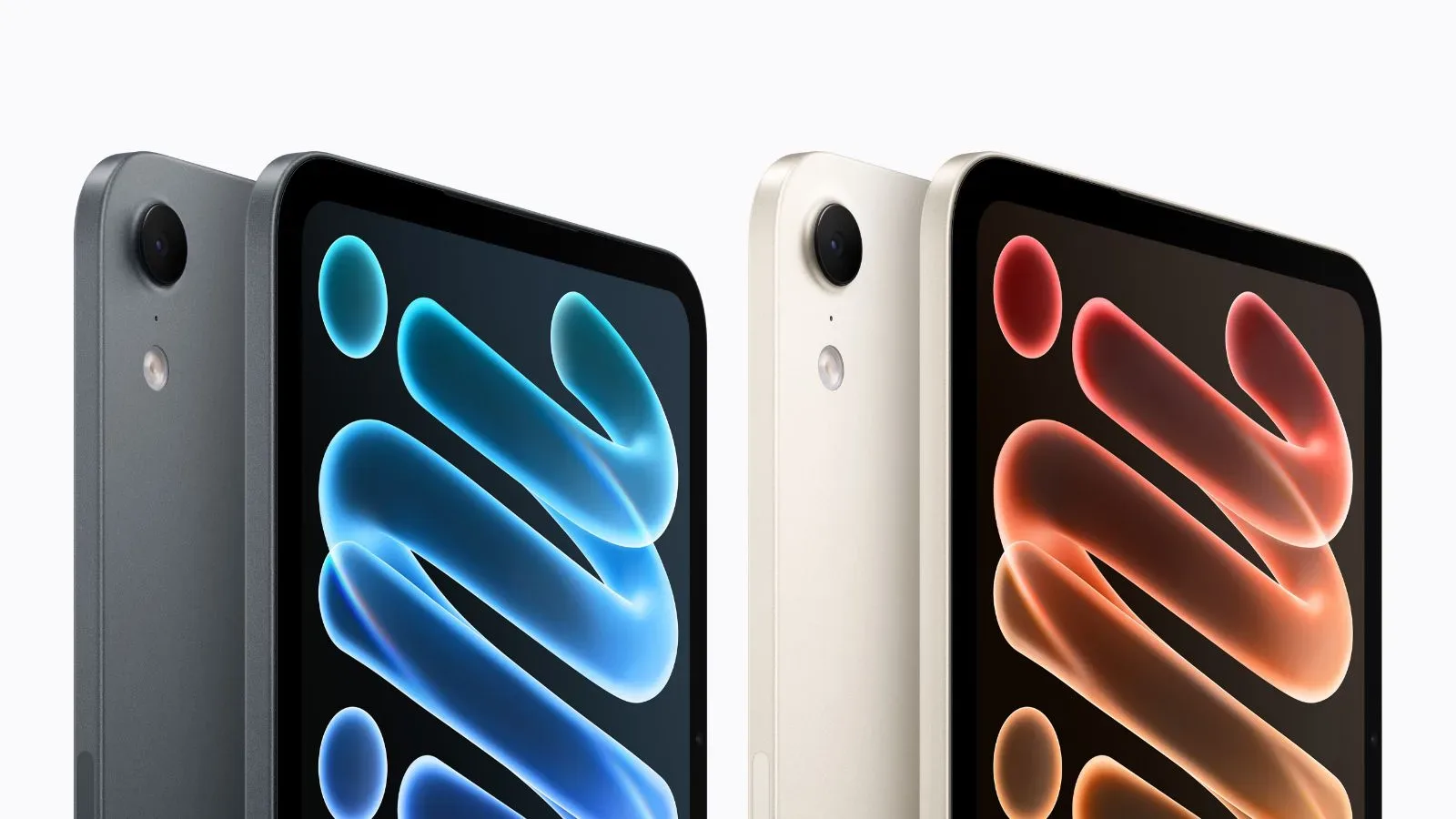
Anyone trying to match an iPad mini to a particular setup should therefore make two separate checks: how much local storage is needed, and whether the preferred display-glass option or processor configuration is attached to that capacity tier. The newly restricted color selection is another hardware-choice detail covered in our look at the iPad mini’s Midnight and Starlight finishes.
How to read the pricing information
Pricing for the new iPad mini starts at $699 for the Wi-Fi model and $849 for Wi-Fi + Cellular. Those figures establish the line’s starting points, rather than the final configured price of every capacity, connectivity and display combination.
That distinction is especially relevant now that the higher storage tier carries a different A20 Pro specification. A buyer evaluating the 512GB model is not only weighing additional storage against the starting price; they are moving to the configuration with an extra efficiency core and the Dual 16-core Neural Engine. Similarly, a buyer interested specifically in nano-texture glass must begin at 256GB, even if 128GB of storage might otherwise be sufficient.
None of this makes the lower-capacity models inherently underpowered. They retain two super CPU cores, a five-core CPU overall, a 16-core Neural Engine, the shared seven-core GPU, Neural Accelerators and hardware-accelerated ray tracing. They are differentiated products, not versions that lack the iPad mini’s key graphics hardware.
What buyers can take from the specification change
The practical takeaway is straightforward: choose the storage capacity with full awareness that it also determines certain hardware features. The 512GB iPad mini is the sole model with the six-core CPU and Dual 16-core Neural Engine. The 256GB model sits between the entry and top tiers by offering the nano-texture glass option, but its listed A20 Pro arrangement matches the 128GB version. All three preserve the same stated GPU and ray-tracing capabilities.
For people who only need a specific amount of storage, that may settle the decision without much complication. For those considering demanding productivity work, machine-learning-related capabilities, or the broadest available configuration, the processor split makes the 512GB version more than a capacity upgrade. It is a separate performance tier within the new iPad mini range—at least as far as Apple’s technical specifications are concerned.