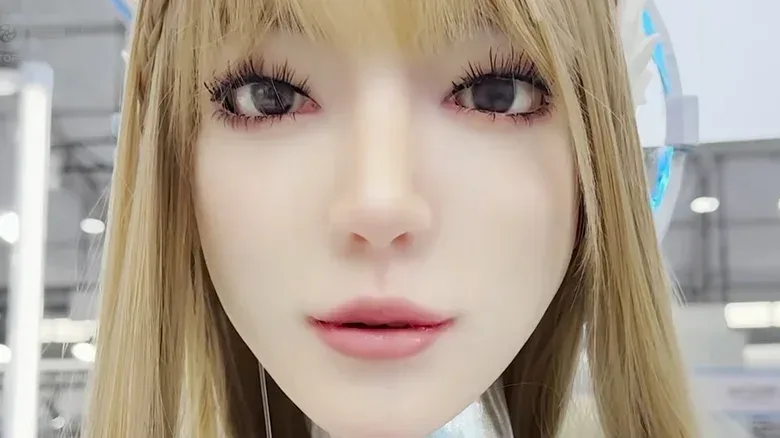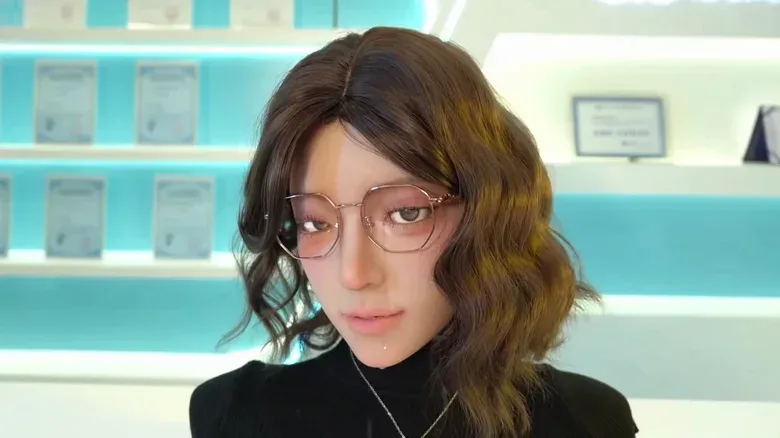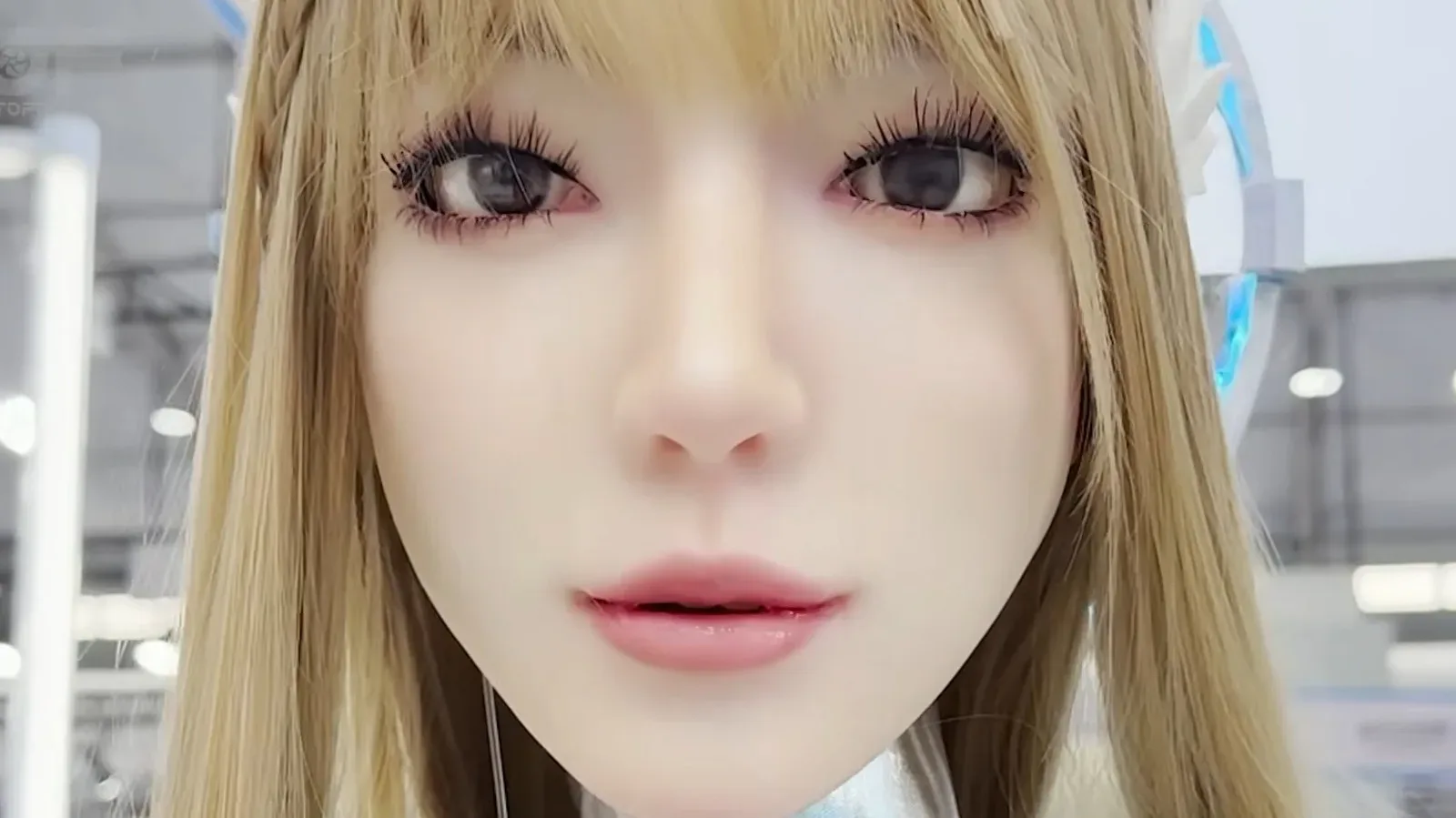
A humanoid robot shedding a single tear on request is exactly the sort of image that makes the brain hit two buttons at once: that is technically impressive and please make it stop looking at me like that. The Yansyn-X2, developed by Ningbo-based Yanxi Technology, is designed to do just that. During footage from Shanghai’s 2026 Inclusion Conference, a demonstrator asks whether the robot can cry, and a tear follows shortly afterward.
The important distinction is simple: the machine is not reported to be feeling sad. It is performing a response assembled from software, moving facial hardware and a liquid-delivery mechanism. Yet the distinction may not make the interaction feel less powerful. Human beings are accustomed to reading tears as an unusually meaningful social signal. When that signal appears on a silicone face in response to conversation, even as a clearly engineered effect, it asks people to decide what they are actually responding to: a machine’s capabilities, its apparent vulnerability, or their own reflexive empathy.
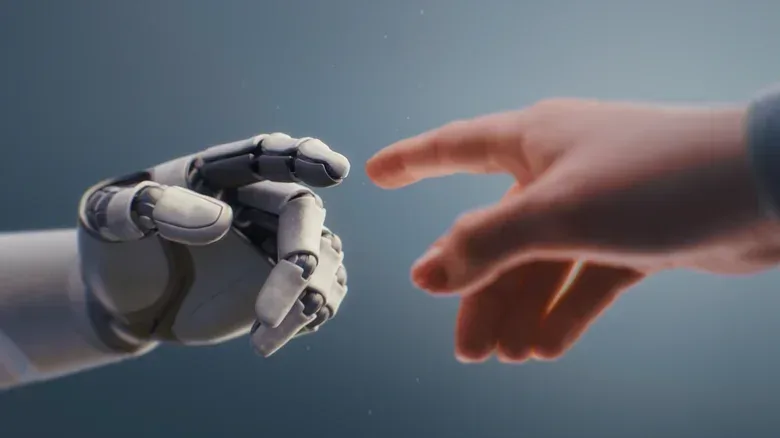
That tension is the real story behind Yansyn-X2. Crying is not merely another item on a humanoid-robot checklist beside head tracking, arm gestures or speech. It is an attempt to make technology communicate in an emotional language people instinctively understand. That could make certain interactions warmer and easier to interpret. It could also make them more uncomfortable, because the machine is borrowing cues normally associated with inner experience without possessing that experience itself.
What Yansyn-X2 is doing when it “cries”
Yanxi Technology describes a three-layer arrangement behind the display. First, an AI system examines conversational context and tone to decide whether an emotional response fits. Next, when it identifies sad or empathetic language, components beneath the robot’s medical-grade silicone face alter its expression. Finally, a separate microfluidic system releases liquid at the corners of the eyes to create tears.
Microfluidics refers to the controlled handling of very small volumes of fluid. In this case, the job is not to imitate a biological tear system in every respect. Its purpose is theatrical precision: put liquid in the visually expected place at the moment the rest of the face is signaling sadness. A single tear matters because it connects facial expression with a familiar physical consequence. The mechanism does not need to be emotionally aware to be emotionally legible.
The robot’s software layer deserves equal attention. Affective computing is the field concerned with systems that recognize, interpret and respond to human emotions. In Yansyn-X2’s described approach, that means evaluating what is being said and how it is said, then selecting an outward response judged appropriate to the exchange. It does not mean the robot has proven feelings, grief or empathy. It means it can be built to recognize cues associated with those things and deliver a corresponding performance.
That framing is worth keeping firm, especially as humanlike machines become more convincing. “Recognizes sadness” and “is sad” are radically different claims. The first concerns pattern detection and response selection; the second implies subjective experience. Yansyn-X2’s tear is a designed output. The fact that it can still affect a viewer is not evidence that the robot is feeling. It is evidence that people are exceptionally practiced at reacting to emotional signals.
Why a staged tear can feel so unsettling
The uneasy feeling many people have around almost-human robots is often described as the uncanny valley. The term refers to the discomfort that can arise when something appears close to human but still noticeably artificial. A machine with no face at all may be easy to treat as a tool. A machine with an expressive face, humanlike gaze and tears forces a more complicated social reading.
Yansyn-X2 intensifies that effect by combining several cues at once. It can turn its head, follow people visually and gesture with its arms. Its silicone face changes into a sad expression, then the tear arrives. None of those details independently establishes personhood, but together they create the outline of an emotional exchange. The observer knows the display is engineered while simultaneously reacting to it as though it carries interpersonal meaning. That clash is where the creepiness lives.
It is also why calling the feature a gimmick would be incomplete. A gimmick can still reveal a genuine design direction. A 2023 study published in Frontiers found that robots whose facial expressions matched a conversation’s emotional tone were judged more likable, more trustworthy and more humanlike than robots with no expression or expressions that did not fit. The reported finding does not mean a sad robot automatically deserves trust. It does indicate that congruent expression changes how people evaluate a robot.
That has a practical implication: emotional displays are not neutral decoration. They can shape a person’s willingness to engage, cooperate or give a machine the benefit of the doubt. A mismatch can make a robot seem strange or insensitive; a well-timed expression can make the same interaction appear smoother and more considerate. Tears are simply an especially potent version of this design strategy.
The useful case for emotionally responsive machines
The stated aim of affective computing in robotics is not necessarily to persuade anyone that a machine has an inner life. The goal is to make human-robot interaction feel more natural. That can be a sensible objective. People already rely on tone, expression, timing and gesture to understand whether another participant in a conversation has understood them. A robot that ignores those cues may be harder to use, even if it completes a task correctly.
In that light, Yansyn-X2 is a demonstration of interface design as much as robotics. A robot’s face can function as feedback: it tells the person that the system has classified the moment a certain way and has selected a response. Facial movement may reduce ambiguity where a flat, monotone machine would leave people guessing. The future plan to use bionic muscles rather than servo motors is aimed at smoother, more varied changes in expression—another attempt to make those signals easier to read.
But this is also where careful boundaries matter. If an emotional display encourages more trust, designers should be precise about what the system actually understands and what it is capable of doing. An appropriate-looking response is not automatically an accurate one. A tear is not care. A sympathetic expression is not a guarantee of sound judgment. The more readily a robot can present itself as attentive or moved, the more important it becomes not to confuse presentation with competence.
That is a useful lens for other conversational technologies as well. Natural-sounding back-and-forth can make a system feel unusually present, even though the quality of that interaction depends on its specific capabilities and limits. The trade-offs in conversational AI are already visible in tools examined in this comparison of voice-focused AI features. Humanoid robotics raises the stakes by putting that conversational layer into a body that can look back, gesture and, now, cry.
Yansyn-X2 is static, but the industry is moving in several directions
For all its striking facial presentation, the current Yansyn-X2 is a static model, not a walking humanoid. It can move its head, track people and gesture with its arms, but it is not being presented as a mobile general-purpose worker. That limitation is useful context. A compelling emotional display and a capable physical assistant are different engineering problems, even when they are placed in the same humanoid shell.
Elsewhere, robotics development is emphasizing physical tasks. At CES 2026, LG’s CLOiD was shown folding and sorting laundry. WIRobotics’ Allex was presented as able to hold objects weighing up to 6.6 pounds while making recognizable hand gestures. SwitchBot’s Onero H1 was shown loading a washing machine. These examples point toward utility defined by manipulation: picking up, holding, sorting and moving objects in human environments.
Other efforts prioritize speed or workplace deployment. Tiangong Ultra recorded a 9.39-second 100-meter run at Beijing’s second annual World Humanoid Robot Games, faster than Usain Bolt’s 9.58-second human record. Japan Airlines began testing an android baggage handler at Haneda Airport in May as it seeks to address a shrinking workforce. Meanwhile, 1X’s NEO home robot is listed at $20,000 and is intended to learn household chores, though human teleoperators initially watch through its cameras.
These examples should not be flattened into one claim that humanoids are suddenly ready for everything. They show different targets: rapid movement, object handling, household assistance, labor support and emotionally intelligible interaction. Each target brings its own hard problem. A robot can be fast without being dexterous. It can make a relatable facial expression without walking. It can promise to learn chores while still depending initially on human oversight.
The strongest takeaway is not that robots have feelings
Yansyn-X2’s crying feature is best understood as a demonstration of how intensely human a machine can appear without becoming human. The technology joins contextual analysis, facial actuation and microfluidics into one small moment designed to be understood instantly. The effect is memorable precisely because people attach so much meaning to tears.
Whether that is welcome will depend on the setting and on the honesty of the interaction. Some people may find a more expressive machine clearer and less intimidating than one that never acknowledges conversational tone. Others may reasonably prefer robots that communicate plainly without reproducing signals associated with emotional intimacy. Both reactions make sense.
For now, the Yansyn-X2 does not settle that debate. It sharpens it. Robotics is advancing across movement, dexterity, household work and social presentation at the same time. The tear rolling down this robot’s face is not proof that a machine has crossed into emotion. It is proof that engineering has become better at staging emotion—and that people will need to stay clear-eyed about the difference.