Valheim 1.0 launched on September 9, 2026, five years after Iron Gate Studios first put its Viking survival game into Early Access. That is a substantial stretch of time for any game to spend being shaped in public, and it makes the full-release label feel less like a starting pistol than the last marker on a very long trail. The new Deep North biome is the fitting capstone: an invitation to sail farther, prepare harder and discover whether a map that once felt familiar still has the power to make its inhabitants feel very small.
Its central appeal has never been explained entirely by logs, ore or the steady escalation from improvised shelter to imposing longhouse. Those are valuable parts of the survival-game formula, certainly. But Valheim understands that gathering things matters most when those things enable a trip into a place that seems dangerous, strange and only partly knowable. A better axe is not merely an axe. It is permission to go somewhere else.
That distinction is why the game can make even its earliest, humblest hours feel memorable. Players begin in the Tenth World with almost nothing, delivered by a Valkyrie and accompanied by Hugin, a raven who offers guidance. The Meadows, the first comparatively gentle biome, are a calm landing point after the foreboding scenery glimpsed during the opening flight. Yet even here, the game does not hand over comfort for free. A newcomer can learn a quick lesson from trying to punch a tree, then realizing that loose branches are the sensible route to early materials. Valheim does not mind letting its world gently embarrass you before it equips you.
A survival game built around the next horizon
The basic routine will be recognizable to anyone who has spent time in the genre. Rocks, flint and wood have to be collected. Wildlife becomes food, hides and materials. A temporary camp gradually becomes a place worth returning to. Danger arrives in forms that require better gear and a more deliberate plan. Taken only at that level, Valheim is an effective Viking-flavored crafting game.
What lifts it is the rhythm that joins those chores together. Each task points toward an expedition: follow a shoreline, cross water on a modest raft, establish a forward base, scout a new biome and prepare for the powerful enemy that waits at its center. Every major biome culminates in a boss encounter, and those victories turn progression into a physical expansion across the world rather than a menu of disconnected upgrades.
It is a structure that makes a homestead feel less like the final destination and more like a staging ground. A roof is important because storms, nightfall and threats exist outside it. Food preparation matters because the next voyage asks for endurance. A storage chest is evidence of a previous journey and a promise that another one is being planned. The best survival games create this loop of departure and return, and Valheim remains especially good at giving each departure a mythic edge.
That same exploratory pull connects Valheim to other large-scale games where travel itself creates the story. The appeal is not simply an enormous space, but the feeling that an unfamiliar frontier asks players to set their own pace and decide how much risk they can carry. For another recent example of exploration systems pushing outward through a huge playable universe, see No Man’s Sky Cosmos and its player-owned stations, space hulks and solar voyages.
Low-poly landscapes, high-impact atmosphere
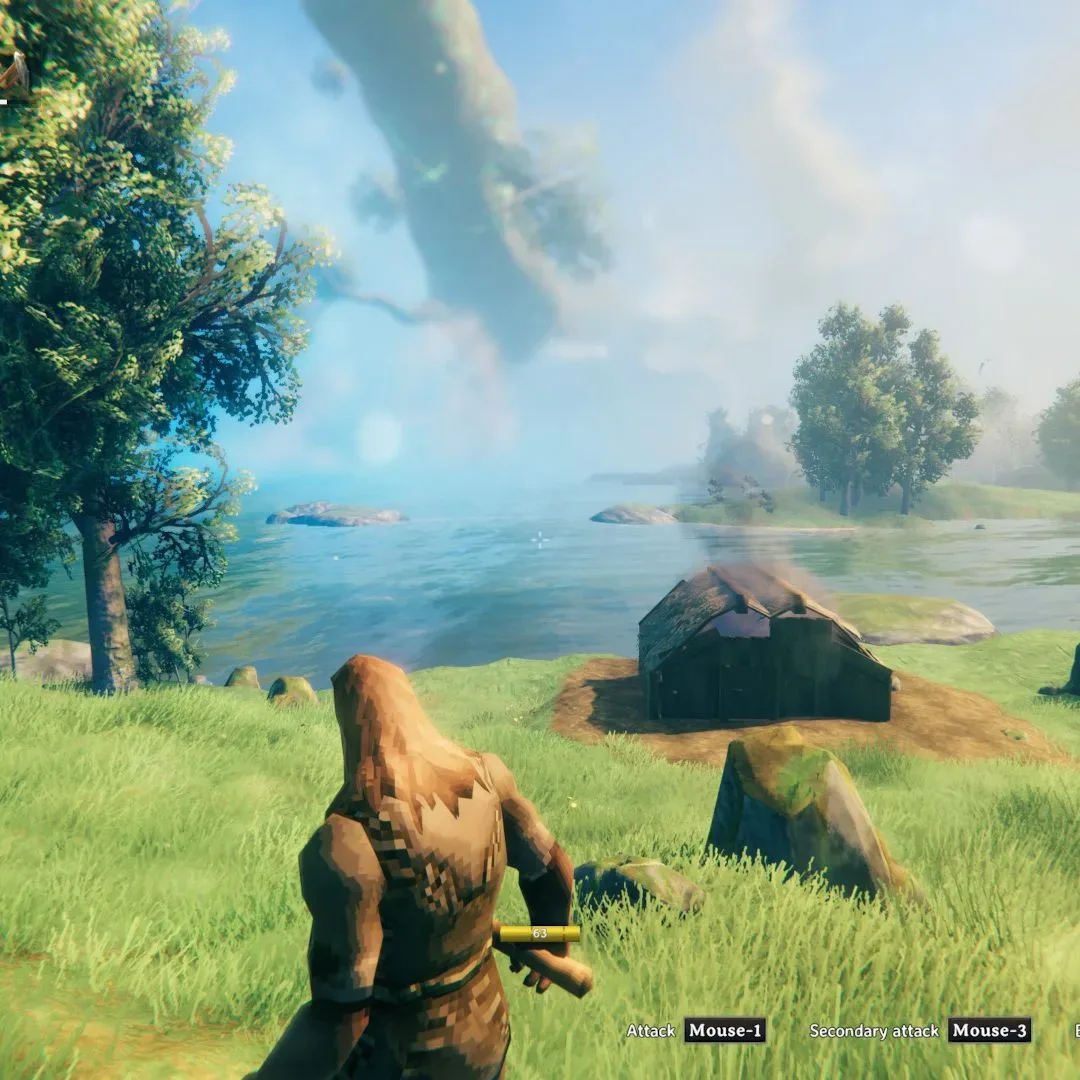
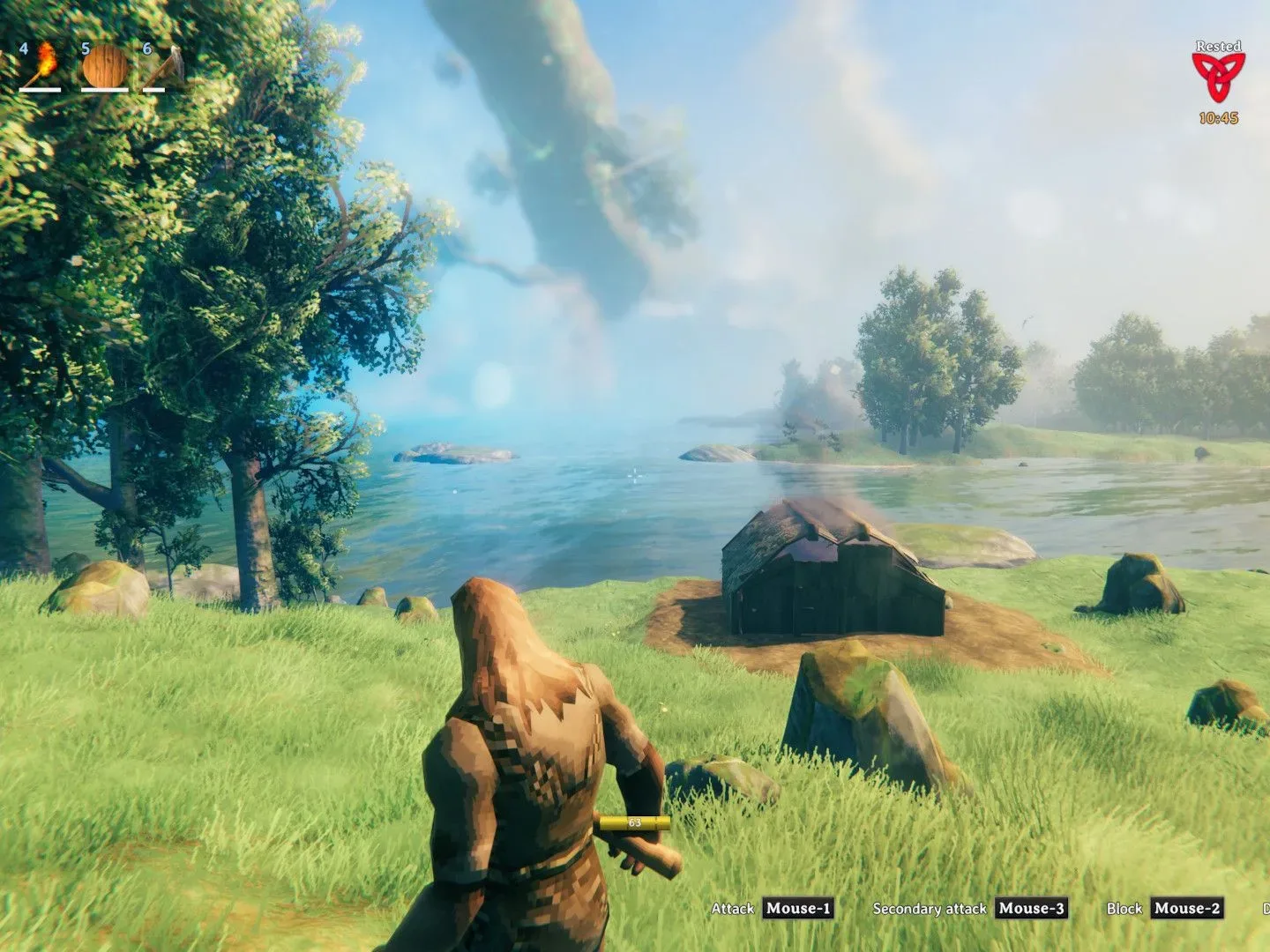
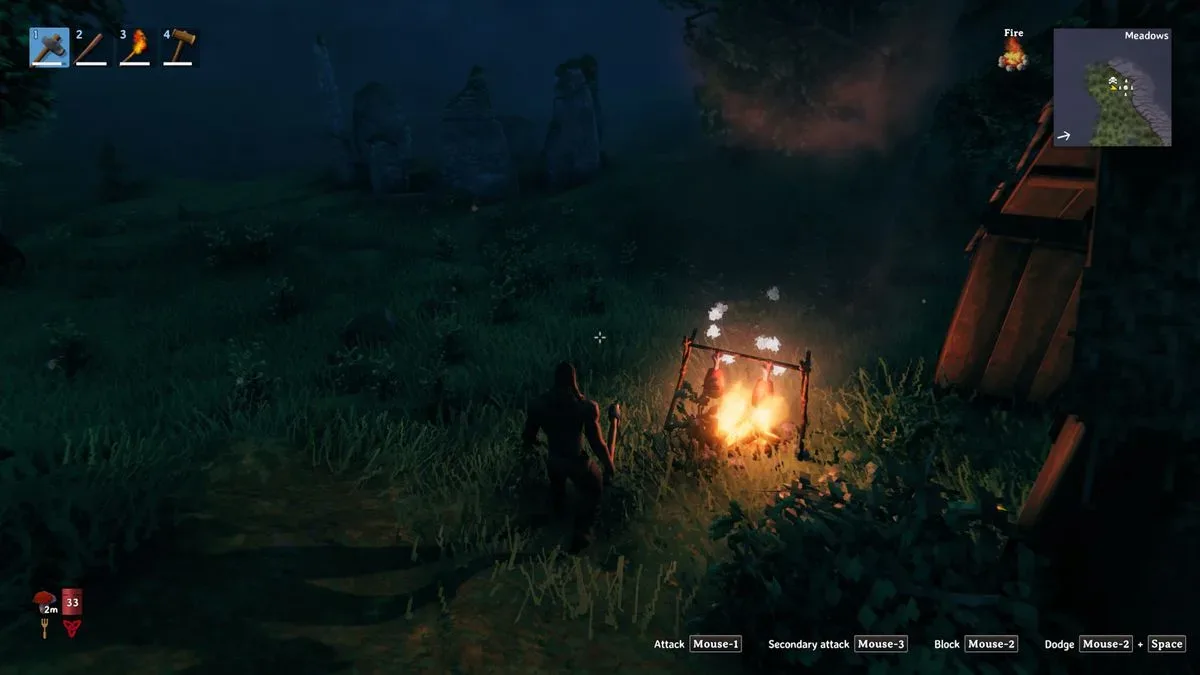
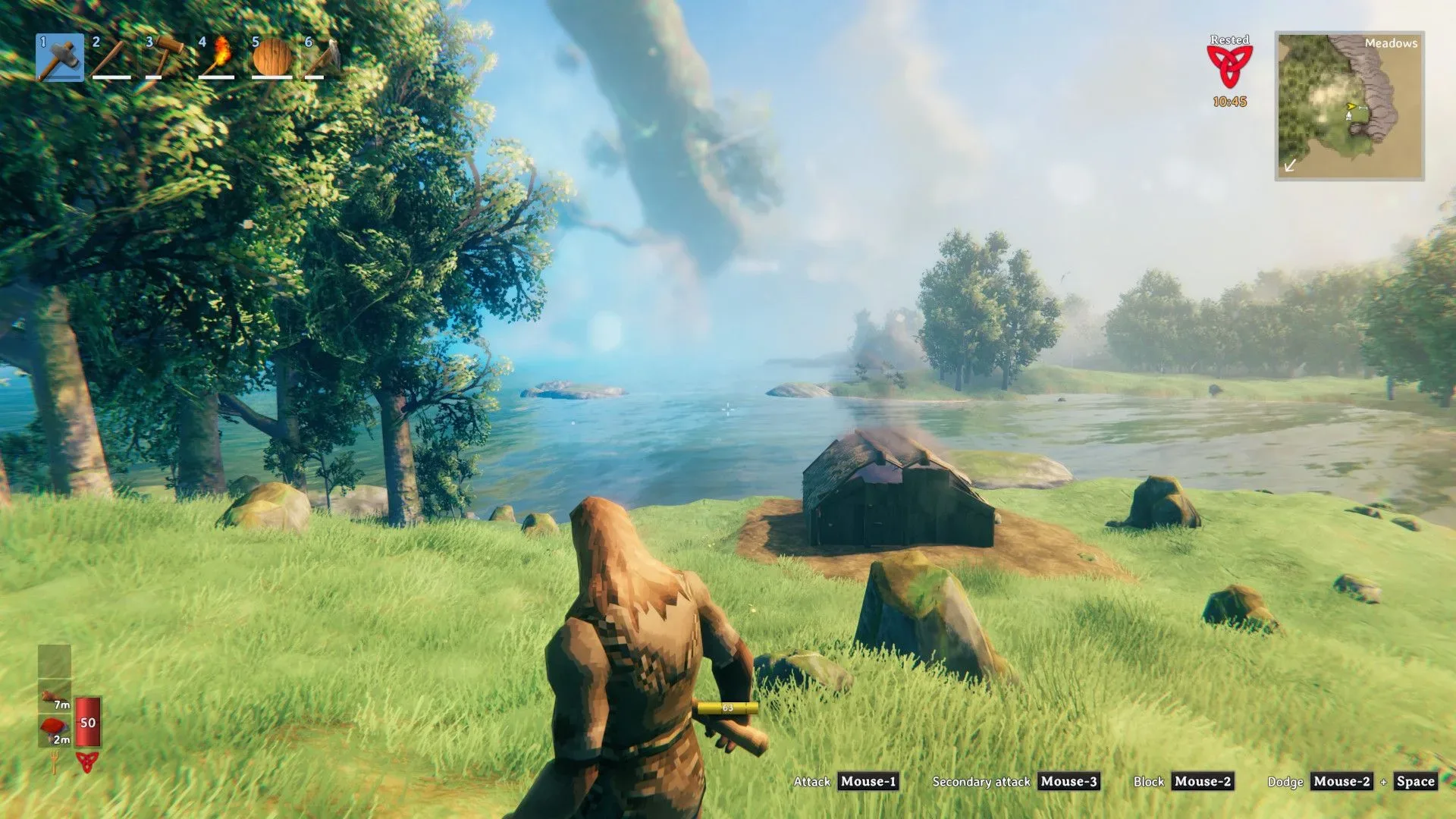
Valheim’s presentation remains crucial to its sense of place. Its visual language evokes the late PlayStation and PlayStation 2 eras, using deliberately simplified forms instead of chasing realism. That look is paired with more contemporary effects, particularly lighting that can make an otherwise modest landscape feel uncanny or beautiful. A dark sky thick with stars, a distant fire seen across water and the shifting mood of weather can lend real consequence to the decision to travel another few minutes from home.
Related coverage includes Valheim 1.0 Makes the Long Journey Into the Deep North.
The Meadows’ music has an equally important role. Its clarinet-led sound, with a character somewhere between folk music and soft jazz, gives the starting region an easygoing pastoral atmosphere. It is a smart contrast to what lies beyond it. Peace is not just an absence of enemies; it has a sound, a color and a memory. That makes leaving it feel like a choice rather than a mandatory trek to the next objective.
There is room for slapstick amid all this grandeur. Valheim’s physics can produce the kind of accident that becomes a survival-game rite of passage. Trees fall, logs split and gravity remains reliably indifferent to Viking ambitions. Standing downhill from a felled trunk is a mistake that can turn an ordinary gathering job into an early corpse run. The comedy works because the simulation treats the environment as more than a backdrop. A forest is a source of resources, but it is also a place full of heavy, moving objects that do not care whether someone has just built their first workbench.
Why the RPG layer matters
Valheim also has more role-playing depth than the label “survival game” may suggest. Skills cover activities including magic, cooking and woodcutting, while combat has the tools to reward timing rather than mere equipment scores. A parry mechanic gives fights an element of precision, and the character’s growth runs alongside the player’s changing understanding of the world.
This is important for people who approach crafting games with some skepticism. The game is not only about keeping hunger, shelter and supplies under control. It offers an evolving adventurer and a sequence of increasingly formidable challenges. A player can see their character develop through the acts they repeatedly perform, then take that development into a biome that demands more awareness than the last.
It is also why the premise has a surprisingly close historical echo in UnReal World, the 1992 survival RPG centered on enduring life in the Far North. Valheim’s Deep North gives the 1.0 release a resonant endpoint in that context. The new biome is not merely another themed zone; it reinforces the long-running conversation between survival mechanics and role-playing progression. The journey northward asks for resourcefulness, combat readiness and the willingness to leave security behind.
The difficult art of making a home
For all of Valheim’s strengths, building is where the game can put friction between a player’s vision and its construction tools. Flat, build-ready land is not necessarily easy to find in the Tenth World. Even with a crafted hoe used to work the terrain, creating a clean foundation may take more patience than a simple wooden house appears to deserve.
That terrain problem becomes more noticeable when players want a home that looks designed rather than hurriedly assembled from panels. Structural work and placement take genuine practice, and imperfect joins can leave conspicuous gaps. There is a certain accidental charm to smoke escaping through an ill-fitting roof over a campfire, but it can also feel as though the game is withholding some of its creative freedom behind a demanding building process.
That complaint does not erase the value of homes in Valheim; in a way, it explains why they matter. A rough cabin with a fire, supplies and a view of the coast can become meaningful precisely because it took effort to establish. Still, players seeking architectural expression may find that the difficulty of leveling and assembly occasionally fights against the fantasy of becoming the author of a personal Viking settlement.
Deep North as a destination, not a footnote
The Deep North arrives at a moment when Valheim has already spent years proving that its world can sustain long-form adventure. Its 1.0 addition gives seasoned travelers a final direction to pursue while underlining the game’s best quality: movement through a hostile, beautiful world is never just a means of reaching a checklist item.
That is the lasting power of its design. Valheim begins with scattered branches and a helpful raven, then steadily creates reasons to look beyond the nearest tree line. Rafts become voyages. Shelters become outposts. A new biome becomes a formidable destination with a boss at its heart. The full release does not need to reinvent that cadence. With the Deep North now part of the route, it affirms how much potential there still is in the simple, enduring urge to pack supplies, look toward the horizon and go.