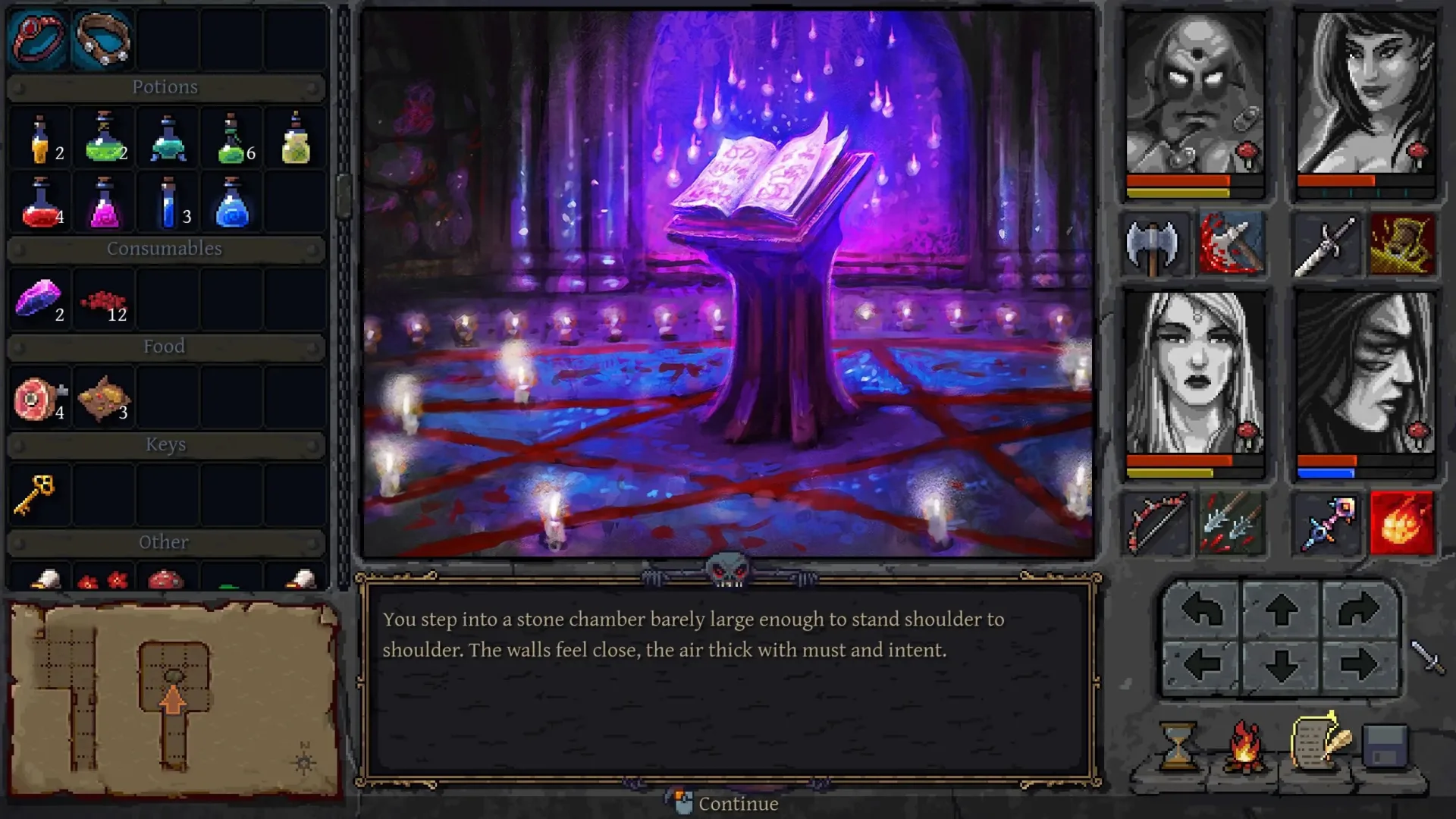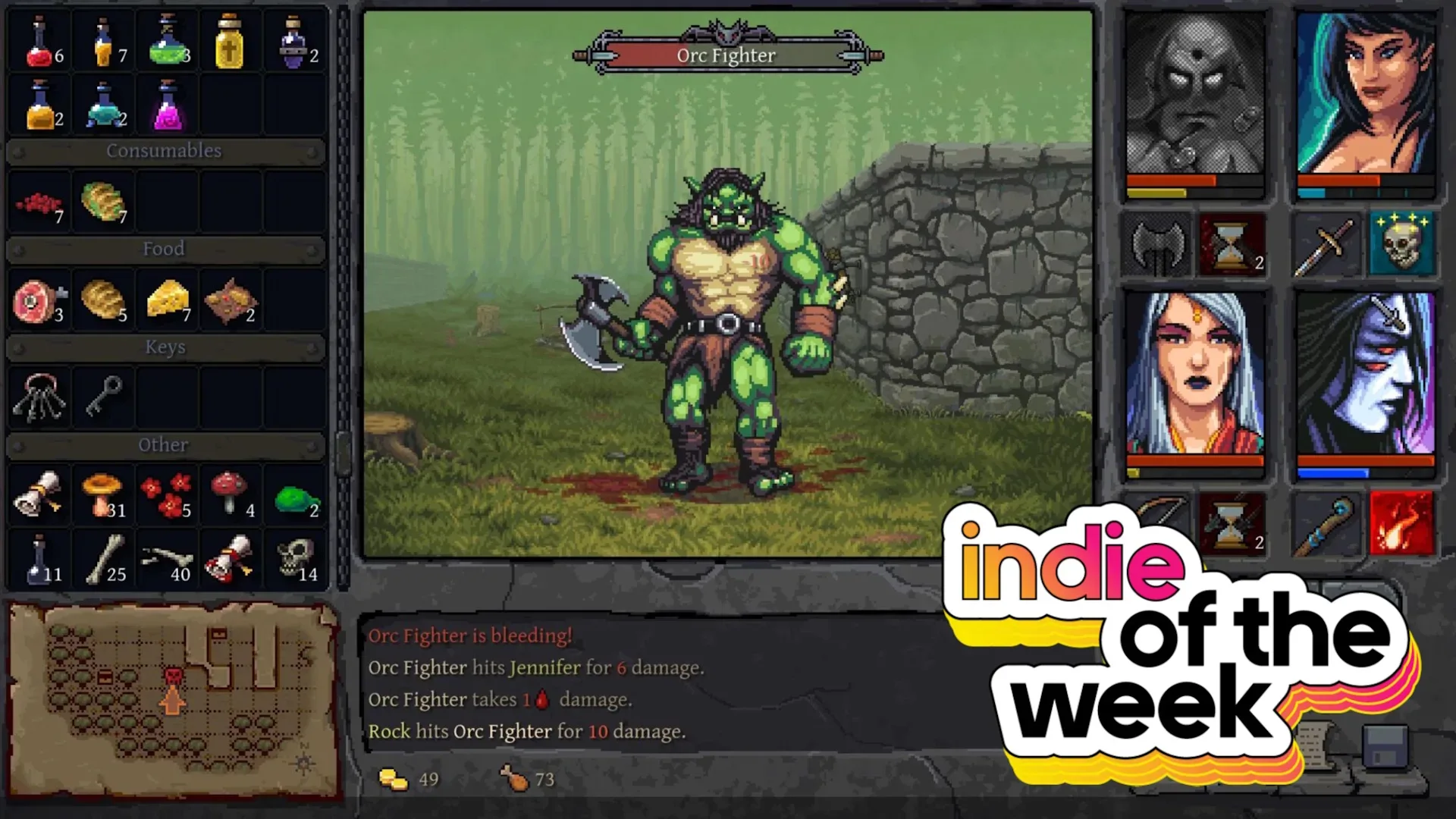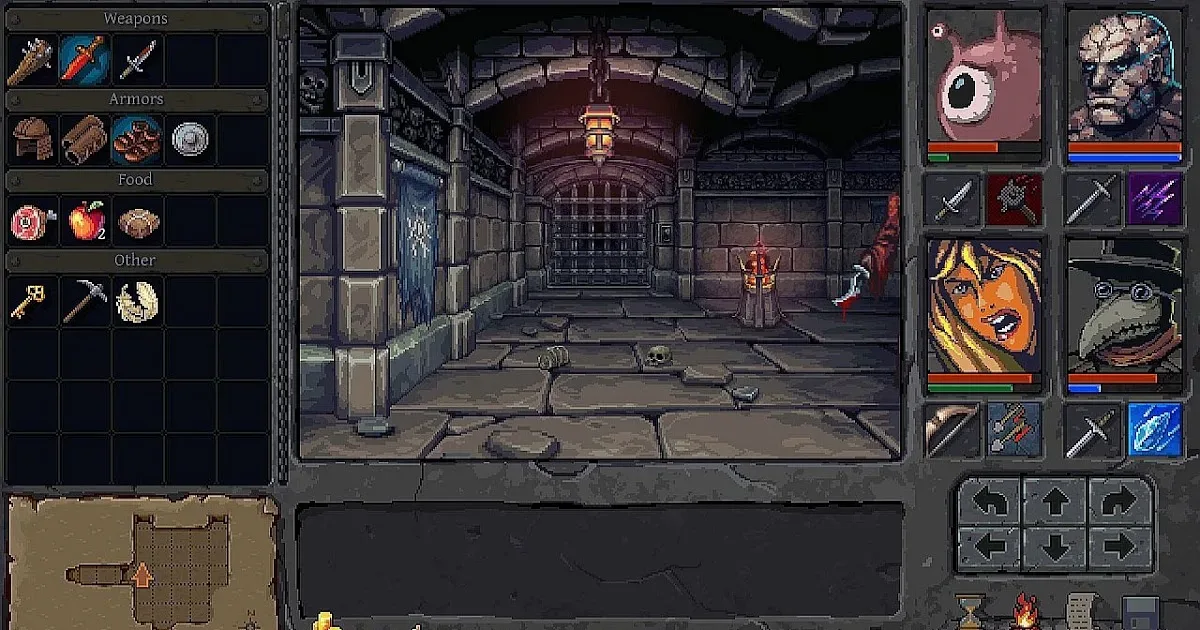
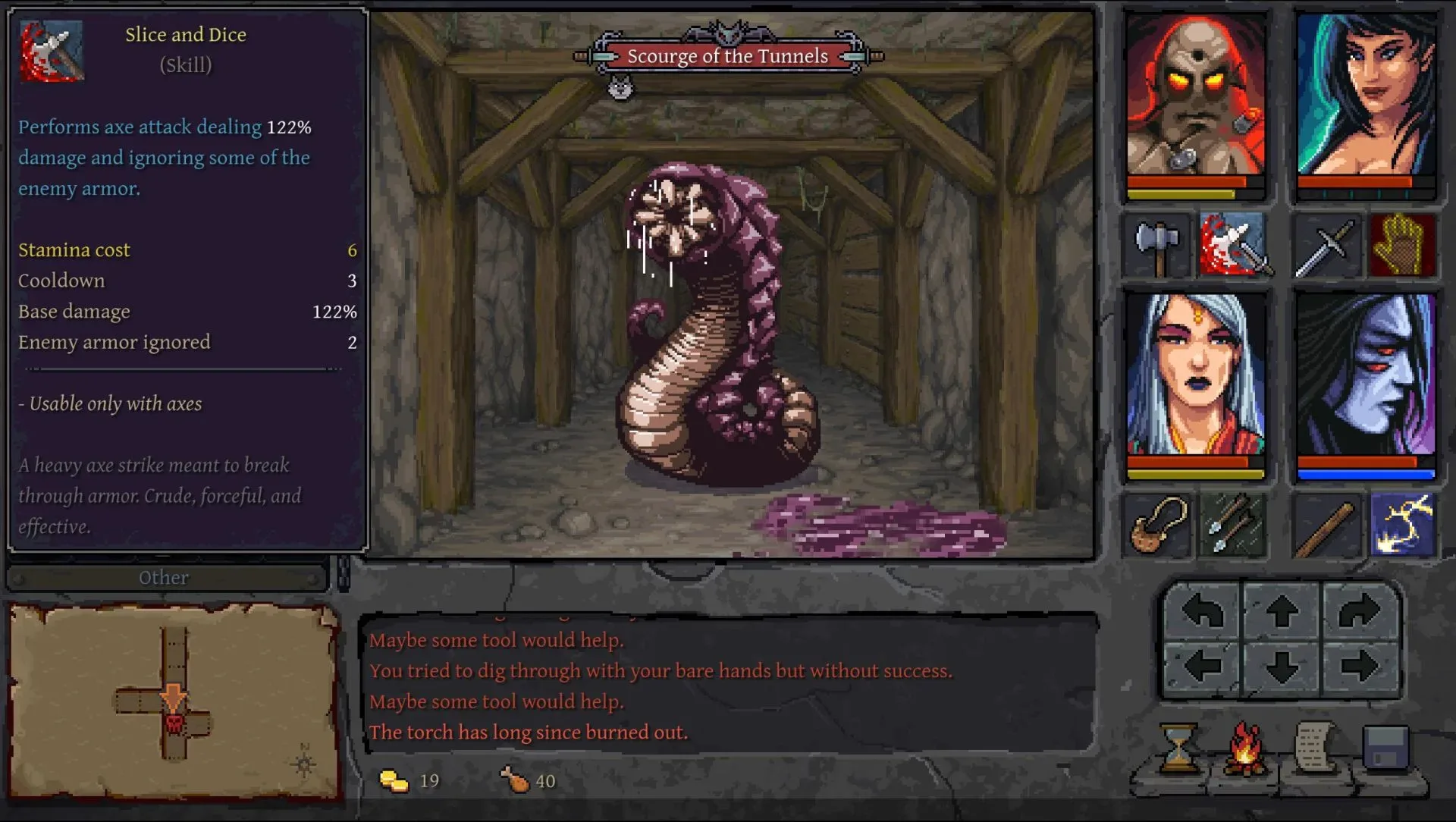
Underkeep is a modern fantasy RPG with a very old-school core: build a four-person party, move that party as one unit through tile-based spaces, poke into dungeons, solve puzzles and make every action in combat count. It is out now on Steam, and its appeal appears to be less about reinventing the dungeon crawler than making the format feel welcoming, colourful and purposeful again.
That matters because this particular branch of role-playing game design can be intimidating on reputation alone. Underkeep belongs to the tradition often called the blobber: a party-based RPG in which multiple adventurers travel together as a single “blob,” rather than separately positioning each individual character around the map. The lineage includes Wizardry, Eye of the Beholder and 1987’s Dungeon Master, while Legend of Grimrock offered a more recent high-profile interpretation of the same broad approach.
Underkeep is plainly interested in that heritage. Even a monster dropping something resembling a wheel of mouldy cheese evokes the tactile, oddball dungeon loot of older games. Yet the game is not described as a pure museum piece. Its route toward the Village of Underkeep runs through woods, monsters, puzzles and dungeons, and its outdoor spaces call to mind the wider roaming associated with Dungeon Master’s 1993 follow-up, Skullkeep.
A four-person party where formation really matters
Character creation starts with four adventurers. Players combine races and classes for each one, choose a profile picture, and are soon sent out into the wilderness. That initial party choice is more than decoration: its composition affects both battle formation and exploration.
The basic tactical logic is familiar and useful. Durable fighters are suited to the front, while rangers and spellcasters benefit from the rear. Underkeep’s racial and class selections can also affect moment-to-moment interactions outside combat. An Elk ranger can identify danger in woodland areas, for example, while a Raven wizard can detect stray magic. These details give character creation practical stakes without requiring an enormous lore encyclopedia before the adventure begins.
There is room for the game to be playful, too. One side-quest outcome can cause the party to occasionally transform into mushrooms. That kind of consequence suggests Underkeep is willing to let its fantasy world be strange without turning every detour into a joke or a punishment.
Combat is about committing to a turn
Underkeep’s combat system makes a specific departure from some grid-based dungeon crawlers. Characters do not move around mid-turn to evade attacks. Instead, the player chooses actions for all four party members—basic melee attacks, arrow shots or specialist moves—and only after every character has acted can the party change tiles. Enemies then get their opportunity to strike back.
In practical terms, that structure puts emphasis on sequencing. A turn is not a scramble to find the safest square; it is a decision about which target to pressure, which party member should use a limited or upgraded ability, and whether the group can afford to advance after committing its actions. The game’s tactical identity comes from that locked-in rhythm.
Specialist moves are unlocked and improved through level-ups. The available options provide some flexibility, and abilities can be switched on the fly. However, level-ups are uncommon and Underkeep does not offer respecs—the ability to reassign previous character-building decisions. That makes each selection more consequential. Players can concentrate advancement into one or two skills or distribute it more broadly, but neither approach can be casually undone.
For players accustomed to modern RPGs that permit frequent rebuilds, that may sound restrictive. It can also create a satisfying sense of ownership over a party. A no-respec design turns a build into a commitment rather than a temporary menu experiment. The trade-off is that newcomers should think ahead before spending scarce advancement opportunities.
Underkeep opens up after the village
Reaching the Village of Underkeep seems to be the point where the game’s larger structure takes shape. The settlement has several shops, characters who offer quests, and multiple directions in which to pursue them. That setup supports open-ended exploration: fill in the map, confront unfamiliar enemies, locate compact dungeons and find side-quests or puzzles that reward useful equipment.
The resulting feel is closer to free-roaming fantasy adventure than an entirely linear sequence of dungeon floors. There is story, but it does not appear to overwhelm the exploration. One thread involves finding a missing group of dwarfs and becoming caught up in their disagreement about a furious dragon. The tale is described as straightforward rather than especially deep, but that can be a feature in a game whose main pleasure is travelling, investigating and making a party work.
Its approach also provides context for a useful comparison with another kind of adventure game. Underkeep’s simplicity does not mean emptiness; it means that rules, movement and objectives are legible enough to support discovery. That quality has long been central to games such as The Legend of Zelda: Ocarina of Time, despite the enormous differences between an action-adventure and a party dungeon crawler.
The biggest issue: freedom without clear danger signals
Underkeep’s free-roaming structure comes with a notable problem: regions may not clearly communicate whether a party is prepared for them. Travel north into the Caerlin Woods and griffins may reveal that the group is badly outmatched. Turn toward the Cemetery instead and progress can eventually meet another abrupt wall.
This is not necessarily a complaint about the presence of difficult enemies. In fact, the return trip can be one of the game’s most rewarding beats. After gaining a few levels and securing better weapons elsewhere, a party can come back and cut through an area that previously flattened it. That is a classic RPG sensation, and it helps equipment and level growth feel tangible.
The frustration is informational. When the world offers several routes but few subtle indicators of relative danger, players can wind up using failure and elimination to discover the intended next step. A more readable sign of regional difficulty—whether through enemy behaviour, environmental cues, quest dialogue or some other in-world language—could preserve the thrill of exploration without making progression feel arbitrary.
For now, players should expect to retreat, explore elsewhere and return later when an encounter is clearly beyond the party’s means. That is sound advice for many older dungeon crawlers, but Underkeep’s more inviting presentation may lead some players to expect a smoother curve than it currently provides.
Death is forgiving; resting is the heavier resource puzzle
Underkeep is comparatively generous about reviving fallen party members. Each region has a statue where gold can be paid to reincarnate a dead hero. The revived character returns with only a sliver of health, so the system does not erase the danger of losing someone, but it avoids the harsher recovery conditions associated with some older games in the genre.
Healing comes through found or crafted potions and, more commonly, rest. But rest has its own cost: food. Recovering health, stamina and mana can consume a great many meals, and food can be expensive to keep stocked. More importantly, the amount spent is unpredictable and rest cannot be interrupted midway.
That combination changes rest from a simple healing button into a resource-management gamble. Food is not merely flavor inventory; it is the price of restoring the party’s ability to continue. The issue is not that a survival-style cost exists, but that players apparently cannot see the anticipated consumption or choose a partial rest duration. Better forecasting would let players make an informed strategic decision: spend precious provisions for a full recovery, recover only enough for another push, or press on with risk.
The resurrection and rest systems therefore pull in different directions. Reincarnation softens a disastrous defeat in exchange for gold, while resting imposes ongoing pressure on every expedition through its food demands. That tension may appeal to players who enjoy carefully managing supplies, but it can become cumbersome when the numbers are opaque.
A focused revival rather than a maximalist throwback
Underkeep does not attempt to match the punishing reputation of Wizardry or the expansive lore associated with Might & Magic. Its spell system is also presented as an area with room to grow; a more elaborate approach, such as rune-based casting, could have added another layer of discovery. Still, the existing spells offer a reasonably varied set of level-up choices, and the game’s strengths lie in its clarity of purpose.
This is a deliberately direct dungeon crawler with attractive enemy designs, a strong soundtrack, a decent amount of narrative context and systems that allow races, classes and player decisions to matter. Its best moments seem to come from the combination of small discoveries: an unusual loot drop, a puzzle that yields equipment, an optional dungeon, a party trait that spots something others would miss, or a former roadblock finally conquered after a little growth.
Underkeep’s rough edges are meaningful rather than trivial. Unclear difficulty boundaries can waste time, and costly, uninterruptible rest makes basic recovery less transparent than it should be. But neither issue changes the central point: tile-based, four-character dungeon crawling still has room to feel fresh when a game understands why the format was beloved in the first place. Underkeep appears to understand that a measured pace, a coherent party and a strange piece of dungeon loot can still make for a very good adventure.