A three-port charger is not exactly the kind of upgrade that makes a dramatic entrance. It does not add frames to a game, transform a monitor setup, or give a phone a new camera trick. But it can solve one of the most persistent little problems in a device-heavy life: the gradual takeover of every wall outlet by individual power bricks.
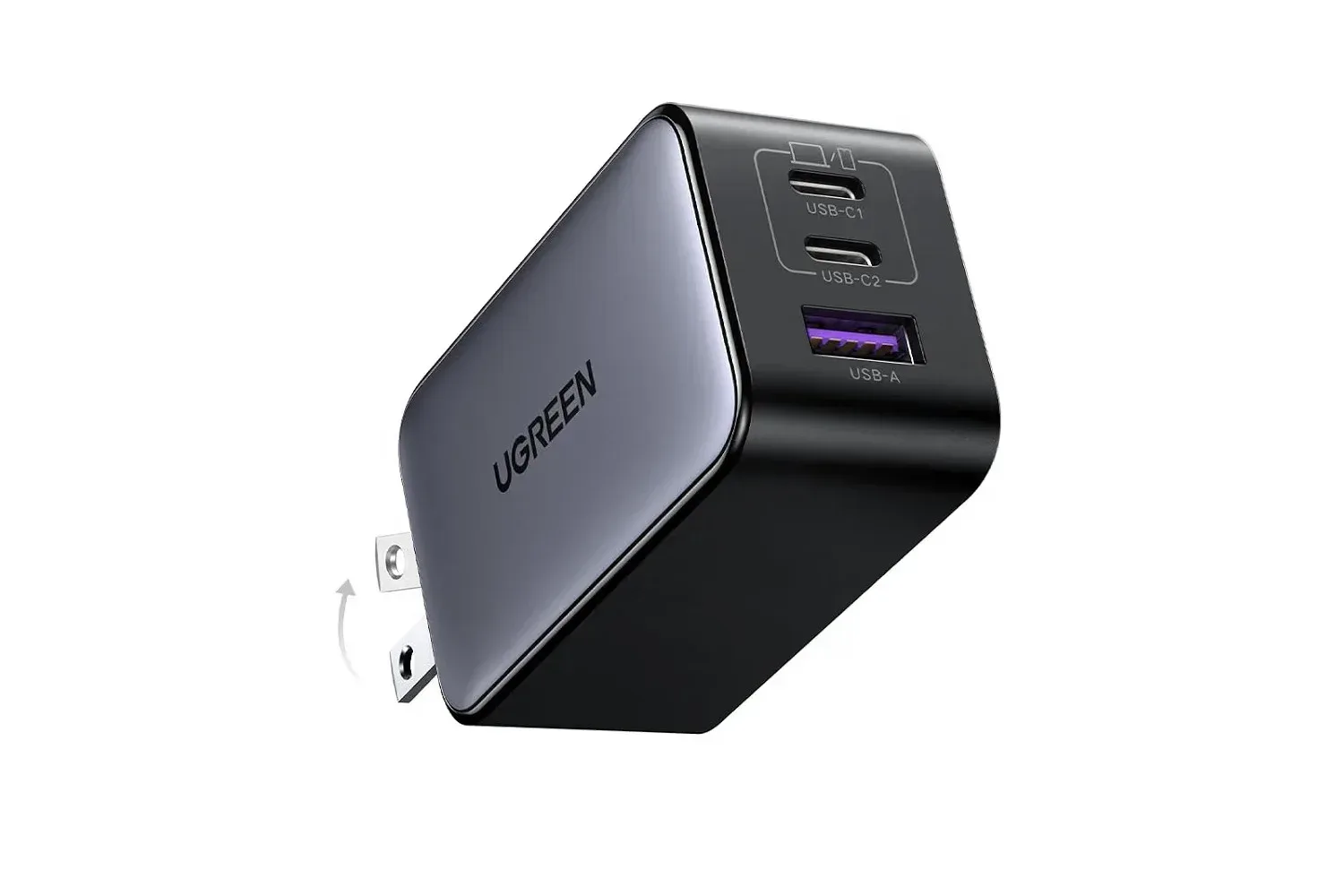
The UGREEN Nexode 65W Three-Port Charger Block is currently listed for $24, a 40% reduction from its stated $40 regular price. The compact charger is built around a maximum 65W output and three ports, with GaN technology cited as part of its efficiency and safety proposition. For someone charging a phone, tablet, earbuds and a laptop across the day, the straightforward pitch is consolidation: one smaller charger in place of several single-device adapters.
That is especially relevant for players and desk-bound workers who regularly rotate between a phone, wireless accessories, a tablet and a notebook. A charger cannot magically eliminate cable clutter, but putting several devices on one outlet can make a bedside charging station, work desk, or travel setup considerably less chaotic.
The deal in brief
- Product: UGREEN Nexode 65W Three-Port Charger Block
- Listed deal price: $24
- Stated regular price: $40
- Discount: 40%
- Maximum output: 65W
- Ports: Three
- Other cited characteristic: GaN efficiency and safety design
At $24, the key value is not simply the headline wattage. It is the chance to reduce the number of chargers competing for outlet space. That is a practical quality-of-life purchase rather than a flashy one—which, frankly, is often the best category of tech upgrade.
What “65W” means—and what it does not
W, or watts, measures electrical power. A charger rated for 65W has up to 65 watts of output available under the appropriate conditions. In broad terms, higher available wattage can enable faster charging for devices that are designed to accept it, and it may be enough to power or recharge many laptops as well as smaller mobile devices.
However, a 65W label should not be read as a guarantee that every connected device receives 65W all the time. The charger has three ports and a total output ceiling. When several products are connected, that power must be shared among them. The exact allocation can depend on the charger’s design, which ports are in use, and the charging requirements of each connected device.
In other words, maximum output is not the same thing as per-port output. A phone, earbuds case and laptop can all charge at once, but the laptop may not have access to the whole 65W while the other two are drawing power. That does not make the product less useful; it simply describes the trade-off inherent to multi-port charging.
It also means shoppers should check their own hardware before treating this as a universal replacement for every power adapter they own. A 65W charger can be a natural fit for a phone-and-accessories setup or many portable computer setups, but users with devices that expect more power should verify their requirements. The cable matters, too: charging performance depends on both the charger and the cable being used.
Why three ports can matter more than raw speed
Single-port fast chargers are great at one job: getting one device topped up quickly. A three-port model is more about making the everyday charging ritual less annoying. It is the kind of accessory that can live at the desk during the week, move to a nightstand in the evening, and then go in a bag for a weekend away.
For a desk, the advantage is outlet management. Rather than occupy separate sockets with adapters for a phone, headphones and laptop, a single wall charger can centralize the job. At a bedside table, the arrangement can be just as useful for the devices that tend to finish the day near-empty. For travel, less bulk is the obvious benefit: packing one compact multi-device charger is easier than packing several bricks.
The 65W maximum also adds flexibility. If one device is the priority, the charger’s output can be focused on that task rather than being limited to the lower capacity of a basic phone adapter. If several devices need power, the three ports make simultaneous charging possible. It is a more adaptable approach than keeping a drawer full of device-specific plugs.
GaN, explained without the marketing fog
GaN is short for gallium nitride, a material used in some power electronics. In charger discussions, it is commonly associated with the ability to build smaller and more efficient power adapters than older designs. The practical appeal is familiar: a charger intended to deliver substantial power without becoming an enormous travel brick.
The listing identifies GaN efficiency and safety as features of the Nexode charger. Still, GaN is not a magic stamp that overrides the basics of safe charging. Use compatible, undamaged cables; keep the charger clear of conditions that could interfere with normal operation; and check the needs of particularly power-hungry devices. The technology is useful because it supports compact charger design, not because it removes the need to use the right equipment thoughtfully.
A sensible fit for a modern device pile
The most compelling buyer for this deal is probably not someone who needs a charger for one phone. It is someone with several devices that repeatedly need attention: a phone used throughout the day, earbuds that get dropped onto charge at night, a tablet for video or reading, and perhaps a laptop that travels between rooms or out of the house.
That same audience may be considering a new phone with more demanding charging habits or a larger role in their daily setup. The broader device context is worth keeping in mind if an upgrade is on the horizon; for instance, the iPhone 18 Pro’s variable-aperture camera change is one example of how premium phones continue to gain features that make them more central to daily use. A dependable shared charging point becomes more valuable when a phone is also a camera, entertainment screen, communication device and travel companion.
There is a gaming angle, too, even if this is not a gaming-exclusive accessory. Wireless headsets, controllers and phones used for companion apps or remote-play sessions all contribute to the background charging workload around a setup. A three-port charger will not replace every console or accessory-specific power solution, but it can simplify the portable pieces of that ecosystem.
Checks to make before buying
The current $24 price is attractive on its face, but the sensible purchasing decision comes down to compatibility rather than the percentage discount. Start with the devices you expect to plug in most often. Identify how many need charging simultaneously, whether a laptop is part of the mix, and whether the cables you already own are appropriate for the task.
- Count your simultaneous devices: Three ports are most useful when you genuinely charge multiple products at the same time.
- Consider the priority device: If a laptop needs to charge alongside a phone and earbuds, expect the overall 65W budget to be shared.
- Check cables: A charger is only one part of the chain. Use cables suited to the devices and the charging performance you need.
- Think about location: A desk, nightstand and travel bag each benefit differently from a compact multi-port design.
- Verify the live listing: Deal pricing can change, so confirm the price and product details at checkout.
It is also worth resisting the temptation to buy hardware solely because it is discounted. If every device already has a charging solution and you rarely need to power more than one at a time, a three-port 65W adapter may be convenient but unnecessary. If outlets are scarce, cables are constantly being swapped, or travel means carrying a collection of bricks, this is the kind of modest upgrade that may earn its place quickly.
The practical takeaway
The UGREEN Nexode 65W Three-Port Charger Block’s $24 deal makes sense because it pairs a useful maximum output with the everyday utility of three charging ports. Its compact format and GaN-based design are intended to make it easier to carry and use than a cluster of separate adapters.
The important caveat is simple: 65W is the charger’s total maximum, not a promise of 65W from every port with every device connected. Buyers who understand that distinction—and whose devices and cables suit the setup—can view the deal as a tidy way to consolidate a phone, accessories, tablet and potentially a laptop around one outlet.
Shop the products
Check current price, model and availability at the retailer.