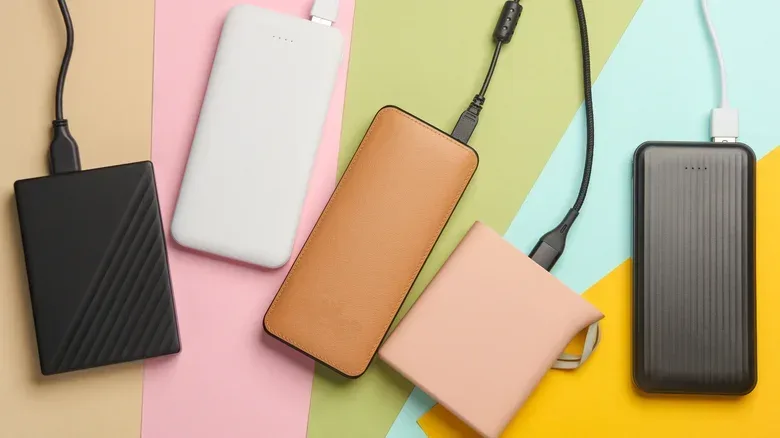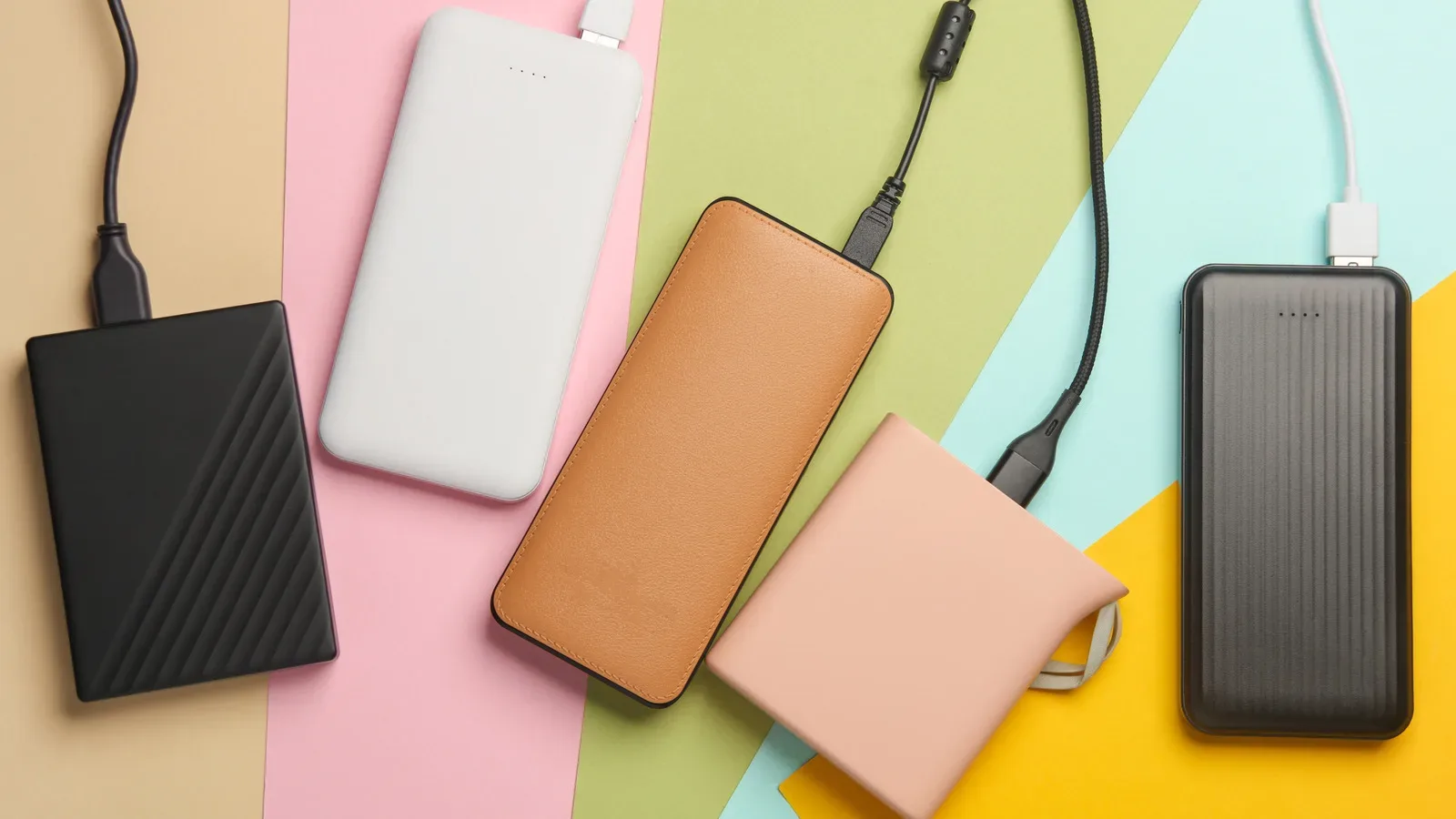
A 20,000 mAh power bank is the backpack equivalent of packing an extra life bar: not especially sleek, not terribly pocket-friendly, but extremely welcome when a wall outlet is nowhere to be found. For a phone, it can mean several days with less battery anxiety. For a handheld gaming PC such as Steam Deck, it is more like a meaningful extension of one play session rather than an endless supply of power. For a laptop, it may be close to a single-charge proposition.
The key is not to treat “20,000 mAh” as a promise of 20,000 mAh arriving intact at every device. That figure describes battery capacity under particular conditions, while a power bank has to convert and deliver that stored energy through electronics, cables and charging circuitry. Heat and resistance take a cut along the way. The capacity that matters in day-to-day use is the energy that reaches the device.
The short answer: expect less than the label suggests
A 20,000 mAh lithium-ion power bank with a typical internal voltage of 3.7V holds approximately 74 watt-hours (Wh) of energy. The calculation is straightforward:
20,000 mAh × 3.7V ÷ 1,000 = 74 Wh
That is the more useful starting point for comparing a bank with phones, tablets, gaming handhelds and laptops. In real operation, internal resistance, heat, and losses during charging and discharging reduce the usable result. A practical usable-capacity estimate is around 60% to 70% of the advertised capacity, rather than the full headline mAh number.
In other words, a 20,000 mAh bank is still a substantial travel accessory, but it is not a magical 20,000 mAh refill for a device with a different battery voltage. That distinction is especially important with handheld PCs and laptops, whose batteries are commonly discussed in watt-hours.
mAh versus Wh: why the two numbers are not interchangeable
mAh, or milliamp-hours, is a measure of electrical charge. In simplified terms, a 20,000 mAh battery could theoretically supply 20,000 milliamps for one hour. It is familiar, easy to put on product packaging and useful when comparing batteries operating at the same voltage.
But devices do not all operate at the same voltage. That is where watt-hours become more meaningful. A watt-hour measures energy, factoring in both charge and voltage. It gives a common language for a phone battery, a higher-voltage handheld battery and a laptop battery.
A power bank’s internal lithium-ion cells are typically around 3.7V. Phones may use a different battery voltage, while devices including Steam Deck operate at higher voltage. The power bank must step voltage up or down as appropriate before power reaches the device. That voltage conversion creates additional heat loss, which is why an apples-to-apples Wh comparison is more honest than simply dividing 20,000 by a device’s mAh rating.
This does not make mAh useless. It remains a quick shorthand within the power-bank aisle. But if the question is “Will this run my Steam Deck?” or “Can it give my laptop a full recharge?”, Wh is the stat to inspect first.
What a 20,000 mAh bank can do for a phone
For smartphone-only travel, 20,000 mAh is far from overkill when the goal is to spend a day or several days away from dependable power. It makes particular sense for camping, site visits, long travel days and situations where the phone has to work harder than usual as a navigation tool or wireless hotspot.
Using the roughly 74 Wh energy figure, the expected outcomes for the examples below are:
- Apple iPhone 17: Its 3,692 mAh battery at 3.88V stores about 14.3 Wh. A 20,000 mAh power bank can provide roughly three to four full charges.
- Apple iPhone 17 Pro Max: Its 4,823 mAh battery at 3.88V stores about 18.7 Wh. Expect around two to three full charges.
Those ranges are more valuable than a single overly precise claim because charging conditions are not static. A phone may be in use while connected, and the bank itself loses energy during the transfer. Navigation, hotspot use and other intensive tasks are exactly the scenarios in which the larger bank is attractive, but they are also scenarios in which the phone is consuming power continuously.
For a normal commute in which a phone only needs a top-up, the trade-off looks different. A 5,000 mAh bank is lighter and occupies less space; some compact models can attach to a phone magnetically. Choosing the smaller option can be sensible if portability is the priority and multiple complete refills are not needed.
If the problem is unexpectedly rapid phone drain rather than a lack of reserve capacity, it is also worth checking the device before buying a bigger brick. For Galaxy owners, our guide to battery-drain settings worth checking before blaming the battery covers that other half of the endurance equation.
Steam Deck: one serious recharge, not a portable power plant
The Steam Deck illustrates why watt-hours are the right measurement for gaming hardware. Its battery is listed at 5,313 mAh, but it operates at 7.7V and stores approximately 40.9 Wh. The mAh number alone makes it look only modestly larger than some phones; the Wh value reveals the much more useful comparison.
Against the power bank’s roughly 74 Wh internal energy figure, the Steam Deck can receive about one to one and a half charges. That is a meaningful amount of extra flexibility for travel, a long wait or a place with no outlet, but it should set expectations correctly. A 20,000 mAh bank is a backup battery for Steam Deck, not a substitute for continuous mains power.
It also reinforces an important purchasing lesson: capacity and charging speed are separate specifications. A large-capacity bank may store enough energy for a handheld, but users should also look at whether it supports the fast-charging capability their device expects. High capacity without suitable charging support can turn an emergency recharge into a slow grind while the device is still actively consuming power.
Laptop math changes the conversation
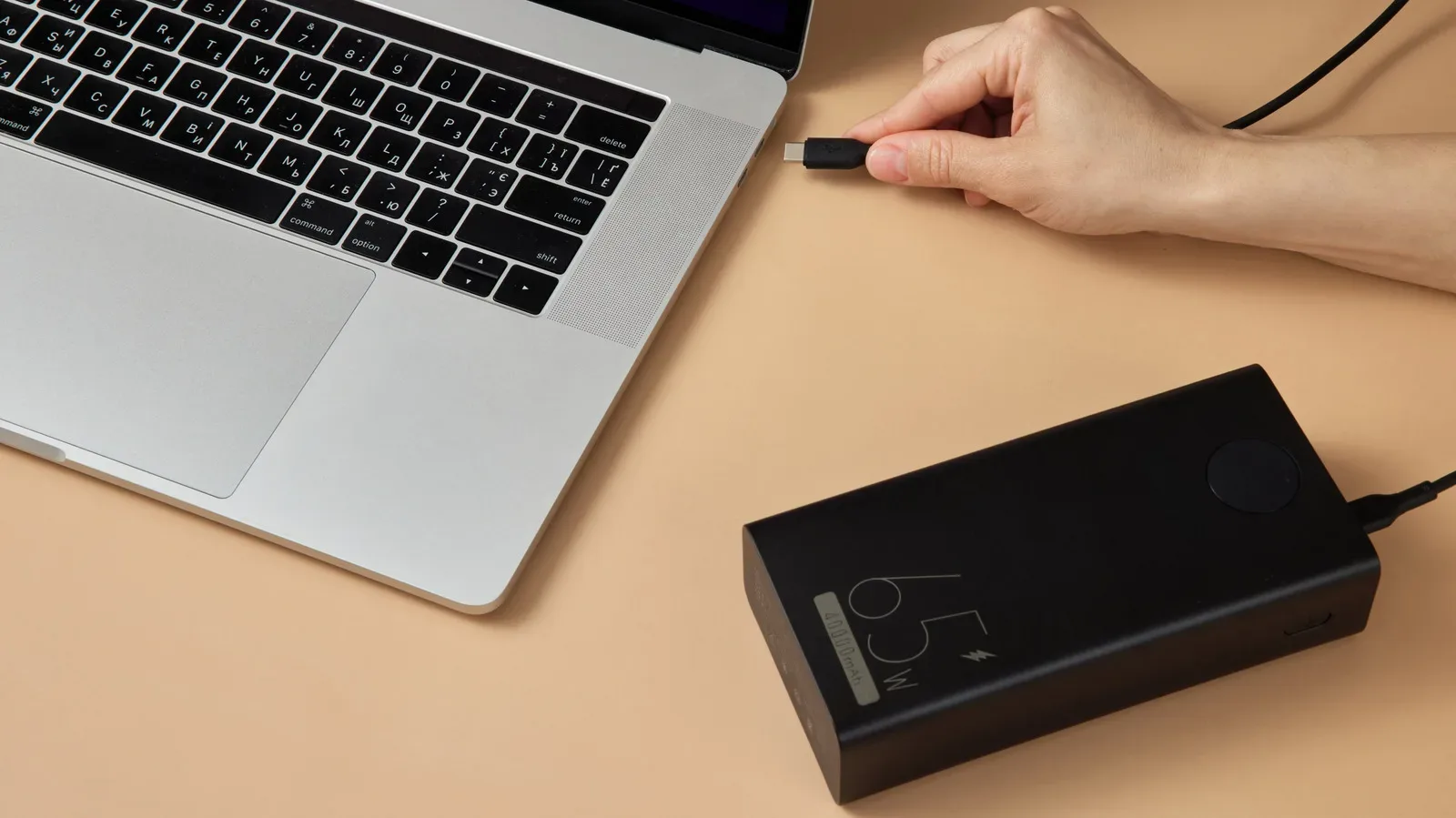
Laptops are generally measured in watt-hours, which removes one layer of conversion confusion. The M5 MacBook Air 13-inch is cited with a 53.8 Wh battery. Since the 20,000 mAh power bank stores roughly 74 Wh before losses, a full recharge of that laptop can drain the bank.
That does not make a 20,000 mAh power bank a poor laptop companion. It simply defines its role. It is best viewed as contingency capacity: enough to rescue a low laptop battery, extend work away from an outlet or cover a portion of a day, rather than something to count on for repeated full laptop charges.
The same perspective applies when carrying multiple devices. A phone and a Steam Deck, or a phone and a laptop, will divide the same energy reserve. Planning around Wh helps avoid the classic travel-bag surprise: a bank that sounded enormous on the package has been largely spent after one demanding device.
When 20,000 mAh is the right size
A 20,000 mAh model is a strong fit when reliability outweighs pocketability. It is especially practical when a phone is essential for navigation, connectivity or hotspot duty, or when a gaming handheld needs a substantial backup refill. It can also be the sensible compromise for someone who needs some laptop emergency coverage without carrying a larger battery pack.
It is less compelling when all that is required is one phone top-up between home and work. In that case, a 5,000 mAh model reduces weight and bulk considerably. Capacity should follow the actual job rather than the urge to buy the biggest number available.
A practical buying checklist
- Start with watt-hours: Compare the bank’s stored energy with the Wh capacity of the devices you plan to charge.
- Allow for efficiency losses: Do not budget around the label as if every unit of energy reaches the device.
- Match capacity to the trip: Several days away from outlets favors 20,000 mAh; light commuter use may not.
- Check charging speed support: Capacity decides how much energy is available, while fast charging support affects how quickly the device can receive it.
- Consider the physical trade-off: High-capacity banks are chunky, so decide whether multi-charge endurance is worth the bag space.
Carry-on travel is within reach
At about 74 Wh, a 20,000 mAh power bank falls below the 100 Wh airline limit referenced for carry-on luggage. That makes this capacity particularly useful for flights, when outlets may be inconvenient or unavailable and a phone can become a boarding pass, map, entertainment screen and communication device all at once.
The final verdict is uncomplicated: a 20,000 mAh bank is not too much battery for people who genuinely need multiple phone charges, a Steam Deck refill, or a laptop safety net. Just read its capacity as approximately 74 Wh of stored energy, expect real-world conversion losses, and choose it for endurance rather than elegance. It is a reserve tank—not an infinite one, but a very reassuring one when the nearest outlet might as well be in another level.