Battery technology has a habit of being discussed as though there can be only one winner. In practice, sodium-ion and lithium-ion batteries are better understood as closely related tools with different trade-offs. Both can store electricity, both move charged particles inside a cell while charging and discharging, and both could have roles in the growing demand for electric vehicles, backup power and grid-scale storage.
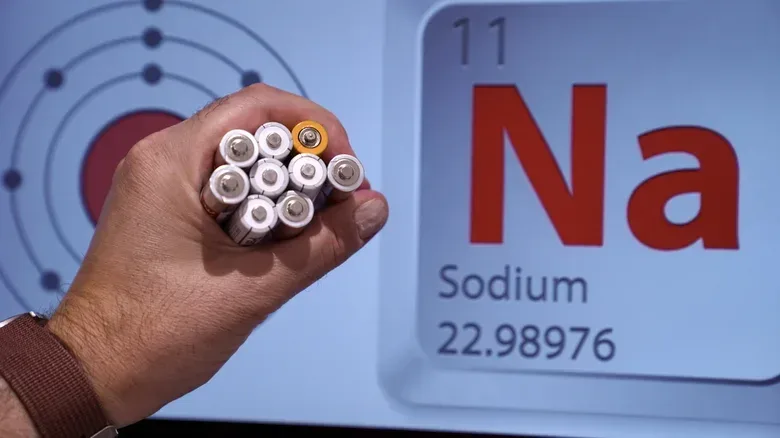
The headline distinction is simple: lithium-ion cells shuttle lithium ions between their negative and positive electrodes, while sodium-ion cells shuttle sodium ions. An ion is an atom or molecule carrying an electrical charge. In a rechargeable battery, ions move internally as energy is stored or released; that motion is central to how the cell operates.
That shared operating principle does not make the two chemistries interchangeable. Sodium ions are larger and heavier than lithium ions, and sodium-ion cells also operate at lower voltages. Those characteristics make it harder for sodium-ion packs to match lithium-ion packs where weight and physical space are at a premium. But batteries are deployed in many places where the lightest possible pack is not the only priority—or even the main one.
The number that matters most for mobile devices
The clearest current advantage for lithium-ion technology is energy density: the amount of energy a battery can store relative to its weight or size. The supplied comparison puts sodium-ion cells at around 175 watt-hours per kilogram. Lithium iron phosphate, generally abbreviated as LFP, is cited at about 205 watt-hours per kilogram. Lithium NMC cells—using nickel, manganese and cobalt oxide—reach about 255 watt-hours per kilogram.
A watt-hour is a unit of stored energy. “Per kilogram” tells us how much of that energy fits into a given weight. Higher energy density can allow a vehicle to travel farther for the same battery mass, or allow designers to use a smaller, lighter pack for a similar amount of stored energy. That is why the 20% to 30% energy-density gap identified for sodium-ion is so consequential in an electric vehicle, where a bulky battery can affect packaging and performance.
The same reasoning helps explain why lithium-ion remains a tough incumbent to displace in compact electronics and weight-sensitive transport. A phone, handheld device or EV does not have unlimited room for extra cells. The trade-off is direct: if a chemistry stores less energy for the same weight, achieving a comparable energy target can require more battery mass or volume.
It would be a mistake, however, to turn “lower energy density” into “no value.” Every battery installation has a use case. A large stationary unit helping support an electrical grid does not need to fit below a vehicle floor, nor does it need to deliver the same energy-to-weight ratio as a road-going pack. In that setting, the material’s behavior, safety requirements, supply position and cost trajectory can carry as much weight as pack compactness.
Sodium’s supply appeal comes with an asterisk
Sodium’s broad availability is its most intuitive appeal. It is far more abundant than lithium, which makes sodium-ion sound like an obvious successor on paper. Yet abundance alone does not manufacture cells, establish suppliers or create a competitive product.
A complete battery depends on more than the element that gives the chemistry its name. The sodium-ion example used in a 2024 JAC Motors EV still involves other components, with nickel and manganese named as sourcing challenges. That is an important corrective to any claim that sodium-ion simply escapes material constraints. It may change the balance of inputs, but it does not remove the need for dependable materials, processing and production capacity.
Lithium-ion also benefits from a substantial lead. Its manufacturing base is established, its supply chains are robust, and competitive LFP pricing creates a high bar for an alternative. The supplied information further notes that global sodium production in 2025 was considerably lower than lithium-ion production. The practical question is therefore not whether sodium exists in large quantities; it is whether the industry can scale the full system around sodium-ion cells at a pace and cost that makes sense against mature lithium-ion production.
This is the less glamorous side of battery competition. A chemistry can look persuasive in a laboratory or in a targeted deployment but still face a long path to broad adoption. Factories do not appear overnight, and neither do the specialized supply networks needed to feed them. For buyers, that means early sodium-ion expansion should not be read as evidence that lithium-ion is about to vanish from mainstream products.
Cold weather is where sodium-ion has a compelling case
Extreme cold changes the comparison. The supplied International Energy Agency figure says sodium-ion batteries retain 90% of their capacity at minus 40 degrees Fahrenheit. Lithium-ion performance drops sharply at similar temperatures. Capacity retention matters because it describes how much of a battery’s usual stored-energy capability remains usable as conditions become harsher.
For transportation, cold-weather performance can influence how reliably a battery-powered vehicle serves drivers in very low temperatures. For fixed installations, it can affect the design requirements for systems placed in punishing climates. The source material does not establish a universal winner in every condition, but it does identify severe cold as a meaningful sodium-ion strength.
Safety is another area where sodium-ion could be attractive. Sodium-ion cells are described as having a lower risk of thermal runaway than their lithium-ion counterparts. Thermal runaway is a dangerous failure condition in which heat can trigger reactions that generate still more heat, potentially escalating quickly. Lower heat generation and fewer required protection systems point to a potentially more stable battery design.
That does not mean sodium-ion batteries are fireproof or risk-free. No responsible reading of a lower risk should become a claim of zero risk. The more useful interpretation is that sodium-ion may offer a safety advantage worth considering where accident resilience, protection complexity or operating conditions are central to the decision.
Cars are only one part of the opportunity
Several companies are pursuing larger-scale commercial production or sodium-ion applications, including CATL, General Motors with Peak Energy, HiNa Battery Technology and Natron Energy, now Draslovka. Automotive uses are a major focus, while some activity is aimed at data-center power.
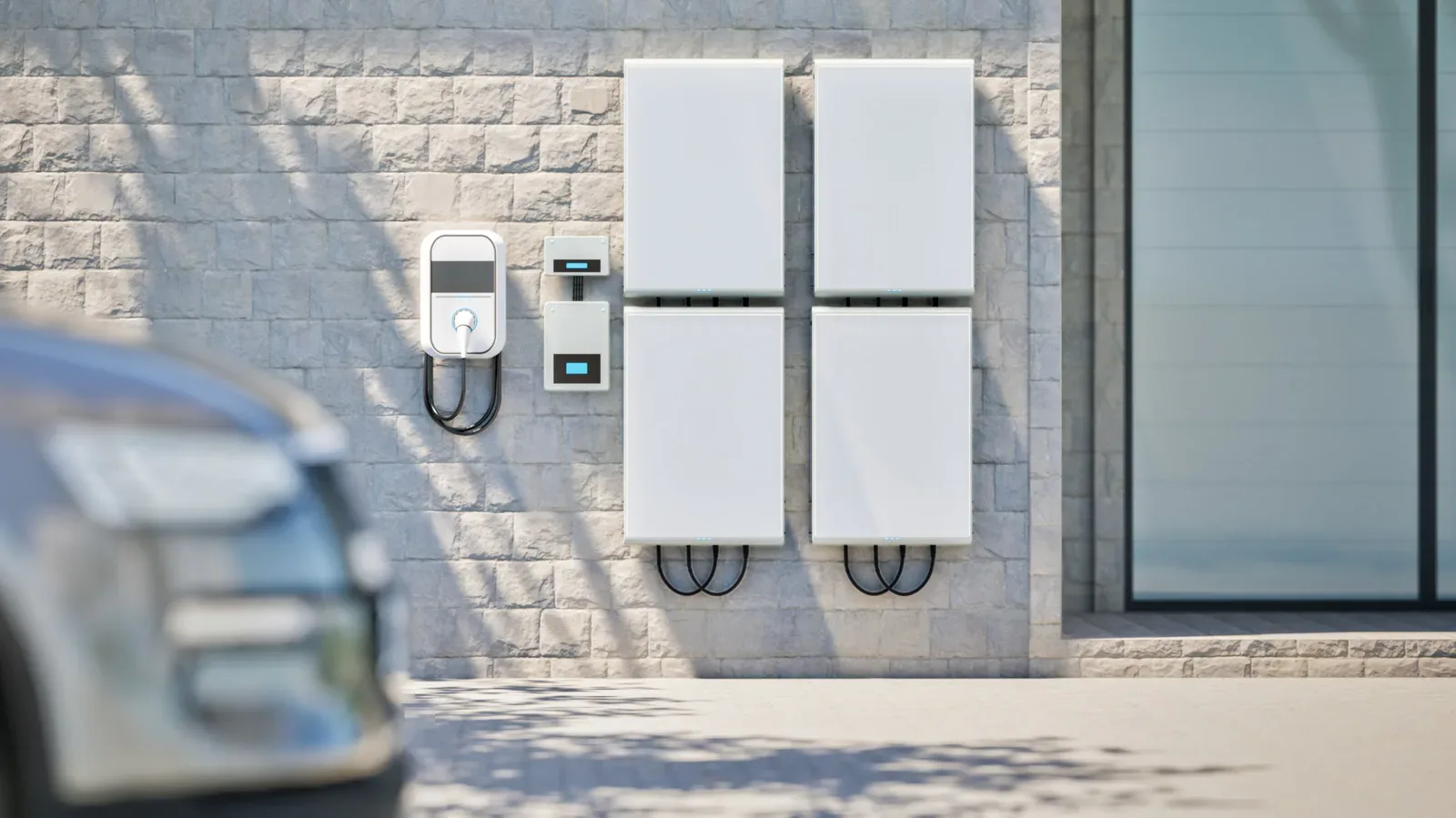
The most promising near-term fit may be stationary energy storage. A stationary battery system supporting the grid can be larger and heavier without suffering the same penalty as an EV. That does not eliminate all economic and engineering constraints, but it changes which trade-offs matter. In a fixed location, lower energy density may be acceptable if the chemistry brings enough value in safety, cold tolerance or other operational qualities.
Data-center power is another notable direction. Such deployments place a premium on dependable stored electricity, but the source material does not provide performance specifications for particular sodium-ion products. The sensible takeaway is limited but significant: these uses widen the potential market beyond cars, which is important because a technology needs multiple viable applications to build scale.
For people following EV infrastructure and driving rules, battery chemistry is only one variable in a much larger transition. Routing, charging access and local restrictions can all shape the real-world experience; for instance, a Google Maps circled Z warning has a specific low-emission-zone meaning. Sodium-ion’s relevance lies upstream of that experience: it could eventually broaden the kinds of battery packs manufacturers can choose for particular climates and vehicle designs.
Replacement narrative or complementary technology?
The most grounded forecast is not sodium-ion conquering lithium-ion across every category. It is a complementary future in which each chemistry is selected for the job it handles best. Lithium-ion’s stronger energy density and mature manufacturing ecosystem remain substantial advantages. Sodium-ion offers a different set of strengths, particularly cold-weather capacity retention, a lower thermal-runaway risk and a starting point for uses where volume and weight are less restrictive.
Hybrid battery packs are one potential expression of that complementary approach. In principle, lithium could cover needs that reward compact, high-density energy storage while sodium is used for tasks better aligned with its characteristics. The supplied evidence presents this as a possibility rather than a confirmed standard, so it should be treated as an area to watch, not as a promised product design.
Ultimately, the sodium-ion story is not about a magic material arriving to erase lithium’s lead. It is about whether a related battery chemistry can mature into a useful additional option. If manufacturing expands and supply challenges are addressed, sodium-ion’s strongest path may be in the places where its compromises matter less and its advantages matter more: bitter cold, stationary storage, data-center power and potentially specialized automotive applications.
That is a more interesting outcome than a simplistic format war. Better battery choice can mean matching chemistry to purpose, rather than forcing every product to rely on one answer. Sodium-ion has real limitations, especially in energy density and production scale. It also has credible reasons to be part of the next phase of battery deployment.