Choosing a PS5 used to sound wonderfully simple: buy the cheaper digital machine if you download games, or pay extra for the version that accepts discs. The current lineup makes that answer far less tidy. Storage capacities differ, the disc drive is removable on some models but not older ones, and a PS5 disc still installs its game data to the console’s internal storage. Then there is the decidedly non-gaming wrinkle: a drive-equipped PS5 can also play Blu-ray and UHD Blu-ray movies.
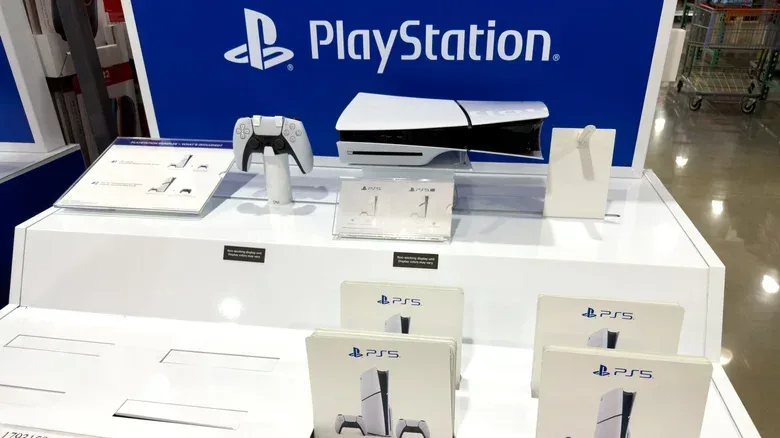
For a buyer comparing the current Slim models at their stated prices, the standard PS5 Slim with its integrated disc drive is the stronger value proposition. It costs $650 with 1TB of storage, while the PS5 Slim Digital Edition costs $600 with 825GB. That $50 gap buys 175GB more built-in capacity and disc functionality. It is not a magic way to avoid installing games, but it provides more room before storage expansion becomes a concern and keeps several kinds of media available.
The PS5 Pro is a different decision. It is the more powerful model, but its listed $900 price creates a much larger commitment before a separate $80 disc drive is considered. For people who already own physical PS4 or PS5 games, or who specifically want a UHD Blu-ray player, the add-on remains meaningful. For a buyer building a fully digital library, it may be sensible to leave it off.
Start with the exact PS5 model, not just the word “Digital”
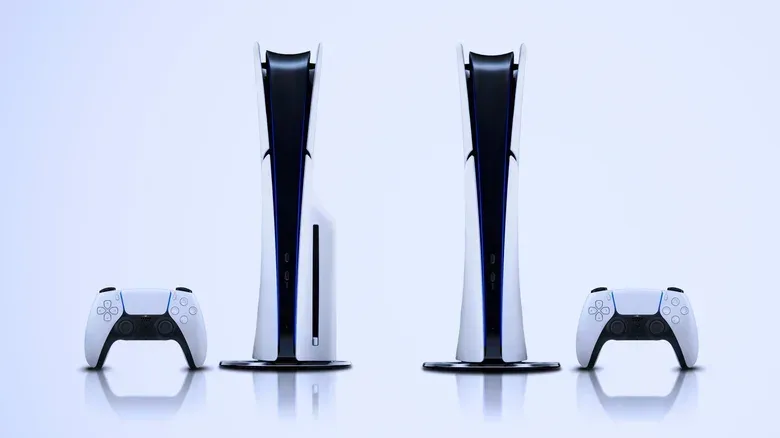
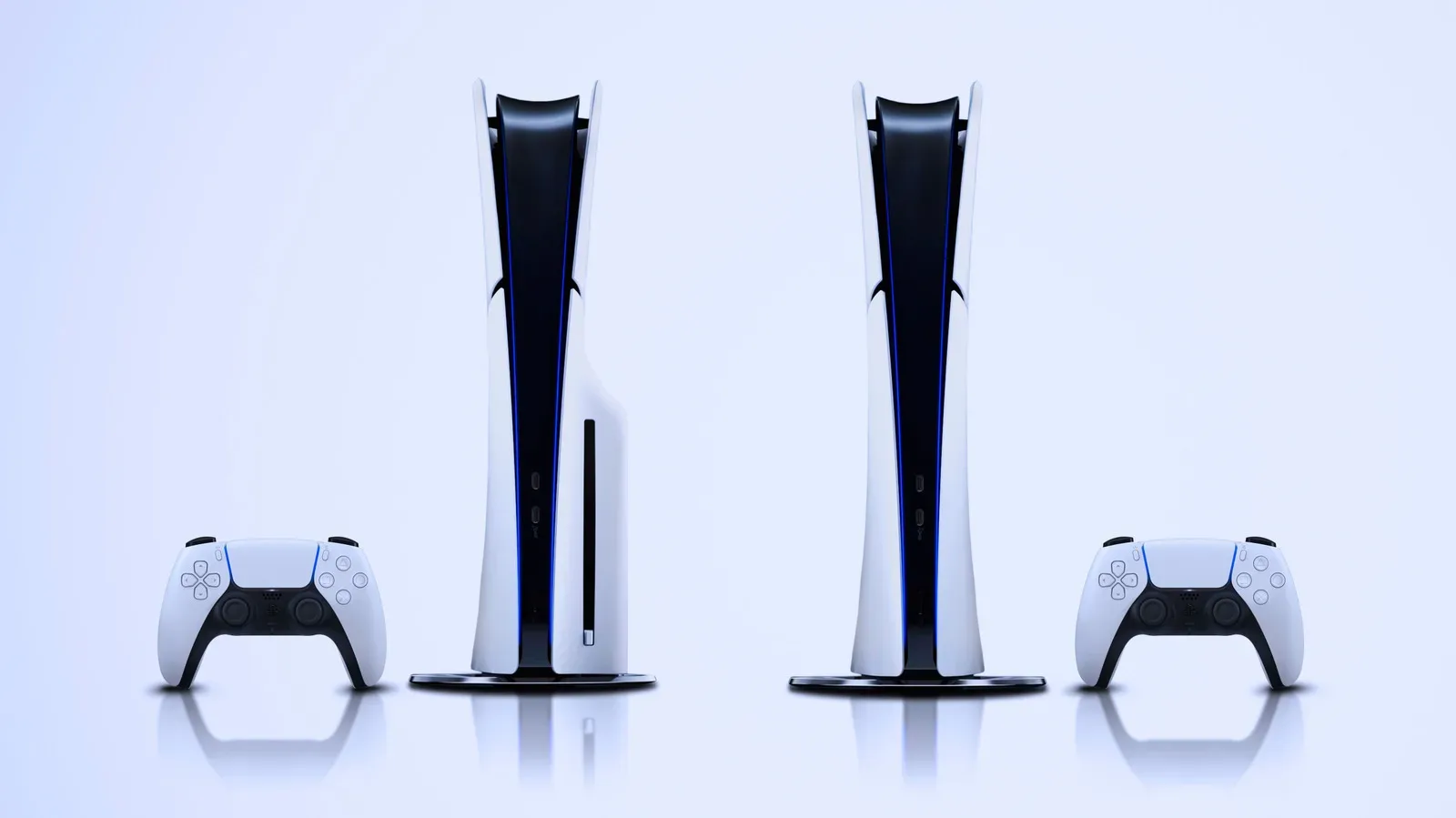
There are two current PS5 families to keep straight: Slim and Pro. The Slim replaced the original launch design and is offered as either a digital-only system or a version with an integrated disc drive. The PS5 Pro is sold as a digital-only console, though it can use the separate drive.
That compatibility detail is important for anyone hunting a used or refurbished console. The original, non-Slim PS5 Digital Edition does not support the later add-on drive. A low price on that older digital machine therefore means accepting a permanently download-only setup. By contrast, a Slim Digital Edition gives a buyer the option to add the drive later, for $80 at the stated price.
This distinction changes what “future flexibility” means. A Slim Digital buyer can delay the accessory purchase while keeping the door open. An original Digital Edition buyer cannot. The integrated-drive Slim is the least complicated route: everything is included from day one, with no separate component to shop for later.
The price comparison that matters most
- PS5 Slim Digital Edition: $600, 825GB storage, no drive included.
- PS5 Slim with disc drive: $650 MSRP, 1TB storage, drive included.
- Separate disc drive: $80 for compatible Slim Digital and PS5 Pro hardware.
- PS5 Pro: $900 sticker price, sold as digital-only; a compatible drive is extra.
On those figures, the disc-equipped Slim is not simply $50 more for a piece of legacy hardware. It also has the larger storage allocation. Buying the Digital Edition and immediately adding the $80 drive costs more than buying the integrated-drive Slim, while still leaving the buyer with 825GB rather than 1TB. That makes the standard Slim unusually straightforward for anyone who knows they will use discs.
Some Slim units with 1TB may still appear at retailers, but availability can vary. The dependable comparison is the stated 825GB Digital Edition against the 1TB disc model rather than assuming every console on a shelf has the same capacity.
Discs do not solve the PS5 storage problem
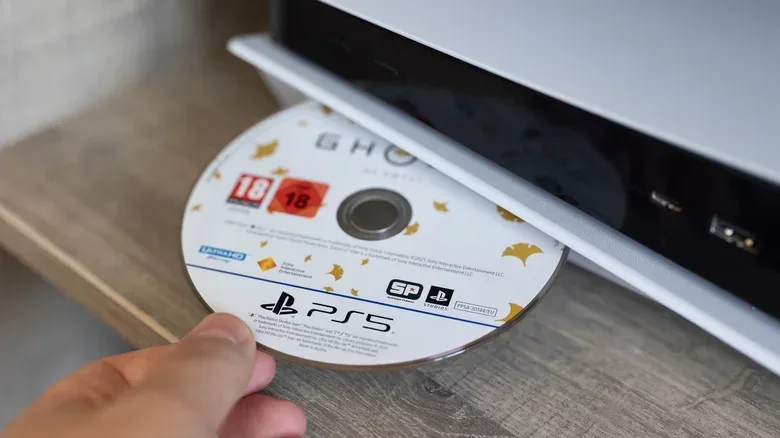
This is the catch that can trip up a buyer returning to consoles after a few generations away. Putting a game disc in a PS5 does not let the system play the entire game straight from the disc as a way to conserve the internal drive. The game still installs to internal storage. In practical terms, a physical library and a digital library both make demands on console capacity.
That does not erase the appeal of physical games. It simply defines it accurately. A disc can be the way to access a game, but it is not additional game-install storage. The 1TB disc Slim’s advantage is therefore two separate advantages: it supports discs and it begins with 175GB more storage than the current Digital Edition.
SSD is shorthand for solid-state drive, the fast storage used by modern systems. More built-in space can postpone the point at which a player needs to think about expanding PS5 storage. With storage hardware described as expensive, delaying that purchase has practical value. It is not a promise that 1TB will be enough forever; it is simply more breathing room than 825GB.
A sensible purchase checklist should separate these questions:
- How many games do you expect to keep installed at once?
- Do you own PS4 or PS5 discs already?
- Would you buy discounted physical games in the future?
- Do you need a movie-disc player in the same entertainment setup?
- Is the lower upfront Digital Edition price more important than larger base storage and optionality?
Answering them separately prevents a common mistake: treating the disc drive as though it were only a storage decision, or treating storage as though physical games require none of it.
Backward compatibility makes an existing disc library more valuable
PS4 backward compatibility gives the PS5 a longer runway than its own native catalog alone. For someone with PS4 discs, a drive-equipped compatible PS5 turns that existing shelf into something immediately useful. It can also play PS5 game discs released through the end of 2027 under the currently stated plan for disc production.
That is a meaningful benefit, but buyers should avoid translating it into an unlimited physical future. Game discs are set to stop being made starting in 2028. Games may still arrive for PS5 after a successor launches, as happened during the PS4-to-PS5 transition, but the physical version will not necessarily be an option after that cutoff. A purchaser should judge a disc drive on the library it can serve and the discs they expect to obtain before then—not on an assumption that every future release will have a boxed equivalent.
Physical games also regularly go on sale. That means the drive can potentially recoup part of its cost over time for players willing to compare formats and wait for discounts. How quickly that happens is personal: it depends on the games a person wants, how many they buy, and whether local or online retailers carry the relevant discs. It should be viewed as an opportunity, not a guaranteed savings calculation.
For a player with no discs, no desire to collect them before 2028, and no interest in movie media, the Digital Edition remains coherent. Digital purchasing offers one storefront-centered library and avoids dealing with physical cases. The crucial point is that its lower initial price does not automatically make it the better-value Slim when the $50 difference also includes extra base storage on the disc model.
The strongest non-gaming reason to get the drive: UHD Blu-ray
The disc drive’s most persuasive role may have nothing to do with buying games. A PS5 with a drive can play Blu-ray discs, including UHD Blu-ray. “UHD” means Ultra High Definition; in this context, it refers to the 4K Blu-ray format used for compatible movie discs.
This matters because streamed 4K video and physical 4K Blu-ray are not the same delivery method. Streaming services can offer 4K video and Dolby Atmos audio, but their video and audio are compressed compared with 4K Blu-ray. Compression reduces the amount of data sent or stored to make playback more practical over internet connections. Disc-based UHD Blu-ray has the advantage for viewers prioritizing the highest-fidelity presentation described here.
For someone who has invested in a home-theater setup but watches everything through streaming apps, the drive can serve as a relatively space-efficient way to add movie-disc playback to an already-planned console purchase. Comparable standalone Blu-ray players with similar performance can cost several hundred dollars, making the PS5’s drive capability more substantial than a minor bonus.
This is also why the recommendation cannot be reduced to “buy a disc console only if you own physical games.” Movie collectors and home-theater enthusiasts may have no interest in swapping game discs yet still have a clear use for a drive. Conversely, someone who streams exclusively and has no physical game library may get little from it.
Where the PS5 Pro fits—and where it does not
The PS5 Pro is the premium option, offering more horsepower at a substantially higher price. It has reportedly been hard to find at its $900 sticker price, with some listings going above normal pricing. Paying a reseller premium is difficult to justify from the available information: a prospective buyer without an immediate need can monitor stock rather than letting scarcity dictate the purchase.
Interest around GTA VI has been cited as one reason for increased attention to the Pro. That does not make the machine a mandatory purchase for the game, and it does not turn a marked-up listing into a better deal. It is simply part of the current demand picture.
The drive choice on a Pro is cleaner than it is on the Slim because the starting expenditure is so much higher. Add the $80 drive if it unlocks an existing disc collection or fulfills a UHD Blu-ray role you genuinely want. Otherwise, retaining the Pro as a digital-first machine is a reasonable way to avoid adding another cost to an already premium console.
There is also a valid third option: wait. A future PlayStation generation is expected eventually, though no firm timetable is established here. The PS5 should still have a substantial life through PS4 compatibility and additional games, but a buyer with no immediate use for a console does not have to make a rushed choice because of speculation about what comes next.
Buying guidance by player type
- Existing PS4 or PS5 disc owner: Choose the 1TB Slim with its integrated drive, or add the drive to a compatible Slim Digital or Pro. Do not accidentally buy an original Digital Edition expecting the add-on to work.
- New buyer who wants the best current Slim value: The $650 1TB disc Slim is compelling. The extra $50 over the 825GB Digital Edition covers both more storage and the drive.
- All-digital player who does not watch discs: The $600 Slim Digital Edition is a valid lower-upfront-cost choice, provided 825GB fits your plans and you understand that adding a drive later costs $80.
- Home-theater-focused buyer: A drive-equipped PS5 deserves serious consideration for Blu-ray and UHD Blu-ray playback, even if physical games are not a priority.
- PS5 Pro shopper: Treat the $80 drive as a targeted accessory, not an automatic requirement. It is most justified by a physical game collection or movie-disc use.
- Used-console shopper: Confirm whether a system is a Slim or original model before using the removable-drive plan in your budget.
The practical winner for most new Slim buyers is the 1TB disc model, not because discs eliminate downloads or guarantee access to every future game, but because the present pricing pairs a modest premium with more storage and broader media support. The Digital Edition is best understood as a deliberate choice for someone comfortable with an all-download future, not as an automatic bargain. And for every model, the drive question is ultimately broader than games: it is about your existing library, your storage tolerance, your buying habits, and whether a UHD Blu-ray player belongs in your living room.