Major story spoilers for The Legend of Zelda: Ocarina of Time, Majora’s Mask, and Twilight Princess follow.
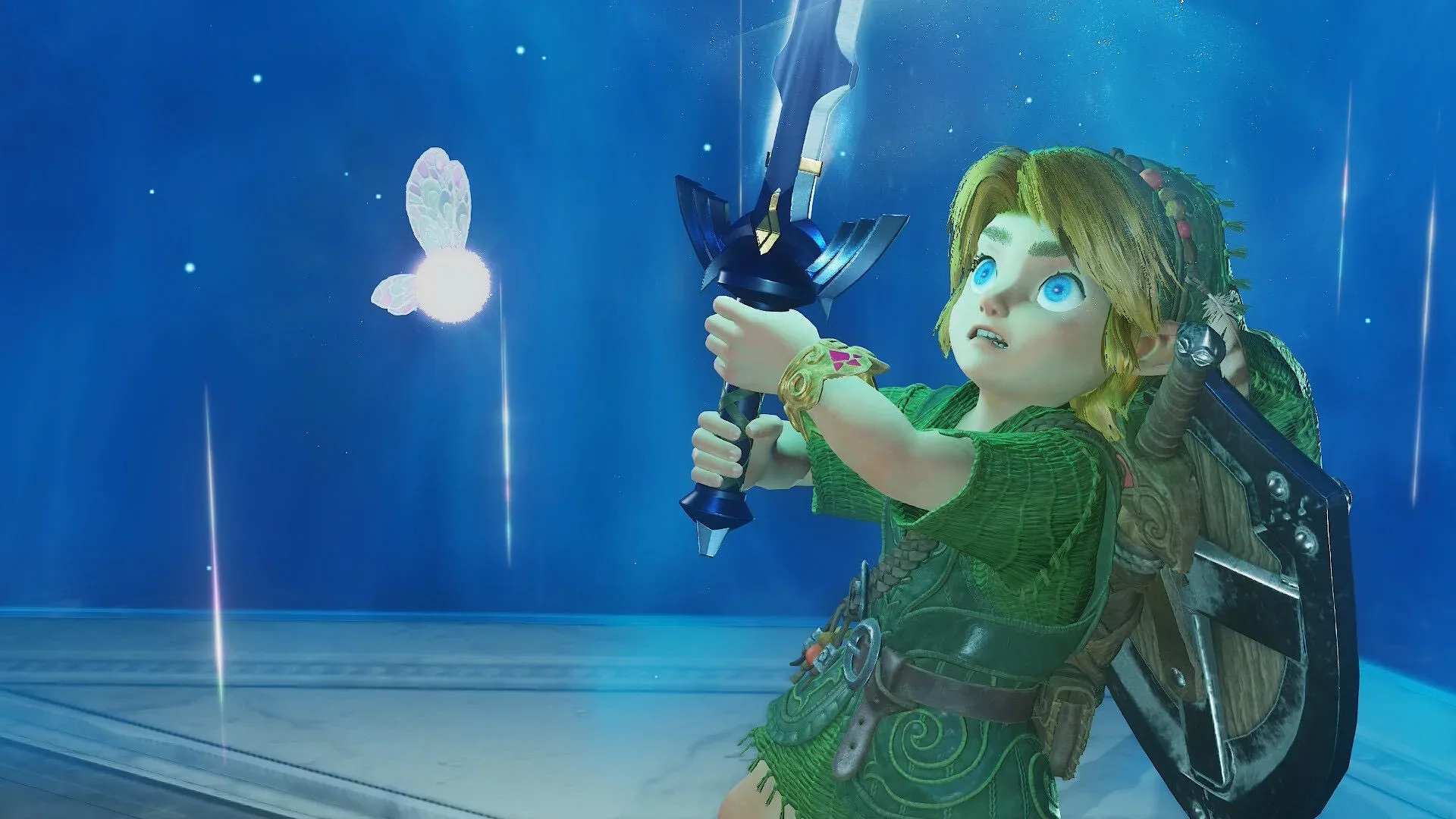
The central image of The Legend of Zelda: Ocarina of Time is usually a triumphant one: Link claims the Master Sword, crosses seven years into the future, and becomes capable of confronting Ganondorf. It is an immediately legible fantasy of growing up. A young hero is suddenly tall enough, strong enough, and equipped for dangers that were previously beyond him.
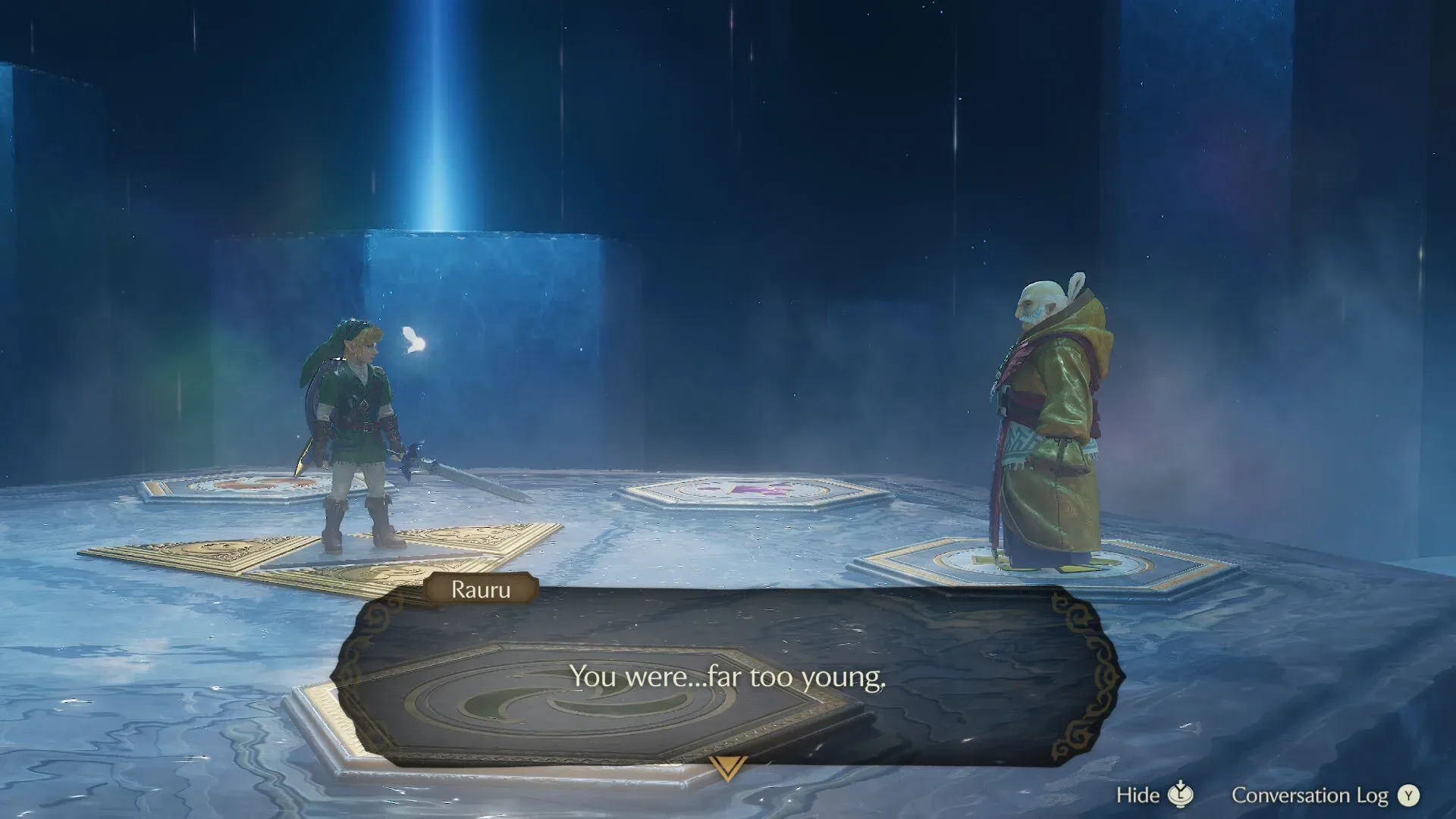
But the remake gives that transformation a harsher emotional edge. Its young Link is especially expressive and visibly small, and the story’s early playfulness does not conceal that he is a child pushed into a crisis far beyond his understanding. When the time jump comes, the loss is not treated merely as a cool power-up or an efficient way to open a second half of the adventure. Rauru, the Sage of Light, explains that Link has lost seven years with evident regret.
That distinction matters. It reframes the familiar structure of the game from a story about a boy finally becoming a hero into one about a child whose life is commandeered by a need he did not create and could not possibly have chosen.
Seven years is not a reward
Time travel is the game’s defining device, but it is also its most consequential wound. In simple mechanical terms, the Master Sword divides Ocarina of Time into two versions of Hyrule. Young Link and adult Link can access different tools, spaces, and challenges. The player gains a larger world and a more powerful protagonist.
Narratively, however, “adult Link” is not a kid who got to live, learn, and mature through seven ordinary years. He has been forcibly moved past them. His body is older because he needs the strength to wield the sword and face the evil threatening Hyrule; his emotional experience cannot neatly be assumed to have caught up. The game’s tragedy begins in that gap between the hero’s outward transformation and the childhood that was taken from him.
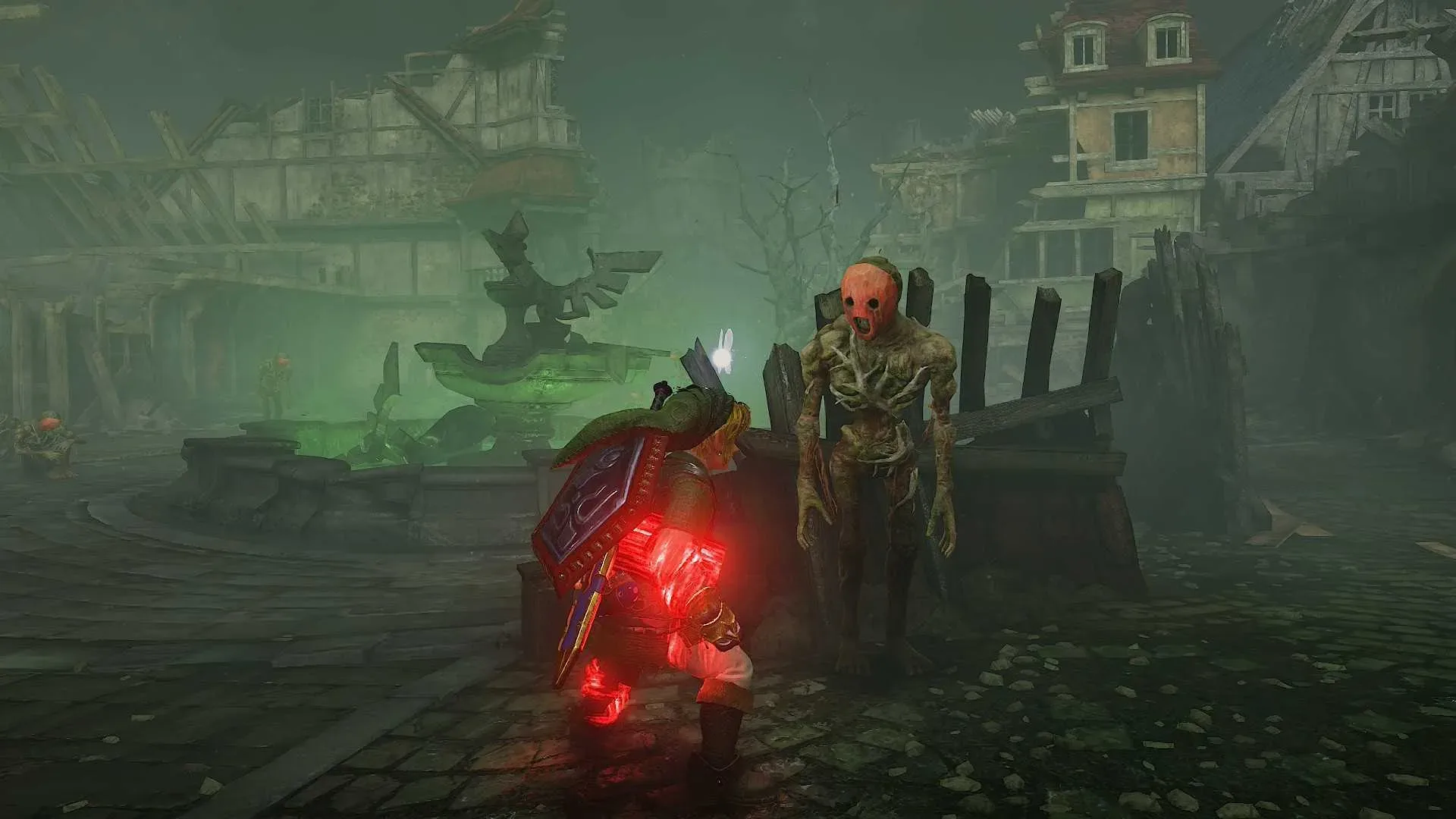
That is why the future Hyrule is so painful. Link does not merely return to a world that has changed. He encounters places that were once safe, lively, or familiar and finds them damaged, corrupted, or unrecognizable. The adventure asks him to process those sights while carrying the perspective of someone who was, moments ago in his own life, still a child.
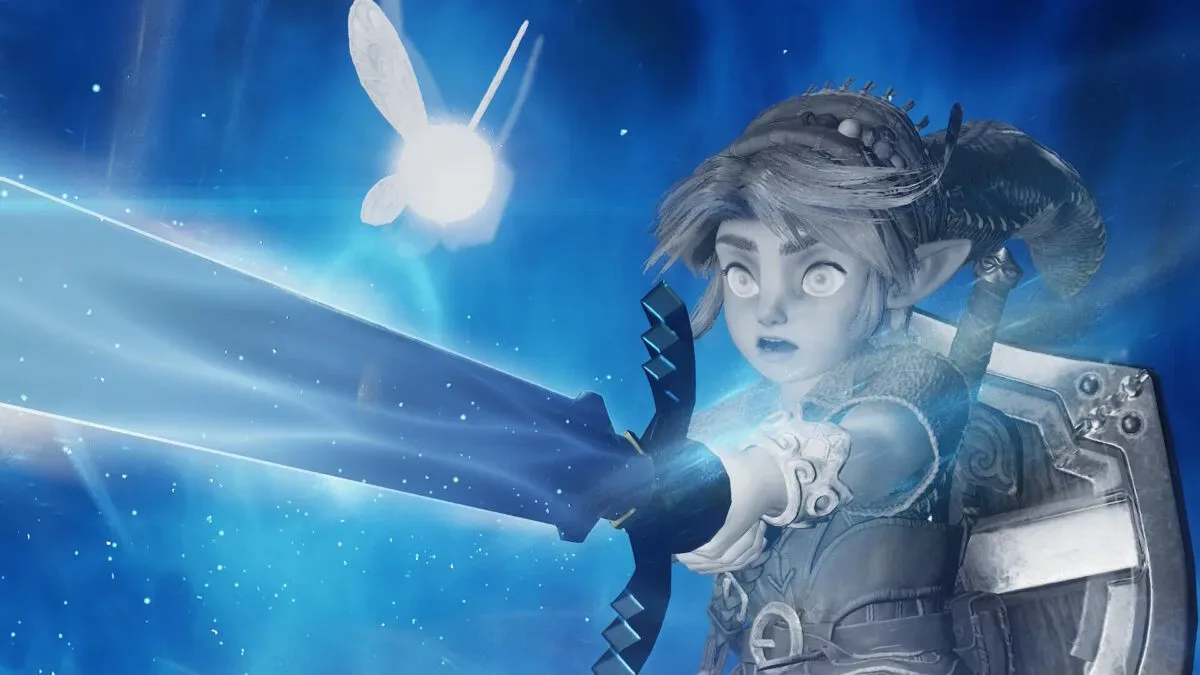
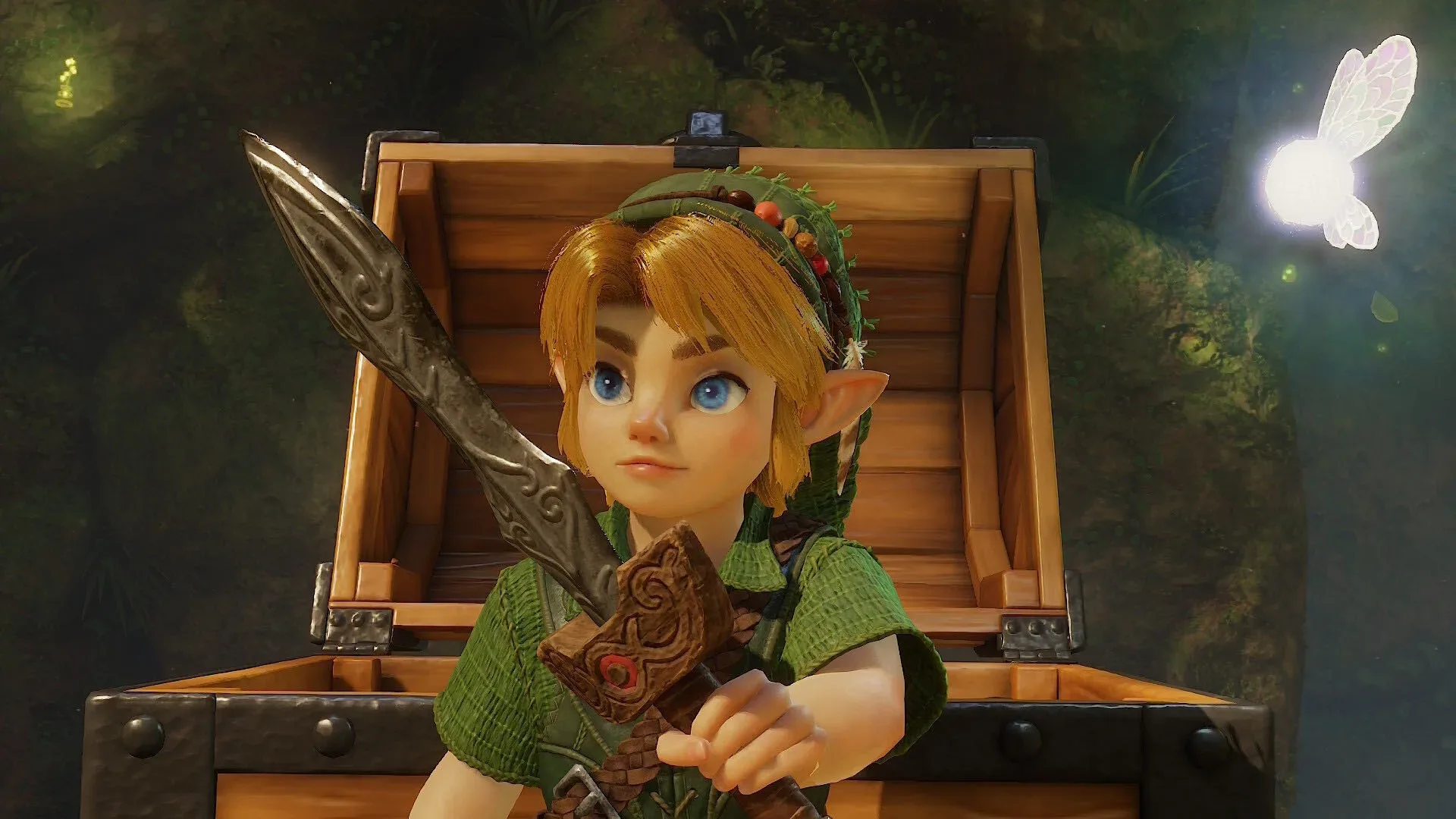
The remake’s presentation makes this contrast more immediate. Young Link’s mannerisms, small scale, and youthful delivery emphasize that the person undertaking the opening journey is not a miniature version of a fully formed legend. He is a kid trying to make sense of grand stories about soldiers, monsters, kingdoms, and destiny. His childish mispronunciation of Ganondorf’s name is a tiny but telling detail: this is someone for whom the kingdom’s looming catastrophe has not yet become fully real.
Related coverage includes Ocarina of Time Remake Makes Link's Lost Childhood Harder to Ignore.
The later transformation therefore does not erase the earlier vulnerability. It makes the player carry it forward.
Destiny does not equal consent
Ocarina of Time is filled with characters bound to a role in Hyrule’s larger design. The Sages are particularly important here. Their awakenings remove them from the lives they knew, including family and friends, yet several find meaning in serving a purpose beyond themselves. Their sacrifices are still losses, but the story allows them a measure of understanding and acceptance.
Link’s position is different. He is destined for the role of hero, but destiny is not consent. He reaches for the Master Sword without the experience necessary to understand the price attached to the act. The need for an adult hero may explain why the world requires the seven-year leap; it does not make the loss less severe for the child subjected to it.
This difference is what gives the ending its uneasy tenderness. Zelda sends Link back to childhood so that he can have the life he should have had. On its face, it is the kindest resolution available: Hyrule is saved, and the hero is returned to the age he was when his adventure began.
Yet restoring the calendar cannot restore innocence. Link remembers what he saw. He knows the possible future of Hyrule, the harm Ganondorf can cause, and the fates faced by people he encountered as an adult. The game’s solution corrects the stolen years in a literal sense, but it cannot make him unsee the ruined world he crossed to save.
Ocarina of Time’s happy ending is not that the cost vanishes. It is that Hyrule survives long enough for Link to be given a chance at the childhood he was denied.
Why the remake’s small details carry such weight
Remakes often invite attention to the conspicuous parts: sharper models, revised controls, expanded environments, or reworked systems. But a story’s emotional meaning can change through much smaller choices. A more expressive face, a youthful posture, or an altered emphasis in dialogue can influence how players read scenes they have known for years.
Here, making child Link look and behave more recognizably like a child strengthens the game’s existing melancholy. It does not need to rewrite the basic events. The same journey becomes more difficult to regard as straightforward wish fulfillment when the player is repeatedly reminded who is paying for that fantasy of instant adulthood.
That is also a useful reminder that visual fidelity is not the only question worth asking of a remake. A newer version can clarify an emotional idea that older technology conveyed more subtly. The result need not replace prior readings of the Nintendo 64 original. It can instead make one reading harder to dismiss: Link’s maturation is a necessity of the plot, not an uncomplicated gift.
That tonal reading sits alongside other observations about the remake’s character work, including the survival of some of Hyrule’s stranger personalities in its new presentation. Ocarina of Time’s unusual supporting cast remains part of the remake conversation, even as its treatment of Link gives the main narrative a more somber focus.
The burden continues beyond Hyrule
The Hero of Time’s story does not become lighter when Ocarina of Time ends. Majora’s Mask follows a version of Link who has been returned to childhood, but whose situation remains shaped by knowledge and experiences few around him can share. In Termina, time travel shifts from a single great rupture to a repeated obligation. The hero must revisit a narrow span of time, act again, and watch outcomes disappear as the cycle resets.
That structure sharpens a recurring Zelda idea: saving people does not always mean receiving recognition from them. A successful reset can mean that those rescued never understand what was prevented or who prevented it. The player remembers the work. Link remembers it. The world, by design, often does not.
This is not simply a gloomy interpretation imposed on a series known for colorful worlds and adventurous discovery. It follows from the logic of its time-travel stories. Correcting history can preserve lives and avert disaster, but it can also erase the public evidence that the hero ever endured those disasters. The more completely the timeline is saved, the more invisible the saving may become.
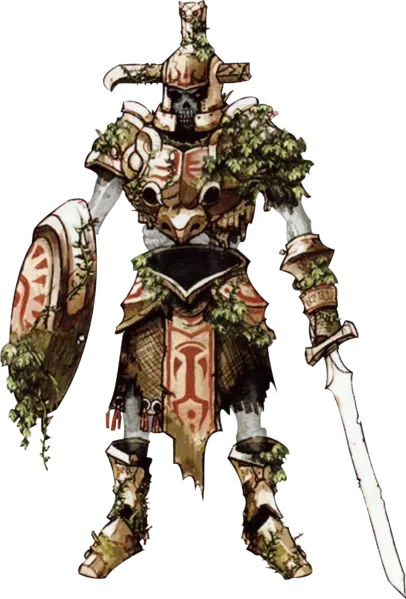
That tension lends added force to the Hero’s Shade in Twilight Princess. The spectral figure is presented as a lingering, regretful presence tied to the Hero of Time. Rather than receiving a monument or ordinary peace, he passes on combat techniques to a later Link. It is a form of inheritance built from knowledge rather than celebration.
There is something fittingly bittersweet about that role. If the Hero of Time cannot be remembered for his victories, then he can still help ensure that another hero succeeds. His legacy persists not as a public reward but as a skill passed forward, an intimate chain of protection across generations.
What should remain open to interpretation
The Zelda series has long encouraged players to read between the lines. Its stories frequently present legends, fragments, aftermaths, and recurring figures rather than exhaustive explanations. That has made room for fan discussion about chronology, identity, sacrifice, and the connections among different games.
Official lore materials can make some of those connections more explicit, including the line between the Hero of Time and the Hero’s Shade. Clear answers can be satisfying, especially when they illuminate a character’s emotional arc. Yet there is a trade-off when every implication becomes a fixed entry in a timeline. A mystery that once invited interpretation can become a fact to be checked off.
The strongest aspect of this reading of Ocarina of Time is not that it requires every emotional detail to be cataloged. It is that the game itself gives the player enough to feel the loss. Link is made older because the world needs him to be. He succeeds because no one else can do what he must do. Then, at the end, the people who care about him attempt to give him back what that success consumed.
The remake’s value lies in treating that loss seriously. It lets the adventure remain heroic without pretending heroism is painless. Link saves Hyrule, but the seven years do not become his just because his body changes. He is still the boy who stepped into a destiny he could not understand—and that is precisely why the Hero of Time remains one of the series’ most tragic figures.