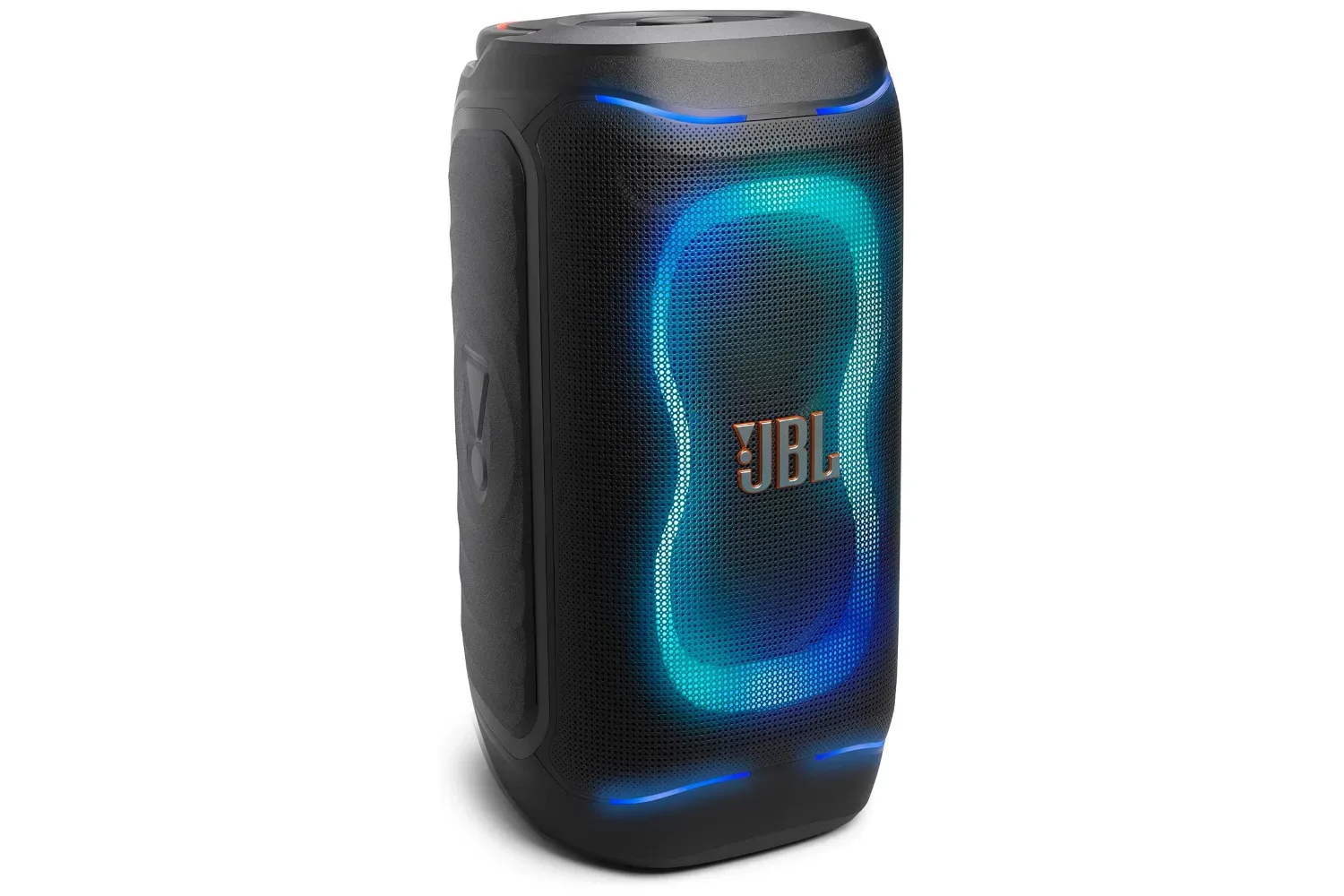
The JBL PartyBox 130 portable speaker is currently listed at $320, a reduction of $130 from its stated $450 regular price. That works out to roughly 29% off, putting a large, party-oriented Bluetooth speaker within reach of buyers who specifically need more scale than a small portable model is designed to provide.
This is not the kind of speaker one buys simply to make a desk setup a little louder. The PartyBox 130 is positioned around filling larger spaces, supplying substantial bass, and adding a lighting element to social settings. Its reported feature set also includes a carry handle, splash resistance, a sound-boosting mode intended to raise output without distortion, rapid charging, and up to 15 hours of use on a full charge.
For game nights, gatherings, outdoor hangouts, or any room where one compact speaker tends to disappear beneath conversation, the discount changes the value discussion. It does not make the PartyBox 130 small, discreet, or necessary for every listener. It makes it a more interesting option for the buyer whose priority is volume, physical presence, and a self-contained party setup rather than minimal footprint.
A large portable speaker solves a different problem
“Portable” can mean anything from a pocket-size speaker to a sizeable unit that can be moved between rooms. The PartyBox 130 belongs in the latter camp. Its handle is important in that context: portability is about being able to relocate the speaker without permanently installing it, not about slipping it into a bag and forgetting it is there.
That distinction matters before a purchase. Smaller portable speakers can be very useful for personal listening, a bedroom, or close-range audio at a desk. A speaker built to play louder and produce heavier bass is aimed at a wider listening area and a more energetic atmosphere. For people arranging a multiplayer session in a living room, music during a holiday gathering, or an outdoor get-together, that extra headroom can be more relevant than ultra-compact dimensions.
Headroom is a useful audio term here. In ordinary use, it means having capacity beyond the volume level currently required. A speaker with more output in reserve may be better able to remain audible in a busy room, where people are talking and moving around, without needing to operate constantly at its limit. The supplied product details describe a sound boost designed to take the volume further while avoiding distortion, though the practical result will still depend on the room, placement, and source material.
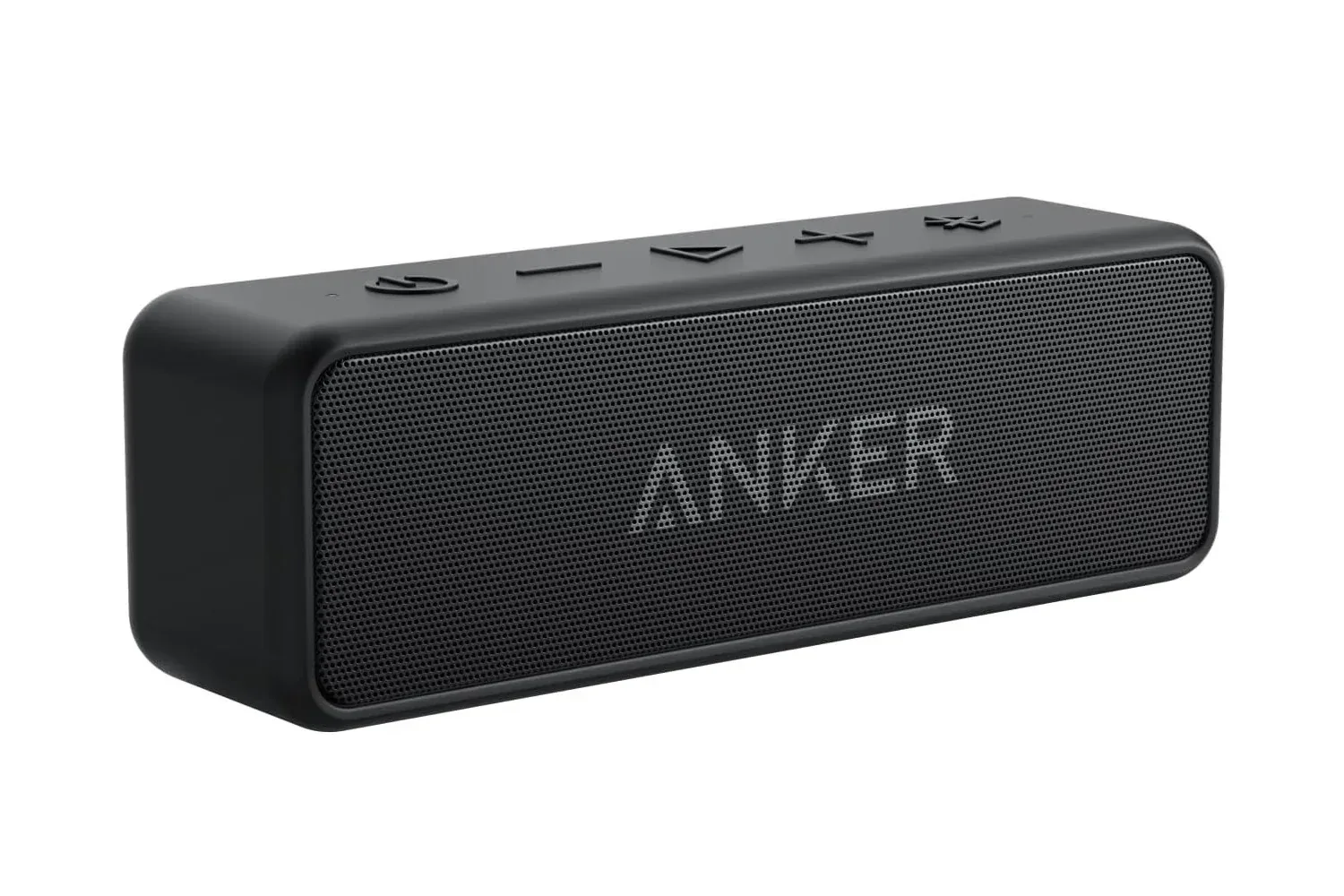
There is a basic trade-off. More size and output can make a speaker more convincing in a shared space, but it also means a buyer should think about where it will live when the party is over. Anyone looking for an inexpensive, easy-to-pack speaker may be better served by a smaller product. For comparison, the Anker Soundcore 2’s $28 listing illustrates the much lower-cost end of portable audio, although it is clearly aimed at a different scale of use.
What the PartyBox 130’s features are meant to do
The core pitch is straightforward: loud sound, clarity across the audio range, and hard-hitting bass. The audio spectrum refers to the range from low frequencies, which listeners often experience as bass and kick-drum weight, through midrange frequencies where much of the vocal and instrument detail sits, and up into higher frequencies that contribute definition and sparkle.
A claim of clarity across that range matters because sheer volume alone is not especially useful if details blur together. At a gathering, listeners may want music that has impact without making vocals, effects, and melodic lines vanish into a wall of low-end noise. The available product information presents the PartyBox 130 as seeking both force and clarity, rather than treating loudness as the only goal.
Its lighting system is another part of that broader use case. The speaker includes an adaptive lightshow, intended to add visual movement and atmosphere. That is not an audio-quality feature, and shoppers who want a speaker solely for sound should treat it as a bonus rather than a reason to pay more. For hosts, however, an integrated lighting effect can reduce the number of separate devices needed to create a more deliberate party feel.
There is also a practicality angle. A splash-proof design is not the same as a promise of worry-free submersion, but it is relevant for the likely environments of a product like this: patios, poolside-adjacent areas, kitchens, and crowded rooms where a spilled drink is possible. The right takeaway is caution, not invulnerability. Splash resistance may offer a margin of reassurance around incidental water exposure; it should not be treated as permission to expose the speaker to more water than necessary.
Battery expectations should be set by the use case
JBL says the PartyBox 130 can run for up to 15 hours on a full charge and can recharge quickly. “Up to” is the key qualifier. It identifies a maximum stated runtime, not a guaranteed number for every session. Volume level, use of lighting, and other operating conditions can affect how long a battery lasts, so a long gathering should still begin with a full charge where possible.
That said, 15 hours is a meaningful figure for the kind of speaker being described. It suggests a device intended to handle an extended day or evening away from a wall outlet, rather than one that is primarily meant for a short listening break. Fast charging adds flexibility for owners who realize too late that the speaker has not been topped up, though the available details do not specify a charging time or how much playback a quick charge provides.
For gaming use, battery-powered scale can be attractive when a group is gathering in a room without a convenient audio setup. Music before and after matches, a tournament atmosphere, or watching clips together are all plausible uses. But it is worth separating those from precision audio needs. A large party speaker may make a space feel lively, while headphones or a closer stereo arrangement can be better suited to competitive play where positioning and individual sound cues matter. The PartyBox 130’s strengths are communal impact and flexibility, not necessarily a replacement for every gaming-audio tool.
The $320 price is the story, but it is still a limited-time listing
At $450, the PartyBox 130 requires a buyer to be very sure that its high-output approach, bass emphasis, lightshow, and large-format portability match their needs. At $320, the proposition is more favorable for someone who was already considering a dedicated party speaker. The $130 difference is substantial enough to change whether a feature-heavy model feels attainable compared with more basic alternatives.
The listing is described as limited-time, so prospective buyers should not assume that $320 is a permanent price. Equally, a discount percentage should not replace a needs check. A good decision starts with a few direct questions:
- Is the speaker intended for a larger shared space rather than close personal listening?
- Will its carry handle and movable design be useful often enough to justify its size?
- Are bass output and an integrated lightshow desirable, or would they be unnecessary extras?
- Is splash resistance relevant to where the speaker will be used?
- Will a stated maximum of up to 15 hours meet the expected session length?
If most of those answers are yes, the JBL PartyBox 130’s current $320 price makes a strong case for a buyer who wants a speaker designed to bring volume and atmosphere to a room. It is a purpose-built choice: larger than everyday portable options, more visually expressive than a plain speaker, and aimed squarely at occasions where audio needs to carry beyond a single listener.
Shop the products
Check current price, model and availability at the retailer.