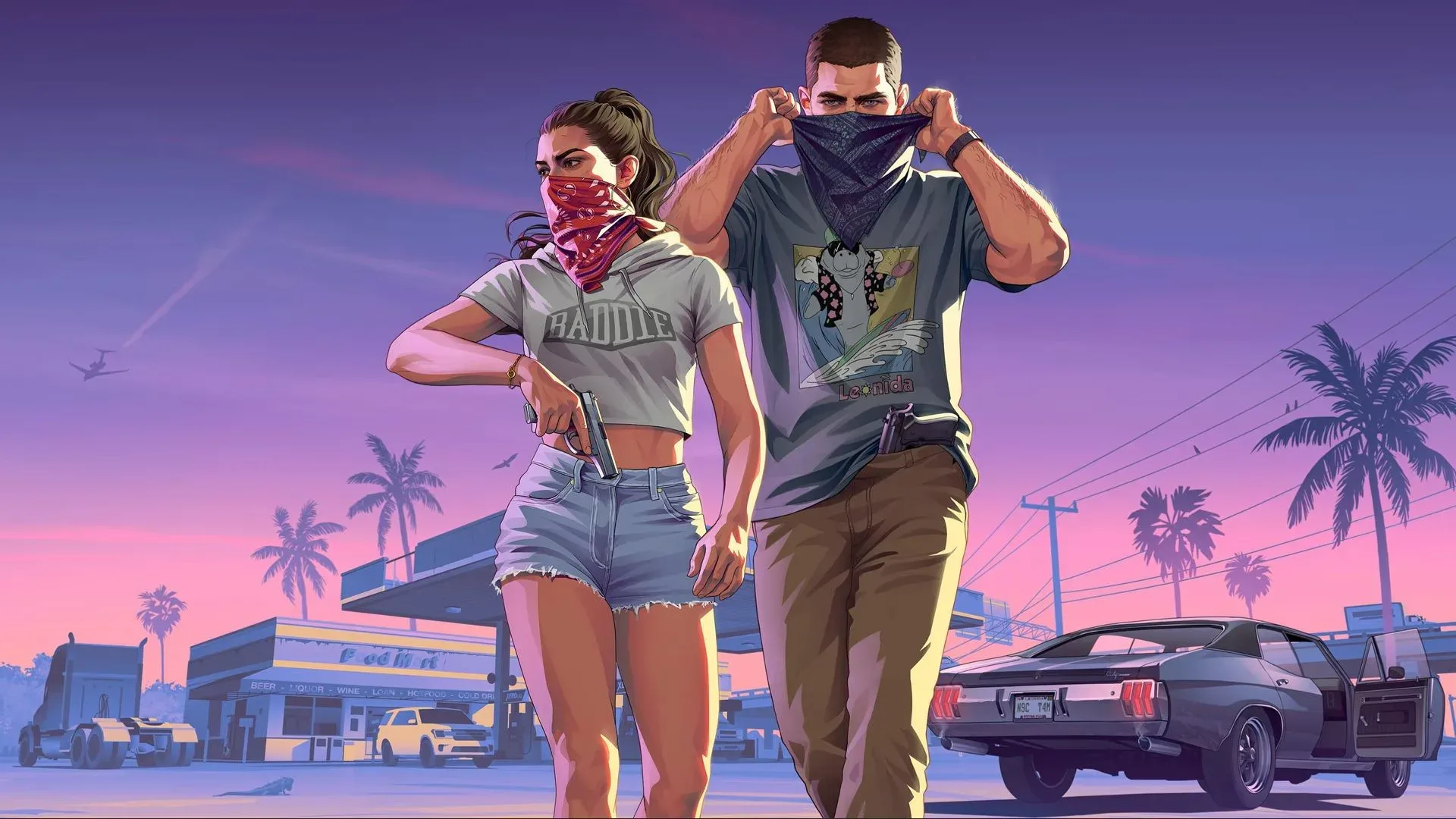

Grand Theft Auto VI has built an early standout sequence around a choice that sounds simple on paper: put Carly Rae Jepsen’s “Run Away With Me” behind a fast, glamorous escape fantasy and let the song do the emotional heavy lifting.
The result is more than background music. In the game’s first chapter, the 2015 Emotion opener accompanies Lucia during a rare burst of apparent freedom after she has spent months locked up. She and Jason celebrate aboard a yacht, join friends on jet skis, and later move into a race through Vice City. The song’s appearance also changes form as the sequence progresses, with an electronic dance remix accompanying the later street-racing section.
That progression matters. A radio track can make driving around an open world more pleasant, but a deliberately placed song can turn a mission into a memory: it tells players what the moment should feel like without stopping to explain it. Here, the central idea is not merely speed. It is possibility.
A pop anthem fitted to Lucia’s fantasy of escape
“Run Away With Me” is an unusually clean match for the scene described. Its title and forward-driving pop energy underline Lucia’s desire for a better life in Vice City, while the yacht celebration and water race supply the kind of temporary luxury that makes that desire seem reachable. Jason is not only present; he is holding on during the jet-ski race and encouraging her. The song therefore supports both sides of the sequence: Lucia’s personal rush toward freedom and the couple’s shared dream.
That is the valuable part of a needle drop, the film-and-games term for placing a pre-existing recorded song at a particular dramatic point. The best needle drops do not simply announce that a scene is cool. They create a conversation between lyrics, mood, character action and pacing. The song can make a player feel the promise of a character’s plan even when the surrounding story has not yet confirmed whether that promise will survive.
There is an important note of uncertainty in this case. The early sequence invites players to buy into Lucia’s vision, but it does not guarantee the future she imagines. The broader story may take darker or more tragic turns. That tension is precisely why the musical choice has room to land: the exuberance is sincere in the moment, yet it can also be read as a glimpse of something fragile.
A familiar song becomes newly specific when the game attaches it to one character’s moment of freedom, aspiration and velocity.
From loose radio listening to authored music cues
Open-world driving games often put music in the player’s hands through in-car radio. That approach creates its own appeal: listeners can browse stations, settle into a mood, or stumble onto a track while travelling between objectives. But it is also inherently inconsistent. A player might not find a preferred station immediately, might change the channel, or might reach a destination before a song gets going.
Related coverage includes Grand Theft Auto 6 Turns 'Run Away With Me' Into a Vice City Escape Fantasy.
Scripted music cues work differently. They allow the developer to control timing, escalation and contrast. In GTA VI’s sequence, Jepsen’s original recording starts amid the yacht-and-jet-ski portion, then the action shifts after the group heads into Vice City. The later race is paired with a dance remix. Rather than treating the track as a single uninterrupted backdrop, the sequence adapts its musical language to the next phase of the action.
That is a useful distinction for players who expect the game’s soundtrack to be defined solely by radio stations. The radio supports the rhythm of free roaming; authored cues can define major story beats. Neither replaces the other. One makes space for personal selection and chance, while the other establishes a tightly composed dramatic beat.
The street-racing portion also arrives after only limited early indication that such racing is available. A brief tutorial message has suggested that Lucia’s current car is not good enough for it. The transition into a tunnel race therefore functions as a reveal as well as a musical escalation. The remix signals that the game has shifted gears, figuratively and literally, from aspiration to competitive action.
Why the remix is more than a repeat
Reusing the same song in a remixed form can sound like an obvious trick, but it serves a structural purpose when it is tied to a change in setting and activity. The original version is associated with open water, champagne and the group’s playful banter. The remix follows the group into the city and through tunnels, where the pace and physical environment are more enclosed, urban and intense.
In technical terms, this is a form of musical variation: recognisable melodic or vocal material is retained, but its arrangement is altered to suit a new dramatic context. Players carry the emotional association from the first section into the second, while the changed production tells them the experience has intensified. It is an efficient way to give a multi-stage mission a sense of continuity without making each stage feel identical.
The effect is especially appropriate for a story built around Lucia and Jason. Their journey in this early stretch moves from enjoying a fleeting taste of excess to pushing through the city in pursuit of a thrill. The shared music keeps those activities connected. What might otherwise be separate set pieces—yacht, jet skis, getting ready, street race—reads as one rising night of liberation.
The practical takeaway for GTA VI players
Players approaching GTA VI’s opening chapters may want to pay close attention when a mission seems to take control of the soundtrack. Those moments are likely operating differently from ordinary drives with the radio on. Letting a scripted sequence breathe, rather than treating it as a routine commute between objectives, can reveal how music is being used to frame a character’s state of mind or a mission’s turning point.
It is also a reminder that early-game limitations can be purposeful. Being told that a current vehicle is unfit for street racing establishes a small barrier before the game presents a high-energy race. The later event feels like an escalation because it has been foreshadowed rather than dropped in without context.
For broader early-game orientation, Joking Joystick’s GTA VI Chapter 1 checklist covering saving, navigation and choices is a useful companion. It focuses on practical starting points, while this musical sequence makes the case for slowing down long enough to take in the authored details around the action.
A strong signal for the soundtrack’s story role
It would be premature to extrapolate too much from one chapter or to assume every licensed track will receive the same treatment. Still, this early use of “Run Away With Me” demonstrates a clear creative priority: GTA VI is willing to deploy a well-known pop song not just as atmosphere, but as part of its storytelling grammar.
That choice works because the scene gives the song a job. It sells Lucia’s hope, reinforces her connection with Jason, links waterborne play to urban competition, and makes Vice City feel like more than a map waiting to be explored. For a few minutes, the music turns the city into the destination Lucia has been imagining—and lets players feel why she would risk so much to get there.