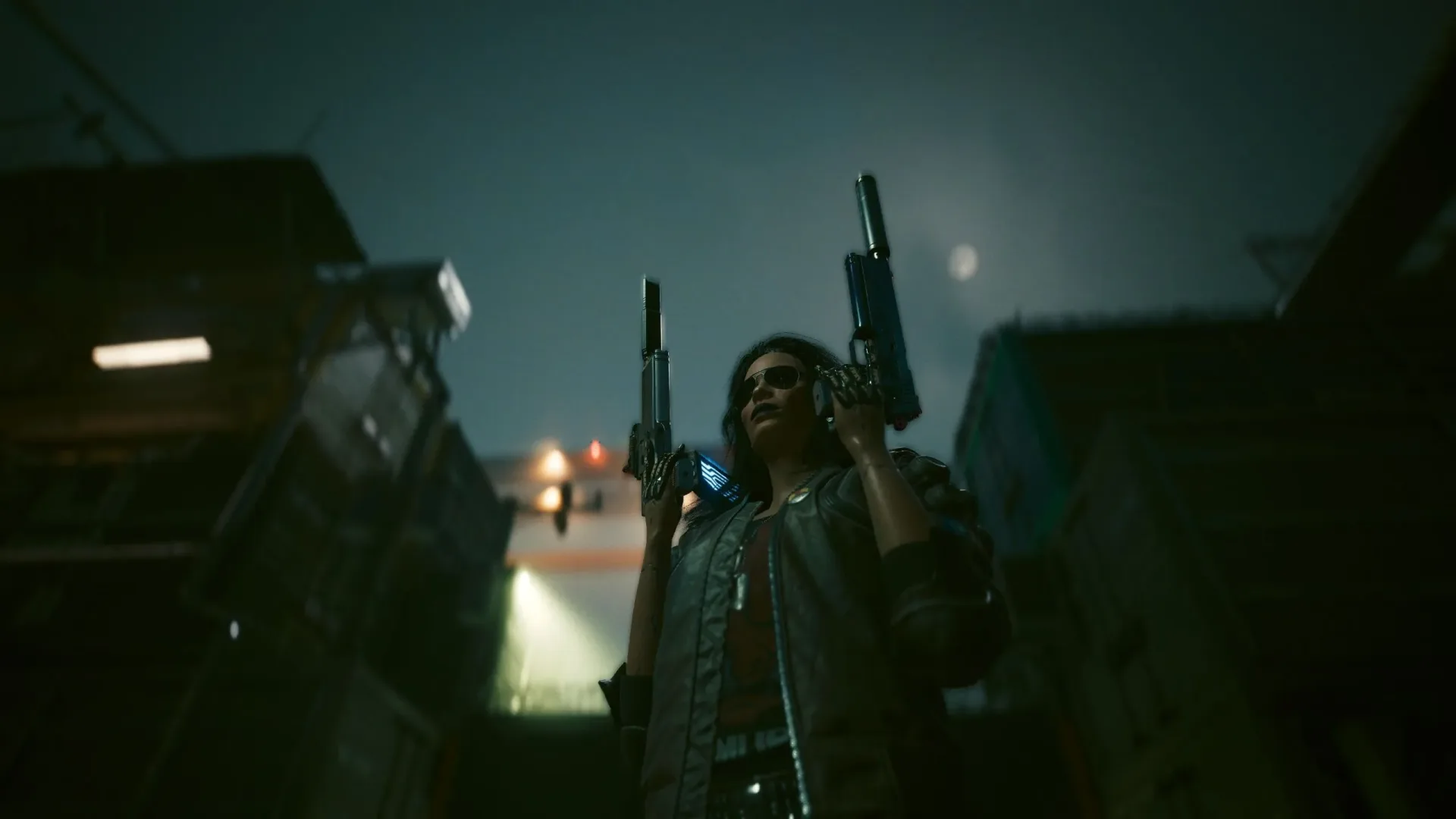
Grand Theft Auto 6 has the kind of gravitational pull that makes every other release schedule look slightly nervous. It is widely positioned as a potential defining game of its decade, and the return to Vice City—now framed through the modern-day state of Leonida—gives Rockstar’s next open-world crime story an enormous cultural head start.
Yet the looming arrival of a new Grand Theft Auto has also revived a useful, less breathless question: what exactly are players hoping will feel new? The series’ essential machine has been recognizable for years. Steal a vehicle, follow a mission, evade law enforcement, collect money, explore a city, cause an amount of chaos that would make a municipal insurer faint. Bigger worlds, more sophisticated presentation, and denser simulation can transform that formula, of course. But the basic appeal is not uncharted territory.
That is why Grand Theft Auto: San Andreas, originally released in 2004 for PlayStation 2, remains more than a nostalgia stop. For players who cannot justify a new-system purchase, are wary of the industry’s push toward increasingly constrained ownership, or simply want a self-contained adventure they can play from a disc, CJ’s trip through Los Santos still represents a remarkably persuasive alternative.
San Andreas was already thinking beyond the usual sandbox checklist
San Andreas arrived as the third major 3D Grand Theft Auto game after GTA III and Vice City, but it did not settle for being merely “the bigger one.” Its map expanded the series’ urban frame into a state-sized playground, moving across Los Santos, San Fierro, Las Venturas, countryside, deserts, and smaller communities. More importantly, it tied its lead character’s life to systems that were strange, ambitious, and memorable.
Carl “CJ” Johnson could eat, exercise, gain or lose weight, build skills, alter his appearance, and manage relationships. Sleep and other routines helped give the game a sense that the protagonist existed between mission markers. Not every system was elegant; some were famously demanding, and others were mostly a charming layer of friction. Still, they gave San Andreas personality. It was an open world that wanted the player to inhabit a messy life, not just finish a sequence of spectacular errands.
Reports around GTA 6 have pointed to a return of lifestyle-oriented mechanics, including weight changes and sleep requirements. Those details should be treated carefully until Rockstar formally spells out the final feature set. But if they do make the cut, they will underline a funny historical point: a PlayStation 2 game was experimenting with character maintenance more than two decades ago.
The prospect does not mean San Andreas and GTA 6 will be equivalent experiences. They plainly will not be. A current-generation blockbuster will have technological advantages in visual detail, animation, scale, world density, and likely many areas nobody can properly judge before release. The point is simpler: old games are not automatically rendered irrelevant by an expensive sequel, especially when the older game’s individual ideas remain compelling.
A complete game on a shelf has its own appeal
There is also a practical reason the PS2 conversation is resurfacing. The physical PlayStation 2 version of San Andreas can still be found for around $20, while used PS2 consoles are sometimes available for under $80. Condition, included cables, controller quality, regional format, and local demand can all change those figures, so they are best understood as rough market snapshots rather than guarantees.
Related coverage includes GTA 6 Hype Puts the PS2's San Andreas Legacy Back in Focus.
Even so, that math makes the old setup attractive. A console, a disc, and a memory card are a modest proposition next to the cost of current hardware and premium editions of new releases. The appeal is not that retro collecting is always cheap—it absolutely is not—but that the PS2 remains one of the easiest major platforms to approach without turning a weekend hobby into a budget summit.
For collectors, the appeal of original hardware is partly material. The San Andreas case, disc, manual where available, memory-card saves, and the specific behavior of the old console form a package that feels settled and personal. It is difficult to replicate that relationship with a license tied to a storefront, an account, patches, and decisions made long after release.
That does not make digital games worthless, nor does it require players to turn a PS2 purchase into a grand consumer revolt. Playing an older game can simply be an enjoyable act of choosing what one already has. Still, anxiety around physical-media support and increasingly complicated ownership terms has made the option feel more meaningful. A disc you can insert into your own working console has an uncomplicated clarity.
Anyone bringing an aging library out of storage should take a minute to safeguard it. Scratched discs, cracked hubs, brittle cases, and neglected memory cards can turn a triumphant retro evening into a tiny preservation tragedy. Our guide on moving a retro game collection without losing discs, cases or save data covers the sort of careful handling that helps keep those shelves playable.
Getting a PS2 onto a modern display need not become a science project
The largest barrier for a returning PS2 owner is often the television, not the game. Modern displays rarely welcome older analogue connections with open arms. A basic PS2-to-HDMI adapter can be a low-cost entry point; adapters in the roughly $13.99 range have been cited as workable for getting a signal to a contemporary TV or monitor. Results can vary substantially by display and adapter design, however, so it is sensible to view the cheapest option as a convenience solution rather than a promise of pristine picture quality.
Players chasing a more refined image can investigate dedicated devices such as a GBS-C or OSSC. These solutions can handle RGB inputs, scaling, deinterlacing, and optional scanline effects more capably than a passive adapter. The trade-off is predictably higher cost and more setup. For someone whose goal is simply to replay San Andreas without buying a pile of modern gear, the inexpensive HDMI path may be enough.
Controllers are another place where old hardware can meet modern habits. The wired DualShock 2 is part of the period charm, but not everybody wants a cable spanning the living room. An 8BitDo Retro Receiver, listed around $24.99 in the material behind this discussion, can enable compatible wireless controllers such as a DualShock 4 or DualSense on original PlayStation 2 hardware. Compatibility, firmware, and controller behavior are worth confirming before purchase, but the broader idea is sound: an authentic console need not require an entirely period-authentic living-room setup.
The PS2 library is much bigger than one gangland epic
San Andreas is the natural focal point because of the possible mechanical echoes with GTA 6, but it need not be the only destination. GTA III and Vice City offer different slices of the series’ formative 3D era, while Liberty City Stories broadens the options for anyone happy to explore the wider catalogue. The PS2 library itself contains more than 4,000 games, giving the console an almost ridiculous amount of range beyond Rockstar’s worlds.
That range is ultimately the strongest argument for preserving and playing the machine. A PS2 can be a low-cost route into one famous open-world classic, but it can also lead toward racing games, role-playing games, fighters, oddball experiments, licensed curiosities, and genres that no longer receive the same level of attention.
GTA 6 can still be a landmark event when it arrives. Anticipation does not need to be denied, and a new Rockstar game is not invalidated because its predecessors retain value. But hype need not force a single path. San Andreas remains a full, distinctive, offline adventure with its own ideas about how a virtual criminal should eat, train, sleep, dress, and somehow still find time to fly a plane into trouble. Sometimes the most sensible response to tomorrow’s biggest game is to reconnect yesterday’s console and see what it can still do.
Shop the products
Check current price, model and availability at the retailer.