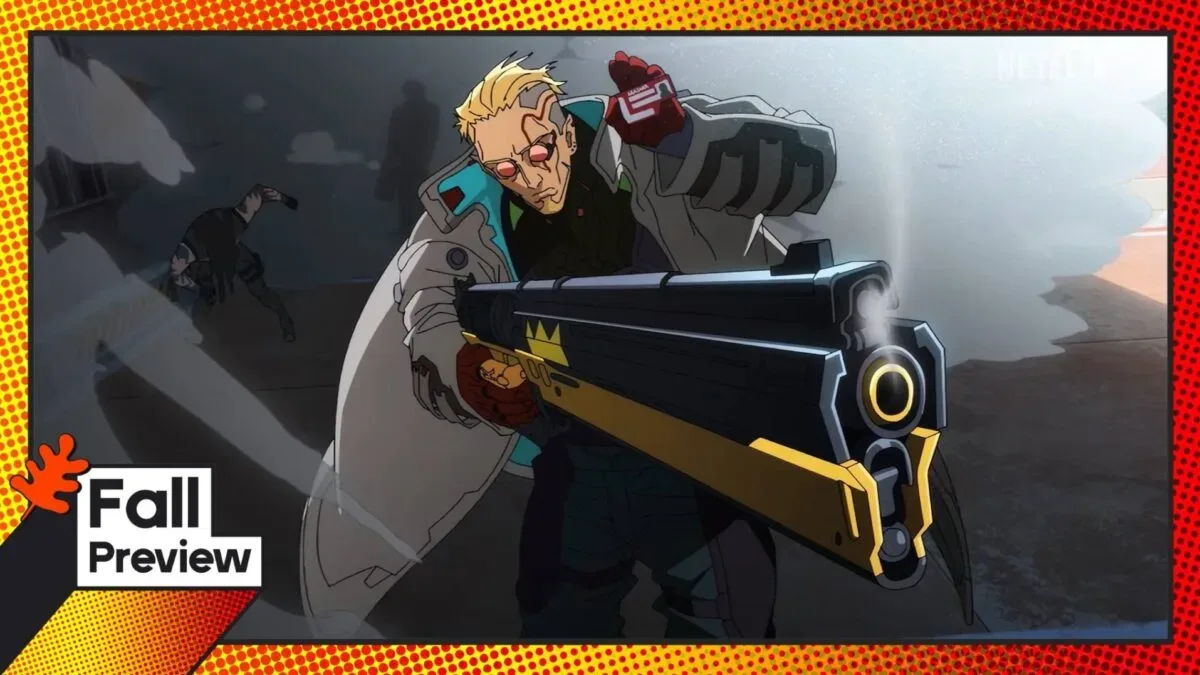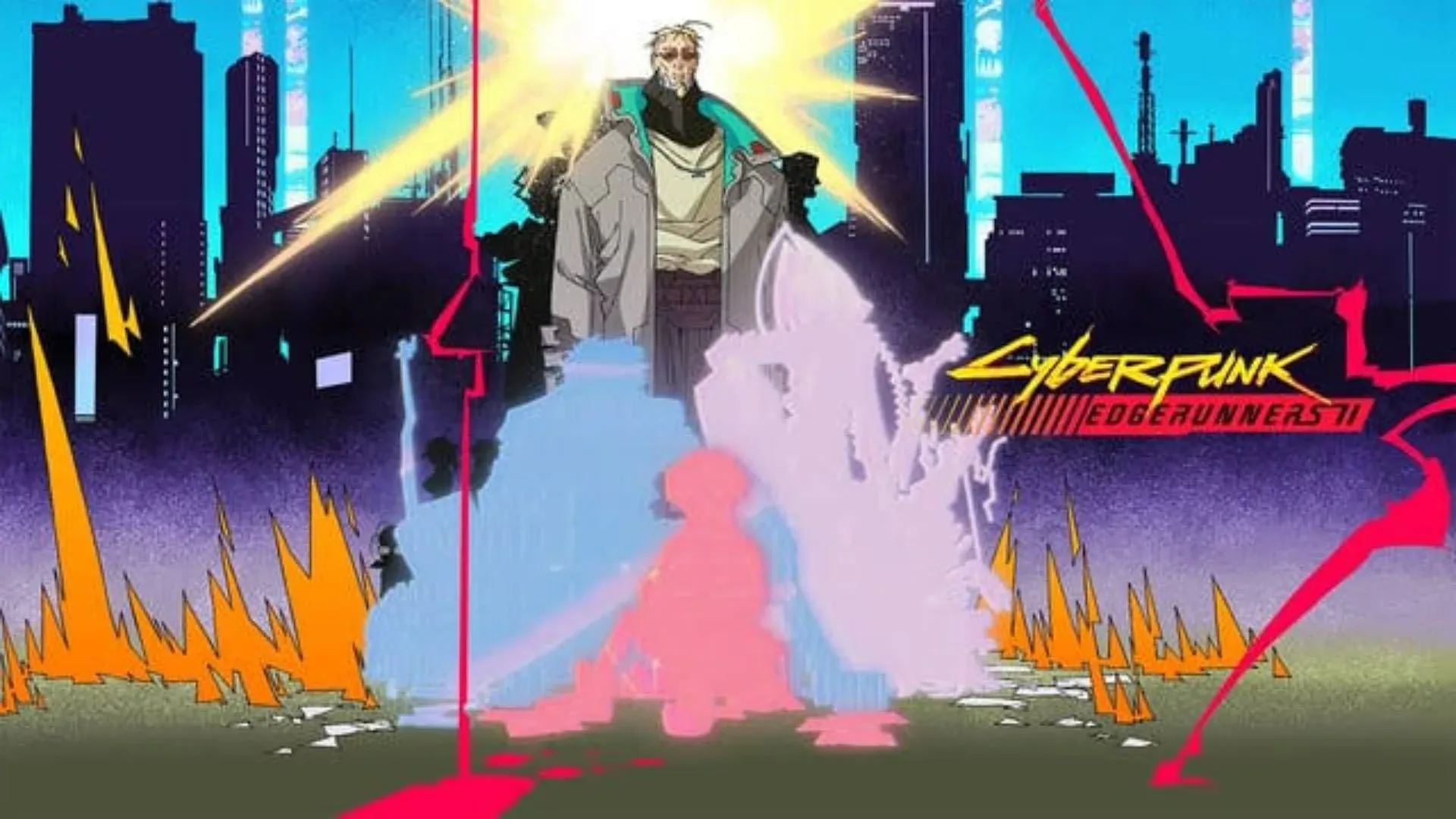
There is a particular kind of game-world nostalgia that does not begin with a menu screen. It begins with a skyline, a street corner, the glow of signage on a familiar road, or a soundtrack cue that makes a place visited virtually feel oddly personal. Cyberpunk: Edgerunners 2 appears positioned to trigger exactly that response when it reaches Netflix on October 20.
The second season has a substantial challenge ahead of it: the first Edgerunners was a compact, punishing 10-episode story that left a formidable emotional shadow. But the new season may have an effect beyond whether its cast and plot attain the same heights. Its trailers already invite viewers to recognize the animated version of Night City as a place they have driven through, wandered around, fought in, or simply stopped to admire in Cyberpunk 2077.
That matters because the anime is not merely borrowing a cyberpunk aesthetic adjacent to the game. Studio Trigger is the principal animation team, while the series is made with Cyberpunk 2077 developer CD Projekt Red. The result is a Night City with locations close enough to the game’s open world that players have identified the map locations echoed in trailer shots. For a returning player, that turns a new anime season into something unusually interactive: every memorable establishing shot can become an invitation to open the map and go looking.
An adaptation that doubles as a memory map
Adaptations often ask fans to accept a new visual interpretation of a setting. Edgerunners takes a different route. Night City is stylized through animation, but its underlying geography remains recognizable. That gives the show a special relationship with the game. Viewers are not only watching characters move through a fictional metropolis; many can connect those scenes with routes and spaces already stored in their own play history.
The distinction is important. The new season is not presented as a continuation of protagonist V’s story or an update on the relationships players built during Cyberpunk 2077. Its value as a companion piece is therefore not dependent on revisiting the same player character. Instead, it offers another angle on a shared city. A street that once functioned as a route between missions can take on a different emotional charge after being used as the backdrop for an animated scene.
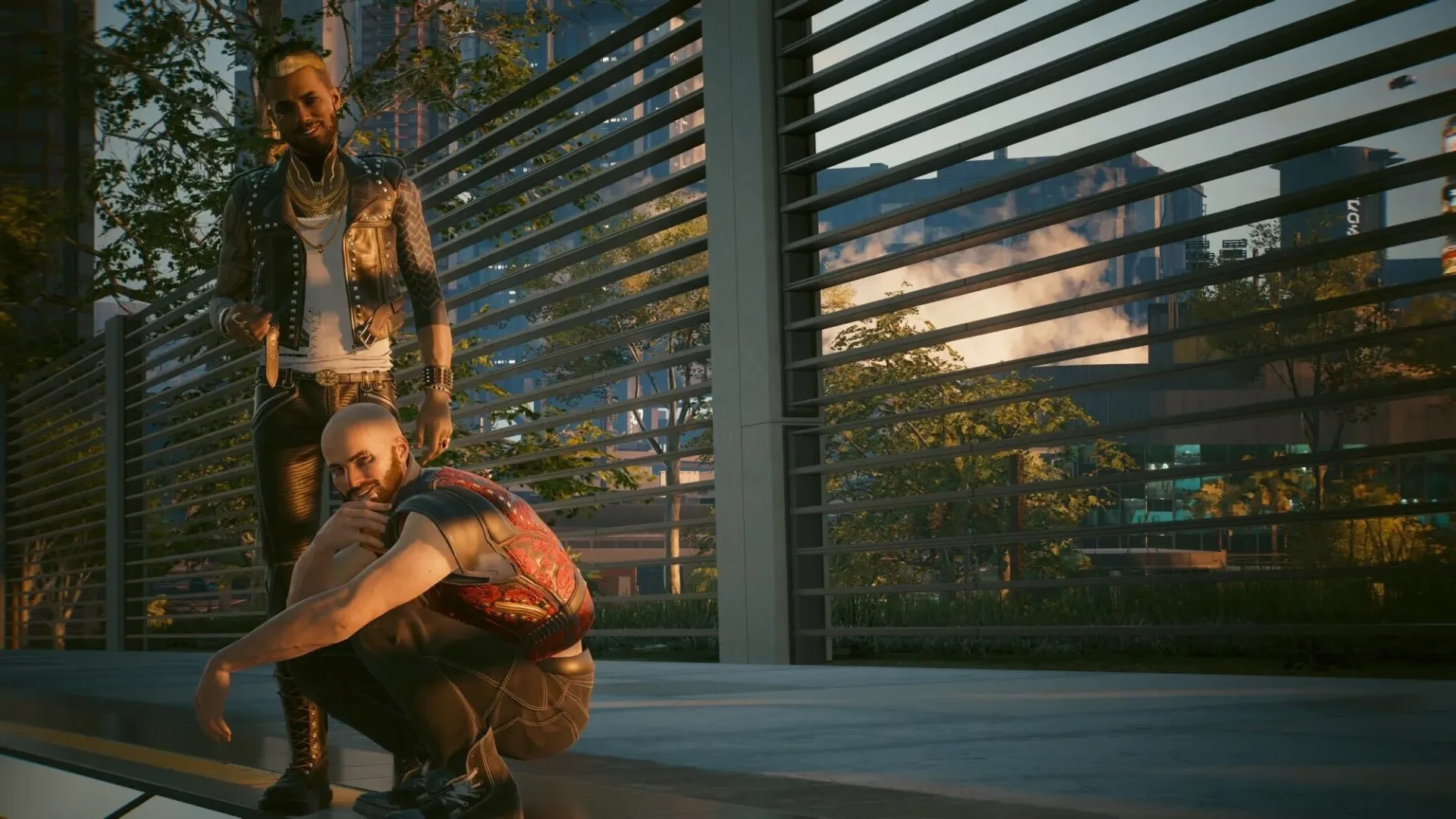
That is a potent design advantage for an open-world game. Open worlds are built to be repeatedly crossed, but repeated traversal does not always lead to remembrance. A separate work can give old environments new associations. A returning player may not remember every quest objective, combat encounter, or system from a prior save. They may remember where they paused for a screenshot, where a favourite song played, or where a story beat landed. The anime’s recognizable locations can reconnect those scattered memories without requiring the game itself to change.
It is a much more compelling pull than the usual backlog logic of “there is more content, so perhaps it is time to return.” Here, the impulse is emotional and geographical. Watch an episode, recognize a junction or skyline, then feel the temptation to load into Night City and compare the two versions for yourself.
Why the timing is different from the first season
The first season of Cyberpunk: Edgerunners arrived in a very different context for Cyberpunk 2077. The game’s 2020 launch had been widely associated with serious problems. Its current-generation version and a series of updates helped improve its standing, and the first anime season is frequently treated as part of the wider recovery in how the game was discussed.
Related coverage includes Cyberpunk: Edgerunners 2 Could Be the Perfect Reason to Return to Night City.
That backdrop made the original show feel consequential beyond television. It brought fresh attention to the setting at a moment when the game needed audiences to reconsider it. The anime provided a vivid, self-contained route into Night City’s pressures, aspirations, violence, and style, while the game offered a vast place to explore once the credits rolled.
Edgerunners 2 does not arrive with the same burden. It does not need to persuade audiences that Night City is worth another look after the game’s troubled start. CD Projekt Red is already working on a sequel, and Cyberpunk 2077 has also received the Phantom Liberty expansion. The role of the new season is potentially less like rescue and more like rekindling.
That shift could make its impact more personal. Instead of acting mainly as a corrective to public perception, a new visit to the setting can prompt players to revisit their own history with it. Some will remember early sessions around launch; others will associate Night City with later updates or Phantom Liberty. Still others may simply have a large archive of screenshots and a favourite track from the soundtrack—particularly “I Really Want To Stay In Your House”—ready to turn a few animated frames into a rush of recognition.
Style is part of the city’s trap
Night City is appealing precisely because it is not presented as desirable in any uncomplicated sense. Its chrome, vehicles, architecture, music, and densely lit streets create a powerful visual lure. Yet the setting is fundamentally concerned with rot, inequality, and survival under an extreme version of capitalism. The polish is inseparable from the despair; the spectacle is not a rebuttal of the city’s ugliness, but one of the ways that ugliness is made alluring.
That tension gives a return to Cyberpunk 2077 more weight than a simple sightseeing trip. Players may want to ride through its streets because the city feels vivid and familiar, while also recognizing that its stories make that familiarity uncomfortable. The people who endure there do not do so because the system is kind to them. Connection with others struggling through the same conditions is depicted as one of the few things that makes life within the city bearable.
It is also why an Edgerunners story can generate anticipation and apprehension at once. A new cast means the possibility of new attachments. The series’ tone and the setting’s brutal logic make an unhappy outcome feel plausible, not guaranteed. Until the season arrives, any claim about its eventual fate remains speculation. But the expectation of emotional damage is part of the show’s identity, and it changes how viewers read every glamorous frame of Night City.
In that sense, the second season’s trailers are not just advertisements for plot. They are reminders of the setting’s central contradiction: a place that looks thrilling enough to revisit, even when it is built to show why nobody should have to live there.
What a return could look like without turning it into homework
For lapsed players, the practical appeal is that Edgerunners 2 may provide a low-pressure route back. There is no need to treat the anime as a checklist or assume every shot has a single, perfectly verifiable in-game counterpart. The pleasure is in recognition, comparison, and getting reacquainted with the city at an individual pace.
- Use episodes as prompts, not assignments. If a location stands out, explore the area in the game and see what memories or details it surfaces.
- Return through atmosphere first. A ride through familiar districts, a pause to revisit old screenshots, or a listen to a remembered soundtrack song can be enough to restore a sense of place before committing to a longer play session.
- Leave room for the anime’s own story. Recognition is part of the fun, but the new cast deserves to be experienced as more than a set of map pins.
- Keep expectations distinct from evidence. The new season may echo the first season’s devastating tone, but its actual plot and conclusions will only be clear once it premieres.
That approach avoids flattening Night City into tourism. The city’s most meaningful spaces are rarely meaningful because of a landmark alone. They are meaningful because players attach moments to them: a conversation, a mission, a photo, a late-night drive, or a song heard at the right time. Animation can revive those associations, but it cannot dictate them.
There is a broader lesson here for games that grow beyond their original release. Follow-up media is most valuable when it respects what players have already made of a world. Rather than replacing their memories with a supposedly definitive version, it can add another layer. The strongest Edgerunners-to-Cyberpunk 2077 loop is not “watch this so you will buy or reinstall that.” It is “watch this, recognize something, and decide whether you want to go back.”
That kind of return is especially meaningful for a game whose reputation has changed so dramatically since 2020. Its path included a difficult launch, continued updates, a current-generation port, and the arrival of Phantom Liberty. Now a second animated season can meet players at a different point in that history. The incentive is no longer simply curiosity about a repaired game. It is the pull of returning to a world that, for all its nightmare qualities, has become familiar.
Elsewhere, games are also looking for ways to make their worlds and systems easier to re-enter; for another perspective on momentum in a different genre, see why survival games may be finding their stride. Night City’s advantage is that it does not need a formal invitation. A few seconds of animated skyline may do the job.
Whether Cyberpunk: Edgerunners 2 matches the first season’s highs remains an open question until October 20. What is already clear is the unusual power of its setting. By putting recognizably game-accurate pieces of Night City back on screen, the anime can turn nostalgia into motion: back to the map, back on the motorcycle, and back into a city whose beauty has always been inseparable from its bleakness.