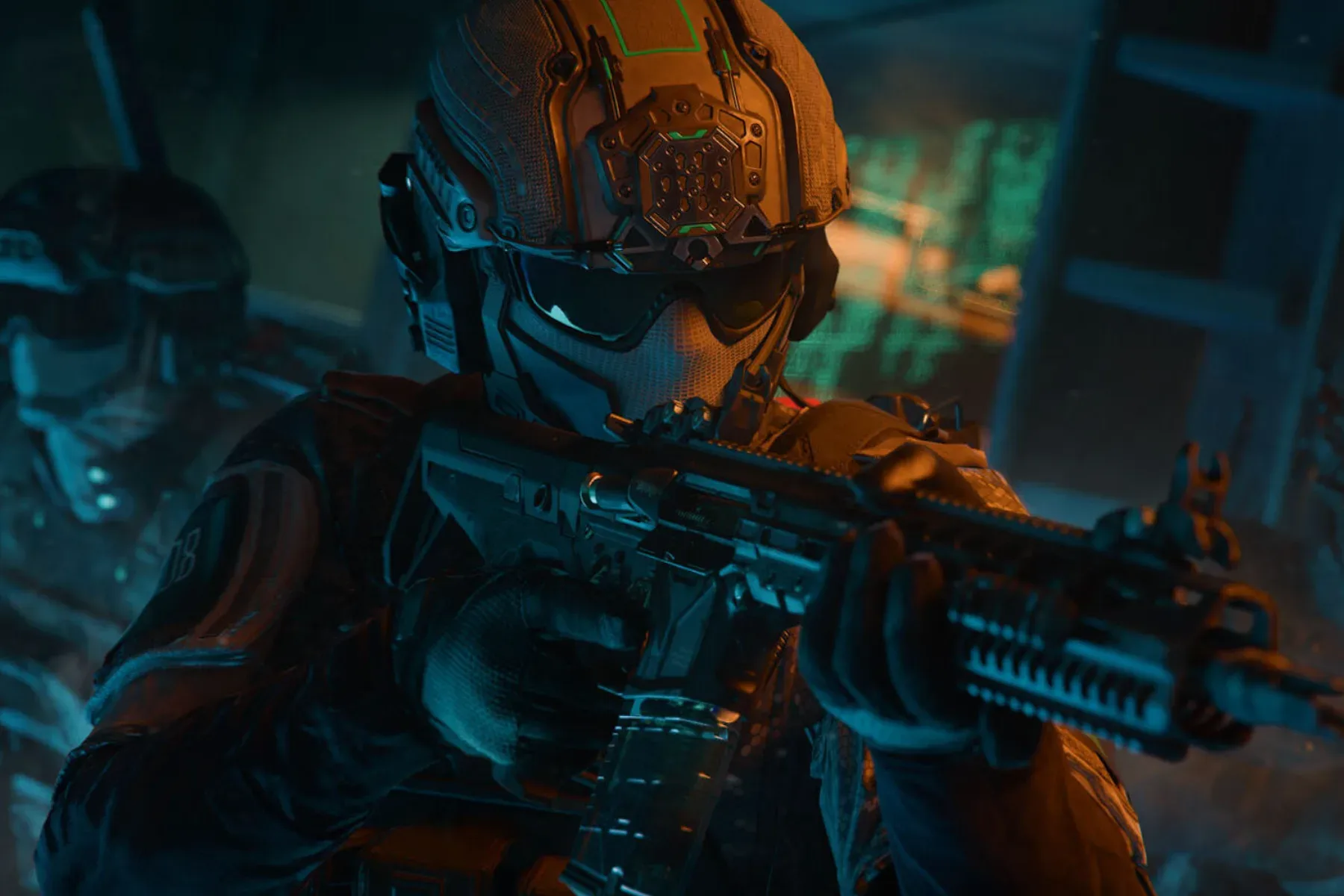
Peter Berg says the planned Call of Duty movie will approach its Modern Warfare material as more than an action spectacle. The director, who is co-writing the screenplay with Taylor Sheridan, has described the project as a story about the consequences borne by people sent into danger, rather than a simple celebration of weapons, combat, and cinematic destruction.
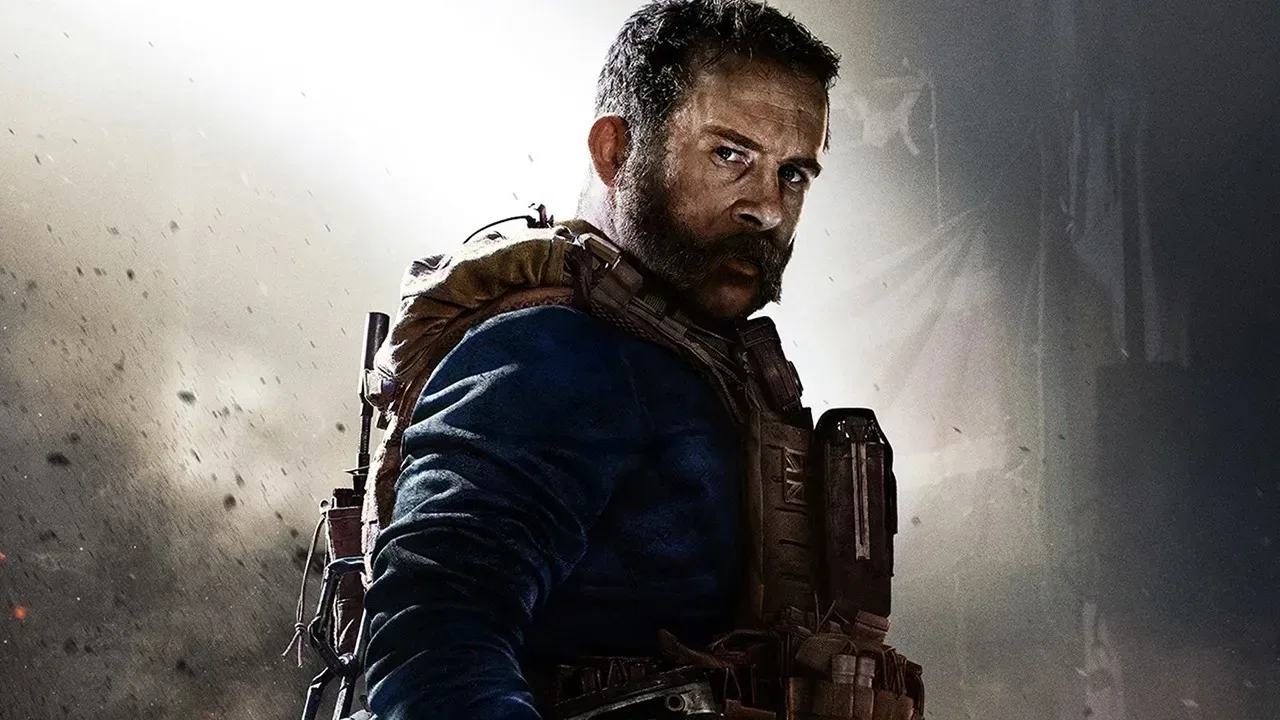
The film is currently planned for June 2028 and is set in the Modern Warfare continuity. Beyond that framework, few story details have been established publicly. Berg has pointed to Captain Price, Soap, Ghost, and Alex as examples of characters he views as complicated people rather than broad action icons. His stated ambition is a film with a strong sense of consequence, even if it may be less graphically violent than his other military-focused film, The Mosquito Bowl.
That is a substantial creative promise, and it is also where the conversation gets complicated. Call of Duty has long occupied two spaces at once: it is an enormous multiplayer shooter built around immediate, repeatable entertainment, and it periodically presents its campaigns as reflections on the human cost of armed conflict. A movie that leans into the second identity will have to do more than give its soldiers traumatic backstories or place sober dialogue between large combat sequences. It will need to decide whose experiences matter, what causes violence, and whether its viewpoint ever challenges the assumptions that usually put its protagonists at the center.
What Berg is promising
Berg’s comments frame Modern Warfare as a universe with emotional weight underneath its familiar military hardware and firefights. His emphasis is on the burden carried by people who become warriors and place themselves in danger. In practical storytelling terms, that suggests the film may prioritize character pressure, moral injury, grief, fear, and the lingering effects of missions over a purely mission-to-mission action structure.
Moral injury is a useful term for understanding what a serious war story might attempt. It is distinct from simply being frightened in combat. The phrase generally concerns the psychological and ethical distress that can arise when someone participates in, witnesses, or fails to prevent actions that violate their moral beliefs. A film does not need to use that clinical language to explore the idea, but it does need to let characters face consequences that cannot be solved by winning the next engagement.
There is a difference, too, between portraying a character as troubled and interrogating the system that placed that character in an impossible situation. The first can add gravity while leaving the broader fantasy untouched. The second asks harder questions: Who has power? Who defines the mission? Who is endangered when decisions go wrong? Who is permitted to be seen as fully human?
Berg’s language about a “soul” beneath the violence implies the film aims for the latter kind of seriousness. But an intention is not yet a finished approach. The screenplay, its antagonists, the civilians caught in the conflict, and the perspective afforded to people outside the main military unit will determine what that claim means on screen.
Modern Warfare’s recurring tension
The Call of Duty brand is particularly difficult terrain for this kind of project because its identity has repeatedly moved between spectacle and gravity. Multiplayer’s appeal is clear: skill, teamwork, competition, gear, maps, and the pleasure of a well-made match. There is nothing inherently deceptive about a game being enjoyable as a game. Call of Duty’s online modes are popular in large part because they make that loop compelling.
Related coverage includes Call of Duty Film Director Says Modern Warfare Movie Will Explore the Cost of War.
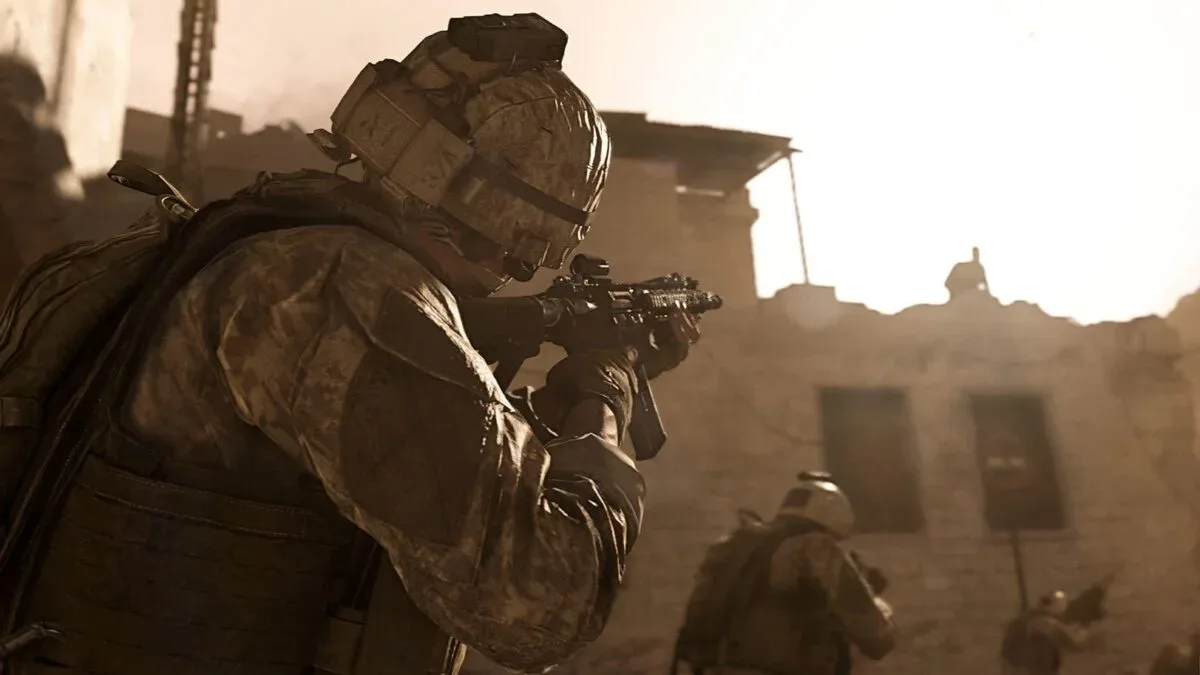
Campaign marketing, however, has at times asked audiences to see the series as an educational or morally challenging account of war. The 2019 Modern Warfare was presented around ideas of realism and moral ambiguity. One frequently discussed scenario involved a person apparently reaching for a weapon, only for the player to learn that she was reaching for her baby. The intended lesson was immediate: acting on assumption can have irreversible consequences.
That kind of scene can create shock and discomfort, but it does not automatically make a work nuanced. Nuance is not simply an unpleasant choice, a bleak environment, or the presence of characters who regret what they have done. It comes from context: whether the audience understands why a situation exists, whether all people in it are afforded interiority, and whether the work is willing to examine the structures behind violence rather than treating them as unavoidable background scenery.
A game also has a structural challenge a film does not. In a shooter, players must continue participating. The action loop demands targets, objectives, and forward momentum. A campaign may pause to make a player uneasy, but it ultimately returns them to the role of an effective combatant. That friction can make anti-war messaging especially hard to sustain inside a blockbuster military shooter.
A film has more latitude to sit with aftermath, uncertainty, and perspectives that do not lead to an objective marker. Yet a Call of Duty movie will still arrive with the franchise’s established visual language and audience expectations: elite units, recognizable operators, tactical equipment, escalating threats, and action on a large scale. The challenge is not removing those elements. It is preventing them from swallowing the stated theme.
The limits of “war is costly”
“War is costly” can be a meaningful premise, but it is incomplete by itself. It can mean the cost to soldiers: physical injuries, bereavement, exhaustion, isolation, and post-traumatic stress. It can also mean the cost to families, civilians, displaced communities, local institutions, and people whose lives are defined by the decisions of distant governments and military leaders.
When a story concentrates exclusively on the pain of its own armed protagonists, it may invite sympathy without offering much scrutiny. The soldier becomes the primary person harmed by war; everyone else risks becoming an obstacle, a casualty count, or a setting for that soldier’s emotional journey. That is the concern hanging over claims that a U.S.-centered military story will reveal the cost of conflict while largely grounding its moral weight in the burden carried by U.S. personnel.
Call of Duty has faced longstanding criticism for jingoism, for portrayals of Muslims and Arabs, and for its relationship to the military-industrial complex. Jingoism is an aggressive form of nationalism that favors forceful foreign policy and treats national military action as inherently righteous or necessary. Identifying those tendencies is not an argument that individual soldiers cannot be sympathetic characters. It is an argument that sympathy cannot be the only lens.
For the film to earn its claim of nuance, it would need to avoid treating political context as a nuisance that slows down the firefights. It would need to resist the shortcut in which every conflict is ultimately explained by a monstrous enemy, a rogue commander, or a singular catastrophe that clears the home side of institutional responsibility. It would also need to ensure that civilians and foreign characters exist as people with agency and histories, not merely as devices to make the central squad feel heroic, horrified, or vindicated.
A film can make different choices than a shooter
There is room for a Modern Warfare adaptation to distinguish itself from the games without rejecting what makes the property recognizable. Captain Price, Soap, Ghost, and Alex can remain central while a film broadens the moral field around them. The key is whether their humanity becomes a gateway to examining war, or a shield that stops the film from examining it.
A consequence-focused story might show that an operation’s “success” does not resolve the harm it creates. It might recognize that intelligence is incomplete, that orders can be questioned, and that violence has repercussions after the unit leaves. It might make room for uncertainty rather than always supplying a tidy moral explanation after a difficult scene. None of those choices require inventing a different genre; they require a willingness to let dramatic stakes extend beyond whether the protagonists complete their mission.
Conversely, a film can include mournful music, scarred characters, and grave speeches about sacrifice while still making military force look like the cleanest answer to every problem. That is why tone alone is not enough. A solemn film may be sincere and still be uncritical. The difference lies in the story’s point of view and in what it asks viewers to accept as normal.
This is also why the phrase “not cartoon characters or comic books” is an awkward way to frame the ambition. Stylization does not prevent serious storytelling, and realism does not guarantee it. A story’s ethical depth comes from its choices, not from whether its characters wear masks, its action is grounded, or its cinematography signals prestige. The Modern Warfare cast may indeed support more complicated drama; the adaptation’s task is to demonstrate that complexity, not merely declare it.
Why expectations will be high
There is no confirmed plot yet, so it would be premature to declare the Call of Duty movie either a thoughtful war drama or uncomplicated military spectacle. Berg and Sheridan’s involvement establishes an intention, not an outcome. The June 2028 target also leaves a long gap before viewers can judge the final work on its writing and execution.
Still, the declaration matters because it sets the standard by which the film should be judged. A project that explicitly invokes war’s consequences invites questions about representation, accountability, and perspective. It asks audiences to look beyond the quality of action scenes and ask what those scenes are saying, intentionally or otherwise.
The broader games business is already full of huge franchises stretching into other forms of media, as the attention around major upcoming game releases and their expanding cultural footprint shows. But adapting a military shooter comes with a particularly heavy interpretive burden. A Call of Duty film does not have to apologize for being action entertainment. It does, however, need to be honest about whether it is offering a critique of war, a tribute to warriors, or a polished combination of both.
Berg has chosen the most demanding version of that pitch: a Modern Warfare film with soul, consequences, and nuanced people at its core. The eventual test will be whether the film understands that the cost of war is not only an emotional weight carried by its heroes. It is also a question of who is harmed, who gets heard, and what a story chooses to leave unchallenged.