A new television often enters the house because the old one has become too small, lacks the desired resolution, or simply no longer fits the main-room setup. That does not automatically make the outgoing screen useless. A working TV can be reassigned to a console, used as a computer monitor, passed to a friend or family member, donated, or offered free locally. And if the set is a CRT, the chunky old display may be more wanted than expected by players building retro-gaming setups.
The better question is not “is this my best TV?” but “is this still good at a particular job?” That distinction matters. A screen that has fallen behind modern smart-TV software can still display a game console or computer just fine. Meanwhile, a television that is broken beyond practical reuse should not be treated as ordinary rubbish. Electronic-waste collection and retailer take-back options may provide a more responsible exit.
Start with a simple decision: reuse, rehome, sell, or recycle
Televisions commonly remain in a home for roughly six to eight years. By then, a set can be perfectly functional while no longer being the preferred centerpiece. The change may be driven by a desire for a larger screen or higher resolution rather than a fault. That makes an old TV a candidate for a second assignment before anyone starts planning a trip to recycling.
A useful way to decide is to separate the TV’s condition from its place in the household:
- Working and wanted at home: Move it to another room, make it a dedicated console display, or use it as a computer monitor.
- Working but no longer needed: Give it to someone, donate it, sell it with realistic expectations, or list it free for collection.
- Older CRT in working condition: Consider resale or gifting before disposal, especially where retro gaming is concerned.
- Damaged, unreliable, or unwanted: Find an electronics-recycling option that explicitly accepts that TV’s type and size.
This is not an argument for keeping a display merely because it exists. Space matters, and an unused screen can become clutter quickly. It is an argument for making the next step intentional rather than assuming the only two options are “main TV” and “trash.”
A dedicated gaming screen can be the old TV’s best second act
For a player with more than one room or more than one console, an outgoing television can become a dedicated gaming display. That can be a particularly straightforward reuse case: it removes the need to reclaim the primary living-room screen every time somebody wants to play, while still getting value from hardware already owned.
The same logic applies to a computer monitor. The screen does not need to be the newest or largest available to be useful for a PC. Its role is simply different. A display that is no longer ideal for family movie night may be adequate for a desk, a spare room, or a specific console setup.
There is also a separate issue often confused with picture output: smart-TV support. Firmware is the installed software that helps run the television’s built-in functions. Smart TVs may stop receiving firmware updates after around four to seven years. That can make their integrated software feel dated, but it does not necessarily end the TV’s life as a screen.
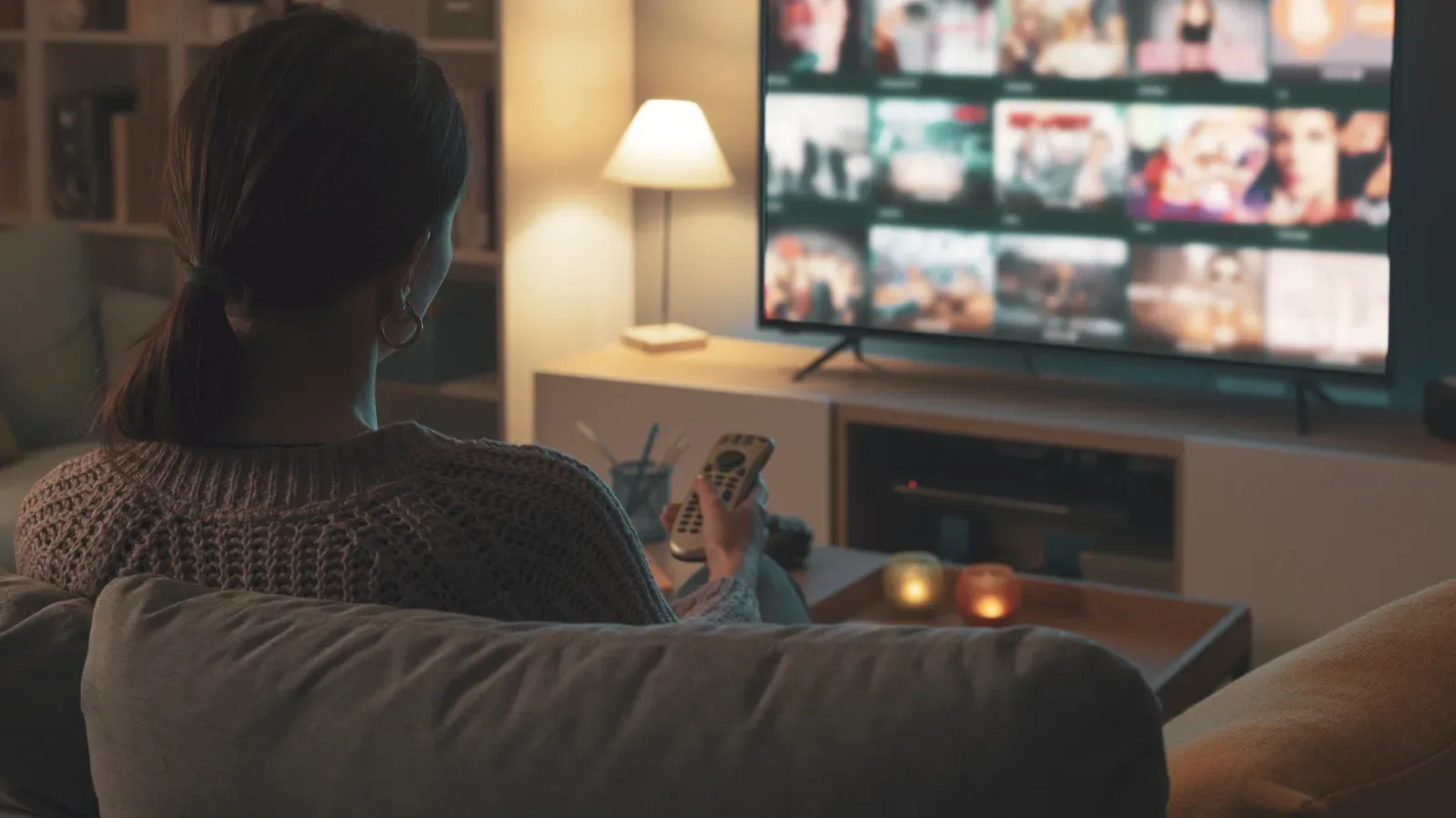
An external streaming device such as a Fire Stick or Apple TV 4K can shift streaming duties away from the aging built-in platform. That is a way to extend the practical usefulness of a working television without presenting it as a cure for every hardware limitation. It addresses the smart interface and streaming side of the experience, while the TV remains the display.
For gaming, that distinction is useful. A player deciding whether to replace a TV should consider whether the frustration comes from the panel itself, the television’s smart software, or the desire for a different size or resolution. If it is primarily the software, an external device may keep the set useful elsewhere. If it is primarily the main-room viewing experience, relocating the old screen can still be a sensible compromise.
CRTs are not just obsolete boxes to some retro players
A CRT, short for cathode ray tube, deserves a different conversation from a typical flat-panel television. These sets are bulky, heavy, and easy to dismiss when a flat screen replaces them. But CRTs have renewed appeal among people who enjoy retro gaming and the particular visual character associated with older displays. That niche interest means a functioning CRT may command more attention—and potentially more resale value—than someone clearing a garage might expect.
This does not mean every CRT is automatically valuable, nor does it mean a seller should assume a high price. It does mean that “old” is not the same as “worthless.” A careful local listing with an honest description may put a usable set in front of somebody specifically seeking a retro display. It could also be given to a friend or family member who will use it.
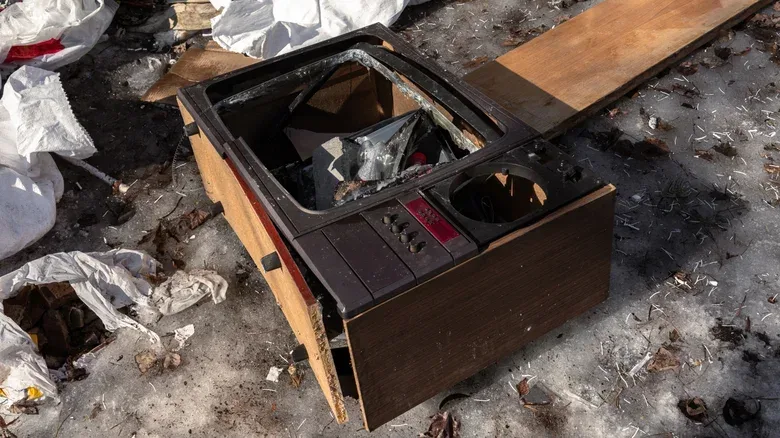
The category has a practical safety caveat. CRT glass may contain lead. Do not dismantle one or smash it in an attempt to make carrying or disposal easier. Its physical construction is precisely why an intact handoff to an interested recipient, or disposal through an appropriate electronics route, is a much better plan than improvised breakage.
For readers building a broader old-school setup, CRT interest fits within a larger revival of vintage gaming hardware and software. Even contemporary updates to older platforms show that those communities remain active; a recent Crazy Cars 2+ update for Amstrad CPC is one example of classic-era gaming still receiving attention. The relevant takeaway for an old television is modest: pause before treating a working CRT as disposable.
If selling, price for usefulness rather than wishful thinking
Televisions depreciate fast. Smart TVs can lose roughly 30% to 40% of their value in the first year, with depreciation reaching around 60% to 70% over three years. The result is familiar to anyone who has tried to sell ordinary consumer electronics: an item that still works may have limited cash value.
That should shape the choice of selling versus giving away. A working, reliable set with little resale value may be much more useful to a recipient than it is profitable to a seller. A thrift store, a family member, a friend, or a local first-come listing may be the cleanest outcome. If the goal is simply to clear space quickly, offering it free can be more realistic than spending time chasing a small sale.
Whatever route is chosen, a description should tell people what they need to know about the condition. Be clear that the unit works if it does; mention visible wear or problems if they exist; and identify what kind of TV it is. A practical description protects the recipient from surprises and helps the owner avoid the needless back-and-forth that comes from vague listings.
A CRT is the notable exception to the broad “manage expectations” rule. Its retro appeal may make it more desirable than a similarly aged flat panel. That is a reason to investigate the possibility of rehoming or selling it—not a reason to make unsupported promises about value or condition.
When reuse is over, treat the television as e-waste
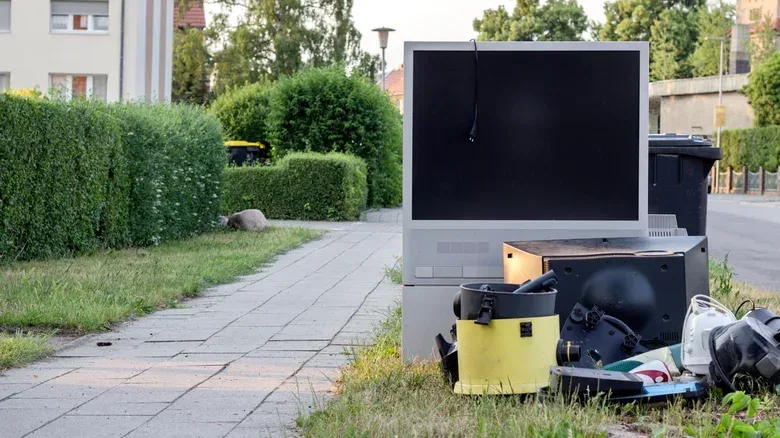
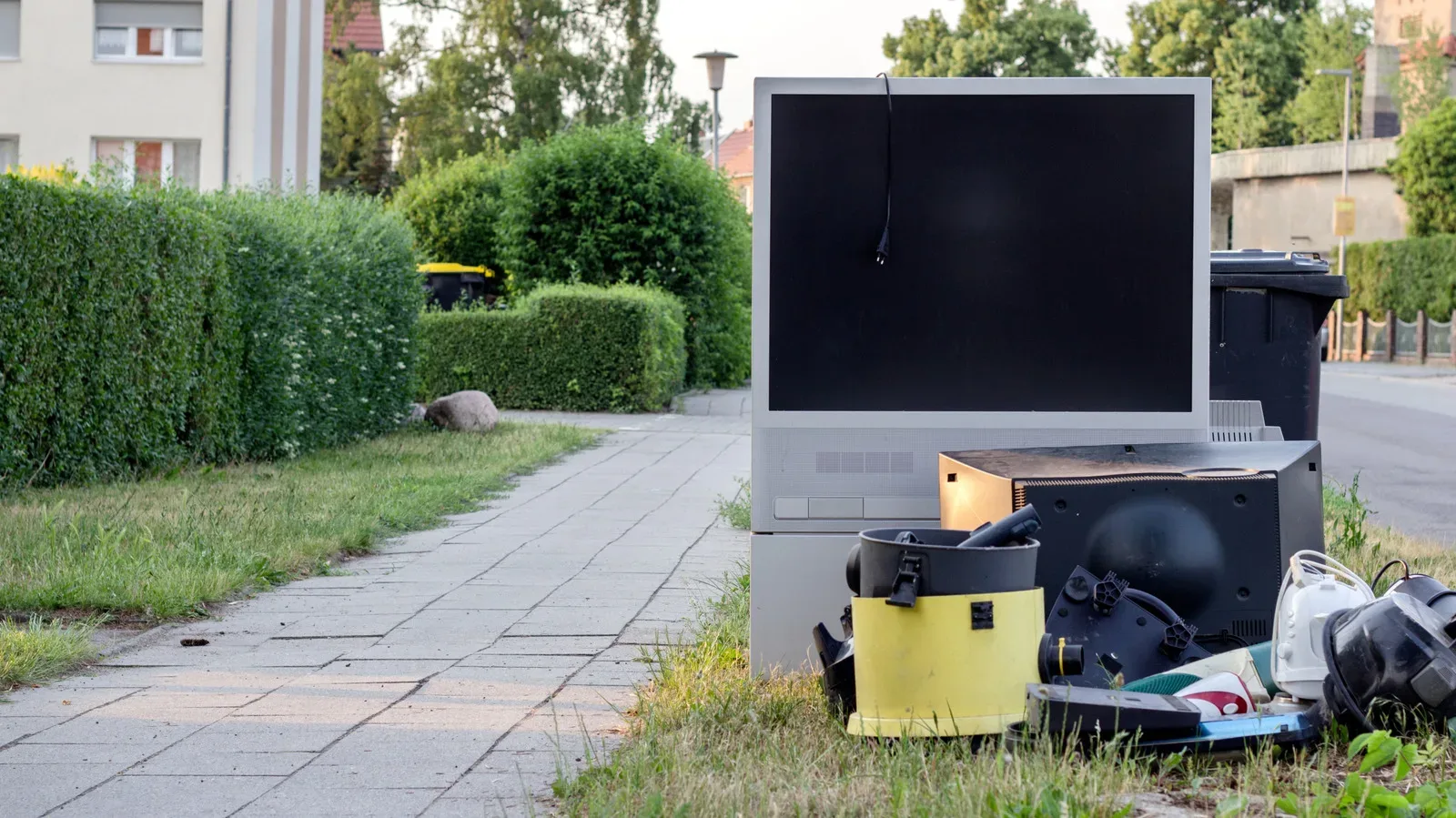
If the screen is ruined, unreliable, or unwanted by anyone else, the remaining option is responsible disposal. E-waste is electronic waste: devices that have reached the end of their useful lives and require a collection or recycling path suited to electronic materials. The United States produces nearly 7 million tons of e-waste per year. One discarded television is a small part of that total, but it is still worth keeping electronics out of an unsuitable waste stream where possible.
Start locally. Municipal and commercial e-waste collection locations do not necessarily accept every television, so verify that a site takes the specific type and size of TV being dropped off. Also check for fees before loading the car. The rules and ordinances that apply can vary by state, county, and city, so a nearby option may operate differently from one in another community.
A retailer’s take-back program may be another option, particularly when a new TV is being delivered. Some retailers can take the old unit away at the same time. It is still important to confirm the arrangement in advance, including whether the program accepts the particular television and whether collection has a charge. Even a paid pickup can be more convenient than transporting a large display alone or letting it occupy storage space indefinitely.
Transport flat-panel TVs carefully
If a flat-panel TV is going to a donation point, buyer, recycler, or take-back location, protect the screen during transport and keep the set upright. A shattered screen is a hazard regardless of the TV’s final destination. Some flat-panel models may also contain small amounts of lead, though not at the level associated with CRTs.
The sensible rule is uncomplicated: do not turn transport into the moment a working screen becomes broken e-waste. Protect it, keep it upright, and make sure the recipient or facility has agreed to take it before making the trip.
The most practical outcome depends on the set, not its age alone
An older television can be a spare gaming station, a computer monitor, a useful gift, a low-value-but-functional donation, or a retro display someone actively wants. Smart features falling behind do not automatically erase the value of the panel as a display, particularly when an external streaming device can handle streaming duties. Conversely, a truly finished TV needs a proper electronic-waste destination rather than casual disposal.
That makes the pre-disposal checklist refreshingly short: confirm whether it works, decide whether a second role suits it, check whether someone else can use it, take special care with CRTs, and verify a recycling or take-back route if none of the above applies. A new screen may be an upgrade, but the old one still deserves a decision more thoughtful than the curb.