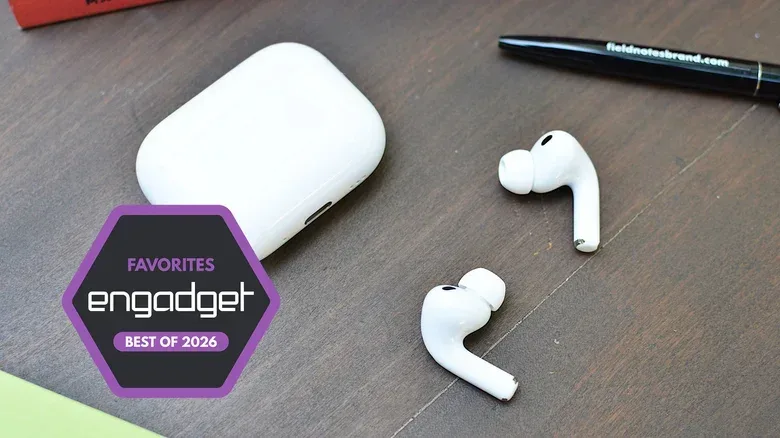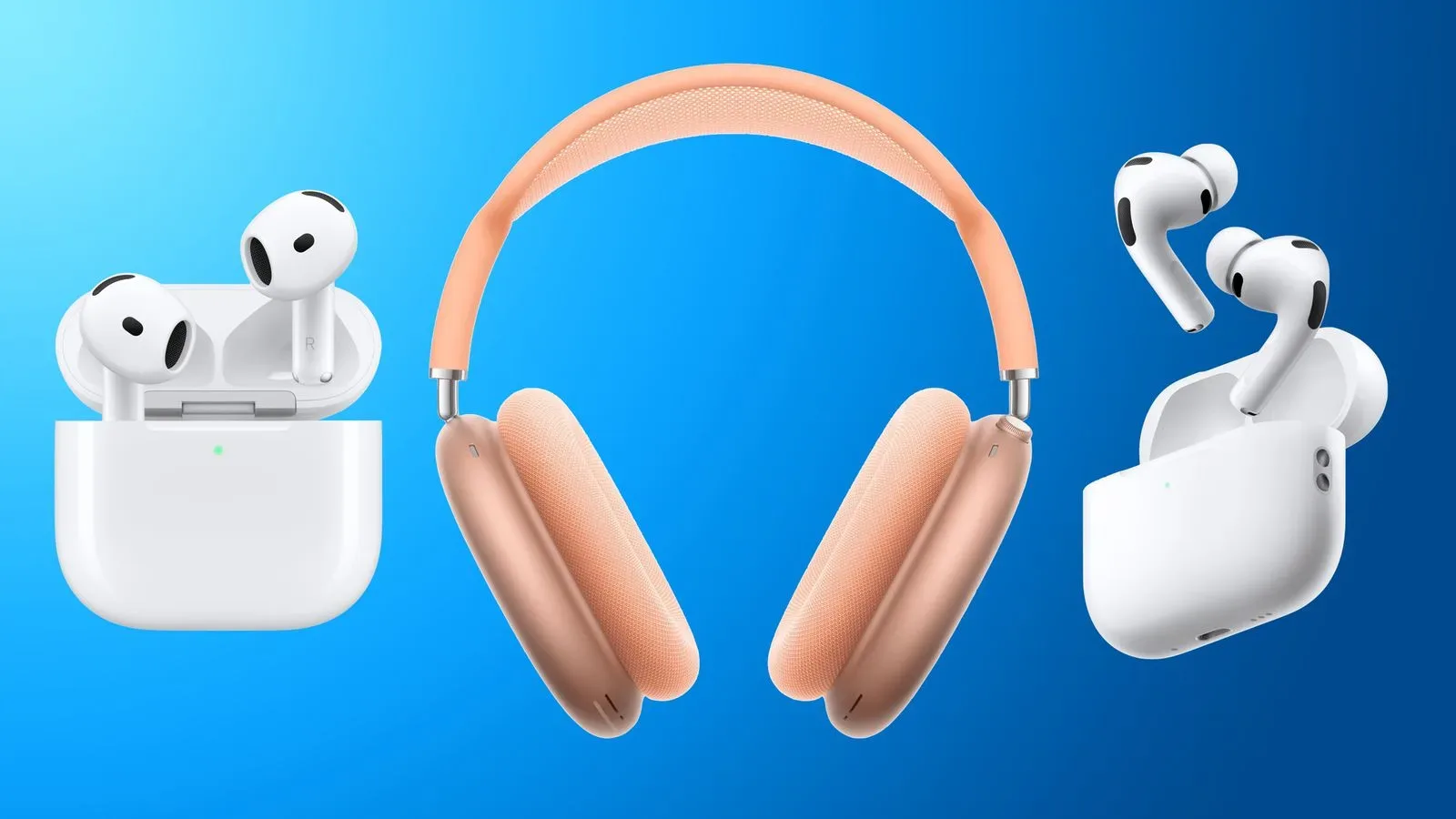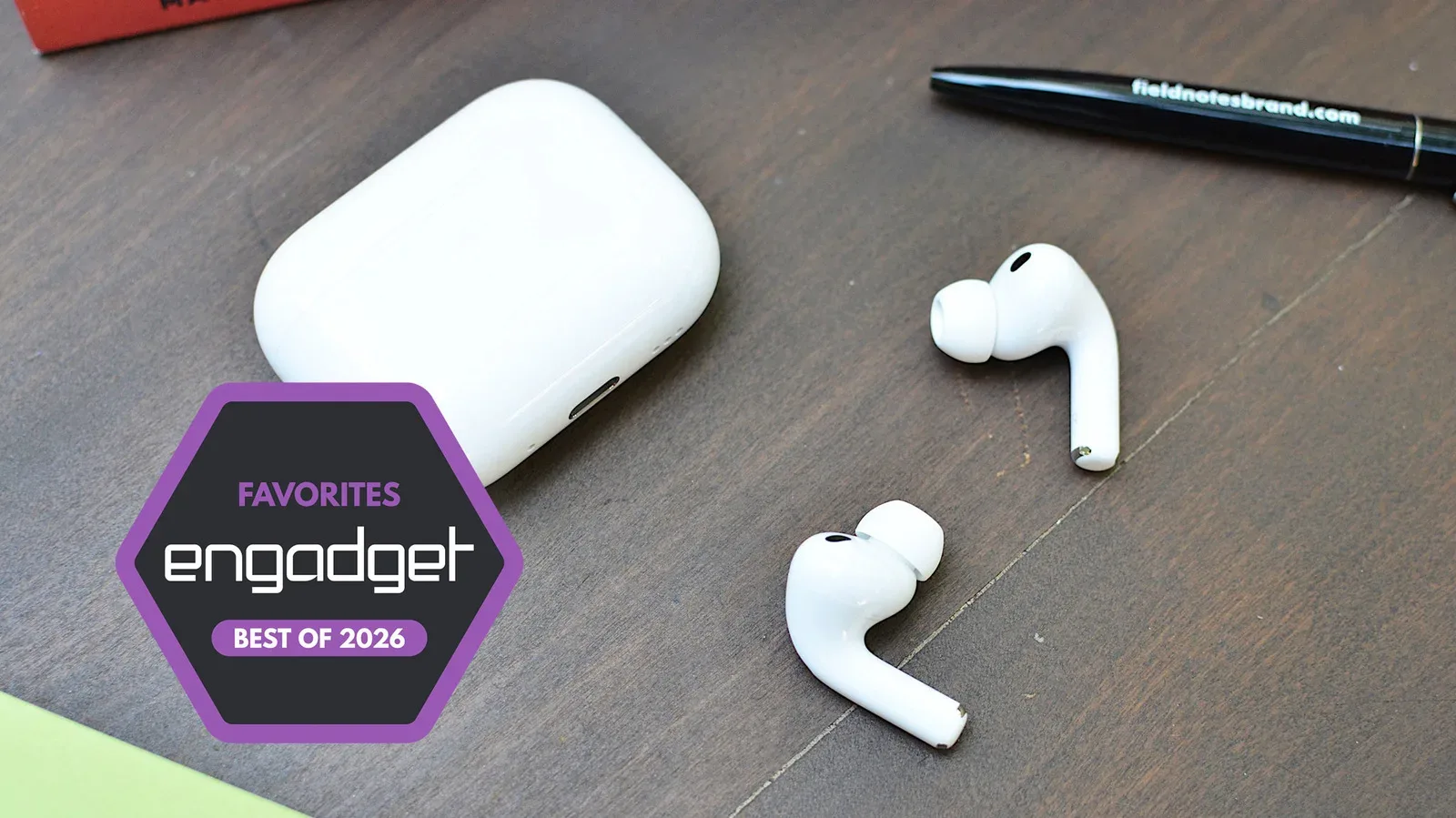
Apple’s AirPods Pro 3 sit in an unusually protected position: they cost $249, and no competing earbuds replicate the full set of Apple-specific conveniences available across iPhone, iPad and Mac. Features including hearing-test and hearing-aid functionality, plus live translation, are part of the argument for staying inside Apple’s accessory ecosystem.
That does not automatically make them the right purchase for every iPhone owner. Active noise cancellation, convincing sound, dependable battery life, multipoint connections and useful app controls are available at substantially lower prices. The more important question is which part of the premium-earbud experience matters most: shutting out environmental noise, being heard on calls, staying secure during a workout, lasting through a workday, or preserving the smallest possible budget.
Here is a practical look at six alternatives, what their savings do and do not buy, and the compromises that should be understood before treating a lower sticker price as a simple win.
The unavoidable trade-off: Apple integration versus broader value
AirPods Pro 3 are not merely Bluetooth earbuds that happen to work with an iPhone. Their appeal is their deep interoperability with Apple hardware and services. Buyers stepping outside that product family should expect to lose some dedicated Apple features. This is a compatibility decision as much as an audio decision.
In exchange, competitors can provide strong value in more focused areas. Bose emphasizes audio and noise cancellation. Anker’s options span unusually inexpensive feature sets and an upcoming call-focused model. Beats presents an exercise-oriented form factor while still offering many AirPods-like conveniences and Android compatibility. Sony offers its own suite of adaptive listening and control tools in compact designs.
ANC, or active noise cancellation, is central to every model here. It uses microphones and processing to reduce ambient sound. Its effectiveness varies by earbud and by the kind of sound involved, so the existence of ANC on a specification sheet is less revealing than the quality of its implementation. A model that handles persistent office noise or a flight well may still fall short of a higher-end pair in more demanding conditions.
Multipoint Bluetooth is another term worth knowing: it allows earbuds to maintain connections with more than one device, which is useful for switching between a computer and a phone. It is not the same thing as Apple’s proprietary ecosystem experience, but it can be a highly practical benefit for people moving between devices throughout the day.
Best overall saving: Bose QuietComfort Earbuds (2024)
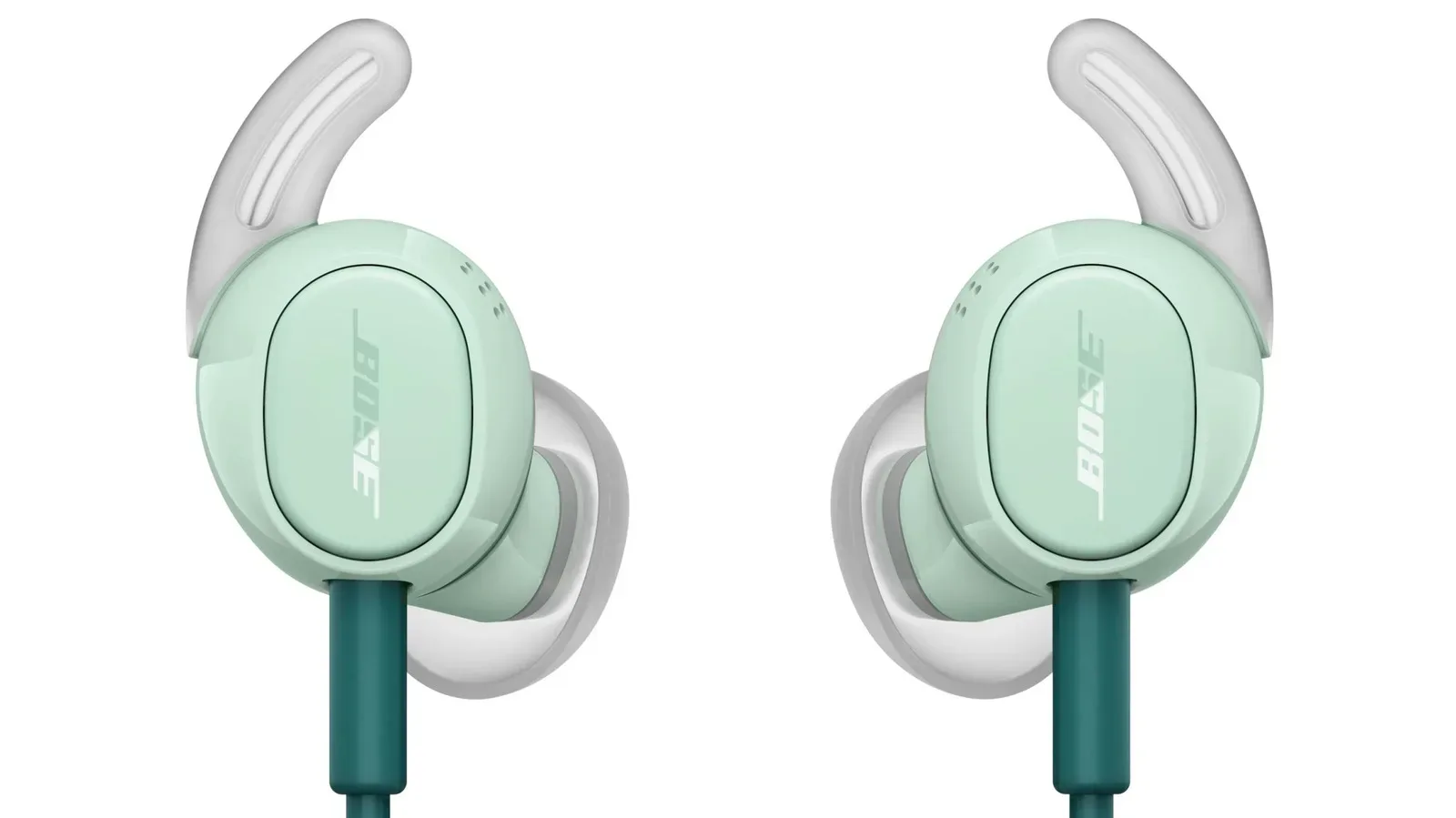
The 2024 Bose QuietComfort Earbuds present the most direct case against automatically paying $249. Originally $179, they are listed at $149 across seven colors, creating a $100 gap versus AirPods Pro 3. For listeners who rank sound quality and effective ANC first, that is a considerable saving without abandoning the core expectations of premium true wireless earbuds.
The feature set includes multipoint Bluetooth, adjustable EQ, hands-free voice control and customizable touch controls. An adjustable EQ lets listeners change the balance of frequencies to suit their preference; in practical terms, it can be used to temper an overly forceful low end or bring more presence to other parts of a mix. Customizable touch controls can similarly make everyday commands less dependent on a phone.
Battery life is another strength. Bose rates these earbuds for up to 8.5 hours per charge with ANC on. That even exceeds the six-hour figure attached to Bose’s pricier second-generation QuietComfort Ultra Earbuds. The Ultra model costs $249, the same as AirPods Pro 3, and offers higher performance along with Immersive Audio and CustomTune. Immersive Audio is Bose’s spatial-sound approach, while CustomTune is absent from the less expensive QuietComfort Earbuds.
That distinction makes the regular QuietComfort model a sensible value choice rather than a cut-price copy of Bose’s flagship. It omits some premium processing features, but it keeps the basics that matter to many commuters and frequent listeners: quality sound, strong noise cancellation and long stated endurance.
For a related look at the company’s audio direction, see Bose’s ANC-equipped wired USB-C earbuds.
For call quality: Anker Soundcore Liberty 5 Pro
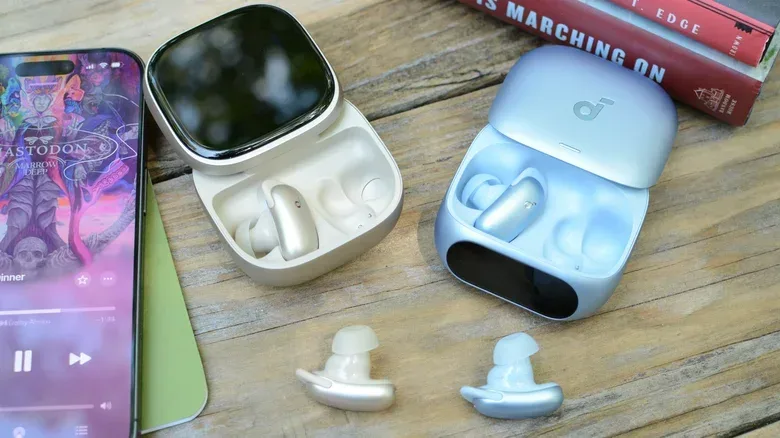
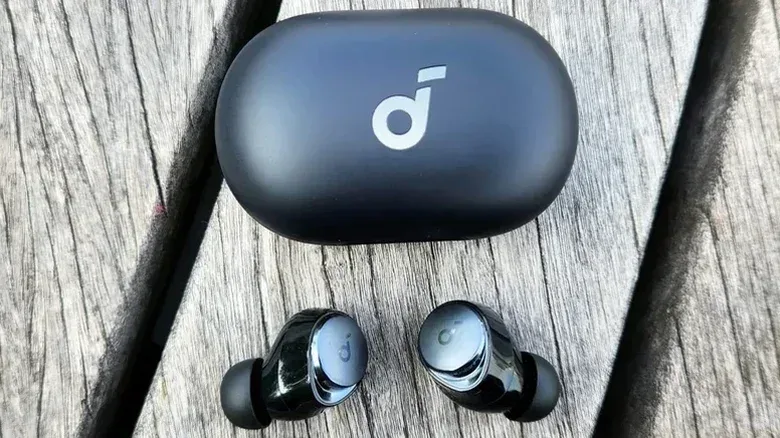
The Soundcore Liberty 5 Pro is positioned differently. At $170, it does not undercut every contender here, but its standout claim is voice pickup. Anker combines a Thus AI audio chip with eight microphones and two bone-conduction sensors to focus on the wearer’s speech and reduce background noise. Bone-conduction sensors detect vibrations associated with a person’s voice, giving the system another signal to use alongside conventional microphones.
The practical implication is straightforward: people who take calls in noisy places may value clear outgoing voice more than the last degree of noise cancellation or the most refined music playback. The Liberty 5 Pro is described as capturing a voice clearly without the wearer needing to raise it, while eliminating distractions for the person on the other end in most situations. That is a meaningful target, particularly because Apple has historically held an advantage in this category.
There are caveats. Overall audio is characterized as good rather than exceptional, and its ANC is effective without matching the most powerful performance found on more expensive earbuds. It does, however, include Dolby Atmos with head tracking, a personalized EQ and an AI Sound Enhancement feature. Head tracking adjusts compatible spatial audio as a listener moves their head; whether that is essential is a matter of taste, but it is additional functionality at this price.
Important uncertainty: this model is still undergoing evaluation, so its early promise on voice performance should not be mistaken for a fully settled recommendation. Buyers whose priority is calls have a potentially compelling $170 choice, but those purchasing immediately may prefer a model with a more complete assessment.
For training: Beats Powerbeats Fit
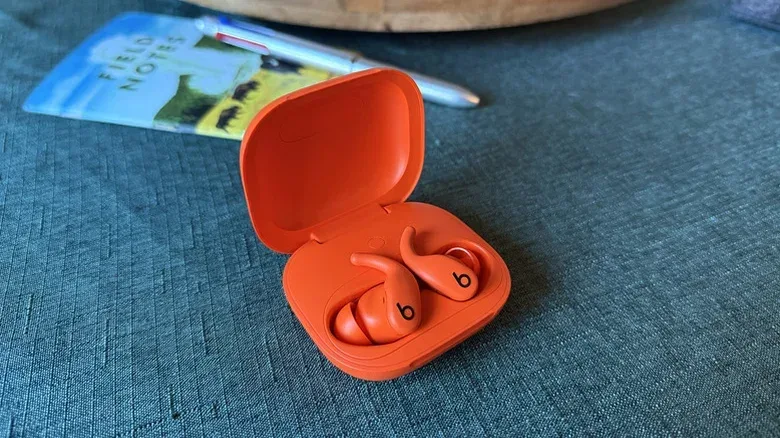
The Beats Powerbeats Fit tackle a problem that specifications often fail to capture: earbuds are not much help in a workout if they do not stay put. Their secure, comfortable design is the central reason they fit this shortlist, alongside good sound, ANC and additional features intended to preserve many of the conveniences familiar to AirPods users.
They are $50 below AirPods Pro 3 at full price, and were listed at $170 at the time of this comparison. That lower price is not the only benefit. The Powerbeats Fit are also presented as working just as well with Android devices, making them a more flexible choice for someone who does not live exclusively in Apple’s ecosystem.
Fitness buyers should focus on the combination rather than any individual claim: secure fit, comfort, resistance to a sweaty session, sound quality and noise cancellation. A workout-specific model is often the better purchase when that combination matters more than Apple’s most specialized software capabilities. The Powerbeats Fit look especially appropriate for iPhone users who want a sport-oriented alternative without completely stepping away from Apple-adjacent convenience.
The low-price standout: Anker Soundcore Space A40
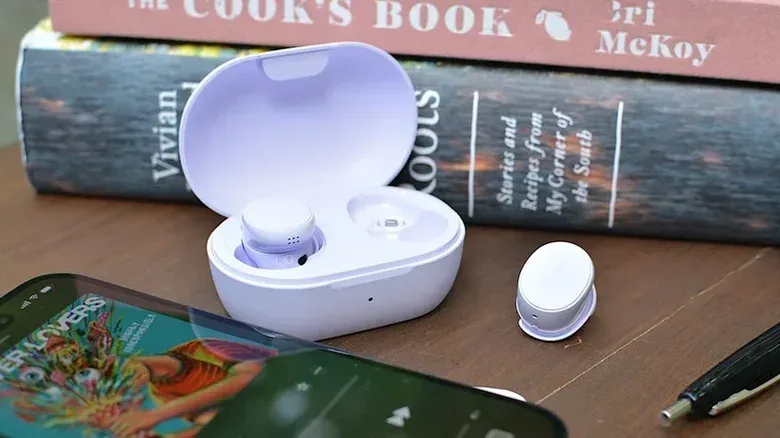
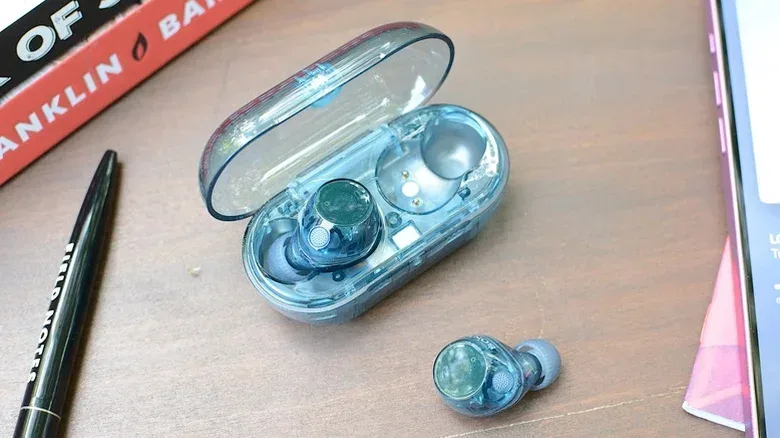
At $55, the Soundcore Space A40 are the budget pressure point in this comparison. They are not presented as matching the leaders in ANC, but the feature inventory is unusually broad for the price: ANC, multi-device pairing, wireless charging, IPX4 water resistance, transparency mode, eight to 10 hours of battery life and LDAC support.
Transparency mode does the opposite of ANC in a useful sense, feeding in outside sound so the wearer can remain aware of surroundings or hear someone nearby without removing an earbud. IPX4 water resistance means protection against splashes; it should not be interpreted as permission to submerge the earbuds. LDAC is a Bluetooth audio codec support feature that may matter to listeners using compatible gear and services.
The Space A40’s default sound is warm and pleasant, with companion-app EQ adjustment available. Their ANC trails the top selections, yet remains useful in a loud office or on a long flight. That framing is valuable: budget ANC need not eliminate the world to improve a commute or make a shared workspace more manageable.
For shoppers trying to stay far beneath the $249 AirPods Pro 3 price, this is the clearest choice. It also demonstrates that a lower price no longer requires giving up basics such as wireless charging or multi-device pairing. The sacrifice is primarily the level of refinement, particularly in noise cancellation, rather than access to the category’s essential tools.
Sony’s two routes: lower cost or ultra-compact comfort
Sony’s WF-C710N occupy the affordable middle at $88, reduced from a $130 list price. Their small size is a practical strength for longer listening sessions. They include Adaptive Sound Control, personalized EQ, DSEE upscaling, Quick Attention, multipoint connectivity and automatic pausing when they are removed.
Adaptive Sound Control refers to Sony’s behavior-based listening controls, while DSEE is intended to enhance audio. Quick Attention is designed to make it easier to engage with the world around the wearer. Taken together, the package is generous at the discounted price, and ANC is described as remarkably strong for this range.
Buyers should temper expectations around music balance, calls and battery. Bass is said to be overpowering across many genres, real-world battery performance did not reach Sony’s promised 8.5 hours, and call quality does not surpass competing options. The WF-C710N make the most sense for someone who values comfort, useful features and stronger-than-expected ANC at $88, and can accept those limitations.
The Sony LinkBuds Fit serve a different buyer. At $198, they save only $51 against AirPods Pro 3, so price alone is not their pitch. They are tiny and exceptionally comfortable, while offering large sound from a small body. Features include Adaptive Sound Control, multipoint Bluetooth, Speak to Chat, head gestures and Wide Area Tap, which lets the wearer control them by tapping their cheek near the ear.
The major warning is ANC. With a stated maximum of 5.5 hours with ANC active, battery life is lower than the Bose option, and the noise handling is characterized more as reduction than full cancellation even around sustained distractions such as fans or white-noise machines. The LinkBuds Fit are therefore a comfort-and-controls choice, not the optimal pick for a buyer whose first goal is making a loud commute disappear.
How to choose without getting lost in feature lists
- Choose Bose QuietComfort Earbuds (2024) if strong sound, ANC and up to 8.5 hours of stated ANC-on listening are the priority, especially at $149.
- Watch the Soundcore Liberty 5 Pro if clear voice transmission is your chief concern, while remembering that assessment is still in progress.
- Choose Powerbeats Fit if a secure workout-friendly design and cross-platform usefulness matter more than Apple’s full Pro feature set.
- Choose Soundcore Space A40 if $55 is the budget ceiling and a surprisingly complete feature set matters more than class-leading ANC.
- Choose Sony WF-C710N if the $88 price, compact comfort and feature depth outweigh concerns about bass, calls and battery results.
- Choose Sony LinkBuds Fit if a tiny, comfortable design and unusual gesture controls are more valuable than the strongest possible noise cancellation.
Other earbuds merit caution rather than a place at the front of this list. Apple’s regular AirPods 5 include ANC, but the lack of ear tips weakens their noise-cancelling performance. Samsung Galaxy Buds 4 have good sound but unimpressive ANC. Google Pixel Buds 2a offer a lot for Pixel users but miss more advanced Pro-level capabilities. Audio-Technica’s ATH-CKS50TW2 pair long battery life and warm sound with a bulky, unbalanced design and awkward controls. Beats Studio Buds+ remain solid but are now more than three years old.
The practical lesson is that AirPods Pro 3 are still the straightforward choice for iPhone owners who want every Apple-specific benefit and are comfortable paying $249. But the alternatives are not merely compromises. At their best, they redirect the budget toward a real preference: Bose for ANC and battery, Beats for fitness, Anker for affordability or calls, and Sony for compact comfort and control options. Choosing by that priority is likely to yield a better result than chasing an incomplete imitation of Apple’s ecosystem.
Shop the products
Check current price, model and availability at the retailer.