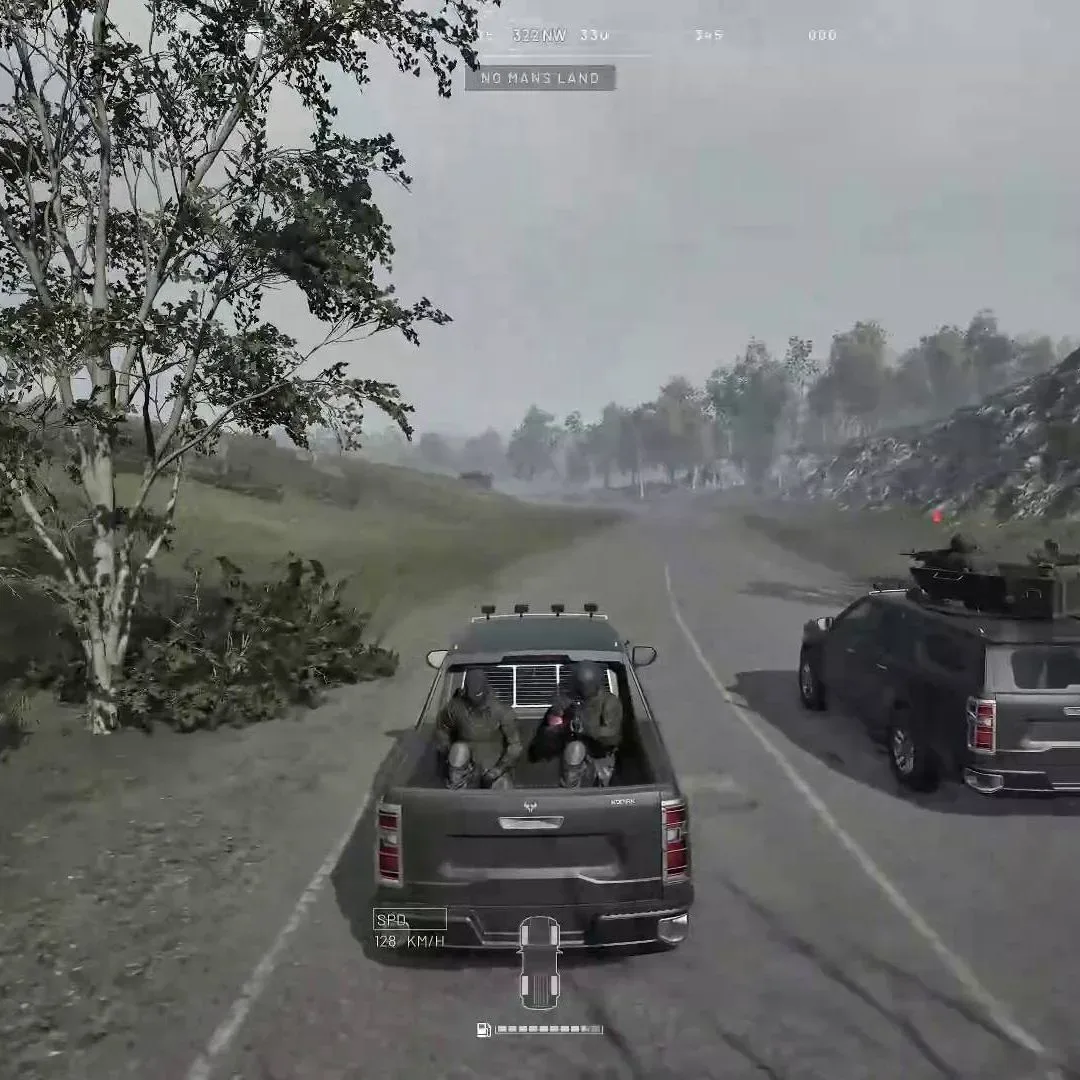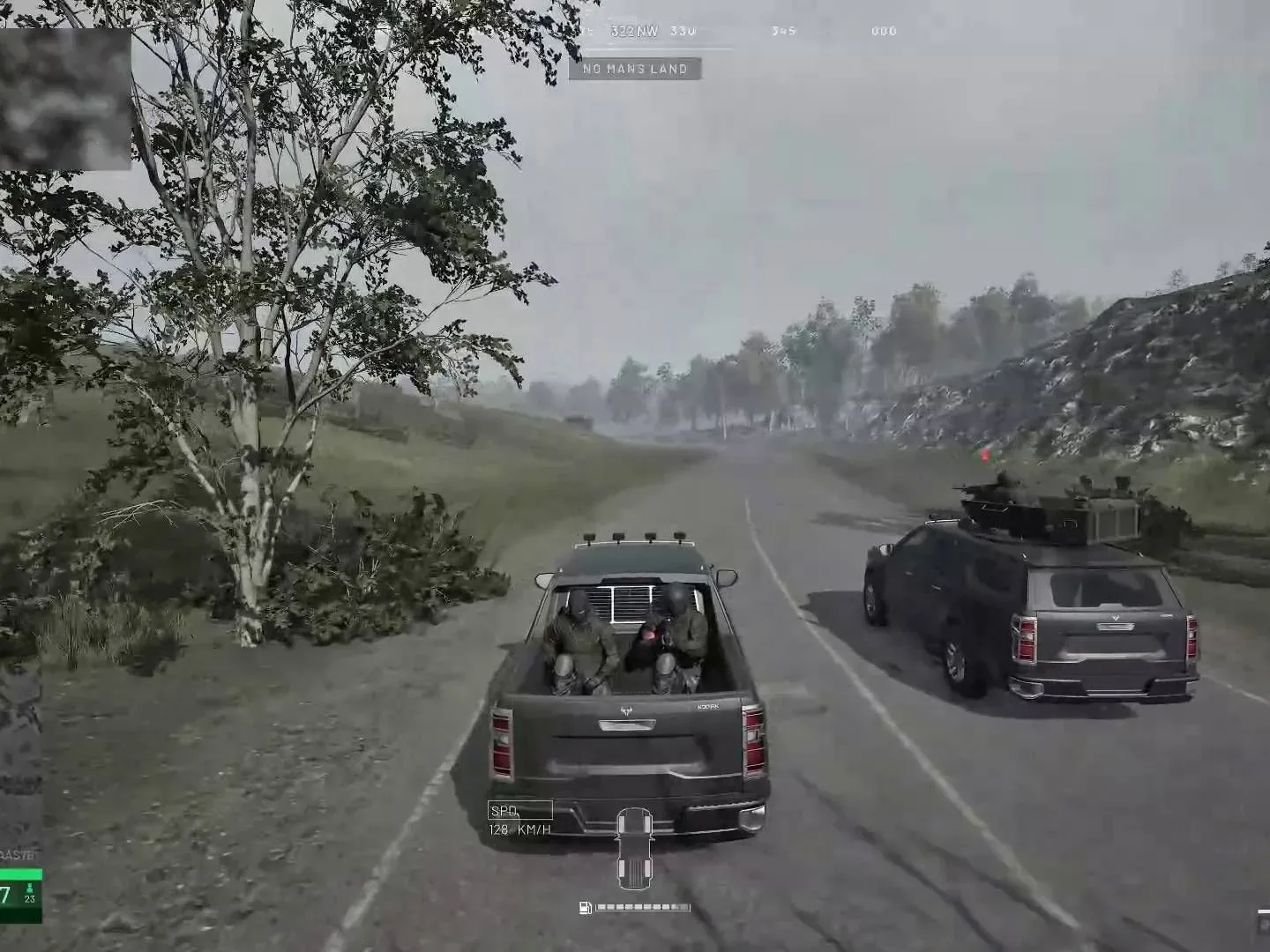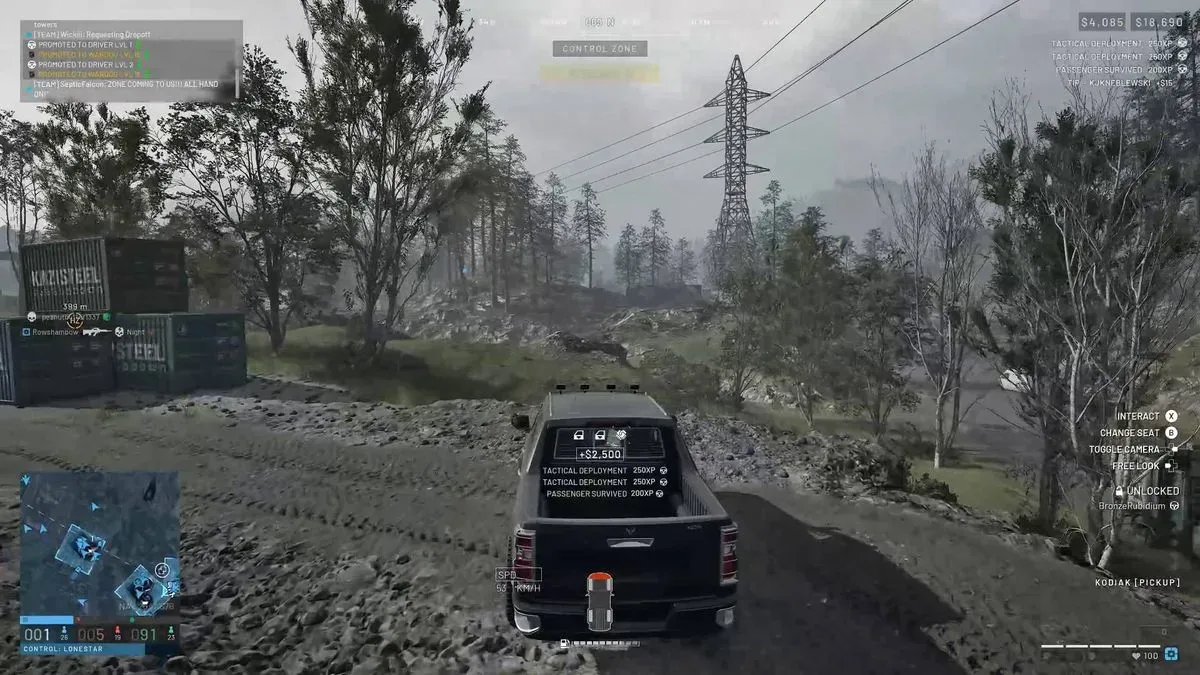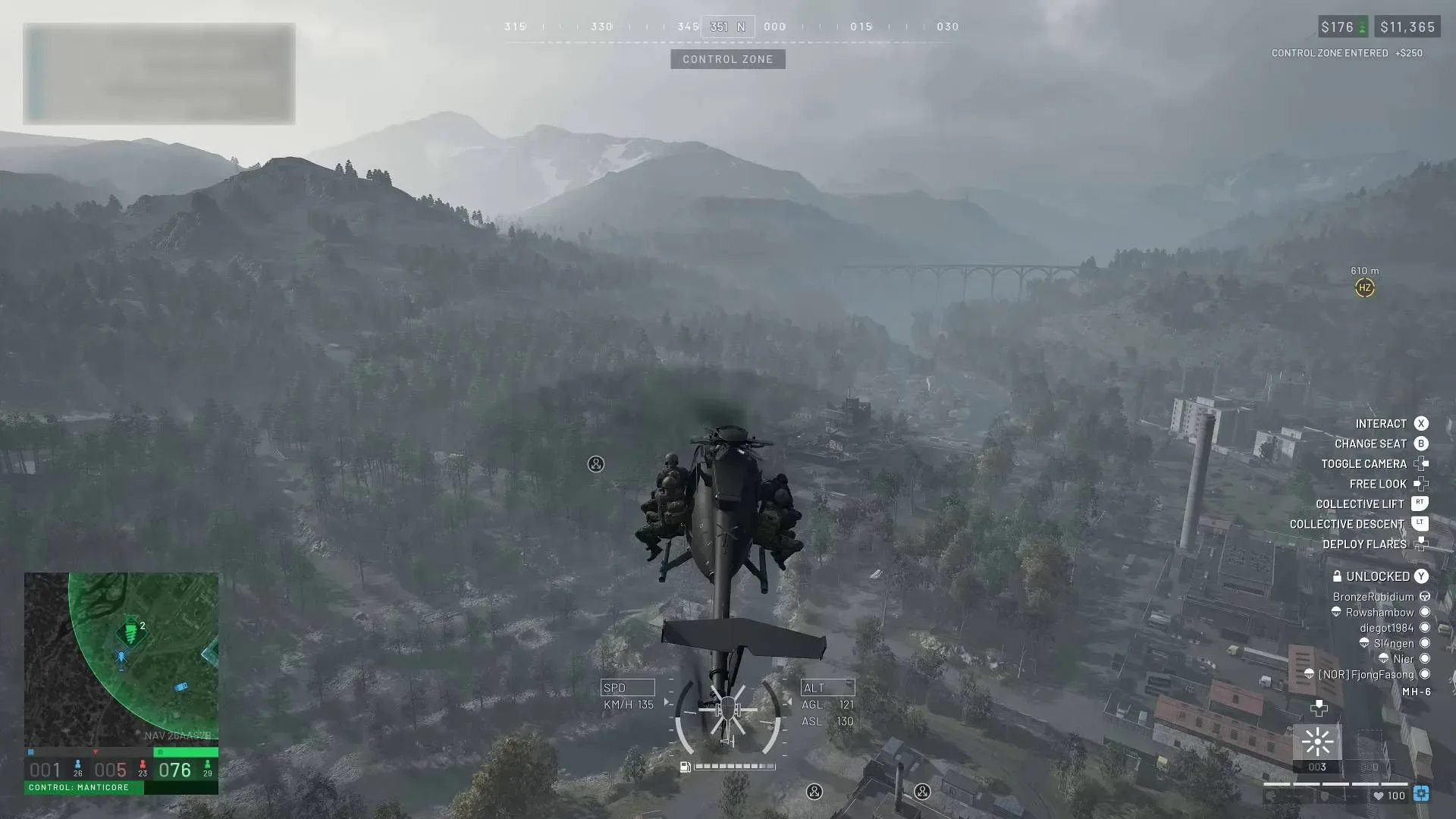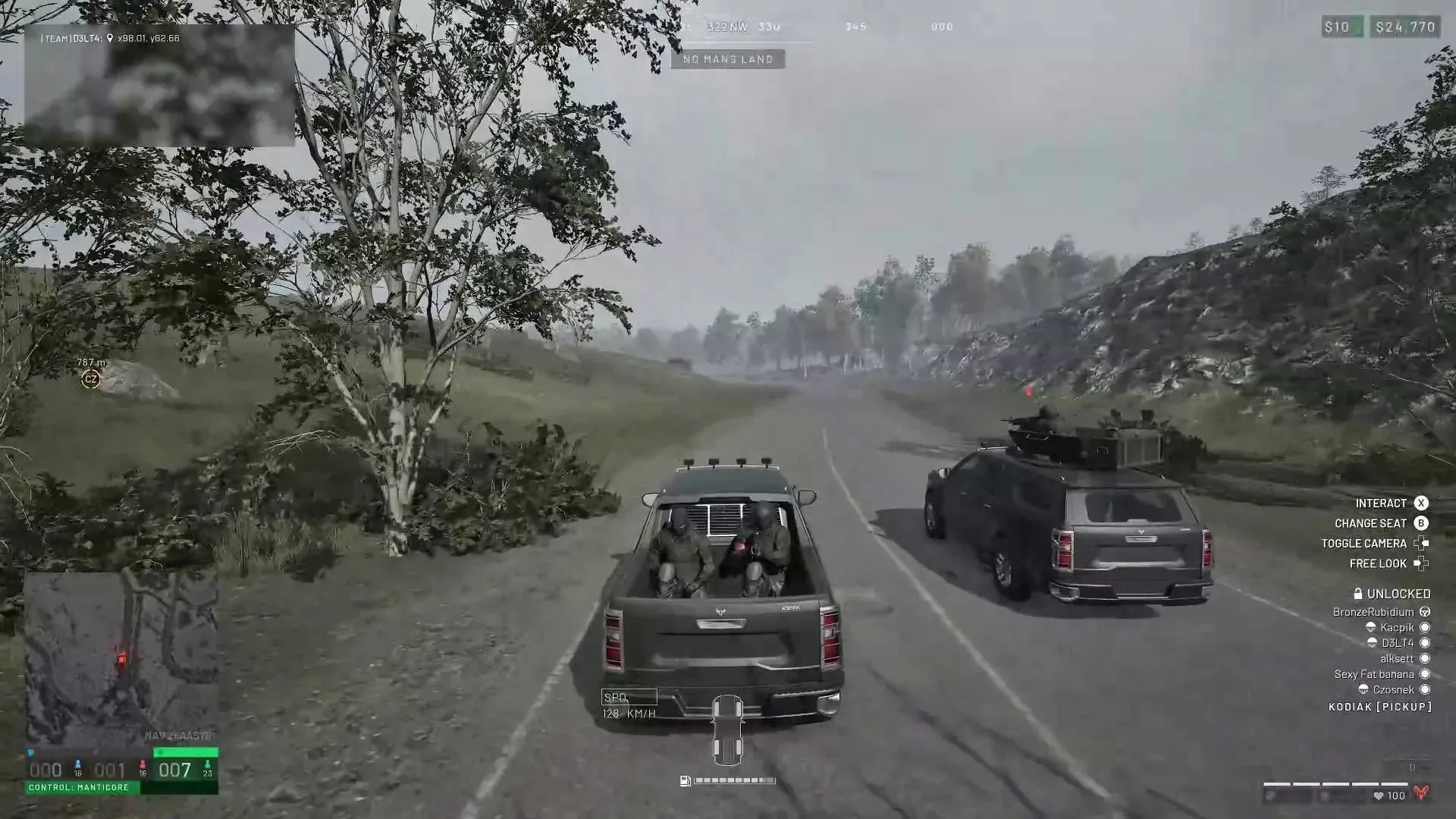
Driver XP is one of Wardogs’ more stubborn progression tracks. It matters because higher Driver levels and enough in-match cash open the path to vehicles such as the Ural truck, while tanks and other heavy vehicles can remain inaccessible for players who have not pushed far enough through the rank requirement.
The catch is that driving around by itself is not presented as a reliable source of progress. Driver XP is tied to practical support actions: bringing supplies to a forward operating base, getting teammates safely from HQ to the control zone, or positioning the APC so allies can deploy on it. Even when those actions are performed efficiently, the gains are limited, so this is a role best approached as useful team play first and a steady XP farm second.
Driver XP methods at a glance
- Deliver FOB supplies: Bring pallets, or supply-filled crates in an early-game alternative, into a friendly FOB and unload them in its area.
- Transport teammates: Take allies from HQ to the control zone. XP arrives when they get out and remain alive for a short period.
- Run the APC spawn point: After the team score reaches 20, drive the APC to a helpful position in the control zone and earn XP when players spawn on it. This appears to have a cap.
Of those three, logistics is the strongest repeatable option. Passenger runs can work well with a coordinated group, while the APC is situational and constrained by both timing and an apparent limit on its rewards.
Best overall method: make supply deliveries to FOBs
FOB means forward operating base: a team position where delivered supplies count toward the side’s wider battlefield effort. For Driver XP purposes, the important action is not merely loading cargo or arriving nearby. The payoff comes when supply pallets are offloaded within the FOB area.
The preferable vehicle for this loop is the Ural truck. It must first be unlocked through Driver progression, and it also costs cash to buy. Once available, load it with pallets of FOB supplies, drive to a friendly FOB and unload the cargo in the designated area. Repeating that route is currently the clearest way to build Driver XP because every completed delivery is a tangible support task rather than a reward contingent on another player’s survival or spawn choice.
What to do before the Ural is unlocked
Newer drivers are not entirely locked out of logistics XP. A Kodiak can be loaded with supply-filled crates instead. It is not described as the ideal version of the loop, but it provides a practical bridge while working toward the Ural unlock.
The two approaches after a delivery are simple, and the right one depends on whether cash or time is the tighter resource:
- Return the truck: Drive back from the FOB, reload, and make another run. This conserves cash but adds travel time.
- Respawn and buy another Ural: If cash is plentiful, respawn at HQ, purchase a replacement truck, load it and head out again. This cuts out the return drive, but spends more money.
That trade-off is worth treating as a team-resource decision, not just a personal leveling calculation. The truck is valuable because it is moving FOB supplies, and repeated purchases consume cash that might otherwise be used elsewhere. If a safe return journey is practical, it is the economical choice. If a match’s needs or available funds favor fast turnaround, replacing the vehicle can keep supplies moving.
How passenger transport awards Driver XP
Wardogs also rewards a driver for delivering teammates from HQ, the team’s home base, to the control zone, the active area where the match is being contested. The process has an important condition: teammates need to leave the vehicle, then survive for a few seconds. An immediate death can prevent the driver from receiving the expected credit.
In plain terms, this turns the job into more than a taxi ride. Pick-up, route choice and drop-off location all matter because the passenger needs a viable chance to get established. Dropping people into a dangerous position may get them to the zone quickly, but it can undermine the survival requirement that makes the trip count for XP.
The limitation is social as much as mechanical. Helicopters are faster, so public-match teammates may reasonably choose air transport over a ground vehicle. That means a driver cannot always create passenger opportunities alone. A coordinated squad or friends willing to ride from HQ makes this method significantly more practical. If several allies agree to use the same vehicle repeatedly through a match, the driver can accumulate XP while helping the group arrive together.
For solo players, it is best viewed as opportunistic support. Offer a ride when people are gathering at HQ, but do not spend long stretches waiting for a full vehicle if nobody is interested. A supply delivery is usually the more controllable task.
Using the APC as a mobile spawn point
The third path starts only once the team’s score reaches 20. At that point, an APC, or armored personnel carrier, appears at HQ. Players can select it as a spawn location through the HQ computer. A driver can take the APC to an appropriate spot in the control zone and receive Driver XP as teammates spawn on the vehicle.
Positioning is the core of this method. The APC needs to be in a location teammates will actually use, which means it must be useful to the team’s push without being placed so recklessly that it is immediately lost. The available information does not define an exact ideal distance or location, so the sensible objective is simply a viable control-zone position that makes the spawn option attractive.
There are several reasons not to build an entire progression plan around the APC:
- It does not exist until the team reaches 20 score.
- The driver has to be at HQ when it becomes available, or wait there for the moment.
- Other players may also want to drive it.
- Most importantly, Driver XP from ally spawns appears to stop after a while, suggesting a reward ceiling.
That last point deserves emphasis. The limit is observed behavior rather than a stated numeric rule: XP eventually ceases to be awarded through this route. Treat APC spawns as a useful burst of support and progress, not an endless loop.
A practical priority order for slow Driver progression
Because none of the known routes is particularly fast, the best approach is to choose actions that contribute to the match even when XP arrives slowly. A sensible order is:
- Run supplies to FOBs whenever a truck and cargo are available. This is the most repeatable and self-directed source.
- Take passengers when allies are ready to travel from HQ. Coordinated teammates make it notably stronger.
- Use the APC after score 20 if it becomes available to you. Place it where spawns are useful, but expect the XP to stop eventually.
This order avoids a common frustration: treating Driver XP as a purely individual task in a game mode where the rewards are attached to team logistics. Deliveries improve a FOB. Passenger runs move people into the contest. APC driving gives the side a forward deployment option. If the XP gain is slow, at least each attempt should be doing work the team can use.
Why the Driver grind feels so restrictive
The available reward sources are narrow, and each has friction. Logistics requires a suitable vehicle, cargo, a destination and time on the road. Passenger XP depends on other players choosing ground transport and living after disembarking. APC XP depends on a score threshold, access to a single vehicle and allied spawn behavior, then seems to stop after a certain amount.
That combination explains why heavy vehicles can feel distant for many players. The issue is not simply that a driver needs to play more matches; progress relies on circumstances that a single player cannot completely control. The logistics loop reduces that uncertainty most effectively, which is why it should be the foundation of any deliberate Driver XP effort.
Players looking for adjacent reading on PC driving-focused games can also see details on the Road Truckers: New Beginning playtest. In Wardogs, though, the immediate lesson is less glamorous: load supplies, deliver them accurately, and use passenger or APC opportunities when the match gives you them.