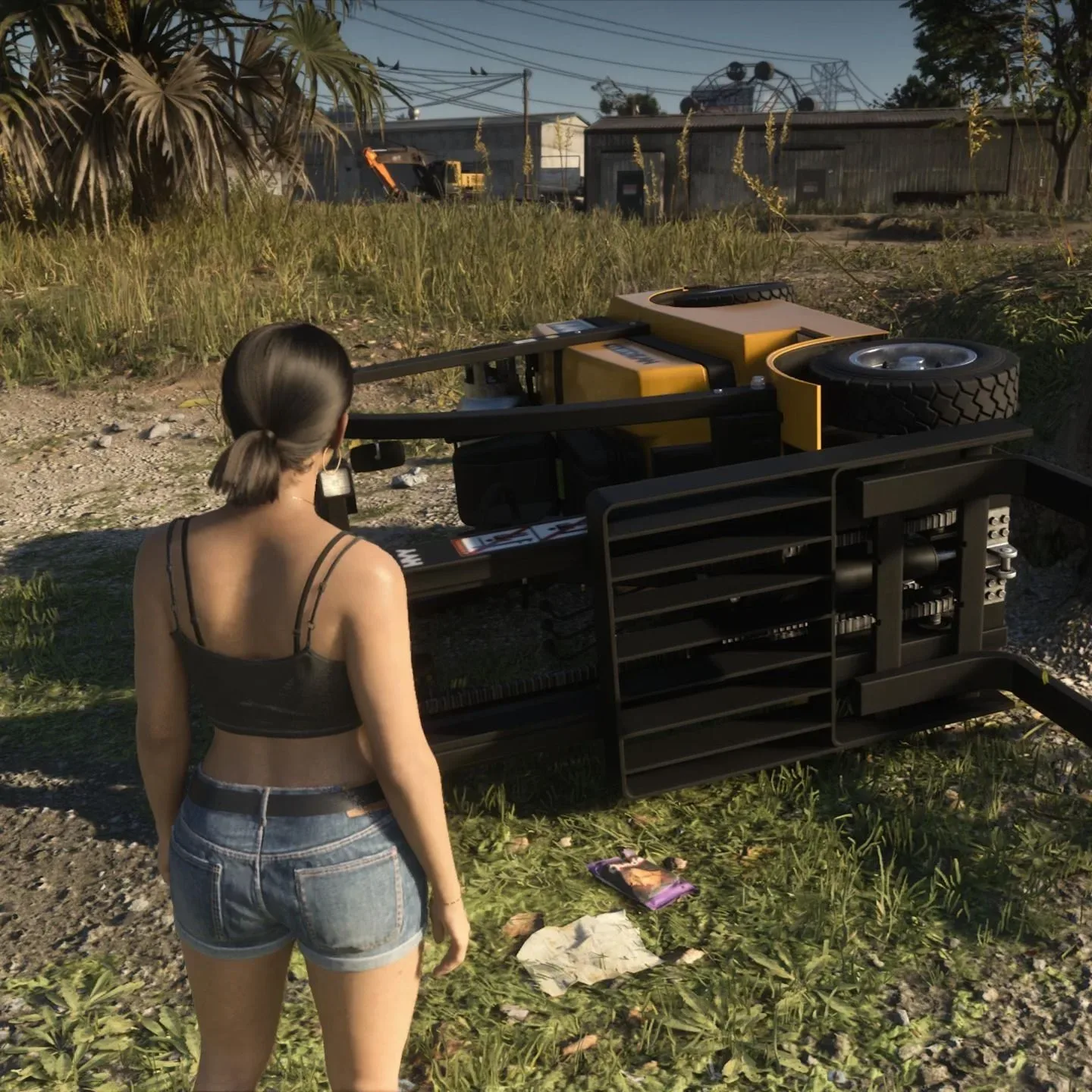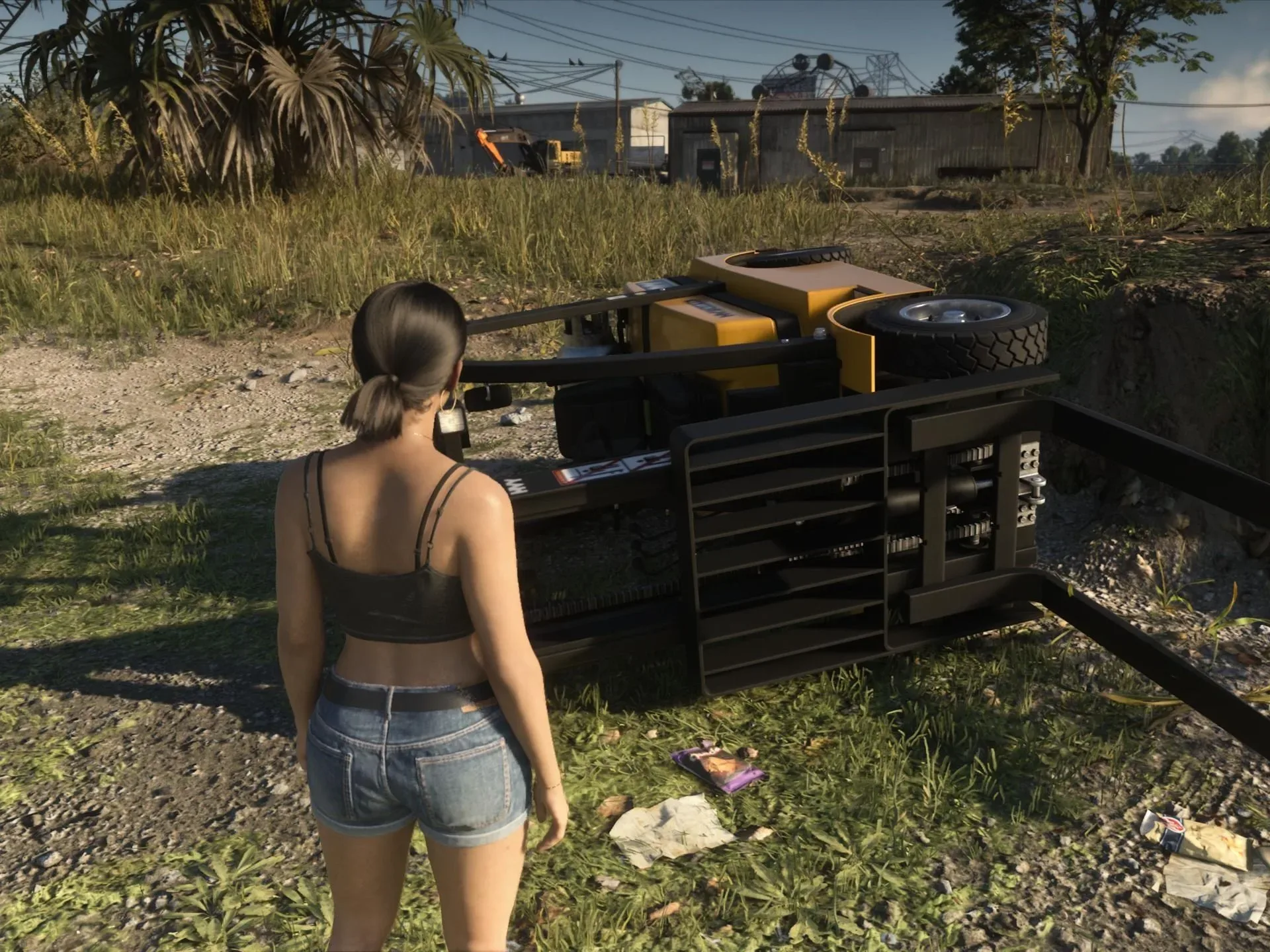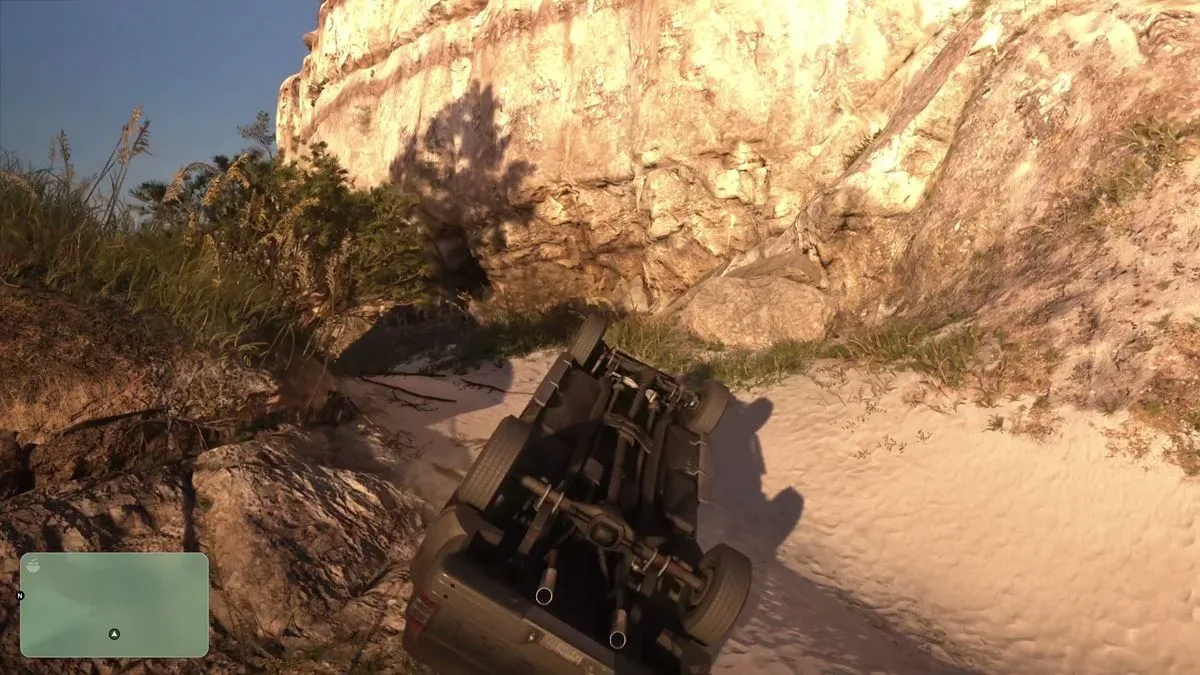
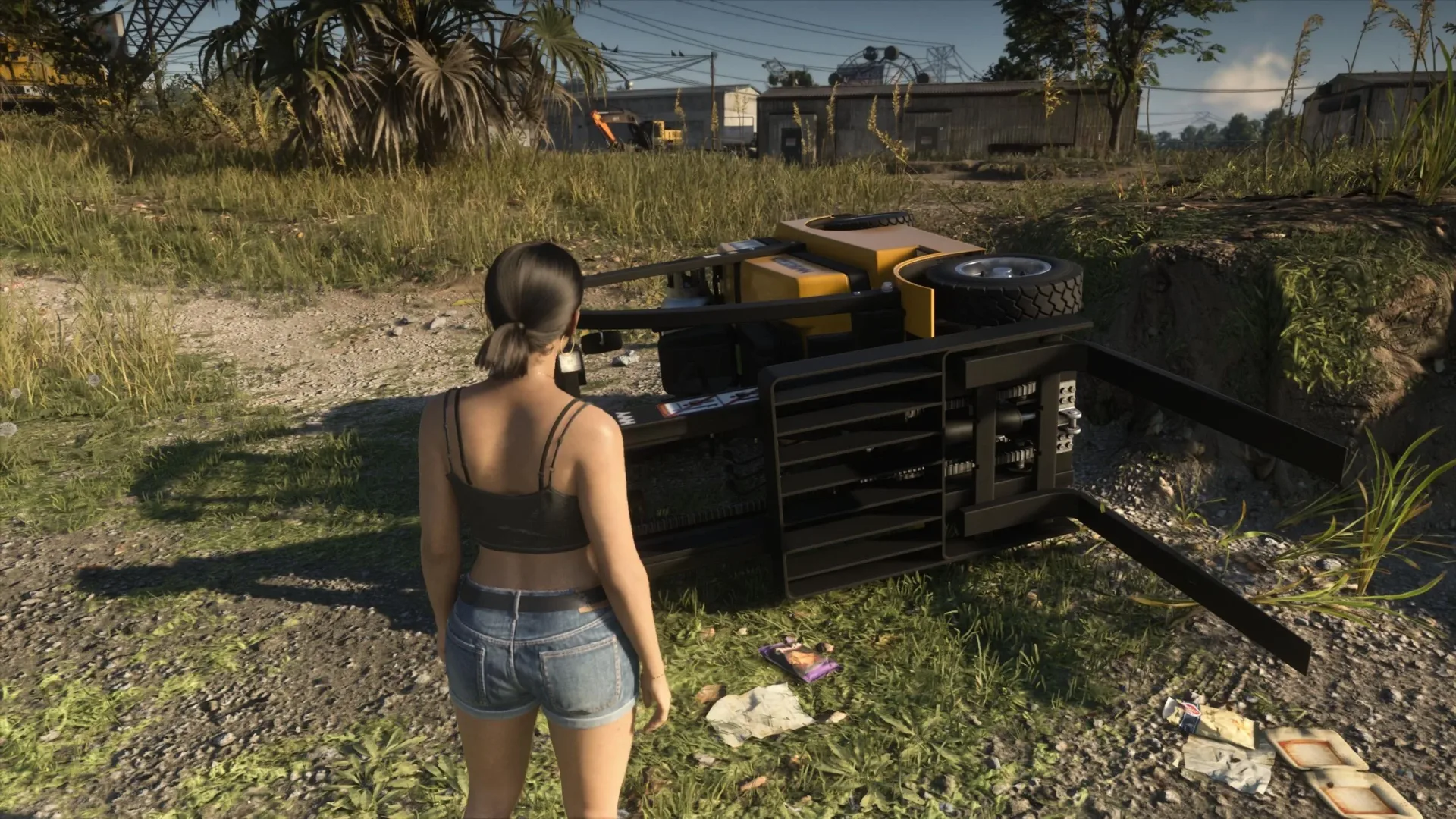
A spectacular crash does not have to end with Jason or Lucia staring at a car resting helplessly on its roof. GTA 6 includes a close-range vehicle recovery interaction that lets the playable characters turn an overturned vehicle upright. The same interaction also applies to a boat that has run aground, allowing it to be pushed back toward the water.
The important detail is that this is not a driving input performed from behind the wheel. Players need to leave the vehicle, stand beside it, and physically approach it on foot. Once the appropriate animation appears, a button press performs the flip or shove.
How to flip a car in GTA 6
- Exit the overturned vehicle and walk up to it.
- Keep moving into the vehicle as though the character is attempting to push it by hand.
- Wait briefly for Jason or Lucia to transition into the vehicle-moving animation.
- Press Square on PS5 or X on Xbox to flip the car back over.
In practical terms, the animation change is the key confirmation that the interaction is available. Simply running into a wrecked car is not the final command. Continue pressing forward against the vehicle until the character visibly adopts the flipping or pushing motion, then use the relevant action button.
Use the same interaction to free a boat
Boats can encounter a closely related problem: ending up stuck on land instead of afloat. The recovery process is the same. Walk into the grounded boat, wait for the character to begin the pushing animation, then press Square on PS5 or X on Xbox.
Rather than rotating the boat as with an overturned car, the action shoves it along the ground. That makes the technique useful when a vessel needs a final nudge back toward the shoreline and water. Positioning still matters: the boat must be pushed in a direction that can actually lead it off land. The provided controls describe the push action, not a guarantee that every awkwardly wedged boat can be freed from any position.
What the recovery action does—and does not—solve
This is a repositioning tool, not a repair feature. A car can be restored to an upright position after a rollover, but the damage caused by the collision remains. Players should treat flipping as a way to make the vehicle usable again or get it out of an inconvenient position, not as a way to undo the crash.
That distinction matters because a vehicle can be functional enough to right itself yet still carry the consequences of whatever sent it airborne in the first place. The recovery prompt addresses the vehicle’s orientation: roof-down becomes wheels-down. It does not restore its prior condition.
Technical term: contextual interaction
A contextual interaction is an action that changes based on where the player is standing and what object the character is engaging with. Here, Square or X is not presented as a universal “flip vehicle” command. It only becomes meaningful once Jason or Lucia is next to the appropriate vehicle and has entered the relevant animation state.
Related coverage includes GTA 6 Car Flipping Guide: How to Turn an Overturned Vehicle Back Over.
That setup explains why proximity and sustained movement into the object are part of the method. The game is checking the player’s position and the vehicle’s state before allowing the action. For an overturned car, the resulting context is a flip; for a boat stranded on land, it is a push.
A quick recovery checklist
- Car on its roof: Get out and approach it on foot.
- Boat on land: Stand against it on the side that will move it toward the water.
- No movement animation yet: Keep walking into the vehicle for a moment.
- Animation is active: Use Square on PS5 or X on Xbox.
- Vehicle is upright but damaged: Remember that flipping does not repair collision damage.
Why the animation cue is worth watching
The game does not heavily explain this capability, so it is easy to assume that an upside-down car is permanently lost or that a grounded boat requires abandoning the trip. The character animation is the clearest piece of feedback that the correct interaction has been found. It also separates this action from ordinary on-foot collision, where walking into an object accomplishes nothing useful.
Watching for the animation prevents a common kind of wasted input: pressing the action button before the character has engaged with the vehicle. Start by establishing contact and moving forward. Once Jason or Lucia shifts into the appropriate effort animation, use the button prompt associated with the platform.
What is known about strength requirements
The vehicle-flipping action works without an indicated requirement to spend time working out in-game first. That makes it a broadly useful recovery option rather than a mechanic reserved for a particular progression path. Jason and Lucia can perform the action despite its intentionally exaggerated display of strength.
It should not be confused with an upgrade system or a permanent vehicle modification. The supplied information identifies a direct, situational interaction: approach, trigger the animation, and activate the flip or push.
Keep vehicle problems separate from other GTA 6 systems
A rollover is one of several situations where GTA 6 may rely on an interaction that is easy to miss until a player needs it. The vehicle recovery input has a narrow purpose: correcting a flipped car or relocating a grounded boat. It does not imply anything about vehicle repair, broader control customization, or online features.
Players looking into other GTA VI account and service options can also read about the GTA+ benefits toggle in GTA VI. That setting is separate from the on-foot vehicle recovery action described here.
Best use cases for the flip and push action
The car flip is most useful immediately after a crash leaves the vehicle upside down. Instead of treating the incident as an automatic reason to find another car, the player can attempt recovery on the spot. For boats, it is especially relevant after an accidental beaching, when a small adjustment may be all that separates a stranded vessel from returning to the water.
Neither use case changes the condition of the vehicle. The benefit is mobility and convenience: a flipped car can be returned to its wheels, while a landlocked boat can be shifted toward its intended environment. Knowing that the action exists turns both accidents from apparent dead ends into problems with a simple on-foot solution.