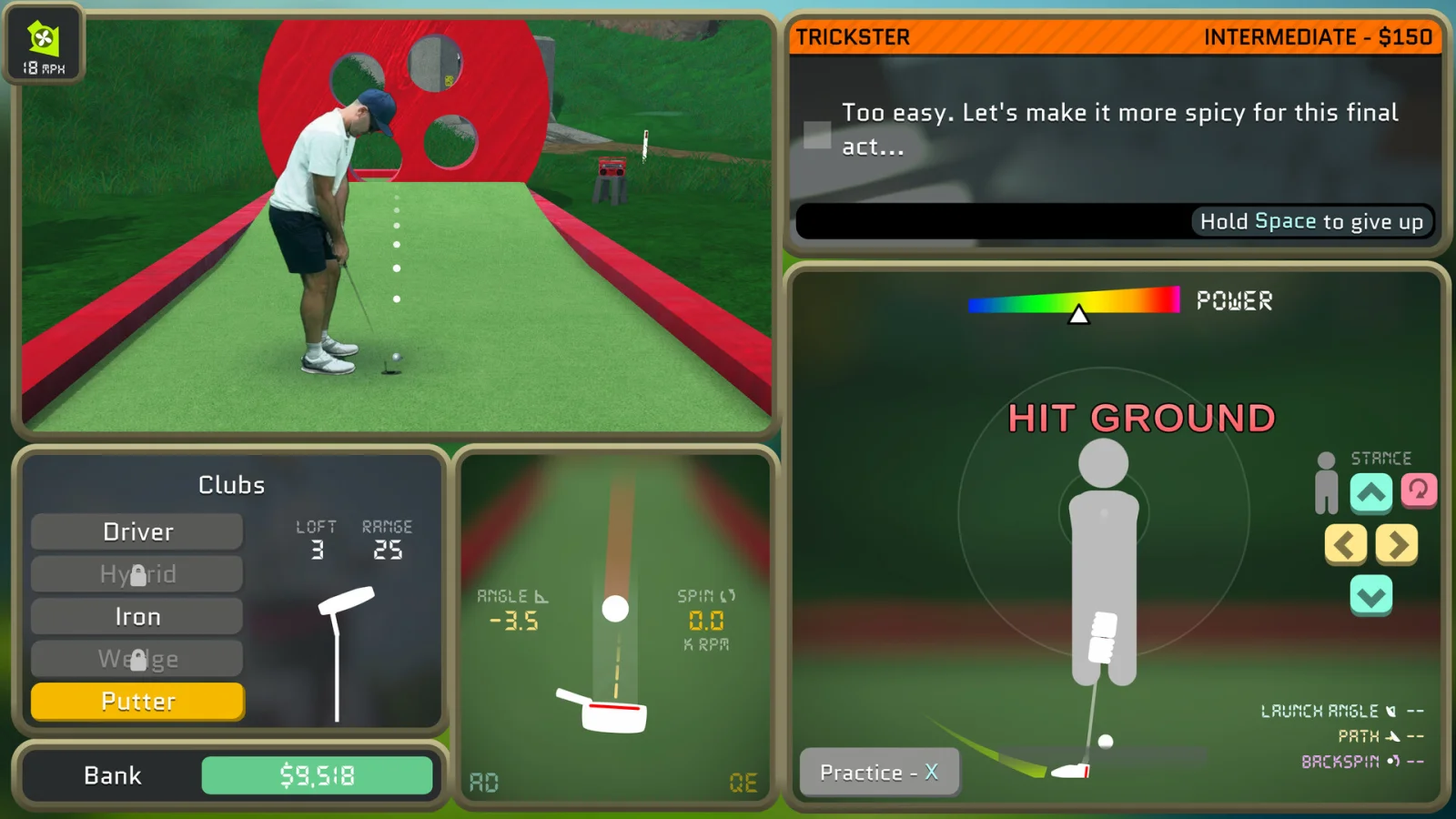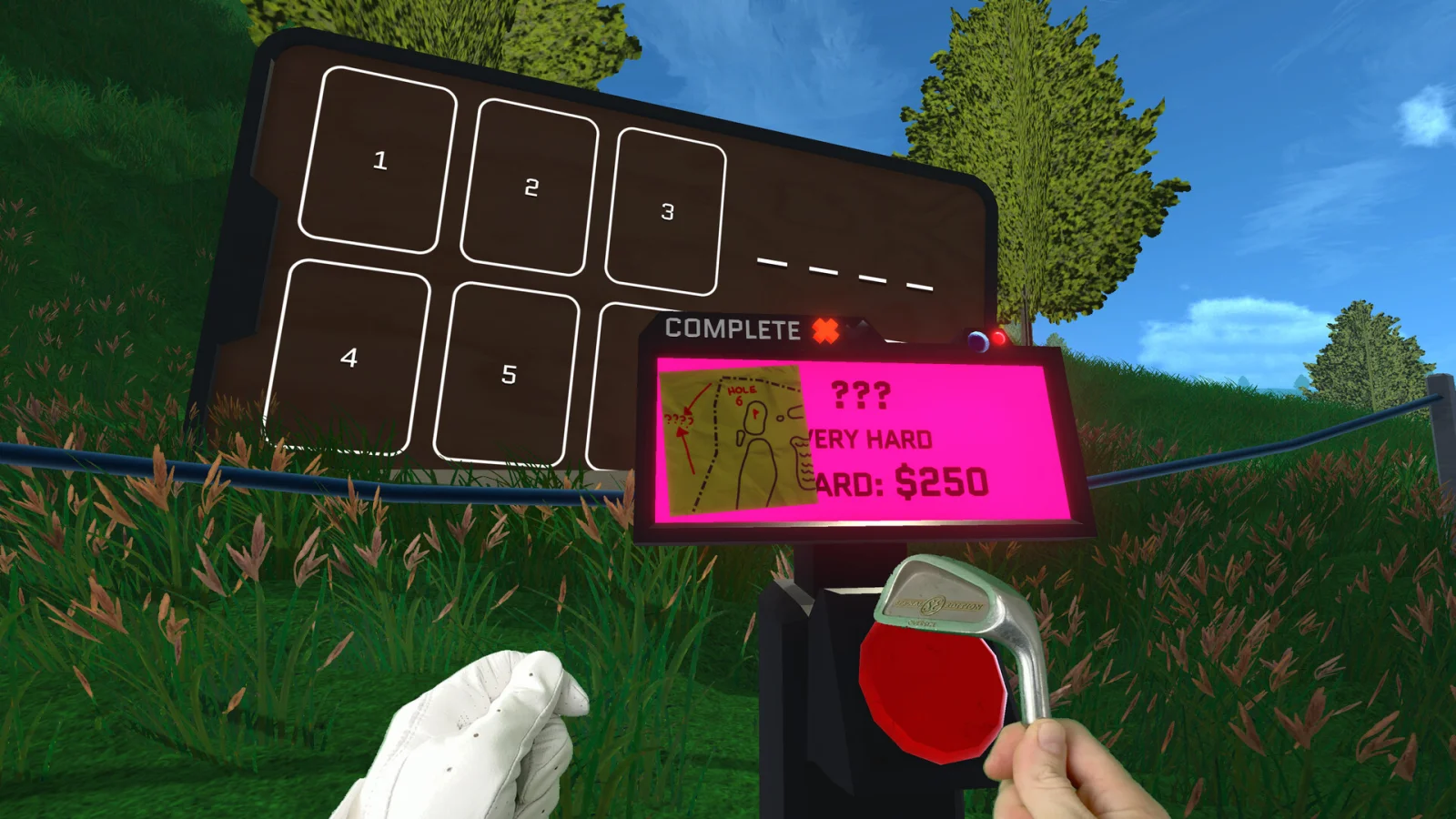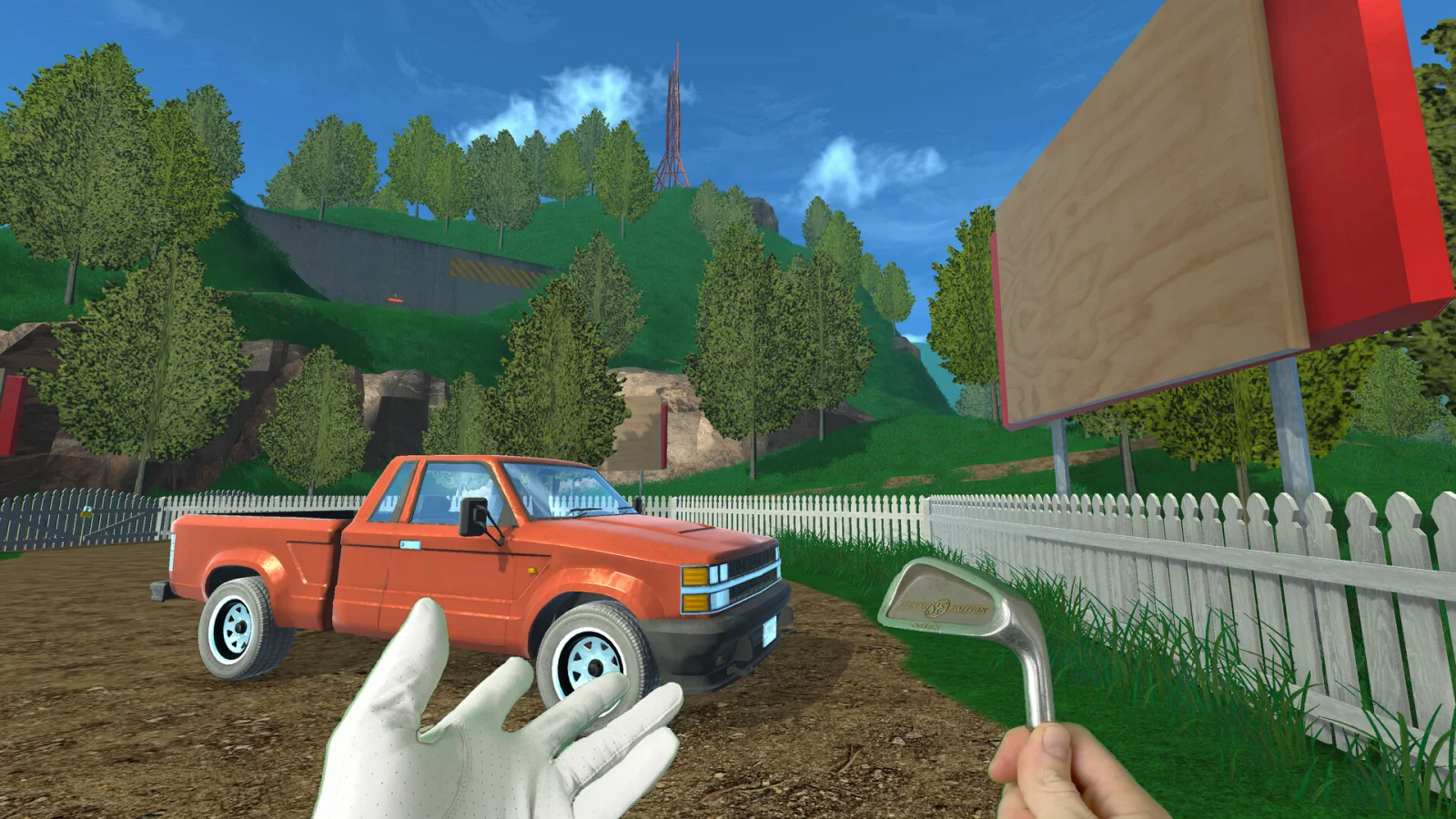
Normal Golf Game is built around a proposition that conventional sports games usually try to avoid: making the basic act of swinging a club conspicuously awkward. Developed and published by Luke Muscat, it released for PC on September 21, 2026. It is listed as a single-player simulation and sports game, and its established premise is deliberately complicated golf swings paired with surreal objectives. That combination gives the title a clearer identity than its deliberately plain name initially suggests. This is not presented as ordinary digital golf with a few jokes attached; the inconvenience of getting a golfer to function is central to the comedy and challenge.
The available evidence supports an unscored assessment rather than a verdict based on direct play. It does, however, establish a useful critical divide. One assessment praised the complex swing model, approachable teaching, strange objectives, and self-aware humor, while also finding the visual presentation dated-looking and the audio basic. Another appreciated an easier stabilization option and some of the game’s charm, yet concluded that the intentionally unintuitive swing and limited escalation could turn repeated play into a chore. Earlier coverage of a demo described mouse-driven arms, adjustments to stance and club face, hidden targets, comic challenges, and a simulation logic beneath the difficulty.
Those observations point to the same central question from different sides. The game does not merely ask whether a player can select a club or judge a line. It appears to make bodily coordination itself the obstacle. For players attracted to strange interfaces, physical comedy, and systems that transform clumsiness into the subject of play, that may be an unusually focused hook. For players who expect a sports game’s controls to get out of the way so that strategy can take center stage, the same hook may be a reason for caution.
Established facts: a golf game that foregrounds the swing
Several elements are firmly established. Normal Golf Game is a PC release by Luke Muscat, classified as single-player simulation and sports. Its store listing includes achievements, full controller support, cloud saves, and Family Sharing. These are useful package details, but they do not prove how responsive the controls feel, how objectives are organized, how demanding later material becomes, or how broadly useful any controller implementation may be. The evidence is stronger on the game’s core premise than on the exact contours of its full structure.
That core premise is an inversion of the usual golf-game abstraction. Many digital golf games reduce a swing to a compact sequence: choose a direction, establish power, time an input, and watch the ball travel. Normal Golf Game instead deliberately complicates the production of a swing. The earlier demo description is especially revealing here. It indicated that mouse movement drove the golfer’s arms and that stance and club-face adjustment mattered. That is a specific description of the demo, not confirmation that every detail carries over unchanged across the release, but it explains the design logic critics identified in the finished game.
Golf already has a cultural association with exacting form. Tiny changes in posture, angle, and timing can be treated as decisive in real-world discussion of the sport. A game that magnifies those concerns into a visibly ungainly interface can find comedy in the distance between an intended shot and the labor of attempting one. Rather than hiding the golfer behind a clean meter, the available descriptions suggest that Normal Golf Game makes the golfer’s apparent inability to behave normally part of the event.
The surreal objectives are equally important to the premise, even though the supplied evidence does not establish a complete inventory of objective types, their sequence, or their role in progression. Strange targets and comic challenges give an intentionally cumbersome swing a reason to exist beyond a standard round of golf. In design terms, an odd target can reframe a difficult shot from an interruption into a punchline. Whether that happens consistently is precisely where critical reaction diverges.
Deliberate frustration is not automatically a flaw or a virtue
The supplied criticism agrees on something fundamental: the swing is unintuitive by design. That wording matters. It would be misleading to treat every complaint about friction as evidence that the game failed to execute its premise, because the premise itself involves friction. Equally, it would be a mistake to assume that intentional frustration is immune from criticism. A game can want players to wrestle with a mechanic and still ask too much of them, explain too little, or repeat the same demand after the novelty has faded.
The more favorable critical response makes a case for the first possibility. It found the teaching approachable and regarded the complex swing model, strange tasks, and self-aware tone as strengths. That suggests a reading in which Normal Golf Game gives players enough grounding to understand what it is asking, then derives humor from their efforts to work within its deliberately inconvenient rules. Under that interpretation, a poor shot is not simply a loss of control. It can become an intelligible consequence of a strange simulated body and, potentially, the basis for the next attempt.
The more skeptical response identifies the counter-risk: a player can understand a system and still find its required repetition unrewarding. Its concern was not merely that the swing feels odd. It was that weak escalation could leave the central idea without enough new pressure or variation to sustain it. This is a meaningful distinction. The initial premise of making golf unnecessarily complicated is easy to understand. The longer-term question is whether new objectives, situations, or applications of the swing model keep changing the player’s relationship to that complication. The available evidence does not settle that question universally; it shows that at least two critics reached different conclusions.
That disagreement is valuable rather than confusing. It identifies the likely dividing line for prospective players. Someone who enjoys learning a peculiar system for its own sake may see repeated attempts as the texture of the game. Someone interested primarily in what comes after mastering an interface may be more sensitive to perceived stagnation. Neither response requires misunderstanding the joke. They reflect different thresholds for how much an intentionally resistant control scheme needs to offer in return.
Teaching and stabilization: evidence of a considered entry point
The reports of approachable teaching and an easier stabilization option deserve careful attention. They are specific observations from critics, not a basis for broad claims about accessibility, difficulty settings, or the exact operation of the option. The evidence does not establish what stabilization changes, whether it is always available, or how it interacts with every challenge. Still, its reported presence is a meaningful detail because it indicates at least one route for reducing some aspect of the swing’s volatility.
In conditional design terms, an aid of this kind can be useful without undoing a game’s identity. If it reduces a source of instability while leaving the broader coordination problem intact, it could help players engage with the comic objectives without requiring the most demanding version of the swing. If it serves primarily as a learning support, it could offer a gentler way to understand the game’s logic before players decide how much instability they want to manage. Conversely, some players may regard the most precarious version of the system as the point and have little interest in assistance.
What can be said with confidence is narrower: one critic singled out the stabilization option positively, while another critic considered the game’s teaching approachable. Together, those observations suggest that the title is not documented solely as a hostile gag with no effort to orient the player. They do not guarantee that every player will find it approachable. Understanding a system and enjoying the amount of work it requests remain separate matters.
This is especially true for comedy based on failure. Physical-comedy games often depend on the gap between a player’s plan and the result. When that gap is legible, an errant shot may be funny because it reveals a mistake, a bad judgment, or the unruliness of the virtual body. When repeated failure seems indistinct, the humor may have less room to develop. The evidence establishes a logical simulation foundation in the earlier demo description, but it does not establish the feedback quality of every release objective or every unsuccessful swing. Any claim that the game always makes outcomes clear would go beyond the record.
Surreal objectives carry much of the game’s broader promise
The established presence of surreal objectives provides Normal Golf Game with an identity beyond a technical swing exercise. Traditional golf structures can already create pressure through terrain, distance, hazards, and scoring, but the supplied material does not support detailed claims about how this game handles those elements. The safer and more interesting observation is that unusual targets and comic challenges appear to change the context in which the demanding swing is used.
That context matters because strange goals can give a player a new reason to revisit an unfamiliar control method. A difficult swing may feel less like an arbitrary barrier when the task itself is knowingly ridiculous. The title’s humor seems to rest on a contradiction: it frames itself as normal golf while making normality increasingly hard to locate. Surreal objectives can extend that contradiction, turning golf’s formal seriousness into a platform for absurdity.
There is also a potential limitation built into that approach. Meta humor can establish a premise quickly, but a game needs more than a title-level wink to remain engaging across repeated interactions. The critical concern about escalation is relevant here because it asks whether the comic contexts keep acquiring new significance. If they do, the game’s awkwardness may become a flexible comic language. If they do not, the joke may remain understandable while losing force for some players. This is not a claim that Normal Golf Game necessarily exhausts its idea; it is the specific concern raised by one of the supplied critical views.
Readers interested in another assessment concerned with a deliberately unruly, physics-centered design can see our Gladio Mori assessment. The two games should not be treated as direct substitutes. The narrow connection is analytical: both invite the question of whether unwieldy outcomes become expressive problem-solving or remain an obstacle to it.
Presentation is a secondary but relevant uncertainty
One critic characterized the visuals as dated-looking and the audio as basic. These are evaluative observations, not technical measurements, and they do not establish performance, resolution, animation quality, sound-design scope, hardware demands, or artistic consistency. They should therefore be read as a limited warning about presentation rather than as a complete technical assessment.
Even so, presentation has a relevant role in a game built around unusual physical interaction. In general, a design that asks players to reason about a character’s movements can benefit from communication that makes those movements understandable; whether Normal Golf Game consistently achieves that is not established by the supplied evidence. Likewise, minimal or basic audio is not inherently incompatible with a dry comedy game. It may be unobtrusive, or it may leave some players wanting more texture. The evidence only supports the narrower conclusion that one critic found the audiovisual side less persuasive than the central mechanical concept.
Prospective players should therefore set expectations around the documented premise rather than presume a presentation showcase. The critical case for Normal Golf Game lies in the specific interaction between complicated swings and surreal comic tasks. Its audiovisual presentation may be adequate for that goal, or it may be a point of friction for players who want a more polished sensory frame; the evidence does not justify a firmer conclusion.
A positive store snapshot, carefully dated
In the checked September 2026 storefront snapshot, 97 percent of 82 user reviews were positive. That is an encouraging signal for a game with such a specialized pitch, but it is volatile data from a limited number of reviews and should not be treated as a stable consensus. Storefront percentages can change as more owners contribute feedback, and they cannot answer the more personal question raised by this game’s design: whether its deliberate resistance feels amusingly purposeful or simply tiring.
The positive snapshot and divided critical response are not necessarily at odds. A self-selecting audience may be especially receptive to a game that openly advertises its own weirdness. Critical analysis may place more weight on whether the structure develops beyond its core premise. Both perspectives are useful, provided neither is made to stand in for the other. The review figure indicates a favorable response among the users represented at that date; it does not settle the question of repetition, escalation, or individual tolerance for the swing model.
Who should consider taking the shot
Normal Golf Game appears most promising for players who want the mechanics of a sports game to become a comic problem in themselves. Its documented appeal is not conventional smoothness. It is the prospect of working through an intentionally complicated swing, encountering surreal goals, and finding humor in the mismatch between a sensible plan and an ungainly execution. The reported teaching and stabilization option may make that premise less forbidding for some players, but they do not alter its basic commitment to friction.
Players who prefer sports-game inputs to be immediately transparent, or who need a premise to expand rapidly beyond its opening joke, may want to weigh the skeptical critical view closely. That is not because the evidence establishes an absence of variety or development. It does not. It is because one critic specifically found repetition and weak escalation substantial enough to outweigh the game’s charm, while another found the same overall concept engaging and well taught.
Normal Golf Game is best understood as a focused simulation-comedy experiment rather than a neutral version of digital golf. Established facts support a game about difficult swings and surreal objectives; critic observations support both a favorable reading of its teaching and humor and a skeptical reading of its longevity. Its strongest appeal will likely be to players who see deliberate awkwardness as an invitation to engage, not a defect to be removed. For everyone else, the same unusual swing system is the reason to approach with caution.