Updated loader content in v0.0.2
pico-ns2jb-bootstrap v0.0.2 updates the embedded bootstrap.bas file with the version used by the ns2jb fork. Published on October 31, 2026, the release provides a 60,416-byte UF2 image named pico_ns2jb_bootstrap.uf2.
The preceding v0.0.1 release was the project’s initial release. No other changes are listed for v0.0.2, so this update’s main purpose is to bring the Pico image’s embedded loader code in line with the intended ns2jb version.
What the Pico utility does
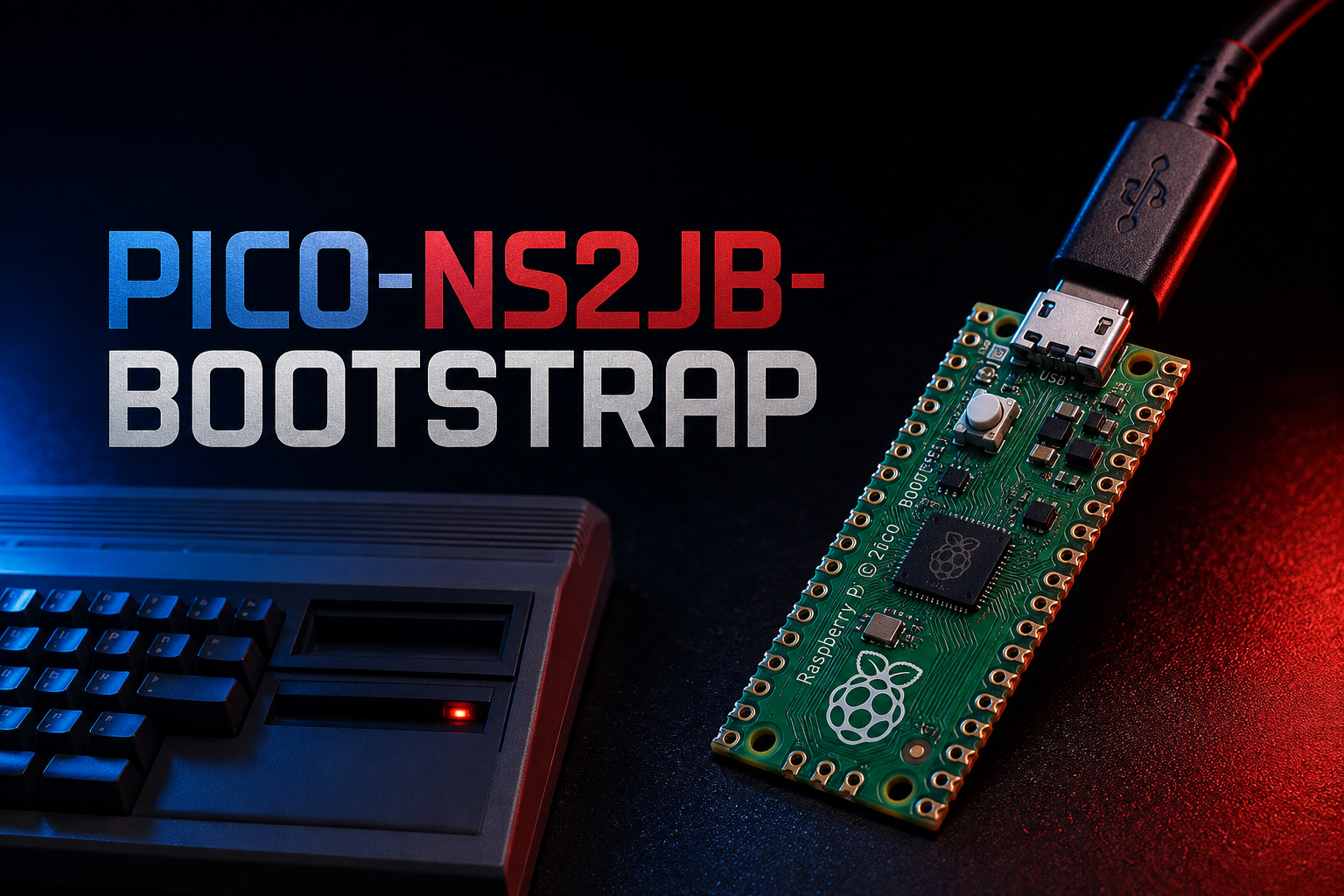
The project is a small loader for a Raspberry Pi Pico. It emulates a USB keyboard and types the contents of bootstrap.bas into the connected device. It is intended for use with the ns2jb fork rather than as a general-purpose keyboard automation tool.
After the Pico is connected, the program waits two seconds before entering the code. That delay gives the user time to open the text input area where the bootstrap program should be entered. The Pico then supplies the code as keyboard input instead of requiring it to be typed manually.
Using the supplied UF2 image
The release provides a UF2 image for the Raspberry Pi Pico. The documented workflow is to flash the UF2 image to the Pico, open the destination device’s text input area, connect the Pico, and allow the two-second delay to pass while the loader enters bootstrap.bas.
The device receiving the keyboard input is separate from the Raspberry Pi Pico running the loader. The Pico acts as the USB keyboard interface, while the embedded bootstrap.bas content is intended for use with ns2jb.
Updating the embedded program
The project stores bootstrap.bas inside the firmware image. Updating that source file requires generating its embedded header again and rebuilding the image. The v0.0.2 release already includes the updated file, so users of the supplied UF2 image do not need to repeat that source-update process to obtain this release’s loader content.