A wide-ranging update with limited public change details
ARMSX1 0.1.4 is a maintenance release for the PlayStation emulator fork. Its release note reports a large number of fixes credited to testers and contributors, but does not identify individual bugs, games, systems or features affected by the update. It is therefore best understood as a broad fix release rather than one centered on a specifically documented new feature.
The published build is tagged 0.1.4 and includes an Android arm64-v8a package. The release record provides no platform-specific fix details, so it does not establish whether every correction applies equally to Android, desktop and the other supported targets.
What ARMSX1 emulates
ARMSX1 includes the main PlayStation emulation components, including the CPU, DMA, GPU, SPU, MDEC, GTE, timers and CD-ROM loading. It also supports memory cards, BIOS selection, PS-X EXE booting, screenshots, logging controls, VSync and fast forward. Its FSUI settings shell provides access to these functions and to execution and presentation options.
The emulator supports BIN/CUE images, single-track BIN files, ISO images, CHD files and ZIP archives containing a supported image with its companion files. CHD handling covers mixed-mode metadata, pregaps and postgaps, audio byte order and Q subchannel data. The project’s validation coverage also includes ZIP extraction and rejection of directory-traversal paths.
Save states, netplay and texture packs are not implemented. These limitations are separate from the 0.1.4 maintenance changes and remain relevant when deciding whether ARMSX1 suits a particular setup.
Accuracy-focused CPU and graphics paths
ARMSX1 offers a cached CPU execution mode by default, alongside an interpreter mode for reference use and diagnostics. The cached path reuses decoded instruction handlers while still performing a bus fetch and opcode check for each emulated instruction. Writes invalidate matching cached entries, including cached and uncached address aliases. Users can select the execution mode in Settings, with the documented command-line option or through the ARMSX_CPU_ENGINE environment variable.
The GPU uses an accurate software PlayStation rasterizer with 16-bit VRAM as the authoritative image data. SDL software presentation is the default, while an SDL accelerated mode can upload only changed VRAM scanlines to a texture. This mode changes presentation rather than replacing PlayStation rasterization with host-side triangles. If an accelerated SDL renderer is unavailable, ARMSX1 falls back to SDL software rendering.
Neither CPU engine emits native code, uses executable memory or relies on host threading behavior. That gives users a selectable interpreter path for diagnostics while retaining the cached path as the normal default.
Supported hosts and the current Android build
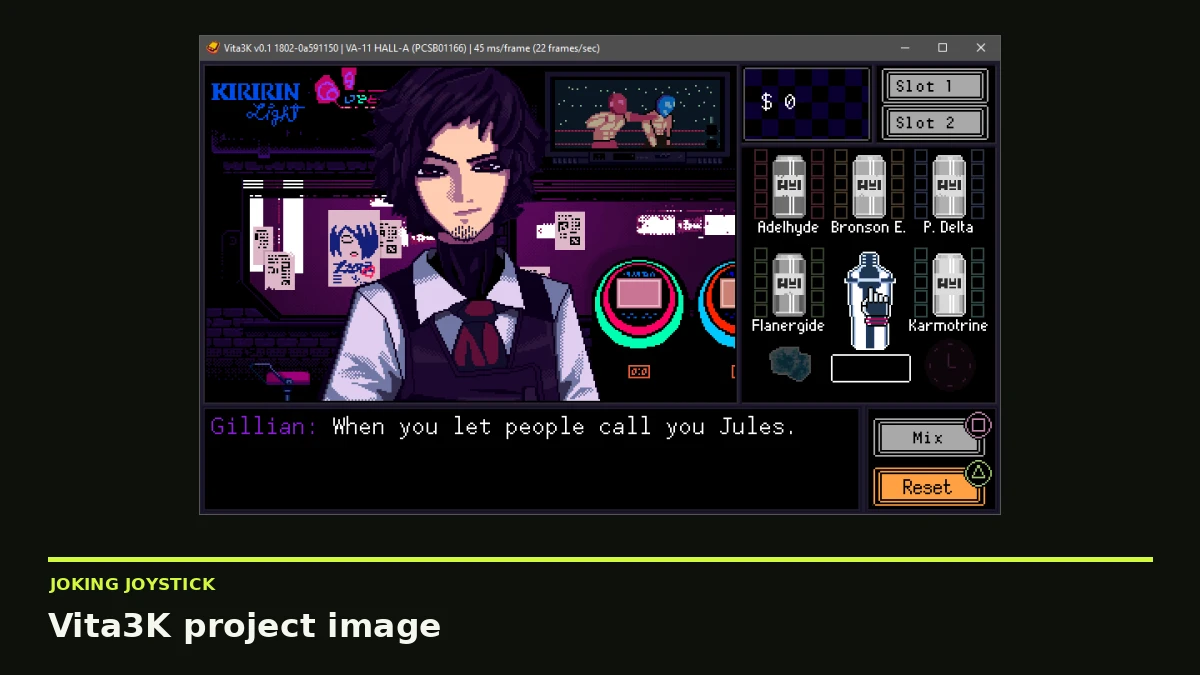
ARMSX targets desktop systems running macOS, Linux and Windows, as well as Android, iOS, UWP, WebAssembly and PSVita. The project identifies desktop and Android as its main day-to-day targets. The other ports are present and buildable but may be more platform-specific and may lag behind the desktop path.
On supported hosts, the FSUI shell handles BIOS selection, disc startup, settings changes, screenshots, fast forward and VSync. The project also supports launching files through its armsx protocol handler on hosts that provide that integration. WebAssembly uses browser file and directory pickers, copying selected content into the virtual filesystem for the current session.
The 0.1.4 release record specifically lists an Android arm64-v8a APK. Because the release notes do not include a categorized changelog, users should not assume that a particular game, controller, renderer or platform issue was resolved unless it is confirmed in the project’s fuller community changelog.