1. Define the Claim Before Testing It
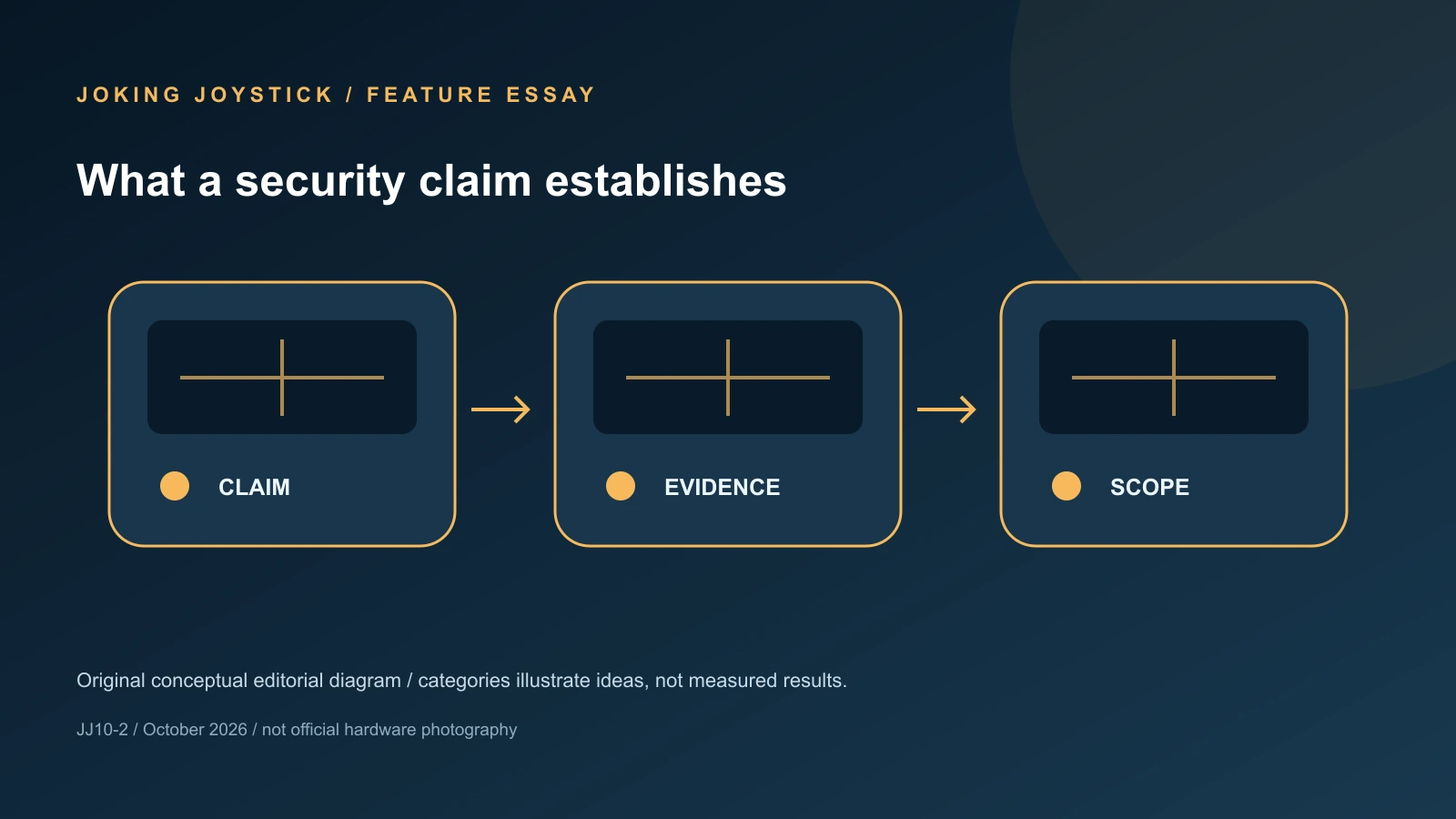
“Codex hacked Switch 2 and PS5” sounds like one claim, but it is actually a bundle of claims about different products, different security boundaries and different kinds of evidence. It may imply that an artificial-intelligence system independently discovered a vulnerability, built an exploit chain, obtained privileged code execution, defeated platform security and delivered a usable consumer jailbreak. None of those steps follows automatically from the others. A careful investigation must separate them before deciding what the public record supports.
The first distinction is between assistance and autonomy. An AI system can search source code, generate test programs, suggest hypotheses, interpret logs, automate repetitive interactions or help a researcher organize a large investigation. That may materially accelerate security work. It does not prove that the system independently selected the target, understood the platform, found the decisive flaw, assembled a working chain and verified the result on hardware. The difference matters especially when a headline compresses weeks of human-directed experimentation into “the AI hacked it.”
The second distinction is between a vulnerability and an exploit. A vulnerability is a weakness: perhaps a memory-safety error, an insufficient validation check or an unintended interaction between services. A vulnerability report can describe why a condition is dangerous without showing that it can be reached reliably. An exploit is a demonstrated method for turning that weakness into a security-relevant result. Even then, the result may be limited. It might produce a crash, disclose data, execute code inside one restricted process or cross one security boundary without reaching the next.
Console terminology adds further layers. Homebrew enablement generally means that a platform can run software outside the manufacturer’s ordinary approval path. A jailbreak may describe a chain that permits such execution, but the term does not specify how much privilege has been obtained or whether the result survives a reboot. A console unlock is broader and often implies meaningful control over several platform functions. Full custom firmware is broader still: it ordinarily suggests a persistent or repeatable replacement or modification of substantial system software, not merely code execution in one service.
These distinctions are practical rather than semantic. A process that runs code in a userland application has not necessarily reached the kernel. Code execution in a system module has not necessarily exposed cryptographic keys, changed the boot chain or defeated the platform’s signing architecture. A tethered jailbreak that must be initiated again after every reboot is not equivalent to an untethered modification that persists independently. A research demonstration on one firmware revision is not a universal consumer release.
The Switch 2 material illustrates the problem. The public project called ns2jb is associated with Sammy Hajhamid, who uses the name “pepsipu.” His account describes a software-only, tethered jailbreak on a specified system-software version. That is a meaningful security result if accurately reported. It is also a much narrower statement than “Codex hacked the Switch 2.” Hajhamid’s own account rejects the one-prompt version of events and describes substantial human effort over roughly two weeks.
The PS5 wording is less secure still. Several public repositories document PS5 security research, older-firmware hypervisor work, Linux-related development and homebrew applications. Those artifacts show that researchers have achieved important results under particular conditions. They do not establish that Codex independently created a current PS5 jailbreak. A repository named “Codex PS5” is especially easy to misread: the documented application runs within an already jailbroken environment. Its name does not turn an application into the exploit that made the environment possible.
There is also an attribution question. The reviewed OpenAI material describes Codex Security as a product for repository and commit analysis, threat modelling, investigation of candidate vulnerabilities, validation where possible and proposed fixes. That official description does not confirm Nintendo, Sony or Xbox console projects. Nothing in the reviewed record says OpenAI sponsored, supervised or independently verified the Switch 2 or PS5 work. Product capability is evidence about what Codex is designed to do, not confirmation of every result associated with the name.
For that reason, the correct starting point is an evidence audit. The question is not whether AI can contribute to sophisticated security research; it plainly can. The question is what this particular project demonstrated, on which firmware and hardware, with what human involvement, and what remains unverified. On that standard, the broad headline is not supportable as written. The Switch 2 portion can be described only with substantial qualifications, while the broader claim that Codex hacked PS5 remains not verified in the reviewed record.
2. Switch 2: Establish the Hardware and Firmware Baseline
The project under examination concerns Nintendo Switch 2 and identifies system software version 23.0.1. Nintendo’s United Kingdom update history lists version 23.0.1 with an October 1, 2026 release date. That public version label supplies an important baseline, but it should not be treated as a guarantee that every region, retail package or hardware revision presents an identical environment. The relevant claim is therefore not “Switch 2 is hacked,” in the timeless sense. It is that a named project reports a result under a specified software condition.
Version 23.0.1 is part of the finding, not incidental metadata. The project account does not establish that the same behavior survives later updates, and the supplied evidence does not provide a regional or hardware compatibility matrix. The article therefore reports the result only under the stated software condition rather than generalizing it to every Switch 2.
Nintendo’s security-advisory framework provides a useful comparison point. When Nintendo publishes a vulnerability notice, its framework can identify affected versions, severity, CVE information, mitigations and discovery details. That is the kind of manufacturer-controlled record that can confirm how Nintendo characterizes a weakness. The reviewed Nintendo materials do not independently confirm ns2jb, do not attribute it to Codex and do not state that Nintendo’s signing architecture has been defeated. The absence of such a notice does not disprove a researcher’s result, but it prevents the result from being presented as a Nintendo-confirmed compromise.
The reported result should also be read as a component-level claim. Native execution in a system module does not by itself establish access to the kernel, secure storage, boot verification or every other protected service. Those are separate conclusions requiring separate evidence.
That is why “ordinary system-module context” is a more informative description than “complete system access.” It tells readers that the reported execution occurred within a particular class of system process rather than an ordinary game or application, but it does not imply that every protected layer became available. The narrower reference to the built-in filesystem service, or fs module, is more specific still. It identifies a reported execution context; it does not convert that context into unrestricted control of the console.
Finally, the public project description does not establish a finished consumer release. Its tethered status and specified firmware condition are practical constraints, while source availability and a research demonstration answer different questions from stability, coverage and ordinary-user repeatability.
The baseline therefore yields a restrained proposition: ns2jb is a project-reported, software-only Switch 2 jailbreak associated with system software 23.0.1. The firmware and hardware conditions are part of the claim. They must travel with it whenever the result is described. Without them, a narrow research report is inflated into a universal statement about Nintendo’s current platform. The reviewed evidence supports investigation of that qualified result, not repetition of the claim that the entire Switch 2 security model has been broken.
3. What the ns2jb Project Actually Reports
The most reliable way to describe ns2jb is to begin with the project’s stated capability rather than with the viral summary. Hajhamid’s account attributes the work to a software-only, tethered Switch 2 jailbreak tested on system software 23.0.1. “Tethered” is a material limitation: the result is not presented as a permanent modification that remains active across an ordinary reboot. The process must be initiated again, which separates it from an untethered consumer-style modification.
The account reports native code execution in an ordinary system-module context and, more narrowly, in the built-in fs module. That is a stronger result than merely causing an application to crash. Native execution indicates that the researchers reached a point where instructions outside the intended program flow could run within a privileged system component. But “privileged” is relative. A system module may have access that a game or user application lacks while still being confined by other process, kernel or hardware-backed boundaries.
The reported uses include homebrew, game research, modifications and save backups. Those examples help establish why the result matters. Researchers can use controlled code execution to study system behavior, test software interactions and explore features that the ordinary retail environment does not expose. They also show why a jailbreak can be useful without being a complete platform unlock. The ability to run homebrew or investigate game behavior does not necessarily grant authority over the boot process, protected keys or every system service.
One of the clearest boundaries concerns persistence. Because the project is tethered, a reboot changes the practical user experience. The reported capability is not equivalent to a modification that automatically restores itself every time the console starts. That distinction affects reliability, accessibility and the scale of any consumer claim. A tethered demonstration can prove that a security boundary is reachable while still requiring research conditions that ordinary owners would not regard as a finished product.
The reviewed material does not present ns2jb as full custom firmware or unrestricted kernel control. Hajhamid describes native code execution in ordinary system modules, with the narrower fs result, and lists further work toward other modules and custom firmware. The stronger claims should therefore remain outside the documented result.
Nor does the account establish a cryptographic break or exposure of Nintendo signing keys. Runtime execution after system startup and authority to authorize software during boot are different capabilities; the reviewed project record documents the former only.
The reported fs capability should likewise be treated as a specific execution context, not as evidence that every security domain became available. The project identifies where code execution was reported; it does not claim unrestricted control of the complete platform.
4. Codex Assisted a Human-Led Investigation
The central attribution question is not whether Codex appeared somewhere in the project. It did. The question is what role the system played. Hajhamid’s account describes Codex operating through a hardware-interaction harness and assisting investigation across the SmileBASIC interpreter, filesystem-service objects and system services. A harness can connect software analysis with controlled interaction against a device, allowing a researcher to automate observations and repeat experiments. That can make a difficult investigation faster and broader without making the model an independent operator.
Hajhamid describes the work as human-directed: the account says the initial userland-code-execution goal did not succeed, the jailbreak took substantial effort over roughly two weeks, and Codex was directed toward several attack surfaces through the hardware harness. It is fair to say that people chose the research goals and assessed the results. It is less precise to present every element of debugging, interpretation or memory management as independently documented workflow detail; those are editorial inferences from the account and should be labeled accordingly.
The account specifically rejects the “one prompt” narrative. The autonomous goal of obtaining userland code execution did not simply succeed after a single instruction, and the jailbreak reportedly required substantial effort over roughly two weeks. Hajhamid also describes Codex helping with exploration and making heap-grooming work more reliable. That is evidence about the coding agent used in this project, not about OpenAI’s separately documented Codex Security product, and it supports a force-multiplier description rather than autonomous completion of the exploit chain.
Heap grooming is a useful example of why the distinction matters, even at a high level. Memory-management behavior can depend on timing, allocation patterns, object lifetimes and the interaction of multiple services. Automating experiments may help a researcher discover a more reliable arrangement, but the automation does not prove that the model understood the entire memory model or independently recognized the decisive vulnerability. The project’s described contribution is better characterized as assistance with exploration and operationalizing a research idea than as autonomous discovery of a complete exploit chain.
The same caution applies to the SmileBASIC and filesystem-service work. The reviewed case record says the FS bug and object-exploitation concept were already known, while the project account associates Codex with investigation of the interpreter, filesystem-service objects and system services. The record therefore supports a qualified attribution: Codex assisted the search and development process, while the complete result remained the product of a human-led investigation. It does not establish that the model originated every relevant vulnerability concept.
There is a separate demonstration that can easily distort the timeline. The Mario Kart World modification was described as a one-day “vibecoded” project. That is not the same thing as the jailbreak. A modification made after a usable execution environment exists benefits from the security boundary already having been crossed. It may show that AI can rapidly produce an application or experiment inside that environment. It does not show that the AI independently found the vulnerability or built the chain that created the environment.
This difference resembles the distinction between writing a program for an unlocked platform and unlocking the platform itself. Once a researcher has a controlled execution context, an AI assistant may be highly effective at generating demonstrations, interfaces or modifications. The hard security work may have involved finding a reachable flaw, making execution reliable, surviving process constraints and coordinating multiple components. Conflating the later application with the earlier security breakthrough assigns the wrong achievement to the wrong stage.
OpenAI’s official descriptions of Codex Security provide a useful but limited comparison. They describe a repository-connected defensive product that builds threat models, investigates potential vulnerabilities, validates them in an isolated environment where possible and proposes fixes. Hajhamid’s account instead describes a Codex coding agent operating through a hardware-interaction harness. The reviewed record does not establish that Codex Security was used in the Switch 2 work, that OpenAI sponsored it or that OpenAI independently verified ns2jb.
The proper attribution is therefore layered. Hajhamid and the associated researchers are responsible for the project’s reported result and its technical account. Codex can be credited with assisting exploration, automation and parts of the heap-grooming work described by the author. OpenAI can be credited only for the capabilities it officially documents, not for an independently verified console compromise. That wording preserves the genuine significance of AI-assisted research without turning assistance into autonomous authorship.
The resulting conclusion is narrower but stronger: Codex appears to have functioned as a research force multiplier inside a human-led Switch 2 investigation. The available evidence does not show that it independently discovered and completed the jailbreak from one prompt. Nor does it support transferring the Switch 2 account to PS5. For the broader statement “Codex hacked Switch 2 and PS5,” the Switch 2 portion survives only in qualified form, while the PS5 portion remains unverified on the reviewed record.
5. Provenance Is Not Independent Reproduction
Security reporting often treats a public repository as if it were a laboratory report. It is not. A repository can establish that a project exists, identify the people or account associated with it, preserve the files used in development and show how the maintainers describe their own work. Those are valuable facts. They answer questions of identity and provenance. They do not, by themselves, answer the separate question of whether another party has independently reproduced the claimed behavior on the stated hardware and firmware.
The original ns2jb repository is important for that first category. It establishes a public project associated with Sammy Hajhamid, who uses the name “pepsipu,” and gives the Switch 2 claim a concrete object that can be inspected. Instead of relying on a screenshot, repost or unattributed social-media summary, a reporter can point to a named project with a development history. That makes the claim auditable in a way that a viral caption is not. It still leaves open how much of the result has been independently tested.
A later mirror and rework record adds another layer of evidence. Its provenance documentation preserves upstream history and records checks showing that a specified payload build can be reproduced byte for byte. In practical terms, that means the documented source and build conditions can generate output matching the recorded reference. Such a result can help establish that files have not been casually altered in the transfer between repositories. It can also allow other researchers to inspect the relationship between the original project and the reworked version.
But build reproducibility is not hardware reproducibility. A build check asks whether the same source and toolchain produce the same output. A hardware test asks whether that output causes the claimed behavior on a physical console under defined conditions. The two tests have different failure modes. A build can be exact while the resulting software depends on a particular firmware revision, memory state, model variant or sequence of system conditions. Conversely, a hardware demonstration might work even when the public build process is incomplete or difficult for outsiders to repeat.
The provenance record is unusually useful because it states this limitation rather than concealing it. The mirror’s documentation says that its maintainers did not rerun the exploit demonstration on physical hardware. That does not invalidate the original project’s account. It means the mirror should not be described as a second laboratory confirmation of the Switch 2 result. Its contribution is preservation, review and reproducible construction, not an independently observed console execution.
This distinction also prevents a common error in discussions of open security research. When source code is available, readers may assume that the mere ability to compile or reproduce an output proves that the code achieves its stated purpose. It does not. Source can document an intended method, a partial chain, a test harness or a payload that was verified only by its original author. The relevant question is what the repository demonstrates, what it merely describes and what an independent party has actually repeated.
The evidence should be kept in separate categories:
- The original repository establishes project identity and source availability.
- The provenance record supports the documented build-reproducibility checks.
- Hajhamid's account supplies the reported physical-console demonstration.
- The mirror does not supply independent hardware reproduction.
Those categories reinforce one another without becoming interchangeable. A reproducible build shows that the public artifact can be reconstructed under stated conditions. It does not show that another party observed the same behavior on a physical console, nor that the result extends beyond system software 23.0.1. The report accordingly attributes the hardware result to the named project and limits the mirror's role to provenance and build review.
The distinction matters particularly for a tethered project. Tethered operation already indicates that the claimed behavior depends on a repeatable setup after reboot. If the result is also tied to system software 23.0.1, then the conditions become part of the finding. A repository that builds successfully does not show that every Switch 2 unit, every regional software build or every later update behaves the same way. It shows that the public artifact has a defined technical lineage.
Nor should a mirror’s failure to repeat the hardware test be turned into a negative finding. The record does not say that the exploit failed when tested by the mirror; it says the mirror did not perform that test. Those are different statements. “Not independently reproduced by this mirror” is supported. “Does not work” is not. The most accurate language attributes the physical demonstration to Hajhamid’s project account and describes the mirror as corroborating provenance and build details only.
This is also why a repository should not be presented as a manufacturer confirmation. Nintendo has its own security-advisory process, including affected versions, severity and mitigation information when it publishes a notice. A community repository and a Nintendo advisory answer different institutional questions. The former records researcher activity; the latter would represent Nintendo’s characterization of a vulnerability or security impact. The reviewed Nintendo materials do not independently confirm ns2jb or attribute it to Codex.
Public code can nonetheless be highly significant. It permits scrutiny of claims that would otherwise rest entirely on trust. It can reveal whether a project contains a real implementation, whether the history is coherent and whether the stated build process is reproducible. It may also allow future researchers to test the artifact under controlled conditions. But those benefits should not be inflated into a claim that the public has already independently confirmed the console result.
The correct description is therefore precise: the original repository establishes a public Switch 2 project associated with Hajhamid; the later mirror preserves upstream history and documents a byte-reproducible build; and the mirror explicitly does not claim to have rerun the exploit demonstration on physical hardware. Taken together, those facts support identity and provenance. They do not transform the mirror into independent validation. Hardware claims remain attributable to the named project and limited to the conditions it reports.
6. Switch 2: What the Evidence Does Not Establish
First, the record does not establish access to Nintendo’s firmware-signing keys. Runtime code execution and signing authority are different capabilities. A vulnerability may allow unauthorized instructions to run after the official system has booted while leaving the cryptographic keys and boot-verification process untouched. Nothing in the reviewed material shows that the project extracted Nintendo’s signing secrets, forged accepted signatures or changed the rules governing what the console will authorize during startup.
Second, the result does not establish a cryptographic break. A cryptographic break would imply that a protected mathematical mechanism had been defeated or bypassed in a way that undermined its intended security property. The reported filesystem-service execution is not, by itself, evidence of that. Code running inside a system service can interact with resources available to that service without revealing the algorithms, keys or secure hardware functions that protect other stages of the platform.
Third, the evidence does not show access to every system module. The reported capability is narrower than unrestricted console control. A system module may have more authority than a game or ordinary application, but consoles commonly divide permissions among processes and services. One module’s behavior does not demonstrate that another service, the kernel, secure storage or the boot components are equally reachable. The phrase “in an ordinary system-module context” should therefore be retained because it identifies the scope rather than erasing it.
The filesystem-service result illustrates the same point. The fs module is important because the primary account reports native execution there, but filesystem-related authority is not synonymous with kernel authority. The reviewed project record also reports that the fs path yielded no key material and did not make kernel escalation easier. Those are project-reported limitations, not independently verified findings, and they do not establish that future escalation is impossible.
Fourth, the evidence does not establish kernel-level privilege. The reviewed record does not present unrestricted kernel control as a demonstrated outcome of ns2jb. The distinction is not academic. Kernel access could alter the scope, durability and control available to a jailbreak, while system-module execution remains constrained by the boundaries above and below it. Reporting the narrower result avoids suggesting that the project reached a stage it did not claim to reach.
Fifth, the result is not shown to be untethered. The project is described as tethered, meaning the process must be repeated after a reboot. That limitation affects the practical meaning of “unlock.” A user may be able to reach the reported environment under the stated conditions, but the state is not presented as a permanent replacement for the manufacturer’s software. A tethered jailbreak can still matter to researchers and developers; it simply should not be marketed as persistent custom firmware.
Sixth, the reviewed evidence does not establish full custom firmware. Custom firmware ordinarily implies a broader modification of substantial system software and a repeatable way to load or maintain it. The reported system-module and fs capabilities do not, by themselves, show that the platform’s firmware has been replaced, that the boot chain has been modified or that all relevant controls are available to the operator. The term would therefore overstate the project’s documented scope.
Seventh, there is no evidence here of a one-click consumer jailbreak. A public repository and a named research result are not the same as a stable release designed for ordinary owners. Consumer readiness would require clearly documented conditions, predictable behavior, support for a defined range of hardware and firmware, and evidence that users can repeat the process without the original researcher’s laboratory context. The reviewed material does not establish those things, and this feature should not infer them.
The same discipline applies to the word “universal.” A result on system software 23.0.1 does not automatically apply to later updates, different regional builds or every retail hardware revision. Even if the underlying vulnerability originated in a shared software component, changes in memory layout, permissions or service behavior could affect whether the chain works. The public record supplied for this audit does not establish compatibility across all Switch 2 units.
None of these qualifications makes the project trivial. Native code execution in a system module can provide researchers with an important foothold for studying a platform. It can support homebrew, game research, modifications and save backups within the limits described by the project. A tethered path can reveal a real weakness even if it is inconvenient. The point is not to downgrade the result, but to describe the result at the level the evidence supports.
The defensible wording is consequently narrow and informative: ns2jb is a project-reported, software-only and tethered Switch 2 jailbreak for system software 23.0.1, with native execution reported in a system-module context and more specifically in fs. The reviewed record does not establish signing-key exposure, a cryptographic break, all-module access, kernel control, untethered persistence, full custom firmware or a one-click consumer unlock. “The console is open” is not the supported conclusion.
7. PS5 Research Is Firmware- and Model-Bounded
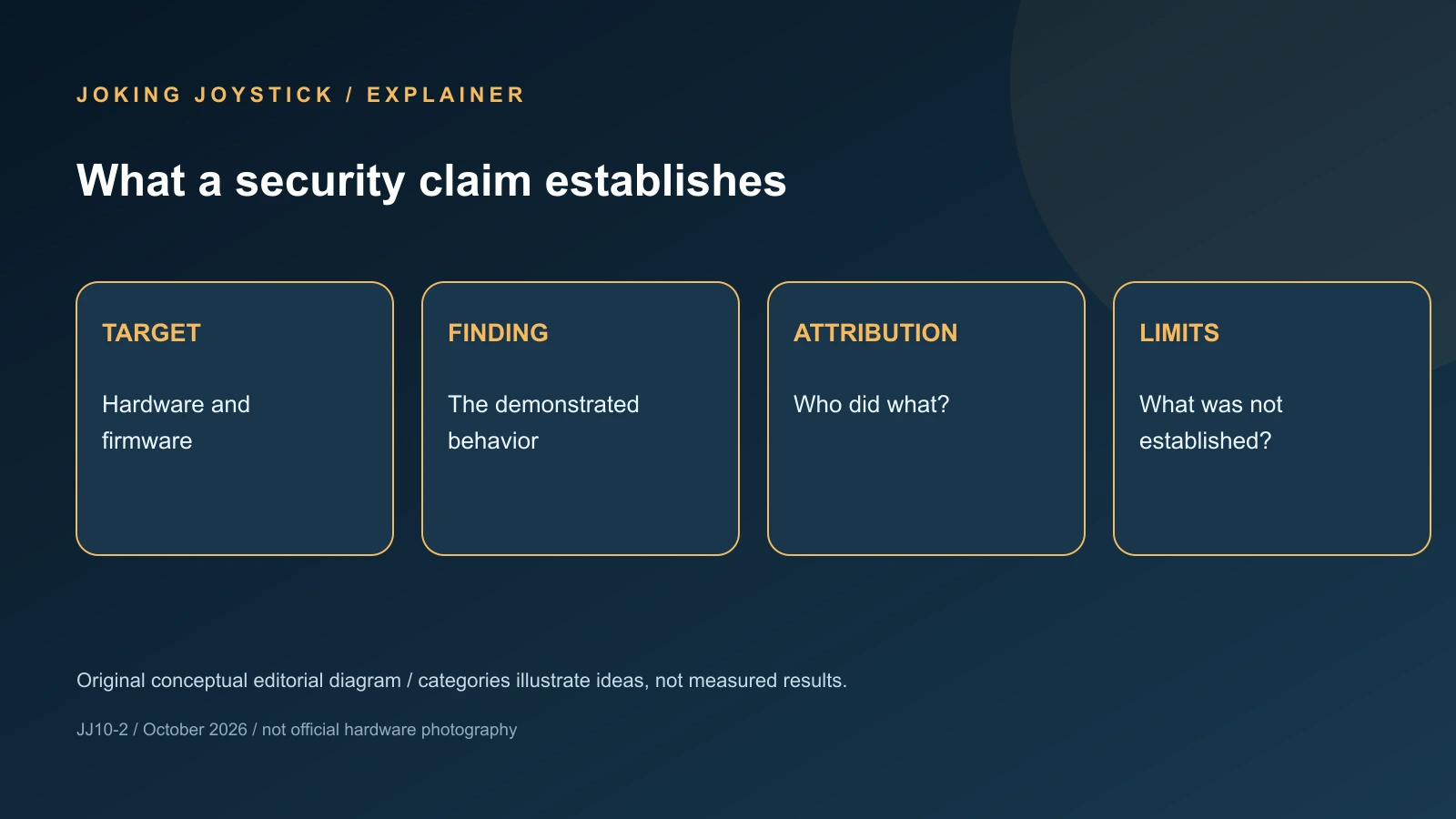
The PS5 portion of the story requires a different evidentiary approach because several genuine research projects already exist, but they do not describe one universal condition. Public repositories associated with PS5Dev document older-firmware hypervisor research, while the ps5-linux organization records development aimed at running Linux-related software on the console. These projects show that substantial technical progress has been made. They do not, without their firmware and hardware qualifications, prove that current retail PS5 systems have been universally unlocked.
The first boundary is firmware. Console security changes through system updates, and a result that works on an older version may depend on code, layouts or interfaces that no longer exist in the same form. A later version can alter a vulnerable component, change how memory is arranged or close the route by which a researcher reaches a privileged boundary. The fact that two consoles carry the PS5 name does not make their security state interchangeable when their system software differs.
That is why older hypervisor projects such as Byepervisor and Byepervisor-Reborn should be described historically and technically, not as present-tense proof of a current universal jailbreak. They document research into a security layer above or around the operating system, under particular firmware conditions and with stated limitations. A hypervisor result can be real and important while remaining unavailable on newer firmware. The existence of an older exploit chain does not imply that Sony’s latest retail software is vulnerable to the same chain.
The word “hypervisor” itself can create an exaggerated impression. Hypervisor research concerns a significant security boundary, but it does not automatically mean that every function of the console is controlled. A project may reach or study one part of that boundary while still depending on an earlier foothold, a specific model, a particular firmware range or additional components that are not publicly available. The research question is not simply whether the hypervisor was mentioned, but what level of control was actually demonstrated and under what conditions.
The reviewed evidence does not establish universal PS5 model coverage. That is the only model qualification needed here: the cited repositories must be read according to the models and firmware conditions they actually name, and no separate PS5 Pro result should be inferred without a specific primary statement.
The PS5 Linux work illustrates a related distinction. Running Linux or using Linux-related development demonstrates that researchers have found ways to use the console’s hardware outside the ordinary retail software experience under certain conditions. It does not, by itself, establish a current, stable consumer jailbreak. Linux support may depend on an existing jailbreak, a particular firmware version, model-specific adaptations or a research environment. The achievement is real only when those conditions are stated alongside it.
Homebrew is similarly narrower than total platform control. A homebrew application can run in an environment that has already crossed one or more security boundaries, but the application’s existence does not reveal how the environment was created or how much authority it provides. This distinction becomes especially important when an application has an AI-related name. A program called “Codex PS5” can be evidence of software operating inside an existing homebrew context without being evidence that Codex produced the underlying jailbreak.
The repositories are developer artifacts rather than Sony confirmations. Their documentation represents the maintainers’ descriptions of their own projects, supported by whatever code, captures or demonstrations they publish. That can be strong primary evidence for what a project claims. It does not become a manufacturer statement merely because the repository is public or technically detailed. Sony’s product-security and system-software pages provide the relevant official framework, but the reviewed materials do not contain a Sony confirmation of the specific jailbreak claims.
Accordingly, the accurate temporal wording is versioned rather than universal: a project may report a result on a particular firmware even though the claim says nothing about later official software. The repositories in this review should be described by their stated firmware and prerequisites, not collapsed into one standing property of the PS5 product line.
Prerequisites matter for the same reason. A chain can depend on an existing entry point, a particular application or a controlled research environment. Those conditions need not be reproduced operationally here, but omitting them would make a research demonstration sound like a general release.
There is also a difference between a working demonstration and a stable release. A named repository can document an experiment that reaches a privileged state on a test console while still being unsuitable for ordinary owners. Stability, repeatability and coverage across firmware and model variants are separate questions. The reviewed PS5 projects should therefore be treated as a map of research milestones, not as one consolidated product called “the PS5 jailbreak.”
This evidence does not support transferring the Switch 2 AI narrative to Sony’s platform. The Switch 2 account comes from a named researcher describing a human-led project in which Codex assisted exploration and development. The PS5 repositories document older hypervisor work, Linux-related development, a 13.60 research claim and a 14.10 project that explicitly limits its own achievements. None of those records establishes that Codex independently found or completed a current PS5 exploit chain.
The responsible formulation is therefore firmware- and model-bounded. Public PS5 research demonstrates meaningful progress under defined conditions, including older-firmware hypervisor work and Linux or homebrew development. It does not prove that current retail firmware, Slim hardware or PS5 Pro hardware share the same result. Any PS5 claim must identify the project, firmware, model and prerequisite conditions before readers can judge what has actually been shown.
8. What the PS5 13.60 Repository Reports
The PS5 13.60 research repository deserves separate treatment because its documentation reports a more advanced result than the older general research projects, while also placing limits on how far that result can be carried. The repository describes kernel read/write, a hypervisor bypass and related research material on a jailbroken PS5 running system software 13.60. Those are substantial claims about a specific research environment. They should be attributed to the repository’s maintainers rather than rewritten as a Sony-confirmed platform fact.
Kernel read/write is a meaningful phrase because it describes access to a security boundary above ordinary application or userland execution. It indicates that the reported environment can read from and write to kernel memory under the conditions documented by the project. A hypervisor bypass, if accurately demonstrated in that environment, would describe another significant step beyond ordinary homebrew execution. But neither term should be expanded into “every PS5 is unlocked.” The repository’s firmware and hardware conditions remain part of the finding.
The starting condition matters. The repository reports the work on a jailbroken PS5 running 13.60. That wording does not necessarily describe a complete chain from an untouched, fully updated retail console to unrestricted control. It identifies the environment in which the maintainers collected or used the research material. A reader must not assume that a result demonstrated after a prior jailbreak automatically supplies a public entry point for every other console or firmware.
The documentation also warns that captured information does not establish the matching layout for version 14.10. That warning is a direct statement about the danger of cross-version inference. Even when two system versions share broad architecture, addresses, structures, code paths and memory organization can change. Information captured from 13.60 may help guide research on 14.10 without proving that the same operations or assumptions remain valid there.
This is a concrete reason to reject headlines that treat firmware numbers as interchangeable. A repository can report a kernel result on 13.60 while another repository investigating 14.10 says that kernel read/write and a complete exploit are not demonstrated. Those statements are not contradictory. They describe different software states and different stages of research. The earlier result cannot be used as silent confirmation of the later one.
Model qualifications remain important, but the cited 13.60 repository should not be given a PS5 Pro qualification that its visible project record does not substantiate. The supported scope is firmware 13.60 on a jailbroken PS5 using the project’s stated prerequisite chain. Any broader model claim requires a separate primary repository, issue or researcher statement.
The repository is therefore best read as a project report with technical scope, not as a manufacturer bulletin. Its maintainers report what they achieved or captured, and the public artifacts allow others to examine the project’s claims. The evidence can be significant without being universal. “The 13.60 repository reports kernel read/write and hypervisor bypass on a jailbroken PS5” is supported. “Sony’s PS5 is fully open” is not.
Nor does the repository establish a stable consumer release. A research artifact may contain source, documentation, captured data or components intended for continued investigation. Consumer readiness would require a clearly bounded process, a supported model and firmware matrix, repeatable behavior and evidence that ordinary users can use it without the project’s original development environment. The reviewed record does not supply a basis for declaring that the 13.60 work is a universal or one-click consumer jailbreak.
The same caution applies to the word “current.” A 13.60 result may be important to owners who remain on that version, but it does not automatically describe the latest official PS5 software. Sony’s system-software updates include security changes, and the security state of a console depends on the version actually installed. A research result should therefore be dated and versioned rather than presented as a timeless property of the product line.
There is no basis here for attributing the 13.60 work to Codex. The repository is a named PS5 research project, while the Switch 2 account separately describes Hajhamid’s use of Codex as an assisting tool. The reviewed sources do not say that OpenAI’s Codex discovered the 13.60 chain, supplied its kernel research or independently verified the result. Similar vocabulary around “AI” and “jailbreak” cannot substitute for a documented connection between projects.
For reporting purposes, the appropriate sentence is carefully bounded: the maintainers of the PS5 13.60 research repository report kernel read/write, a hypervisor bypass and related material on a jailbroken PS5 running 13.60, while warning that the captured information does not establish the matching layout for 14.10. The project record supports that firmware and prerequisite scope, but not a universal model claim, a stable consumer release or Sony validation.
That formulation preserves the technical significance of the project while preventing the result from being absorbed into the unsupported claim that “Codex hacked PS5.” The evidence shows a firmware-bounded PS5 research milestone reported by a community project. It does not show that the result applies to every PS5, that it transfers to 14.10 or that an AI system independently created the underlying jailbreak.
9. The PS5 14.10 Record Explicitly Limits the Claim
The PS5 14.10 research record is valuable partly because it refuses to present unfinished work as a completed jailbreak. The repository describes a research goal that begins with userland execution and seeks to progress toward kernel and hypervisor control. That sequence matters. It identifies a chain of security boundaries rather than treating “PS5 exploit” as a single event. Reaching one stage may provide information or leverage for the next, but it does not prove that the next stage has been reached.
The repository’s own status description says that kernel read/write and a complete exploit are not demonstrated. That statement is the controlling fact for any account of the project. It means the public record does not verify unrestricted kernel memory access, a completed path through the relevant security boundaries or a public jailbreak for every console running 14.10. A report that describes the project as “PS5 14.10 fully hacked” would contradict the project’s documented limits.
This is not merely cautious wording. Kernel read/write is a distinct technical milestone. Userland execution means that code can run within a comparatively restricted process or application environment. Kernel read/write would indicate the ability to manipulate the operating system’s most privileged software layer in a controlled way. The difference between those conditions is a security boundary, not a matter of degree in a progress bar. A crash in userland, even a repeatable one, does not establish that the kernel can be read or modified.
The hypervisor represents another boundary. A hypervisor can mediate access to hardware and enforce isolation between lower-level software components. Research aimed at reaching it may involve understanding how the operating system communicates with privileged services, how memory is arranged and how faults propagate. But investigating that attack surface is not equivalent to bypassing it. The repository’s stated goal shows direction; its explicit disclaimer shows that the destination has not been publicly demonstrated.
The record includes crash data and investigation of possible attack surfaces. Such material can be important to researchers. A reproducible crash may reveal that a particular input reaches an unsafe code path, produces an unexpected state or exposes a useful area for further study. It may help distinguish a software defect from an environmental failure. It does not, on its own, demonstrate arbitrary code execution, kernel control or a stable exploit chain.
The same distinction applies to candidate vulnerabilities. A candidate weakness is a hypothesis supported by evidence that a component behaves insecurely. It may eventually lead to a working exploit, or it may prove unuseful because the affected code is isolated, the reachable state is too restricted or later stages cannot be connected. A candidate CVE, where one is discussed, is not a certificate that the reported researcher has crossed the relevant security boundary. Vulnerability identification and exploit completion are separate reporting events.
Progress assessments should be read in that context. A repository may use informal stages, confidence estimates or descriptions of what has been investigated. These can help collaborators understand where effort is concentrated. They are not substitutes for a public artifact that demonstrates the claimed result. A status label saying that research is advancing does not turn an unresolved chain into a working consumer jailbreak.
Nor does the existence of a 13.60 research result fill the gap. The earlier repository reports kernel and hypervisor work under conditions tied to system software 13.60 and a jailbroken console. Its documentation warns that captured information does not establish the matching layout for 14.10. That warning is especially relevant here: a previous firmware’s structures, addresses and execution conditions cannot be silently carried forward to a later version.
The 14.10 repository should therefore be treated as a named project report about research progress, not as manufacturer confirmation. Sony’s security-reporting and system-software materials establish official channels and the importance of firmware versioning, but the reviewed record contains no Sony statement confirming that 14.10 has been fully jailbroken. Nor does it contain a public, reproducible artifact that independently demonstrates the complete chain on the stated firmware and model conditions.
A stronger claim would require stronger evidence. At minimum, that could be a new primary statement from a named researcher explicitly documenting the completed boundary, accompanied by a public artifact that others can inspect and reproduce under defined conditions. A Sony security response or advisory could also establish an official characterization, though it would answer a different question from a community jailbreak demonstration. What cannot establish the claim is inference from a crash report, a candidate vulnerability, a repository’s research goal or an application that runs on an already jailbroken machine.
The wording should preserve whatever hardware qualifications the project itself documents. The reviewed 14.10 record does not establish universal coverage across the PS5 product family, so the article does not infer results for particular variants that the cited repository does not specifically identify. A statement about 14.10 must remain limited to the tested conditions named by the project, rather than allowing the firmware number alone to imply coverage across every model.
The defensible conclusion is narrow but meaningful: the PS5 14.10 repository documents ongoing investigation from userland toward more privileged control, while explicitly stating that kernel read/write and a complete exploit are not demonstrated. The public record therefore does not verify a fully jailbroken PS5 14.10. Any headline that says otherwise converts research direction into a result the researchers themselves have not claimed.
10. “Codex PS5” Is Homebrew, Not a Breakthrough
The name “Codex PS5” helps explain why the viral story may have acquired a Sony-shaped second half. A public repository with “Codex” and “PS5” in its title sounds, at a glance, like a project in which OpenAI’s Codex broke through the console’s defenses. Its documentation says something substantially narrower: it describes a native homebrew assistant intended to run on a PS5 that is already jailbroken.
That starting condition changes the meaning of the project. The application is not presented as the mechanism that first crosses the console’s security boundary. It is software operating after that boundary has already been crossed by another jailbreak environment. In security terms, the application is downstream of the exploit chain. Its ability to run demonstrates that the pre-existing homebrew environment can host an AI-related tool. It does not demonstrate how the environment was created.
This distinction is familiar outside consoles. A program running with administrator privileges does not prove that the program obtained those privileges. A web application operating behind an authenticated session does not prove that its developer defeated the login system. Likewise, a homebrew assistant running on a jailbroken PS5 does not prove that the application’s author discovered the vulnerability, built the jailbreak or defeated the hypervisor.
The repository identifies a specific validation setup rather than claiming broad platform coverage: firmware 13.00 with Relapse, kstuff and ShadowMount, with other firmware and tool combinations explicitly unconfirmed. That qualification is essential. The application should not be described as tested across every PS5 firmware, model or jailbreak environment.
The documentation also says that the project is independent of OpenAI and Sony. That statement directly addresses the most misleading possible interpretation of the name. “Codex” in the repository title does not constitute an OpenAI product endorsement, an OpenAI engineering disclosure or a confirmation that OpenAI participated in the underlying console research. It identifies the application’s concept or function. The repository’s independence statement is evidence against treating it as an official OpenAI case study.
It is useful to distinguish three separate propositions:
- A homebrew application called “Codex PS5” exists in a public repository.
- The application is designed to run within an already jailbroken PS5 environment under a stated validation configuration.
- OpenAI’s Codex independently discovered or completed the PS5 jailbreak.
The first two propositions are supported by the project documentation. The third is not. The first cannot be used as a shortcut to the third, because the application’s runtime position is evidence that a jailbreak already exists, not evidence of who created it.
The application also cannot establish a hypervisor result. A native program may be able to use whatever permissions and interfaces the existing homebrew environment exposes. That says nothing by itself about the integrity of the hypervisor, the security of privileged memory or the methods used to obtain the underlying jailbreak. To prove a hypervisor bypass, a project would need to document that boundary as a result, under defined conditions. An AI-themed user application is not such documentation.
Nor does the application connect itself to the PS5 13.60 or 14.10 research repositories. Those are separate public projects with their own maintainers, firmware scopes and stated limitations. A researcher could theoretically use several tools in one environment, but the reviewed record does not establish that the “Codex PS5” application created, discovered or supplied the chains described by those repositories. Similar words in project names are not a technical lineage.
The distinction matters because software can be valuable without being a security breakthrough. A homebrew assistant may provide a useful interface, automate tasks or demonstrate what becomes possible once a console is running unauthorized native software. That is a legitimate development result. It should not be diminished merely because it is not an exploit. But it must be classified correctly: application-layer capability inside an existing homebrew environment, not proof of a new entry point.
For this audit, installation procedures, credentials, networking arrangements and payload details are outside the relevant evidence. The question is provenance and scope, not how to run the application. Publishing operational instructions would add intrusion or misuse value without resolving the attribution question. The critical fact is simpler: the repository assumes an already jailbroken PS5.
The accurate description is therefore: “Codex PS5” is a named homebrew application reported to run on an existing jailbroken PS5 under a specified validation setup, and its documentation says it is independent of OpenAI and Sony. It may explain how a screenshot or project name became attached to the viral claim. It cannot substantiate the claim that OpenAI hacked the PS5, discovered its jailbreak or defeated its hypervisor.
11. Official Disclosures: OpenAI and Platform Research Policies
The console narrative should be tested against OpenAI’s own description of Codex Security rather than against the broadest interpretation of the Codex name. OpenAI describes Codex Security as a repository-connected application-security agent that builds project-specific threat models, investigates potential vulnerabilities, attempts validation in an isolated environment and proposes patches. That official product description is not a case-specific claim that Codex autonomously broke a game console.
The product description places the emphasis on software repositories and security workflows. A repository can contain source code, history, dependencies and configuration that allow an analysis system to reason about possible weaknesses. A commit can introduce a risky change or repair one. Threat-model construction helps identify which components matter and what an attacker might reach. Candidate-vulnerability investigation narrows a hypothesis. Validation tests whether the evidence supports the proposed finding. A patch recommendation addresses remediation. Each activity belongs to a defensive research process.
That sequence is compatible with human supervision and authorization. OpenAI’s Daybreak material emphasizes controlled security work and authorized defensive research. The significance is not that AI cannot generate code or explore complex systems. It is that the official framing does not present Codex Security as an unbounded autonomous operator entitled to attack arbitrary third-party infrastructure. The product is described in terms of permitted repositories, controlled workflows, evidence and remediation.
This official framing helps interpret the Switch 2 account, but only by analogy. Hajhamid describes a Codex coding agent working through a hardware-interaction harness; OpenAI’s official materials describe Codex Security as a repository-connected defensive product. The reviewed record does not establish that the Switch 2 work used Codex Security or was an OpenAI product engagement. It supports the narrower conclusion that an AI coding tool assisted a human-led investigation.
The same distinction applies to attribution. There are at least four different statements that can be confused:
- OpenAI documents that Codex Security can analyze repositories, investigate candidate vulnerabilities and propose patches.
- A named researcher says Codex assisted work on a Switch 2 security project.
- A public repository describes a homebrew application called “Codex PS5.”
- OpenAI officially confirms that Codex independently compromised a PS5 or Switch 2.
The reviewed record supports the first statement through OpenAI’s own product materials. It supports the second through Hajhamid’s project account, with the limitations already described. It supports the third through the application repository. It does not support the fourth. The gap between those propositions is the central attribution issue in the story.
The reviewed public OpenAI disclosures do not identify Nintendo, Sony, Switch 2 or PS5 as Codex Security customers, case studies or independently verified targets, and they do not present ns2jb as an OpenAI-supervised engagement. This is a finding about the documents reviewed, not proof that no private contact or undisclosed engagement could exist. The article should report that evidentiary limit rather than imply a catalog-wide negative.
OpenAI’s product capabilities also cannot be converted into proof of a specific result. A tool capable of scanning code or investigating vulnerabilities may be used in many contexts, but capability is not evidence that it was used on a particular target, that it found a particular flaw or that it completed a particular exploit chain. The existence of a general security feature does not validate every social-media claim made in its name.
The Switch 2 evidence illustrates why project-level attribution is more precise. The attributable account comes from Sammy Hajhamid, using the name “pepsipu,” and describes a result on system software 23.0.1. The account says Codex assisted human-directed work and rejects the one-prompt narrative. The project’s own limitations include tethered operation and a scope narrower than full custom firmware. Those are facts about a named researcher’s project, not an official OpenAI announcement.
The PS5 evidence is even less connected to OpenAI. The 13.60 repository reports research on a defined firmware and jailbroken console. The 14.10 repository explicitly says that kernel read/write and a complete exploit are not demonstrated. The “Codex PS5” repository describes an application that runs after a jailbreak and says it is independent of OpenAI and Sony. None of those records supplies OpenAI confirmation of autonomous PS5 compromise.
There is also a difference between security research and a product’s business claims. Codex Security may identify a candidate vulnerability, validate it and propose a patch without producing a public jailbreak. Defensive validation seeks evidence of risk and a repair path; a console jailbreak requires a usable chain through the target’s defenses, often under exact firmware and hardware conditions. A tool can assist one kind of work without publicly demonstrating the other.
For that reason, the article should not write that “OpenAI’s Codex hacked” either console unless a new primary disclosure directly supports that attribution. The strongest current wording is more specific: a named Switch 2 researcher reports using Codex as an assisting tool in a human-led project; separate PS5 repositories document firmware-bounded research and pre-existing homebrew; OpenAI’s official materials describe defensive security capabilities but do not confirm these console results.
That conclusion is not a judgment on whether AI can contribute to vulnerability research. The Switch 2 account suggests that it can help with exploration, automation and difficult debugging. The point is evidentiary: contribution is not the same as authorship, product capability is not the same as a verified target result and a project using a product’s name is not an official product disclosure. Those distinctions preserve both the significance of AI assistance and the limits of what OpenAI has actually confirmed.
Why a reporting channel is different from vendor confirmation
As of October 26, 2026, the public security programs associated with Nintendo, PlayStation and Xbox provide a useful comparison because they show how platform companies define reporting channels without turning every report into a public exploit claim. A responsible-disclosure program answers institutional questions: where researchers may submit a suspected vulnerability, which products or services are in scope, what information the company needs to evaluate the report, how confidentiality and publication are handled, and what conduct may disqualify a submission. Those rules are important, but they do not themselves establish that a particular console was compromised.
Nintendo’s public HackerOne policy, checked on October 26, 2026, specifically concerns Switch 2, Switch and Switch Lite, including designated system vulnerabilities and Nintendo-published application titles. It excludes other Nintendo platforms, network-service and server information from that program’s stated interest. This is a concrete reporting scope, rather than a confirmation of a named research result. The policy does not establish that ns2jb was submitted there, that Nintendo accepted the project’s characterization or that Nintendo confirmed Codex as a contributor.
The same distinction applies to PlayStation. Sony’s product-security page identifies a Sony-managed PlayStation Bug Bounty Program on HackerOne as one route for vulnerability reports. Sony describes receiving reports about products and associated services and evaluating their impact through its product-security process. That establishes an official reporting relationship with the research community. It does not convert a community repository into a Sony-confirmed exploit or mean that a report about one firmware or component proves a complete PS5 jailbreak.
Program scope is especially important for console reporting because platform security is layered. A policy may include a console system, an operating-system component, an online service, an application or a web property, while excluding other assets or requiring testing only against designated versions. Even when a console component is in scope, the policy may require a report to demonstrate a particular security impact rather than merely identify a crash or theoretical weakness. A report that satisfies a disclosure program’s intake requirements still has to be triaged, reproduced and classified by the vendor.
HackerOne’s general disclosure guidance also illustrates the difference between reporting and publication. Reports are initially available to the security team and ordinarily remain non-public while the company investigates and remediates. Public disclosure depends on the program’s settings and, in some cases, the parties’ agreement or a defined disclosure process. That workflow protects users while a fix is prepared, but it also means that a public researcher post may not contain the full report, and a private report may not become public evidence of a consumer-ready exploit. The absence of a public report is not proof that nothing was found; the existence of a report is not proof that a complete jailbreak was achieved.
Responsible disclosure rules also shape what can be responsibly published about the Switch 2 and PS5 material. A reporter can state that a named project claims a result, identify its firmware and prerequisites, distinguish source availability from independent reproduction, and explain whether a vendor has publicly confirmed it. The reporter should not publish credentials, payloads, offsets, exploit sequences or instructions that would turn a historical account into an operational guide. That editorial restraint is separate from a vendor’s policy, but it serves the same evidentiary purpose: preserve enough detail to evaluate the claim without expanding the ability to misuse it.
Firmware-update records answer a different question. Nintendo’s update history can establish the public existence and date of system software 23.0.1. Sony’s system-software documentation can establish that updates include security changes and that version matters. Those records help bound a research result in time. They do not prove that a named exploit works on every later version, every model or every region. A firmware number is a condition attached to a claim, not a universal compatibility certificate.
12. Xbox: No Verified Console Progress in This Record
Xbox must remain separate from the Switch 2 and PS5 findings. The presence of three console brands in a viral sentence can make them appear to form one coordinated story, but the reviewed evidence does not support that structure. The Switch 2 record concerns a named researcher’s project. The PS5 record consists of firmware-bounded community research and a homebrew application. The Xbox record reviewed here is an official vulnerability-bounty framework, not a documented Codex-assisted console breakthrough.
Microsoft’s Xbox bounty program covers vulnerabilities in Xbox Live network and services. Its eligibility language requires a previously unreported issue that reproduces against the latest fully patched service and produces a demonstrable security impact. Those requirements define a reporting channel and a standard for submissions. They do not announce that a particular vulnerability was accepted, that Codex was involved or that an Xbox console firmware boundary was crossed.
The word “services” matters. Xbox Live network and service security is not interchangeable with console firmware security. A weakness in an online service could affect authentication, data handling, communication or another network-facing function without giving an attacker control of the physical console’s operating system. Conversely, a console research result would not automatically constitute an Xbox Live finding. The program’s scope should therefore not be used as evidence for a hardware jailbreak.
A bounty program also has a different evidentiary function from a public exploit repository. It tells researchers where and how to report qualifying vulnerabilities. It may describe eligibility, impact and disclosure expectations. Unless Microsoft publishes a specific case, the existence of the program does not establish that any particular claim occurred. A reporting mechanism is an invitation to submit evidence, not evidence that a submission succeeded.
That distinction prevents a common leap in online security commentary. Someone sees an official security page and reasons that the company must therefore have acknowledged progress against the platform. The page may say only that Microsoft accepts reports under defined conditions. It does not say that an AI system found a flaw, that a researcher achieved code execution, that the hypervisor was bypassed or that an Xbox console can be unlocked.
The reviewed evidence packet did not identify a primary confirmation of a Codex-assisted Xbox console jailbreak, a named researcher account documenting a Codex-attributed firmware exploit or a public artifact demonstrating an Xbox hypervisor result. Microsoft’s cited policy page concerns Xbox Live network and services. This is a statement about the evidence reviewed for this feature, not a claim that no unrelated Xbox console research exists.
The program’s network scope must also remain separate from local-console security. A qualifying Xbox Live report could concern an online service, account flow or other network-facing trust boundary without demonstrating code execution on physical Xbox hardware. Conversely, a console firmware result would require separate evidence and should not be inferred from the existence of the service bounty. The two scopes may coexist within the same company’s security program, but one does not prove the other.
The Xbox conclusion also cannot be rescued by the PS5 “Codex” application. That repository describes software for an already jailbroken PS5, not an Xbox project. Its name does not establish a cross-platform exploit framework, and its stated independence from OpenAI and Sony does not connect it to Microsoft. Nor can the Switch 2 ns2jb project be treated as evidence of Xbox work; it concerns a different vendor, architecture, firmware and research environment.
For a final ledger, the claims should be separated as follows:
- Switch 2: A named researcher reports a software-only, tethered jailbreak on system software 23.0.1, with Codex assisting a human-led investigation. The result is qualified and project-attributed.
- PS5: Public research exists on particular firmware and hardware conditions. The 13.60 repository reports advanced work, while the 14.10 repository says kernel read/write and a complete exploit are not demonstrated. A separate Codex-named application runs in an existing homebrew environment.
- Xbox: The reviewed official material establishes a bounty and reporting channel for Xbox Live network and services, not a Codex-assisted console jailbreak, firmware exploit, hypervisor bypass or public unlock.
This ledger is less dramatic than the viral formulation, but it is more useful. It tells readers which claims have a named source, which have a defined firmware boundary and which remain unsupported. It also avoids making the existence of an AI tool do more evidentiary work than it can bear. AI assistance may accelerate exploration, code generation, testing and documentation. It does not erase the need to identify the target, reproduce the result and name the security boundary crossed.
That leaves the broader headline corrected rather than repeated. The public record supports a qualified, project-reported Switch 2 jailbreak in which Codex assisted human-led research. It supports PS5 research that is divided by firmware, model and completion stage, plus a homebrew application that requires an existing jailbreak. It does not verify that Codex hacked the PS5, and it supplies no verified Xbox console progress. Any stronger three-console claim would require new primary evidence from a named researcher, a reproducible public artifact or the relevant vendor—not inference from names, capabilities or bounty pages.
Related reading and hardware searches
Check the exact item, edition, seller, compatibility, regional fit, price and availability before buying.
Affiliate disclosure: As an Amazon Associate, Joking Joystick earns from qualifying purchases. Search results do not guarantee stock or price.