A collection can become repetitive without looking repetitive. Four different covers may still represent the same experience: another mascot platformer, another arcade conversion, another familiar franchise entry, or another game that says little about the console beyond its popularity. The better question is not which overlooked disc is most desirable in the abstract. It is what new evidence the disc contributes to your shelf.
Rugrats: Royal Ransom, Rampage: Total Destruction, Intellivision Lives!, and AeroWings 2: Air Strike make a useful comparison because they preserve four different kinds of gaming history. One records licensed children’s software on sixth-generation consoles. One combines a new arcade-style release with older franchise material. One acts as a playable archive with editorial context. One documents a Dreamcast simulation niche that can disappear beneath the system’s better-known arcade and action games.
Choose by the role the disc fills
Before looking for a complete copy, write down the gap you want to fill. A collection may need a licensed release that reflects a particular audience, a compilation that explains older software, a platform-specific genre example, or a sequel that carries forward an arcade idea. This turns an unusual game into a deliberate acquisition rather than an impulse purchase.
The four selections work because they are not being treated as a ranked list. They answer different collecting questions. Rugrats: Royal Ransom asks what early-2000s licensed platformers looked like when they were built for home consoles. Rampage: Total Destruction asks how a classic arcade formula was expanded for a later audience. Intellivision Lives! asks how a publisher packaged and interpreted older games. AeroWings 2: Air Strike asks what sort of combat-flight simulation the Dreamcast could support.
This approach also gives you permission to buy only one. If your shelf already has several licensed children’s games, Rugrats may repeat an existing role. If you own a strong arcade anthology, Rampage may be less urgent. The point is to identify the missing chapter, not to create a four-item obligation.
- Define the historical role you want before searching listings.
- Separate a game’s collecting interest from its current price or perceived rarity.
- Reject a purchase when it duplicates a role already well represented on your shelf.
Rugrats: Royal Ransom preserves licensed-console culture
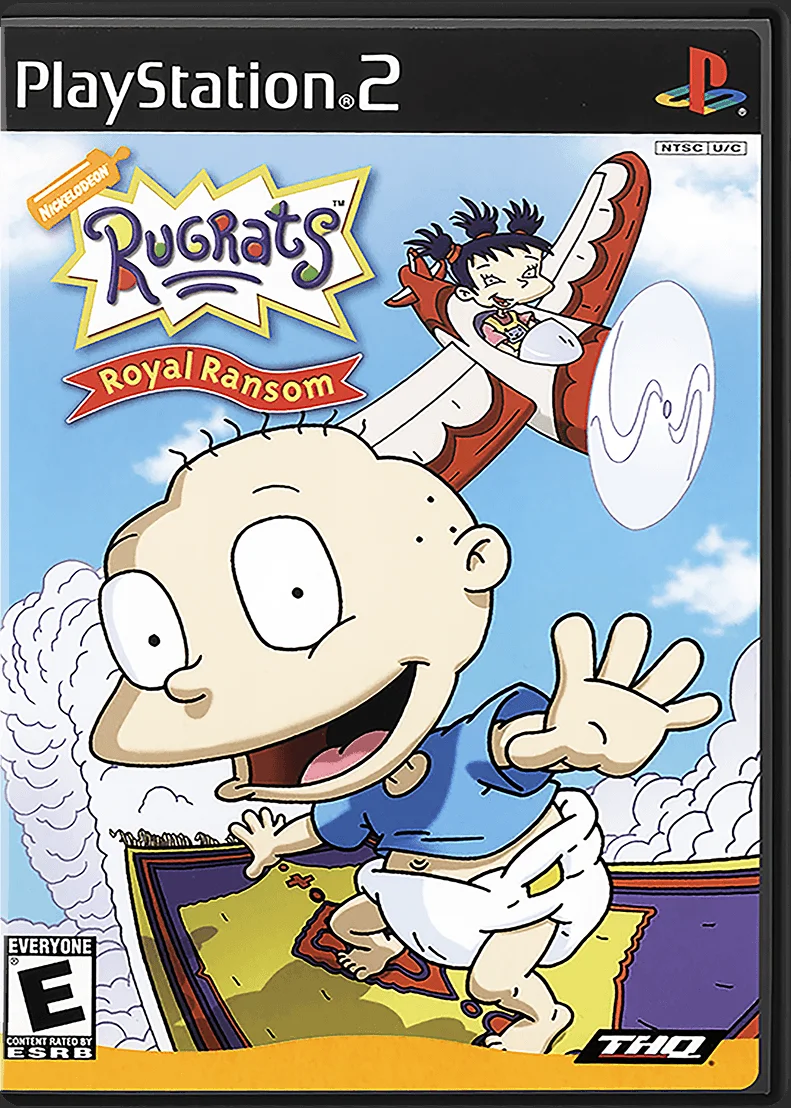
Rugrats: Royal Ransom is a useful choice for a collection that lacks a clear example of early-2000s licensed 3D platforming. Avalanche Software developed the game and THQ published it for PlayStation 2 and GameCube. Its premise sends the Rugrats through nine fantasy environments, including snow, ocean, jungle, and moon settings, turning a television property into a conventional console adventure rather than a short promotional side project.
That distinction matters when cataloging licensed games. A recognizable character is only part of the evidence. The disc also records how a children’s brand was translated into movement, exploration, level themes, bonus content, and local play. The cataloged PlayStation 2 and GameCube releases support one to two local players and have no online multiplayer. The game also includes bonus levels and multiplayer activities, showing a release designed around living-room hardware and the social habits of its period.
Its value is strongest when your library needs audience history. A shelf built mostly from prestige action games can miss the software made for younger players and families. Rugrats supplies that contrast without requiring the collection to become a franchise archive. It also gives you a physical example of how a licensed property could occupy the same broad 3D platforming space as original console characters while using television recognition as its entry point.
Do not blur the PlayStation 2 and GameCube editions together. The North American PlayStation 2 release is dated November 16, 2002, while the North American GameCube release is dated November 27, 2002. The PS2 product code is SLUS-20443 and the GameCube code is DOL-GRRE-USA. A cover title is therefore not enough to identify the intended copy, especially when a listing uses a generic photograph or mixes the two platforms in its description.
- Choose Rugrats when your collection lacks a licensed children’s 3D platformer.
- Confirm the console, region, disc label, case, cover insert, and product code.
- Treat the staged PlayStation 2 artwork as evidence of the PS2 edition only, not the GameCube release.
- Look for the manual if your collecting goal includes preserving the original package context.
Rampage: Total Destruction links a new game to arcade history
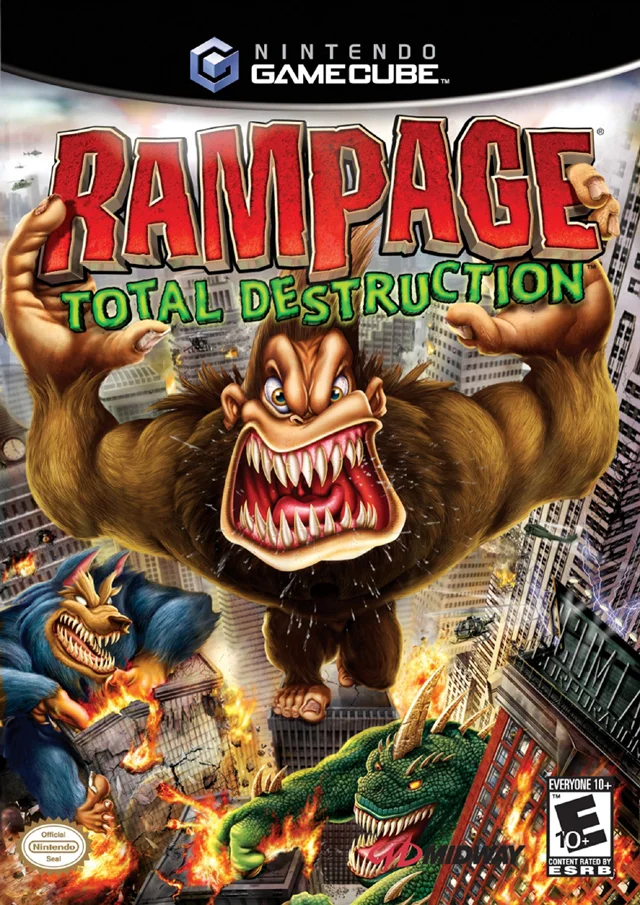
Rampage: Total Destruction has a different collecting job. The GameCube edition is both a later attempt to expand the Rampage formula and a compact piece of franchise history. Pipeworks Software developed it and Midway published it. The North American GameCube release is dated April 24, 2006, with product code DOL-GXNE-USA. Those details help distinguish the physical object, but the more important distinction is what the disc contains.
The main game expands the familiar building-destruction premise with a roster of 30 monsters, health recovery through eating, and a Rampage meter that can temporarily increase destructive power. Characters can climb the fronts of buildings, and the game adds more movement and attack options than the earlier arcade releases. Unlockable upgrades and special abilities give the disc more progression structure than a straightforward arcade reproduction.
The GameCube version supports one to four local players and does not offer online multiplayer. That makes it a useful choice for a collection documenting the console’s group-play identity, particularly if your other GameCube games focus on solo adventures. The multiplayer modes also help explain why this release belongs on a shelf as a social console artifact, not only as a single-player action game.
The historical layer is just as important. The GameCube release includes emulated versions of the original Rampage and Rampage World Tour. It is therefore not merely a new entry that borrows a name. It places an updated interpretation beside earlier forms of the franchise on the same disc. For collectors, that makes the package a bridge between arcade lineage and sixth-generation design.
Its tradeoff is redundancy. If your shelf already contains several multi-game arcade compilations, Total Destruction may not add much archival breadth. It becomes the stronger choice when you want one physical release that demonstrates both how the series changed and how its earlier games were preserved for a later console audience.
- Choose the GameCube edition when four-player local support is part of the collection’s purpose.
- Confirm that the listing refers to Total Destruction rather than an earlier Rampage release.
- Record the included legacy games as part of the disc’s preservation role.
- Do not assume the same player capacity or bonus material applies to every platform version.
Intellivision Lives! preserves software and the way it was explained
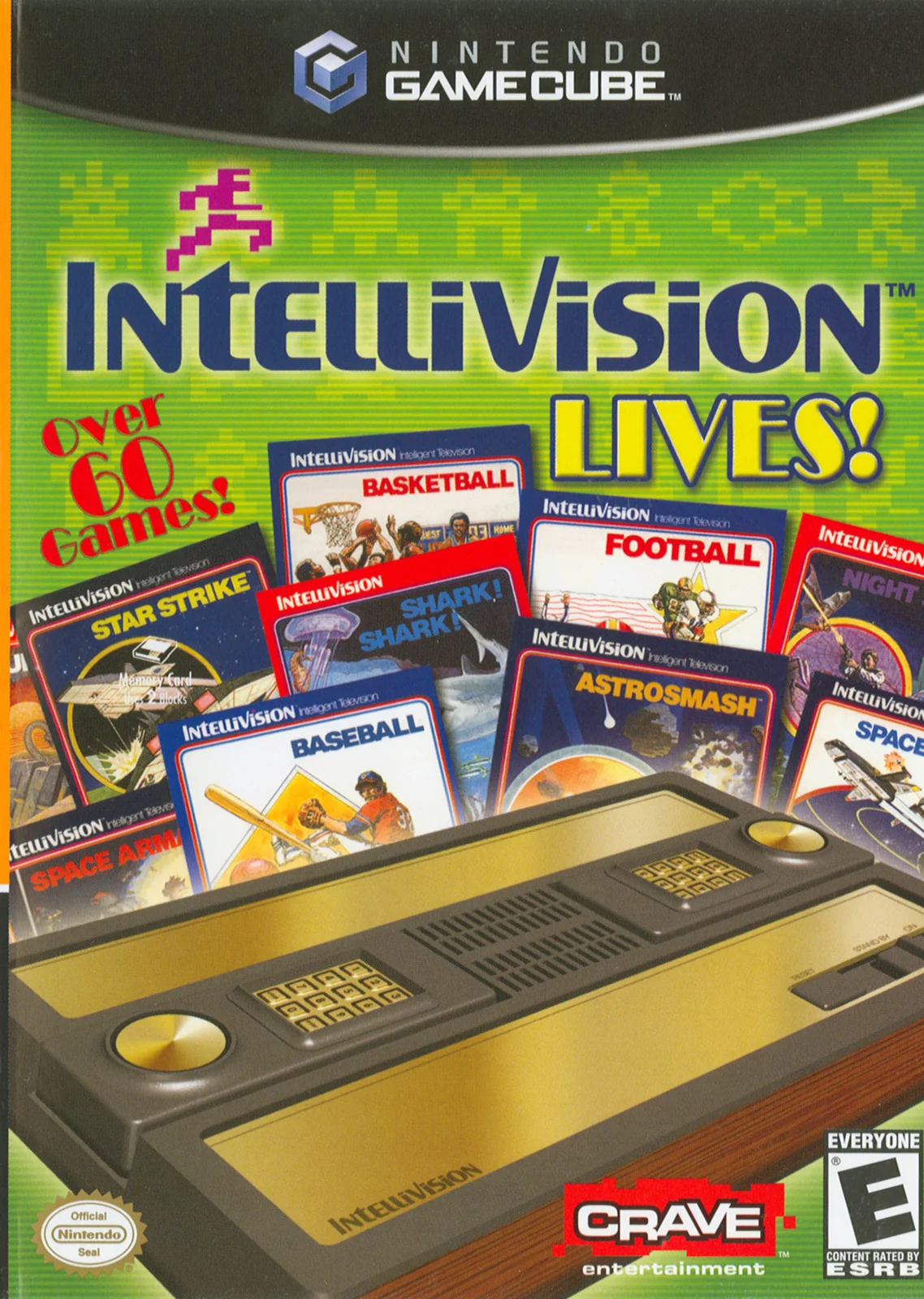
Intellivision Lives! should be collected as a historical compilation, not mistaken for a single newly developed game. Realtime Associates developed the GameCube version, Crave published it, and the North American release is dated November 4, 2004. Contemporary descriptions identify more than 60 Intellivision games, including several unreleased titles. That gives the disc a wide playable footprint, but its documentary material is what makes it especially useful on a collecting shelf.
The compilation includes historical information, developer interviews, original commercials, archival footage, production notes, and visual material connected to the games. In other words, it does not only preserve reproductions of old screens. It also preserves a later explanation of why those games mattered and how they were presented to a new audience. The package becomes a period example of compilation design: older games placed inside a later console interface with context and selected supporting material.
The library represents several parts of early-1980s console culture, including arcade-style games, sports, strategy, and action-oriented releases. That range makes the disc useful for someone who wants to understand the platform’s breadth without collecting every individual original cartridge. It is also an efficient contrast to a shelf made entirely of later games that reference retro design without preserving the original catalog directly.
There is an important limitation. Intellivision Lives! should not be described as a complete Intellivision archive. The selection reflects licensing, editorial decisions, and what could be included in that release. Licensed games are not represented comprehensively, and the historical material is shaped by the recollections and editorial choices of the people involved. That makes it a valuable archive-shaped compilation rather than a definitive institutional account. The limitation is part of the object’s story, not a reason to dismiss it.
The GameCube packaging deserves careful attention as well. The staged artwork includes more than one cover variant, so one scan should not be treated as representative of every regional or packaging version. If your collection tracks original presentation, record the exact release rather than filing every copy under a single generic compilation entry.
- Choose Intellivision Lives! when documentary context matters as much as playability.
- Record the number of included games as a release feature, not as proof of a complete archive.
- Check for the original case, cover insert, disc, and manual before labeling the copy complete.
- Keep the compilation’s historical commentary separate from independently verified platform history.
AeroWings 2 adds a Dreamcast simulation chapter
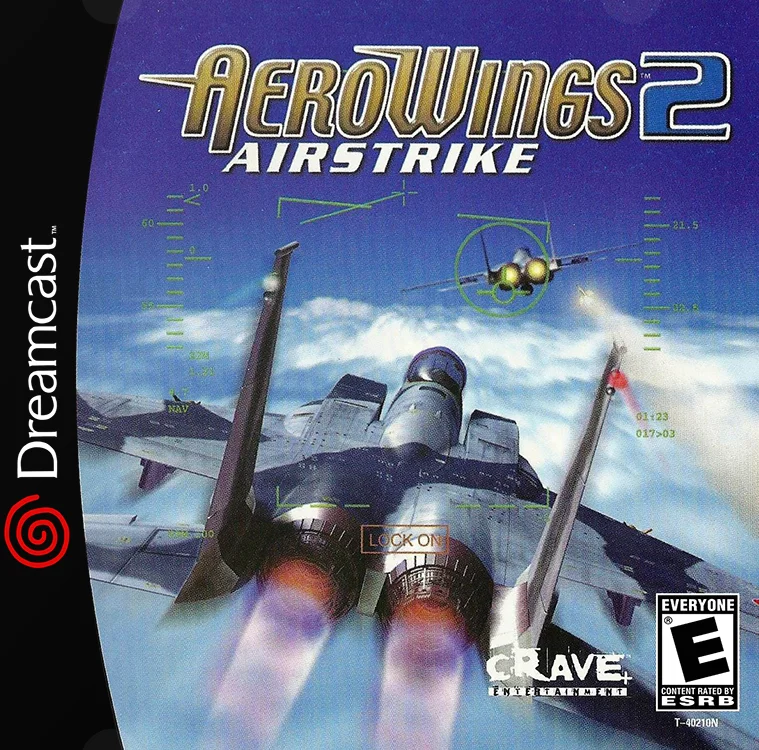
AeroWings 2: Air Strike fills the most platform-specific role of the four. CRI developed it, and Crave published the North American Dreamcast edition. The North American release is dated August 27, 2000, with product code T-40210N. The European release followed on December 8, 2000. The Japanese counterpart is known as Aero Dancing F, so regional naming is not a minor catalog detail: it is central to identifying which release you are looking at.
The game is categorized as a combat flight simulation title with one- to two-player support. Its descriptions emphasize fighter jets, training, and combat challenges rather than presenting it as a conventional arcade shooter alone. Other catalog material identifies more than 30 fighter-training missions and 15 tactical challenges. That gives the disc a distinct preservation role. It records a Dreamcast interest in structured flight play that can be overlooked when the console is represented only by racers, fighters, mascot games, and arcade conversions.
This is a strong selection for a collector who wants platform identity rather than another famous franchise. The question is not whether the Dreamcast had a larger library of action games. It is whether your physical shelf shows the range of experiences the hardware was used to present. AeroWings 2 says that the system’s identity also included a focused flight niche with its own terminology, training emphasis, and regional naming history.
The tradeoff is accessibility. A simulation-oriented disc may be less immediately inviting than a party game or short arcade session. That is not a defect if the collecting goal is documentation. It simply means the purchase should be justified by the gap it fills, not by an expectation that every disc must serve the same kind of casual replay.
When checking a copy, do not substitute Aero Dancing F or another AeroWings title without recording the difference. The Japanese title, regional release, packaging, and product codes can change the object’s historical meaning.
- Choose AeroWings 2 when your Dreamcast shelf lacks a simulation-focused release.
- Verify the regional title and edition before comparing listings.
- Keep the manual with the game because its training and control context helps explain the release.
- Do not treat a different AeroWings game as an equivalent substitute without noting the change.
Completeness means matching the intended edition
A complete copy is not simply a disc that boots. For this group, completeness begins with the correct platform and region, then moves through the case, cover insert, manual, and disc. A seller’s title may say “Rugrats” or “Rampage” while the photograph shows another platform. Compilation packaging can vary, and Dreamcast regional names can make a familiar-looking cover misleading.
Use the physical identifiers as a chain of evidence. Start with the console logo and region mark. Compare the disc label with the case spine and cover. Check that the product code belongs to the selected edition, then inspect whether the manual matches the same platform and language. If any piece conflicts, describe the copy as mixed or incomplete rather than silently treating it as original.
This matters especially when the goal is preservation. A manual can explain controls, multiplayer arrangements, training language, or included material that a modern listing omits. A cover insert documents how the publisher positioned the game. Even a compilation’s packaging can reveal whether the release was marketed primarily as a playable library, a historical exhibit, or a budget-friendly catalog entry.
Photographs should answer questions before you commit to a purchase. Ask for the disc label, the inside cover, the manual, and the product code when those details are missing. Avoid making value judgments based on an unclear stock image. The objective is not to chase a perfect copy at any cost; it is to know exactly what evidence your copy preserves.
- Match console, region, title variant, and product code.
- Inspect disc, case, cover insert, and manual as separate collection components.
- Mark mixed-region or missing-paperwork copies accurately in your catalog.
- Do not use a stock cover image as proof of the item being sold.
Which one belongs in your next open slot?
Choose Rugrats: Royal Ransom if your collection needs evidence of licensed children’s console software and early-2000s 3D platforming. Its value comes from audience and design context, not from pretending it represents every Rugrats release. Choose Rampage: Total Destruction if you want a local multiplayer GameCube release that also carries earlier Rampage games with it. That is the most direct bridge between a modernized arcade formula and franchise preservation.
Choose Intellivision Lives! if you want the broadest documentary object. It offers a large playable selection plus interviews, commercials, archival footage, and historical framing. Its limitation is that it is selective and interpretive, so catalog it as an archive-shaped compilation rather than a definitive replacement for the original library. Choose AeroWings 2: Air Strike if the missing piece is a Dreamcast combat-flight simulation and you want your shelf to reflect a less obvious part of the platform’s identity.
These choices can also be arranged as a decision tree. Ask first whether you need audience history, franchise lineage, archival explanation, or platform-specific genre evidence. Then ask whether your existing collection already answers that question with a stronger example. If it does, leave the slot open. An empty space is better than a fourth disc that repeats information your shelf already preserves.
- Rugrats: licensed-console culture and family-oriented 3D platforming.
- Rampage: arcade evolution, local multiplayer, and included franchise history.
- Intellivision Lives!: playable preservation with documentary framing.
- AeroWings 2: Dreamcast simulation and regional release identity.
The most useful overlooked disc is the one that changes what your collection can explain. These four releases do that in different ways: one records a licensed audience, one connects a new arcade interpretation to older games, one preserves a catalog alongside its historical framing, and one gives the Dreamcast a simulation-focused voice.
Use the role test whenever a new listing catches your attention. If the disc contributes a distinct audience, lineage, archive, or platform identity, it may deserve a place. If it only repeats a chapter already crowded on your shelf, the most disciplined collecting decision may be to pass.