A ten-game shelf can still become a collection of admired titles that rarely leave their cases. The problem is not always poor game selection. More often, every purchase was made for the same reason: reputation, nostalgia, rarity or the hope that a free weekend will eventually appear.
Instead, treat ten slots as ten answers to recurring play situations. You need something that works for twenty minutes, something that rewards a long evening, something visitors can understand quickly and something you will still want to revisit after finishing it. The games in this guide demonstrate the method, but they are not mandatory purchases or a ranking.
Start With Play Situations, Not Platforms
Before naming games, write down when your collection is actually used. A weekday session may be short and interrupted. A weekend session may leave room for a story-heavy adventure. Visitors may want immediate multiplayer without learning a complicated control scheme. You may also want a solo game that can be practiced in small pieces rather than restarted from the beginning every time.
This changes the question from “Which classic games are essential?” to “What does my collection fail to provide?” A shelf containing five acclaimed action games may still be weak if it has no local multiplayer, no short-session option and no title you can comfortably pause after ten minutes. Assigning roles first makes duplication visible before money or storage space is involved.
Use the ten slots as a framework, not a requirement to own exactly ten discs immediately. Empty slots are useful. They show which needs remain unresolved and prevent a tempting purchase from being justified merely because a space exists.
- Record your usual session lengths: under 20 minutes, 20–60 minutes and longer than an hour.
- List who plays: only you, one regular partner, occasional visitors or a larger group.
- Write down the hardware already connected and the accessories you actually own.
- Identify genres you enjoy playing, not just genres you believe a collection ought to include.
Slots One and Two: Build a Short-Session Pair
Reserve two slots for games that can deliver a satisfying session without demanding a large memory investment. Racing, sports, score chasing and compact platforming objectives are natural candidates, but the deciding factor is friction. A short-session game should be easy to resume, offer clear immediate goals and avoid making you reconstruct a complicated story or inventory plan.
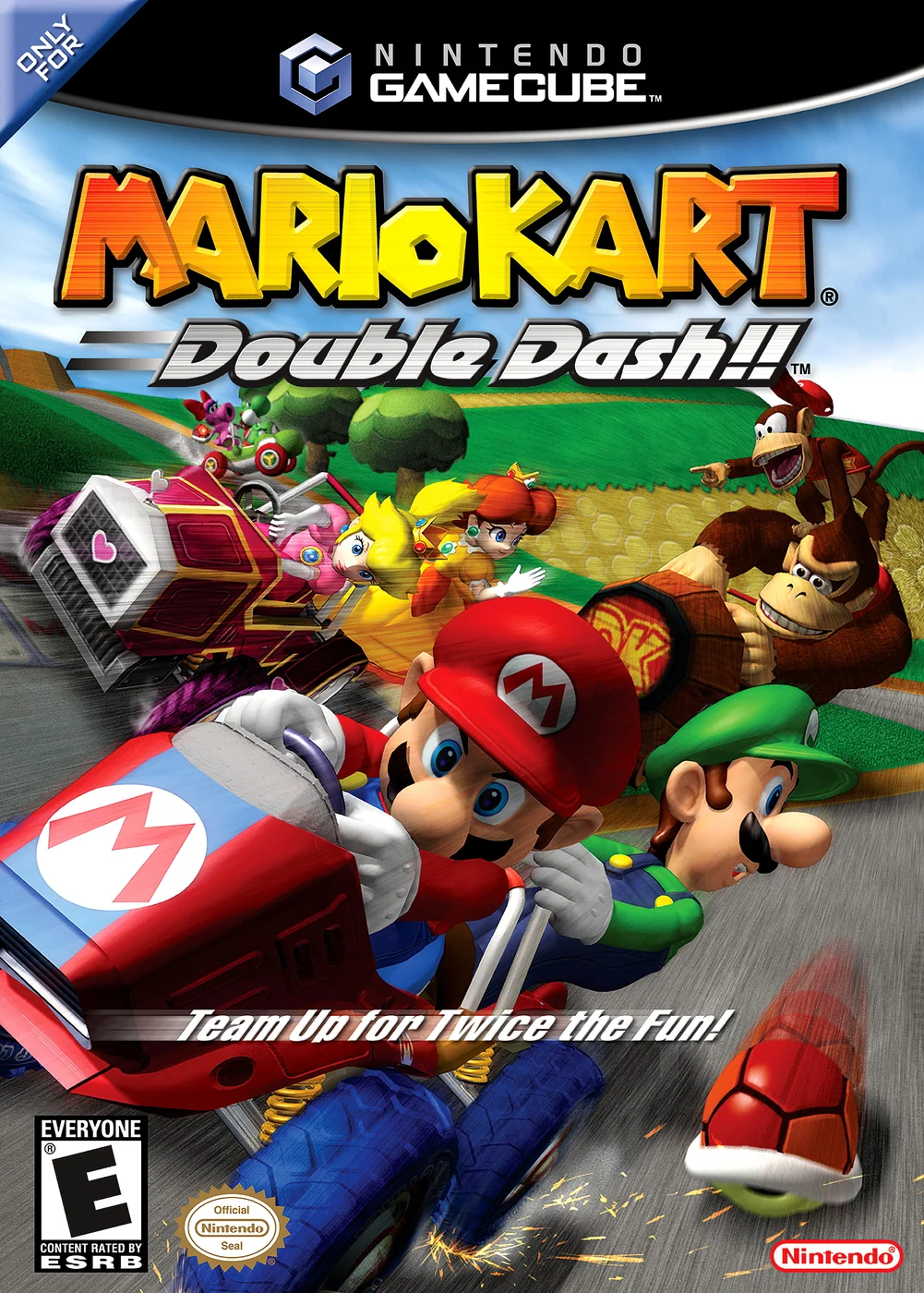
Mario Kart: Double Dash!! can fit this role when used for a few races, a time trial or a quick Versus event. Nintendo’s original material identifies Grand Prix, Time Trial, Versus and Battle modes, so it is not limited to a single campaign-like progression. Its value in a small collection comes from serving several situations without needing another racing disc for every mood.
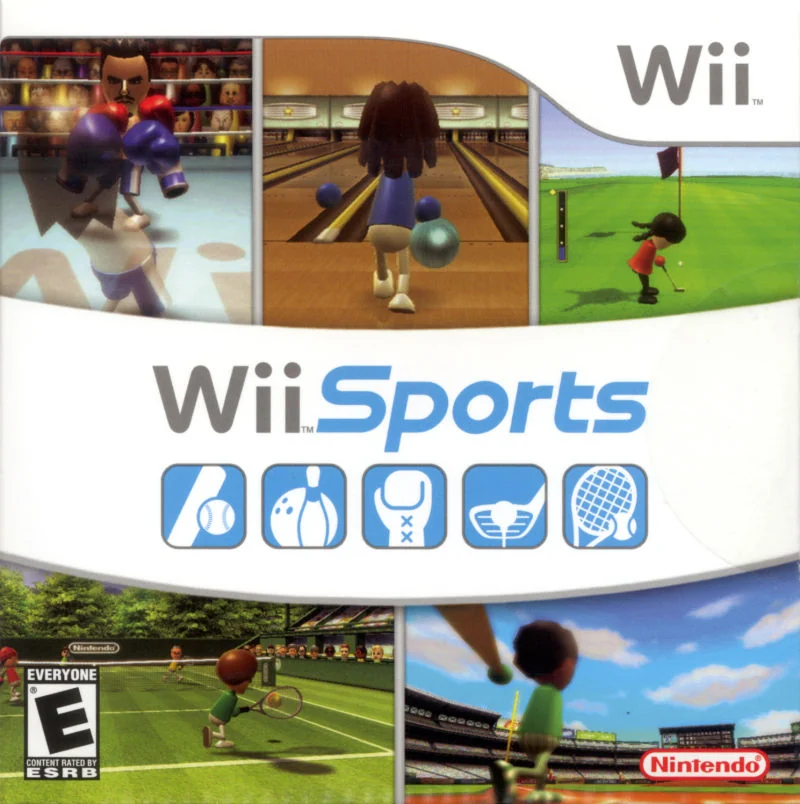
Wii Sports offers a different kind of short session. Its original activities include tennis, baseball, bowling, golf and boxing, giving the disc several distinct entry points. That variety can make it a practical low-commitment choice, especially when the goal is a quick activity rather than a long progression system. It is not interchangeable with Wii Sports Resort or Wii Sports Club, so the exact release must be recorded in the wishlist.
Do not fill both short-session slots with near-identical games simply because they are convenient. A racing game and a motion-controlled sports collection provide more useful contrast than two games that both ask you to repeat short races.
- Choose one slot for immediate competition or score improvement.
- Choose the second for a different control style or social situation.
- Confirm that the game can be played meaningfully without starting a long sequence.
- Record whether the required controller is comfortable and available.
Slots Three and Four: Make Room for Long Adventures
Long games deserve deliberate limits in a ten-slot collection. One substantial adventure can anchor the shelf; two can provide variety. More than that may create a queue of intimidating commitments, particularly if your available play time is fragmented. A long-adventure slot should be selected because you want to spend weeks with the game, not because its reputation makes it feel obligatory.
Final Fantasy X is a clear example of a long-session role. It was first released on PlayStation 2 and is structured as a story-focused role-playing adventure. That makes it a different proposition from a game such as Wii Sports or Mario Kart: Double Dash!!: progress depends on returning to an ongoing journey rather than simply choosing another activity.
The original PlayStation 2 edition also needs practical planning. Its manual describes Save Spheres as the way to save progress in the field and states that each save file uses at least 64KB of memory-card space. A working PlayStation 2 memory card is therefore part of the playable setup, not an optional collector extra. Later versions and remasters should be tracked separately because their hardware and save arrangements differ.
If you choose a second long adventure, make it differ in pacing, perspective or controls. Two lengthy role-playing games may compete for the same scarce attention. A story-heavy game paired with an exploratory platformer can give you a more realistic chance of alternating between them.
- Choose one long game you genuinely want to finish or steadily explore.
- Give the second long slot a different rhythm or genre when possible.
- Confirm the original platform and edition before researching save requirements.
- Treat the memory card, controller and display connection as part of the plan.

Slots Five and Six: Reserve Space for Local Multiplayer
Local multiplayer should have dedicated slots because its requirements are different from solo play. A game may be excellent but useless for a planned gathering if you lack controllers, a multitap, a Nunchuk or the correct display setup. Record the ordinary play configuration separately from unusual linked-console features.
Mario Kart: Double Dash!! is a useful example because it covers both solo and group needs. Nintendo’s official material describes one-to-four-player play on a single GameCube and a team arrangement in which two characters share one kart. That gives the game more than one social use: two players can cooperate in a kart, while a larger group can compete in ordinary local races.
Nintendo also promoted linked play for up to eight players using multiple GameCube systems and broadband adapters. That is a substantially more demanding arrangement than four-player play on one console. A planning sheet should not treat “supports eight players” as meaning that eight people can simply sit down with one disc and a pile of controllers.
Wii Sports supplies a different local-play option. Tennis, bowling and golf support up to four players, while baseball and boxing support one or two players. Boxing also requires both a Wii Remote and Nunchuk for each player. Those details determine whether the game belongs in a casual visitor slot or needs to be reserved for a smaller group with the right equipment.
The best two multiplayer slots do not have to be two competitive party games. Pair a fast game with a lower-pressure activity, or choose one title for regular friends and another for guests who may not know the controls.
- Write the normal player limit for the exact edition.
- Count compatible controllers rather than assuming modern replacements will work.
- Separate single-console multiplayer from linked-console configurations.
- Note accessory limits for specific activities, especially motion-controlled games.
Slot Seven: Add a Movement or Skill Playground
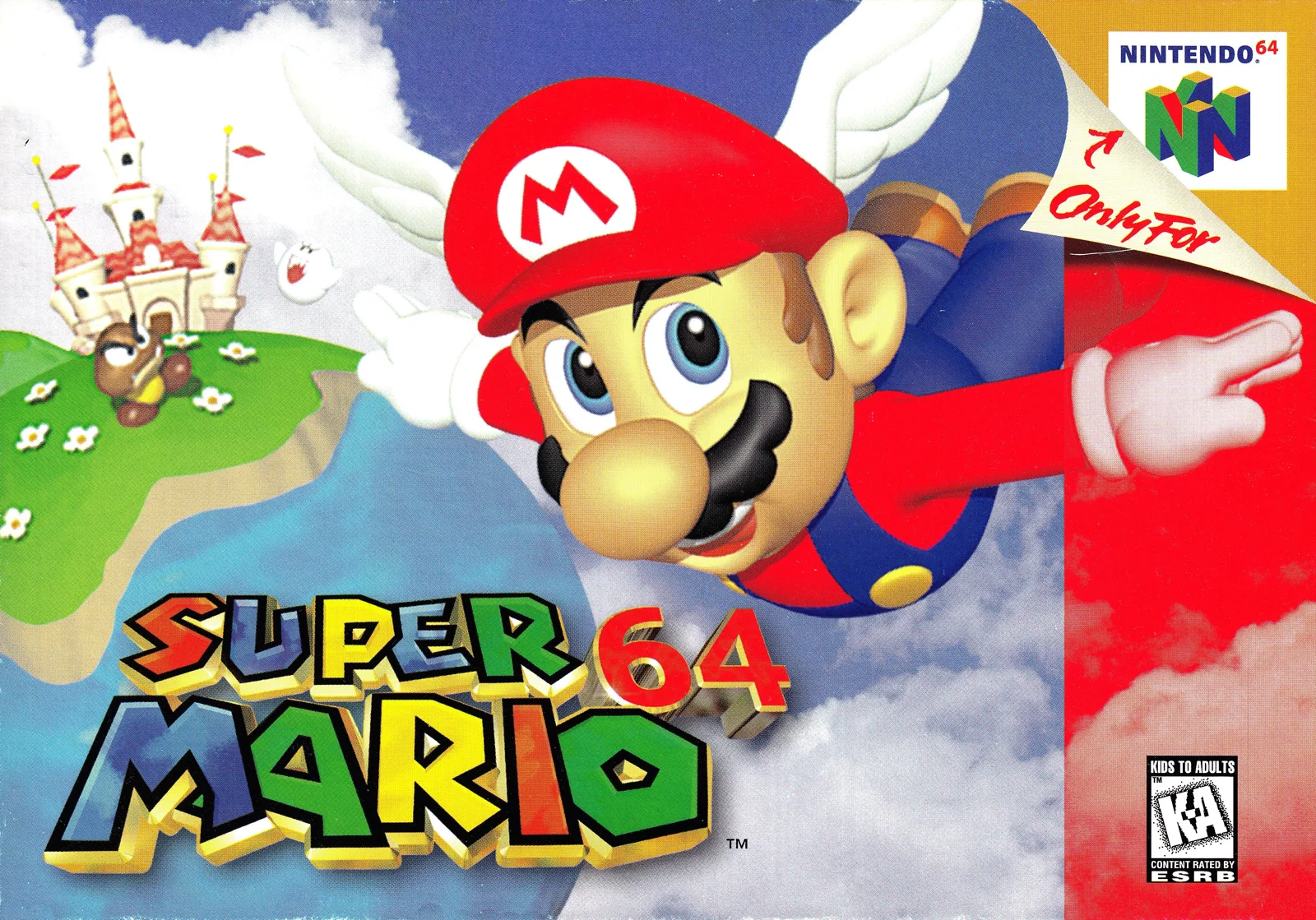
A movement-focused slot provides something between a short-session game and a long adventure. It should reward practice, experimentation or one clearly defined objective without requiring a complete campaign commitment. This is where Super Mario 64 can be a useful model.
The original Nintendo 64 manual describes movement controls, camera operation, save files and course-based objectives. Those features make it suitable for several session lengths. You can focus on one objective, practice movement in an open area or make gradual progress without treating every visit as a major story event. Its role is not simply “the famous Nintendo 64 game”; its role is a flexible single-player playground.
This category is especially valuable when your collection contains ambitious games that are difficult to resume. A movement playground gives you a reliable alternative on days when you want to play rather than organize a large quest. It can also expose a gap in your hardware plan: the original Nintendo 64 release needs its compatible console and controller, and later versions should not be assumed to have identical controls or display behavior.
Do not select a second movement game automatically. If your short-session slots already contain platforming and racing, use this space for a type of skill you do not otherwise have, such as puzzle solving, tactical planning or score improvement.
- Choose a game with goals that can be isolated into manageable sessions.
- Check whether camera or control demands suit the controller you have.
- Avoid counting a second game as variety if it creates the same play pattern.
- Define what improvement means: new objectives, better movement or higher scores.
Slot Eight: Give One System a Distinctive Reason to Exist
A small collection does not need one game from every console generation. However, a platform earns space when it offers a play experience or hardware feature that the rest of the shelf cannot replace. This is the purpose of the unusual-system slot.
Sonic Adventure on the original Dreamcast is a useful example. Its manual lists Adventure Mode, Trial Mode, Chao features and VMU-related functions. Those elements give the original release a different identity from a general-purpose action game, but they also make the hardware plan more specific.
The Dreamcast manual distinguishes between ordinary game files requiring 10 VMU blocks and the Chao Adventure feature requiring 128 free blocks. It also describes automatic saving for cleared action stages, events and victorious boss battles. That means a disc alone is not the entire original-hardware experience. A working VMU with enough available space belongs on the readiness list if those features are part of the reason for choosing this slot.
Later Sonic Adventure releases should be treated as separate candidates. Sonic Adventure DX is not automatically the same purchase decision as the original Dreamcast edition, particularly when your reason for selecting the game involves VMU interaction. Platform identity is useful only when the edition has been identified accurately.
- Write down the platform-specific feature that justifies the slot.
- Check memory devices and free space before buying the game.
- Separate original releases from ports, remasters and revisions.
- Do not confuse a distinctive platform feature with proof that you will replay the game.
Slot Nine: Choose the Game You Already Want to Revisit
One slot should be awarded for demonstrated replay desire rather than collection logic. This may be a game you return to every few years, a comfort title you use when tired or a competitive game where improvement itself is the reason to continue. It does not need to be historically important or difficult to find.
The test is simple: can you name the situation in which you will choose it over the other nine? “It is considered essential” is not a use case. “I want one race before bed,” “I want to practice a familiar movement route” or “I want to replay selected sections after finishing the story” is more useful evidence.
This slot also protects the collection from becoming an obligation. A carefully balanced shelf can feel like homework if every game represents a project, a genre gap or an important historical milestone. A personal favorite gives you permission to play for comfort rather than progress.
If one of the supplied examples already serves this purpose, do not buy another title to fill the role. Double-counting a game by role is allowed; counting duplicate games is what causes the shelf to swell. A single disc can be a short-session choice and a replay favorite when it genuinely serves both purposes.
- Name the specific reason you return to the game.
- Write the likely session length and preferred mode.
- Do not replace an existing favorite merely to improve genre balance.
- Keep personal history separate from rarity, condition and possible future value.
Slot Ten: Keep One Slot for Personal History or Discovery
The final slot should remain flexible. It may hold a game connected to a meaningful period, a title recommended by someone you play with or a discovery that fills a need your original plan missed. Leaving this slot open is often better than rushing to complete the number ten.
Personal history and critical reputation are not the same thing. A game can matter to you even if it is not considered a landmark, while a landmark can remain untouched. Write down the emotional or practical reason before adding it. If you cannot explain the reason without mentioning rarity, completeness or resale potential, defer the decision.
This slot can also absorb a controlled experiment. Perhaps you want to test whether you enjoy a genre before building around it. The condition is that the experiment has a stopping rule. If you do not play the game after a reasonable rotation, it should return to the wishlist rather than becoming permanent simply because you own it.
A flexible slot prevents the ten-slot framework from turning into a rigid canon. The collection remains personal, and the method continues to work when your available hardware, household or schedule changes.
- Write the personal or experimental reason in one sentence.
- Set a review date before buying if the slot is exploratory.
- Choose the correct edition instead of treating all versions as equivalent.
- Allow the slot to remain empty until a convincing candidate appears.
Audit Overlap Before You Buy
Once all ten roles are assigned, review the list as a system. Count repeated genres, session lengths, platforms and accessory requirements. A collection can appear varied on paper while still requiring the same mood, the same controller or the same uninterrupted evening for nearly every game.
Also count use cases rather than discs. Mario Kart: Double Dash!! may cover solo time trials, competitive racing and team play. Wii Sports may cover short solo practice and casual multiplayer, but only if the Wii Remote and any required Nunchuk are available. Those multiple uses can justify keeping fewer games in the same category.
Hardware concentration deserves special attention. Three games spread across Nintendo 64, Dreamcast and PlayStation 2 may offer variety, but they also create three separate console, cable, memory and controller obligations. That is not automatically bad. It is a tradeoff to record rather than discover after buying.
Finally, compare the list with your actual calendar. If you have one long evening each month, four long adventures are probably not a balanced plan. If friends visit weekly, local multiplayer may deserve more than two slots. The correct allocation reflects use, not an abstract idea of completeness.
- Mark every game sharing a genre or dominant control style.
- Count the number of consoles and memory devices required.
- Check whether the social slots match the people who actually visit.
- Remove or defer any game whose role is already covered better by another title.
Use a Wishlist Template With a Stop-Buying Rule
A wishlist becomes useful when it records decisions, not just titles. For every candidate, note the game, original platform, exact edition, intended slot, expected session length, local-player needs, required accessories, replay reason, backup choice and the condition that would make you stop pursuing it.
The backup choice matters because it exposes whether the first candidate is solving a real need or merely attracting attention. If a short-session slot has no alternative, ask whether the category is genuinely important. If three games are competing for the same slot, select by practical fit rather than reputation alone.
Add a hardware readiness line before any purchase. For Final Fantasy X on original PlayStation 2 hardware, that includes a functioning memory card. For Sonic Adventure on Dreamcast, it may include a VMU with sufficient free blocks. For Wii Sports, it includes the necessary Wii Remote and, for boxing, a Nunchuk. For Double Dash!!, it includes enough compatible controllers for the intended local group.
Use a quarterly review rather than a permanent ban. Keep a game if it solved its assigned play problem, replace it if another title serves that role better and defer it if the hardware or schedule is not ready. This keeps the collection playable without pretending every decision is final.
- Game and exact edition.
- Original platform and intended collection role.
- Typical session length and preferred mode.
- Number of local players and controller requirements.
- Memory card, VMU or other accessory needs.
- Specific reason to replay.
- Backup candidate.
- Stop-buying condition.
- Review decision: keep, replace or defer.
A ten-slot collection succeeds when every space answers a real question. Short-session games protect limited time, long adventures provide depth, multiplayer titles make the shelf useful to other people, and personal favorites prevent the plan from becoming a museum display.
Before buying, verify the edition, hardware and saving method. Then ask the most important question: when a particular kind of free time appears, will this game be the one you reach for? If the answer is unclear, leave the slot open and let the wishlist do its job.