One of the stranger sneaker disputes of the year has ended without delivering the answer collectors wanted most: whether Nike’s Air Max 95 Big Bubble “7-Eleven” will actually receive a retail release.
7-Eleven filed papers on October 19 to dismiss its lawsuit against Nike concerning the shoe, and the dismissal was accepted by the court on October 20. The case had begun July 1 in federal court in Dallas. Its end is legally meaningful, but commercially inconclusive: 7-Eleven cannot bring the same claims again, yet there has been no court decision on whether Nike’s design infringed the retailer’s trademark rights.
Nike has also not announced a new launch date for the Air Max 95. That leaves the IR1944-102 style in an unusual position. It is a sneaker that was planned for release, abruptly pulled from Nike’s calendar, seen in limited numbers on the resale market, and then freed from this particular lawsuit—without confirmation that it is coming back.
What the dispute was about
The conflict centered on a Nike Air Max 95 colorway commonly called the “7-Eleven.” The shoe uses an off-white base with brown, orange and green suede accents. 7-Eleven argued that the orange, green and red colors appeared in the same order associated with its familiar branding.
For more context, explore Wireless CarPlay Adapters: What to Check Before Turning a Wired Connection Cord-Free.
Color is not automatically owned in every setting. In trademark disputes, the critical question is generally whether the challenged use is likely to confuse consumers about a product’s source, sponsorship or affiliation. Here, the retailer’s complaint put the focus on the particular sequence of colors, the visual connection to its identity, and the way the sneaker was being marketed.
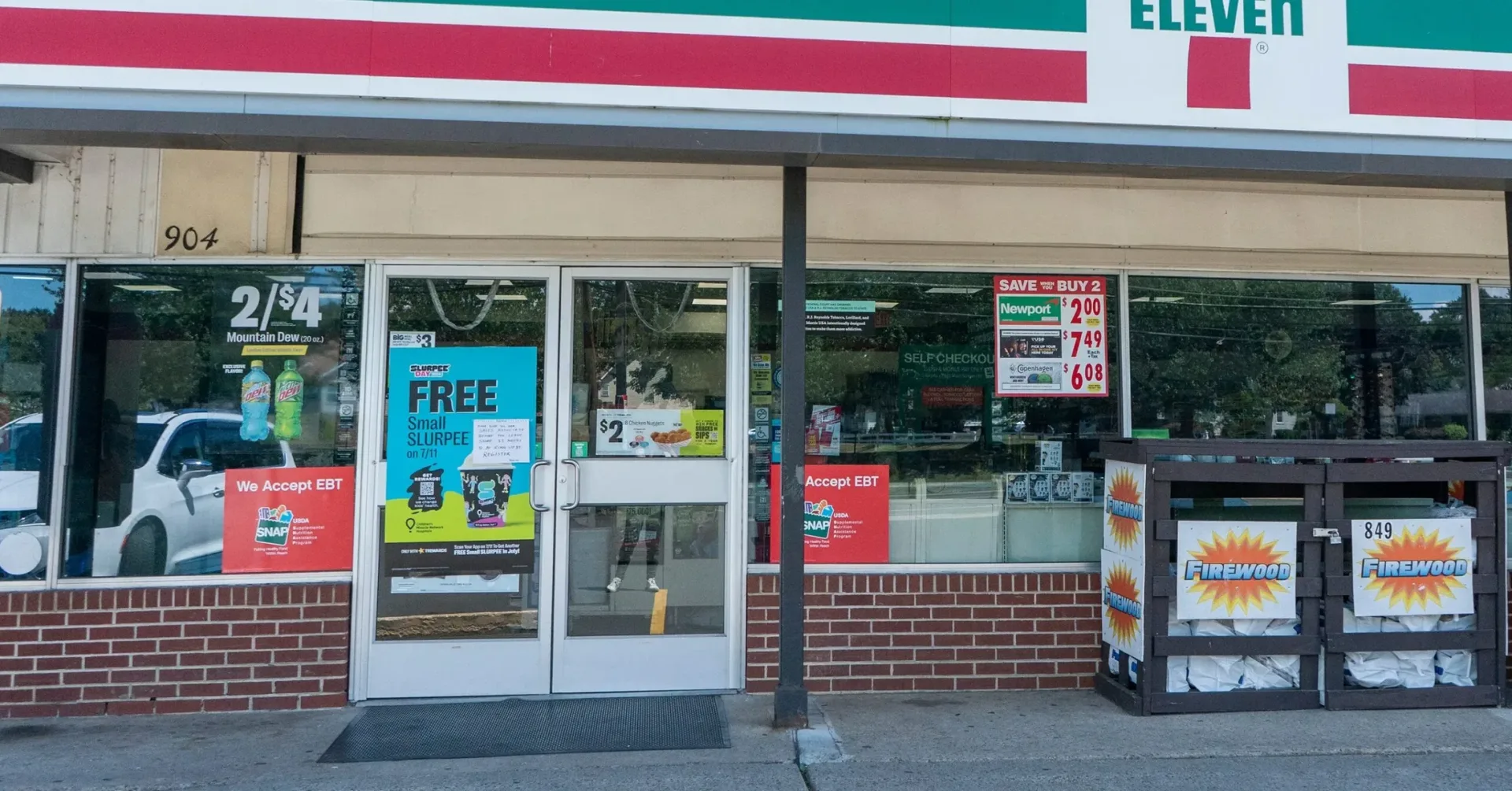
The planned timing added a conspicuous wrinkle. Nike had been expected to release the shoe on July 11, a date 7-Eleven marks as its birthday with free Slurpees. For a design already widely read as a reference to the chain, a launch tied to that calendar date made the connection harder to ignore.
7-Eleven sought to stop Nike from advertising and selling the shoe. It also requested destruction of remaining pairs. Nike subsequently removed the release from its calendar, although some pairs had already made their way onto the secondary market.
Dismissed with prejudice: what that actually means
The phrase “with prejudice” is the most important legal detail in the case’s conclusion. It does not mean a judge found one company morally or commercially right. It means 7-Eleven is barred from bringing the same claims against Nike again.
That finality should not be confused with a ruling on the merits. The court did not determine whether Nike infringed a 7-Eleven trademark. It did not publicly establish that the color arrangement was protected in this context, nor did it clear Nike’s design as non-infringing. The case closed before those questions were resolved through a decision.
Neither side has explained why the litigation ended. That leaves several possibilities open in the abstract, but none can be treated as fact here. There is no disclosed indication of a settlement, licensing arrangement, redesign, future collaboration, or agreement concerning a launch. The only firm public outcome is dismissal of this lawsuit and the restriction on refiling the same claims.
That distinction matters for collectors watching a possible release. A legal dismissal eliminates one active obstacle, but it does not create a product launch. Nike still controls whether the shoe returns to its calendar, appears in altered form, or remains unreleased.
A cancellation can make a shoe feel rarer than it is
The Air Max 95 “7-Eleven” quickly became more than a themed colorway because the lawsuit interrupted its expected path to retail. Once Nike pulled the date, the small number of pairs already circulating took on extra attention. In sneaker collecting, uncertainty can be as powerful as confirmed scarcity: buyers are often reacting not only to how many pairs exist, but also to the possibility that no broader release will ever happen.
That dynamic was visible in the secondary market. Daily averages reportedly reached about $439 in July, when the possibility of a permanent cancellation appeared more plausible. By October 22, the lowest asking price on StockX was around $190—below the originally stated $210 retail price.
Those figures are useful signals, but they should not be read as a clean appraisal of the shoe’s permanent value. An asking price is what a seller wants; it is not necessarily the price a buyer paid. A daily average can reflect the mix and volume of sales on a given day, including the effect of a small number of transactions. Neither number guarantees what an individual pair would sell for after fees, shipping, taxes, condition differences or a future Nike decision.
The direction of the movement is still notable. The market appears to have cooled as the narrative shifted from “the shoe may be gone forever” to “the lawsuit is no longer active.” For a release whose appeal was partly driven by its legal limbo, less uncertainty can mean less urgency.
The collection context makes the case more unusual
This was not simply an arbitrary use of convenience-store colors. The Air Max 95 Big Bubble “7-Eleven” was described as part of a convenience-store-inspired pack that also referenced Japan’s Lawson. That wider concept provides design context, but it does not settle the trademark question that was raised in court.
The situation is also notable because Nike and 7-Eleven have a prior connection. They had worked together on an unreleased Nike SB Dunk Low. That history does not establish permission for every subsequent use of 7-Eleven-adjacent imagery, but it helps explain why the lawsuit caught sneaker followers off guard. Brand collaborations typically teach audiences to look for official authorization; when a product appears to echo a recognizable partner without a clearly stated collaboration, consumers and collectors can draw assumptions that become commercially significant.
For collectors, that is the core lesson behind this episode. A product nickname, color palette, mood board or apparent homage can create an impression of affiliation even when the exact legal relationship is unclear. It is sensible to separate three things that the resale market often blends together:
- A confirmed official collaboration: a product publicly presented as authorized by the brands involved.
- A themed or referential design: a product whose colors or details evoke another brand or cultural touchstone.
- A collector-created label: an unofficial nickname that may become more widely used than the product’s formal name.
The Air Max 95’s “7-Eleven” label may be convenient shorthand, but shorthand can obscure the question that mattered in court: whether the specific presentation created a trademark problem. The dismissal does not turn that question into a decided legal precedent.
What prospective buyers should and should not assume
The most practical takeaway is simple: do not buy or sell on the assumption that a December 4 release is confirmed. A date has circulated, but it remains rumor rather than an announced Nike launch. The lack of a confirmed date is especially important when price swings have already been tied to changing expectations.
Anyone considering an existing resale listing should verify the exact style code, IR1944-102, rather than relying solely on a listing title. Sellers and marketplaces can use popular nicknames inconsistently, particularly when a shoe becomes known through an abandoned release and a lawsuit. Checking the code is a basic way to make sure the listing corresponds to the intended model.
It is equally important not to treat the court dismissal as a statement about authenticity, a promise of future supply, or confirmation of a private business arrangement. Those are separate issues. The case’s closure tells collectors that the same 7-Eleven claims will not be relitigated by 7-Eleven; it does not disclose Nike’s inventory plans or validate every resale-market story surrounding the shoe.
For people who simply like the design, the current uncertainty could reduce the temptation to chase a dramatic “canceled forever” premium. For people who collect unreleased or interrupted launches, however, the situation remains inherently fluid. A later retail drop could change the available supply and the way the pair is viewed. Continued silence could preserve its status as an odd, limited-circulation chapter in Air Max collecting. Neither outcome has been confirmed.
A quiet resolution after a very public buildup
The lawsuit made the Air Max 95 Big Bubble “7-Eleven” considerably more famous than a standard themed release might have been. The planned July 11 timing, 7-Eleven’s request to halt sales and destroy remaining stock, Nike’s decision to pull the release, and the sudden resale activity combined into a story that was bigger than the sneaker’s materials and color blocking.
Its ending is far less dramatic. The case is over with prejudice. There is no infringement ruling. There is no public explanation from either company. There is no confirmed settlement, no confirmed reworked shoe, and no confirmed new release date.
For now, the sneaker remains suspended between two markets: the official retail market it was supposed to enter, and the resale market that formed around its interruption. The legal cloud tied to this case has lifted, but the release question has not. Until Nike speaks, the only responsible description is also the least satisfying one: the Air Max 95 “7-Eleven” may return, but it is not confirmed.