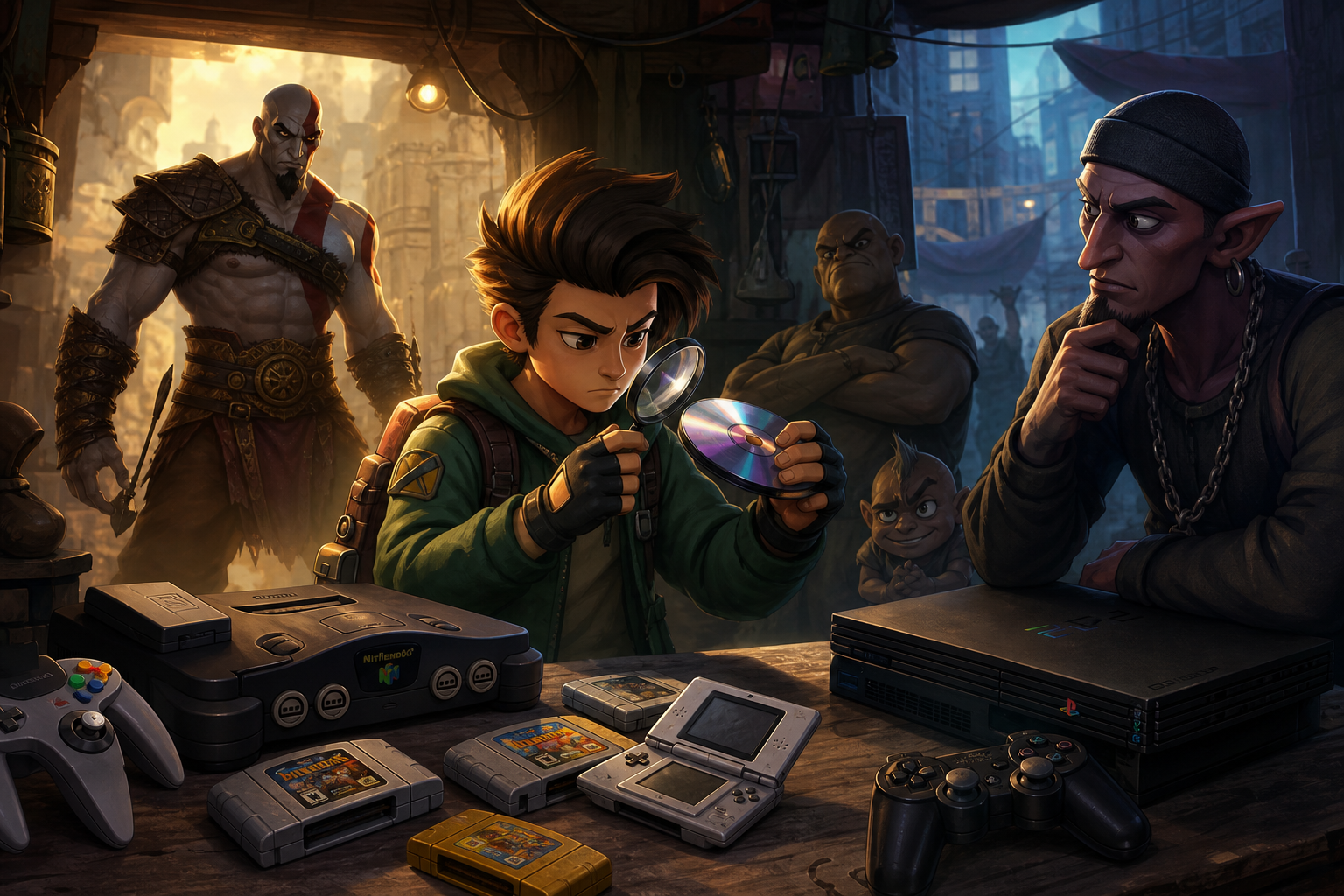
A Nintendo 64 cartridge, PlayStation 2 disc and Nintendo DS game card have different weaknesses. A cartridge can suffer label abrasion, shell cracks or crushed edges. A PS2 disc can come loose from its hub and scrape against the case. A DS card is small enough to disappear into a box corner or strike a larger item. Complete-in-box games add vulnerable cardboard, inserts and hinges to the problem.
The safest purchase is not necessarily the one with the cheapest postage. It is the one where the seller can explain how movement will be controlled, how each format will be separated, and what happens if the item arrives damaged. Listing photos are evidence to compare, not proof that an item was packed well, is authentic or works correctly.
Start with the item you are actually buying
Before judging a shipping method, define the shipment. A loose Nintendo 64 copy such as Super Mario 64 or The Legend of Zelda: Ocarina of Time has a compact, fairly rigid body, but its exposed label and connector opening still need protection from rubbing, crushing and moisture. A loose Nintendo DS game such as Phoenix Wright: Ace Attorney or Final Fantasy III is smaller and more vulnerable to being lost inside void fill or struck by a heavier object.
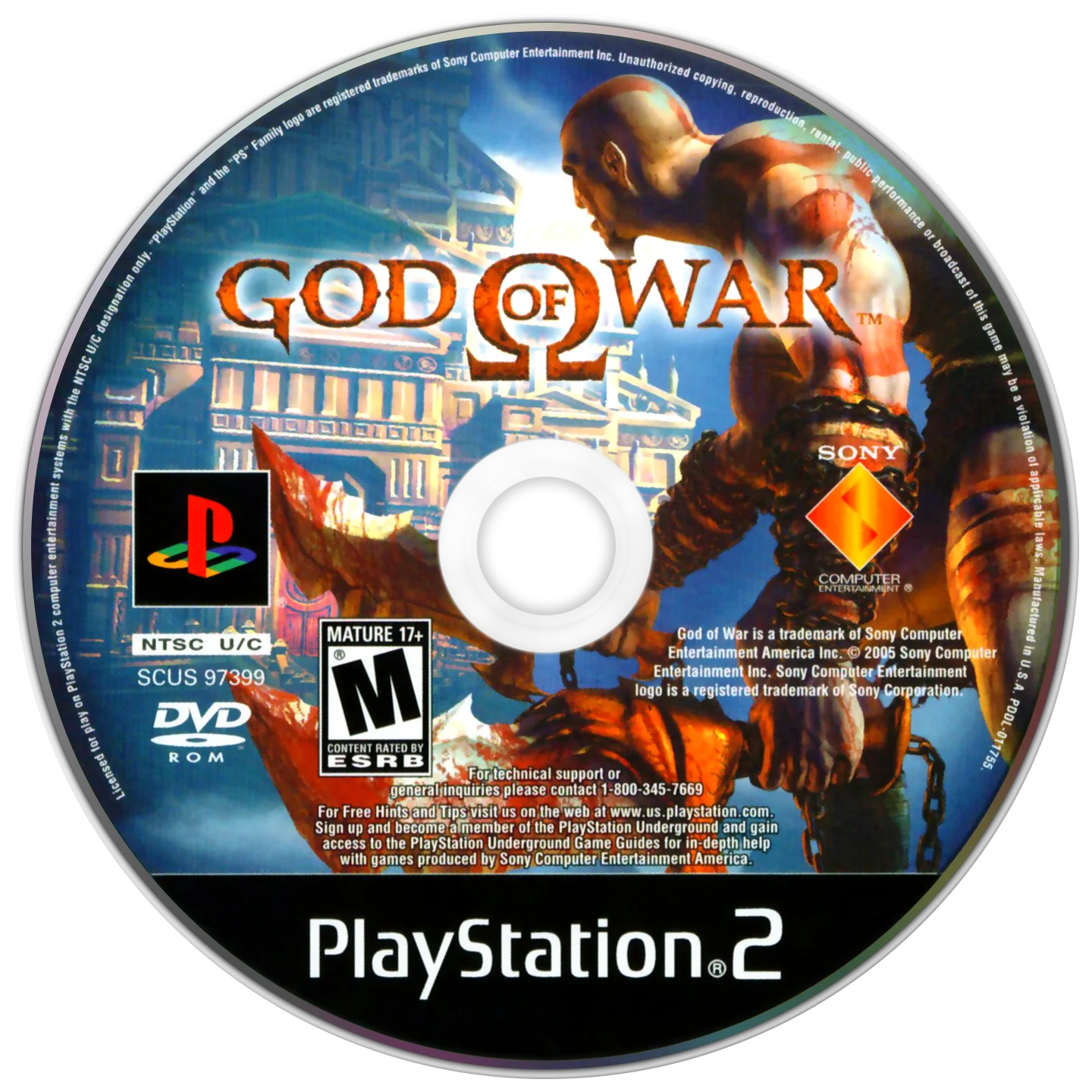
A PS2 game such as Shadow of the Colossus or God of War introduces an optical disc, a case, a disc hub, artwork and sometimes a manual. A disc that arrives loose may have acquired new scratches even if the outer case looks acceptable. A complete-in-box Nintendo 64 game has a different risk again: crushed corners and abrasion can reduce the condition of the packaging without affecting the cartridge.
Consoles and mixed lots require a separate plan. A console may have a disc tray, cartridge slot, memory-card openings, controller ports and ventilation grilles. Loose controllers, cables and power supplies can become heavy internal projectiles. Decide whether you are buying a loose game, a boxed game, a console or a mixed lot before comparing postage. A method suitable for one cartridge is not automatically suitable for six games and a console.
- Identify the exact platform, region and edition you expect.
- Decide whether condition of the game, case, manual, label or outer box matters to you.
- Treat complete-in-box packaging as a fragile collectible, not merely decoration.
- Ask whether the listing includes every disc, cartridge, manual, insert and accessory shown.
Inspect the listing before discussing packing
Look for usable photographs of the front, back, sides, connectors or label, disc surface, case hinges, disc hub and cardboard corners. A seller who supplies only a stock image has not shown the condition of the actual item. A photograph can reveal a cracked PS2 case, a broken disc hub, a crushed box corner, corrosion-like discoloration or a cartridge label lifting at an edge. It cannot prove authenticity, internal board originality, region, long-term reliability or successful gameplay.
Read the description for contradictions. “Complete” may mean a case and disc but no manual. “Tested” may describe a brief boot rather than a sustained check of saves, audio, multiple discs or accessories. A software screen can show that something displayed an image; it cannot establish that the cartridge or disc is genuine. A clean label, factory-looking seal, familiar screw or visible board is also only one piece of evidence.
Ask for additional photographs through the marketplace’s messaging system when an important surface is hidden. Keep the request specific: the disc side under diffuse light, all cartridge edges, the DS card label and contacts, the inner case hub, or the corners of a cardboard box. If the seller will not show an item that is central to the purchase, treat the uncertainty as a reason to decline rather than as an invitation to guess.
- Compare every included component with the written description.
- Request missing condition photos before paying.
- Do not treat one label, seal, screw, board or boot screen as authentication.
- Stop if the seller uses pressure, refuses reasonable questions or asks for payment outside the platform.

Ask for a packing plan, not a promise
A useful seller question is: “How will you stop the item moving, and how will you keep separate pieces from hitting each other?” A vague answer such as “It will be packed safely” tells you little. A credible answer identifies the inner protection, the outer box, the cushioning on each side and the way the parcel will be sealed.
For one loose cartridge, ask whether it will be placed in a protective case or rigid inner packaging, wrapped so the label cannot rub against rough cardboard, and immobilized inside a corrugated box. For a DS card, ask whether it will travel in its own small protective holder or rigid package rather than loose beside a console, charger or boxed game. For a PS2 title, ask whether the disc will be secured in its case or an appropriate disc holder before the case is wrapped.
For a mixed order, the seller should describe separation between items. USPS guidance emphasizes protecting multiple items from one another as well as from outside impact. Heavy concentrated pieces need stabilization away from fragile pieces. Request that cables, controllers and power supplies be bagged or braced separately instead of being allowed to strike discs, labels or cardboard.
- Ask what prevents sliding, not only what absorbs impact.
- Ask how discs are secured to their hubs or holders.
- Ask how small DS cards are kept from moving through the package.
- Ask how heavy accessories are separated from games and cases.
- Save the seller’s packing answer with the order details.
Control movement before adding more cushioning
Cushioning absorbs some impact; void fill prevents the protected item from traveling across the box. Both matter. USPS recommends cushioning around contents, closing and shaking the box, then adding more cushioning if anything shifts. This is a practical standard for evaluating a seller’s plan, although no packing method guarantees safe delivery on every route.
The item should not touch the outer box directly, and there should be cushioning on every side rather than only above it. A tight fit can crush a fragile case or bend cardboard, while an oversized box with a few loose air pillows allows the contents to gain momentum. The target is a supported item that cannot slide, rattle or strike another item.
Loose-fill material deserves special caution. UPS notes that loose fill is not ideal for flat, narrow products because they can migrate through it. That makes it a poor sole solution for a DS game card, a thin manual or a flat cardboard insert. Use a rigid inner holder first, then use void fill around that holder. If the package rattles when gently moved, the seller has not finished the job.
- Look for cushioning on all sides.
- Distinguish impact cushioning from movement-blocking void fill.
- Do not rely on loose fill alone for DS cards, manuals or flat inserts.
- Avoid pressure directly against delicate labels or cardboard edges.
- Expect the package to remain quiet when gently shaken.
Pack cartridges, discs and cards as different formats
Nintendo 64 cartridges are sturdy compared with discs, but a bare cartridge should not be tossed into a mailer with keys, cables or other cartridges. A protective plastic case or rigid inner wrap reduces label rubbing and protects the shell from concentrated impacts. The cartridge should then be immobilized inside a corrugated box. A padded mailer can be reasonable for one low-risk loose cartridge only when its inner packaging prevents bending, abrasion and free movement; it is a poor choice for a boxed game or mixed lot.
Nintendo DS cards need extra separation because their small size makes them easy to lose and easy to damage through contact with larger objects. Put each card in its own rigid holder or small protective package, then secure that package in the main parcel. Do not permit a card to travel loose in a console box, under loose paper or beside a charger.
A PS2 disc should be secured in its case or a suitable protective holder, with the readable surface protected from direct contact with paper, cardboard or another disc. If the hub is cracked or the disc does not remain firmly seated, the seller should disclose that before shipping and use a holder that does not apply damaging pressure. A sealed bag can isolate an item from incidental moisture, but it cannot fix existing dampness, mold or corrosion and may trap moisture already present.
Nintendo advises avoiding liquids and extreme temperatures around game cards and accessories. This supports isolating items from minor moisture exposure, but not treating plastic bags as waterproof insurance. For disc care, Nintendo recommends a clean, soft cloth and straight strokes from the inner rim toward the outside edge. Abrasive cleaners, solvents and scratch-removal machines should not be part of the arrival response.
- Use individual protection for each cartridge, card and disc.
- Secure discs before wrapping the case.
- Keep DS cards out of loose-fill and away from heavy accessories.
- Do not ship a damp, moldy or corroded item as though a bag solves the problem.
- Never use abrasive cleaning or unapproved disc-resurfacing methods after arrival.
Protect cases, ports and console parts without forcing anything
A PS2 case can crack while the disc survives, and a Nintendo DS case can split at its hinge even when the game card works. Wrap cases so hinges and corners are not bearing concentrated pressure. Cardboard boxes should be supported by a rigid inner layer and kept away from wet or dirty packing material. Do not assume a functional game means the shipment met the listing’s stated condition.
Consoles need movement control inside the chassis and around removable parts, but port protection must remain reversible and external. Remove detachable cables, memory cards and controllers, bag them separately, and brace them so they cannot strike the console. Use removable covers or external padding over openings when appropriate. Do not force foam, paper, tools or improvised material into cartridge slots, disc drives, controller ports or ventilation grilles.
Nintendo’s handheld guidance says to insert or remove a game card only when the system is turned off or at the appropriate home-menu state, and to avoid extreme temperatures around game cards and accessories. This is also a useful unpacking reminder: keep games separate from consoles until the system is safely set up. A package that arrives with a loose accessory wedged in a slot is a stop-and-document situation, not an invitation to pry or repair immediately.
- Separate cables, controllers and removable media.
- Protect ports externally without packing material inside them.
- Check disc trays, cartridge slots and case hinges for shipping stress.
- Do not perform invasive electrical or mechanical repair to establish a claim.
- Keep the item’s condition unchanged until documentation is complete.
Choose a mailer, box or double box
A thin padded mailer has limited crush protection and little control over a rigid item inside. It may suit a single inexpensive loose cartridge if the cartridge is already in a protective case and cannot bend, rub or move freely. It is not a sensible default for a complete-in-box Nintendo 64 game, a PS2 case containing a loose disc, a console or a mixed collection.
A sturdy corrugated box is the normal baseline for fragile or dense contents. USPS recommends sturdy paperboard or corrugated fiberboard for ordinary parcels and stronger construction for fragile or concentrated loads. The contents should be cushioned away from every wall, and seams should be reinforced with shipping packaging tape rather than masking or cellophane tape. FedEx recommends an H-taping pattern across the center and edge seams for a standard corrugated box.
Double boxing is justified when the inner item is valuable, the cardboard is collectible, the shipment contains a console, the contents are dense or fragile, or the seller cannot create a stable single-box arrangement. UPS describes stabilizing the item in an inner box and surrounding that box with additional cushioning inside a larger outer box. Its current two-box guidance uses an outer box approximately six inches larger in length, width and depth than the inner box, with cushioning filling the space between them. FedEx also recommends double-boxing fragile items with cushioning in and around the inner box. A second box adds cost and size, so it should solve a real movement or crush risk rather than serve as a decorative extra.
- Use a rigid inner package for small or fragile media.
- Use a corrugated outer box for boxed games and consoles.
- Reserve double boxing for high-risk, dense or highly condition-sensitive shipments.
- Confirm that the outer carton is sealed with proper shipping tape.
- Consider dimensional shipping cost before choosing an oversized box.
Compare the total cost and the protection you can enforce
Compare more than the item price. Add postage, sales tax, insurance or declared-value limits, possible customs and brokerage charges, replacement cases, return postage and the time required to resolve a claim. An apparently cheap international shipment may carry longer transit, more handling points and harder returns. A low-cost domestic method may still be poor value if the seller uses a thin mailer for a fragile complete-in-box game.
Ask who is responsible for shipping damage under the marketplace’s current rules and whether the transaction remains protected when the seller chooses the carrier. Keep payment and communication on the platform. Do not accept a request to mark an item as a gift, avoid customs requirements, pay by an unprotected method or arrange an off-platform return.
The right decision may be to buy a less complete copy with stronger documented packing, or to pay more for a seller who answers format-specific questions. That is not a product endorsement; it is a risk decision. Stop when the expected uncertainty includes both poor shipping and unclear authenticity or functionality. No packing upgrade can repair a listing that never established what is being sold.
- Calculate shipping, tax, duties, insurance and replacement-case costs.
- Check the current return window and permitted return method.
- Keep payment, messages and tracking inside the marketplace process.
- Do not evade customs or marketplace protections.
- Decline when the seller cannot explain protection for the actual format.
Document the parcel before testing anything
Photograph the unopened exterior, every side of the parcel, the shipping label, visible punctures or crushing, and any wetness or tape changes. Then photograph the internal arrangement before removing the contents. Capture the cushioning, empty spaces, broken holders and item condition in place. This record helps distinguish damage caused during transit from a scratch, crack or missing component that was already present in the listing.
Do not clean, polish, resurface, open, repair or discard anything before documenting the problem. If a PS2 disc is loose, photograph its position and the hub. If a cartridge label is torn or a DS case is cracked, capture the damage before handling it. Preserve the box, inner packaging, label and damaged parts until the marketplace or carrier process is finished.
After documentation, compare the item with the listing and seller messages. Test only when it is safe and when testing will not alter evidence. A working boot does not resolve an authenticity, completeness or pre-existing condition dispute. On eBay, an item that arrives broken, damaged or faulty may qualify for Money Back Guarantee protection when the transaction and buyer meet the policy requirements. eBay’s current return instructions require relevant images for damaged, broken or faulty items, and returns should follow the platform’s instructions and tracking requirements.
- Photograph the sealed parcel before opening.
- Record the label, damage, internal packing and item condition.
- Preserve all packaging and damaged components.
- Use the marketplace’s tracked return process if instructed.
- Separate transit damage from authenticity, completeness and pre-existing wear.
The most reliable shipping plan follows a simple order: identify the format, inspect the actual item, ask how movement will be controlled, separate media from heavy accessories, choose a container appropriate to the risk, and preserve evidence on arrival. Nintendo 64 cartridges, PS2 discs and Nintendo DS cards should never be treated as interchangeable packing problems.
If a seller cannot answer basic questions about disc security, individual protection, void fill, box construction or returns, stop before payment. A slightly higher total cost for documented protection can be easier to justify than a bargain that leaves you arguing about whether damage, missing parts or a failed test existed before shipment.