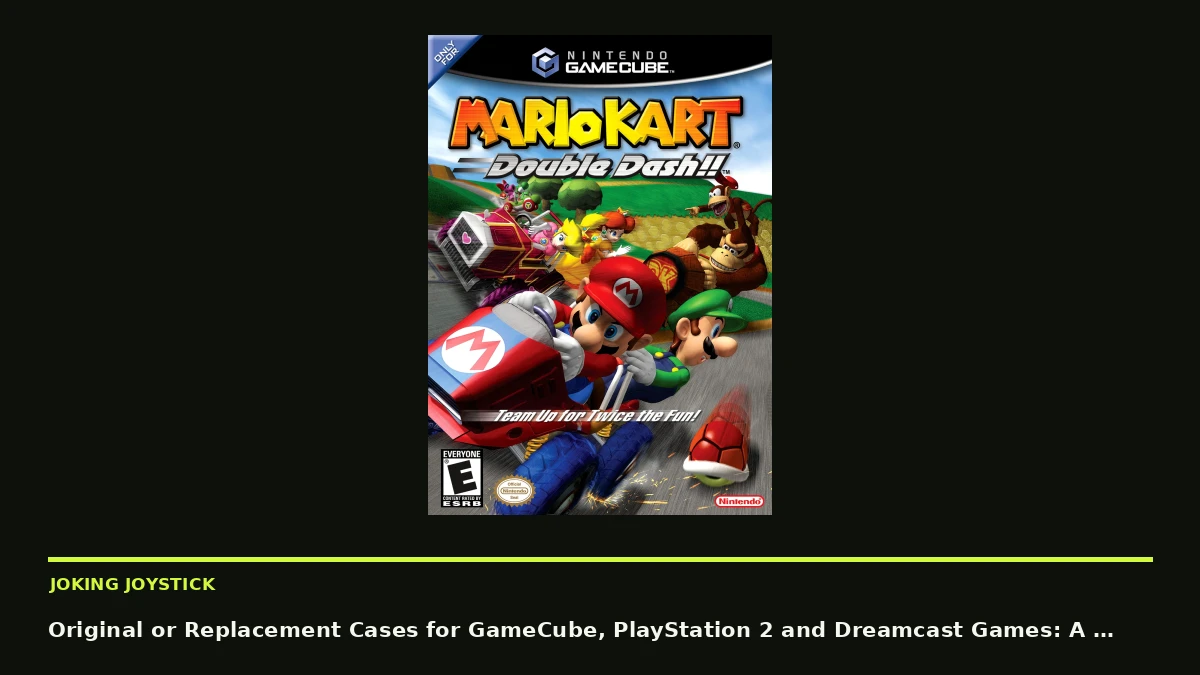

Buying an older disc game is partly a compatibility decision and partly an identification exercise. Mario Kart: Double Dash!! on GameCube, Shadow of the Colossus on PlayStation 2 and Shenmue on Dreamcast may share a recognizable title across regions, but the disc, packaging, language options and required hardware can differ. A seller’s front-cover photograph or familiar title screen is useful only as an initial clue.
Before comparing listings, write down the console you will use, its region, the language you need, the edition you want and the contents that must be included. Then verify the disc itself rather than treating marketplace descriptions as documentation. If the region, language or exact edition cannot be established, the sensible buying decision is to pause rather than guess.
Define the copy you actually want
Start with the use case, not the most attractive listing. A buyer playing on an unmodified North American GameCube has a different requirement from a collector seeking a Japanese copy of Metroid Prime for its artwork. Someone building a PAL PlayStation 2 library must also consider the console’s video standard and display connection. A Dreamcast buyer may want an original North American Sonic Adventure set, while another may specifically seek a Japanese release with different packaging and language expectations.
Record five requirements before searching: console region, preferred language, original or modified hardware, target edition and required contents. Decide whether complete means only the game and case or also the manual, registration card, inserts, tray, bonus disc, Passport disc or outer packaging. This prevents a low-priced incomplete copy from being compared directly with a verified complete one.
Separate playability from collectability. A replacement case may be acceptable for a player but unacceptable for a collector. Conversely, a regional package may satisfy a shelf goal while being a poor choice if you need English menus or unmodified-console compatibility. The right listing is the one that meets your stated priorities with the fewest unresolved assumptions.
- Write down your console model and region before contacting sellers.
- State whether English menus, subtitles, voices or manuals are required.
- Identify the exact edition and every item that must be present.
- Decide which flaws are acceptable and which make the copy unsuitable.
Read the disc before trusting the cover
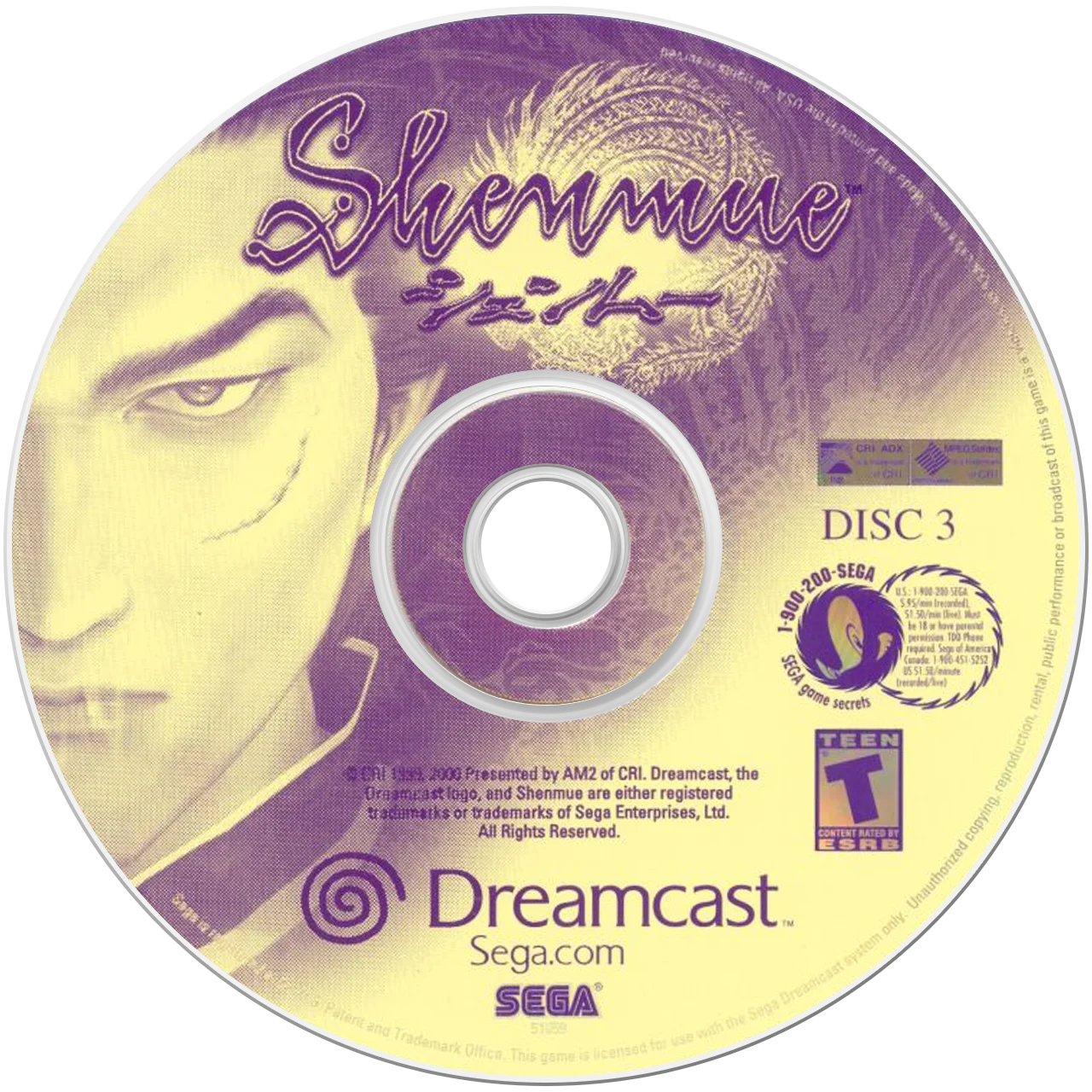
Ask for sharp photographs of the readable disc side, not only the front of the case. Look for the platform logo, publisher information, regional text, catalog or serial number, format marking and identifying information around the inner ring. The label can help distinguish a GameCube disc from a PlayStation 2 DVD-ROM or a Dreamcast GD-ROM, and it may reveal that a supposedly standard copy is a promotional, sample or budget release.
These details are identification clues, not authentication by themselves. A genuine-looking label does not prove that the disc is original, functional or correctly paired with the case. A matching case and disc improve confidence, but they do not establish that the manual belongs to the same regional release. Compare several identifiers with a maintained reference database such as Redump, using region, language, edition, serial, barcode, ring code, media type and disc type where available.
Redump records show why this matters. North American Mario Kart: Double Dash!! can appear as an original release with a playable demo bonus disc, while European entries can include different catalog identifiers, languages and bundle descriptions. Those records support comparison, but they do not prove that the seller’s photographed item is genuine or complete.
Do not use one unusual font, logo placement or color difference as a final authenticity judgment. Printing variations and reissues exist, while counterfeit or altered items can imitate visible design elements. If the photograph is too small to read the identifier, request a better image. If the seller will not provide one, classify the copy as unverified rather than filling in the missing information.
- Request label-side and inner-ring photographs at readable resolution.
- Record every visible serial, catalog, barcode and format marking.
- Compare multiple fields with a maintained reference database.
- Treat database matching as identification support, not proof of authenticity.
Match each platform to the console
GameCube software was released in major North American, Japanese and European or PAL families. The title and artwork do not establish that Mario Kart: Double Dash!! or Metroid Prime will start on your console. Region-modified hardware, boot accessories and other modifications can change that result, but region free is not a sufficient description. Ask what exact console was used, what modification it has and whether the seller tested the specific disc rather than a different game.
The console’s video behavior is a separate question from whether the disc boots. North American and Japanese GameCube systems use NTSC-oriented output hardware, while European systems are associated with PAL output modes. A regional workaround that starts a game does not automatically prove that the buyer’s television, cable or converter will display it correctly.
PlayStation 2 buyers must distinguish software format as well as region. Sony’s documentation separates PlayStation 2 DVD-ROM, PlayStation 2 CD-ROM and original PlayStation CD-ROM software. A PAL console and PAL software designation are an important pairing, but a successful start on one setup does not automatically settle video compatibility on another television or connection. This matters when importing Shadow of the Colossus or God of War.
Dreamcast software is region locked across North American, European, Japanese and Asian families. Region bypass methods exist, but a boot disc, modified BIOS, optical-drive replacement or other workaround belongs to the console’s documented configuration, not to the game listing’s assumptions. A seller who says a Dreamcast plays imports should identify the method and demonstrate the exact regional disc.
- Confirm the console’s region and model, not merely its brand.
- Ask whether the hardware is modified and what modification was made.
- Match the exact game region to the hardware and display setup.
- Require testing with the listed disc, especially for imported software.
Check language instead of inferring it
An English title does not guarantee English menus, subtitles, voices or manual text. Regional releases can carry different language combinations, and a seller’s location is not evidence of the disc’s language. Ask the seller to identify the exact language options on the pictured release. If the answer depends on a database entry, compare that entry to the disc’s serial or regional identifier rather than to the game title alone.
The distinction is especially important when importing Japanese or European copies. A Japanese Sonic Adventure or Shenmue release should be treated as a separate edition with its own serial and language metadata. A European copy may be attractive for packaging but may not provide the language or video behavior expected by a North American buyer. Language information recorded for one release should not be generalized to every pressing.
Redump’s Dreamcast records illustrate the need for exact matching. Japanese entries can list English and Japanese metadata for particular releases, while other entries may list only Japanese or a different edition. That does not mean every copy with the same title has the same language options. Confirm the specific catalog entry and, where language is essential, ask the seller for a clear menu or manual photograph.
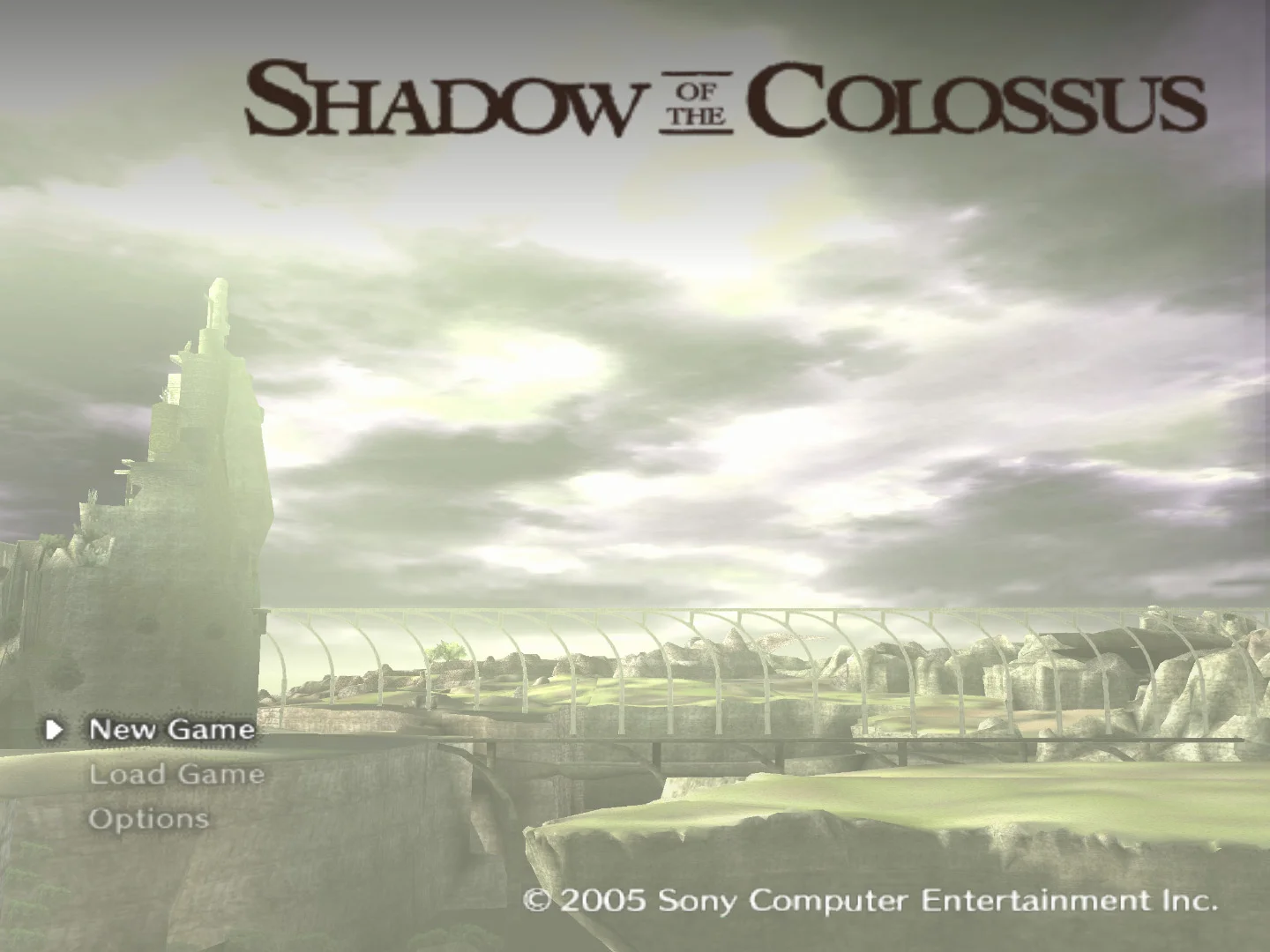
A title-screen photograph can sometimes show a useful clue, but it remains weak evidence. Regional versions can use similar title screens, and a seller may have photographed a different copy. Request a clear image of the relevant menu or ask for a written confirmation that can be included in the marketplace transaction record.
- Ask separately about menus, subtitles, voices and manual language.
- Match language information to the exact disc identifier.
- Do not infer language from the seller’s country or cover title.
- Keep the seller’s written confirmation with the listing records.

Use the six games as edition checks
Mario Kart: Double Dash!! and Metroid Prime are useful GameCube examples because a buyer may encounter North American, Japanese and European packaging that looks familiar at a glance. Verify the disc region and identifier, then compare the case and manual. Nintendo’s support archive provides an official Metroid Prime instruction manual reference, but a manual’s presence does not prove it matches the photographed disc or print run. For Mario Kart, do not assume that a pictured promotional item or bonus disc belongs to every release.
On PlayStation 2, Shadow of the Colossus and God of War require the same discipline. Record the disc catalog number and regional designation, then determine whether the case represents a standard release, later reprint or greatest-hits-style edition. Similar front artwork can conceal different back covers, labels and included paperwork. A title-screen image does not establish which edition is being sold.
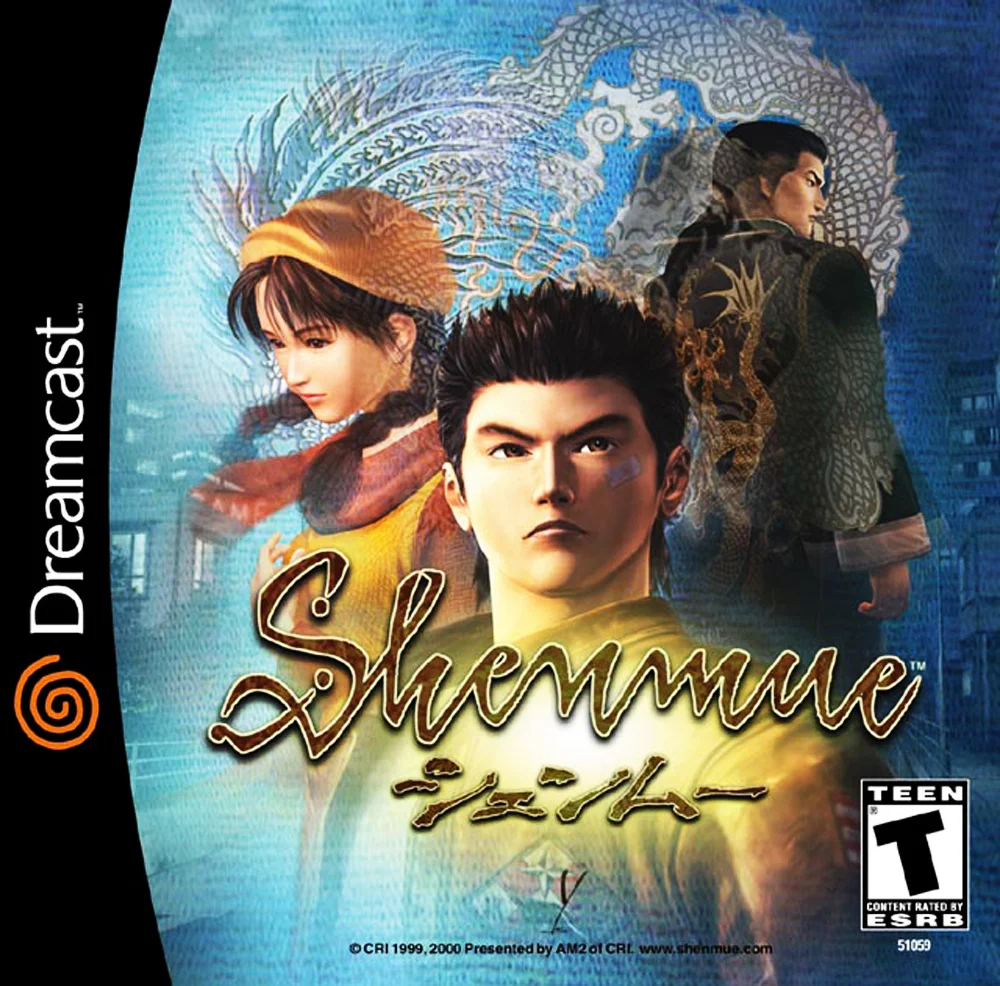
Sonic Adventure and Shenmue show why Dreamcast inventories deserve special care. A Japanese Shenmue listing can contain separately identified game discs and a Shenmue Passport disc. Redump records list separate entries for Shenmue discs and distinguish edition labels such as Original, Dorikore, Sample and anniversary packages. A Japanese Sonic Adventure listing should likewise be checked by serial and language rather than assumed to be the North American version.
For each of the six games, write down the platform, region, catalog number, language expectation, disc count and edition label before comparing photographs. The title is only the first field in the record.
- Compare disc, case, manual and inserts as one claimed package.
- Record the exact catalog number for Shadow of the Colossus and God of War.
- Inventory every Shenmue disc, including any Passport media.
- Check edition labels before calling a Dreamcast set complete.
Inventory multi-disc and special contents
A listing can be genuine and still be the wrong purchase because it is incomplete or assembled from different releases. Make a contents table with one row for every disc, manual, insert, tray, outer box and bonus item. For each disc, note the title, disc number, region, catalog number and label condition. Then compare those rows with the exact edition reference, not with a generic image of the game.
This is essential for Shenmue, where a buyer should not assume every regional package has the same disc count or Passport material. It also helps with bundles containing unrelated games, demo media or promotional discs. A disc that boots may still be the wrong regional variant, and an attractive case may contain a replacement disc from another edition.
Packaging can establish broad identity and completeness clues, but it cannot prove function or authenticity. Scratches, cracks, corrosion, missing seals and replacement artwork should be described precisely. A sealed case is not automatically genuine, and an unsealed case is not automatically damaged or counterfeit. When the listing combines mismatched parts, ask whether the seller is representing it as an original complete set; if the answer is unclear, treat it as incomplete.
Do not assume that matching catalog numbers eliminate every uncertainty. A reprint, revision, regional variant or replacement component may still require comparison with the case and contents. The goal is not to make a single photograph carry the entire authentication decision.
- Make a disc-by-disc and insert-by-insert inventory.
- Check whether bonus, demo or Passport media belongs to the edition.
- Record mismatched artwork, trays, manuals and replacement cases.
- Do not pay a complete-set premium for unverified contents.
Ask sellers questions that produce evidence
Replace broad questions such as Does it work? with questions tied to the purchase decision. Ask for the console model and region used for testing, whether it is modified, whether the listed disc reached gameplay, and whether every disc in a multi-disc set was tested. For a PAL item, ask what display connection was used. For an imported Dreamcast or GameCube disc, ask what bypass method or hardware modification made the test possible.
Request photographs of the front and back of the case, the readable label side of each disc, the inner ring where identifiers appear, the manual, inserts and any unusual accessory. Ask the seller to confirm the language options and identify missing or replacement parts. Save the answers in the marketplace message system. A vague tested label has little value if it does not identify the hardware, startup result or tested disc.
Ask for the console model number rather than accepting a statement such as original PlayStation 2 or Japanese Dreamcast. Model information can help establish the expected region family, but it does not document modifications. If the seller says the console is region free, ask how that was achieved and whether the same configuration was used with the listed game.
Do not ask the seller to remove labels, open hardware or perform invasive work. Internal photographs can create additional risk and still may not authenticate the item. If the seller cannot answer, the correct interpretation is missing evidence. You can still buy an explicitly unverified copy if the uncertainty is reflected in your decision and the platform’s return rules protect you, but do not treat it as confirmed compatible.
- Ask which exact console and region were used.
- Confirm whether the game reached gameplay, not merely a boot screen.
- Request language and contents confirmation in writing.
- Keep all communication on the marketplace platform.
Compare total cost and preserve your return option
The lowest listing price is not necessarily the lowest-cost route to a usable copy. Add shipping, taxes or duties, insurance where appropriate, replacement case or manual costs, required boot hardware, console compatibility work and the risk of an international return. A Japanese copy that needs extra hardware or does not provide the desired language may cost more in time and accessories than a clearly identified local copy.
Compare listings by the same condition and contents standard. Separate disc-only, complete-in-box, restored and modified-console-dependent offers rather than averaging them together. Use sold-listing research to understand how comparable copies are described, but do not treat an old sale as a current guaranteed value. The useful comparison is total cost for the exact edition you need.
Include the cost of uncertainty. If a seller will not identify the region or contents, you may need a second purchase, replacement manual, replacement case or return shipping. If an import requires a boot accessory or a compatible display solution, those are part of the buying decision even if they are not included in the listing.
Pay through the marketplace’s protected checkout and retain screenshots of the listing, photographs and messages. Do not move payment off-platform or accept an arrangement designed to evade marketplace rules. Inspect the item promptly after delivery, before the return period expires. Check the disc identity, contents, region and stated language first; then test it on compatible hardware without assuming a title screen proves long-term function.
- Add shipping, taxes, duties, accessories and replacement contents.
- Compare like with like: same region, edition and completeness standard.
- Use protected platform payment and preserve listing evidence.
- Inspect immediately inside the stated return window.
Stop when the evidence cannot support the purchase
Pause or reject the listing when the seller will not show readable disc markings, the console used for testing is unidentified, or the claimed region conflicts with your hardware. Stop when language needs remain unanswered, when photographs contradict the written description, or when a multi-disc set is missing a disc that the target edition requires. A low price does not resolve a compatibility conflict.
Also stop when the listing depends on an undocumented region-free modification, an unverified boot accessory or a display setup you cannot reproduce. If the disc, case and manual appear to come from different releases, decide whether you are knowingly buying a mixed set; do not let the seller’s use of complete settle the question. If authenticity matters and the visible evidence is inconclusive, seek a specialist opinion or choose a better-documented copy.
A successful boot is useful evidence, but it does not establish long-session reliability, complete contents, authentic media, correct language or compatibility with your own console. The seller may have tested a different disc, a modified system or a different video connection. Treat testing as one part of the evidence chain.
The safest purchase is not always the most complete-looking package. It is the listing whose region, language, edition, contents, hardware requirements and return path are all understandable before payment. When those facts remain unresolved, keeping your money and continuing the search is a successful buying decision.
- Reject unresolved console-region conflicts.
- Reject listings with unidentified or contradictory discs.
- Reject language claims that are not tied to the exact release.
- Reject transactions without a workable, protected return path.
Disc-region buying becomes manageable when you treat every listing as a claim to verify. Match the disc identifier to the edition, the edition to the language and contents you need, and the game to the exact console and display setup you own. Covers, seals and title screens can support that process, but none should carry it alone.
For Mario Kart: Double Dash!!, Metroid Prime, Shadow of the Colossus, God of War, Sonic Adventure and Shenmue, a short evidence checklist is more useful than a confident guess. If the seller cannot supply the missing evidence or a protected return option, choose a different listing rather than paying to discover the incompatibility later.