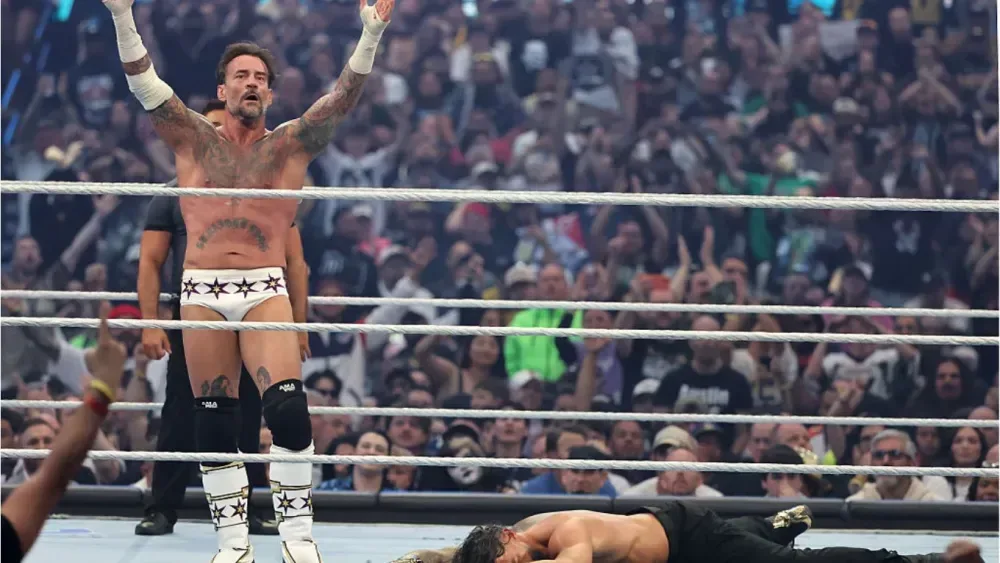
Penta’s victory in the Money in the Bank ladder match in New Orleans has given wrestling-card collectors a fresh event card to monitor. The win earned him the coveted briefcase, which guarantees its holder a future match for one of WWE’s world championships, and Topps has marked the moment with a new Topps NOW release.
The card captures Penta immediately after the match, seated atop a ladder with the briefcase raised overhead. It is a simple image with obvious appeal: it freezes the exact instant a major career opportunity became official. For a wrestler whose fan connection and collectible profile have been building since joining WWE, that kind of clear milestone is the reason event-driven releases can draw interest beyond a standard base card.
The release arrives while Penta already has documented high-end sales in the modern WWE card market. That does not make a future increase inevitable, particularly because a Money in the Bank title opportunity is not the same as a title victory. But the new card gives collectors a defined, limited parallel structure tied directly to a significant televised achievement.
What is in Penta’s Topps NOW release?
Topps NOW is an on-demand style of card release built around current events rather than a conventional, full-season trading-card product. In this case, the event is Penta’s ladder-match win. The core appeal is not just the image; it is the specificity of the moment. Collectors looking to build a Penta-focused collection now have a card explicitly connected to the briefcase win and the eventual championship path it opens.
Alongside the standard version, the release has a Foilfractor parallel ladder:
- Gold Foilfractor: numbered to 50
- Orange Foilfractor: numbered to 25
- Black Foilfractor: numbered to 10
- Red Foilfractor: numbered to 5
- Foilfractor: a one-of-one
In card-collecting language, a parallel is a variation of a card that uses a different finish, color treatment, serial number, or combination of those elements. The serial number establishes the stated production ceiling for that version. A card numbered to 25, for example, has 25 copies in that parallel; a one-of-one has a single stated copy.
That structure creates several collecting lanes. A fan can pursue the standard event card, while a scarcity-focused collector can target a numbered color. The black, red, and one-of-one versions will naturally have far fewer available copies than gold or orange. Low numbering alone does not guarantee market value, but it changes the practical challenge: finding the exact card may matter as much as deciding what it is worth.
A small autograph chase changes the equation
The set also includes autograph cards, though the autograph component is notably limited. There are six autographs in total to chase, including red autographs numbered to five and a one-of-one Foilfractor autograph.
An autograph parallel combines two collector motivations: a signature from the wrestler and a restricted print run. For collectors who prioritize signed cards, the release is therefore more than a commemorative photo card. It is a chance at an unusually scarce signed artifact connected to a notable WWE moment.
At the same time, scarcity should be separated from certainty. With only a few signed copies, the cards may be difficult to locate, and a lack of public sales would not automatically establish a reliable market price. Collectors weighing a purchase or trade should distinguish between an asking price, a listed price, and a completed sale. The latter is the more useful evidence of what someone actually paid at a particular moment.
Penta already has meaningful modern-card sales
Penta’s market has shown signs of collector demand before this release. Orange autographs numbered to 25 from his WWE Chrome X Cactus Jack debut have sold in the $300 to $350 range. That is a useful benchmark because it concerns both a limited serial number and an autograph, two attributes present in the new Topps NOW chase.
His 2026 Topps Chrome WWE Superfractor also sold for $3,394 before Money in the Bank. A Superfractor is generally the flagship one-of-one parallel designation in the Topps Chrome ecosystem. One-of-one sales attract attention because there is no second identical copy to use as a direct substitute. Their results can reflect a mix of player or wrestler popularity, card design, set status, condition, timing, and the determination of the bidders involved.
For that reason, the $3,394 result is best read as evidence that high-end demand for a singular Penta card exists, not as a floor for every rare Penta card that follows. A 2026 Topps Chrome one-of-one and a Topps NOW one-of-one are both unique, but they are not interchangeable products. They differ in release format, visual presentation, collector audience, and the particular story attached to each card.
Still, the pattern is clear enough to explain why the Money in the Bank release will be watched. Penta’s on-screen popularity has translated into a hobby audience, and the ladder-match victory supplies a new focal point for that audience.
Why the briefcase matters to collectors
Money in the Bank is valuable storytelling currency because the winner is guaranteed a future world-title match. That places Penta in a continuing narrative rather than closing the book on a single victory. Collectors can view the Topps NOW card as a snapshot of the beginning of that next chapter.
There is a practical distinction here. The card celebrates a confirmed win and a confirmed title opportunity. A championship cash-in and a world-title reign remain future possibilities, not completed facts. That uncertainty is part of the appeal and part of the risk in event-based wrestling cards. If the future angle becomes a major career moment, earlier cards tied to the path may receive renewed attention. If it does not, the card still records the ladder-match victory, but its wider significance may be judged differently by the market.
That is why collectors should avoid treating storyline momentum as a guarantee of financial return. Wrestling cards often reward collectors who care about the performer and the moment first, with potential resale value remaining a secondary consideration. A buyer who likes the photograph, the match result, or the goal of assembling a rainbow of every parallel has a rationale that does not depend entirely on the next title development.
How to approach the release without overreaching
For collectors choosing among versions of the card, the most useful starting point is to define the collection goal. A standard copy is the straightforward way to own the moment. A numbered parallel emphasizes rarity. An autograph is the premium chase for collectors who want a signature attached to the occasion. Attempting every color variation—often called building a rainbow—is a longer project, and the low-numbered red and one-of-one cards can make completion difficult.
- Prioritize the moment you want to own. The central attraction is Penta celebrating atop the ladder after earning the briefcase.
- Read serial numbering precisely. “To 25” and “to 5” describe substantially different availability, even if both cards use a similar image.
- Compare like with like. Use sales of similarly numbered Penta cards, and account for whether those comparables are signed, Chrome cards, event cards, or one-of-ones.
- Keep future booking separate from confirmed results. The title opportunity is real; a world championship is not yet a completed milestone.
- Buy within the limits of the collection. A small autograph checklist and very low print runs can make chasing every variation expensive and unpredictable.
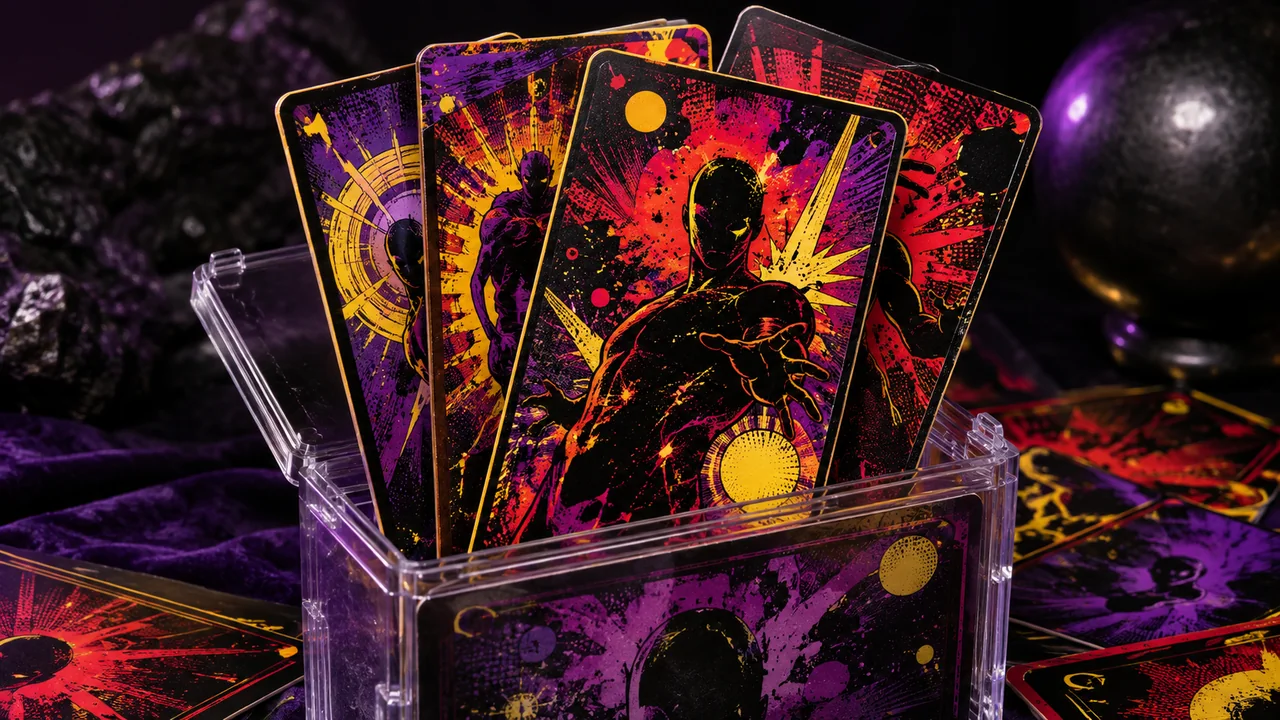
Collectors following Penta’s market may also find it useful to keep the broader hobby in view, including other character- and story-driven releases such as this look at a narrative-led trading-card release. The collectible logic differs from wrestling, but the connection between a card and a key story beat is familiar.
Penta’s Topps NOW issue offers a concise record of a major win, with accessible standard copies, progressively scarcer Foilfractors, and only six autograph cards. His existing orange-auto sales and pre-Money in the Bank Superfractor result establish that collectors have already placed meaningful value on top Penta cards. The briefcase adds a prominent new moment to that portfolio—while leaving the biggest possible chapter of the story still unwritten.