A sports-card market can look booming from one angle and distinctly uneasy from another. That contradiction is playing out at card shows, where some dealers report slower traffic, reduced sales volume and noticeably more resistance to expensive cards even as recorded online sales reach extraordinary levels.
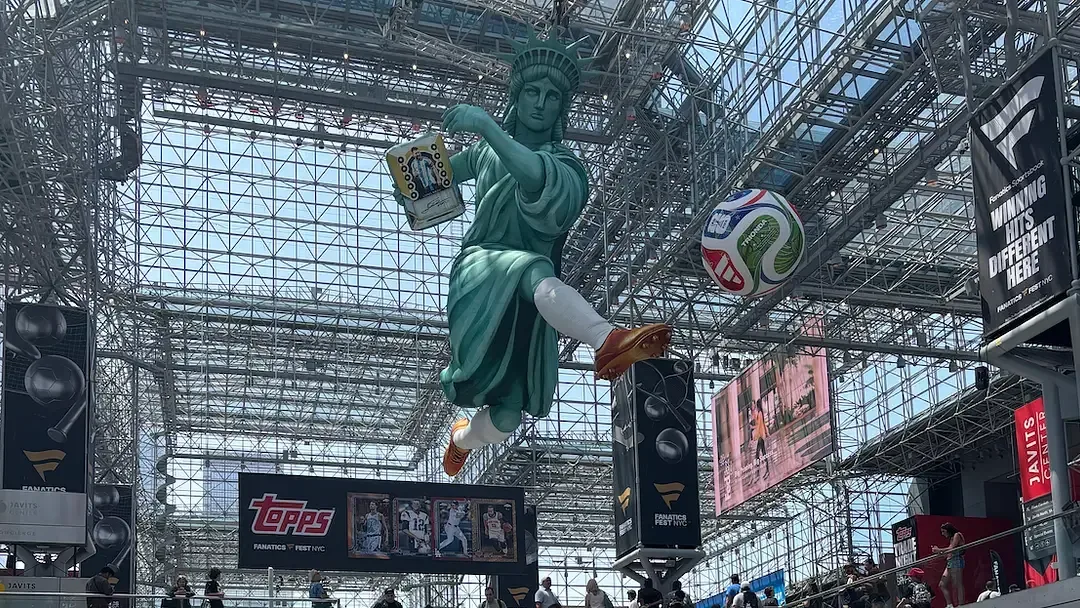
The clearest example comes from the Nashville Card Show, known as the Nash-ional. The event ran from October 30 through November 1 across three buildings with 1,400 tables, hundreds of dealers and thousands of collectors. It is a large enough setting to make individual dealer experiences worth noticing, though it is still only one slice of a sprawling hobby.
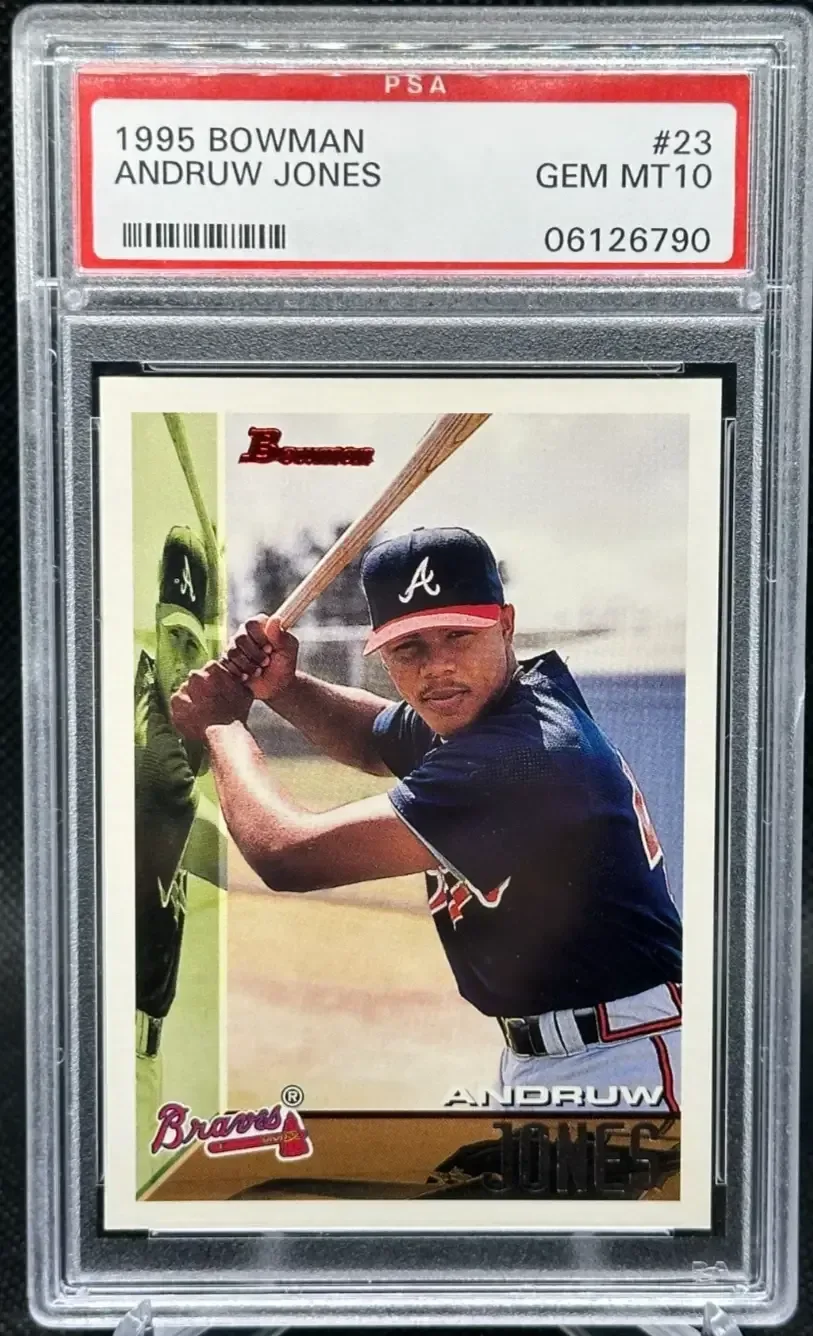
At that show, a Topps Dynasty Chipper Jones autograph card—an item with strong visual appeal and an obvious connection to a Braves-friendly collecting audience—received interest from just one person. Other Braves autographs, including cards of Tom Glavine, John Smoltz and Andruw Jones, reportedly did not leave the display case for consideration. Sales goals were still reached, but the apparent indifference to cards that seemed like natural show-floor inventory stood out.
Conversations with other dealers reportedly pointed in the same direction: items expected to move did not, and some vendors characterized the event as a poor sales show. That is the kind of anecdotal signal that can rapidly turn into a more alarming question for collectors and businesses alike: is the market shrinking, or merely behaving differently?
The billion-dollar number and what it does not settle
Available sales data puts reportable online trading-card spending above $1 billion in October 2026 alone. That is a major number, but it needs to be interpreted carefully. It concerns reportable online transactions, not every card transaction in existence. It does not directly measure cash deals at shows, sales through local card shops, live-selling activity or purchases at big-box retail. Nor does an aggregate sales total tell us which cards sold, which price ranges gained traction, or whether sales were concentrated in a smaller number of major transactions.
Still, the number makes one conclusion difficult: a soft show weekend cannot automatically be treated as proof that collectors have stopped spending. A floor can be slow while online marketplaces are active. A dealer’s showcase can be packed with cards above a buyer’s current comfort level while that same buyer is still happily purchasing less expensive graded cards elsewhere.
That distinction matters because “the sports-card market” is not one uniform product. It contains vintage and modern cards, sports and players with different audiences, raw and graded examples, low-cost collector cards and high-end pieces. It also operates through several sales channels that do not necessarily rise and fall at the same pace.
In other words, strong online totals and difficult show-floor conditions can coexist without either observation being false. The disagreement may be about where demand is visible, rather than whether demand exists at all.
Related coverage includes Sports Card Market Shows Record Spending Online While Dealers See Slower Floors at Card Shows.
Reallocation is the more useful lens
The most persuasive explanation offered by the show-floor evidence is reallocation: collectors are still deploying money in the hobby, but they are changing the kinds of cards, price points and formats they choose.
Earlier in the summer and early fall, spending was described as moving away from ultra-modern cards and toward standout players from the 1990s and 2000s—the so-called GOAT market. More recently, the movement has reportedly tilted from higher-dollar cards toward lower-priced cards. Repack businesses, which sell products assembled around the chance to receive particular cards, are said to be concentrating heavily on cards in the $25-to-$100 range and on graded inventory.
That does not establish a universal rule for every segment. It does, however, offer a grounded reason why a dealer concentrating on $1,000 cards might see a slowdown while total hobby spending remains high. If a buyer who formerly considered a $10,000 card now limits a purchase to $5,000, or a shopper who used to select $100 cards now prefers $50 cards, both buyers remain active. Yet the difference will be immediately felt in high-end display cases.
For a show dealer, that can make a routine event feel like a market emergency. High-value cards often need fewer buyers, but those buyers have to be both present and ready to commit. If a modest change in budgets removes even a small share of that audience, expensive inventory may sit for longer. The card may not have become undesirable; its path to the appropriate collector has simply become narrower.
What “graded” means in this shift
A graded card is a card that has been examined and assigned a condition grade by a third-party grading company, then typically sealed in a protective holder. The reported increased attention to graded cards in lower price bands suggests a preference for clearer condition information and a more standardized buying proposition. At a crowded show or in a repack setting, that can make comparison easier than with an ungraded, or “raw,” card.
That is not a claim that every graded card is a safer purchase or that grading creates demand by itself. Rather, it highlights how buyers may respond when they become more selective: they can favor items whose condition and presentation are easier to understand at a glance.
A slowdown is not automatically a crash
It is tempting to turn any softer period into a dramatic crash narrative, particularly in a hobby where social-media excitement and fear of missing out can make prices feel like a live scoreboard. But markets generally do not reveal their full direction in a single weekend, a few quiet cases or one dealer’s slower month.
The historical reference point in this discussion is the junk wax era, a period often associated with heavy card production and a later market decline. The key lesson is not that every current dip must repeat that outcome. It is that large market changes can take years to become fully recognizable. Collecting did not disappear, and major manufacturers did not all vanish. A sharp shift in demand can be painful for particular sellers or product categories without ending the hobby itself.
The current situation also differs from a simple “buyers are gone” story because recorded online spending remains so substantial. The more cautious interpretation is that the buyer base is becoming choosier. That can create shorter-term volatility: a card once easy to sell may now require the right show, the right audience, the right price and more patience.
This kind of unevenness is not unique to cards. Consumer markets often behave this way when discretionary spending—the money people can choose to use after essentials—is under pressure or simply being redirected. Buyers may retain interest while setting firmer limits. Comparable pressure on enthusiast purchases can also be seen in other technology-adjacent markets, including the forces reshaping the PC GPU market, although that is a separate market with its own supply and demand dynamics.
FOMO fading can be uncomfortable—and healthy
FOMO, short for “fear of missing out,” is the urge to buy because an item appears to be rising quickly or because waiting feels like a risk. It can produce rapid activity, but it can also make prices and expectations less stable. When FOMO cools, cards that once sold quickly may need stronger fundamentals: player appeal, scarcity, condition, visual design, collector relevance and a price that fits the current budget.
The evidence here suggests buying behavior cooled in late 2022 and may be cooling again, not necessarily through a collapse in total spending but through altered spending choices. That is a meaningful distinction. A market driven solely by urgency may feel exciting on the way up, but it leaves little room for careful evaluation. A slower market can frustrate dealers holding expensive inventory, while also giving collectors more time to decide what they truly want.
There is no guarantee that every card will benefit from such a reset. A seller who depends on fast turnover, narrow margins or one type of shopper faces real risk when that shopper pulls back. Likewise, a collector treating every high-demand card as an automatic financial asset can be caught off guard when demand rotates elsewhere.
Practical implications for collectors and dealers
The show-floor reports do not offer a magic formula, but they do suggest several practical ways to read the present environment.
- Separate the card from the headline. Record online spending does not mean every card is liquid, just as a slow show does not mean every category is falling.
- Pay attention to the price band. The reported movement toward $25-to-$100 cards means a seller’s inventory mix may matter as much as the overall level of collector demand.
- Expect more deliberation on expensive cards. Higher-priced pieces may require longer selling windows and a better match between the item and its buyer.
- Do not mistake one channel for the whole hobby. Online reporting, show transactions, retail purchases, live sales and local shops capture different kinds of activity.
- Keep FOMO in check. A purchase made because a card fits a focused collection is easier to defend than one made only because the market appears to be moving fast.
For dealers, the underlying message is diversification. A business built entirely around a single price tier or a single buyer profile becomes more exposed when demand rotates. That does not mean abandoning premium inventory; it means recognizing that the path from showcase to sale may change when collectors concentrate their budgets differently.
For collectors, the situation may be less dramatic than the anxious talk suggests. If buying for personal enjoyment, a more selective market can reward patience and allow for closer attention to condition, authenticity, grading and long-term collection goals. If buying with resale in mind, the central lesson is harsher but useful: liquidity is not guaranteed merely because a card is attractive, autographed or expensive.
The Chipper Jones Topps Dynasty autograph remains an apt small-scale symbol of the moment. It is not evidence that Braves cards no longer have an audience, nor proof that premium autographs have lost relevance. It is a reminder that even a compelling card can wait for its collector when budgets, venue traffic and buying preferences shift. In a market that is still generating enormous recorded sales, patience may be the most valuable accessory in the case.