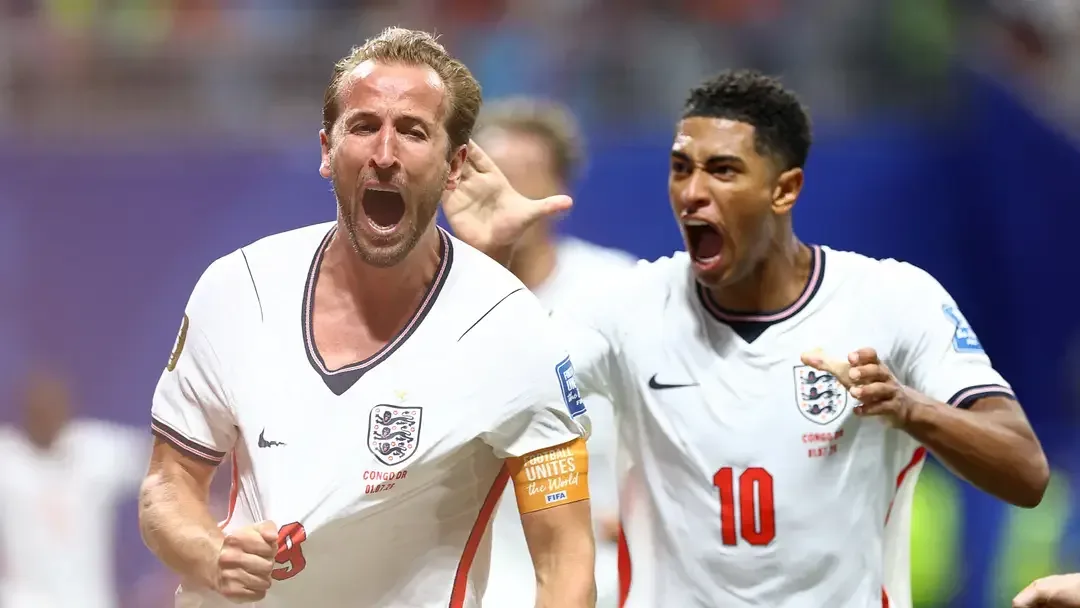
Harry Kane’s Ballon d’Or victory has given soccer-card collectors a very clear new chapter to evaluate. His on-field résumé in the supplied record is unusually dense: 73 goals for club and country last season, Bundesliga top-scorer honors, Bundesliga and DFB-Pokal trophies, plus six goals during England’s run to the 2026 World Cup semi-finals.
The individual award places Kane in a particularly small English group. He joins Stanley Matthews, Bobby Charlton, Kevin Keegan and Michael Owen as English men to have won it. The London presentation also carried historical symmetry, as Matthews was the award’s first winner in 1958.
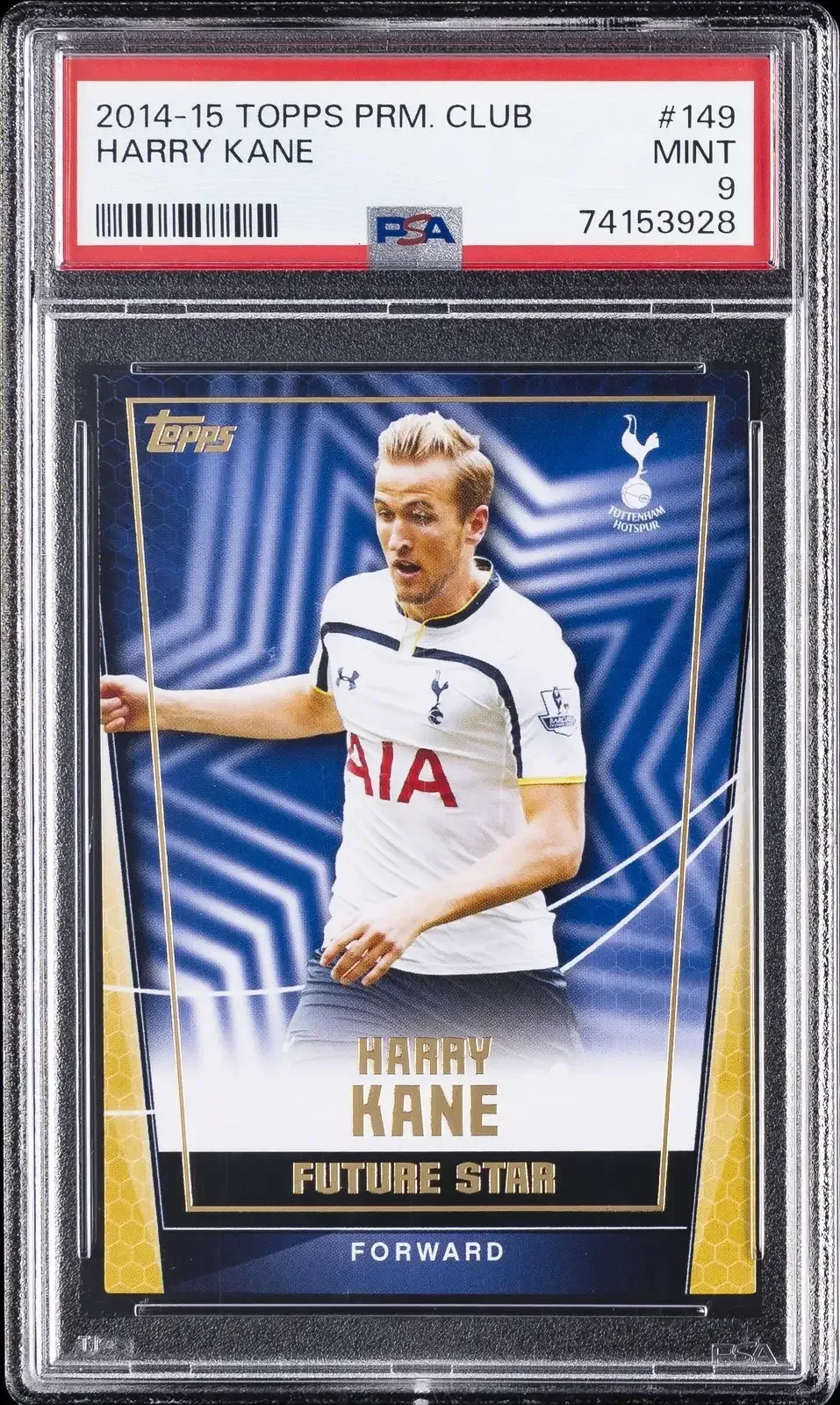
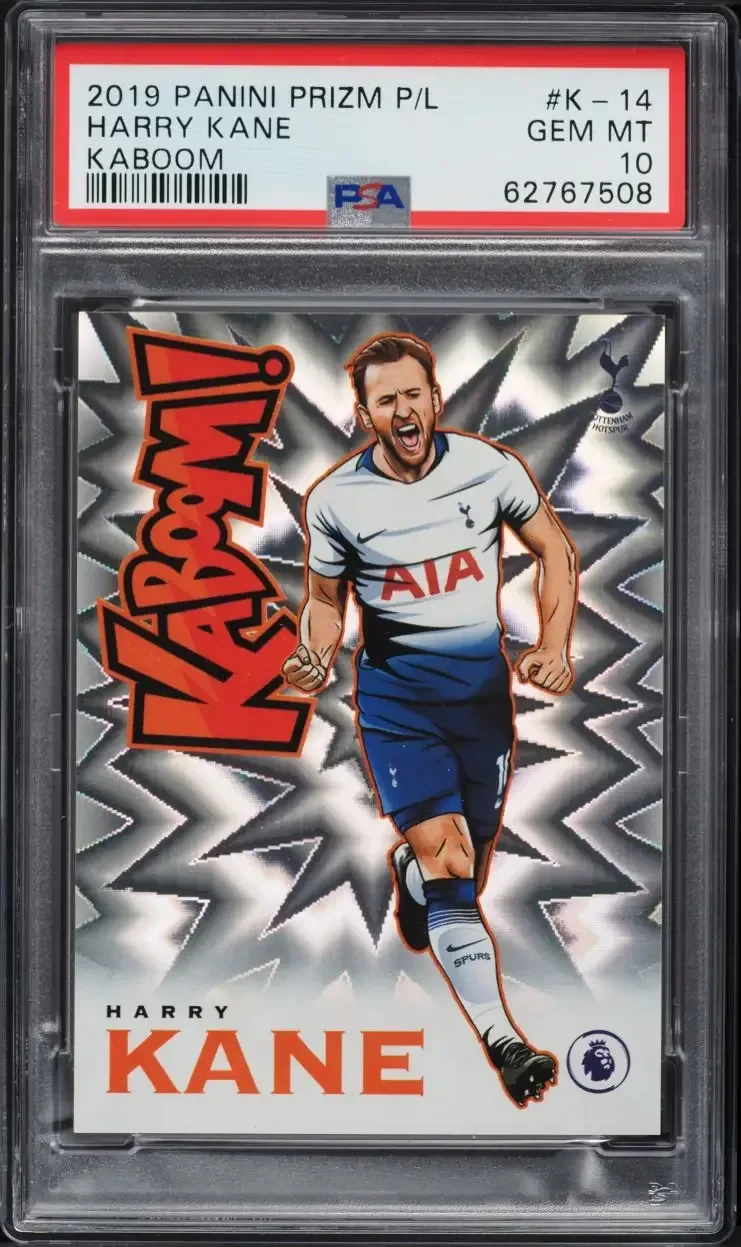
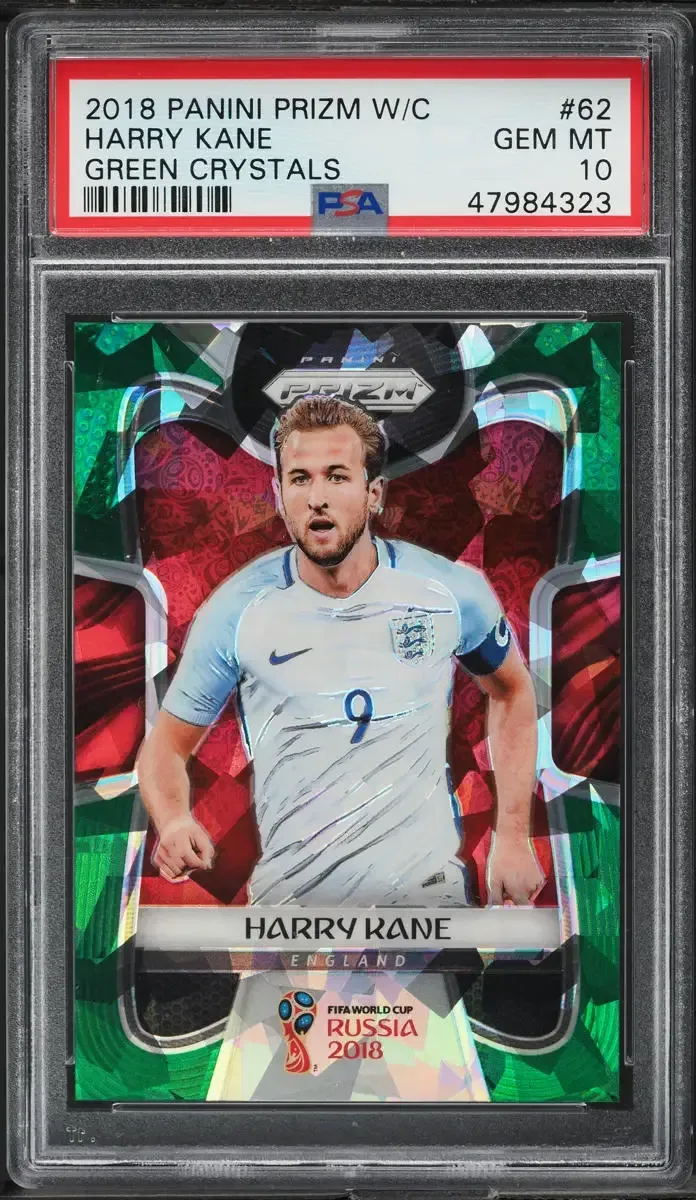
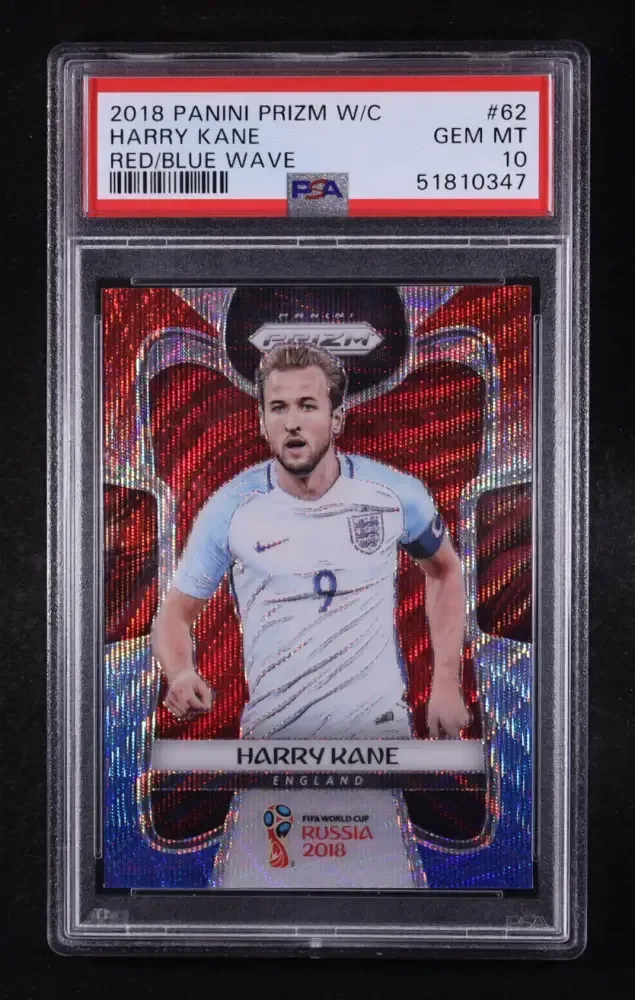
For collectors, however, a landmark does not make every card equally compelling. A player’s market is usually spread across rookie issues, scarce inserts, tournament cards and numbered parallels, each appealing for a different reason. Kane’s card history offers examples in all of those lanes. Four cards and parallels stand out from the available sales and grading data: the 2014-15 Topps Premier Club Future Star #149 rookie, the 2019-20 Panini Prizm Premier League Kaboom #K-14, and two versions of his 2018 Panini Prizm World Cup #62.
They are not interchangeable buys, and none comes with a guaranteed return. They instead offer distinct ways to collect a player whose case now rests on both a major individual award and a long list of England accomplishments.
Why Kane’s résumé matters to the card conversation
Soccer-card demand often responds to moments that make a player easier to place in history. Kane’s Ballon d’Or is one such moment, but it is supported by achievements that collectors can connect to specific card eras.
His 73 goals for club and country last season form the headline statistical case. He was also the Bundesliga’s leading scorer and won both the Bundesliga and DFB-Pokal. The league title was described as the club’s 35th, while the DFB-Pokal is Germany’s domestic cup competition.
Then came the 2026 World Cup, where Kane captained England to the semi-finals and scored six times. England’s campaign was its best World Cup showing on foreign soil. Kane scored in every round before England’s 2-1 loss to Argentina, according to the supplied account.
The tournament also changed the numerical framing of his international legacy. Kane became England’s all-time World Cup leading scorer with 14 goals, moving beyond Gary Lineker. He reached 14 World Cup goals in 16 matches across three tournaments, tying Gerd Müller for fifth on the all-time World Cup scoring list and moving past Pelé. He also set the record for six penalty goals at the World Cup.
Related coverage includes Four Harry Kane Cards to Watch After His Ballon d’Or Win.
That matters because the strongest Kane cards do not have to rely on one single selling point. A rookie card speaks to the beginning of his career; a Tottenham-era insert preserves an earlier club identity; and a World Cup Prizm card ties directly to a tournament résumé that has become much stronger. The Ballon d’Or does not erase the differences between those collecting stories. It makes each one more legible.
1. 2014-15 Topps Premier Club Future Star #149
The foundational choice is Kane’s 2014-15 Topps Premier Club Future Star #149. The supplied information identifies the 2014-15 card and sticker as his true rookie issues, making this card the cleanest starting point for a collector prioritizing rookie status.
“Rookie card” is a hobby label for an early mainstream card issue associated with a player’s arrival. It is not automatically a claim that every rookie card will be the highest-priced card, but it can give an item lasting importance because it anchors the player’s cardboard timeline. In Kane’s case, the 2014-15 season is the relevant rookie-card window.
Population data adds another dimension. PSA has graded 135 copies of the Future Star #149, with 17 receiving PSA 10. A PSA 10 is the grading company’s top numerical grade and indicates a card judged to be in gem-mint condition. Grading is an assessment of physical condition, not a guarantee of value or authenticity of every marketplace listing, but population totals can help collectors understand how frequently a specific grade has appeared in that company’s records.
The available sale reference is a PSA 10 that sold for $3,350 in July. That result is a useful historical snapshot, not a universal price guide: it describes one grade, one card and one completed sale. Still, the combination of rookie relevance and the cited 17-card PSA 10 count gives the Future Star a straightforward collecting thesis. It is the Kane card for someone who wants the most direct early-career piece, rather than a later scarcity play.
Collectors should also remember that the same rookie season includes a sticker. Card and sticker formats can attract different audiences, even when they occupy the same career period. The Future Star #149 has the specific grading and sale detail here, which makes it easier to evaluate from the supplied evidence.
2. 2019-20 Panini Prizm Premier League Kaboom #K-14
The 2019-20 Panini Prizm Premier League Kaboom #K-14 presents an entirely different proposition. Rather than being a rookie issue, it is Kane’s first Kaboom, dating to his Tottenham Hotspur period.
Kaboom is an insert brand known here as a case-hit SSP. An insert is a card placed into a product alongside its standard base-card run. A case hit is a card or insert expected to appear very infrequently relative to ordinary pack content; SSP is collector shorthand for “super short print.” Those labels describe scarcity positioning, but do not establish an exact production total in this case. No print run is provided, so collectors should not treat the case-hit designation as a precise count.
The key appeal is visual and structural rather than rookie status. It is a scarce insert attached to an earlier stage of Kane’s club career, before the Bayern achievements listed in the supplied record. That can appeal to collectors who value an iconic insert design or a Tottenham-era card, as well as those building a Kane collection beyond standard base cards.
The supplied market references show a raw copy recently selling for $685. “Raw” means ungraded: the card has not been encapsulated and assigned a numerical grade by a grading company. PSA has graded 64 copies of the Kaboom, with 37 PSA 10s recorded. The most recent cited PSA 10 sale was $2,500 on September 30.
That grading split illustrates why condition and format must be kept separate when comparing prices. A raw $685 sale cannot be directly measured against a $2,500 PSA 10 sale as though they were identical objects. The grade itself, the buyer pool, eye appeal and timing can all affect realized prices. The practical comparison is among like-for-like copies: raw against raw, or the same grade against the same grade.
For a collector choosing one high-impact Kane insert, the #K-14’s first-Kaboom status is the point. Its connection to an established brand of scarce insert is distinct from the Future Star rookie’s early-career importance.
3. 2018 Panini Prizm World Cup #62 Green Crystals /25
Kane’s first World Cup Prizm card arrives in the 2018 Panini Prizm World Cup set. The Green Crystals parallel of #62 is numbered to 25, indicated by “/25.” A parallel is a version of the same player/card concept differentiated by design, finish, color or serial numbering. In this instance, the serial number supplies a clear ceiling of 25 copies for the parallel.
This is not a rookie card, and it need not be one. Its collecting case is tied to the World Cup platform and Kane’s Golden Boot at the 2018 tournament. The later 2026 performance adds another layer: Kane now owns England’s World Cup scoring record and has reached 14 goals over three World Cups. A 2018 tournament card can therefore represent both the Golden Boot season and the beginning of a broader World Cup scoring legacy.
The cited sale is a Green Crystals /25 in PSA 8 that sold for $611 in May. PSA 8 is below PSA 10 on the numerical grading scale, another reminder that scarcity, player significance and condition interact rather than moving in lockstep. A numbered card may be limited to 25, but the individual copy’s condition still changes how collectors may value it.
The Green Crystals card suits a collector who wants the firmest stated scarcity among the four choices. Its serial number is the concrete feature. Its challenge is availability: with only 25 numbered copies, a buyer cannot assume another example in the desired grade will appear quickly. Patience matters more with a finite parallel than with a card that turns up frequently.
4. 2018 Panini Prizm World Cup #62 Red/Blue Wave
The Red/Blue Wave version of the 2018 Prizm World Cup #62 offers a more approachable route into the same World Cup story. A PSA 10 copy sold for $151 during the week described in the supplied information.
That price point should not be mistaken for a standing market floor; it is simply one recent transaction in a particular grade. But compared with the cited four-figure PSA 10 results for the rookie and Kaboom, it demonstrates how collectors can target Kane’s tournament credentials without necessarily pursuing his most expensive flagship cards.
The card’s attraction is its combination of a recognized World Cup Prizm issue, parallel treatment and a player whose tournament standing has been reinforced by the 2026 run. It also provides a useful contrast to Green Crystals. The Green Crystals /25 is the explicit low-numbered scarcity choice, while the Red/Blue Wave example provides a documented lower-cost PSA 10 result in the available data.
Collectors weighing those two versions should decide what they value first: the certainty of serial-numbered limitation, the target grade, or the amount they are prepared to allocate. There is no evidence here that one parallel is inherently “better” for every buyer. They serve different collecting priorities.
Reading the immediate post-award market carefully
Kane cards had already been climbing in anticipation of the Ballon d’Or. A short-term rise after a major award is plausible, with the supplied estimate placing a possible 24- to 72-hour bump in the 15% to 25% range. That is an expectation, not a confirmed result or a promise that every Kane card will move by the same amount.
There are practical reasons to be cautious during such a window. A sudden burst of attention can concentrate on the most recognizable cards and highest grades, while less prominent issues may not move in tandem. Asking prices can change faster than completed-sale evidence. And a sale of one premium-grade copy does not establish the price of a raw card or a different parallel.
A Ballon d’Or can raise visibility, but collectors still need to identify exactly what they are buying: the card year, set, card number, parallel, serial numbering where applicable, and whether the sale being compared is raw or graded.
For long-term collectors, Kane’s age, listed as 33, is part of the evaluation. The case for holding his cards is not simply that he has won a new award; it is that the award adds weight to an already substantial England legacy. His domestic scoring, club trophies, World Cup production and record-setting international totals now all sit alongside the Ballon d’Or.
The four cards above provide four routes into that legacy: an early rookie cornerstone, a scarce Tottenham-era Kaboom, a numbered 2018 World Cup parallel, and a lower-cost graded World Cup parallel. Collectors who also follow non-sports releases can see the site’s related Marvel trading-card coverage, but Kane’s market is ultimately a player-focused soccer story, driven by the specific career milestones these cards represent.