Spoilers for X-Men #41 follow.
X-Men #41, by Jed MacKay and Netho Diaz, moves the focus of Marvel’s DNX storyline away from Cyclops’ immediate pursuit of Beast and toward the crisis facing the X-Men still on the ground. Scott Summers has left to kill Hank McCoy, the original Beast and now chairman of the mutant terrorist group 3K. That is an enormous fracture for any X-Men story to begin with. But the issue’s more immediate pressure comes from a different direction: the United States government, its emergency apparatus, and O*N*E’s authority over a quarantine zone.
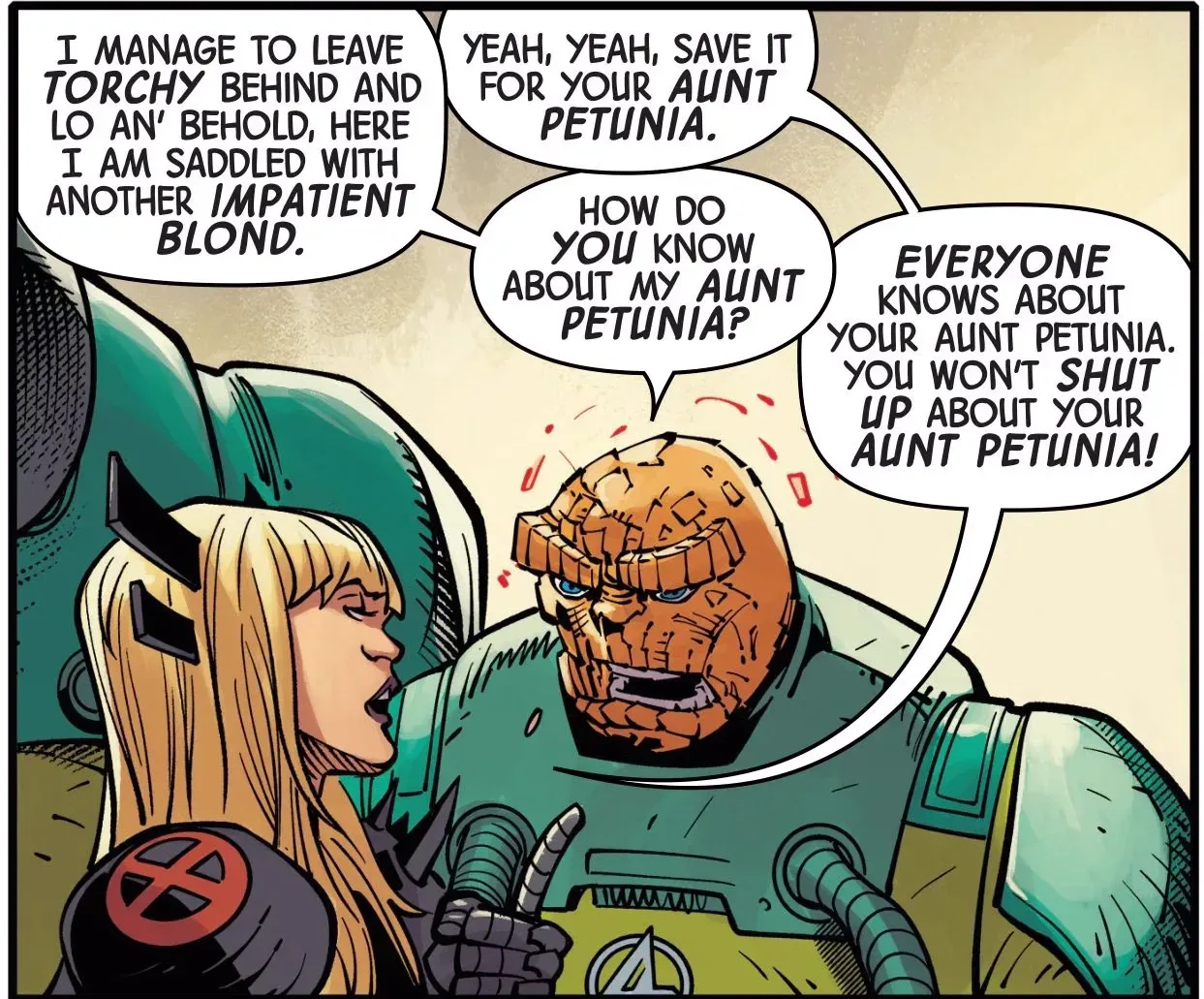
The Fantastic Four enter that clash as allies on a mission to save lives, with Susan Storm especially prominent. The core problem is not framed as a straightforward superhero brawl. The X-Men and Fantastic Four are trying to conduct a rescue, while O*N*E has its own mission and a mandate to enforce the quarantine. That setup gives the conflict a sharply different kind of antagonist. A hostile official does not need to physically overpower a hero if he can control access, define the legal limits of an operation, and command the institutions surrounding it.
Crimson Commando is a threat built around authority
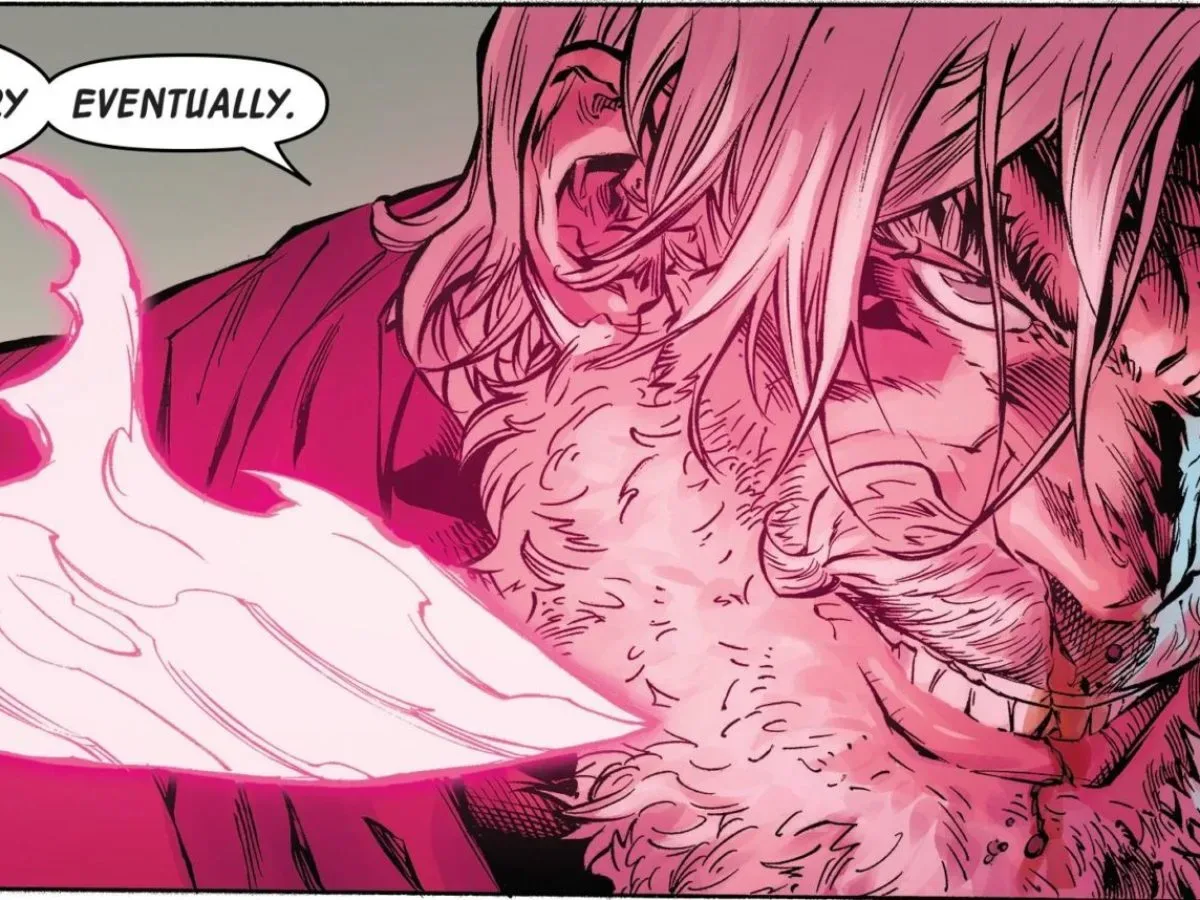
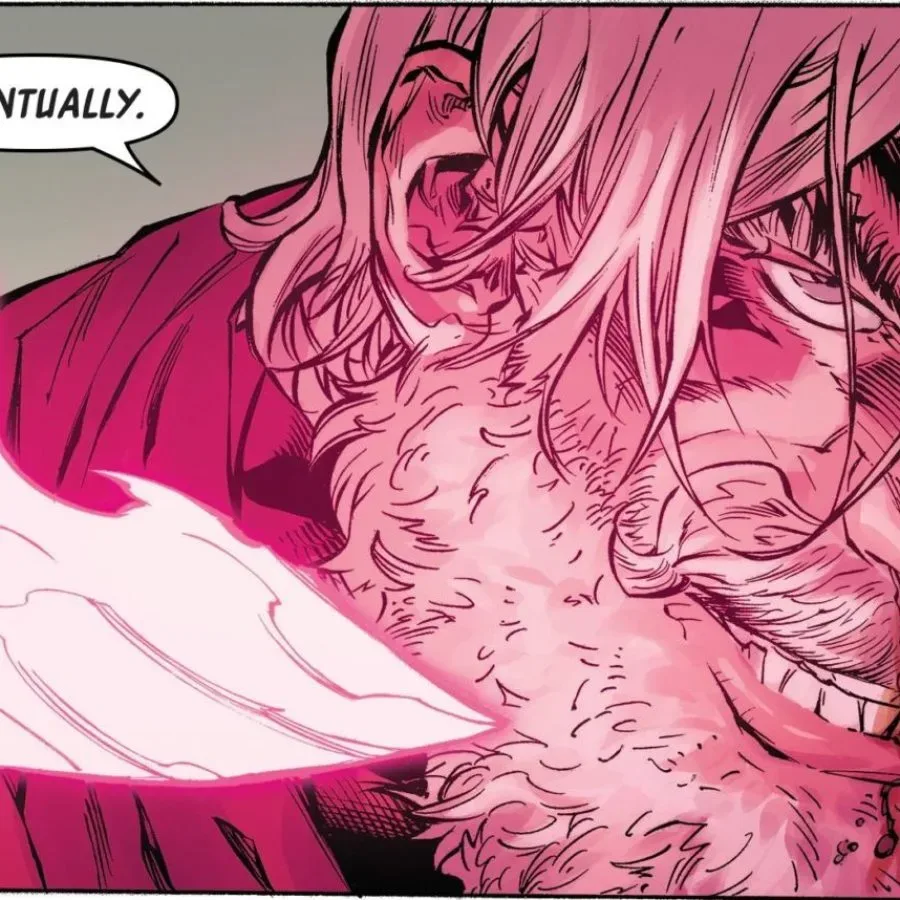
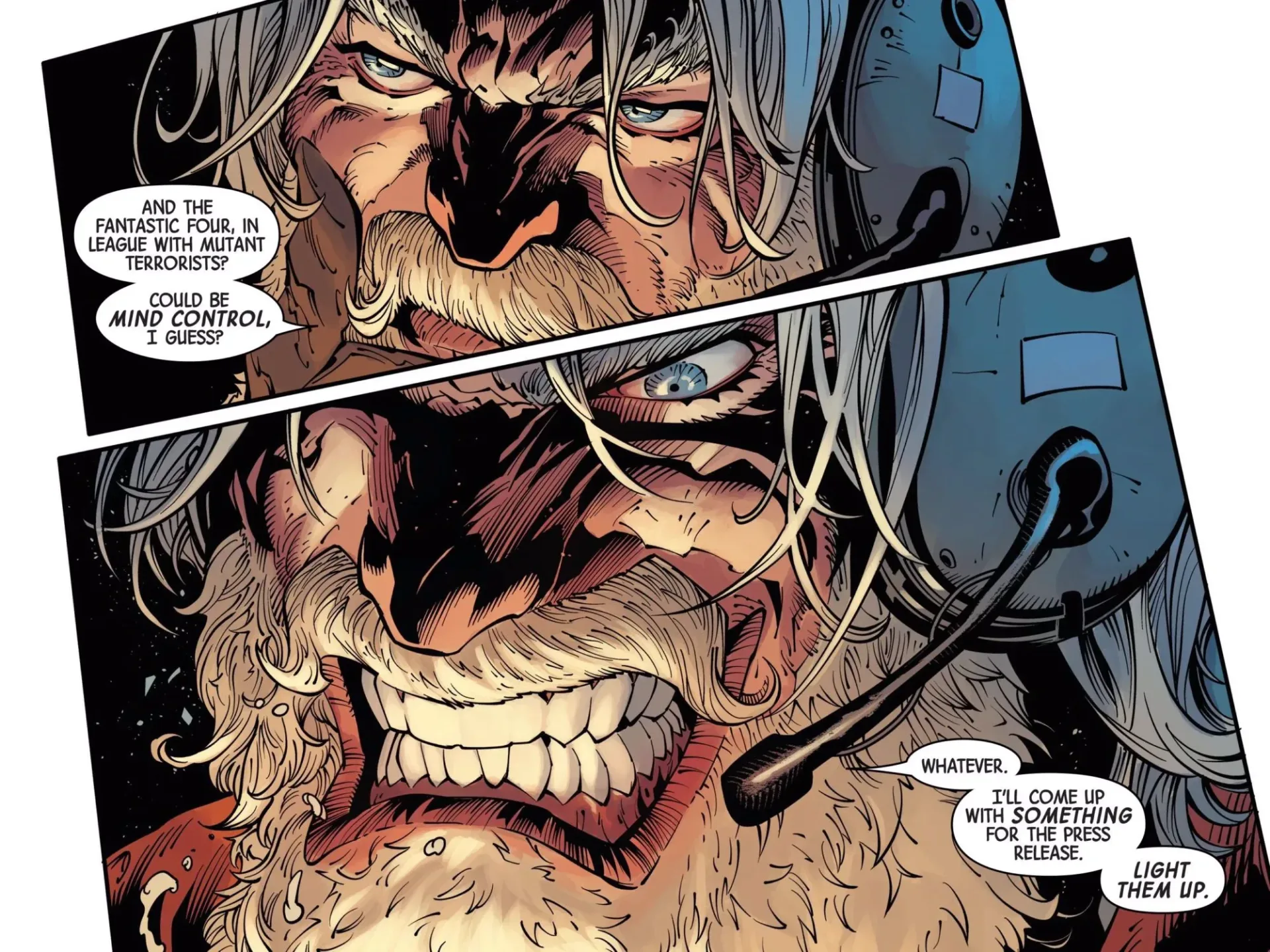
That distinction is embodied by Frank Bohannan, better known as Crimson Commando. His history connects the issue’s present-day confrontation to a long-running X-Men concern: the gap between individual mutant power and government power.
Bohannan first appeared in The Uncanny X-Men #215 in 1987, created by Chris Claremont and Alan Davis. A World War II veteran and mutant, he has a power that maintains him at the peak of human physical perfection. It is an imposing ability, but not one that places him in Marvel’s highest superhuman tier. What makes him consequential in this story is his position rather than a spectacular physical advantage.
His past already has deep links to official mutant-control structures. Bohannan was recruited into Freedom Force, the original government-sponsored mutant team operating under the Mutant Registration Act. The group confronted the X-Men, X-Factor and others while carrying out government policy. Later, Bohannan was rebuilt as a cyborg and assigned to mutant-surveillance operations including Project: Wideawake, before Wolverine killed him.
During the Krakoa era, Bohannan was resurrected and became director of O*N*E, the United States Office of National Emergency. In X-Men #41, that role is the important one. O*N*E is not simply another super-team or a villain faction waiting to trade punches with the heroes. It is an organization with a mandate, personnel and the ability to impose a response to a declared emergency.
What a quarantine mandate changes
A quarantine is a restriction designed to limit movement into, out of or through an area because of a perceived threat. In superhero fiction, such an order can become a potent plot device because it converts a humanitarian problem into a conflict over jurisdiction. The people inside may need immediate help, but the officials outside can argue that access itself risks making the disaster worse.
That does not automatically establish that either side is ethically correct. The known premise only establishes competing objectives: the X-Men and Fantastic Four want to save lives, while O*N*E is enforcing the quarantine and pursuing its own mission. The tension lies in whether those goals can coexist—and in who gets to decide when they cannot.
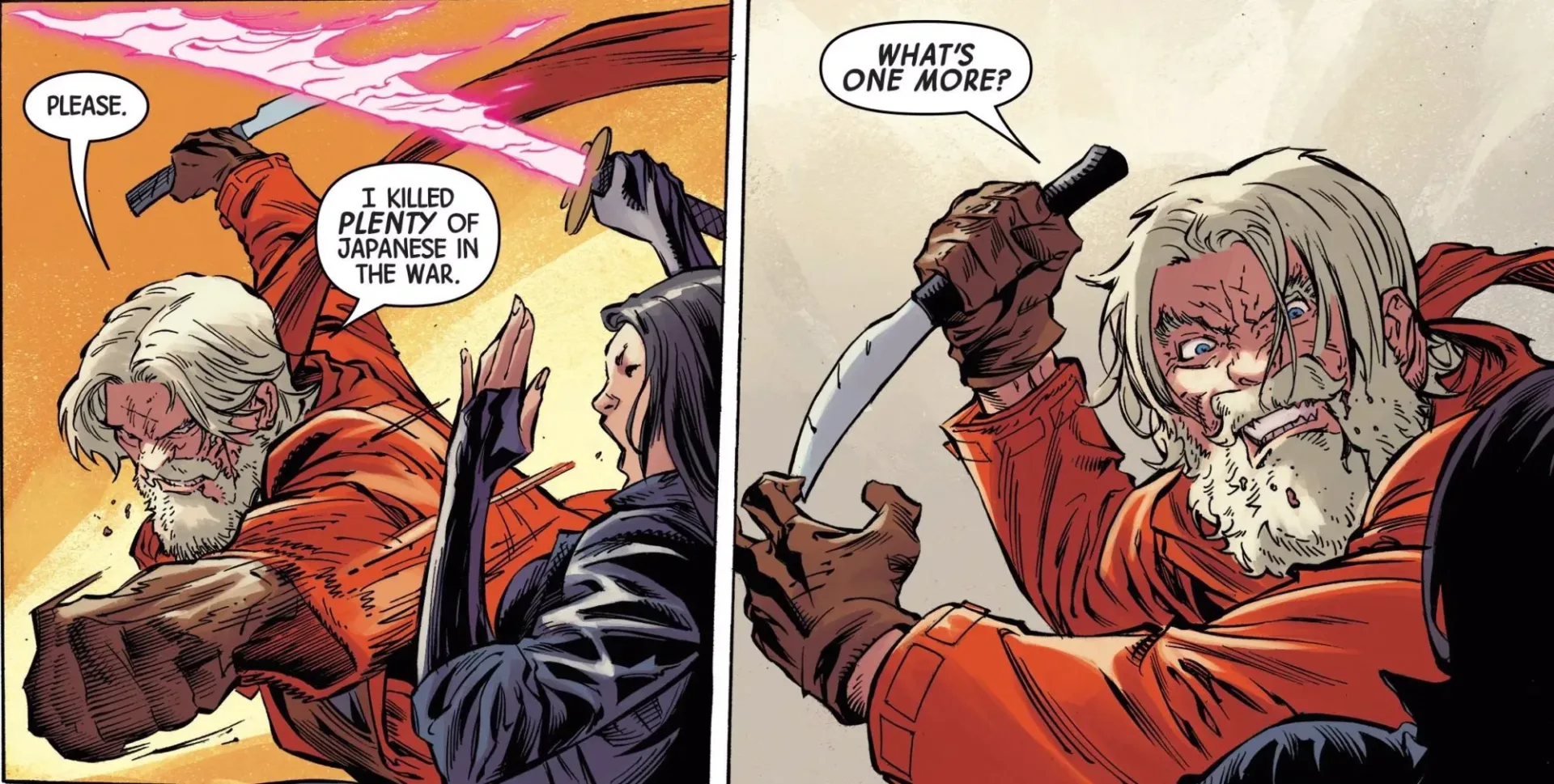
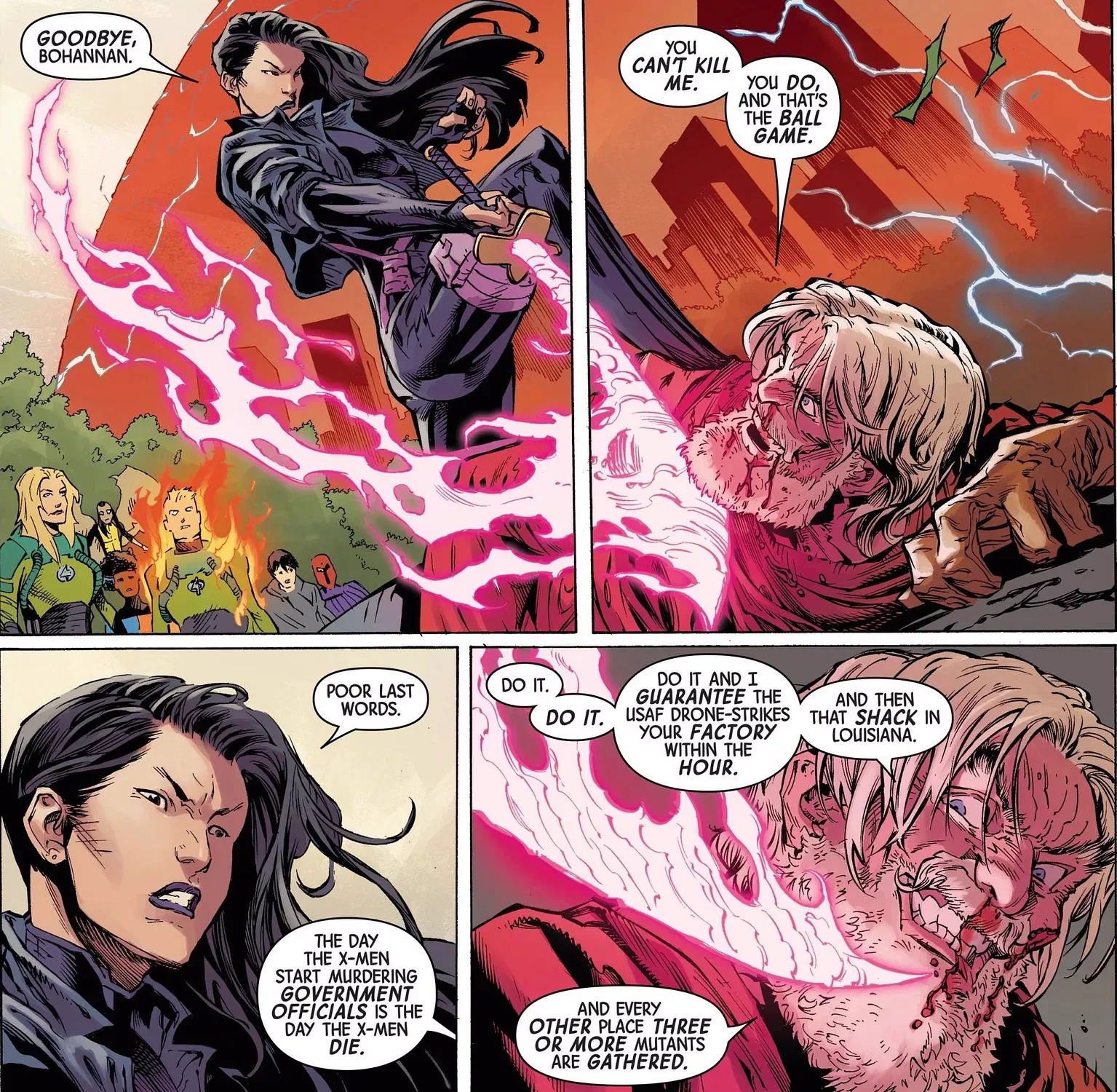
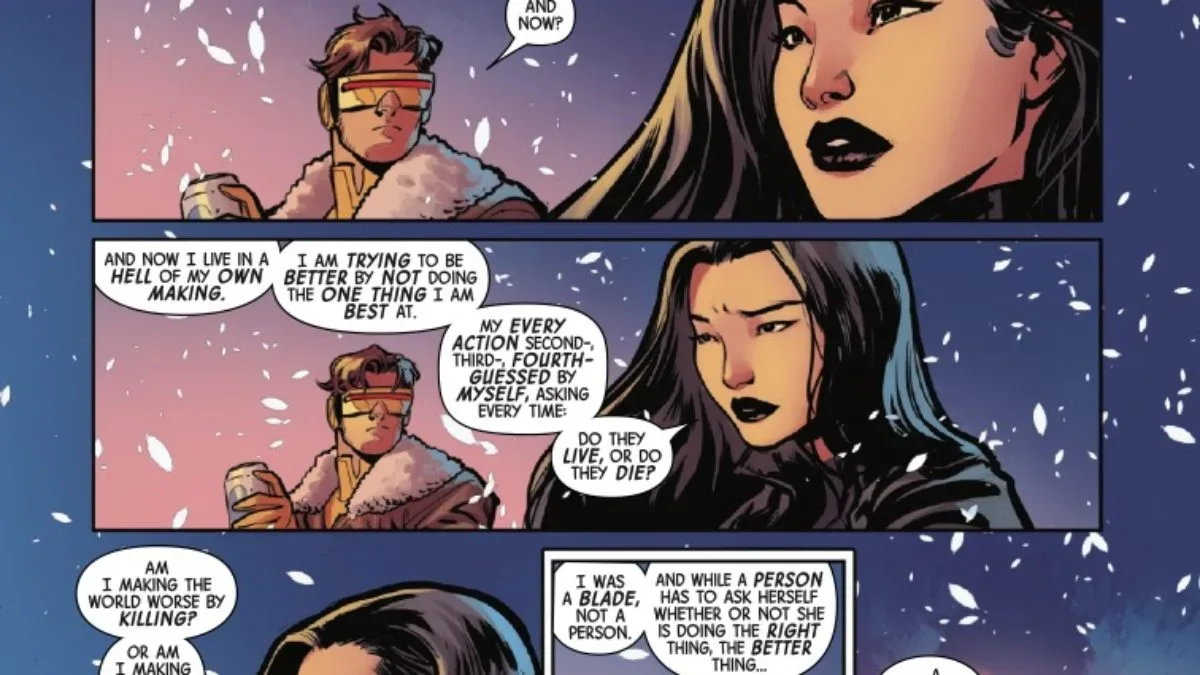
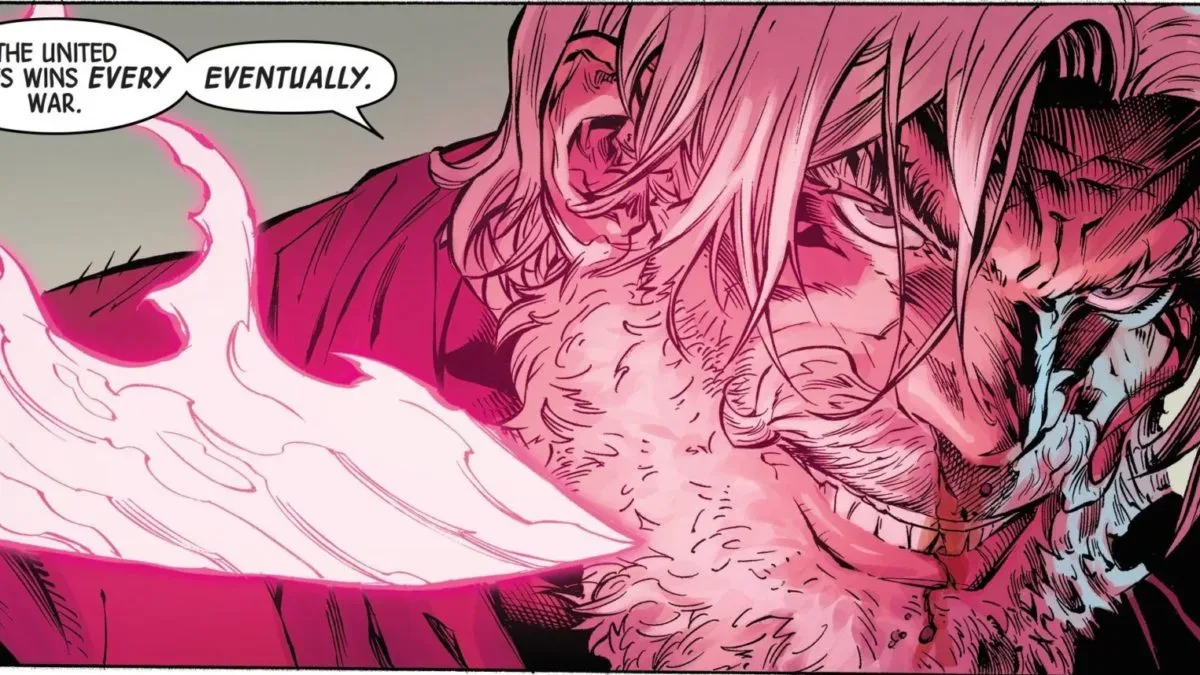
It also explains the issue’s central idea about winning. Psylocke can defeat Bohannan in a direct confrontation, yet he can still prevail through the institutional leverage behind him. The point is not that combat skill no longer matters. Rather, it is that a win in the room may not undo an official order, open a blocked route, or erase a chain of command. The psychic sword can settle a fight; it cannot necessarily settle policy.
In DNX, the most formidable weapon available to O*N*E is not necessarily a superpower. It is the ability to turn an emergency response into a boundary the heroes must confront.
Psylocke’s fight has consequences beyond the fight
Psylocke’s clash with Bohannan supplies the issue’s clearest expression of that imbalance. On the superhero level, beating an opponent normally resolves the immediate obstacle. On the institutional level, removing one person changes much less. The agency remains. The quarantine remains. The authority associated with the position remains available to whoever is next in the chain.
That is why Crimson Commando’s particular background matters. His story has moved through several forms of mutant policing and surveillance: Freedom Force, Project: Wideawake and now O*N*E. The details differ, but the recurring narrative function is recognizable. He is a character through whom Marvel can explore state power directed at mutants, whether that power arrives in uniform, through registration, through surveillance, or through emergency management.
X-Men #41 therefore makes its government conflict broader than one villain’s personal grudge. Bohannan’s loss to Psylocke does not eliminate the apparatus he represents. The issue’s suggested outcome—that he can lose the confrontation and still win—puts the practical consequences of power at the front of the drama.
For the X-Men, that produces a difficult problem of scale. Cyclops has gone after the man leading 3K, a personal and existential danger that naturally calls for decisive action. The remaining team, however, must deal with an institution capable of shaping the conditions under which rescue is possible. DNX is consequently running two different kinds of crisis at once: a deadly conflict tied to Beast, and a public emergency in which official control becomes its own barrier.
Why the Fantastic Four fit this DNX conflict
The Fantastic Four’s involvement gives the story an especially useful counterpoint. The team is associated here with the rescue mission rather than O*N*E’s enforcement operation, and Susan Storm is singled out in the issue’s events. Her presence places a highly visible Marvel hero beside the X-Men at a moment when the dispute is not merely about mutant survival, but about people caught in a quarantine zone.
That change in framing matters. A story involving only the X-Men and a federal emergency office might be dismissed by some characters as another chapter in mutant-specific mistrust. Bringing in the Fantastic Four broadens the stakes. It turns the question toward immediate life-saving work and asks whether the government and the heroes can act effectively under incompatible instructions.
Susan’s participation is also a reminder that the Fantastic Four’s role is not limited to cosmic threats or family adventures. They can function as public-facing scientific and humanitarian heroes when a crisis calls for them. In this case, their cooperation with the X-Men makes the quarantine dispute harder to reduce to a simple us-versus-them battle.
There is a wider pop-culture lesson in that kind of crossover: long-lived shared universes often use established heroes to alter the lens of a conflict without discarding its specific stakes. Readers interested in another major franchise balancing legacy material with new plans can also see our coverage of Star Wars’ 50th-anniversary plans.
DNX leaves Cyclops’ mission in the background, not forgotten
None of this makes Cyclops’ pursuit of Beast any less severe. Scott’s decision to leave in order to kill Hank is the issue’s ominous backdrop. Beast is not just an estranged teammate in this context; he is identified as 3K’s chairman. The fact that Cyclops and Beast are two of the original X-Men gives their confrontation additional weight, but the supplied details do not establish how or when their collision will play out.
What X-Men #41 does establish is that the people Cyclops left behind cannot simply wait for that conflict to resolve. They are already navigating a different threat with its own consequences. This is a useful structural move for an event tie-in: it keeps the larger story moving while making clear that the team’s problems are not all concentrated in one duel.
The result is an issue built around a pointed contrast. Cyclops is headed toward a violent answer to a personal and political threat. Back with the X-Men, Psylocke demonstrates that physical victory may not be enough when the opponent’s real strength is institutional. Susan Storm and the Fantastic Four add urgency to the rescue side of the story, while O*N*E’s quarantine mandate tests whether heroic intervention can operate inside an official emergency boundary.
What to know about X-Men #41
- Series: X-Men #41, a DNX tie-in.
- Creative team: Jed MacKay and Netho Diaz.
- Key conflict: The X-Men and Fantastic Four seek to save lives while O*N*E enforces a quarantine zone.
- Key characters: Psylocke, Frank Bohannan/Crimson Commando, Susan Storm/the Invisible Woman, Cyclops and Beast.
- Listed cover price: $4.99.
- Listed date: November 11, 2026.
The issue’s most compelling idea is ultimately simple: heroes can overcome a person and still be trapped by the system that empowered that person. With Cyclops pursuing Beast elsewhere, DNX uses O*N*E, Crimson Commando, Psylocke and the Fantastic Four to make that pressure immediate—not as abstract politics, but as a question of who can reach people in danger before the rules of the crisis decide the outcome for them.