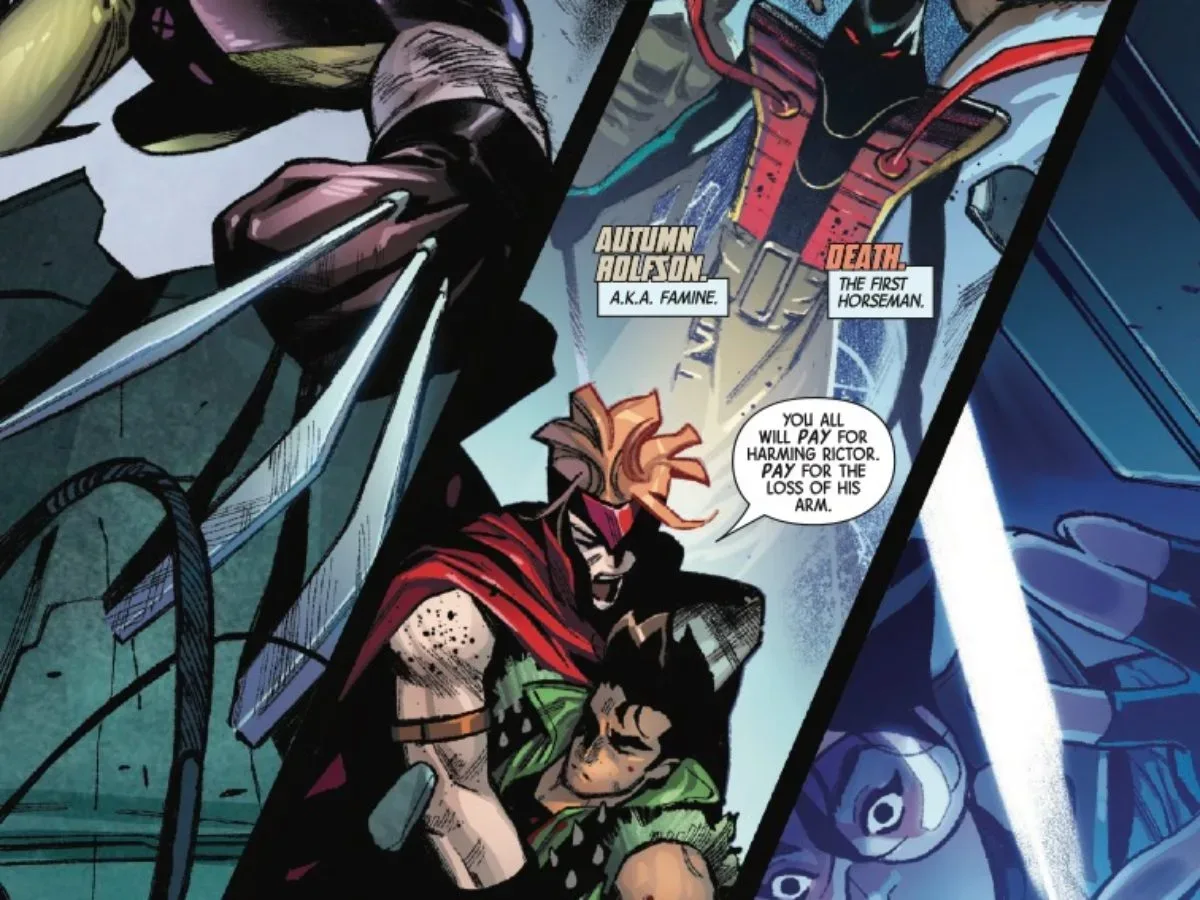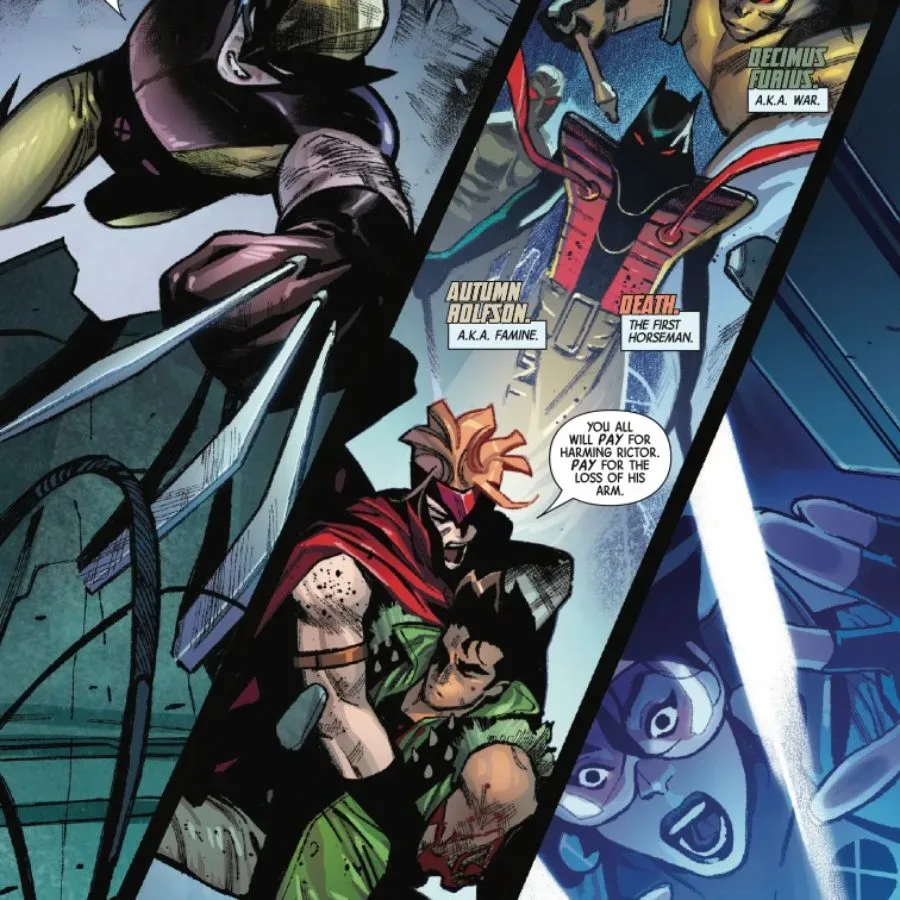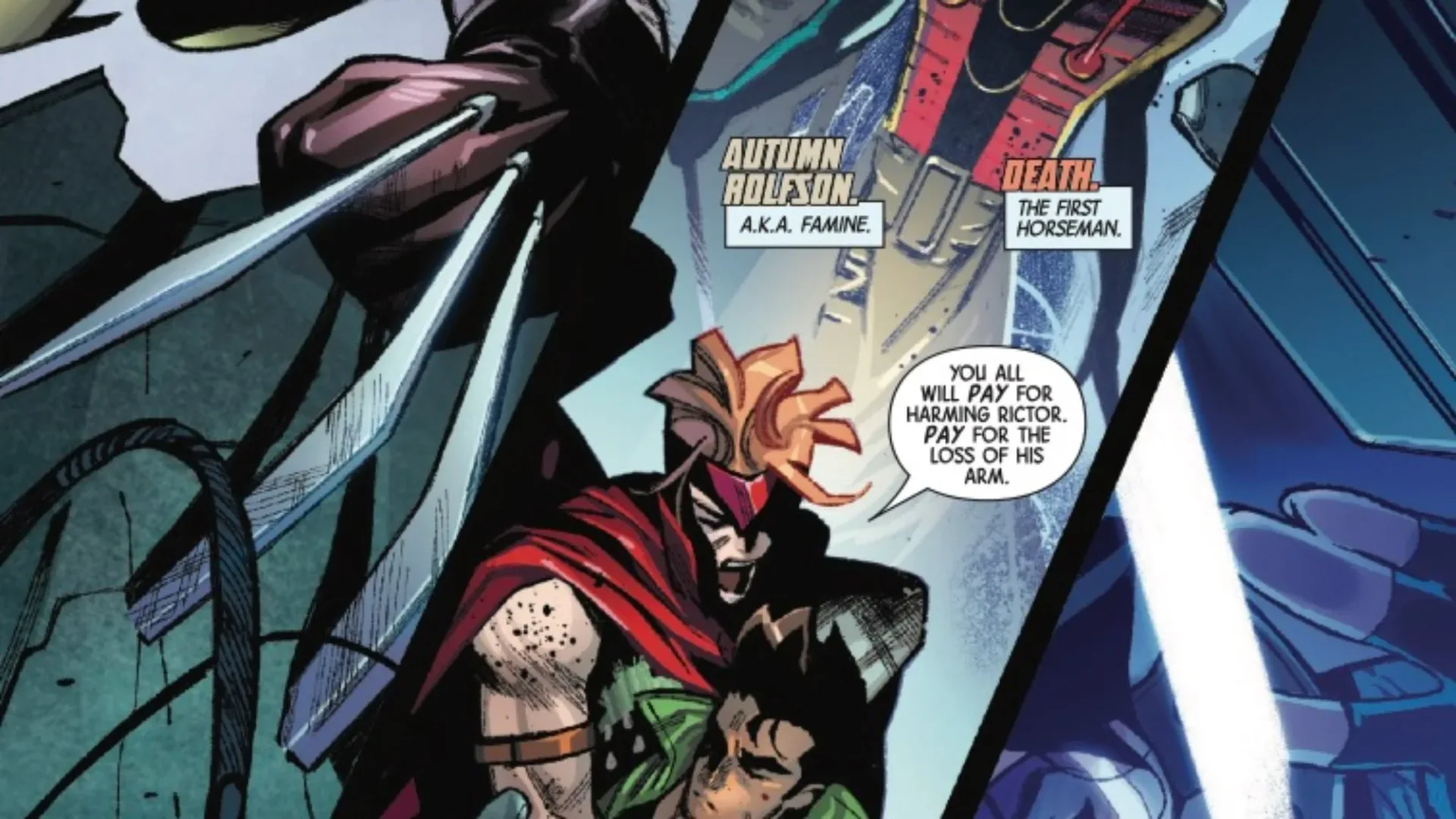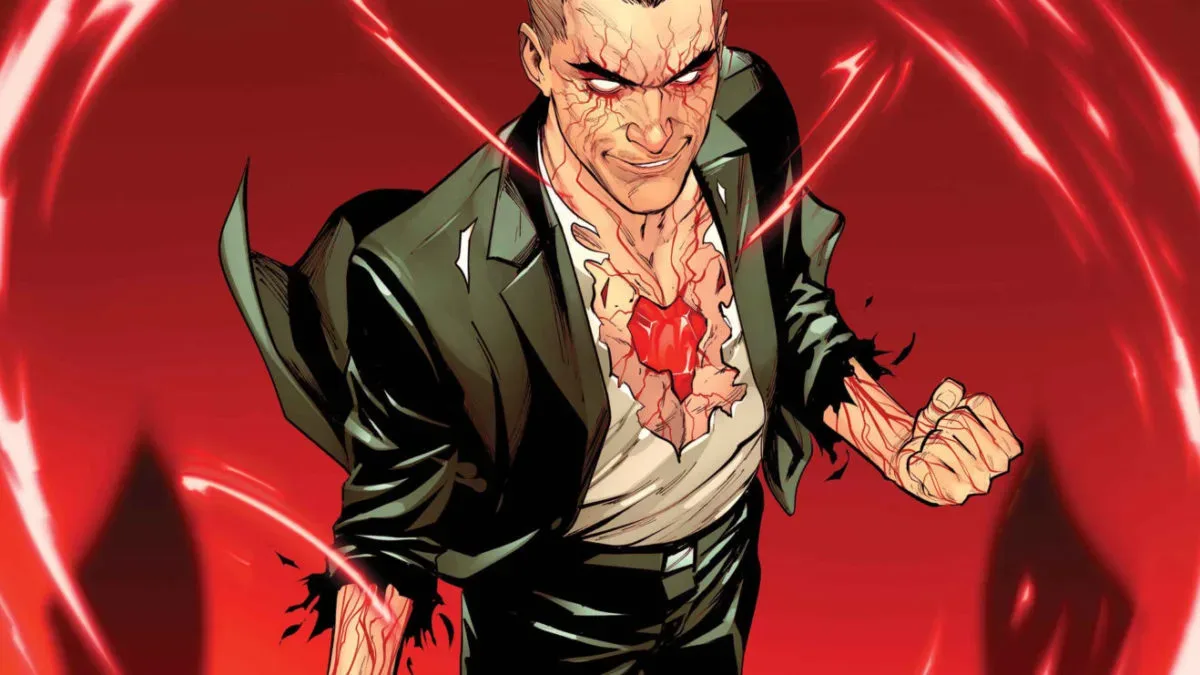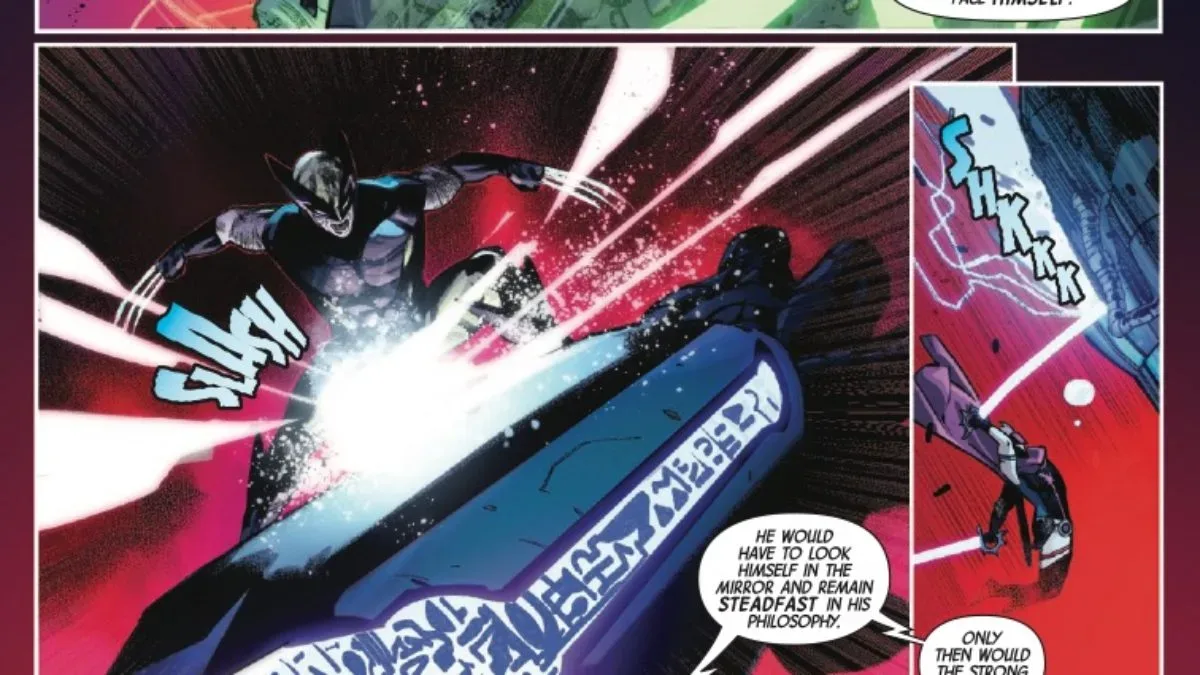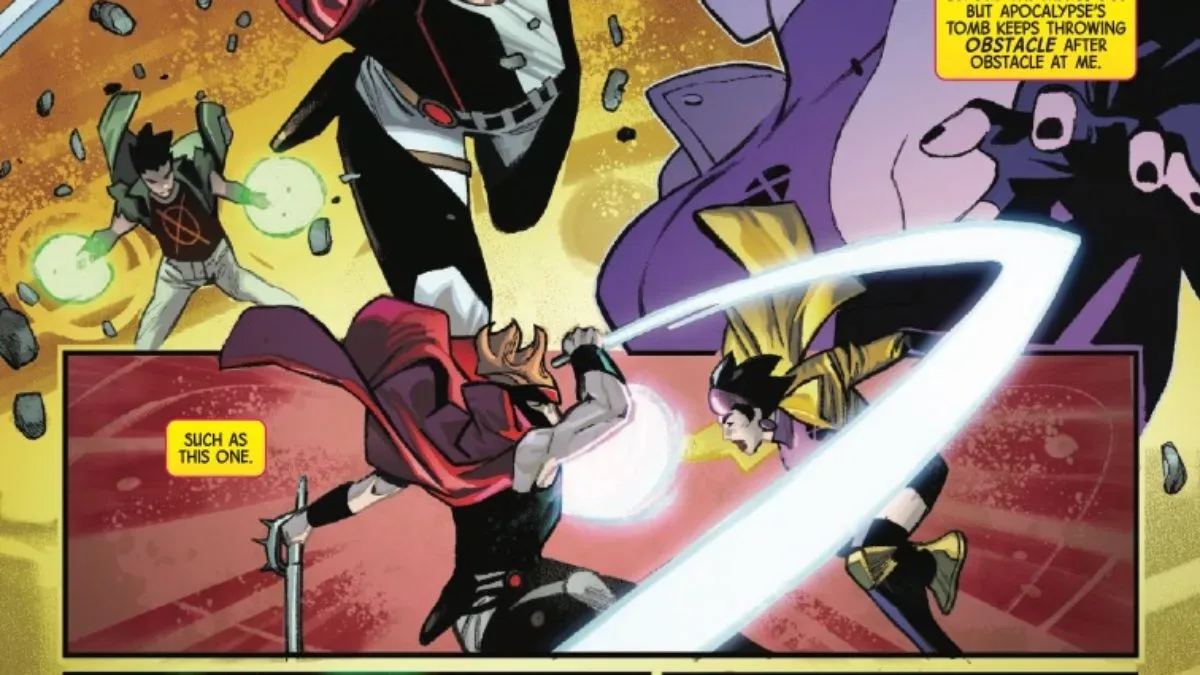
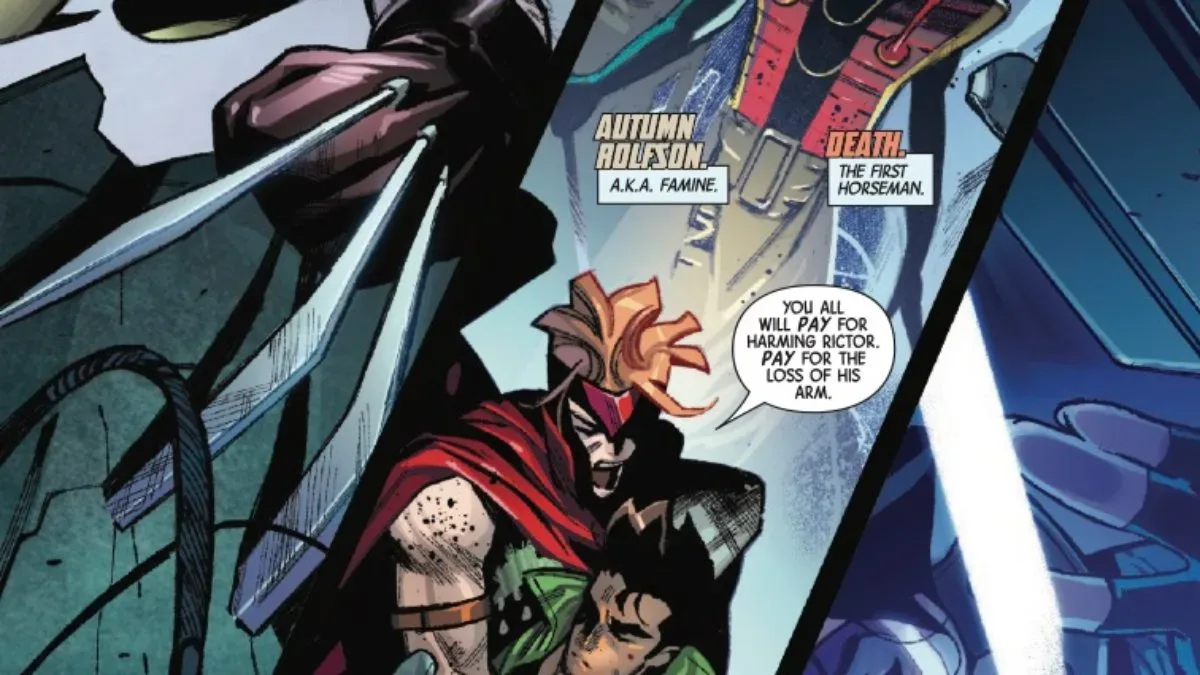
Marvel’s Tomb of Apocalypse #4 is set to arrive on November 18, 2026, and its premise points toward a pressure-cooker chapter for the mutant team trapped inside Apocalypse’s ancient stronghold. Jubilee and Wolverine have already confronted dangers in the buried site, but the new issue pivots on an unnerving complication: the tomb has not yet disclosed its real function.
That distinction matters. A tomb is usually imagined as a sealed endpoint, a place intended to preserve something from the past. Here, the setting is being framed as active, purposeful and increasingly difficult to contain. As Jubilee and Wolverine push further into its horrors, Rictor and Shatterstar reportedly unleash forces beyond their control. Meanwhile, something new is awakening beneath the sands.
The issue is written by Ashley Allen, with interior art by Domenico Carbone and a cover by Fabrizio De Tommaso. It is a 32-page, Rated T+ comic with a listed US price of $4.99. A Peach Momoko Momo-Tone variant is also listed at $4.99 in the US and $6.25 in Canada.
An ancient stronghold that is more than a tomb
The solicitation’s key idea is not simply that Apocalypse left horrors behind. It is that the structure itself has a “true purpose” that the cast has yet to understand. That setup creates a useful shift in the story’s stakes. The immediate threat is no longer just surviving monsters, traps or hostile spaces within an old stronghold. The heroes also have to determine what the place is designed to do, and whether their presence has helped activate it.
“Ancient stronghold” suggests a fortified location rather than a passive grave. Combined with the language around awakening and ascension, the issue appears positioned to make the environment an active antagonist. In comic-book terms, an active setting is one that changes the characters’ choices: it limits escape routes, introduces new hazards, withholds vital information and turns discoveries into threats.
That approach suits a story built around Apocalypse’s legacy. The preview information does not confirm the exact nature of what has been buried or what the tomb intends to accomplish, so readers should not treat any particular return, resurrection or transformation as confirmed. What is clear is that disturbing the legacy has consequences, and those consequences are escalating rather than resolving.
Jubilee and Wolverine face a different kind of danger
Jubilee and Wolverine are at the center of the descent into the stronghold, but the available details emphasize uncertainty over a straightforward fight. The pair believed they had gained a handle on the dangers within, only for the tomb to reveal that its secrets run deeper. That is a classic escalation structure: the heroes’ apparent understanding becomes evidence that they were only seeing part of the problem.
For readers, that makes the issue sound less like a standalone encounter and more like a turning point in the larger mystery. The question is not merely whether Jubilee and Wolverine can defeat a specific obstacle. It is whether the assumptions that have guided them through the location remain valid at all.
The phrase “new horrors” also deserves a measured reading. It promises additional threats, but it does not identify their form. They could be creatures, supernatural phenomena, defenses built into the tomb, or a result of another character’s actions. The solicitation deliberately keeps the danger broad, which preserves the issue’s central mystery: what exactly has been set in motion beneath the sands?
Rictor and Shatterstar’s loss of control raises the immediate stakes
While Jubilee and Wolverine investigate the stronghold, Rictor and Shatterstar face a parallel problem. They unleash forces that exceed their control. The wording does not establish whether the two intend to activate those forces, whether the event happens by accident, or whether they can reverse what has happened. It does establish that the results are significant enough to raise tensions across the group.
That is important because it introduces a second layer of jeopardy. A team can sometimes plan around an external enemy. It is much harder to plan around a developing crisis triggered from within the group’s own actions, especially when the setting is already hostile and its purpose remains unclear.
Rictor and Shatterstar’s role also means Tomb of Apocalypse #4 is not being sold solely as a Jubilee-and-Wolverine chapter. The four named mutants indicate a split-focus issue in which separate threads may collide. One thread concerns discovery: what does the ancient stronghold actually do? The other concerns consequence: what happens when forces are released before anyone can fully understand them?
The tension between those two threads is where the premise has its strongest hook. Knowledge is urgently needed, but the characters may be creating irreversible problems faster than they can learn enough to solve them.
What “ascension” signals in the preview
The issue’s promotional language centers on ascension, and a preview-page location caption reportedly places events “Above Egypt (and rising).” Neither detail provides a complete explanation by itself. Together, though, they indicate movement on a large scale: whatever is tied to the tomb is not necessarily remaining underground.
Ascension can be a deliberately flexible genre term. It may refer to physical elevation, a transformation into another state, an increase in power, or an effort to rise beyond ordinary limits. The preview does not settle which meaning is most important. That ambiguity is likely intentional, since it allows the setting, the awakening beneath the sands and the rising location to reinforce one another without revealing the issue’s core surprise.
The practical implication is that containment may be failing. A secret hidden in a tomb is one category of threat. A secret that can rise, spread or operate beyond the tomb is another. Readers looking for confirmation of the story’s direction will likely be watching for how the issue connects its underground awakening to the apparent upward movement above Egypt.
What is confirmed for Tomb of Apocalypse #4
- On-sale date: November 18, 2026.
- Publisher: Marvel.
- Writer: Ashley Allen.
- Interior artist: Domenico Carbone.
- Cover artist: Fabrizio De Tommaso.
- Length: 32 pages.
- Rating: T+.
- US price: $4.99.
- Named characters in the premise: Jubilee, Wolverine, Rictor and Shatterstar.
- Variant listed: Peach Momoko Momo-Tone variant, priced at $4.99 US and $6.25 Canada.
Why this issue could be a key chapter
Issue #4 appears to be where Tomb of Apocalypse shifts from entering a dangerous place to confronting the reason that place exists. The solicitation does not reveal the tomb’s true purpose, the identity of what wakes beneath the sands, or the eventual impact of the forces released by Rictor and Shatterstar. That restraint makes those questions the issue’s main draw.
For readers following Marvel’s mutant stories, the cast combination offers a mix of investigation, survival and interpersonal strain. Jubilee and Wolverine are pressed deeper into an unknown space, while Rictor and Shatterstar’s situation threatens to make the mystery more volatile. The result is a premise where every revelation can plausibly make escape more difficult.
Anyone tracking current Marvel comic releases may also want to keep an eye on a separate Venom #5 threat centered on Mogul’s Origin Box powers. Tomb of Apocalypse #4, however, is firmly focused on an older danger: a legacy that was buried, disturbed and apparently never meant to stay dormant.
With its ancient stronghold becoming more active, its four central mutants under mounting strain and an awakening still undefined, Tomb of Apocalypse #4 is positioned as a mystery-driven escalation rather than an issue that gives away its answers before release.