Tomb of Apocalypse #2 arrives on September 30, 2026, with Jubilee and Wolverine caught deep inside a tomb engineered around the ancient designs and ruthless priorities of Apocalypse. The premise is direct, but that does not make it simple: the two X-Men are not merely trying to locate an exit. They are being subjected to trials by someone who is apparently indifferent to whether they survive, while other mutants explore the same hostile space with goals that do not match the X-Men’s.
That setup places the issue squarely in the pressure-cooker tradition of Marvel team stories. A closed environment limits options, makes every encounter more consequential, and turns uncertainty about allies into a major part of the danger. Here, the advertised “time bomb” is not necessarily a literal device. It describes a situation in which confinement, competing agendas and escalating violence can force a breaking point.
What Tomb of Apocalypse #2 has established
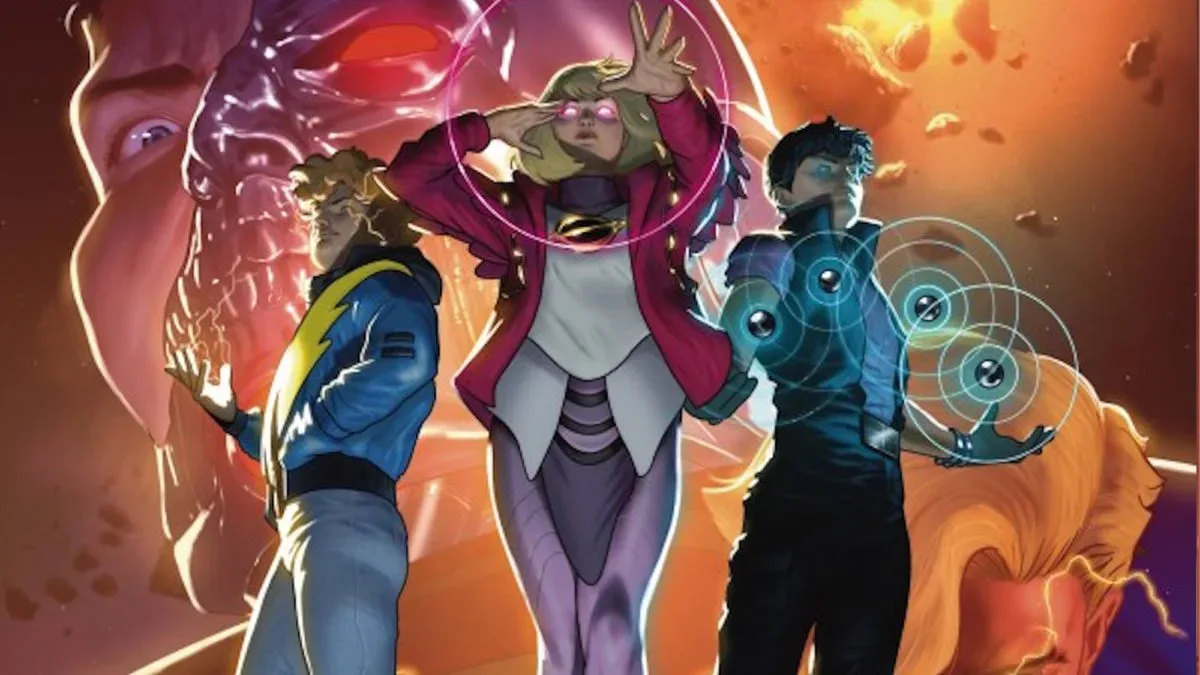
The issue is written by Ashley Allen, with art by Domenico Carbone and a cover by Fabrizio De Tommaso. It is a 32-page, Rated T+ Marvel release priced at $4.99 in the United States and $6.25 in Canada. Two listed variants, by Farid Karami and Nogi San, carry the same listed prices.
Its central pairing is notable. Jubilee and Wolverine are both identified as trapped in the darkness beneath Apocalypse’s tomb, but the available setup makes clear that their ordeal is not framed as a straightforward two-person escape. Apocalypse is actively subjecting them to trials, and additional mutants have entered the tomb. Their objectives are described as misaligned with the X-Men’s, leaving the characters to contend with both environmental peril and uncertain loyalties.
“Entombed in the dark… but far from alone!” is the issue’s succinct promise, and the second half of that line may be the bigger warning.
In practical storytelling terms, an underground tomb gives a creative team a built-in engine for tension. Characters can be separated by corridors, forced through chambers with different hazards, or pushed into face-to-face confrontations with limited room to retreat. The tomb is also more than scenery when Apocalypse is the guiding intelligence behind it: each obstacle can function as an imposed test rather than random architecture.
Jubilee faces attacks from familiar mutants
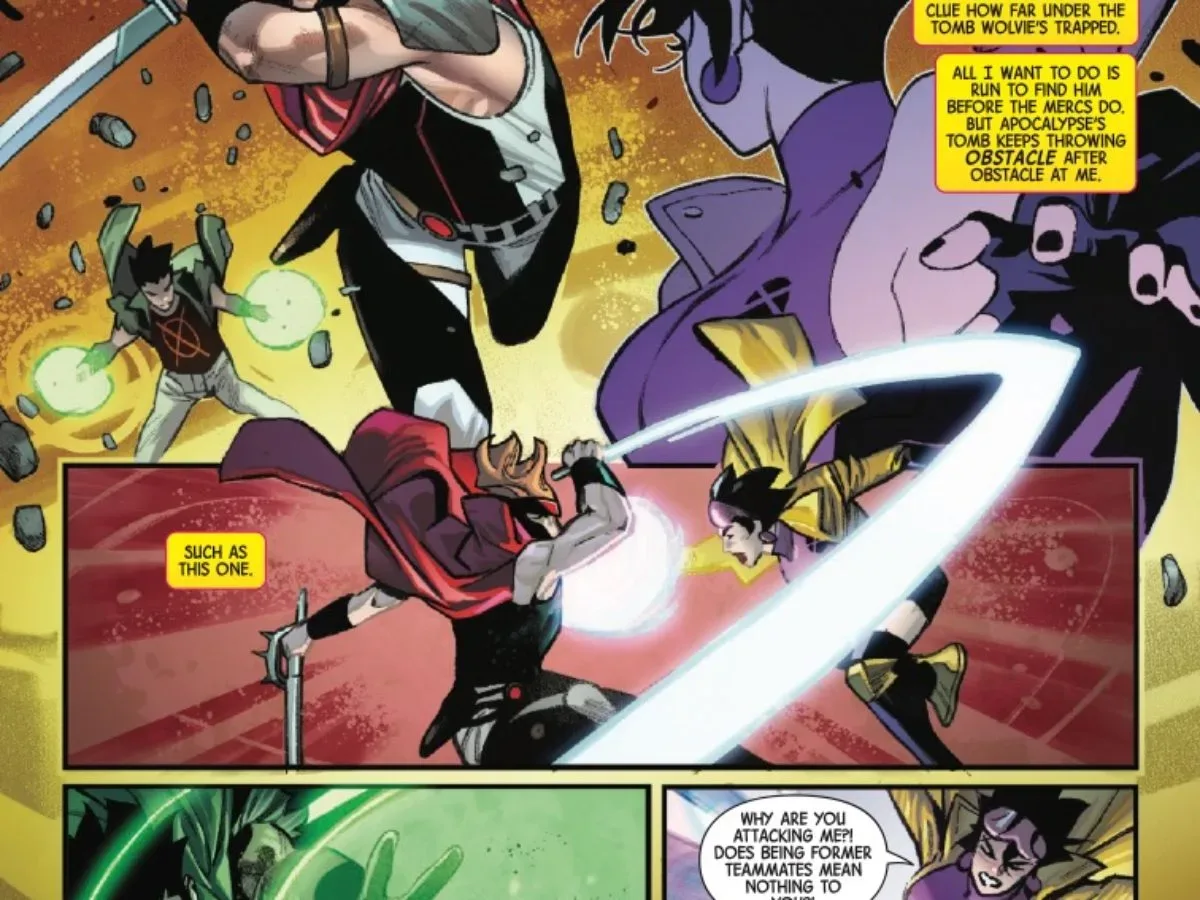
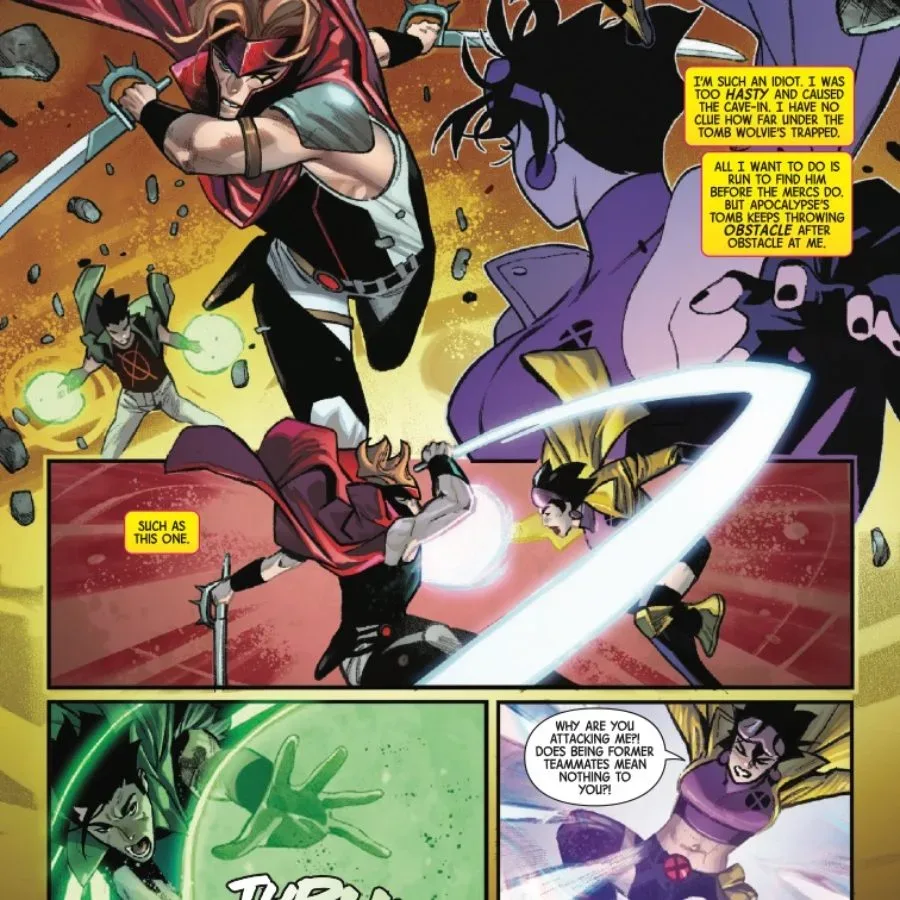
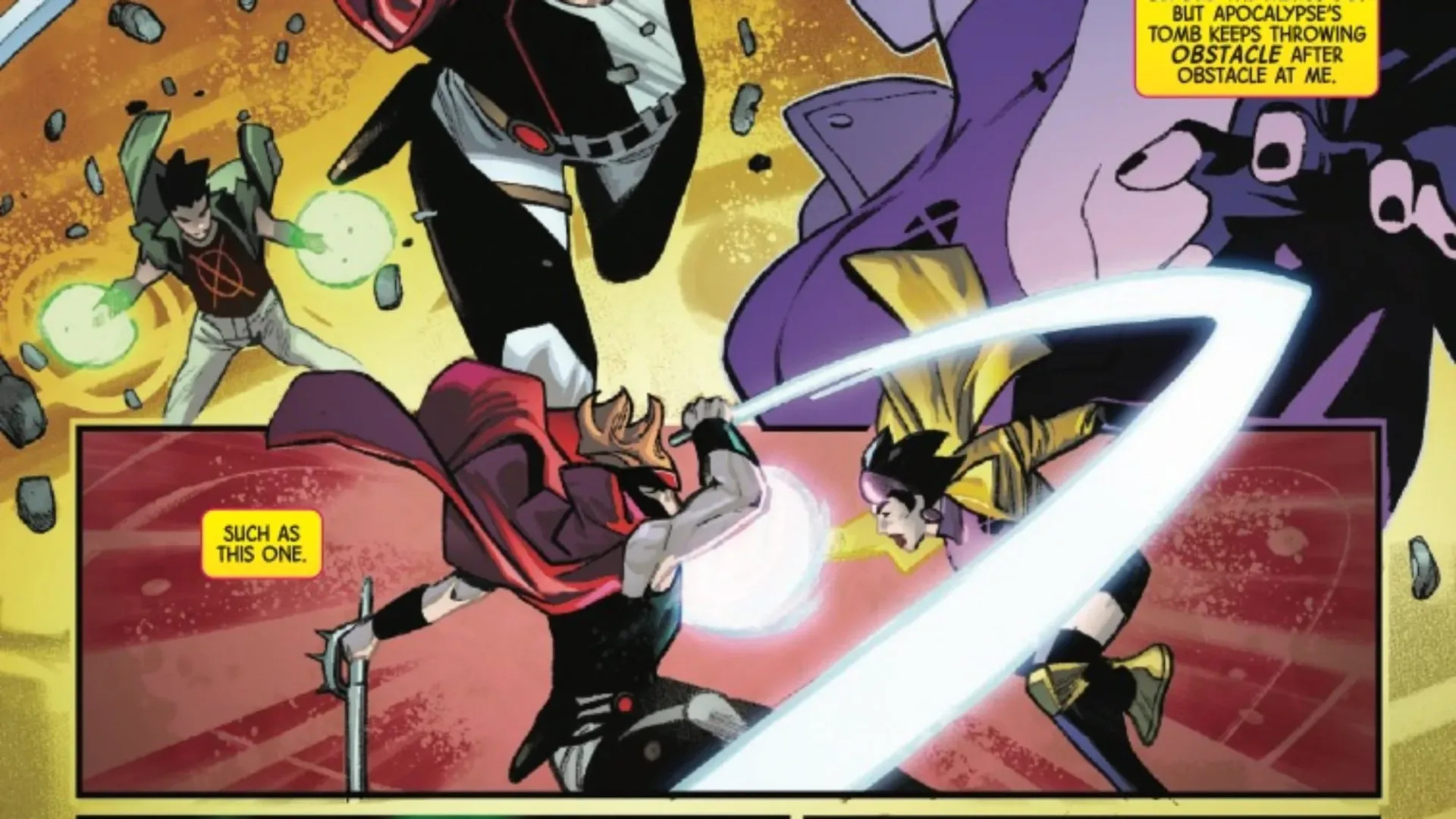
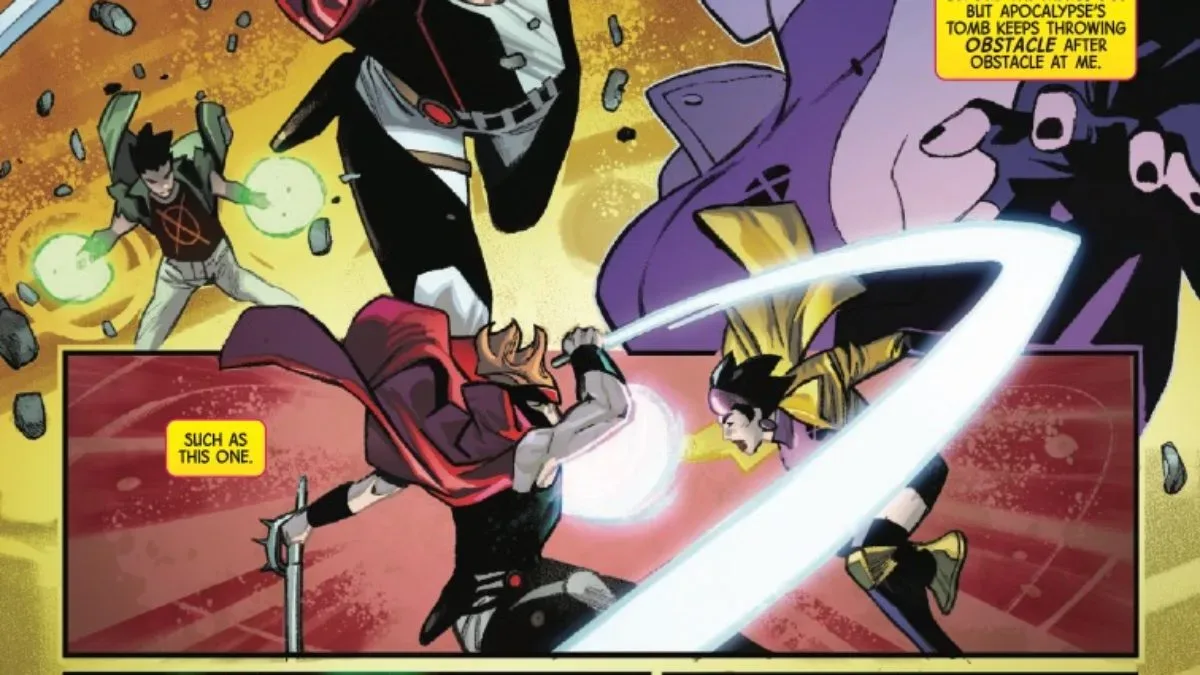
The preview material indicates that Jubilee is attacked by Rictor and Shatterstar. Rictor is shown using energy-based attacks, while Shatterstar comes at her with blades, with one strike drawing blood across Jubilee’s cheek. Jubilee demands an explanation for the assault, an important detail because it suggests the conflict is not being presented simply as an agreed-upon contest.
Apocalypse’s disembodied encouragement that those inside must “overcome together” adds another layer of unease. The words point toward a group test, but the actions on the page point in the opposite direction. That contrast is the core dramatic question suggested by the preview: are the combatants being manipulated into fighting, interpreting a trial differently, pursuing separate objectives, or simply choosing conflict under pressure? The supplied material does not settle that question, so readers should treat the exact reason behind Rictor and Shatterstar’s aggression as unresolved.
Wolverine is part of the tomb-bound premise, although he is not present in the described Jubilee confrontation. That absence can matter in a contained story. A missing teammate can mean a parallel challenge, a forced separation, or an incoming intervention—but those are possibilities, not confirmed plot developments. What is certain is that Jubilee’s immediate predicament is already severe before the issue has explained where Wolverine is or how the pair might reunite.
Why Apocalypse is the right kind of threat for this premise
The issue’s conflict is not described as a simple brawl against Apocalypse. Instead, it centers on his “twisted, ancient mind” and a tomb full of deadly tests. That wording shifts the threat from a single opponent to a hostile system: the location, its rules and the people caught inside it can all become weapons.
That distinction is useful for readers approaching a preview. A death trap is a situation designed to threaten or kill characters through restricted choices, hazards or puzzles rather than an open fight alone. A trial, meanwhile, carries the implication that somebody is measuring a quality—strength, endurance, loyalty, cooperation or adaptability. Tomb of Apocalypse #2 appears to combine those ideas. Escape may depend not just on defeating an enemy, but on recognizing what the tomb is demanding and determining whether its rules can be trusted.
The other key term is rival mutants. Rivalry does not necessarily make every participant an outright villain; it means their aims conflict. In an enclosed setting, even a temporary disagreement can be disastrous. One group may prioritize reaching a relic, another may want answers, and another may simply want to get everyone out alive. The issue’s description deliberately leaves the rival mutants’ exact goals unclear, which helps preserve the mystery around why Jubilee becomes a target.
A ticking-clock structure without a confirmed clock
The solicitation calls the situation a time bomb, but it does not specify a timer, an explosive, or a deadline. That leaves room for the phrase to be read structurally: the longer hostile factions remain trapped together in Apocalypse’s tomb, the more likely the situation is to detonate into irreparable conflict.
For Jubilee, that may be especially consequential. The preview emphasizes her immediate vulnerability in the fight, including the injury dealt by Shatterstar, while also putting her at the center of the unanswered question about the attackers’ motives. That makes her more than a bystander to Wolverine’s mission. She is the character through whom the issue appears ready to explore the uncertainty of the tomb’s trial firsthand.
For Wolverine, the separation raises the stakes rather than reducing them. With no description of his location during the shown confrontation, readers are left with two simultaneous sources of tension: Jubilee’s active fight and Wolverine’s unknown circumstances. A good containment story gains momentum when the audience knows help exists but cannot know whether it can arrive in time. The preview’s arrangement seems built for exactly that uncertainty.
Release details and variants
- Title: Tomb of Apocalypse #2
- On sale: September 30, 2026
- Writer: Ashley Allen
- Artist: Domenico Carbone
- Cover artist: Fabrizio De Tommaso
- Format: 32 pages, Rated T+
- Price: $4.99 US / $6.25 CAN
- Variants listed: Farid Karami variant and Nogi San variant
Collectors weighing editions should note that the available listing identifies the two variant covers and their prices, but offers no additional information about their artwork, print quantities, incentives or distribution. The safest takeaway is simply that readers will have multiple cover options at the stated cover price, rather than assuming rarity or market differences that have not been established.
Marvel’s comic slate regularly gives readers plenty of separate books and printings to track; for another recent printing story, see our coverage of Transformers #1 reaching a 15th printing.
What to watch for in issue #2
The clearest points to follow are the nature of Apocalypse’s trials, the reason Rictor and Shatterstar turn on Jubilee, and how Wolverine’s off-page position connects to the immediate conflict. The story’s premise promises that none of these elements are isolated: a tomb designed by Apocalypse, rivals with incompatible aims and a cast divided by its corridors can all feed the same escalating crisis.
At this stage, the appeal of Tomb of Apocalypse #2 is not an answer to those questions but the way it stacks them. Jubilee is under direct attack, Wolverine is elsewhere, Apocalypse controls the setting, and the other mutants cannot yet be counted on as allies. For a comic built around entombment, it is a fittingly cramped set of problems—and the September 30 issue is positioned to tighten them further.