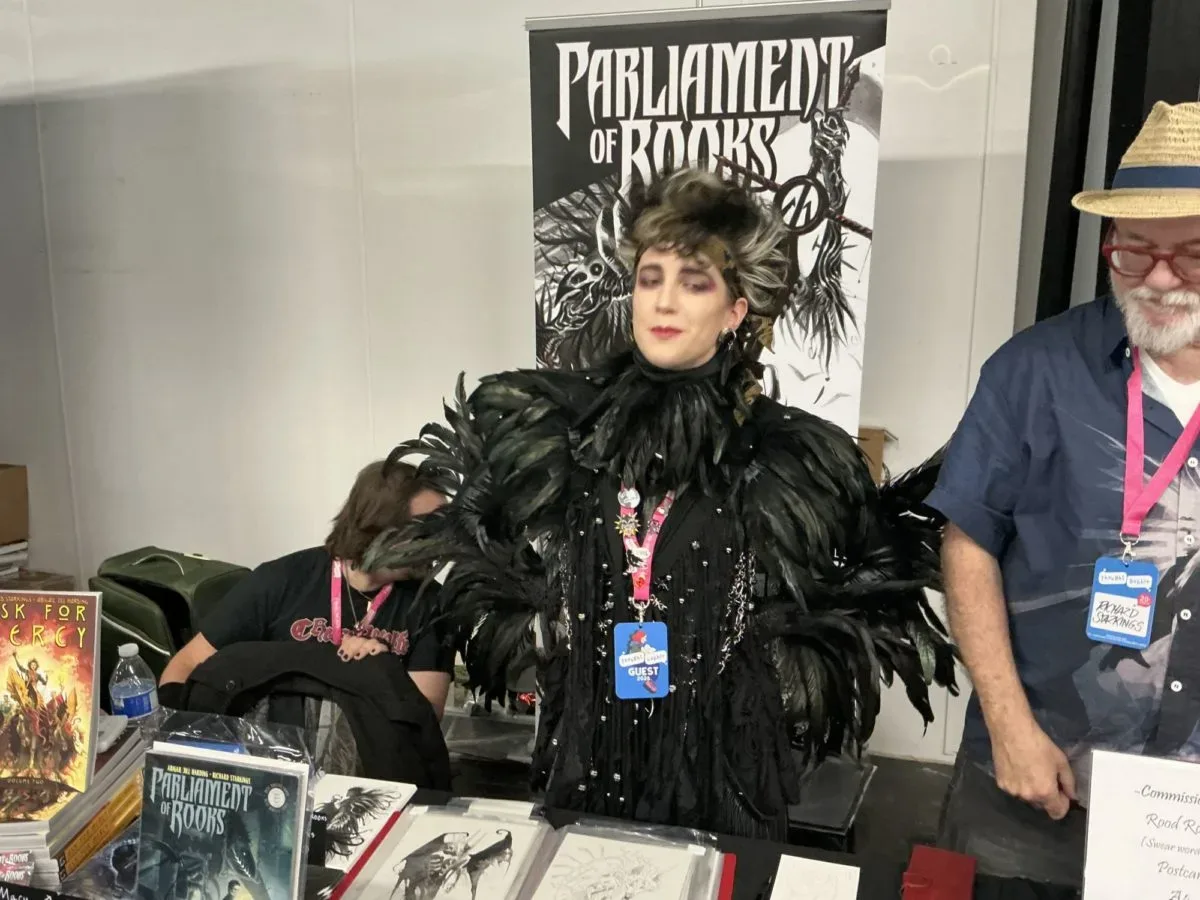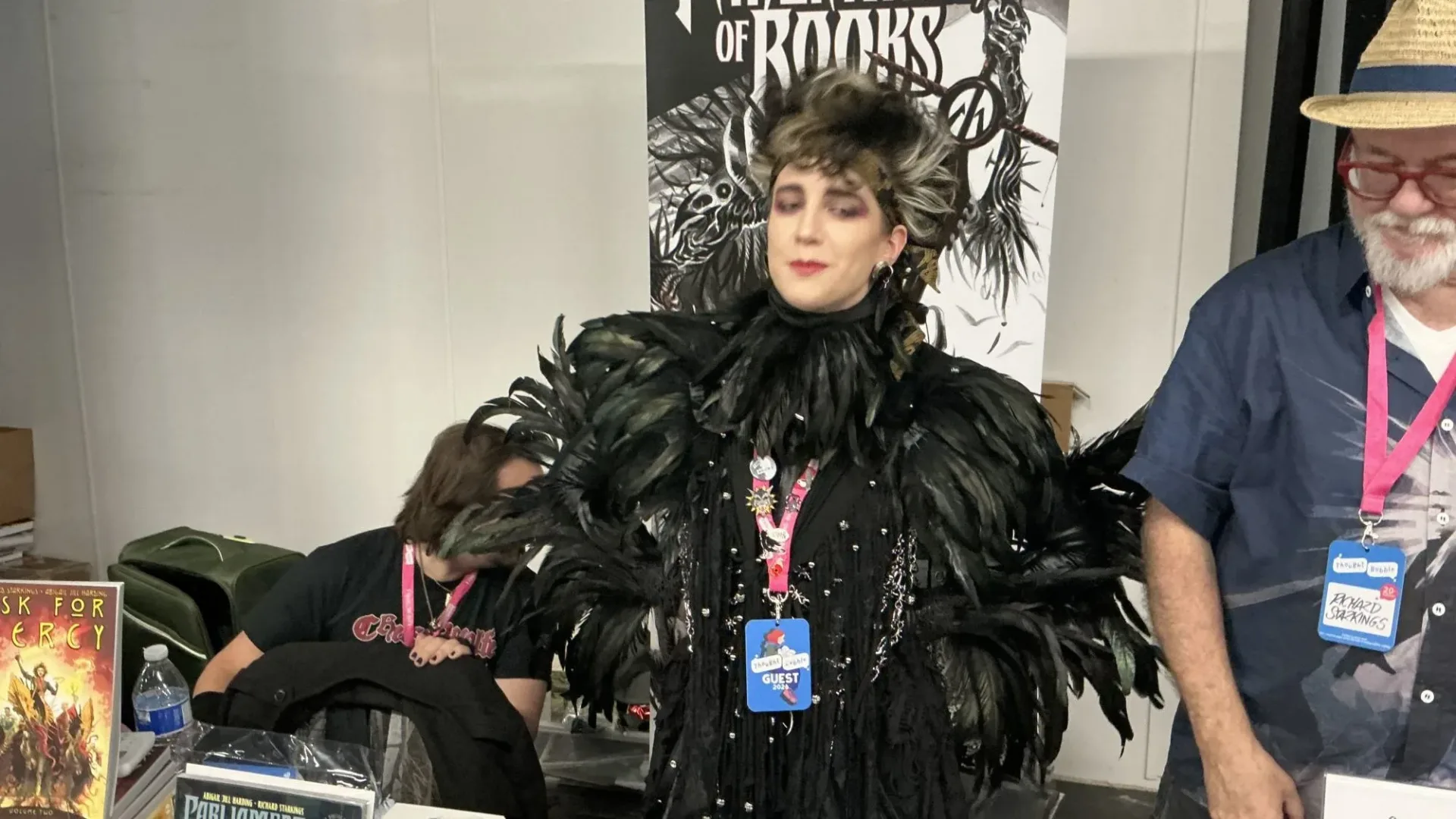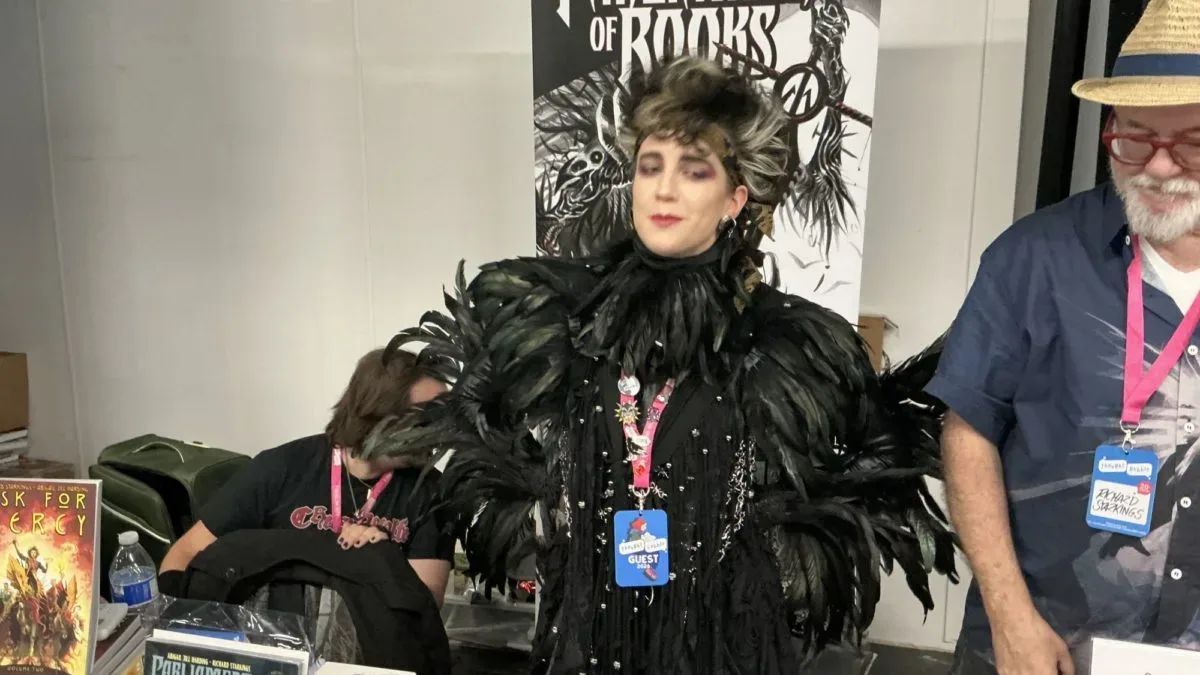
Thought Bubble Comic Con is celebrating its 20th show in Harrogate, England, across November 14 and 15, 2026. A walk-through filmed during the first 25 minutes after the doors opened offers a simple but useful snapshot of the event at its busiest starting point: attendees moving into the Harrogate Convention Centre, exhibitors beginning their day, and a convention floor built around the people who make comics.
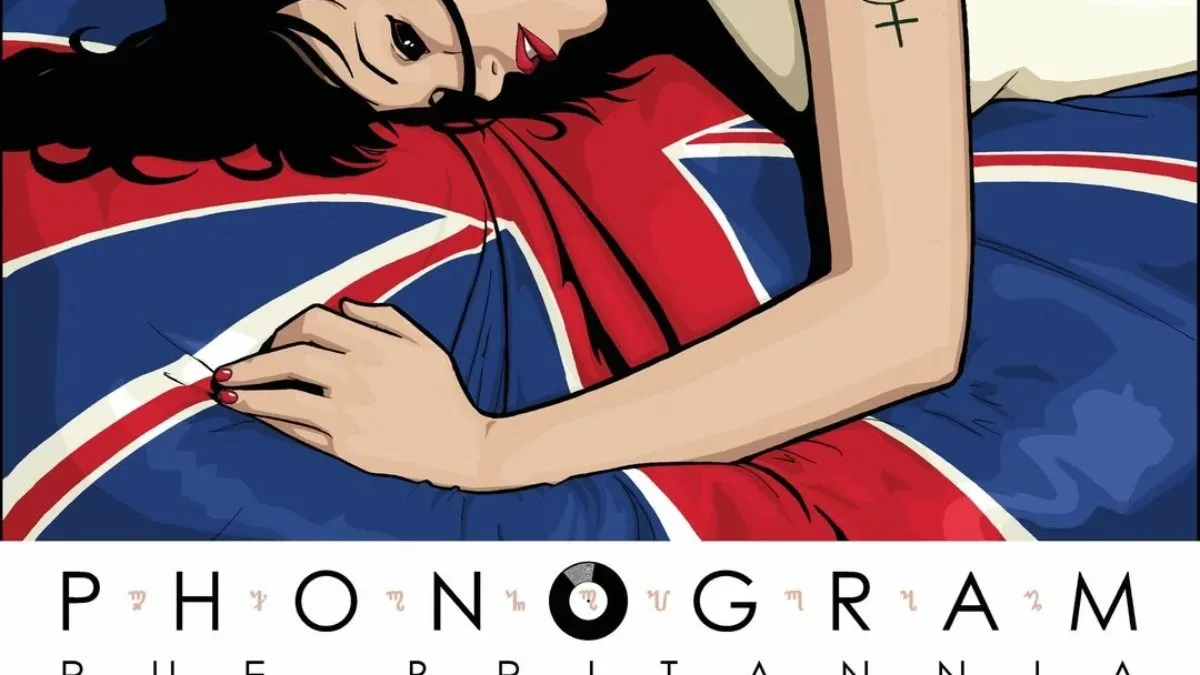
The footage is paired with a view of the queue before opening and short clips from a 20th-anniversary gathering for Phonogram. The party material is described as heavily attended by comics creators, with Kieron Gillen handling DJ duties. Together, these pieces capture two complementary sides of a major comic-art event: the public rush of a convention weekend and the smaller professional community that comes together around it.
A convention built around creators
Thought Bubble describes itself as the UK’s largest comic art festival. Its focus is notably creator-led: comic-book artists and writers are central to the event, and small press is a particular part of its identity. In practical terms, small press refers to independently made or independently published work that exists outside the largest traditional publishing operations. These books may be produced by individual creators, small teams, or small publishers, and conventions can give them direct access to readers.
That emphasis makes a floor walk more than a tour of booths. It is a record of the setting in which readers can encounter a broad range of comic-making, from established names to creators working with less institutional backing. It also helps explain why the opening queue matters. A large first-wave crowd is evidence of audience interest, but at a creator-focused event it can also represent a concentrated opportunity for exhibitors to meet readers, discuss their work, and sell books directly.
Convention footage should not be mistaken for a complete guide to everyone attending, every panel, or every item on sale. A 25-minute walk captured immediately after opening is necessarily a moment in time. Still, it provides a visual measure of the event’s physical scale and its early-day energy without reducing the show to a list of guests or product announcements.
From a Leeds basement to Harrogate
The 2026 gathering represents a substantial milestone for a festival founded in 2007 by Yorkshire artist Lisa Wood, who is also known as Tula Lotay. Thought Bubble began as part of the Leeds International Film Festival, with the stated aim of raising the profile of comics in the area. Its first event took place in the basement of Leeds Town Hall and drew a couple of hundred attendees.
That origin is important context for the 20th-show celebration. The festival did not begin as an enormous convention in a major venue; it began as a local effort to make space for comics. Over time it expanded beyond that initial audience and format. The transition from a basement event to a convention occupying the Harrogate Convention Centre is a visible expression of that growth, even if a single opening-day video cannot quantify it.
Thought Bubble originally operated across Leeds. In 2019, it moved to nearby Harrogate, with the need for additional space and issues involving Leeds City Council cited as factors. The relocation illustrates a common reality for growing cultural events: growth is not only a question of attracting more people. It also requires a venue capable of supporting exhibitors, visitors, circulation, programming, and the logistics of a multi-day show.
The festival is bigger than the convention weekend
While the convention is the culminating attraction, Thought Bubble is framed as a week-long Yorkshire celebration encompassing comics, illustration, animation, and related creative work. The Harrogate show on November 14 and 15 is therefore the peak of a wider festival programme rather than an isolated retail event.
That distinction matters for anyone trying to understand its place in comics culture. A comic convention can be a marketplace, a meeting place, and a fan destination. A festival can additionally create room for forms and disciplines around comics, including illustration and animation. Thought Bubble’s structure combines those functions while keeping comic creators at the foreground.
The supplied opening-day material focuses on the convention itself rather than providing a full account of the wider week. Even so, the existence of a festival framework helps clarify why an anniversary weekend can include both a busy public floor and a creator-heavy celebration connected to a particular comic series.
Why the Phonogram gathering fits the occasion
The clips from the Phonogram 20th-anniversary party add a more intimate counterpoint to the main hall footage. Phonogram is closely associated with comics creators, and the reported presence of a creator-heavy crowd, alongside Kieron Gillen’s DJ set, reinforces the social dimension of the medium. Comics are made by individuals and teams, but events such as Thought Bubble also bring together the networks of collaborators, peers, readers, publishers, and friends around that work.
It is tempting to treat parties and convention queues as unrelated side notes, but they show different ways an anniversary is experienced. The queue is public-facing: it reflects anticipation for the doors opening. The party is community-facing: it marks a creative milestone among people connected to the work. Neither replaces the other, and the combination is a fitting lens for a festival whose stated focus is artists and writers.
What opening-day footage can tell prospective attendees
For people following Thought Bubble from outside Yorkshire, a continuous floor walk can be more informative than a polished montage. It can show the basic rhythm of arrival, the density of the crowd at opening, and the distance involved in moving through the venue. Those are useful practical signals for prospective attendees, particularly at a convention where the appeal is tied to browsing and direct contact with creators.
- Expect demand at opening: the pre-opening queue and initial rush suggest that arriving early can mean entering alongside a substantial crowd.
- Expect a creator-led environment: the festival’s stated commitment to writers, artists, and small press is central to its identity, not a peripheral attraction.
- Expect an event with regional roots: the Harrogate edition sits within a Yorkshire-wide festival that began in Leeds in 2007.
- Keep the footage in perspective: it reflects the first 25 minutes of one day, rather than the full range of activity across the weekend and festival week.
The practical appeal of a creator-led convention is different from that of a show defined chiefly by blockbuster media launches. Visitors may be there to discover unfamiliar work, revisit favourite creators, or see how independent comics are presented alongside more established names. That discovery element is one reason new printings and continued availability matter within the wider comics ecosystem; recent examples include comic books returning for new printings, which can give readers another route to find work after an initial run.
Twenty shows as a marker of endurance
Calling this the 20th Thought Bubble show is not merely anniversary branding. It marks the survival and evolution of a festival that started with a few hundred people in a basement and now culminates in a two-day Harrogate convention. The available material does not provide attendance totals for 2026, nor does it establish a complete timeline for every stage of the festival’s expansion. What it does establish is a clear trajectory: a Leeds-founded comic initiative, a later move to Harrogate in search of more space, and an event that remains explicitly committed to creators and small press.
That continuity is arguably the most significant point behind the opening-day videos. The crowds, the convention-floor circuit, and the creator celebration are all contemporary moments. But each is connected to an organisation built over two decades around making comics visible in Yorkshire. For readers and creators alike, Thought Bubble’s milestone weekend is a reminder that comic culture depends not only on the books themselves, but also on places where the people behind them can meet the audiences looking for their next read.