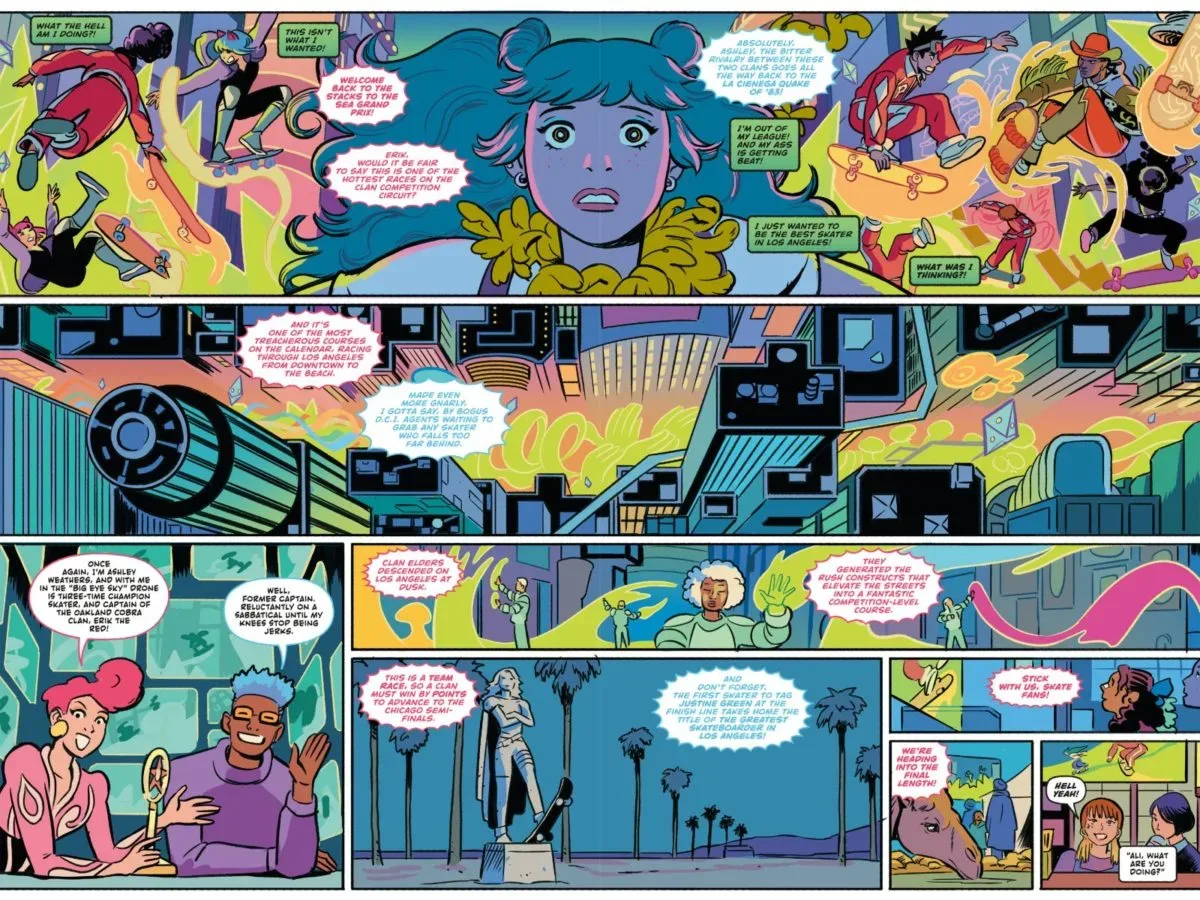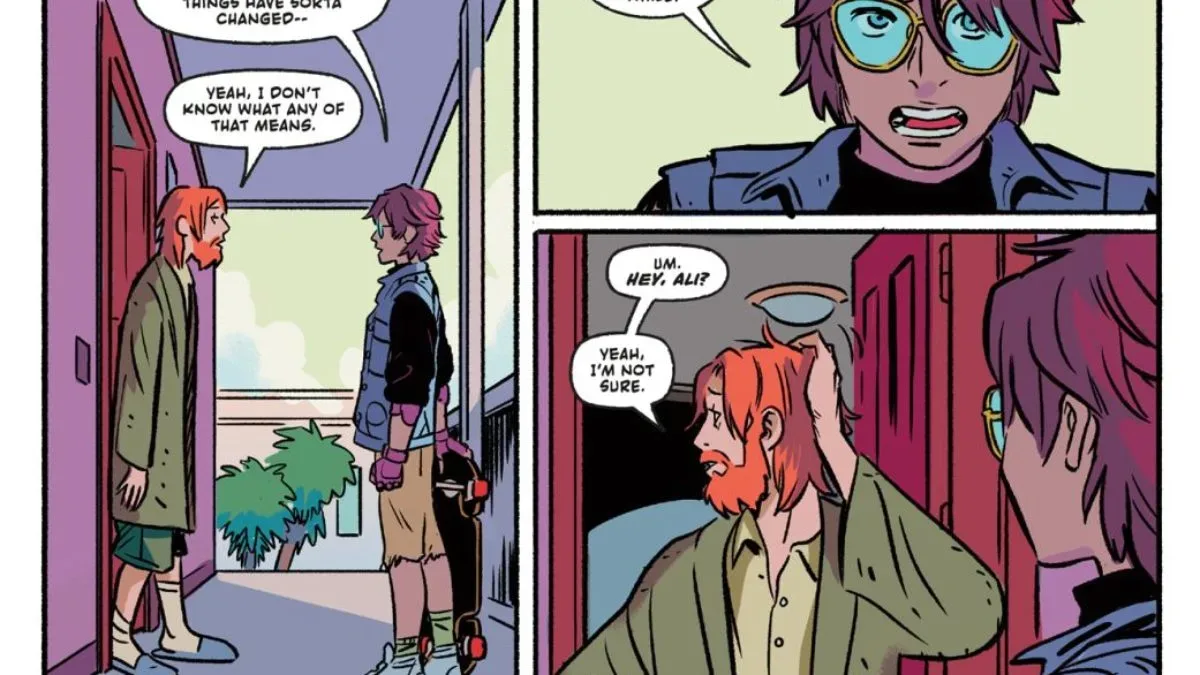
Skate Ali #5 is positioned as the final lap for Dark Horse Comics’ sci-fi skatepunk series. On sale November 11, 2026, the 32-page issue brings Ali’s clash with Playa into a citywide, magic-powered race across Los Angeles—one watched by millions and carrying the kind of stakes that go beyond a simple contest.
The immediate prize is the title of Los Angeles’ greatest skater. The larger conflict, however, rests on what Ali is willing to sacrifice for it. A crash during the race leaves her facing a choice between pursuing individual glory and standing with her clan. That framing gives the finale a clearly personal pressure point: speed, skill and spectacle matter, but so do friendship and collective responsibility.
A finale built around an impossible race
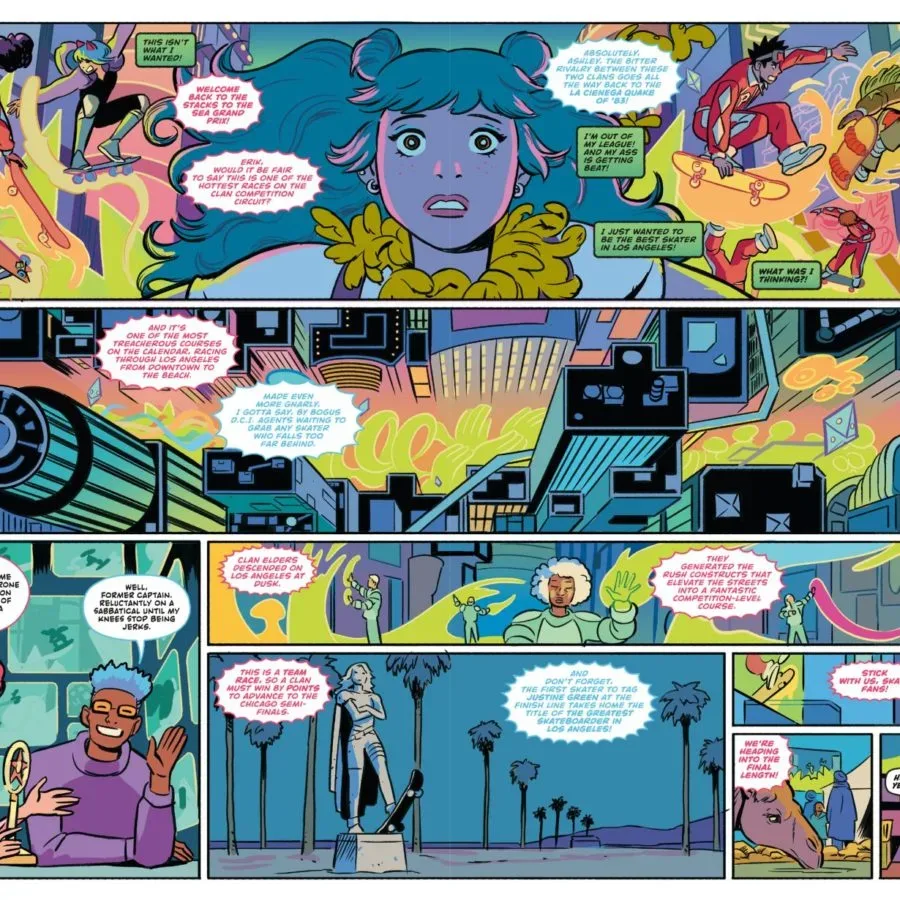
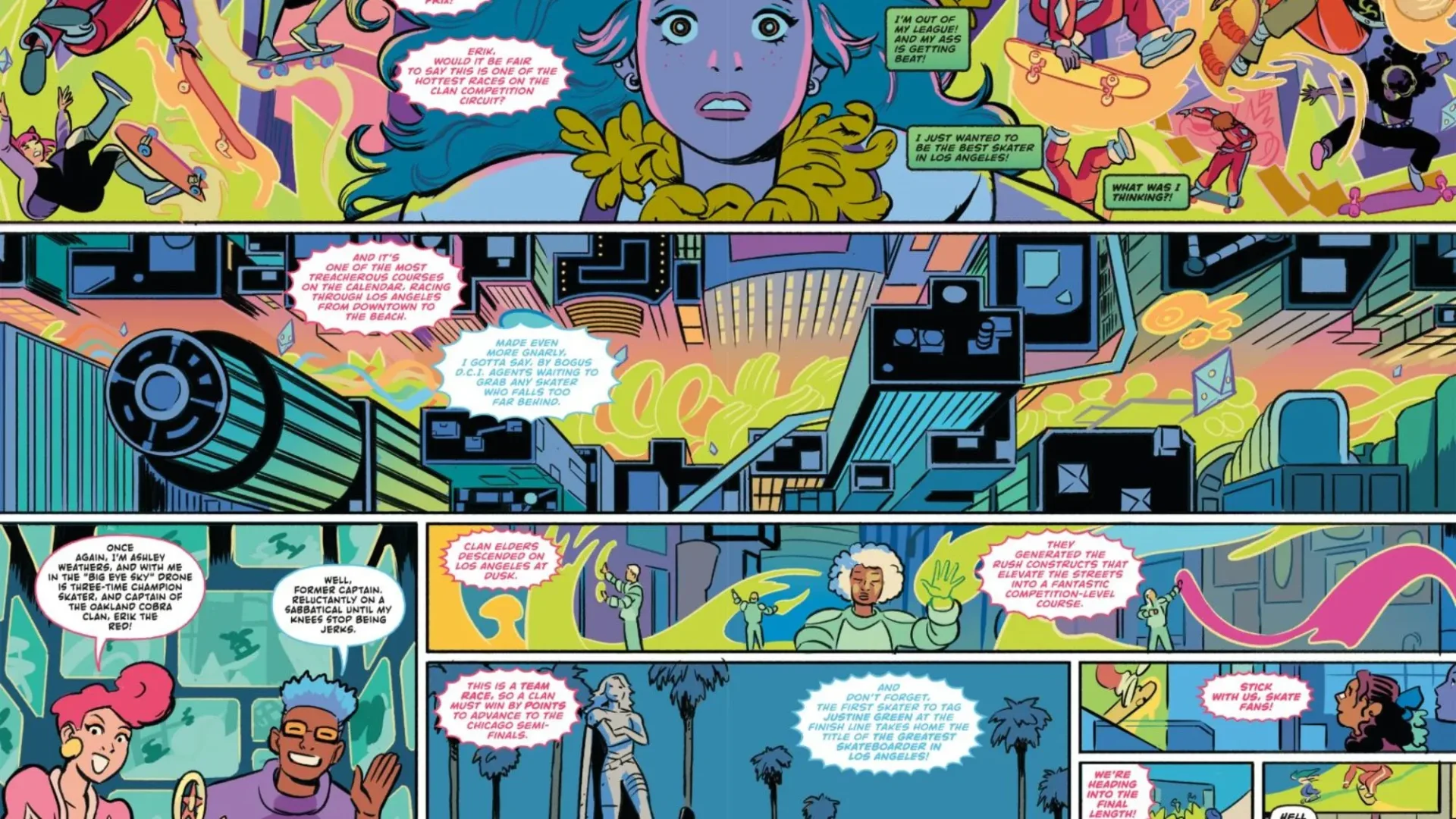
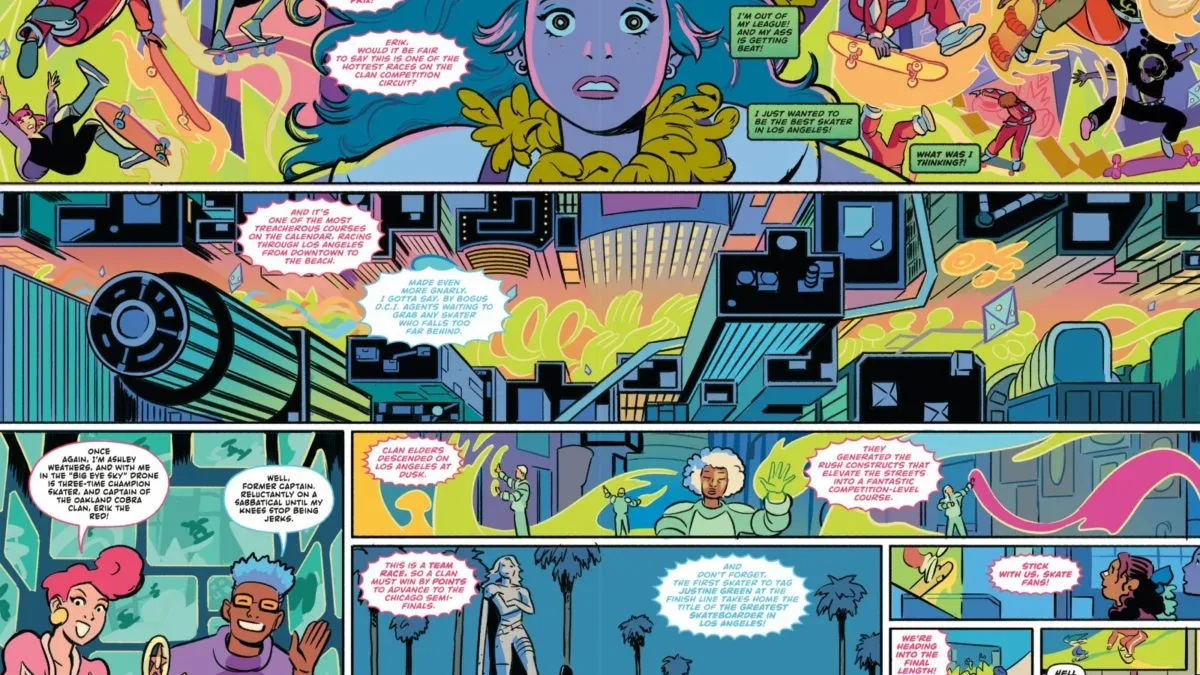
The decisive race against Playa is described as a team event, not merely a one-on-one skate contest. Its route tears through Los Angeles streets and landmarks, while magical forces turn the city into an obstacle course. In practical story terms, that means the setting is not just a backdrop. The urban environment becomes part of the challenge, with the competitors navigating hazards as well as each other.
The race is also livestreamed to a global audience. That detail raises the pressure on Ali in two directions. A private loss is one thing; failing or changing course in front of millions is another. At the same time, public attention makes the contest about more than the skaters involved. The outcome becomes a spectacle whose viewers can assign meaning to victory, defeat, risk and loyalty.
“Magic-fueled” is the key phrase defining the issue’s version of skateboarding action. Rather than presenting a grounded sporting event, the comic combines skating with fantastical systems and a heightened science-fiction setting. The result is a story that can treat a race as both physical movement through a real city and a genre-scale challenge designed to test its lead character.
What is at stake for Ali
Ali is driven to push harder than ever with L.A.’s top-skater bragging rights on the line. But the issue’s central crash interrupts the straightforward logic of competition. Instead of asking only whether she can beat Playa, the finale asks what a win means if it comes at the expense of her people.
That is a familiar but effective pressure structure for a series finale. Personal ambition and group loyalty do not necessarily have to be enemies, yet a crisis can make them feel incompatible. The premise does not reveal exactly how Ali responds, and readers should not assume the outcome from the setup alone. What is clear is that the issue treats the decision as consequential, not as a minor detour on the way to a race result.
The series has been presented as a story about friendship, rebellion and finding one’s own line when the world pushes back. In skating language, a “line” is a planned or improvised sequence of moves and routes. Used here as a thematic idea, it suggests an individual path through pressure rather than only a technical run. The finale appears set to bring that idea into focus: Ali has to determine which path is truly hers when the crowd, the competition and her clan’s needs all pull in different directions.
The creative team behind the final issue
Skate Ali #5 is credited to writers Kelly Sue DeConnick and Sam Humphries, artist Natacha Bustos and Josh Reed, with a cover by Bustos. DeConnick’s listed work includes Bitch Planet and FML; Humphries is associated with Harley Quinn and Guardians of the Galaxy; and Bustos’ previous credits include Moon Girl and Miles Morales.
Those credits establish a creative team with experience across creator-owned comics and major superhero characters, while Skate Ali itself takes a different blend of ingredients: street-level motion, Los Angeles landmarks, magic, futuristic genre energy and a rivalry that resolves in a public race. Bustos also handling the cover provides a direct visual link between the issue’s interior artistic voice and its final-issue presentation.
The comic is rated for readers ages 9 and up, which suggests the issue’s high-risk race is being framed for a broad readership even as its conflict deals with difficult choices. It is priced at $4.99 and carries the identifier 76156801589800511.
Why the skatepunk angle matters
“Skatepunk” is best understood here as a stylistic blend rather than a rigid genre label. It joins the kinetic, youth-driven identity of skating with an attitude of defiance and resistance. The supplied description explicitly places rebellion alongside friendship and self-definition, so the term is doing thematic work as well as describing the comic’s visuals and movement.
Putting that sensibility in a fantastical L.A. race creates a useful contrast. The story has a gigantic audience, a city-spanning course and magic-backed hazards, but its core dilemma remains close to the ground: whether a person reaches for recognition or protects a community. That difference in scale is likely central to the finale’s appeal. The obstacle course may be enormous, yet the question is intimate.
It also places the comic near games and competitive media without turning it into either. The race has an audience, competitors, a visible objective and escalating dangers—elements that will be familiar to readers who follow esports, sports broadcasts or game tournaments. But its dramatic function is character-driven. Winning matters because of what it asks Ali to compromise, not solely because a leaderboard needs a name at the top.
For readers interested in stories where competition becomes a vehicle for identity and community, the issue’s premise has a timely parallel with the broader culture around televised and streamed contests. Even gaming’s awards calendar, such as the upcoming Golden Joystick Awards 2026, demonstrates how public attention can turn creative and competitive spaces into collective events. Skate Ali #5 takes that idea into fiction and increases the stakes with a magical race through a major city.
Release details
- Title: Skate Ali #5
- Publisher: Dark Horse Comics
- On sale: November 11, 2026
- Format: 32 pages
- Price: $4.99
- Age rating: 9 and up
- Writers: Kelly Sue DeConnick and Sam Humphries
- Artist: Natacha Bustos
- Additional credit: Josh Reed
- Cover artist: Natacha Bustos
As a series finale, Skate Ali #5 has a specific job: resolve the Playa conflict while paying off Ali’s larger struggle between self-advancement and commitment to her clan. The citywide race provides the action framework, but the crash and subsequent choice are where the issue’s emotional stakes appear to reside.