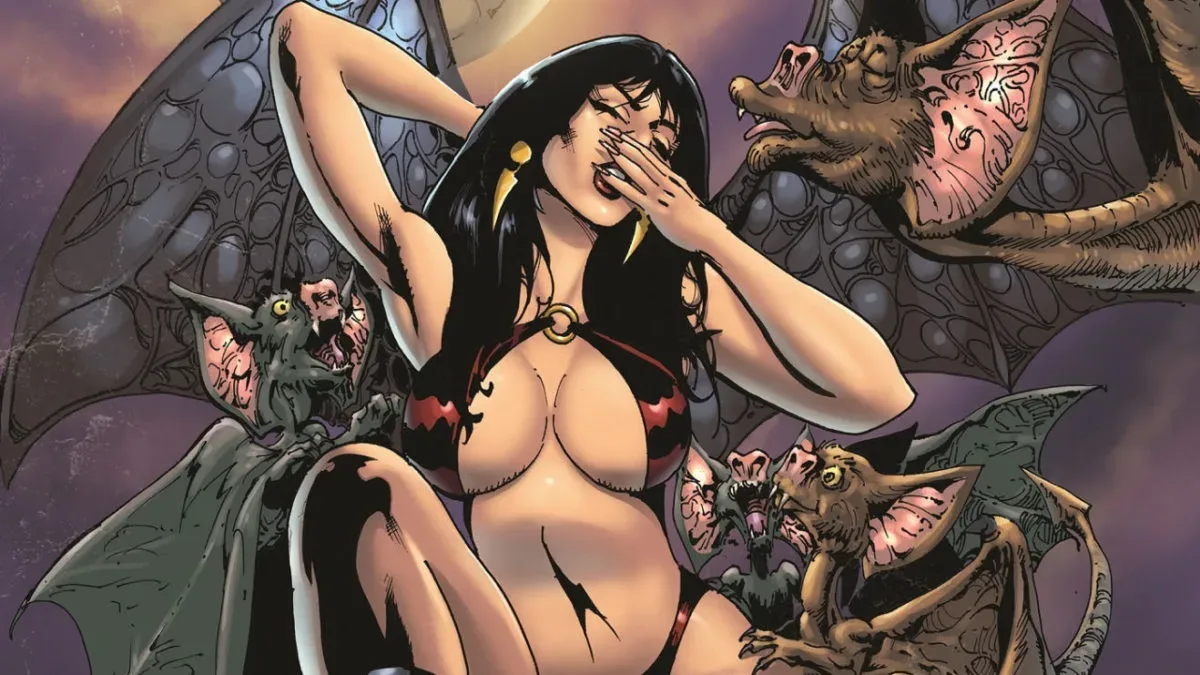
Pathfinder/Vampirella: Blade of Darkness #1 begins a four-issue crossover that brings Vampirella into Golarion, the sword-and-sorcery setting of Pathfinder. Its inciting complication is direct: vampire lord Zaloch intends to summon a demon that can give his vampire forces an advantage, but the ritual produces Vampirella instead.
That mismatch gives the miniseries an immediately useful story engine. Zaloch has prepared for a supernatural weapon or ally under his control; Vampirella is neither. Her unexpected arrival turns a calculated magical plan into an unpredictable confrontation, while the presence of monster hunters and the established heroes Kyra and Merisiel expands the conflict beyond the summoner and his accidental guest.
The first issue is scheduled for comic shops on October 28, 2026. Dynamite Entertainment lists Erik Burnham as writer, Federico Dallocchio as artist, and Steven Cummings as cover artist. The standard issue carries a $4.99 suggested retail price, with Andrew Huerta and Wayne Reynolds cover variants also listed at $4.99, plus a Blank Authentix cover.
A summoning mistake sets the crossover in motion
The solicitation frames Zaloch’s objective as a search for greater power against those who would destroy vampires. A summoning ritual is magic intended to call a creature or force to a chosen place; in this case, the important narrative twist is that the result does not match the caster’s intention. Rather than receiving the raging demon he expected, Zaloch draws Vampirella into his world.
That is more than a convenient portal between properties. It establishes a clash of expectations. Zaloch apparently sees the ritual as a means of strengthening an army. Vampirella’s appearance disrupts that plan before its benefits can be secured, placing a vampire lord, an outsider pulled across worlds, and local defenders on intersecting paths.
The series is described as involving chaos, dark magic and a life-or-death battle. Those terms describe the stakes but leave several specifics open: the available material does not establish Vampirella’s goals in Golarion, whether Zaloch can repeat or reverse his spell, or how long she may remain there. Those unanswered questions are likely central to the opening chapter’s job of setting the crossover’s rules.
Why Golarion matters to the premise
Golarion is presented here as a setting where adventurers take risks, monsters may be found in every shadow, and powerful figures pursue still more power. In practical story terms, that makes it a natural arena for a vampire-focused threat. Zaloch’s ambition is not happening in isolation: monster hunters are already active, and figures described as legendary heroes are part of the developing situation.
Vampirella therefore arrives in a world that is already prepared to recognize supernatural danger, but not necessarily prepared to understand her. A crossover works best when its central visitor is not simply dropped into a neutral backdrop. The available setup instead places her in the middle of an active magical crisis with people who have their own knowledge, priorities and reasons to oppose vampire power.
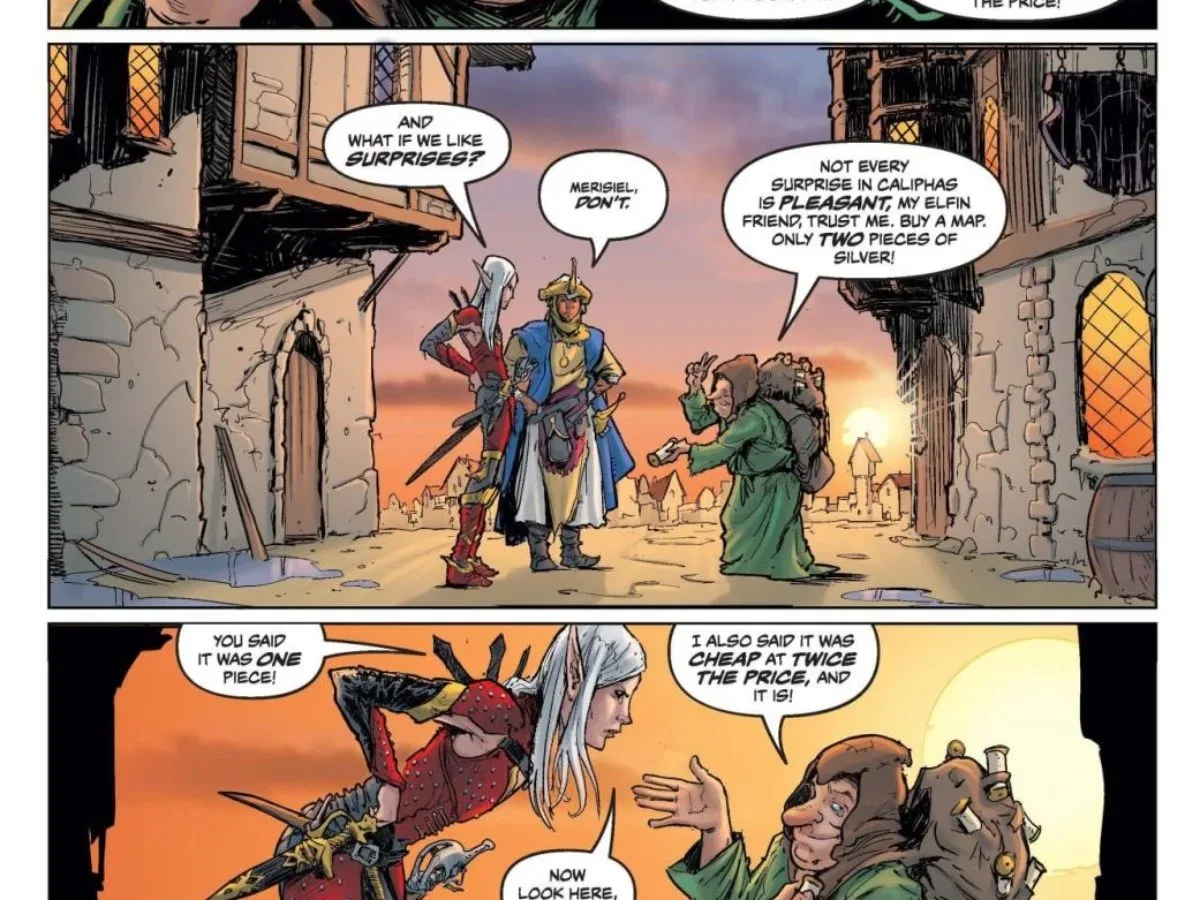
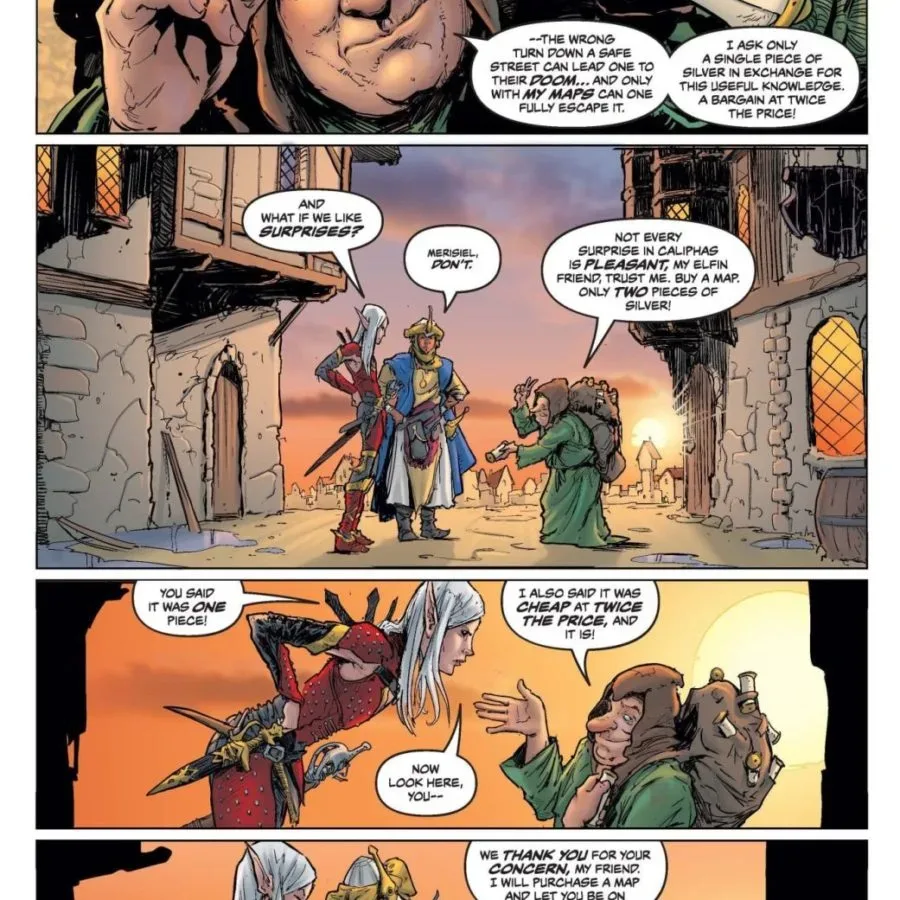
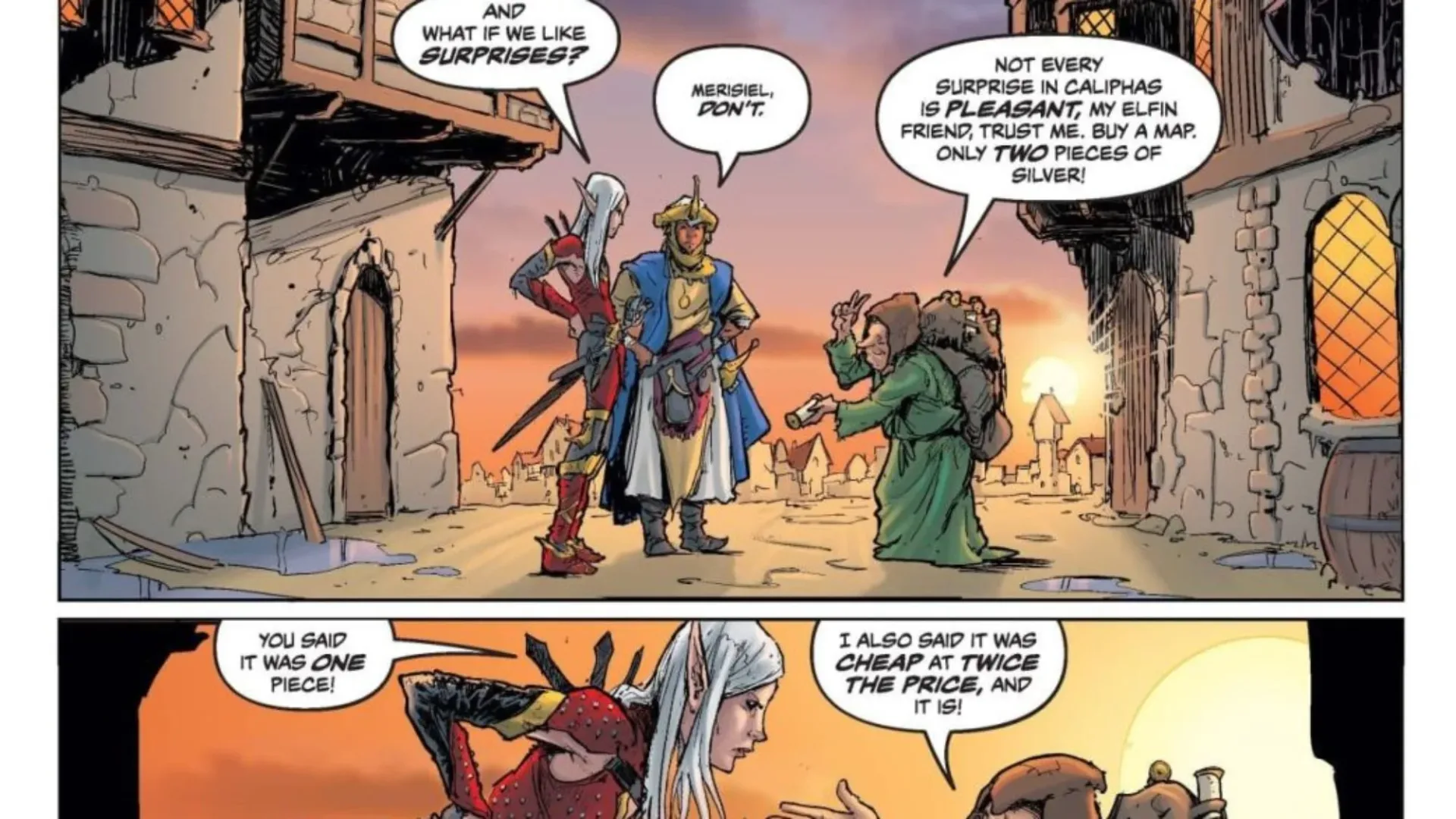
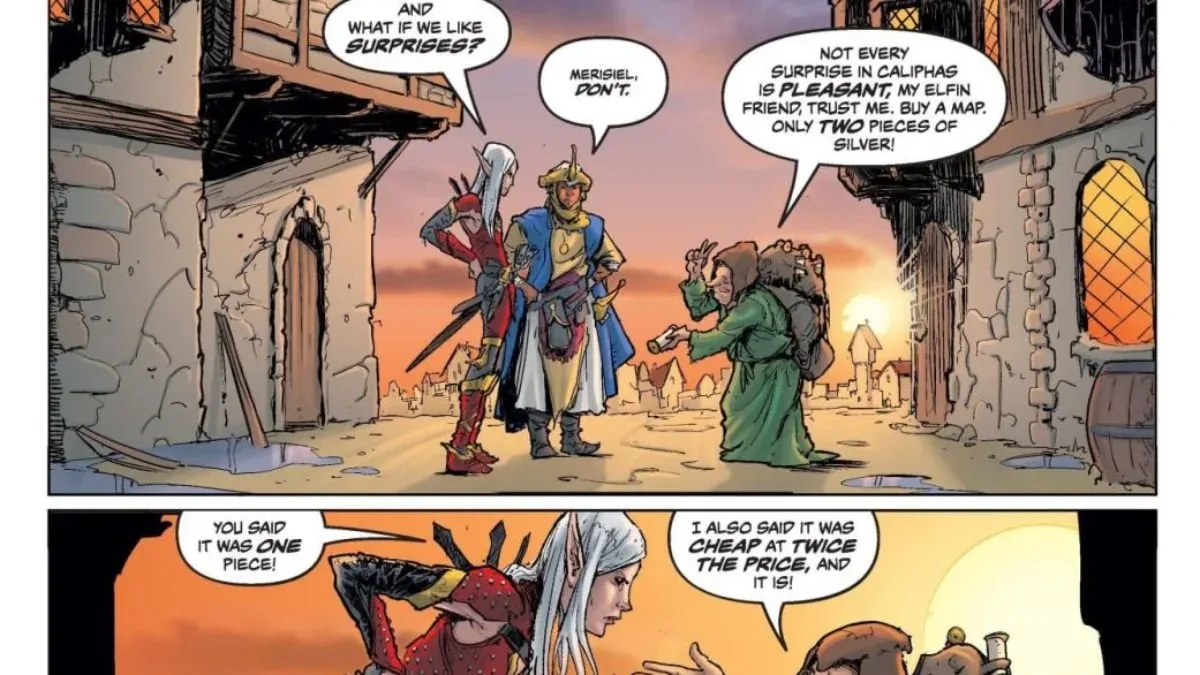
The preview material also points to Caliphas, a city described through the idea that evil can conceal itself behind civilization’s mask. That detail potentially adds a different texture to the expected monster conflict. The danger is not limited to a distant lair or an obvious battlefield; the story may also explore a place where appearances, status and hidden predation matter.
Kyra and Merisiel join the pressure around Vampirella
Kyra and Merisiel are specifically named among the heroes entering the story, while monster hunters are also said to arrive. Their involvement means the book is not constructed solely as Vampirella versus Zaloch. It has room for uneasy assumptions, competing approaches and the problem of identifying who is actually responsible for the threat after a vampire lord’s spell unleashes an unexpected figure.
The solicitation does not explain how Kyra, Merisiel or the hunters first encounter Vampirella, nor does it identify every character on the opposing side. That restraint is worth preserving. What is clear is that the series positions recognizable Pathfinder heroes as meaningful participants rather than treating Golarion as scenery for a standalone Vampirella adventure.
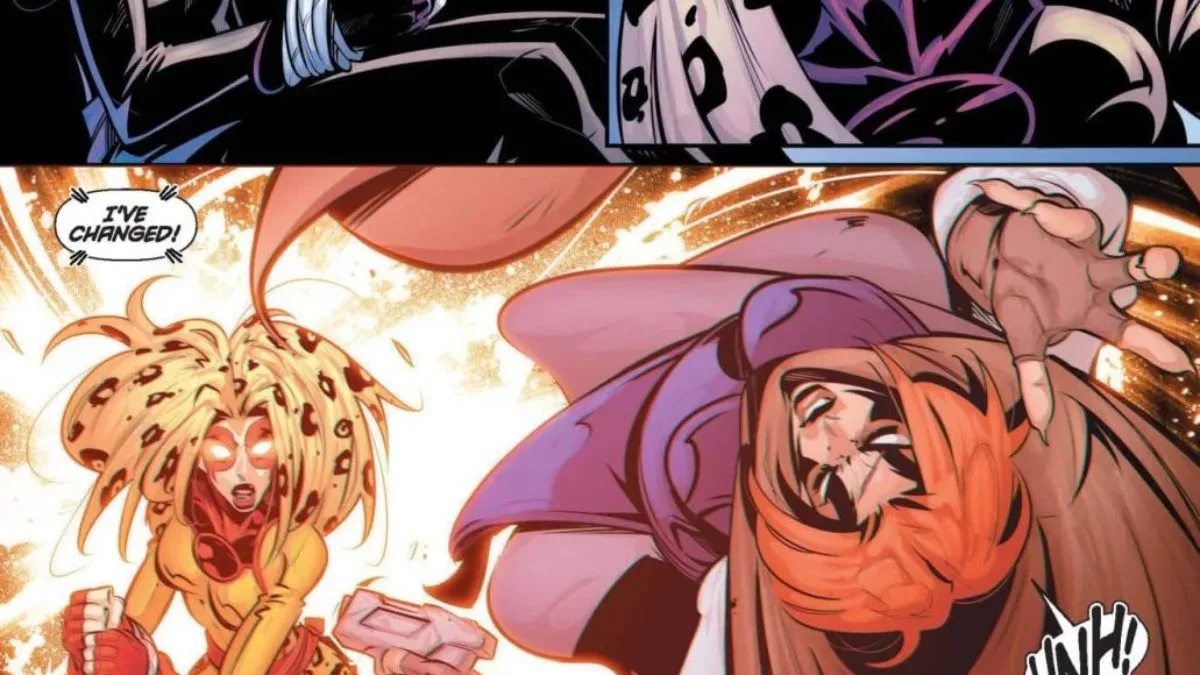
For readers interested in comics built around genre characters dropped into a hunt-driven setting, there is a related tale in ThunderCats: Cheetara #2’s jungle pursuit for the Book of Omens. The stories are separate, but both premises put a known hero under pressure from a larger pursuit and a dangerous objective.
What readers can expect from issue #1
As the opening of a four-part miniseries, Blade of Darkness #1 has a clearly signposted foundation to build: a failed ritual, an antagonistic vampire lord, a displaced protagonist, and local heroes drawn toward the fallout. The first installment will need to establish why Zaloch’s desired demon would have altered the balance against his enemies, what makes Vampirella such a disruptive alternative, and why the situation becomes a crisis requiring multiple defenders.
The phrase crossover miniseries means a limited comic run that combines characters or settings that are ordinarily distinct. “Limited” here is concrete: the story is planned for four issues rather than an ongoing open-ended title. That can make the premise approachable for readers who want a self-contained event, while giving the creative team a defined span in which to develop the magical accident and its consequences.
It also places a premium on momentum. Zaloch’s failed ritual is a strong opening hook because it creates a problem at the same instant it introduces Vampirella to Pathfinder territory. With hunters, Kyra and Merisiel in play, the series can move quickly from surprise to confrontation without requiring the premise to wait for a distant villain reveal.
Creative team and cover options
Burnham and Dallocchio are the credited writer-and-artist team for the debut. Cummings is credited for the main cover. In addition to the standard listing, Huerta and Reynolds covers are listed as separate $4.99 variants. A Blank Authentix cover is also included in the published item information at the same price point.
Variant covers give readers and retailers alternate cover-art choices for the same issue; they do not indicate separate chapters or different versions of the story. The Blank Authentix option is likewise listed as a cover format, not as a different narrative edition. Readers seeking the four-part story can choose based on their preferred cover availability.
With a vampire lord’s plan derailed before it begins, Pathfinder/Vampirella: Blade of Darkness #1 promises a crossover driven by an error with immediate consequences. Vampirella’s arrival in Golarion is not presented as a sightseeing detour. It is the complication that threatens Zaloch’s plan, draws monster hunters into the danger and brings Kyra and Merisiel into a dark-magic conflict that will unfold across four issues.