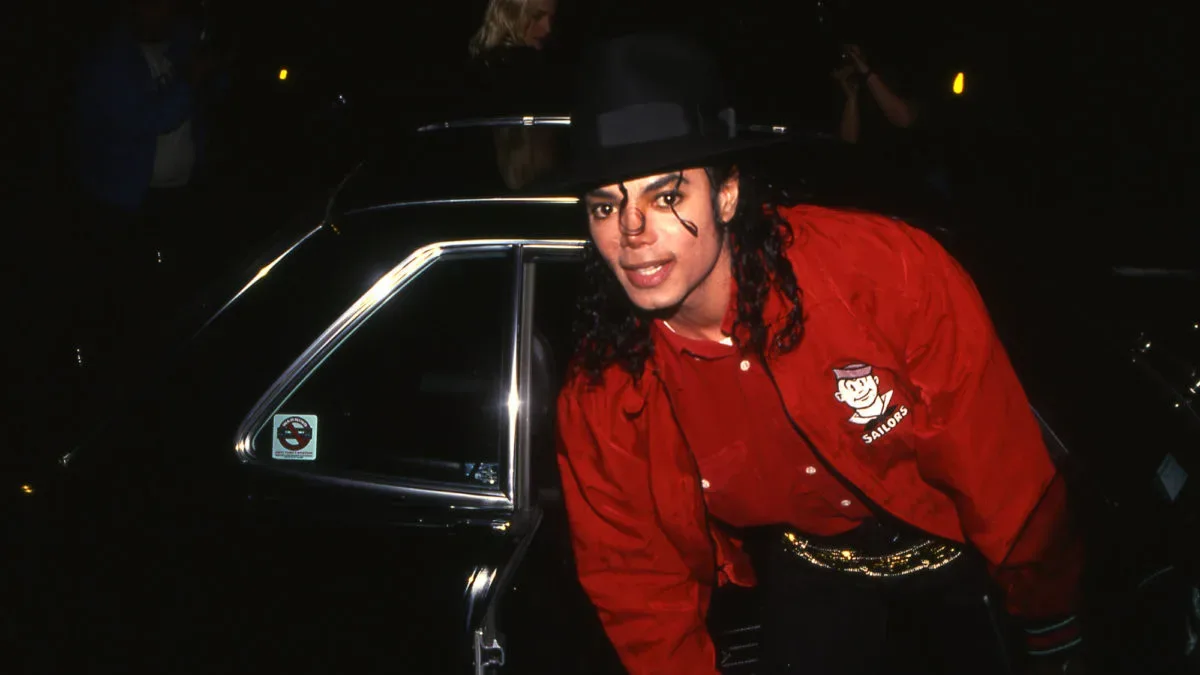
A potentially extraordinary piece of pop-comics history never made it to a spinner rack: a Marvel comic built around Michael Jackson, developed in 1983 with Christopher Priest writing and Michael Golden slated to draw. It did not become a published Marvel project, but Priest’s recollection describes a proposal that progressed beyond a stray idea. Conversations took place with Jackson’s representatives, Golden was attached, and Priest had begun a script before the effort lost momentum within Marvel.
The project sits at a fascinating intersection of celebrity licensing, comics craft and timing. Jackson’s Thriller era was gaining force in 1983, while Marvel had recently put out a comic connected to KISS. Priest, working at Marvel at the time under the name Jim Owsley, saw a direct opportunity: if a major music act could support a comic-book tie-in, Jackson looked like a natural next candidate.
What Priest says was in motion
Priest has said he was a fan of both KISS and Jackson, and that the KISS comic supplied the immediate creative-business precedent for pursuing a Jackson project. Rather than merely imagining the crossover, he contacted Jackson’s representatives. Priest recalls a positive response from that side and says Jackson himself was a real Marvel reader who would have welcomed the concept.
Most importantly, the proposed book had a notable creative pairing. Priest started work on the script, while Michael Golden was lined up as artist. Golden’s cited work includes Micronauts and The ’Nam; he is also credited as a co-creator of Rogue and Bucky O’Hare. That combination makes the lost comic more than an amusing alternate-history footnote. It was, at least in development terms, an attempt to assign a celebrity property to creators with recognizable comics credentials.
That distinction matters. A licensing idea can exist as an informal wish, a preliminary conversation, or a project sufficiently active that creators are selected and pages or scripts begin. Priest’s account places the Jackson comic in the latter territory. Yet the available details do not establish that completed pages, a final approved script, a solicitation, or a release date existed. The careful description is therefore an unpublished, in-development Marvel proposal, not a cancelled comic known to have reached production or distribution.
Where the proposal appears to have stopped
According to Priest, the pitch eventually reached Marvel editor-in-chief Jim Shooter and was passed to editor Tom DeFalco. Priest remembers the idea then being absorbed by Marvel’s internal process and fading away. He has expressed lasting surprise that it did not happen, particularly given his view that Jackson was genuinely enthusiastic about Marvel comics.
The account does not specify a single formal rejection, a rights dispute, a financial disagreement, or a creative conflict. That absence is important. It would be easy to turn a project with a famous star and several famous comics figures into a neat story about one executive decision or one lost business deal. The supported version is less dramatic but more useful: a promising proposal reached senior editorial attention and did not survive the publisher’s development process.
“The Marvel machine” is an informal way of describing that process: projects may be considered by different editorial and business stakeholders, shifted between people, delayed, changed, or simply cease advancing without a public cancellation. In this case, Priest’s memory suggests a handoff rather than a clearly documented endpoint. It explains why no Marvel Michael Jackson comic emerged, but it does not tell us exactly why.
Why a KISS comic made the idea plausible
The KISS comparison was not a claim that every music celebrity should receive a comic. It was a proof of concept. A celebrity tie-in comic uses a performer’s public identity as the center of a licensed work, ideally giving existing fans a different format in which to engage with that identity. For a publisher, the potential appeal is obvious: comics readers may be curious about the celebrity, while the celebrity’s audience may be brought toward comics.
Jackson was an especially striking prospect in that model during 1983. The premise was not simply a cameo in an established superhero title, but a comic conceived around him. Priest’s recollection that Jackson loved Marvel is also significant because it suggests that the prospective licensee may have had personal interest in the medium rather than treating comics only as another promotional channel.
Still, celebrity comics are not automatically straightforward. They require agreement over name and likeness, the tone and subject of the story, creator assignments and editorial direction. A publisher can see commercial promise while still failing to bring all of those moving parts to a finished book. Priest’s story is a reminder that a project can look remarkably viable from the outside—even with interested representatives, a writer working on a script and a high-profile artist attached—without becoming a publication.
The creative team makes the absence more intriguing
Priest’s eventual reputation as a writer makes his early involvement especially notable, but the project belongs to a particular moment before that later body of work. In 1983, he was at Marvel as editor Jim Owsley. His pursuit of the license appears to have begun from a fan’s practical observation: Marvel had a recent music-related comic, Jackson was huge, and the two seemed compatible.
Golden’s attachment gives the project a similarly specific visual identity, even though there is no supplied evidence of surviving finished art. Readers should not assume that a published-looking cover, interior sequence, synopsis, or design package exists just because an artist was selected. What can be said is that Marvel had identified Golden as the artist for the proposed book. In an industry full of hypothetical matchups, that is substantial enough to make collectors and comics historians wonder what kind of work the team might have produced.
The story also demonstrates why unpublished projects deserve precise language. “Never happened” accurately captures the result for readers: there was no Marvel Michael Jackson comic to buy. But it can hide the development work that did happen. There was outreach, apparent interest from Jackson’s side, a writer beginning a script and an artist attached. Those steps are the difference between trivia and a meaningful lost project.
Jackson did reach comics, just not through this Marvel plan
The unmade Marvel project was not Jackson’s only relationship with comics. He later appeared in official comics connected to Captain EO and Moonwalker, though those were published elsewhere. That history makes the 1983 proposal feel less like an impossible notion and more like a path that simply did not reach its intended publisher.
There is also a smaller Marvel-adjacent wrinkle. Jackson appeared in Longshot in 1985—or, more cautiously, a character named “Jackson” did. The available information does not establish that this was an official Michael Jackson appearance. It is better viewed as a curious connection than evidence that the abandoned project was revived in altered form.
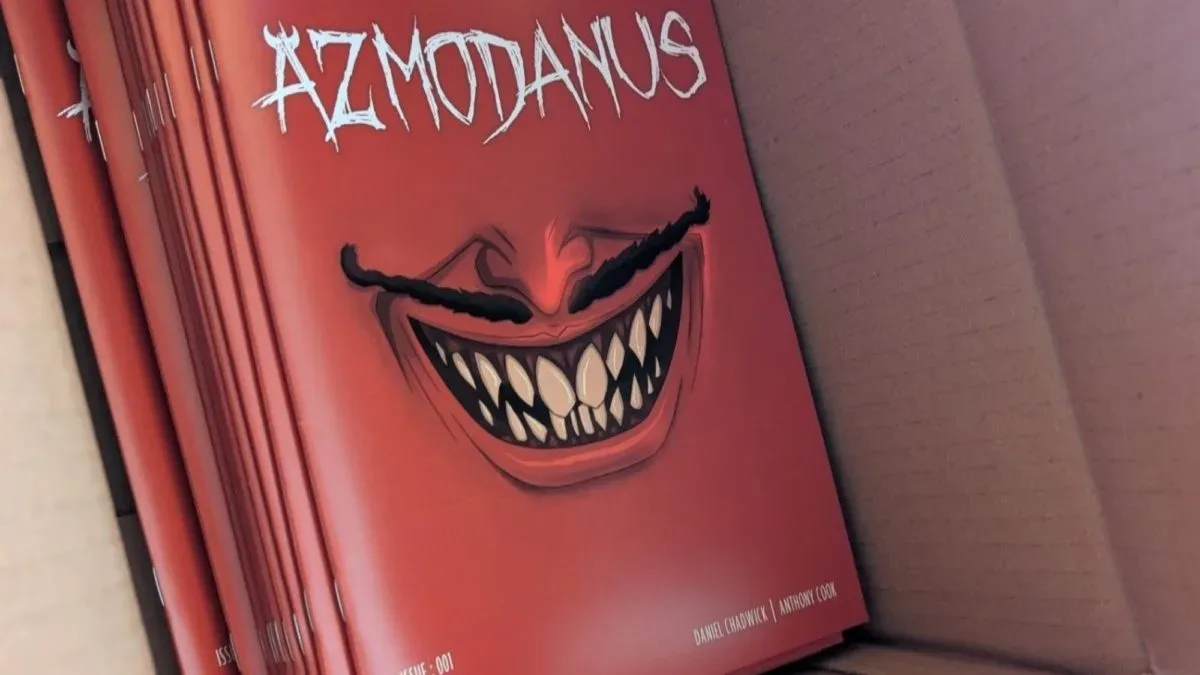
For readers interested in how comics creators continue to bring distinct new characters to print, see the recent Azmodanus debut at Thought Bubble.
What remains unknown
There is plenty that the current account does not answer. No story premise has been established. We do not know whether Jackson would have been portrayed in a fictional adventure, whether Marvel characters would have appeared, or whether the book would have been a one-shot, series, special publication or another format. There is also no confirmed issue number, cover, publication schedule, completed art or archival material described here.
Those unknowns should shape how the project is remembered. The tantalizing part is not a fully documented comic hidden in plain sight; it is the credible possibility of a major licensed Marvel book that came close enough to assemble Priest and Golden, then quietly disappeared before readers saw what it was meant to be. For comics history, that is still a substantial “what if”: Michael Jackson, at the height of a defining period, collaborating with Marvel in a book written by Christopher Priest and drawn by Michael Golden.