Christopher Priest’s contribution to DC/Marvel Superman Spider-Man #1 nearly did not happen. The writer has said that he initially declined the assignment, only agreeing after DC Comics editor-in-chief Marie Javins pushed back on that answer.
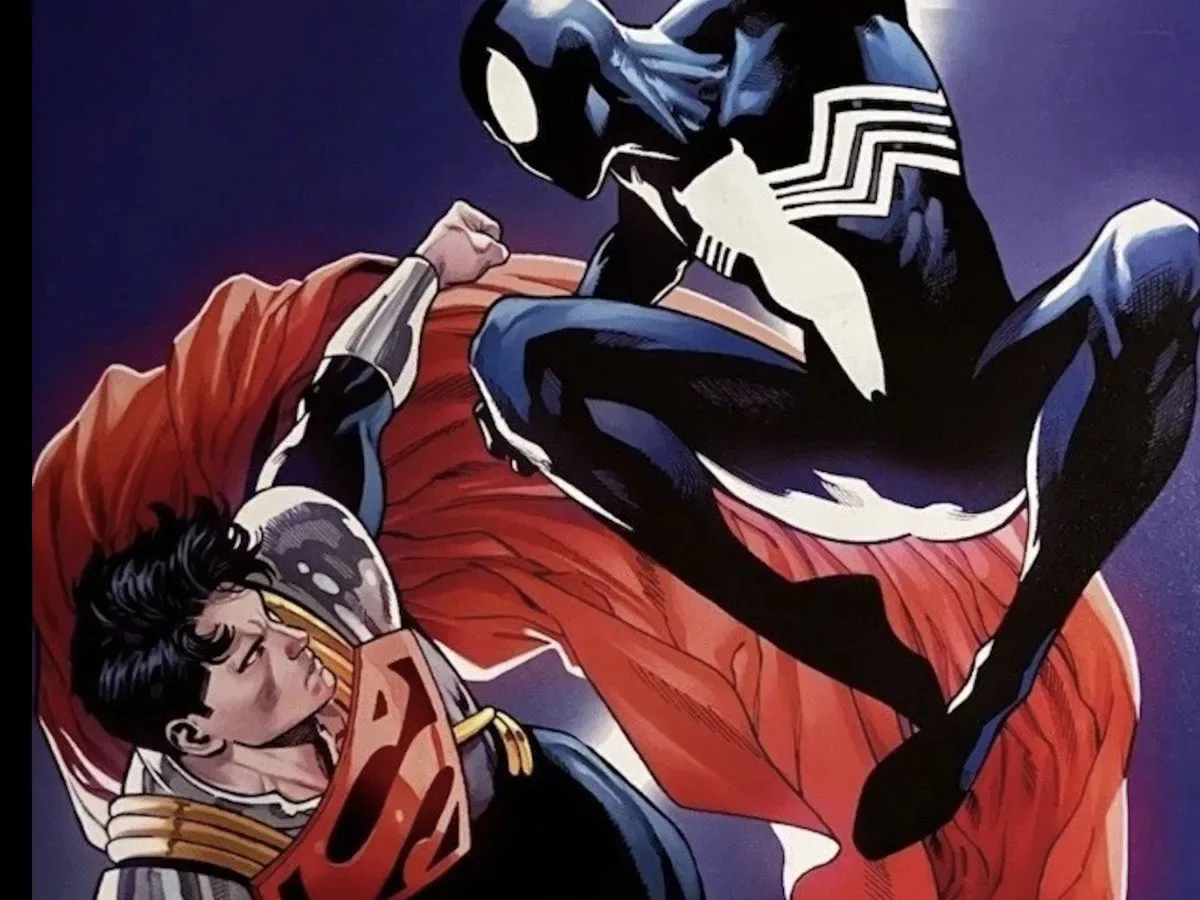
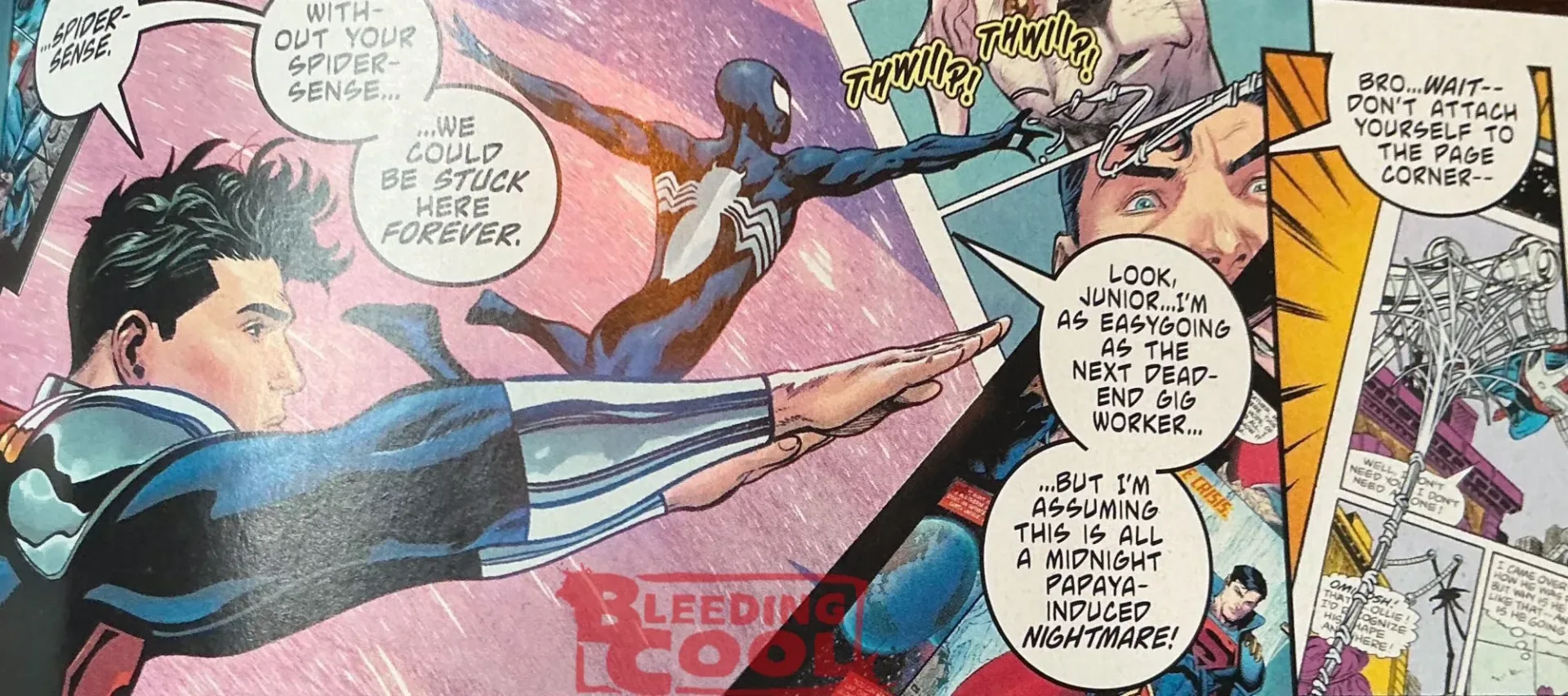
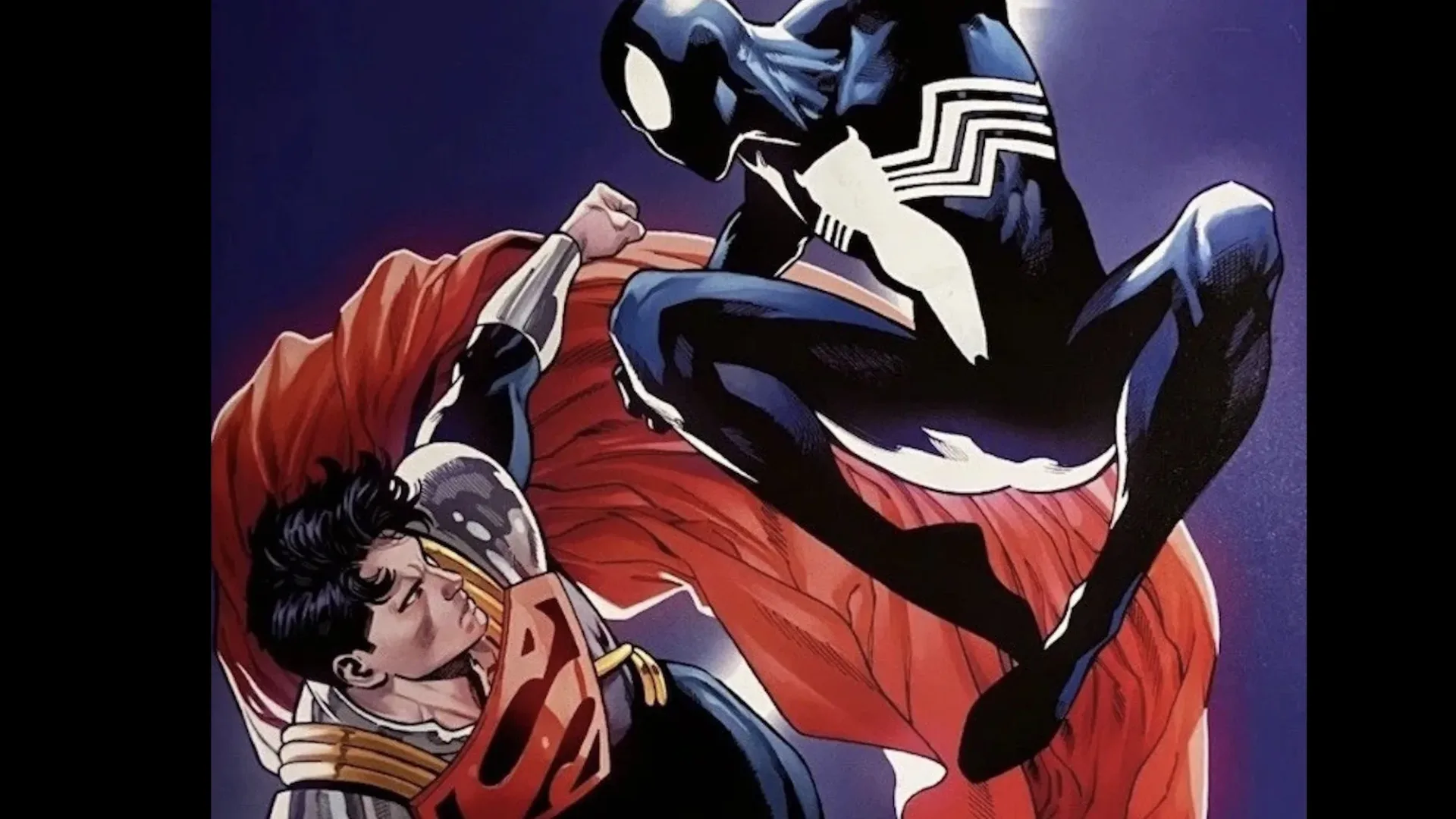
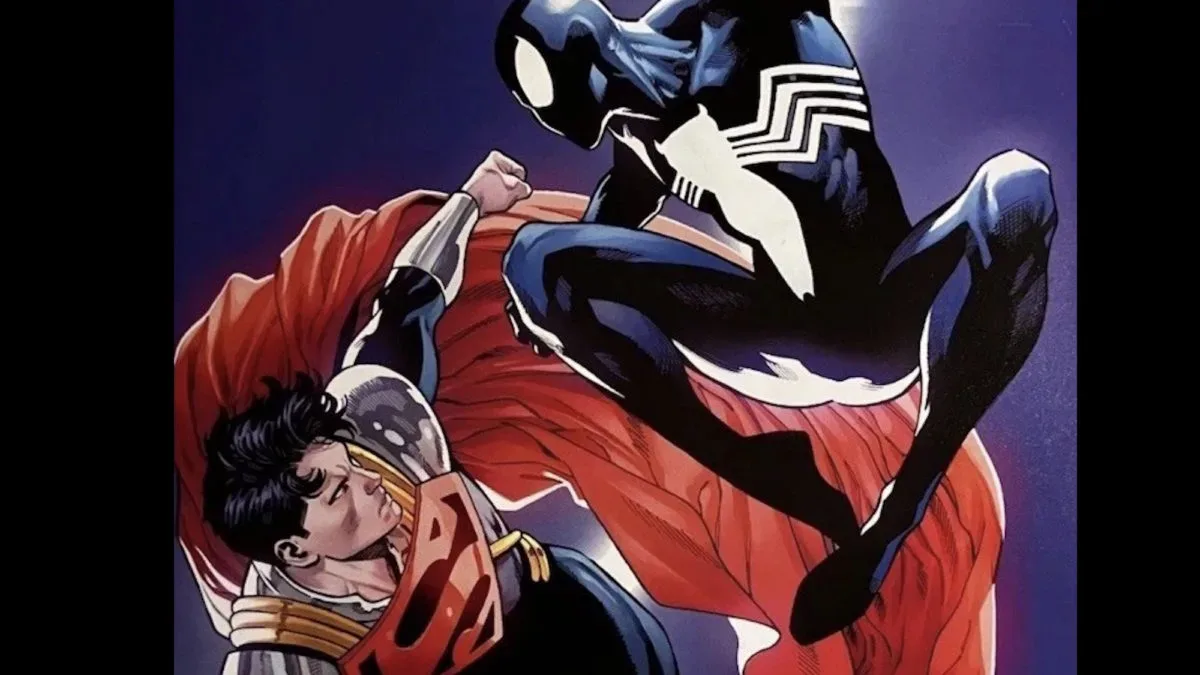
The eventual result, “Pages”, pairs Superboy-Prime with Spider-Man during the black-suit period. Daniel Sampere drew the story. Priest’s comments offer a useful look at the less visible challenge behind a major inter-company comic: a short story can be creatively demanding on its own, then become even more complicated when two publishers are reviewing the same work.
Why Priest’s Spider-Man story goes back to the black suit
Priest explained that he chose a Spider-Man era he knew from his own time editing the character. That familiarity mattered because Spider-Man has changed considerably across decades of comics. Rather than trying to write from a version of the character with which he felt less closely acquainted, Priest set the story at a point where he felt confident in Spider-Man’s voice and circumstances.
That decision is more meaningful than a visual callback to the black costume. In superhero comics, a character’s continuity is the accumulated set of story developments, relationships, roles, and status-quo changes associated with that character. A crossover adds another continuity question: not only does a writer need a usable version of one hero, but the story must also find a version that can plausibly meet a character from another publisher’s world.
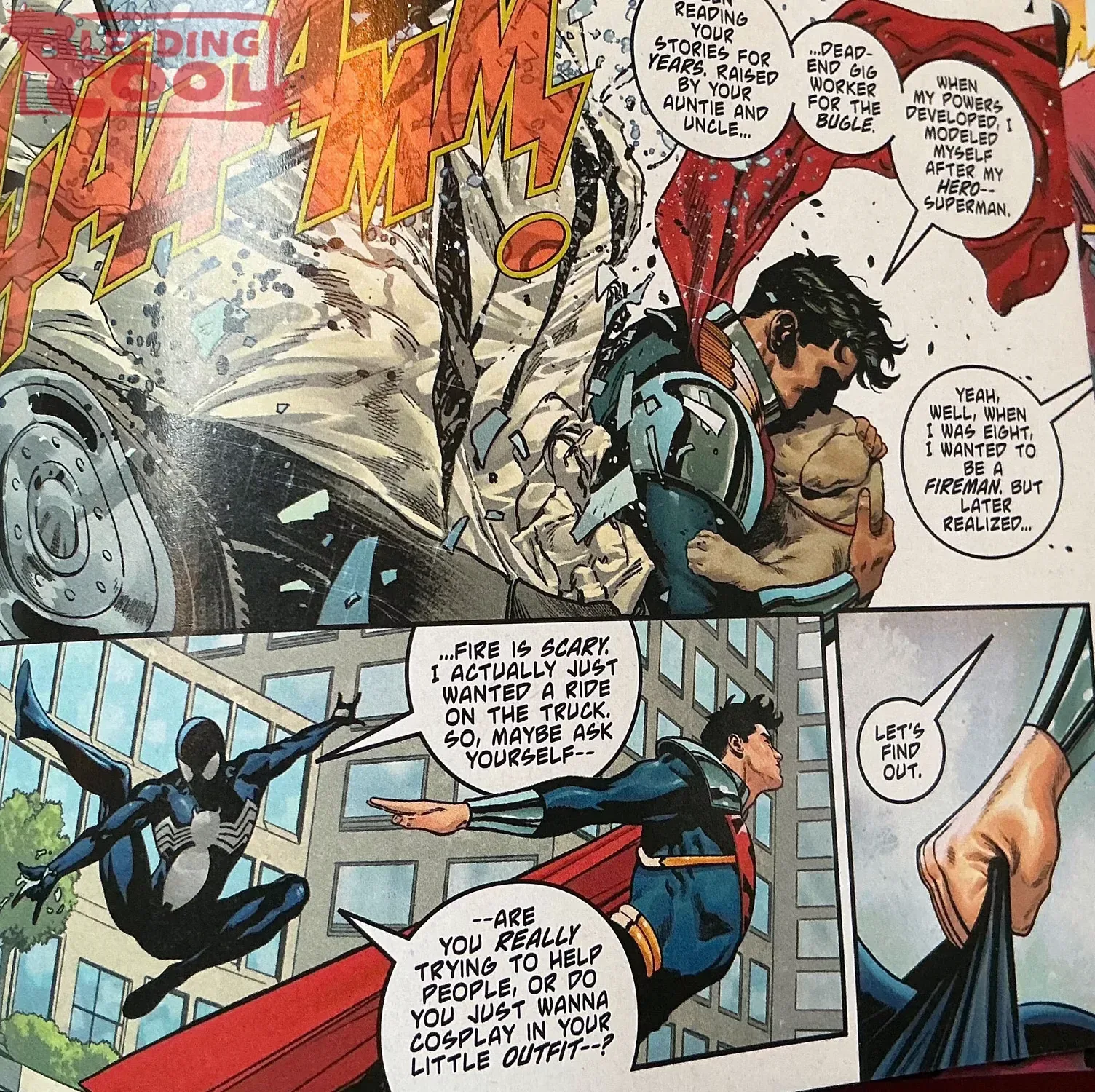
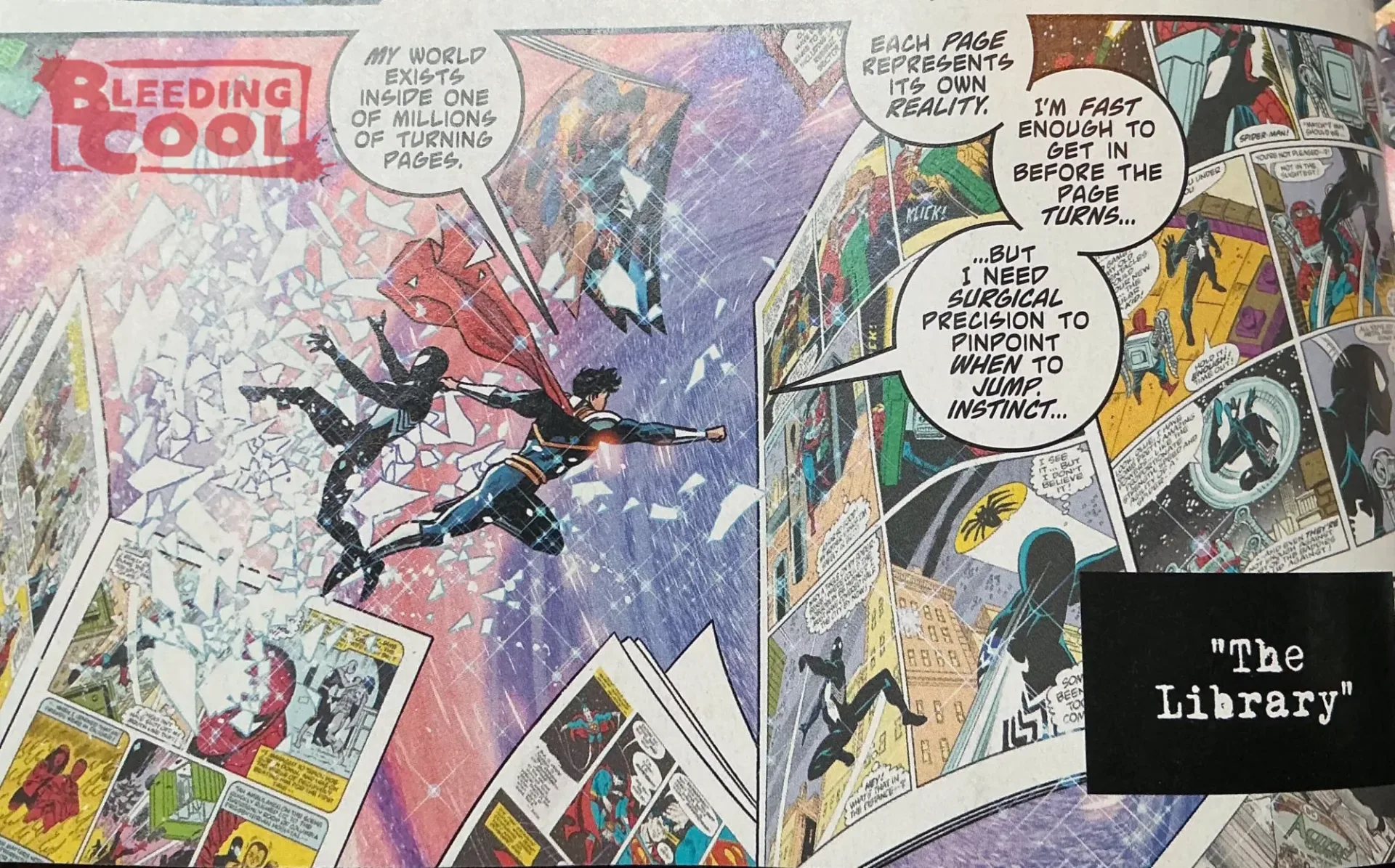
“Pages” uses Superboy-Prime, a character described in the issue’s material as someone who reads all the comics, to meet black-suit Spider-Man. That premise is openly meta. Meta, in this context, means the fiction is conscious of, or plays with, the medium and its own constructed history. A comic-reading character entering a crossover story is not merely another superhero encounter; it creates room to comment on superhero publication, fandom, and the weight of decades of stories.
Priest characterized the piece as a silly story and said his creative yardstick was, “What would Mark Waid do?” That remark fits an anthology designed around multiple distinct creative teams. A shared special can contain radically different tones, but each entry still needs to feel like part of the same occasion: a celebration of Superman, Spider-Man, and the unusual possibility of DC and Marvel characters sharing a page.
A refusal that did not stick
Priest said Javins specifically requested him for the crossover. His first response was no. He recalled Javins answering, “I don’t accept your no.” Her role in the exchange mattered to him personally: she had also been a Marvel editor when Priest worked as an editor there.
The anecdote is funny on its face, but Priest’s stated reasons for hesitating are practical. He said short stories are difficult because they require as much plotting as longer work. That can sound counterintuitive to readers who naturally associate length with effort. A shorter page count, however, does not reduce the need for a beginning, a turn, an ending, character motivation, visual staging, and a satisfying central idea. It reduces the space available to accomplish all of them.
A compact crossover also has unusually strict priorities. The premise has to establish why the characters meet, give both sides something to do, make the meeting feel special, and leave the reader with a complete experience before the page count runs out. If the story also incorporates a joke about comics themselves, it has to do so without becoming so insular that the emotional or narrative point disappears.
Priest’s assessment is a reminder that “short” is not a synonym for “simple.” A long serial has room for detours, supporting characters, and gradual changes in direction. An anthology entry has to make readers care quickly, select only the most important information, and land with enough force to stand beside several other high-profile stories.
Two publishers, more approvals
Priest also pointed to the approval process as part of the assignment’s difficulty. He said material had to go to Marvel for approval and return with notes, while multiple people weighed in. That is a routine implication of licensed or shared-property work, but crossovers make it especially visible.
An approval process is the review of story material by the companies that control the characters involved. Notes are requested changes, questions, or concerns raised during that review. They can address characterization, plot consequences, visual details, how a hero is portrayed, or how the story fits the project’s wider goals. Priest did not specify the content of any notes on “Pages,” so there is no basis to assume a particular disagreement. His point was broader: more stakeholders can mean more creative voices and more coordination.
That coordination is one reason a DC-Marvel crossover is different from simply putting two guest stars into a normal superhero issue. Both companies have interests in how their characters are presented. The collaboration has to preserve the appeal of the matchup while satisfying each side’s standards. It can be an opportunity for inventive combinations, but it also increases the number of decisions that must align.
Priest ultimately said the story turned out fine, despite not being thrilled about taking it on initially. His later gratitude toward Javins gives the account a satisfying reversal: the writer who did not want the job ended up pleased that he had been persuaded to accept it.
What is in DC/Marvel Superman Spider-Man #1
The $7.99 special, dated March 25, 2026, is structured as a package of eight new stories. Its main Superman-and-Spider-Man feature is by Mark Waid and Jorge Jimenez. In that story, Clark Kent and Peter Parker pursue the same investigation, with Brainiac and Doctor Octopus involved in the larger conspiracy.
The backup lineup makes clear why Priest’s story is one component of a broader event rather than a conventional single-plot crossover. Tom King and Jim Lee handle Lois Lane and Mary Jane Watson; Matt Fraction and Steve Lieber bring Jimmy Olsen together with Carnage; and Sean Murphy writes and draws a future-facing story involving Superboy of the Legion and Spider-Man 2099.
Other pairings include Gail Simone and Belen Ortega’s Power Girl and Punisher story, Greg Rucka and Nicola Scott’s Daily Planet-versus-Daily Bugle race, and Jeff Lemire and Rafa Sandoval’s story focused on Pa Kent and Uncle Ben. Priest and Sampere’s Superboy-Prime/black-suit Spider-Man entry sits among these deliberately varied combinations.
That anthology design is a smart fit for a crossover milestone. Readers get the central, classic matchup—Superman and Spider-Man—while the supporting stories explore different corners of both universes. Instead of asking one creative team to make every possible interaction work inside a single plot, the format allows several creators to build around sharply defined pairings and tones.
The issue is positioned as a celebration of 50 years of DC/Marvel crossovers. That framing helps explain why the book reaches beyond the obvious title characters. Clark and Peter are the marquee names, but Lois and Mary Jane, Jimmy and Carnage, and the newspaper rivalry between the Daily Planet and Daily Bugle all approach the crossover idea from different angles. Priest’s use of Superboy-Prime, meanwhile, puts the very act of reading comics near the center of the story.
Why “Pages” is a fitting crossover premise
Superboy-Prime is an especially useful character for a story built around comic-book self-awareness because the supplied description identifies him as someone who reads all the comics. Combined with Spider-Man immediately after acquiring the black suit, that gives “Pages” two kinds of distance from the present-day status quo: a character who is conscious of comics as comics, and a Spider-Man deliberately located in a past era.
That is not the same as saying the story needs encyclopedic continuity knowledge. The arrangement itself communicates the basic joke. A reader can understand the contrast between a comic-reading visitor and a hero at a well-known earlier point in his history, even if they do not know every intervening Spider-Man development.
Sampere’s role is significant too. In a short, concept-heavy piece, the art must rapidly establish period, personality, and the story’s meta premise without consuming pages with explanation. The available information does not detail the visual execution, so it would be unfair to judge it beyond the credited collaboration. Still, the pairing of a specific era of Spider-Man with a character defined here by his comic-reading creates a premise where clear visual storytelling is inherently valuable.
The contributor-copy surprise
Priest also described an unexpectedly tangible side of participating in the special. A truck arrived at his home carrying two large boxes of contributor copies—complimentary copies supplied to a creator involved in a publication. He said there were five copies of every cover and a great many covers overall, prompting him to jokingly tell Javins that he appeared to have received the entire print run.
He said he donated some of the copies and signed others. The episode underscored the scale of the project for him. A multi-cover comic can be a substantial physical object of promotion and collecting as well as a story on the page, and the contributor shipment made that fact impossible to miss.
It is also a reminder that a crossover special’s footprint extends beyond its script. Multiple creators, a large slate of covers, two corporate libraries of characters, and anniversary branding all make the issue a sizable production. For Priest, the boxes became a literal measure of the assignment he had almost turned down.
In the end, “Pages” represents both the fun and the friction of comic-book crossovers. It draws energy from an improbable character meeting and a knowingly meta setup. At the same time, Priest’s account makes clear that the finished novelty came through a process involving careful compression, approvals, notes, and a writer being firmly encouraged not to walk away from the job.
For more DC-related comics context, see this look at changes in DC Studios leadership.