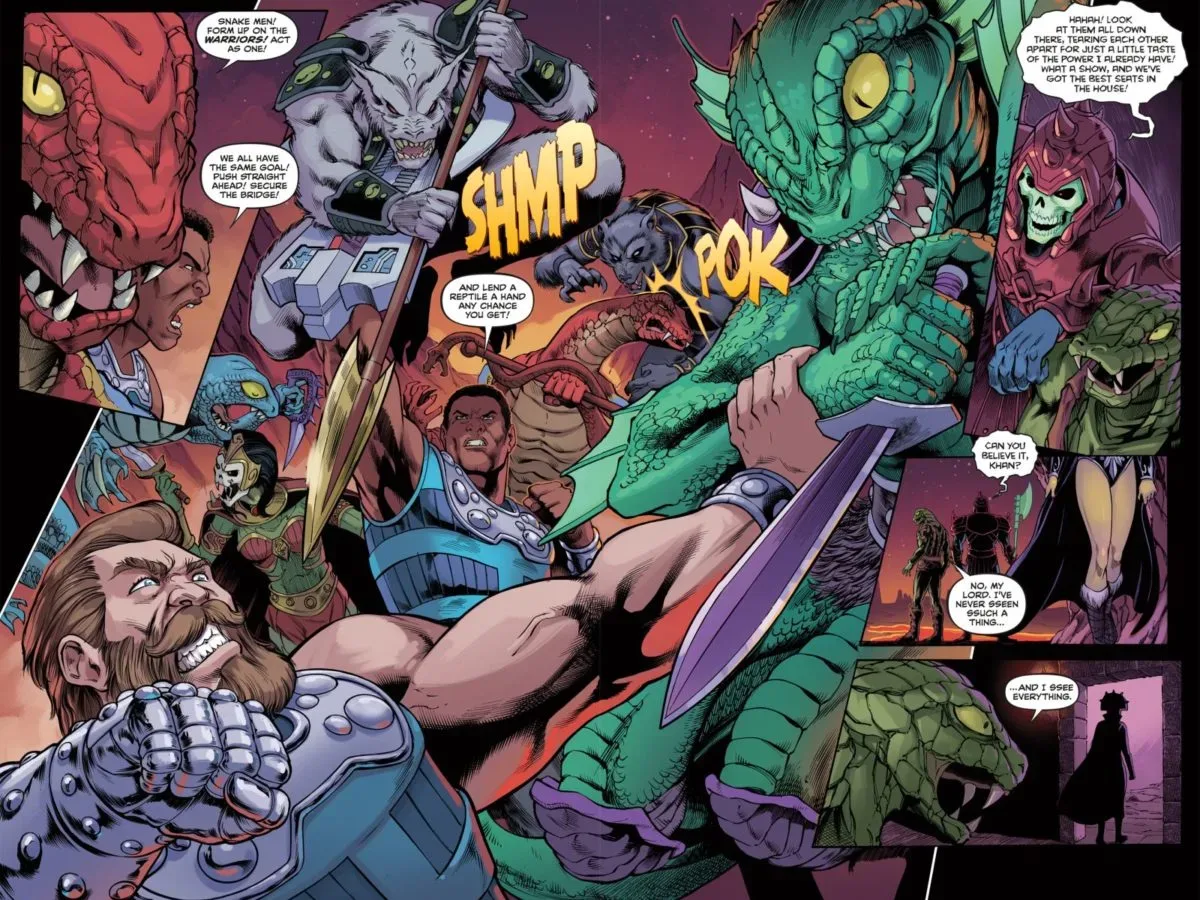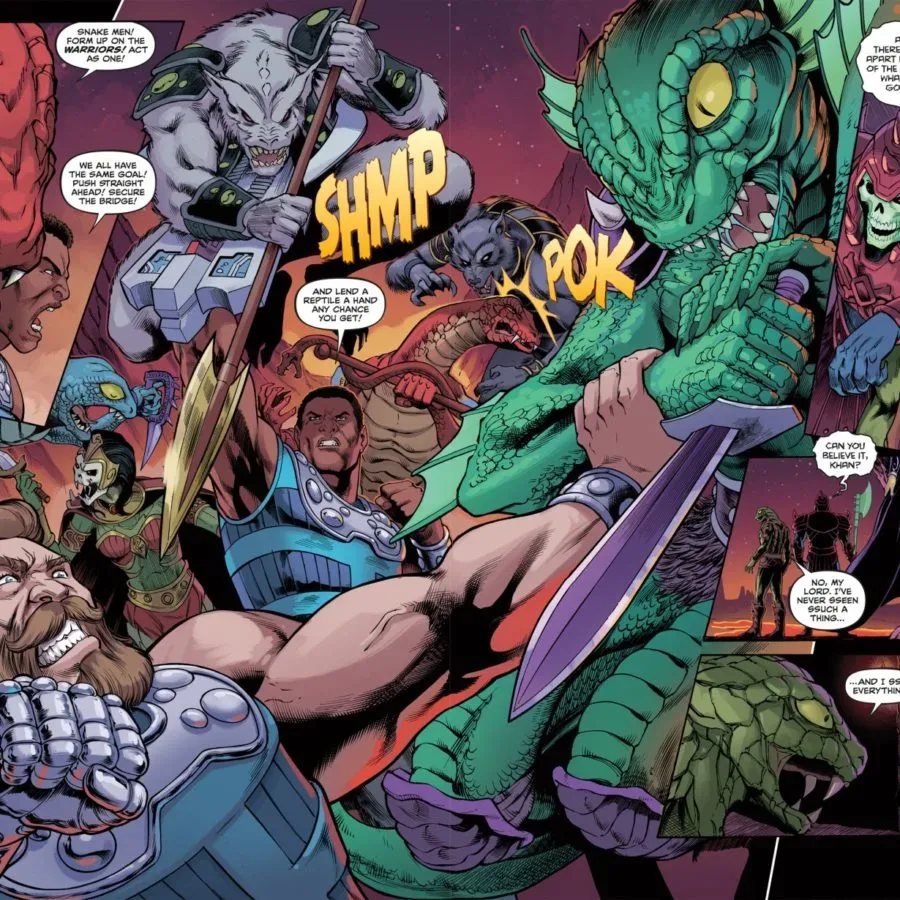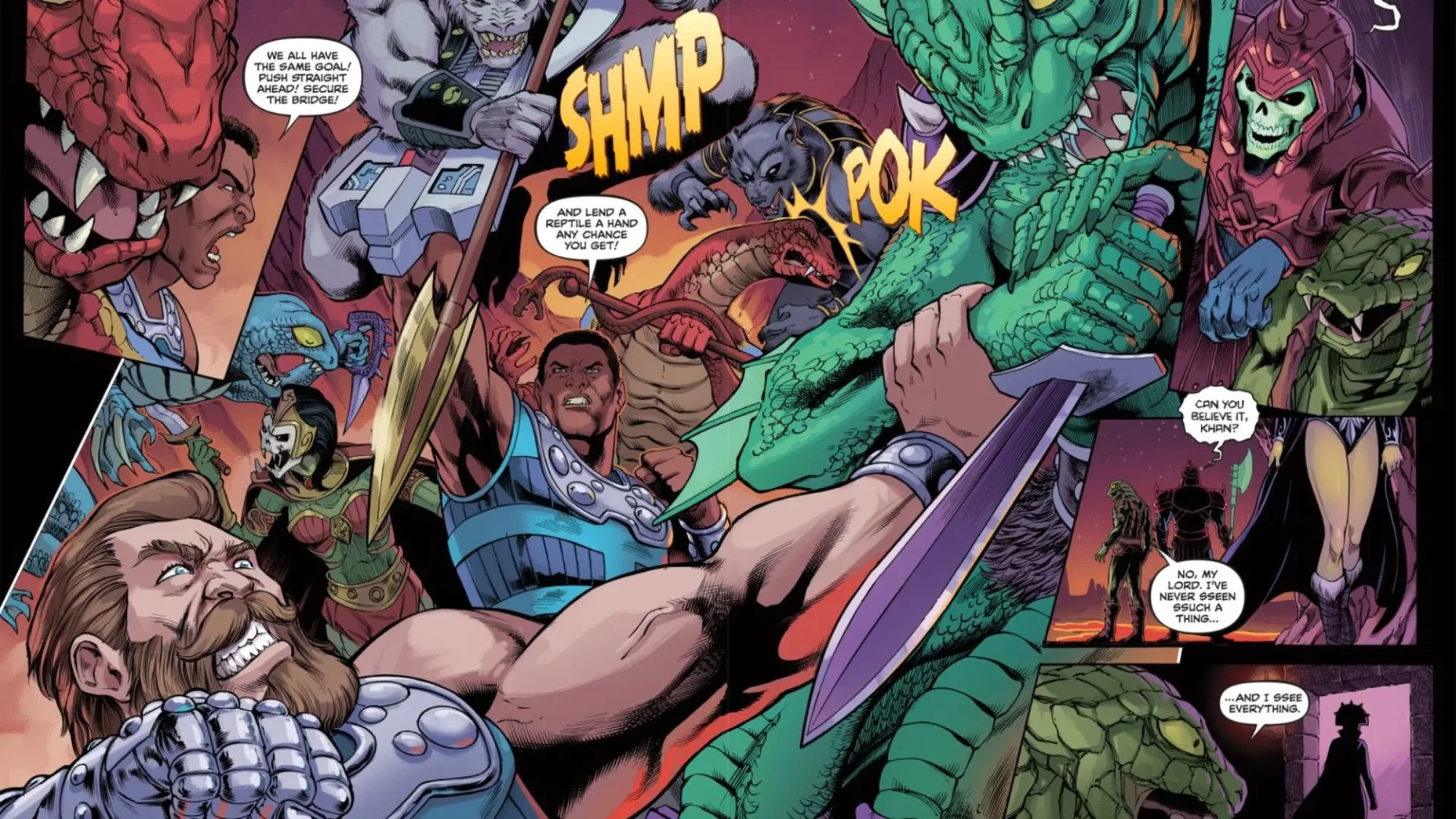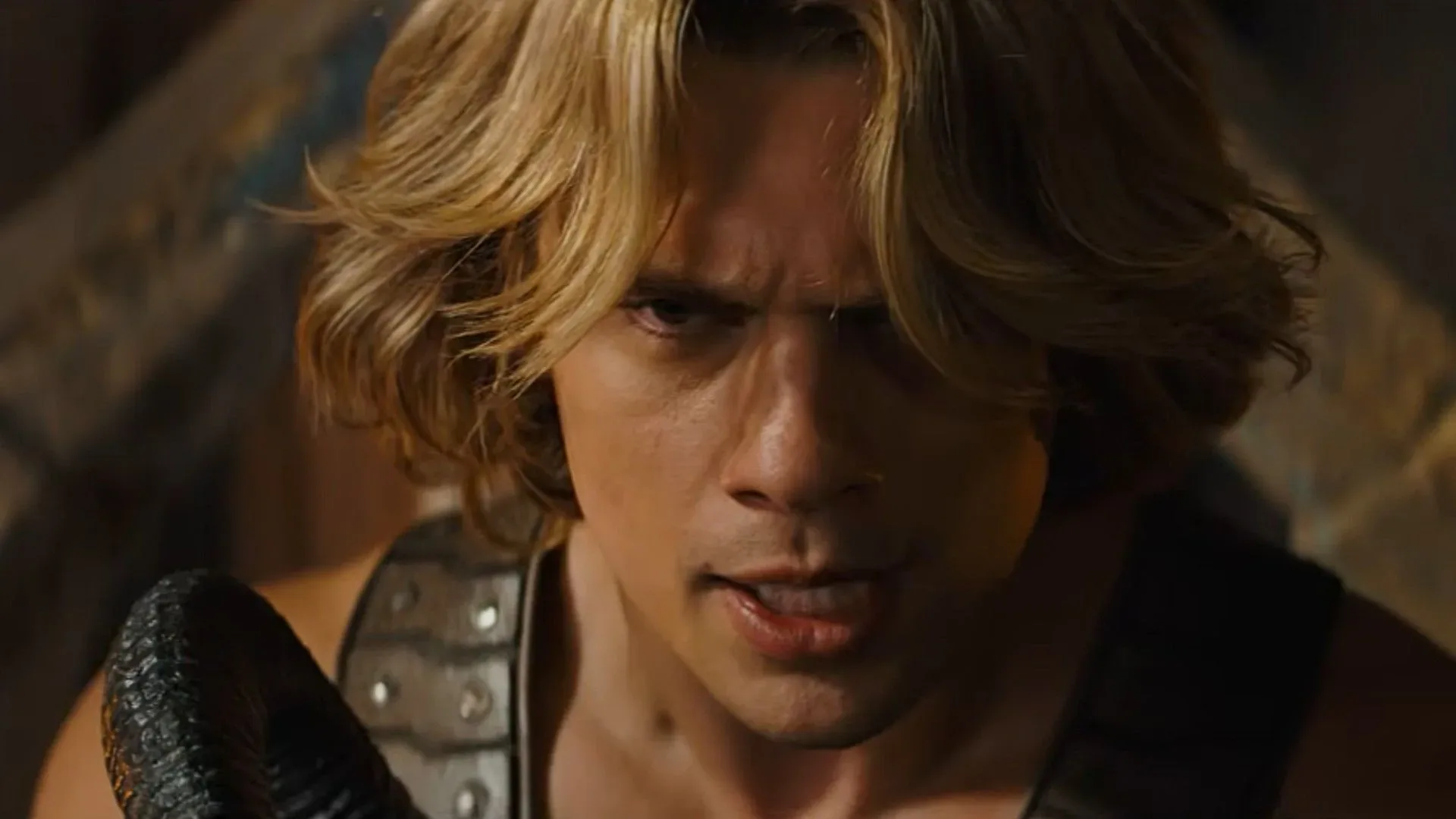
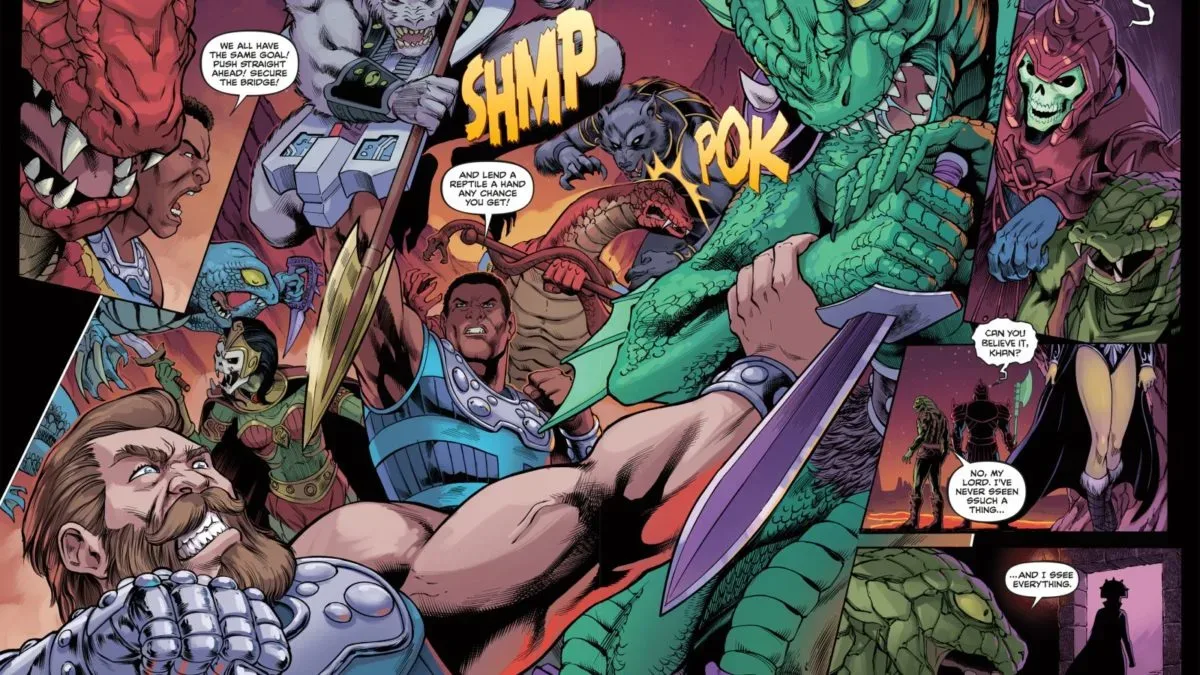
Snake Mountain has never exactly been known as a low-stress workplace. Its usual operating model involves skull-shaped architecture, ambient lava, an angry skeleton sorcerer and a workplace culture where “initiative” means trying to overthrow everyone in the building. But He-Man and the Masters of the Universe #7 is set to make the fortress even more crowded, as the Battle of Snake Mountain pushes Eternia into a distinctly awkward arrangement: the Heroic Warriors and the Snake Men are on the same side.
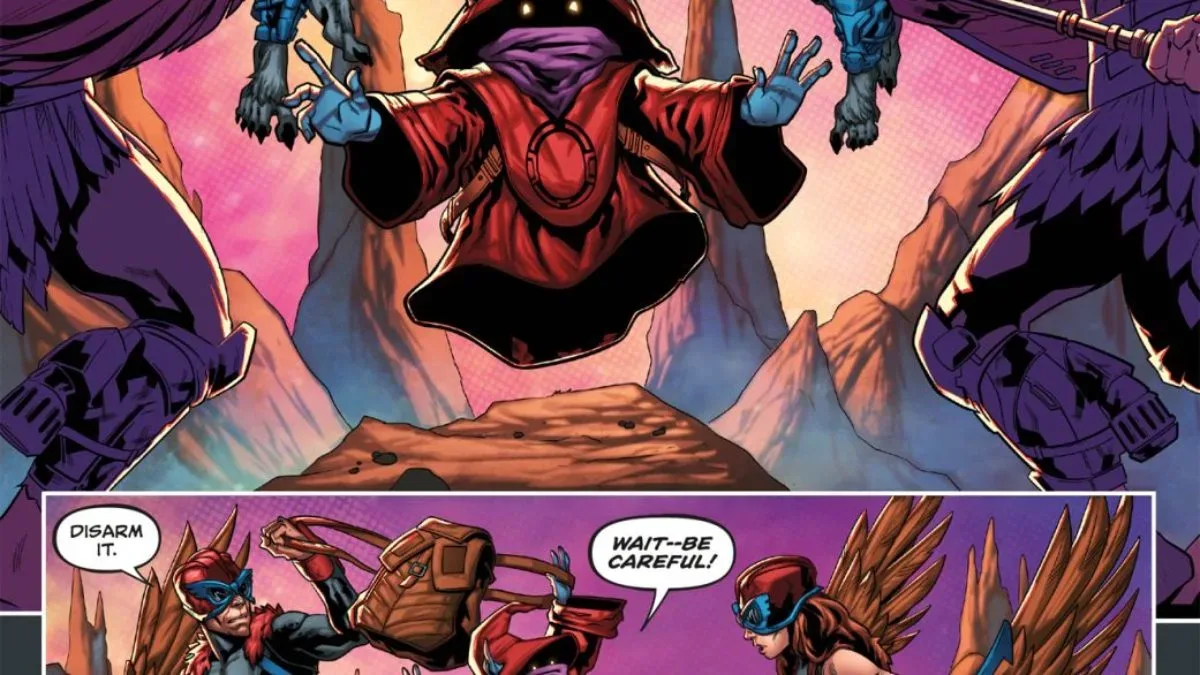
The 32-page issue arrives November 11, 2026, from Dark Horse Comics. It is the third chapter of The Battle of Snake Mountain, an ongoing storyline built around two simultaneous fronts. He-Man heads below the mountain into the catacombs of Vy-Por, accompanied by allies and enemies alike. Above ground, the Heroic Warriors join the Snake Men to confront Skeletor and an army comprising Aquaticans, Beast Men and Evil Warriors.
That leaves the issue with the rare comic-book elevator pitch that practically writes itself: good and evil versus evil and somehow-more-concerning evil. It is not an alliance that promises trust, harmony or a pleasant group lunch. It is a survival arrangement, and those tend to become volatile the moment one side thinks it has gained an advantage.
Two battles, one very bad mountain
The key setup is the split between the catacombs and the battlefield above. He-Man’s route into Vy-Por suggests a more enclosed, potentially tense part of the story: a confined space beneath Snake Mountain, a mixed party, and no obvious reason to expect everyone travelling together to share the same final objective. “Allies and enemies” is doing plenty of narrative work there.
Meanwhile, the surface conflict is much easier to describe and probably much harder for everyone involved to explain to their usual teammates. The Heroic Warriors are fighting beside the Snake Men against Skeletor’s side, which includes the Aquaticans, Beast Men and Evil Warriors. This is not a story about former rivals suddenly agreeing on the finer points of Eternian governance. It is a tactical coalition: groups with major differences temporarily prioritizing Skeletor’s immediate threat.
That distinction matters. An alliance is not the same thing as a reconciliation. In adventure fiction, an alliance is often a practical promise to stop attacking each other until the larger disaster is handled. It can create drama even before the first blow is exchanged, because cooperation has limits. Who leads? Who gets the dangerous assignment? What information stays private? And, in a universe populated by people who regularly build armies around personal grudges, how long can anyone resist settling an old score?
Why the Snake Men angle gives the conflict teeth
Putting the Snake Men beside the Heroic Warriors creates a situation in which the heroes cannot rely on the comforting clarity of a usual He-Man confrontation. Skeletor may be the focal enemy, but the heroes are now sharing a battlefield with a faction normally positioned on the other side of the moral divide. The arrangement asks them to make a practical judgment rather than enjoy the luxury of a cleanly sorted conflict.
That does not automatically make the Snake Men heroic, nor does it make the Heroic Warriors naïve. It means the circumstances are severe enough to produce cooperation that would otherwise be impossible. The issue’s central “evil versus eviler” framing is jokey in the best appropriately melodramatic Eternian way, but it also explains the shape of the stakes. Skeletor’s assembled force is formidable enough to make a former enemy a necessary partner.
For readers, this kind of setup is useful because it changes what success means. Winning is no longer only about defeating the opposing army. The heroes may also need to preserve a working partnership through a battle in which every participant has their own history, methods and likely hidden priorities. Snake Mountain is the arena, but the real pressure point may be whether the coalition survives contact with victory.
Skeletor’s coalition is the issue’s other big question
Skeletor’s army is described as a combined force of Aquaticans, Beast Men and Evil Warriors. The solicit does not spell out how those groups came together or what each contingent contributes, so it would be premature to treat that list as a complete tactical blueprint. Still, the combination establishes a central contrast: the heroes’ side has forged an uneasy cross-faction response, while Skeletor commands a broad hostile formation of his own.
“Coalition” is worth unpacking here. In simple terms, it means separate groups acting toward a shared short-term objective without necessarily becoming one permanent organization. That is different from an army made of a single unified force, because coalition members can bring different strengths, loyalties and agendas. It also means cohesion can become a weakness. A commander must keep competing personalities and goals pointed in the same direction while the battlefield is trying very hard to make everybody panic.
That symmetry gives The Battle of Snake Mountain its appealing messiness. Both sides have reason to worry about the reliability of their companions. The difference, at least from the setup, is that He-Man’s side is attempting to stop Skeletor’s advance, while Skeletor’s force is the threat compelling everyone else into action. It is the kind of arrangement where every apparent advantage arrives with a possible betrayal clause in very tiny print.
The catacombs of Vy-Por could offer a different kind of danger
While the open battle supplies the large-scale stakes, He-Man’s journey through the catacombs of Vy-Por gives the issue a second mode of conflict. Catacombs are underground chambers or passageways, generally associated with confined routes and hidden spaces. In a setting beneath Snake Mountain, the term immediately evokes a place where direct strength may not solve every problem and where a small group’s internal tensions can become as dangerous as whatever waits ahead.
The available details stop short of identifying He-Man’s companions or the catacombs’ exact purpose, which is a good reason not to fill the tunnels with imaginary traps, relics or surprise villains. What is clear is that the subterranean plot is positioned alongside the battlefield rather than beneath it as mere scenery. He-Man is there with both friendly and hostile company, while the wider coalition fight unfolds overhead. The structure naturally creates two questions for the issue: what does He-Man need to accomplish below, and can the forces above hold long enough for that mission to matter?
It is a clean way to scale a conflict. A massive battle can show the fate of Snake Mountain being fought in public, while the catacombs can concentrate the tension around decisions made among a handful of characters. One plot is loud; the other has every reason to be quieter, closer and more suspicious.
What readers should know before picking it up
- Issue: He-Man and the Masters of the Universe #7
- Release date: November 11, 2026
- Publisher: Dark Horse Comics
- Story position: Part three of The Battle of Snake Mountain and part of an ongoing series
- Creative team: Tim Seeley, Daniel HDR, Jim Charalampidis and Andworld Design, with a cover by Reilly Brown
- Format: 32 pages, rated T
- Price: $4.99 US; $6.99 CAN for the listed Eric Powell Cover B variant
The issue is listed with a Reilly Brown cover and a Cover B by Eric Powell. For readers following the series month to month, “part three” is the important label: this is a middle chapter in a continuing battle, not presented as a self-contained finale. Newer readers may want to keep that in mind, especially because the premise assumes a developing conflict between several factions rather than stopping to introduce each one from scratch.
An Eternian battle where the controller has no safe button
There is a familiar game-like appeal to the setup. Think of a strategy map where the opposing side has acquired several units that normally appear in entirely different regions, while your side has accepted a temporary ally whose loyalty meter remains stubbornly orange. The obvious move is to combine forces against the strongest opponent. The less obvious problem is making it to the end of the mission without your coalition turning into the next boss encounter.
That is why the Battle of Snake Mountain’s premise has more going for it than a simple roster of monsters and warriors. He-Man is dealing with danger below the fortress; the Heroic Warriors are confronting Skeletor’s combined troops above it; and the Snake Men complicate the entire definition of who counts as “on our side” from one scene to the next. A battle can be won by strength. A temporary peace requires timing, restraint and a heroic amount of side-eye.
For a broader example of how genre fandom can turn a release or event into a shared experience, see this look at fans making a theatrical return into a communal celebration. The circumstances are wildly different, admittedly; Snake Mountain has not yet announced a post-battle audience Q&A. But the basic appeal is recognizable: a continuing story gives fans another moment to show up, compare theories and debate whether a temporary alliance was clever strategy or the sort of decision that gets a cartoon castle exploded.
He-Man and the Masters of the Universe #7 is set to deliver the middle installment where those tensions should become harder to ignore. Skeletor has a coalition. The heroes have one too, although theirs arrives with far more venom and considerably less confidence-building. Beneath Snake Mountain, He-Man has enemies at his side. Above it, old foes are fighting shoulder to shoulder. Eternia may be saved, but nobody should expect the seating chart afterward to be civilized.