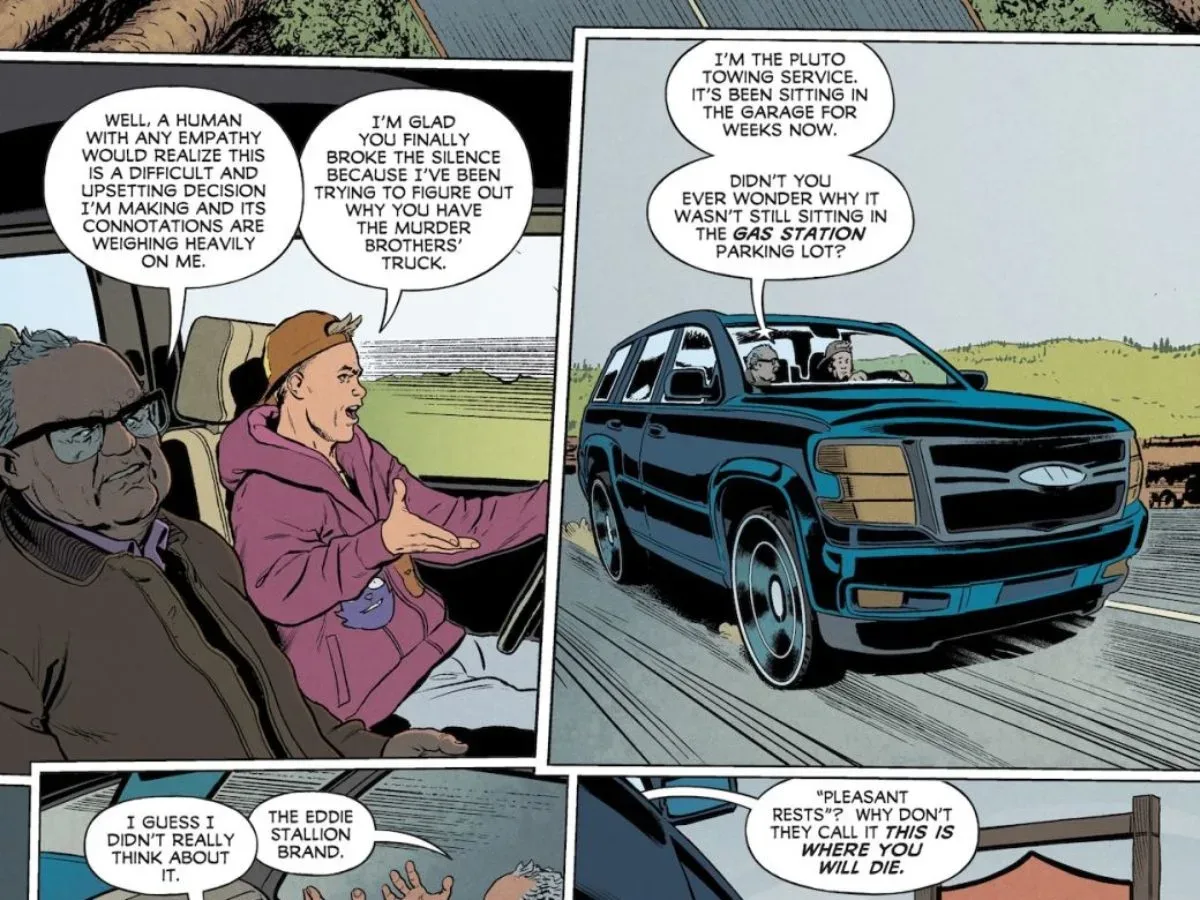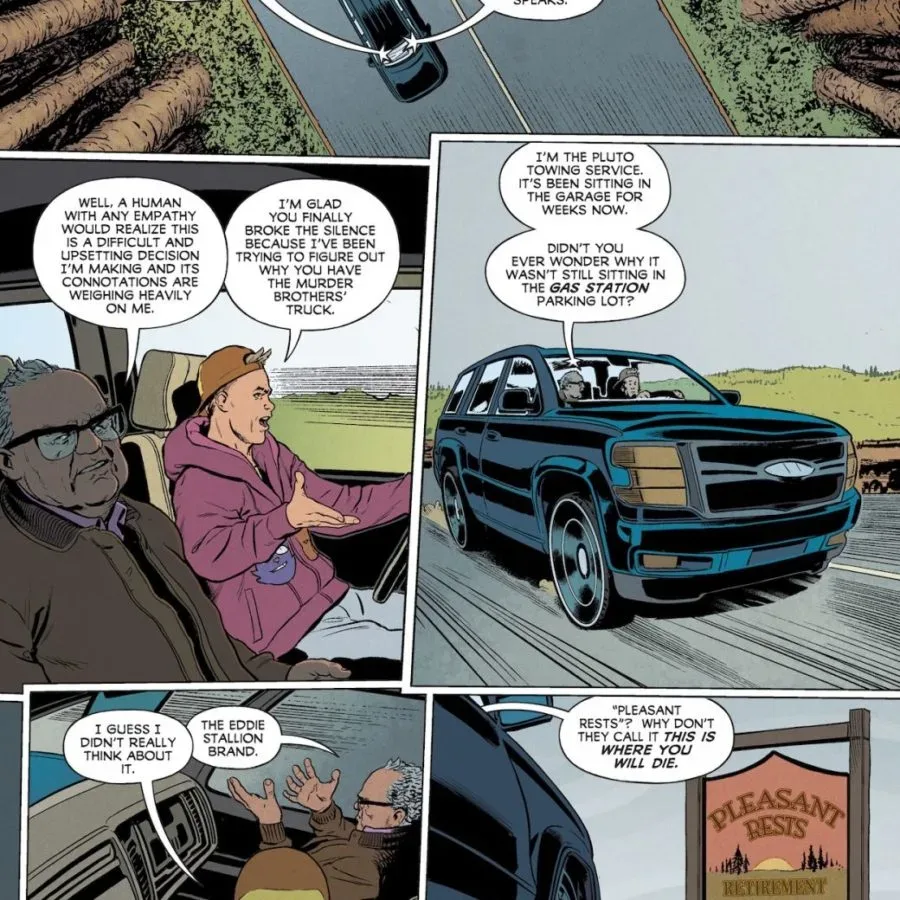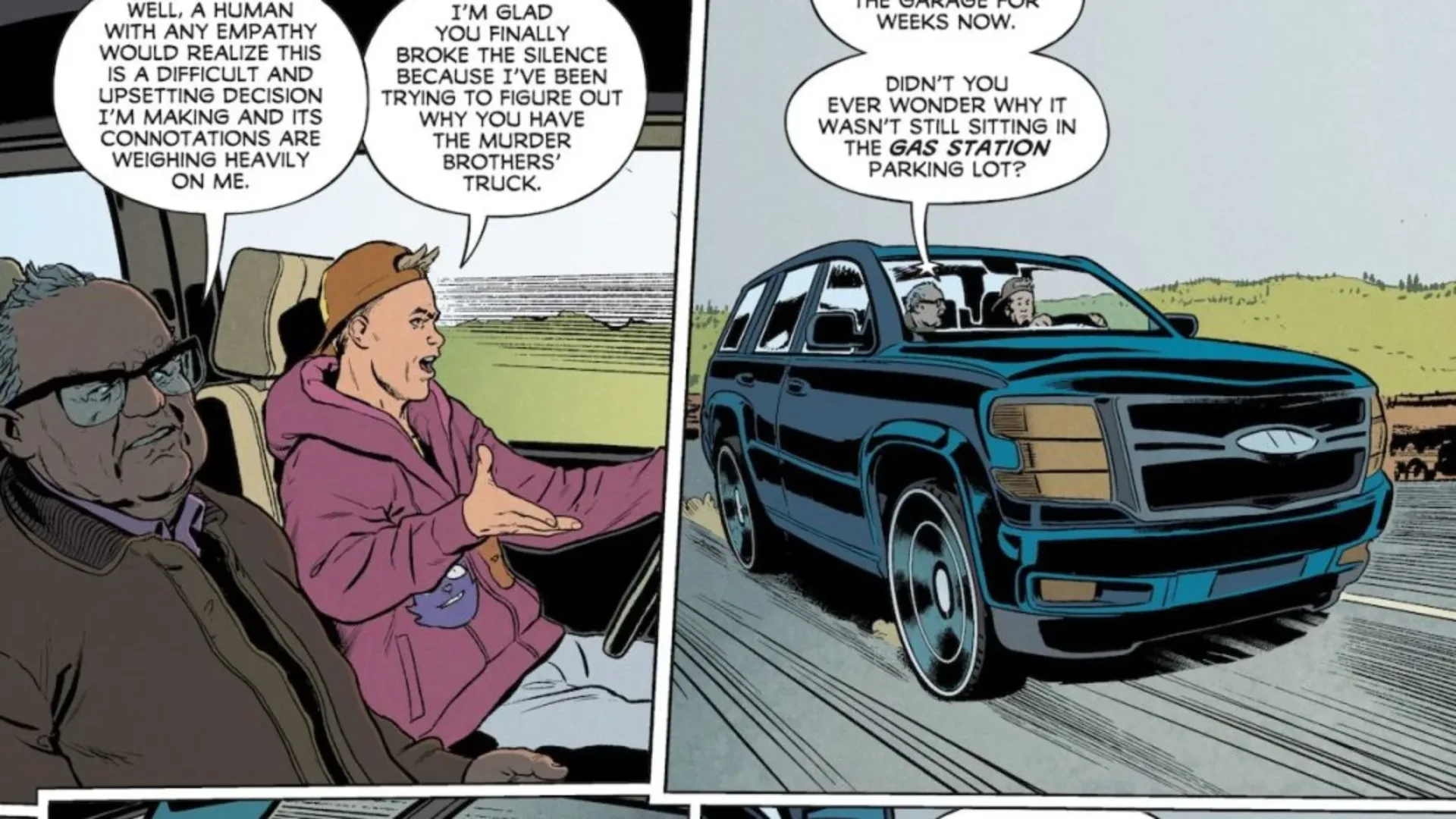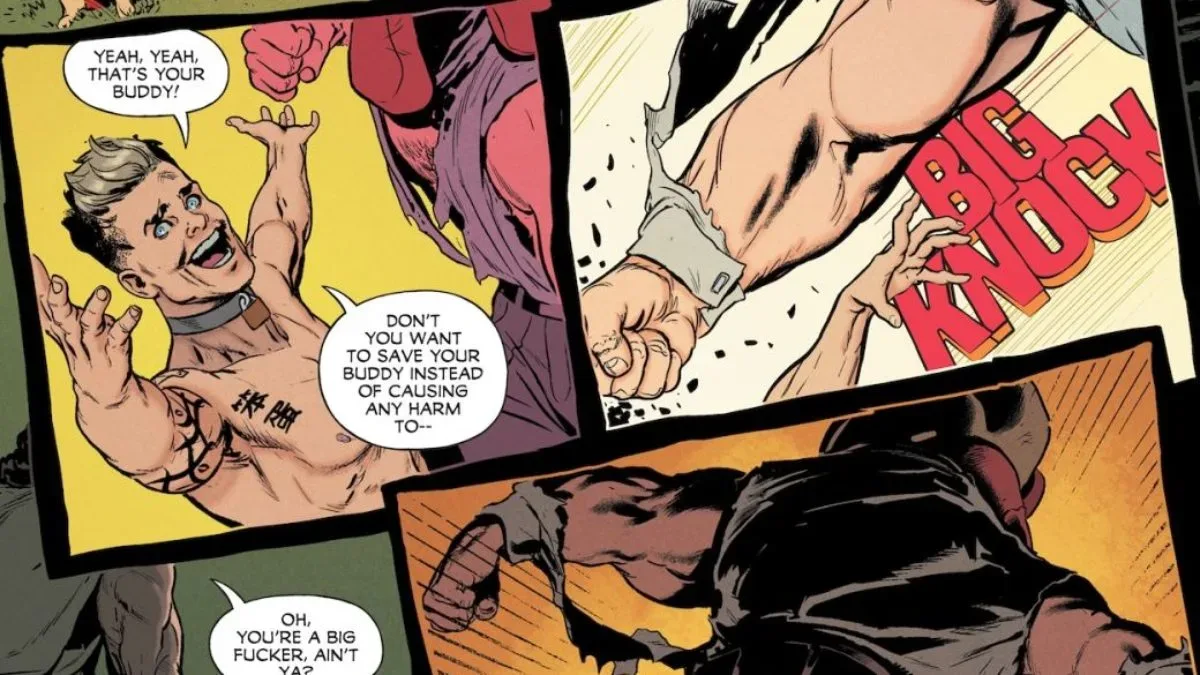
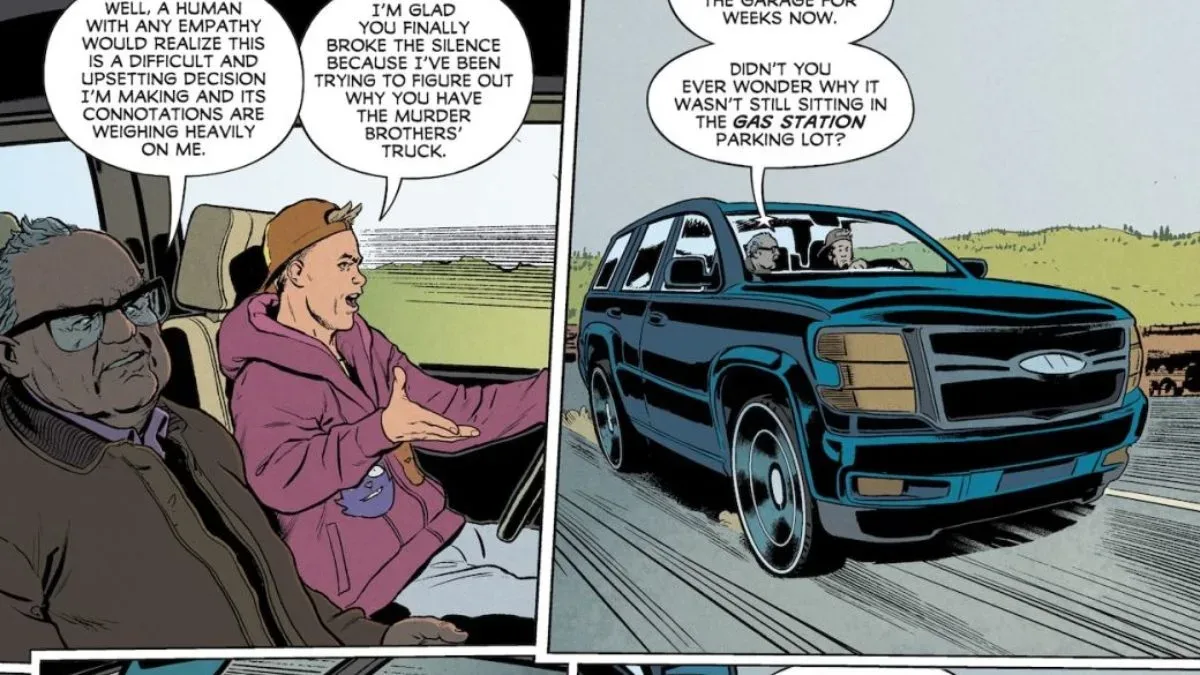
End of Life #10 will move its father-and-son conflict into a new setting when it reaches comic shops on Wednesday, November 18, 2026. The issue, from writer Kyle Starks, artist Steve Pugh, colorist Chris O’Halloran and DC, follows Eddie as he drives his father George to a senior living facility a few miles outside town.
On the surface, the trip offers Eddie the prospect of distance from Pluto’s ongoing “hell-storm.” The solicitation makes clear, however, that the facility is not an escape hatch. George has history there: several residents are fellow founding members of the Menagerie, and they are decidedly not pleased to see him arrive.
That premise gives issue #10 a compact but potentially volatile setup. A family obligation, a change in George’s living situation, an outside crisis in Pluto, and an old group with unsettled grievances all converge at the same door. Eddie may be seeking relief, while George is being delivered directly into a confrontation with people who know more about his past than Eddie may expect.
A relocation becomes a reckoning
The core plot point is straightforward: George is moving into senior living. Yet the solicitation frames that move less as an endpoint than as a trigger. The Menagerie founders’ reaction suggests that George’s former association with the group carries personal baggage, and the issue’s tension rests in what that shared past means now.
The Menagerie is the key proper noun in the description, but the available details do not explain the organization’s history, its purpose, or George’s role within it. That uncertainty is useful to preserve. What is established is narrower: George and some of the residents helped found it, they go back a long way, and there is enough resentment that no friendly reunion is expected.
For Eddie, the drive appears to be motivated partly by exhaustion. Pluto is described as being in the middle of a hell-storm, and getting George out of town sounds like it could offer a needed pause from that pressure. But moving a parent into a facility is already an emotionally charged event. Adding a roomful of hostile former associates turns a practical responsibility into a potential reckoning.
There is an inherent contrast in the premise. Senior living ordinarily implies routine, support and stability. Here, it also becomes the site of an unresolved conflict between people with a shared origin story. The phrase “founding members” matters because founders usually have a stake in how a group began, what it became, and who deserves credit or blame. Issue #10 looks positioned to test whether George can simply enter this new phase of life without answering for that earlier chapter.
What the solicitation confirms
- Title: End of Life #10
- Publisher: DC
- Writer: Kyle Starks
- Interior artist: Steve Pugh
- Colorist: Chris O’Halloran
- Cover artist: Gerald Parel
- On-sale date: Wednesday, November 18, 2026
- Story setup: Eddie brings George to a senior living facility outside town, where Menagerie founders from George’s past are waiting.
The listing also identifies a Riley Rossmo cover edition. It gives a $4.99 price alongside that cover listing, while the stated suggested retail price for the standard issue is $3.99. Readers checking with a local comic shop may want to confirm which cover is being ordered and its applicable price.
Why George’s past is now the present conflict
Comic-book solicitations often present a complication in broad strokes rather than disclose its cause. “They go way back” is doing a lot of work here. It establishes a shared history without explaining whether the grudge stems from a betrayal, a disagreement about the Menagerie, a past failure, or something else entirely. The important immediate fact is not the exact origin of the dispute; it is that George cannot arrive anonymously and start over.
That makes the facility more than a backdrop. It is a place populated by people who can challenge George’s version of events. In story terms, it places the character among witnesses who have their own memories, loyalties and resentments. It also complicates Eddie’s position. If he sees the move as a way to get breathing room from Pluto’s chaos, he may instead find himself closer to a family history he did not set out to investigate.
The phrase “hell-storm that is Pluto” signals that the book’s larger circumstances remain actively hostile, not merely an off-panel inconvenience. Eddie’s personal errand is happening under pressure. The issue can therefore operate on two levels: the immediate question of whether George can settle into the facility, and the broader question of what Pluto’s crisis leaves room for when private grudges demand attention.
The creative team and the issue’s visual roles
Starks is credited as writer, meaning the issue’s plot, dialogue and pacing are attributed to him. Pugh is credited with the interior art, the work that translates the script into the page’s characters, settings, action and visual storytelling. O’Halloran’s colors shape the issue’s palette and atmosphere, helping distinguish environments and guide a reader’s attention across a page. Parel is credited for the listed cover, which is separate from the interior artwork.
Those credits are worth separating because a comic’s cover and interior pages can involve different artists with distinct responsibilities. The Rossmo-covered edition likewise indicates a separate cover option rather than a change to the announced story or interior creative team.
Nothing in the solicitation promises a particular visual approach, so readers should not assume the tone of either cover dictates the full contents. What the material does establish is a story built around an uncomfortable reunion and a move that is likely to reopen old wounds.
What readers should watch for in issue #10
The central question is not simply whether George is accepted at the facility. The premise suggests acceptance may be impossible without addressing what happened among the Menagerie’s founders. The most revealing developments would be any explanation of George’s role in the group, why the other residents hold onto their resentment, and whether Eddie understands the extent of that legacy.
There is also a practical emotional tension in Eddie’s reason for making the trip. Hoping for a reprieve from Pluto does not necessarily make the decision uncomplicated. The issue’s setup leaves room for the possibility that Eddie’s need for a break and George’s need for care are tangled together, especially once the past begins to intrude on the plan.
For readers keeping up with the wider comic-book conversation, the prospect of old alliances becoming present-day problems arrives during a busy period for superhero and genre fiction; DC and Marvel readers can also find a very different team-up thread in the developing original X-Men crossover story in Avengers: Doomsday.
End of Life #10 is scheduled for comic shops on November 18, 2026. Its available description promises a tense stop on Eddie and George’s journey: a new residence, a hostile welcome, and a Menagerie history that clearly has not stayed buried.