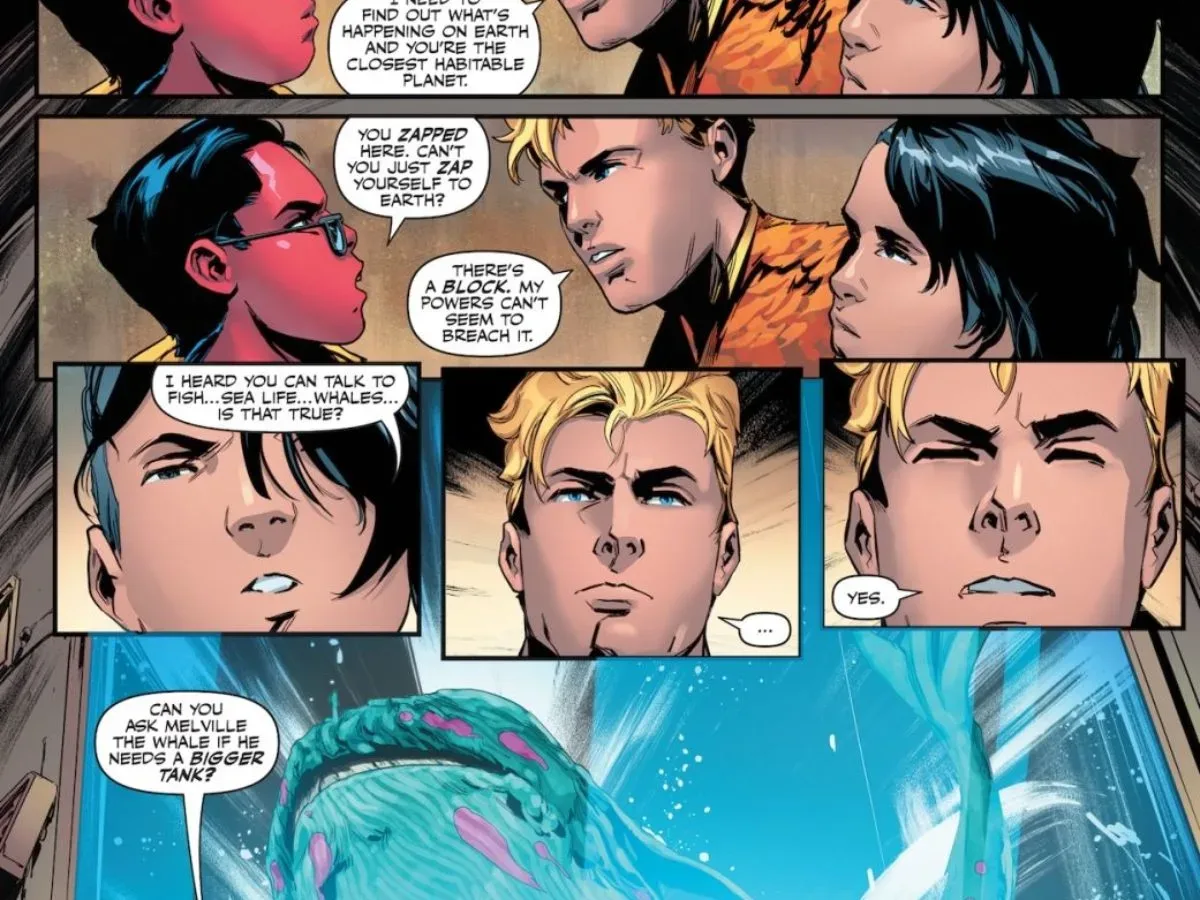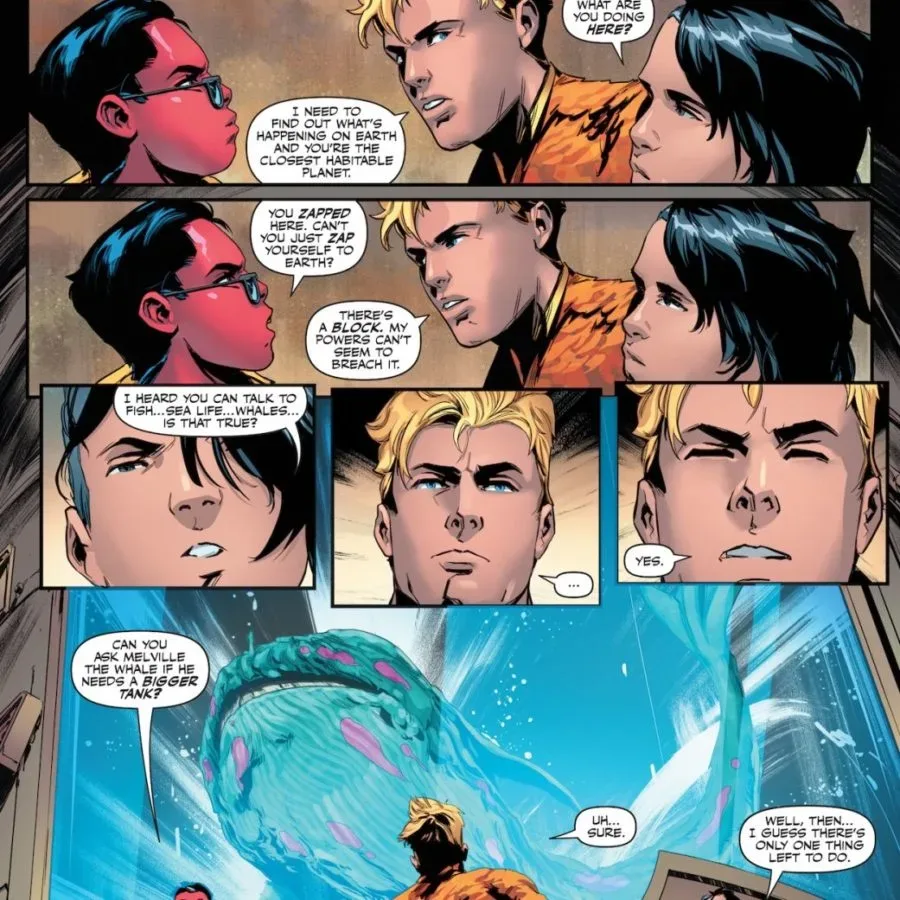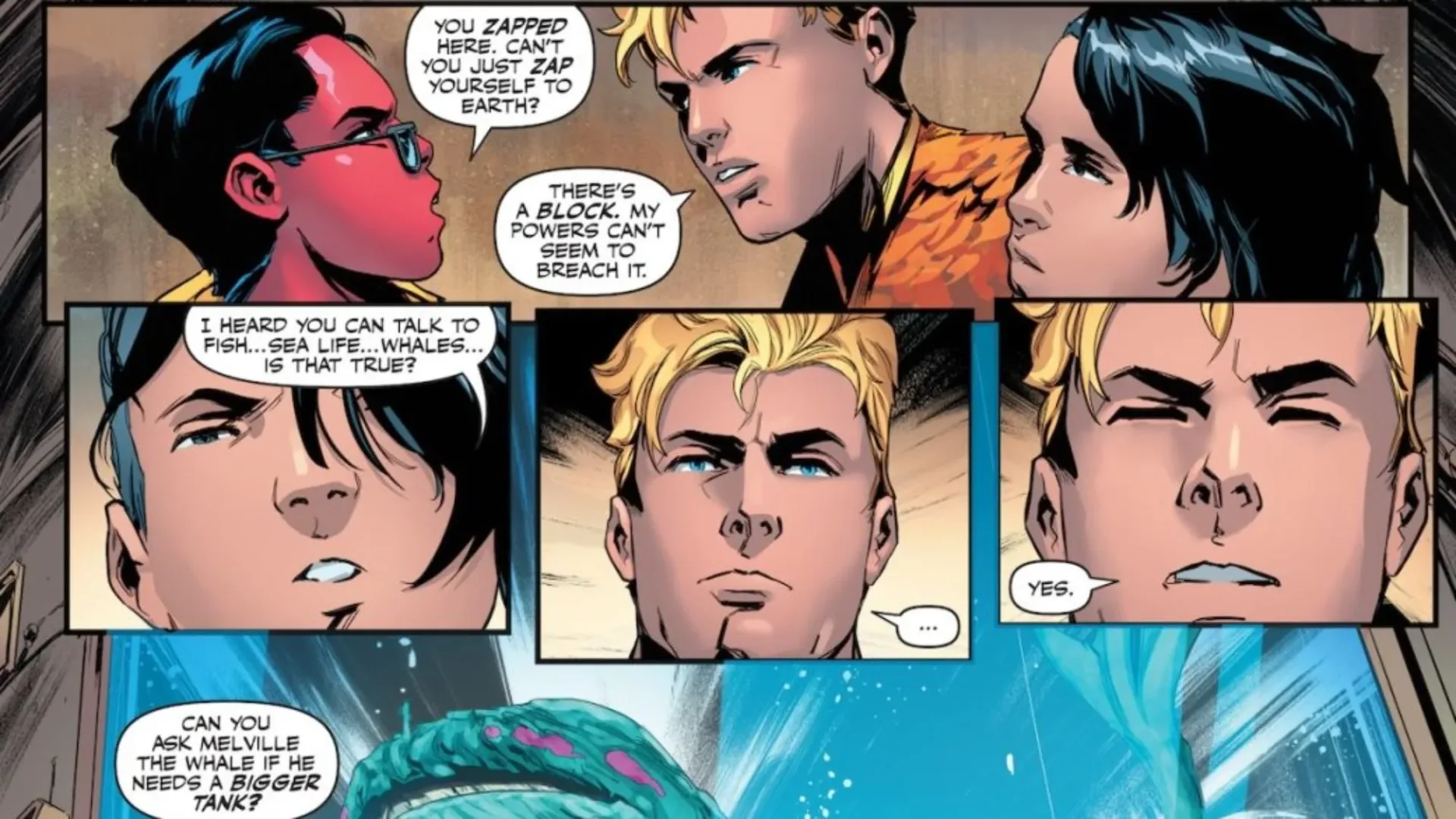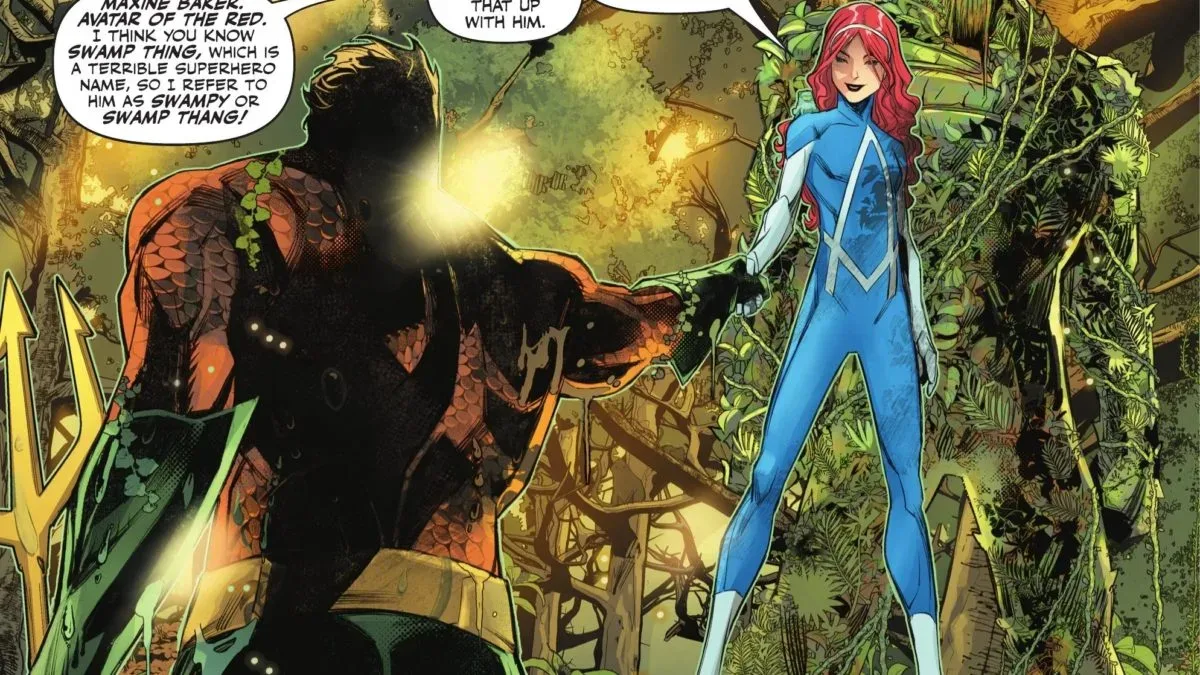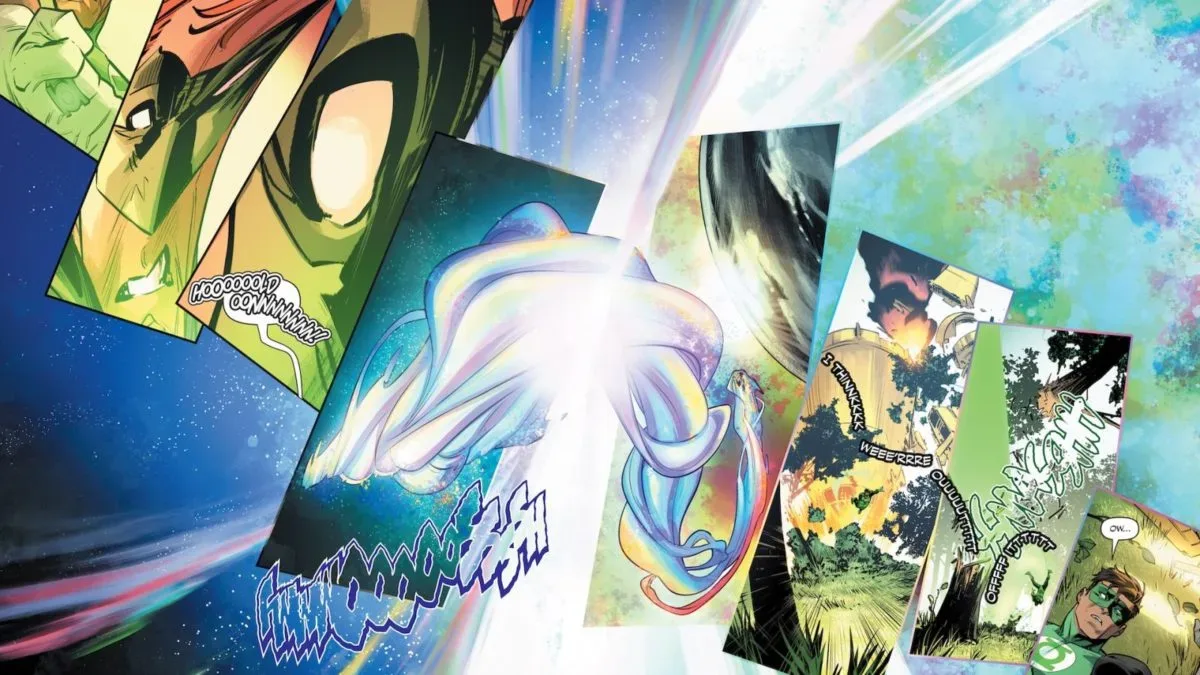
Aquaman has dealt with pressure from the deep before, but Emperor Aquaman #23 is arranging the sort of crisis where distance is the real villain. The new issue places Arthur Curry on Korugar while Earth faces an escalating supernatural danger: the Crimson Queen is using the ancient Zodiac Crystals to call on a force described as being as old as time.
That is the essential tension behind “The Tidal War: Part Three,” the chapter title attached to issue #23. Arthur is trapped away from the planet that needs him, the threat is explicitly aimed at Earth’s surface, and the apparent route to saving humanity involves an unlikely vision connected to the DC K.O. tournament. It is a wonderfully overloaded superhero-comic premise: alien-world isolation, mystical artifacts, planetary stakes, and a tournament vision entering the chat like it has been waiting all day to cause narrative trouble.
The issue is listed for shops on November 11, 2026, with a $3.99 suggested retail price. Jeremy Adams is credited as writer, Paolo Villanelli as artist, and John Timms as cover artist. Additional listed covers include variants by Mark Spears and Mikel Janin.
Arthur is stranded, and Earth is the target
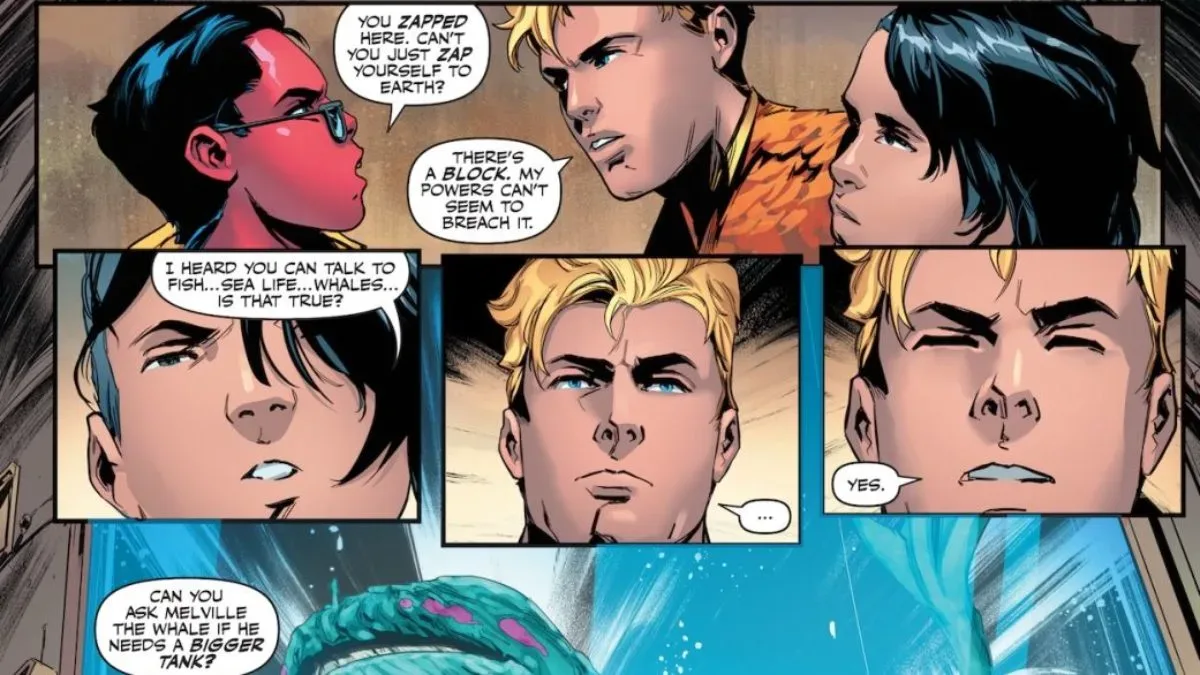
The premise makes one immediate fact clear: Aquaman cannot simply swim toward the emergency. Korugar is an alien world, and Arthur being trapped there creates a practical obstacle that matters as much as the mystical threat itself. He is separated from the place he is expected to protect at precisely the point when the Crimson Queen is directing power at the surface world.
That setup does useful dramatic work. Superhero threats can become abstract once the language reaches “destroy the Earth,” but isolating Arthur on another planet gives the danger a clear human scale. He is not only facing a powerful adversary; he is facing the inability to be where he believes he is needed. A hero whose identity is closely tied to ocean, kingdom, and planet is being pushed into a story about dislocation.
The title The Tidal War also suggests a conflict with movement and momentum rather than a single contained encounter. A tide is a force that arrives, recedes, and returns. In a story where the stakes are spreading beyond one location, that is an apt image: Arthur may be stranded on Korugar, but the consequences of what happens there and on Earth are clearly connected.
What the Zodiac Crystals mean for the issue
The Zodiac Crystals are the issue’s central MacGuffin—a storytelling term for an object that drives the plot because characters need, fear, protect, or fight over it. Calling something a MacGuffin does not mean it is unimportant. Quite the opposite: it identifies the narrative engine. Here, the crystals give the Crimson Queen both a means to threaten Earth and a focal point for whatever solution Arthur must uncover.
The solicitation does not explain the crystals’ origins, limits, or individual powers, so readers should be cautious about assuming more than is stated. What is established is substantial: they are ancient, they can be used to summon a primordial power, and the Crimson Queen is wielding them against Earth. That is enough to position them as more than decorative treasure. They are a direct instrument of the current crisis.
The phrase “a power as old as time” points to a threat with mythic framing. In comic-book terms, mythic does not necessarily mean simple magic. It often signals that the danger operates at a level beyond ordinary weapons, ordinary travel, or a conventional hero-versus-villain brawl. If that reading holds, Arthur’s separation from Earth may be part of why a vision, rather than raw force, is being introduced as a possible answer.
DC K.O. is more than a passing name in the setup
The most intriguing element in the logline is the mention of an unlikely vision from the DC K.O. tournament. The issue’s description presents that vision as a possible key to humanity’s survival, which makes it more than background flavor. It is a clue, a warning, or a source of knowledge that Arthur may need to interpret while trapped far from the main battlefield.
A vision is a particularly flexible device in a superhero story. It can reveal a future, frame a hidden connection, show an alternate possibility, or offer an image whose meaning becomes clear only later. The available details do not say which function it serves here, so the most useful expectation is simply that readers should watch the issue for how the vision changes Arthur’s understanding of the Tidal War.
There is a practical reader takeaway in that setup, too. Anyone following the DC K.O. tournament material may want to pay close attention to how issue #23 characterizes its connection. The solicitation promises a link, but it does not establish whether the issue requires extensive tournament knowledge or merely borrows a vision from that setting. Those are very different levels of crossover involvement, and the story itself will need to clarify the distinction.
Why Korugar changes the shape of the conflict
Having Arthur on Korugar allows Emperor Aquaman #23 to run two pressures at once. On one side is the immediate question of escape: how does he get off an alien world? On the other is the larger question of intervention: even if he can leave, what must be done about the Crimson Queen and the Zodiac Crystals?
That dual structure can make an event chapter feel more focused. Rather than asking Arthur to solve every part of a global threat at once, it gives him an urgent local problem while keeping the wider disaster visible. His predicament is not a detour from the main plot; it is inseparable from it. Being stranded is the reason a vision may matter, the reason time becomes a weapon, and the reason the crisis can feel larger than a standard confrontation.
It also creates room for the issue to emphasize information over brute strength. When a hero cannot immediately reach the site of danger, learning what the enemy is doing and identifying the right response can be the decisive step. The wording around the tournament vision suggests that revelation may be the story’s currency in Part Three.
Creative team and cover options
Adams and Villanelli are the credited creative team for the interior story, with Timms supplying the main cover. The listed variants expand the issue’s cover lineup with work from Spears and Janin. For readers who keep up with single-issue superhero releases, that provides a straightforward choice: buy the standard cover for the chapter itself, or select a preferred alternate presentation if a particular artist’s approach is part of the appeal.
The solicitation identifies three associated item listings beyond the standard edition: two Mark Spears cover listings and one Mikel Janin cover listing, each shown at $4.99. The standard issue is separately listed at $3.99. No further distinction between the two Spears listings is provided in the available information, so collectors will need to check the specific comic shop listing or physical cover details before assuming they are identical.
For another current example of how a serialized superhero issue can foreground an escalating threat while keeping its lead character at the center, see Daredevil #9’s conflict with Mr. Fear.
What to watch for in The Tidal War: Part Three
- The scope of the Crimson Queen’s plan: The crystals are already identified as a threat to Earth’s surface, but the issue may clarify what the summoned ancient power actually does.
- Arthur’s way off Korugar: His confinement is central to the premise, so any breakthrough there is likely to affect the larger conflict.
- The purpose of the DC K.O. vision: Whether it is prophecy, instruction, warning, or something more complicated remains the issue’s biggest stated mystery.
- The role of the Zodiac Crystals: Their history is not detailed in the solicitation, leaving room for the issue to explain why they matter now and why the Crimson Queen can use them.
Emperor Aquaman #23 has a clean chapter-to-chapter hook: while the Tidal War moves toward a climactic confrontation, Arthur must find a path from an alien prison to a solution for a catastrophe already building at home. That combination of cosmic displacement and mystical danger is an ambitious lane for an Aquaman story—and Part Three appears set to make the vision, rather than the trident, the immediate tool humanity needs.