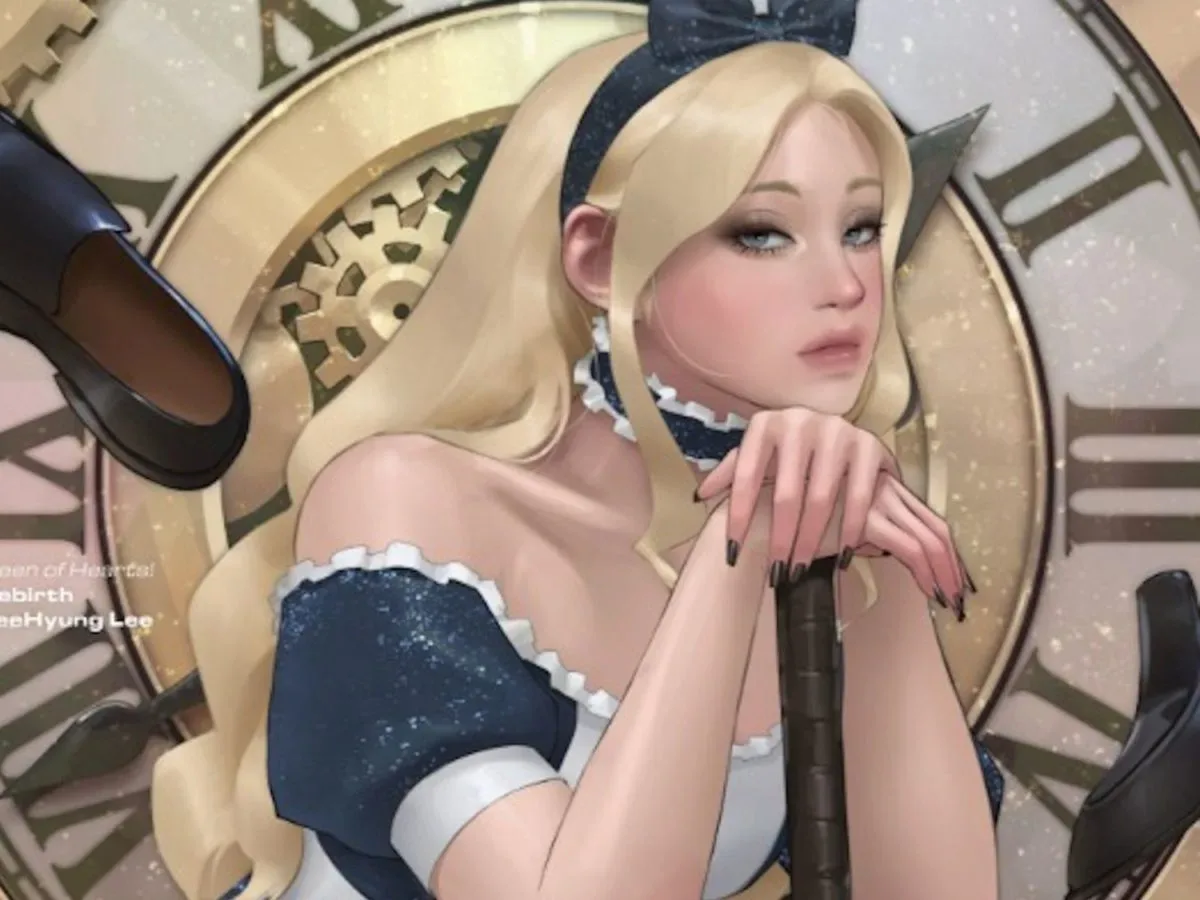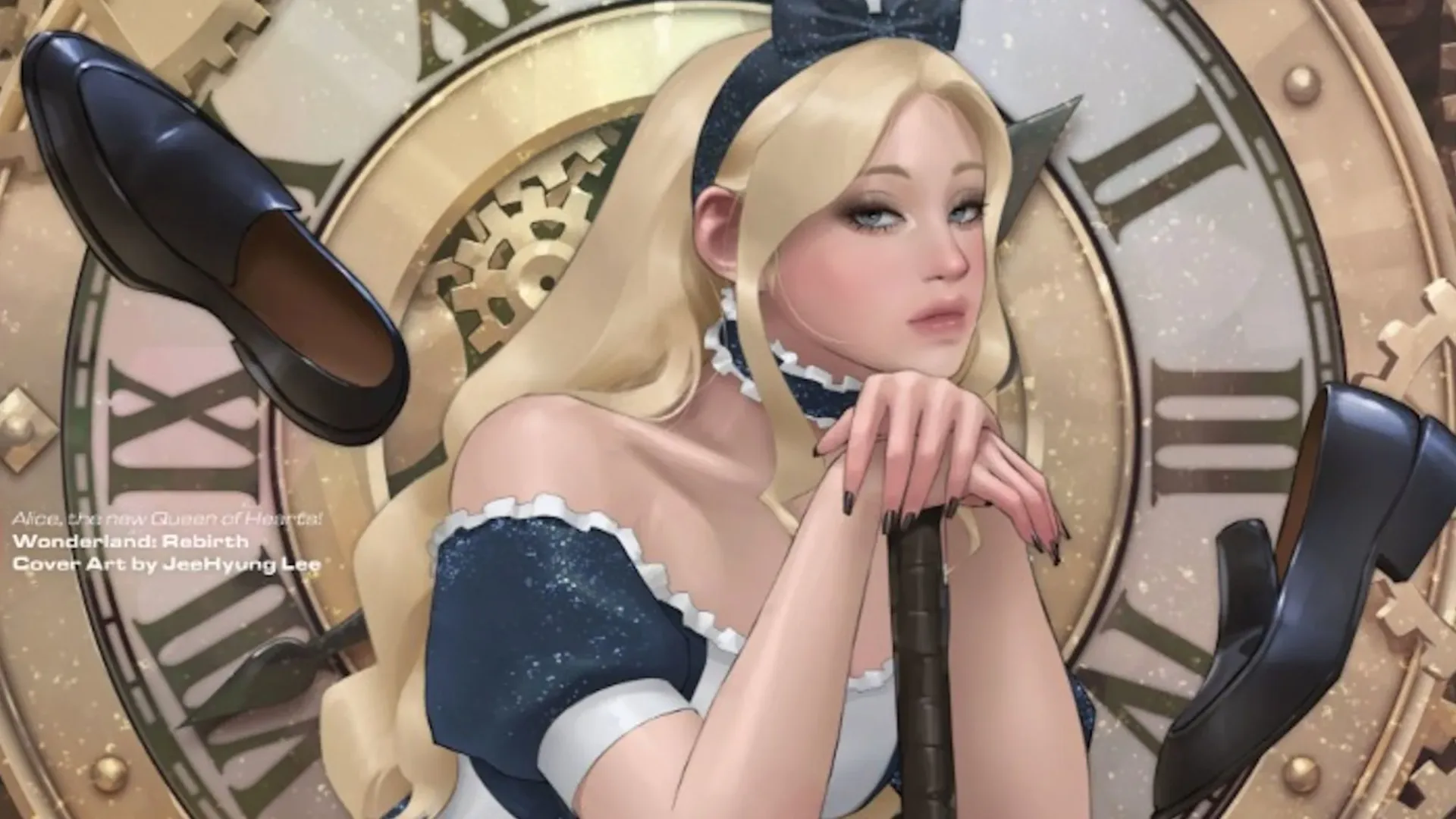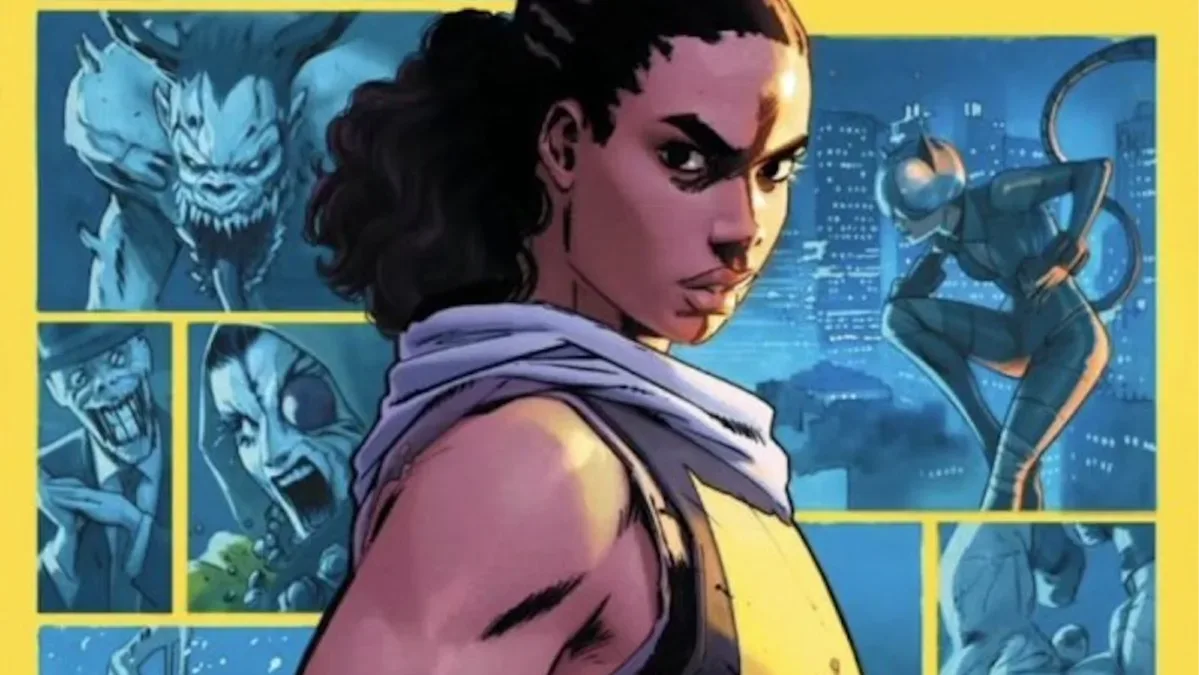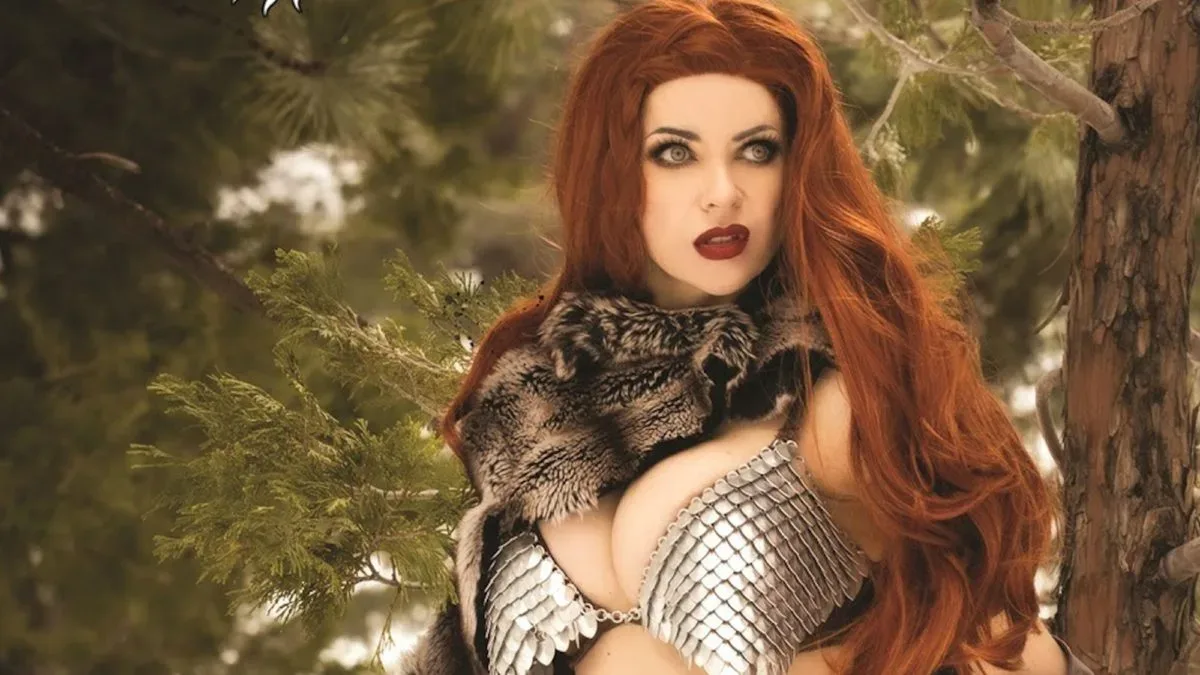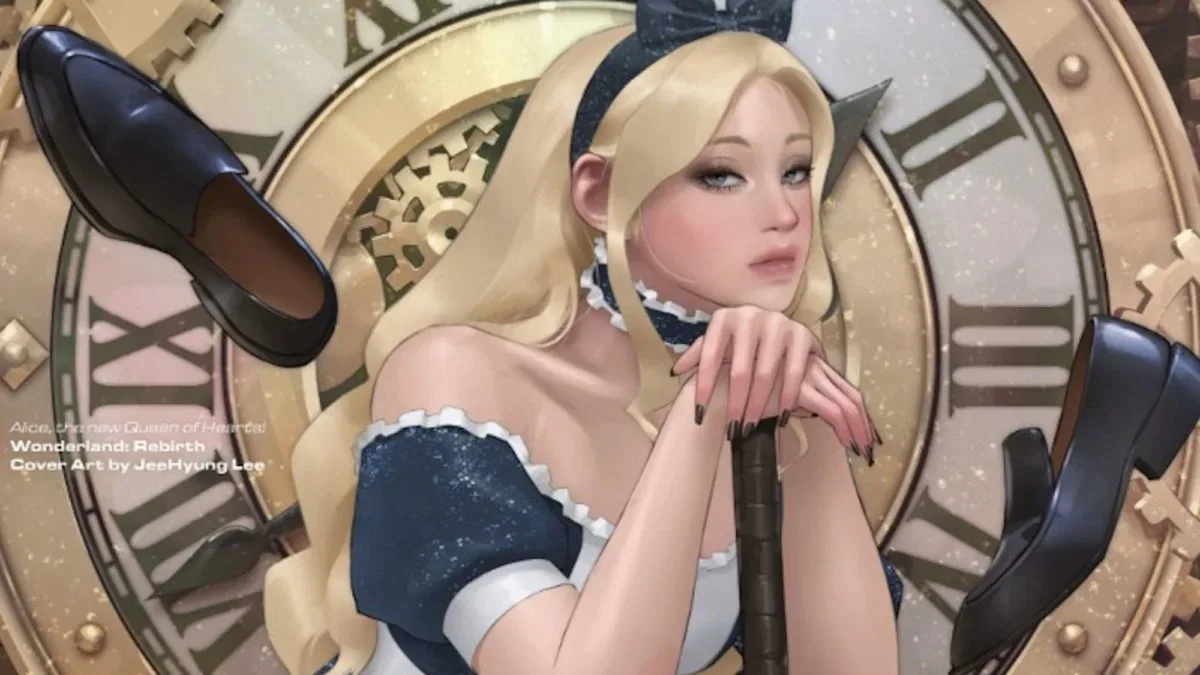
December 2026’s Zenescope comic slate puts a hostile new ruler at the center of Wonderland. Wonderland Rebirth, a $6.99 one-shot dated for December 16, positions Alice as Wonderland’s new Queen of Hearts—and frames Linnea, heir to the Queen of Spades and a native of the realm, as the figure determined to oppose her.
The premise turns a familiar fantasy setting into a struggle over sovereignty. Wonderland has returned and retains the capacity for beauty and life, but corruption and malice have returned alongside it. Alice is not simply present in the realm; she is depicted as actively pursuing a plan to bring all of Wonderland under her rule. Linnea knows precisely what that takeover would mean for her home, though the solicitation leaves its most important question unanswered: whether her resistance has begun too late.
Joe Brusha and Chas! Pangburn write Wonderland Rebirth, with art by Saint Yak and a cover by Igor Vitorino. Its one-shot format means this is presented as a self-contained comic rather than an individually numbered installment in an announced miniseries. That does not guarantee the story is detached from the broader setting—its central conflict is clearly built around established Wonderland roles—but it does make the issue a potentially direct entry point for readers interested in the clash between Alice and Linnea.
A Queen of Hearts with a plan to conquer
The key shift in Wonderland Rebirth is Alice’s position of power. “Queen of Hearts” is not merely a dramatic label here: it identifies her as the ruler at the center of the looming political and supernatural threat. Her stated goal is to place the entire realm beneath her control, making the story’s stakes territorial as well as personal.
Linnea provides the counterweight. As heir to the Queen of Spades, she has a hereditary connection to the realm’s leadership, while her identity as a Wonderland native gives the confrontation an immediate home-defence dimension. The solicitation does not explain the exact history between the two characters, the mechanics of Alice’s ascent, or what has enabled the new corruption. Those are story details the comic itself will need to establish. What is clear is the basic opposition: Alice seeks consolidation; Linnea intends to stop it at any cost.
That is a useful distinction for prospective readers. The issue is not described as a broad tour through Wonderland or a light reintroduction to its inhabitants. It is built around an imminent threat and a confrontation with a ruler whose authority appears newly established. The word “Rebirth” also suggests a return that is not a clean restoration. Wonderland is back, but so are the forces that make its revival dangerous.
What a one-shot means here
In comics publishing, a one-shot is a single issue intended to tell a complete featured story or spotlight a particular premise. It differs from an ongoing comic, which continues through sequential issue numbers, and from a limited series, which has a declared finite run. That designation is especially relevant in a month that also includes the final issue of a three-part story and the seventh issue of an ongoing volume.
For collectors and readers, the practical point is simple: Wonderland Rebirth can be identified as one individual comic rather than issue #1 of a numbered run. The supplied listing gives a December 16 date and $6.99 price, with no variant-cover information or format details beyond its one-shot label.
Jynx and Stitches close in on Lucian
Earlier in the month, Jynx and Stitches Great Revenge #3 is dated for December 9 at $4.99. Written by Joe Brusha, with Hakan Aydin handling both art and cover duties, the issue is the third and final chapter of its three-issue arc.
The series has been staged around Lucian’s talent show, but its final setup makes plain that the dwindling contestants are not the intended prey. Lucian himself is the target. Jynx and Stitches are hunting the legendary dark magician over a longstanding grievance, one that the solicitation says can only be resolved with his blood.
Lucian, naturally, is not described as accepting the role of victim. He recognizes the trap and intends to fight back, retaining deadly tricks of his own. That establishes an endgame in which the hunters’ advantage is countered by a target with an arsenal and the will to use it.
The premise also gives the talent-show backdrop a clear narrative function. Instead of being the conclusion’s real contest, it becomes the setting through which Lucian’s vulnerability is exposed. The number of contestants shrinking to only a few increases the sense that the façade is falling away, leaving the central vendetta in the open.
As a finale, issue #3 carries a different kind of reading expectation than the Wonderland Rebirth one-shot. It follows an established pursuit and is described through the culmination of a personal score. New readers may understand the immediate conflict from the solicitation, but its emotional payoff will presumably depend on the earlier chapters’ treatment of Jynx, Stitches and Lucian.
Arcane Acre faces danger after the Hollowborn battle
Grimm Fairy Tales Vol. 3 #7, dated December 23 and priced at $4.99, continues another thread of escalating danger. Joe Brusha writes the issue, Allan Otero provides interior art, and Igor Vitorino supplies the cover.
The story begins in the aftermath of a battle with the Hollowborn. Keres and the heroes of Arcane Acre are trying to recover and put the pieces back together, but the recovery period is quickly disrupted. Keres investigates the Tome of Blood and Shadow and discovers an ancient presence connected to the book’s secrets.
A tome is, in this context, a substantial book, usually one associated with accumulated knowledge, ritual or mystery. The title Tome of Blood and Shadow signals that it is more than a routine object of research; it is the source of a discovery with consequences beyond its pages. The listing does not say what the ancient presence is, what it wants, or how it relates to the Hollowborn. Those omissions are significant, because they reserve the nature of the new threat for the issue itself.
Elsewhere, Skye receives what is characterized as an impossible surprise: someone believed lost returns carrying a warning. The warning could change the Grimm Universe forever, tying the personal shock of a reunion to a potentially setting-wide consequence. The solicitation does not identify the returning person, so readers should treat the identity and content of the warning as deliberately withheld plot information rather than assume a particular character or outcome.
Together, Keres’s investigation and Skye’s encounter indicate that the issue is not simply about post-battle cleanup. The Hollowborn conflict has left its cast in a vulnerable position, and fresh revelations arrive before that recovery can settle. One thread concerns an ancient force; the other concerns a returned figure and an urgent warning. Both point beyond Arcane Acre’s immediate repairs.
An art-book record of Once Upon the End of Time
The month’s largest-priced listed item is Grimm Fairy Tales TP: Once Upon the End of Time Art Book, dated December 2 at $24.99. Credited to various writers and artists, with a cover by Igor Lomov, it collects covers associated with the story’s climactic moments.
This is an art book, meaning its emphasis is on artwork rather than a standard sequential comic narrative. The provided description specifically identifies explosive covers as the material being collected. Readers looking for the complete scene-to-scene story should therefore distinguish this book from an issue or trade collection presented as a conventional comic; its stated purpose is to showcase cover art connected to the event.
Once Upon the End of Time is framed around Father Time’s arrival, the destruction of realms and the fracturing of time itself. The resulting catastrophe extends across the Grimm Universe, drawing in the heroes of Arcane Acre as well as Oz, Wonderland, Neverland and Myst. The central struggle is against reality coming apart.
That scope makes the art book more than a random assortment of illustrations. Its selected covers are tied to climactic event imagery involving multiple realms and a reality-level threat. However, the listing only promises the collected covers; it does not specify a page count, enumerate every included image, or state that the book reprints the full comic storyline. Those are meaningful distinctions for anyone deciding whether they want a visual companion volume or a narrative collection.
For a broader look at another comic series reaching a decisive December stretch, see Animal Castle Vol. 3’s final three-issue arc.
December 2026 release order and reader options
The four listed releases arrive across the month in a clear sequence:
- December 2: Grimm Fairy Tales TP: Once Upon the End of Time Art Book — $24.99.
- December 9: Jynx and Stitches Great Revenge #3 — $4.99.
- December 16: Wonderland Rebirth — $6.99.
- December 23: Grimm Fairy Tales Vol. 3 #7 — $4.99.
There is a notable range of formats and functions across those dates. The art book looks back at dramatic imagery from a multi-realm event. Jynx and Stitches Great Revenge #3 delivers the declared conclusion to a revenge story. Wonderland Rebirth concentrates on a throne, a realm and a direct challenger to Alice’s authority. Grimm Fairy Tales Vol. 3 #7 advances continuing mysteries after a major battle.
The unifying theme is pressure on worlds and their inhabitants: Wonderland faces control by its new Queen of Hearts; Lucian becomes the subject of a hunt; Arcane Acre’s heroes find that surviving one threat does not end the next; and the art book’s event material depicts realms confronting the collapse of reality itself. December’s listings do not reveal how every thread will develop, but they make the immediate conflicts—and the creative teams carrying them—plain.