Spoilers for Absolute Flash #21 follow.
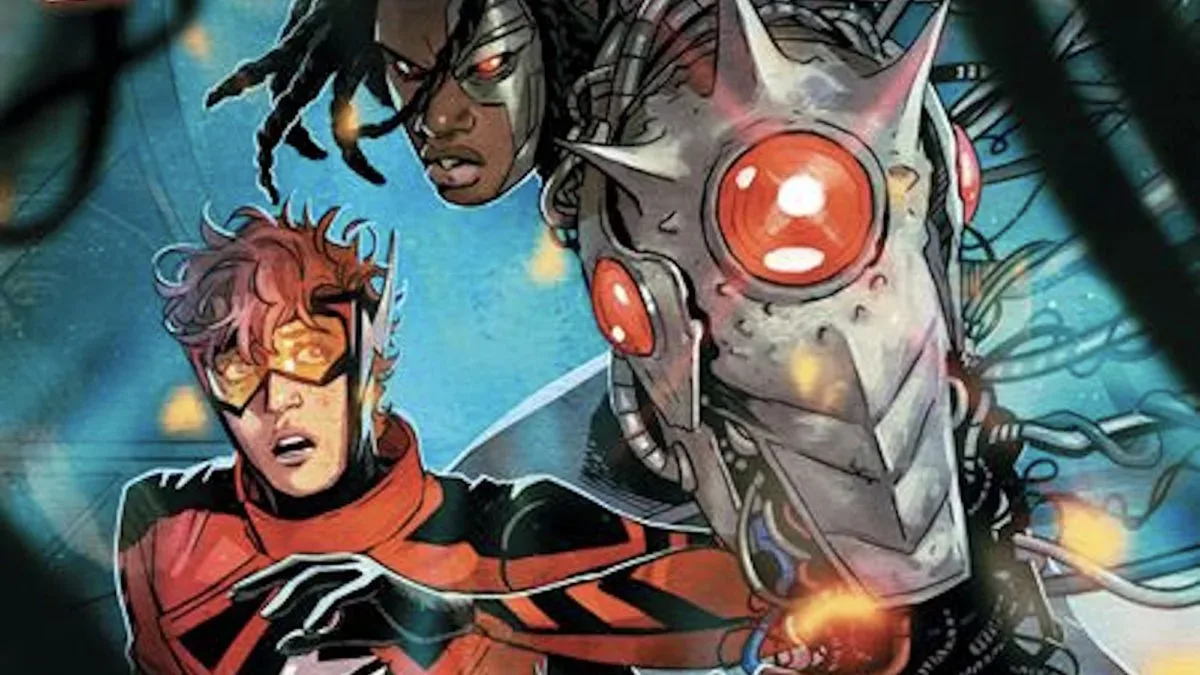
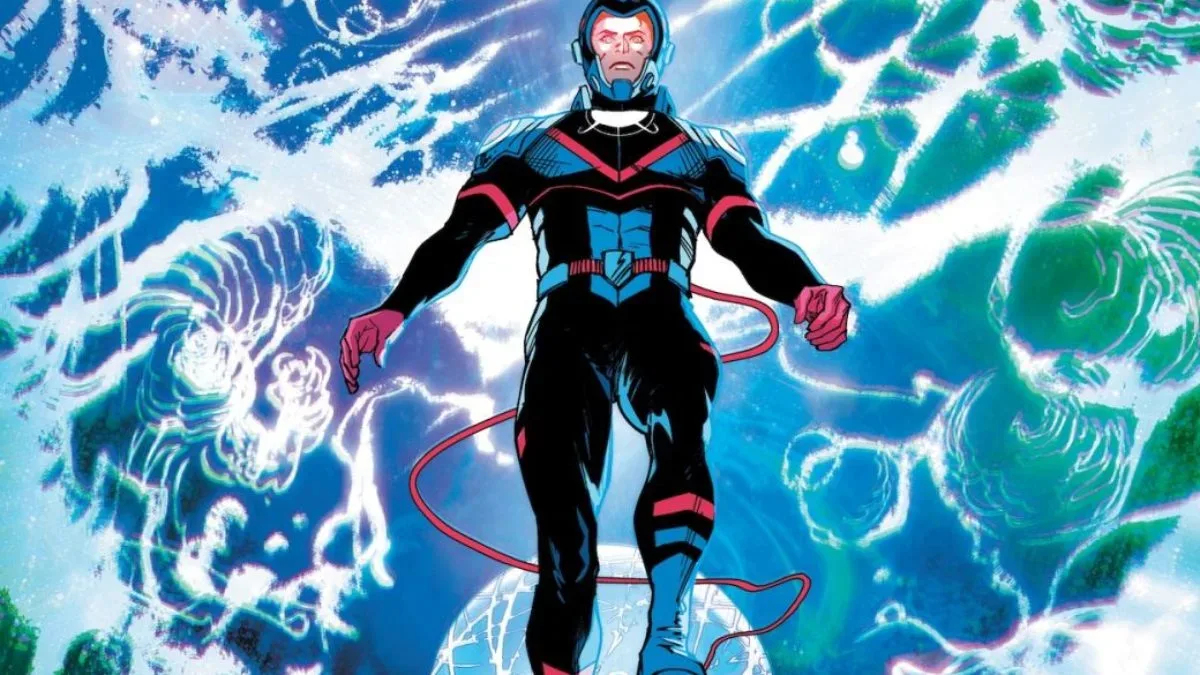
Absolute Flash #21 substantially widens the book’s corner of DC’s Absolute Universe. Written by Jeff Lemire with art by Haining and a cover by Nick Robles, the issue reworks several established names at once: Kilg%re, Cyborg, H.I.V.E., Queen Bee and characters linked to the Justice League. Its most consequential switch is also its cleanest: in this continuity, Kilg%re is not simply an enemy attacking Cyborg. Kilg%re is the identity connected to Absolute Cyborg.
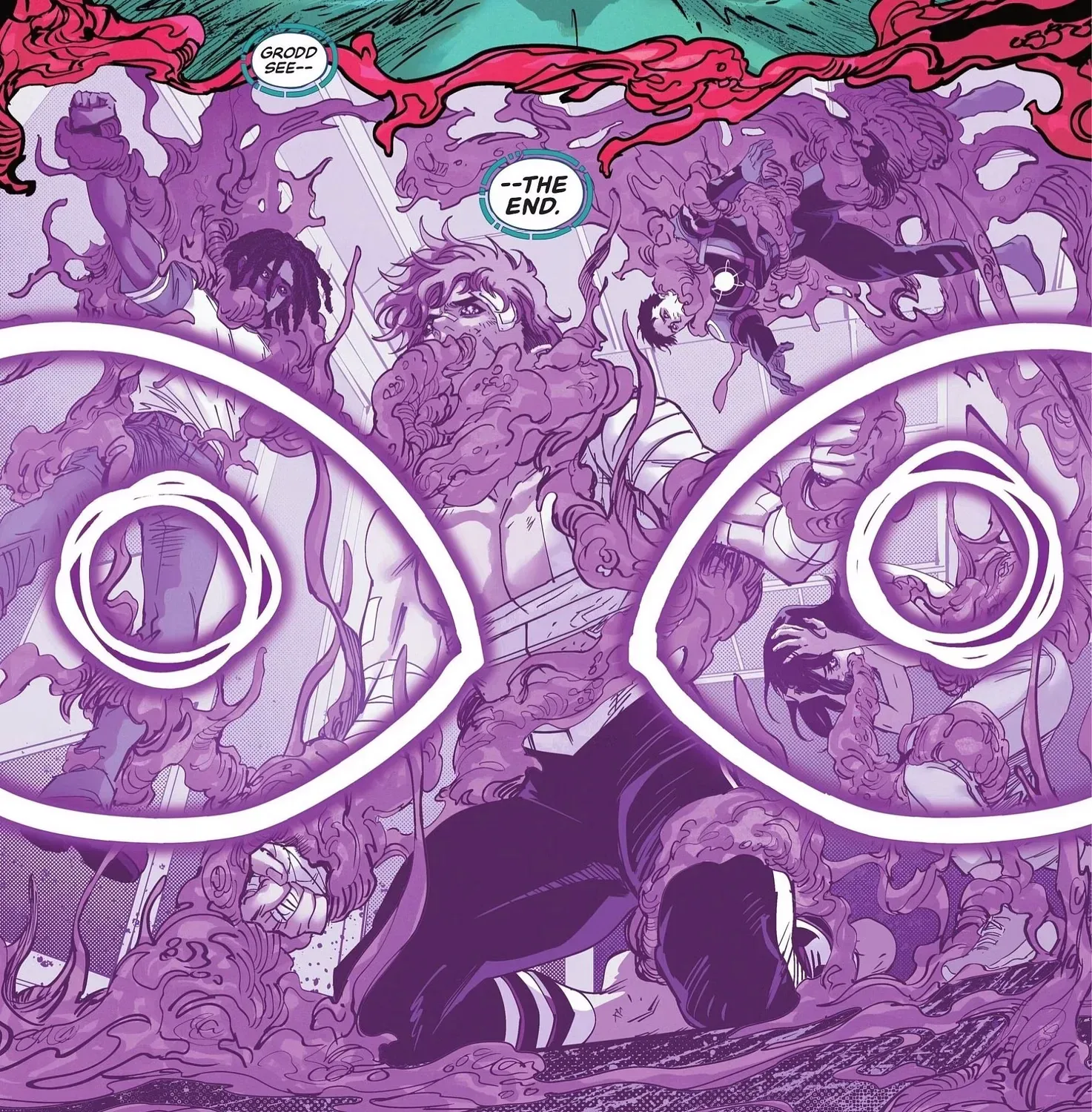
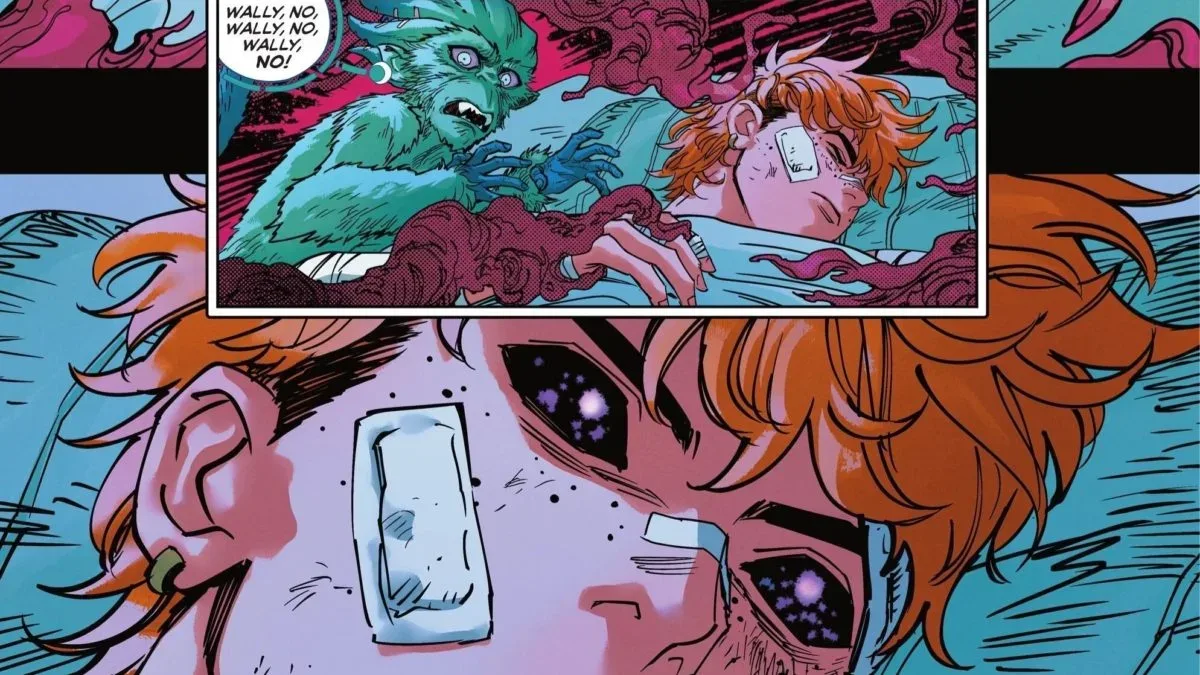
That is the kind of continuity remix the Absolute setting is built to support. Readers familiar with the conventional versions of these characters may recognize the names and broad associations, but the issue uses those expectations as setup rather than a promise that events will follow their usual route. It also places a more immediate, far stranger danger over Wally West: Grodd receives a vision of a future in which an alien entity kills and absorbs figures around him, while Wally appears to be possessed by a cosmic force.
Kilg%re and Cyborg become one idea rather than rivals
Kilg%re has a specific history in mainstream DC lore. Created by Mike Baron and Jackson “Butch” Guice, the character debuted in The Flash vol. 2 #3 in 1987. The original Kilg%re was an electro-mechano-organic intelligence, an entity associated with consuming “electro-life.” Its story included the destruction of its homeworld in the Pleiades sector, confinement in vibrational limbo by Meta#sker and a later release on Earth near Salt Lake City after Wally West accidentally freed it.
For more context, explore Opening the Door to Hinata-San’s Heart Gets English Print Release in February 2027.
Those details made Kilg%re an unusual fit for a single hero’s rogues gallery. It had ties to early Justice League International events through Maxwell Lord, and it later clashed with Cyborg. In the familiar setup, the character’s machine-adjacent nature naturally put it on a collision course with Victor Stone.
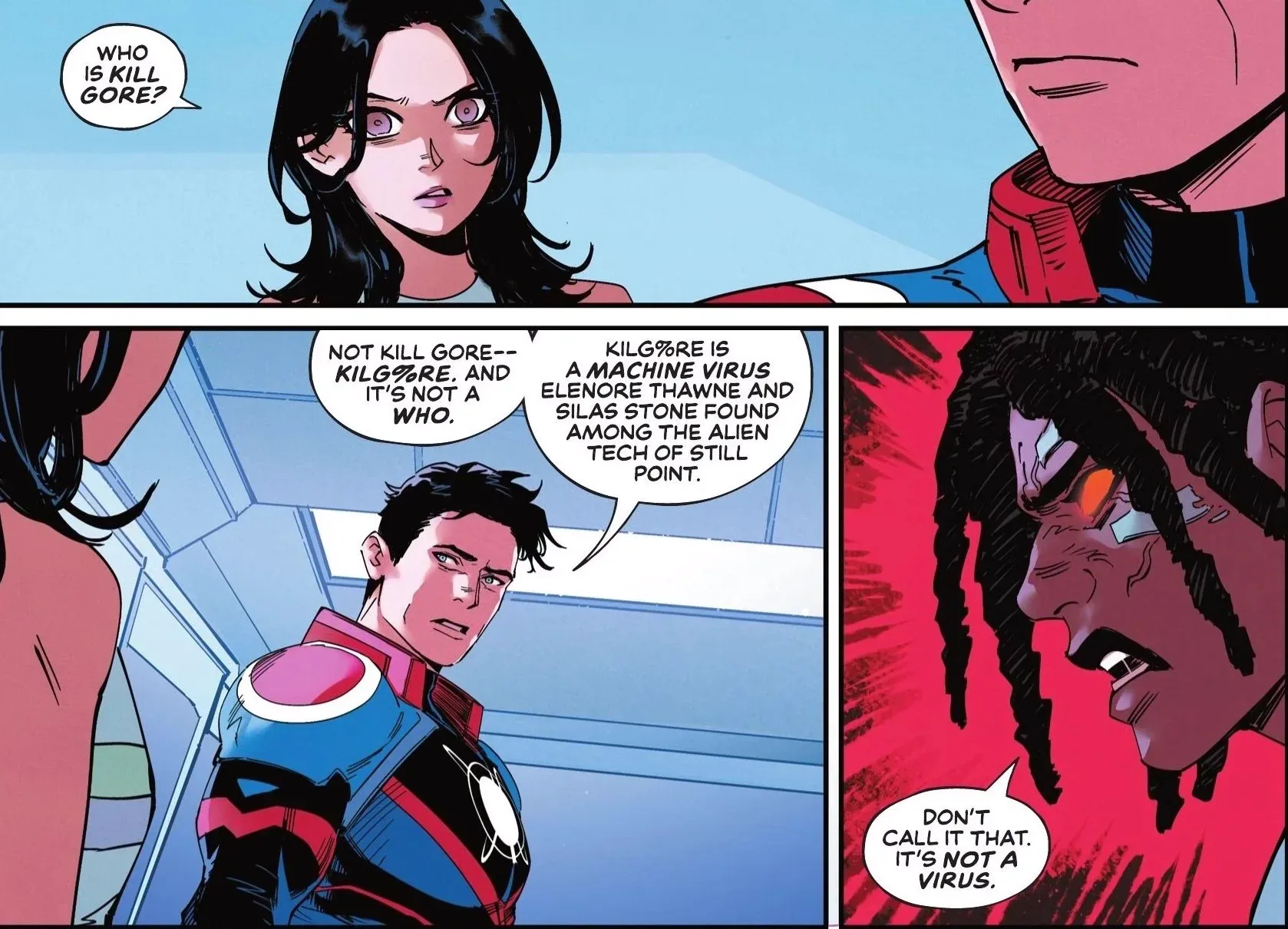
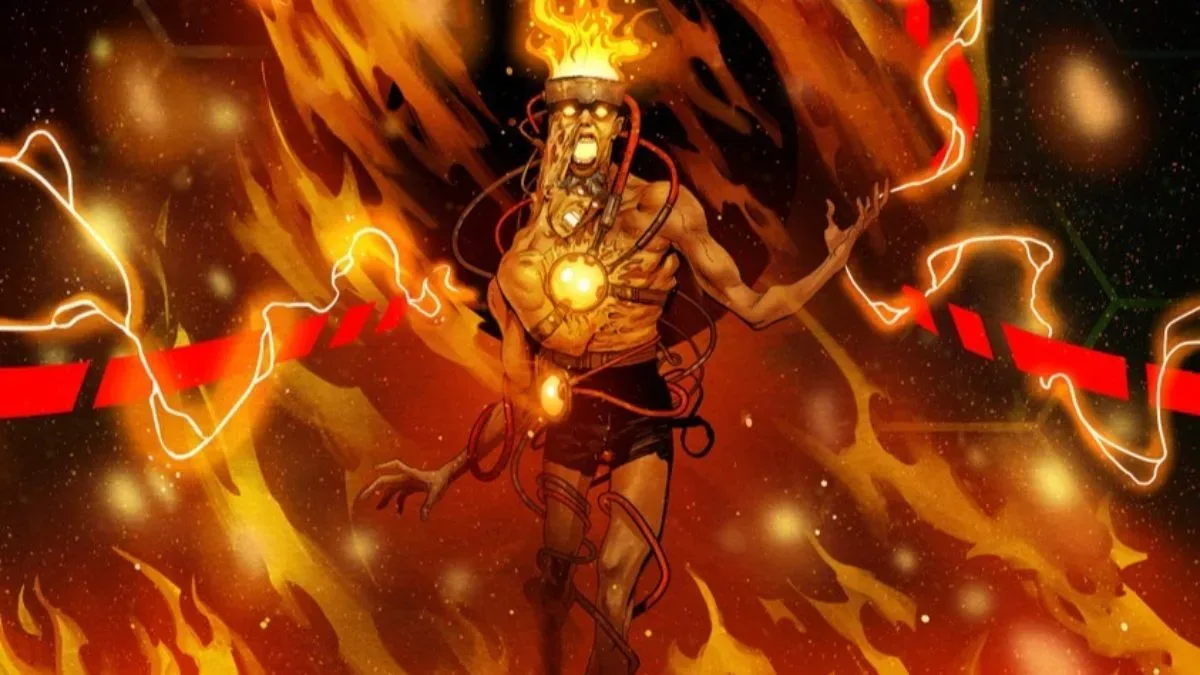
Absolute Flash #21 takes that old opposition and folds it inward. The apparent conflict between Absolute Kilg%re and Absolute Cyborg is reframed when the issue reveals they are not separate roles in the expected sense. Kilg%re is Absolute Cyborg.
That distinction matters because it changes the dramatic question. A conventional hero-versus-villain plot asks whether Cyborg can repel or defeat Kilg%re. This version instead makes the reader ask what “Cyborg” means in a world where Kilg%re’s identity is part of the answer. Is the character being defined by an attack, an imposed identity, a transformation or some other technological horror? The supplied material does not establish the full mechanics, so those questions remain open. But the reveal clearly turns a legacy rivalry into a character-concept revision.
What “electro-mechano-organic” signals here
The original description of Kilg%re as electro-mechano-organic combines three ideas: energy or electronic systems, machinery and living matter. In superhero comics, that vocabulary often points to a threat that cannot be neatly separated into biological and technological categories. By making Kilg%re synonymous with Absolute Cyborg, the issue brings that uneasy overlap directly into the Cyborg concept instead of treating it as an outside adversary.
It is a particularly fitting transformation for an Absolute Universe story, where recognizable DC names can be rebuilt around altered foundations. The familiar association remains visible—Kilg%re and Cyborg are still connected—but the nature of their connection changes completely.
Grodd’s future glimpse puts Wally West at the center of a cosmic horror
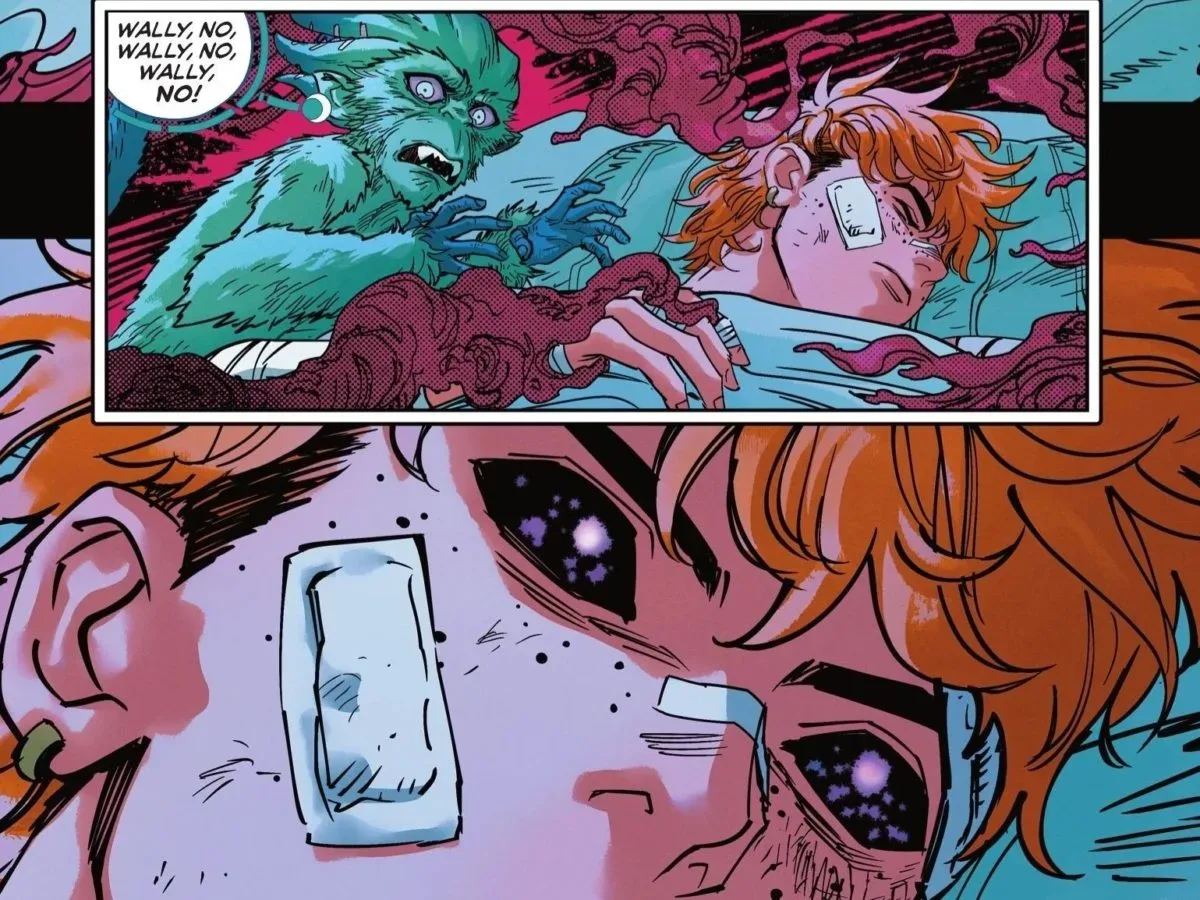
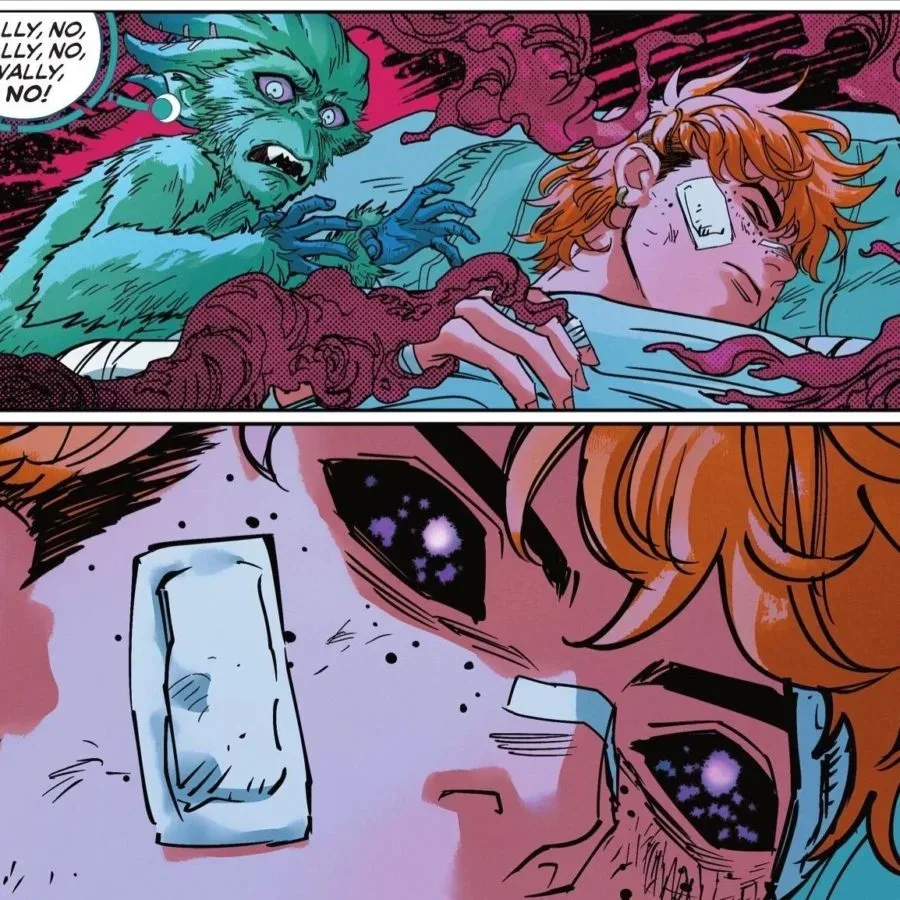
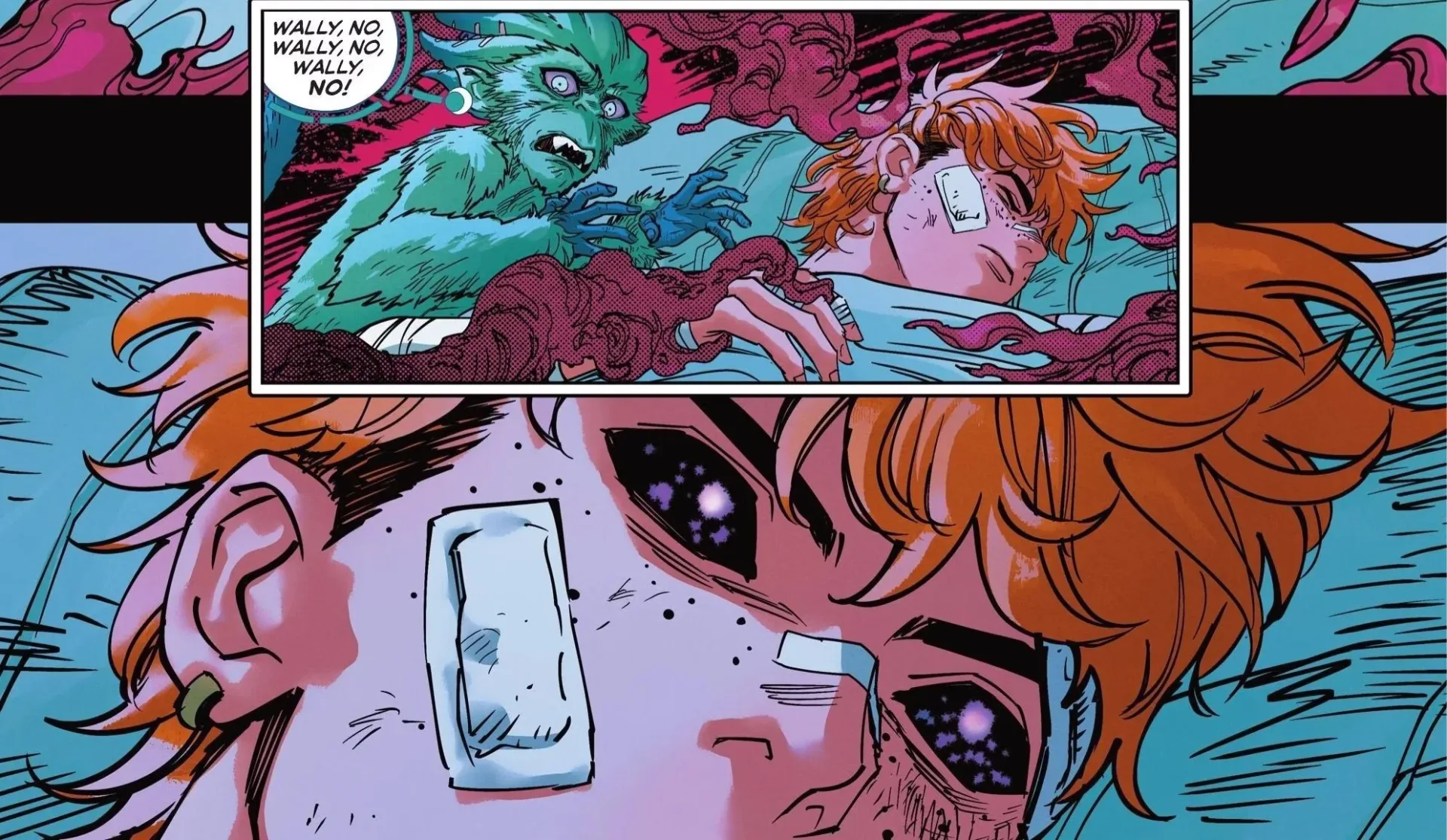
While the Kilg%re/Cyborg development expands the book’s character map, Grodd’s vision raises the immediate stakes. He sees a future in which an alien creature kills and absorbs those present. Wally is then shown possessed, with darkened, cosmic-looking eyes and a recognizable eye-like image of its own.
The imagery points toward an Absolute Universe version of Starro, though the connection is presented as a suggestion rather than a fully confirmed explanation. That caution is important. The visual resemblance and the nature of the possession invite the comparison, but the issue’s material leaves room for later clarification.
Starro the Conqueror first appeared in The Brave and the Bold #28 in 1960, created by Gardner Fox and Mike Sekowsky. That debut is especially notable because it also introduced the Justice League of America. Traditionally, Starro is part of the Star Conquerors, a parasitic alien race. A central Starro can generate smaller drones that attach to hosts’ faces, take control of them and extend a collective consciousness across a population.
In simple terms, a hive mind is a connected group that operates under shared direction rather than as wholly independent individuals. Starro’s classic threat is not merely physical destruction; it is the loss of personal agency as hosts become part of a wider invading network. That is why Wally’s apparent possession is more unsettling than a straightforward monster attack. If the force in Grodd’s vision truly is related to Starro, Wally may be endangered as a person and as a potential instrument for something larger.
The Absolute interpretation is described as less like the familiar giant starfish and more rooted in body horror. Body horror is a genre approach that makes altered, invaded, merged or violated bodies the source of fear. It fits a threat built around absorption and possession. Rather than relying on Starro’s classic silhouette alone, the issue appears to emphasize the visceral consequences of an alien organism entering or overtaking people.
There is also a useful thematic contrast in the issue’s reveals. Kilg%re/Cyborg explores a blurred boundary between person and machine. The Starro-like menace pushes at the boundary between person and parasite, individual and collective. Both ideas threaten identity, but from very different directions. One asks who Cyborg is when technology and alien intelligence are inseparable; the other asks what remains of Wally if an outside consciousness takes hold.
Gotham’s plot pulls in H.I.V.E., Queen Bee and the DEO
The issue does not keep its worldbuilding confined to Wally’s immediate predicament. In Gotham City, Ralph Dibny, Abrakadabra, Hunter Zolomon and Dr. Bones of the DEO travel to meet Elenore Thawne, described as one of the Absolute Justice League.
That lineup is notable because each name carries a different kind of DC association: Dibny evokes investigation, Abrakadabra brings a more theatrical and reality-bending villain presence, Zolomon is tied to the Flash’s antagonists, and Dr. Bones represents the DEO. The DEO, or Department of Extranormal Operations, is the government-facing acronym in this material; the issue positions Dr. Bones within that agency as this Gotham thread develops.
Elenore Thawne’s role is even more significant because she occupies the Absolute counterpart to Queen Bee. In established DC history, Queen Bee debuted in Justice League of America #23 in 1963, also created by Fox and Sekowsky. The character is associated with Korll, a hiveworld, and with expanding her insectoid species through bee-men drones, mind-confusing pollen, venomous darts, enhanced physical abilities and a search for immortality.
There have been multiple Queen Bees over the years, and the Absolute Universe now assigns that role to Elenore Thawne. The issue therefore does more than introduce another villainous motif. It attaches the Queen Bee concept to a Thawne and places her among the Absolute Justice League’s members, immediately making the label more complicated than a standard hero or villain introduction.
H.I.V.E. also enters the conversation. The acronym stands for Hierarchy of International Vengeance and Extermination. Created by Marv Wolfman and George Pérez, H.I.V.E. first appeared in Action Comics #513 and The New Teen Titans #2 in 1980. In its traditional form, it is an organized coalition of scientists and operatives pursuing the removal of superheroes and global control, later operating under Queen Bee’s influence.
The connection between H.I.V.E. and Queen Bee is naturally strong: both invoke hierarchy, swarm behavior and command over subordinates. But readers should not assume every prior relationship transfers untouched into the Absolute setting. #21’s larger pattern is to preserve meaningful names and motifs while rerouting their roles. Elenore Thawne’s Queen Bee position, the Kilg%re/Cyborg merger and the unsettling Starro suggestion all demonstrate that approach.
Ray Palmer’s motives remain a central practical concern
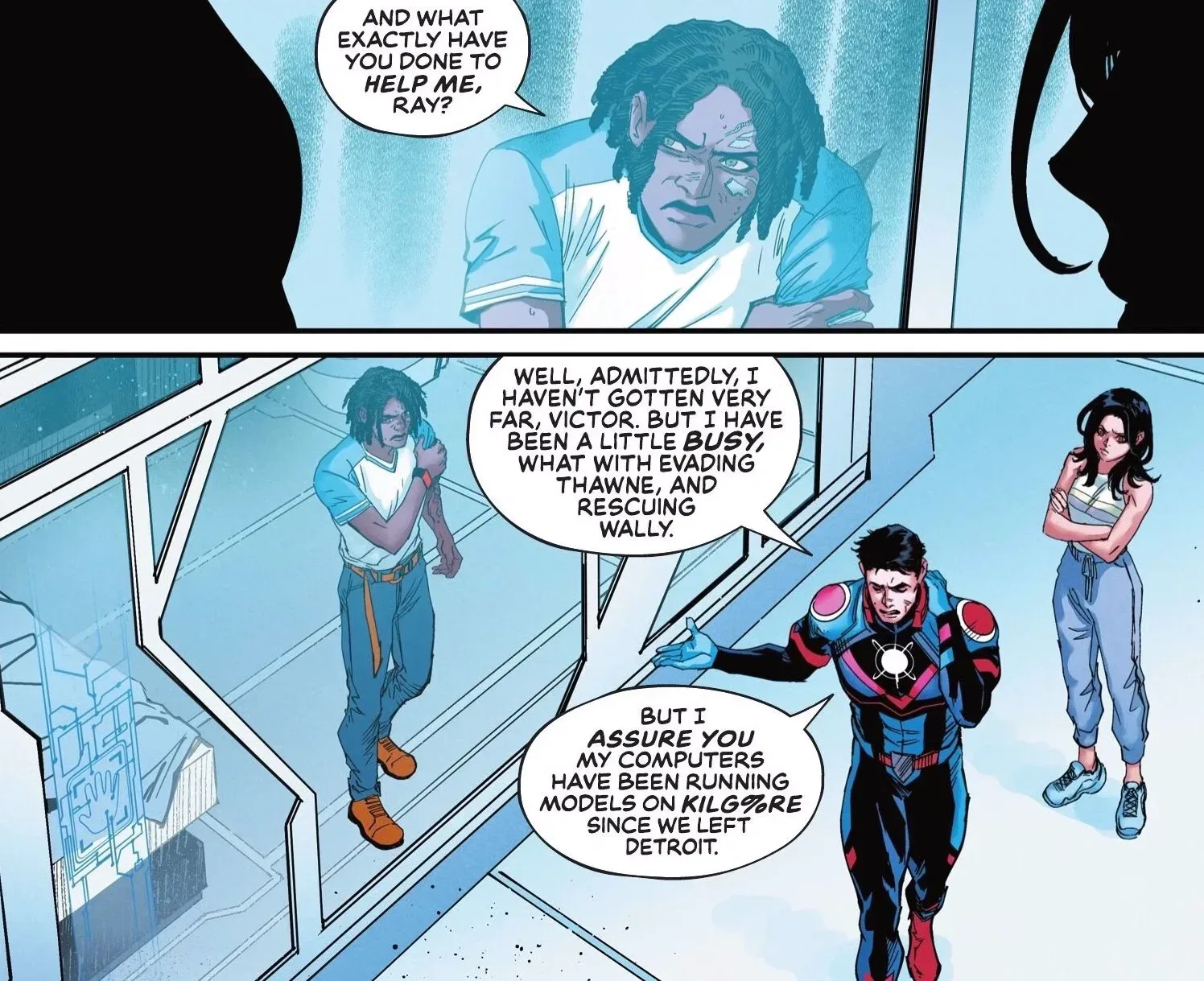
Alongside the wider continuity reveals, the issue’s stated premise keeps the immediate plot focused on the Microverse. Wally is recovering from his encounter with Hunter Zolomon, leaving Linda and Grodd to find a way forward in a dangerous setting. Ray Palmer has saved them, but the issue explicitly raises doubt about why.
The Microverse is presented as perilous, and the question is not simply whether Palmer has the ability to help. It is whether he sees Linda, Grodd and Wally as people in need or as material for experiment. That uncertainty is a useful grounding device amid the cosmic and organizational revelations. It gives the group a concrete trust problem: accepting a rescue may still mean entering someone else’s agenda.
For Wally, that is an especially precarious position. He is recovering, may be tied to the disturbing future Grodd has witnessed and is caught in a storyline involving a place described as dangerous even before the question of experimentation enters it. Linda and Grodd taking the lead means the issue distributes agency beyond the speedster himself, while Palmer becomes a possible ally whose intentions have not been settled.
What #21 establishes for the Absolute Universe
Absolute Flash #21’s key contribution is not just the number of familiar concepts it introduces. It is the confidence with which it rearranges them. Kilg%re is recast as Cyborg rather than Cyborg’s foe. Queen Bee’s position is held by Elenore Thawne, who is connected to the Absolute Justice League. H.I.V.E. is present as a loaded organizational idea. And a future vision implies that a body-horror version of Starro—or a closely related force—could become the far larger menace.
The issue also separates what is revealed from what is merely foreshadowed. The Kilg%re/Cyborg identity is the direct reversal. The Starro connection is a strong visual and conceptual implication, not a detail to treat as fully settled. Ray Palmer’s status is a question deliberately left hanging. Those distinctions are likely to matter as the story continues through the Microverse and Gotham threads.
Absolute Flash #21 is published by DC Comics with a listed cover price of $4.99.