Spoilers for the setup of Absolute Batman #25 follow.
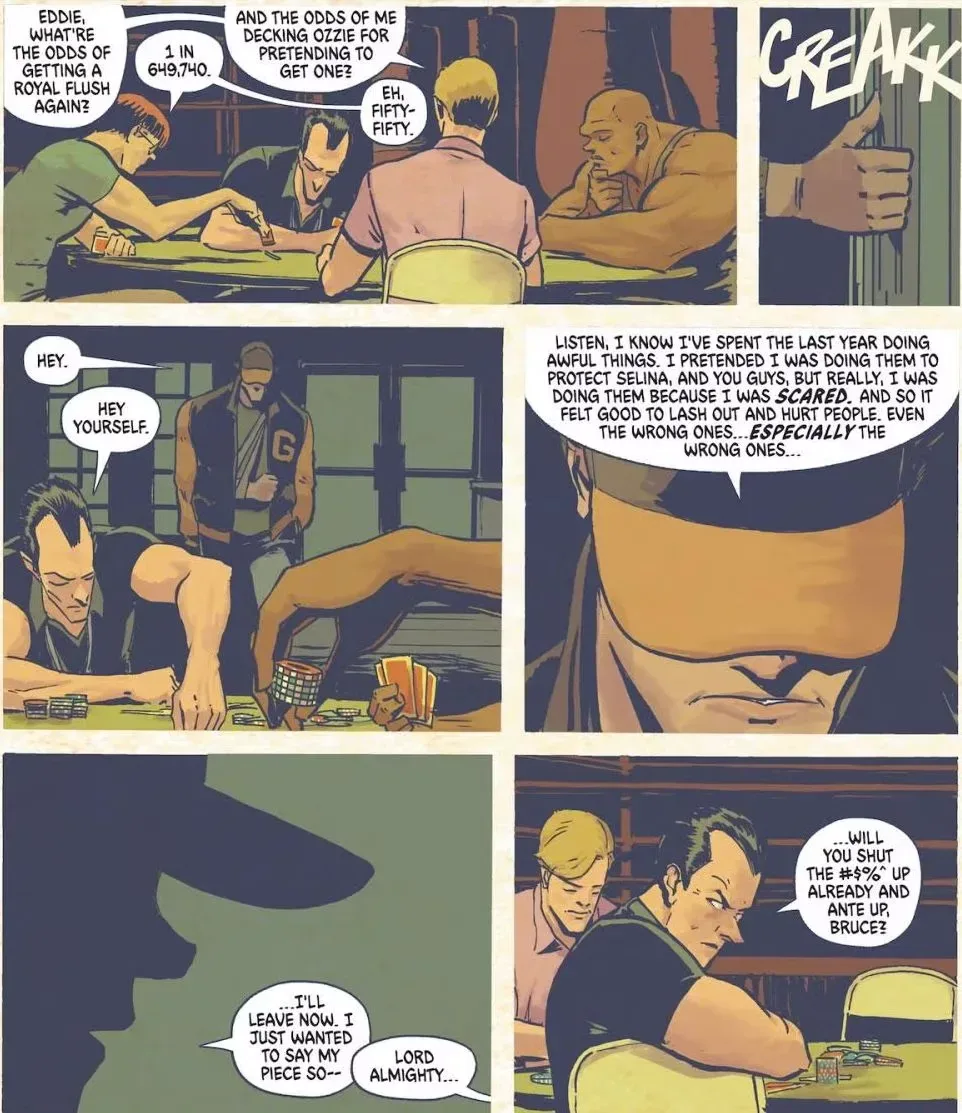
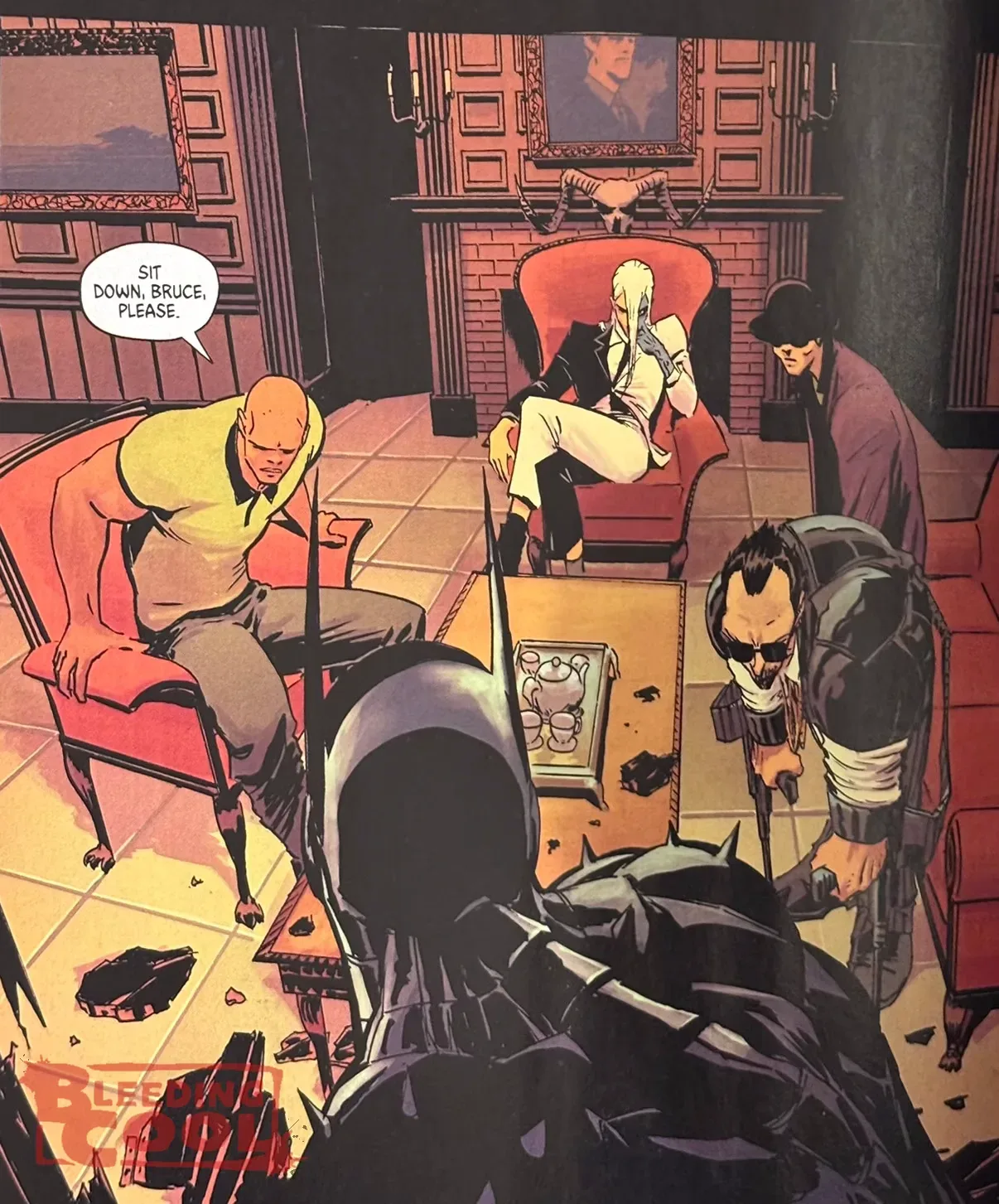
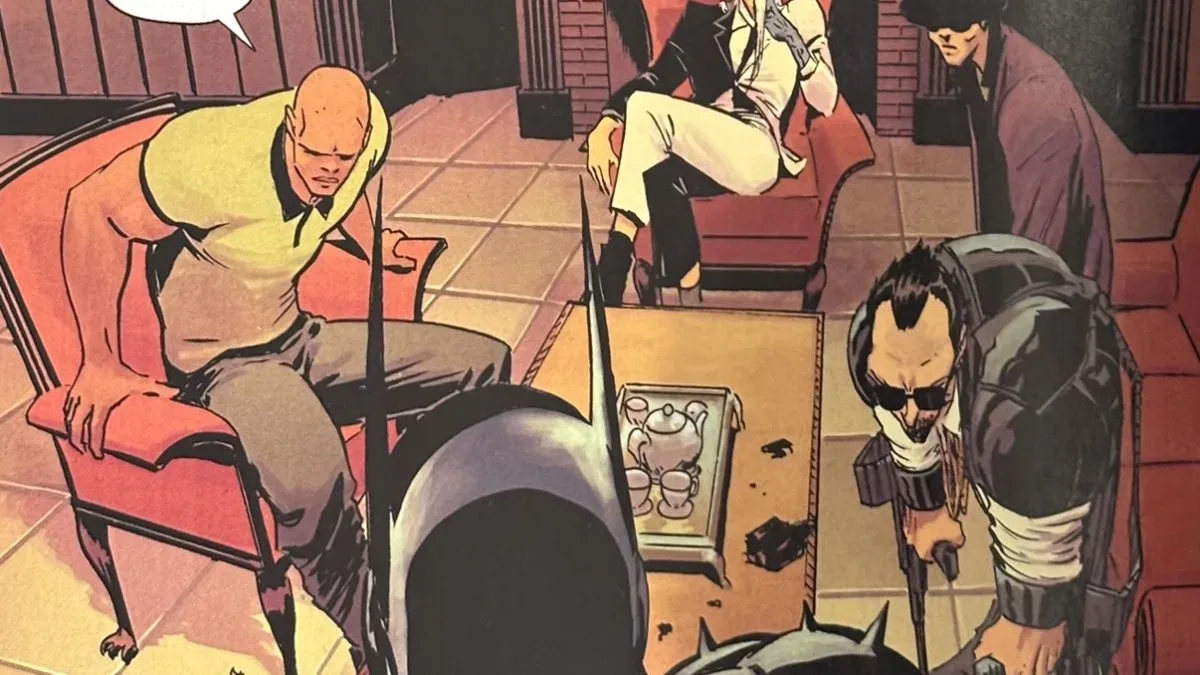
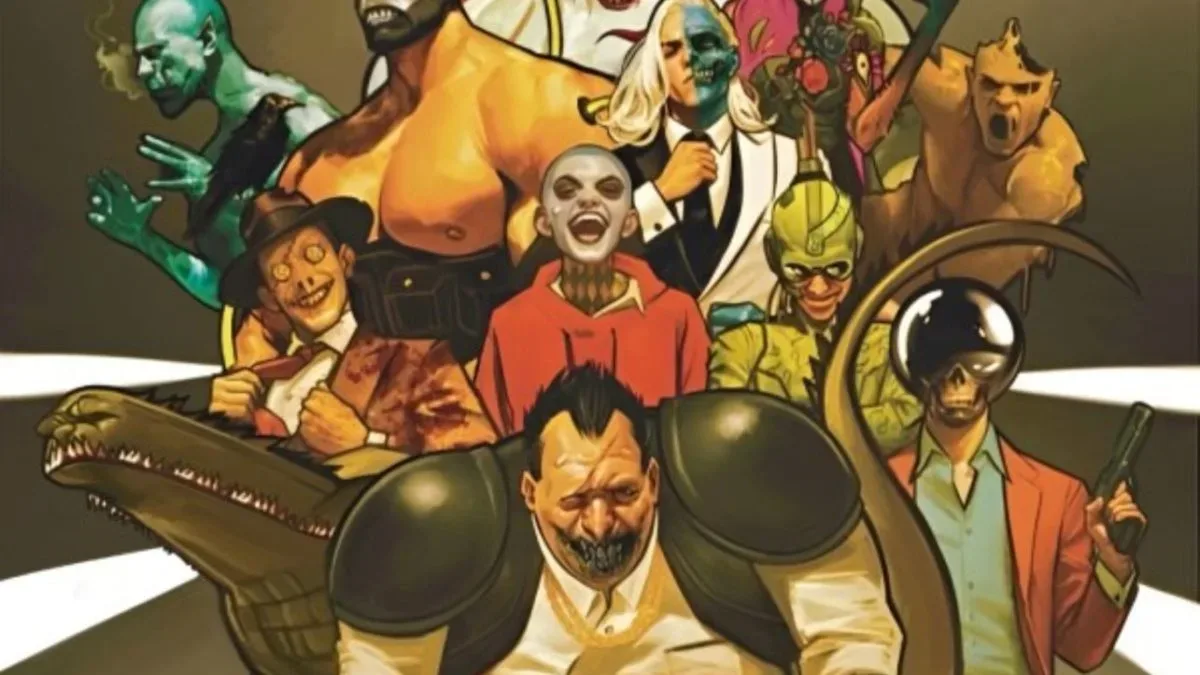
Absolute Batman #25 arrives on October 28, 2026, from writer Scott Snyder and artist Nick Dragotta, and its central danger may not be a conventional Gotham brawl. The issue places Bruce Wayne in an intervention led by people who knew him when they were children: Waylon Jones, Oswald Cobblepot, Edward Nigma and Harvey Dent. In this version of the characters, they are also the figures who have become Killer Croc, Penguin, Riddler and Two-Face after being put through extreme ordeals by the Joker.
That premise gives the milestone issue an unusually intimate pressure point. Batman stories often test Bruce through physical danger, criminal conspiracies and impossible moral choices. Here, the apparent test is whether he can trust the people surrounding him—and whether their concern is genuine help, manipulation, or some unstable mixture of both.
The issue is advertised as a 25th-issue celebration involving its villains, heroes and the series’ biggest stakes. More than 775,000 copies have reportedly been ordered, making the installment a notably large release for the title. Yet the immediate dramatic hook is small-scale in the best way: several old friends confronting Bruce in a room, with love, fear and resentment all potentially operating as weapons.
An intervention is a different kind of Batman confrontation
An intervention, in its everyday sense, is a coordinated attempt by people close to someone to address destructive behavior and encourage them to accept assistance. It is supposed to be rooted in care. But the format also carries an inherent imbalance: the person being confronted is outnumbered, placed under scrutiny and asked to accept the group’s judgment about their own life.
That makes it especially combustible for Batman. Bruce Wayne is a character closely associated with preparation, secrecy and a belief that danger can be controlled through vigilance. An intervention turns those traits into evidence against him. If he refuses, he may look isolated, distrustful and volatile. If he agrees, he may be placing himself at the mercy of allies whose judgment—or intentions—he cannot safely verify.
The idea also directly challenges a stated thematic interest of this series: moving away from the superhero as a solitary “lone wolf” and toward the community, or village, around him. A village is normally framed as a corrective to the isolated hero. It can offer care, accountability and practical support. Absolute Batman #25 asks the sharper question: what happens when the village is wrong?
That is not simply a twist on a familiar Batman setup. It questions whether community is automatically good just because it opposes isolation. A group can be caring and still misread a person. It can be frightened and still overreach. In Gotham, where the Joker has already pushed Bruce’s oldest friends into altered versions of themselves, a well-meant gathering can become a tool of coercion remarkably quickly.
Bruce’s friends are also Gotham’s future monsters
The emotional stakes depend on the particular people in the room. Waylon Jones, Oswald Cobblepot, Edward Nigma and Harvey Dent are recognizable to readers as Killer Croc, Penguin, Riddler and Two-Face. But the Absolute setting makes them Bruce’s childhood friends rather than merely familiar adversaries orbiting Batman’s career.
That change matters because it transforms the usual villain dynamic. The threat is not only that Batman faces four dangerous people. It is that Bruce may remember them as friends first. Their history can lend weight to every accusation and make every offer of help harder to dismiss. A stranger calling Bruce unstable is easy to write off. Someone who grew up beside him has access to memories, shared pain and a version of Bruce that predates Batman.
The Joker’s role intensifies the uncertainty. These friends have been put through the wringer by him to become their new forms, suggesting that their transformations are not merely visual or physical changes. The looming possibility is that the Joker has damaged not just their bodies or public identities, but the trust underpinning Bruce’s relationships with them.
That distinction is important. A physical threat has visible parameters: who is armed, who is hurt, who controls the room. Psychological manipulation is harder to map. If the friends are acting under the influence of trauma, fear or distorted loyalties, Bruce must decide whether resistance is self-preservation or a failure to recognize their pain. The issue’s tension comes from the fact that those answers may not be cleanly separated.
The Joker’s possible victory condition
Batman and Joker conflicts are often described in terms of escalation: a deadlier device, a larger body count, a more spectacular public crime. The intervention setup suggests a potentially quieter approach. Rather than defeating Bruce through punches, kicks or killing, the Joker may be trying to make Bruce appear unreasonable when he protects himself.
If that is the plan, it exploits a brutal double bind. Bruce’s instincts may tell him that the meeting is compromised and that the people closest to him have been turned against him. But acting on those instincts could make him look exactly like the paranoid and violent figure the group believes they are confronting. He could be cornered by the perception of his own behavior.
This is a particularly fitting type of danger for a character who operates behind a mask and depends on secrecy. Batman’s methods are often frightening even when they serve a protective purpose. Put those methods in front of frightened friends who have been reshaped by the Joker, and his explanations may not carry much weight. The more forcefully he insists that he sees a trap, the more the trap can seem confirmed to everyone else.
There is a useful distinction here between mistrust and paranoia. Mistrust is a response to credible reasons for doubt; paranoia is a belief in threat that exceeds available evidence. Stories about Batman regularly play in the tension between the two because his world genuinely contains conspiracies, elaborate disguises and mind games. The intervention gives that tension a human face. Bruce may have excellent reasons to be suspicious, but the people judging him may only see a friend who cannot accept help.
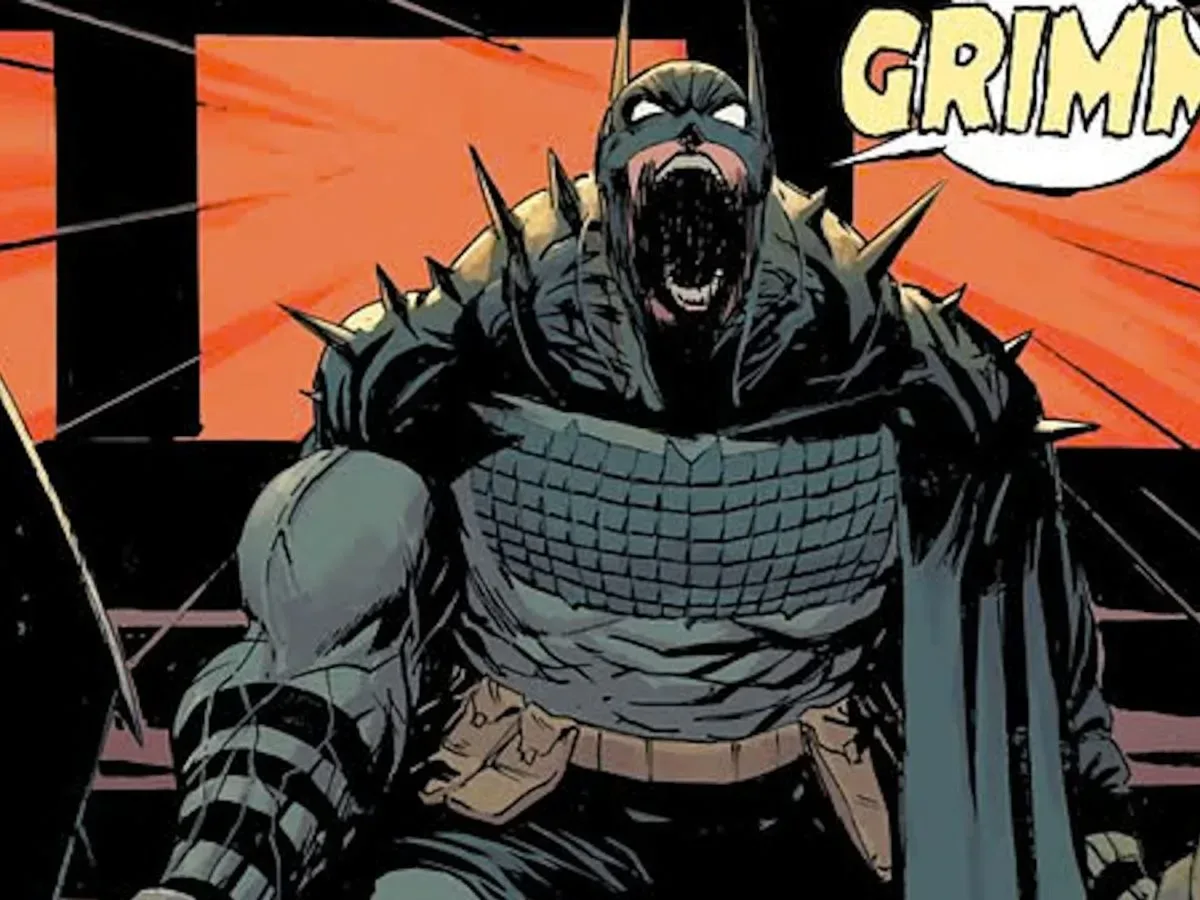
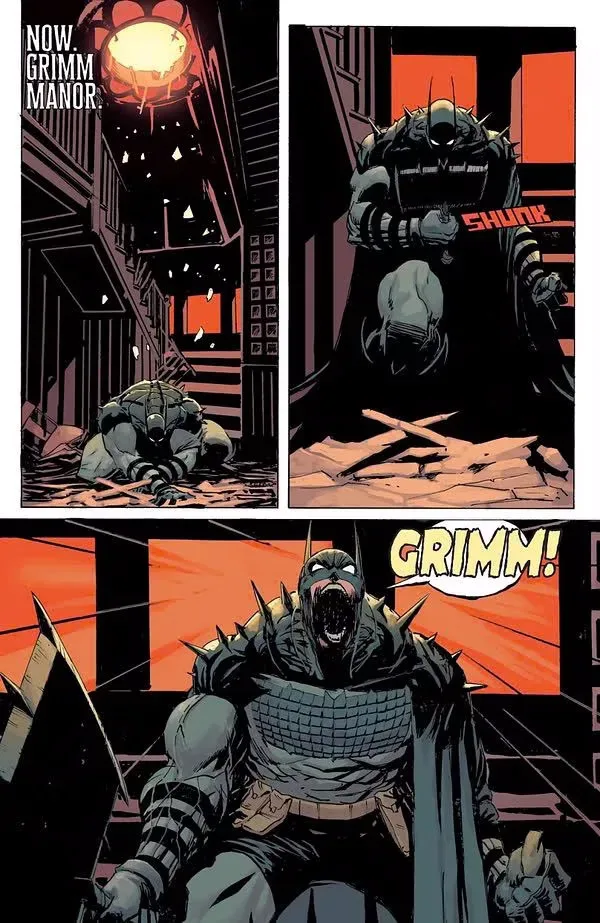
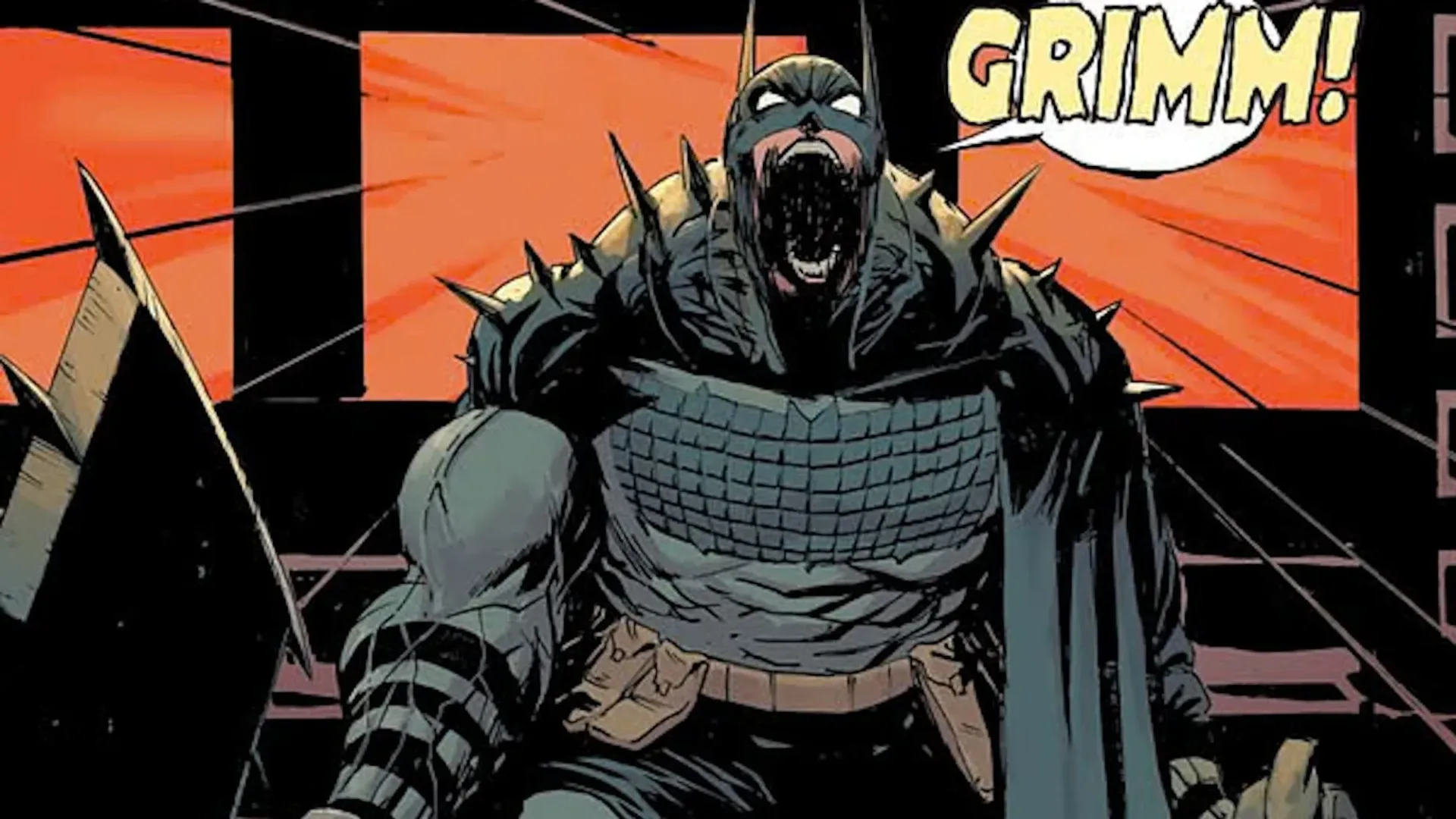
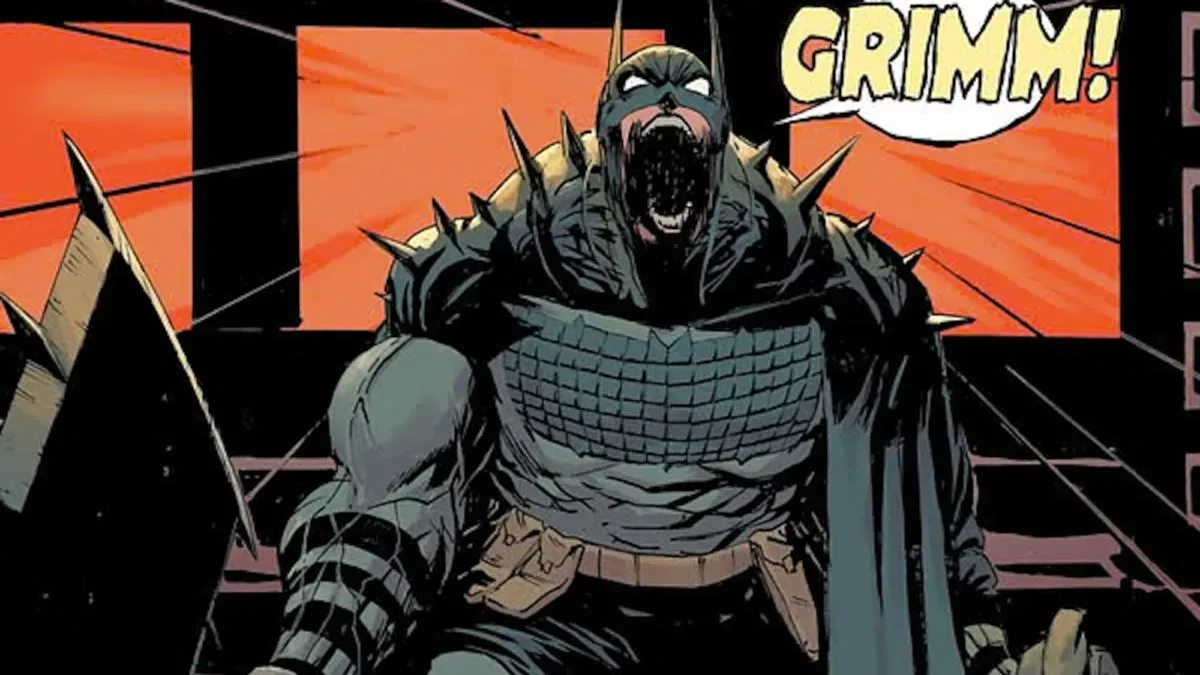
The reference point within this conflict is Jack Grimm, who is positioned as the contrasting figure Bruce could be mistaken for or measured against. The question is not simply whether Bruce can escape a trap. It is whether the situation can redefine him in the eyes of those who matter: as a protector under pressure, or as the threat they need protection from.
Why the 25th issue format fits the story
Anniversary and milestone issues often promise scale. The official solicitation leans into that language with “all the villains,” “all the heroes” and “all the stakes,” before asking what remains of Absolute Batman. The intervention premise offers a way to give that promise a personal center rather than treating scale as a synonym for spectacle.
For a 25th issue, “what is left of Batman?” can mean more than whether Bruce survives an encounter. It can mean whether the relationships that define this incarnation survive the Joker’s interference. When the people who knew Bruce before his role as Gotham’s vigilante become part of the crisis, the story puts identity—not just survival—on trial.
It also creates a meaningful use for a large villain and hero roster. Characters need not merely arrive to fight. They can represent competing accounts of Bruce Wayne: the friend who sees someone in pain, the enemy who sees a target, the ally who sees a necessary protector, and the Joker who sees an opportunity to make all of those interpretations collide.
Readers following the broader Absolute Batman material may also want the surrounding DC context, including the recent focus on Absolute Batman within DC All In. For this specific issue, however, the central question remains tightly focused on Bruce and the people assembled around him.
What readers should watch for
The setup does not establish that Waylon, Oswald, Edward and Harvey have consciously betrayed Bruce. It establishes a much more unsettling possibility: their care can be genuine while the situation is still shaped by the Joker’s designs. That ambiguity is likely to be the key to reading the confrontation.
- Who controls the terms of the meeting: An intervention depends on framing. Watch for who defines Bruce’s problem, who decides what counts as proof, and whether Bruce is allowed to set any boundaries.
- How the friends describe their shared past: Childhood history could be a bridge back to trust, or a way to press Bruce’s emotional weak points.
- Whether the Joker needs to be physically present: The premise makes clear that his influence can matter even if he is not the person speaking in the room.
- How Bruce responds to concern: A refusal to cooperate may be evidence of danger, a rational defense against manipulation, or deliberately written to look like both.
- What “help” actually requires: The most telling detail may be whether the group asks Bruce to accept support or demands that he surrender agency.
Nick Dragotta’s role as both interior artist and cover artist places a single visual voice across the issue’s presentation, while Snyder’s premise turns familiar Batman mythology toward a conflict built on interpersonal fracture. The result is a story hook where an ordinary word—intervention—carries as much threat as any supervillain codename.
Absolute Batman #25 is listed at $5.99 and dated October 28, 2026. Its broad promise of heroes, villains and high stakes may draw attention, but the defining clash appears to be more painful than a standard showdown: Bruce Wayne confronting the possibility that the people trying to save him may be the people most capable of destroying his trust.