Sports-card collectors can usually spot the obvious foul: cut away an edge, rebuild a worn corner with color, or add material that was not there before, and the card has been altered. The harder arguments begin with the imperfections that seem external to the card itself. A fingerprint. Surface dirt. A curl from storage. A raised corner. A dent or crease that might respond to humidity and pressure.
Those cases matter because a card can occupy two very different worlds at once. It may be a personal collectible that an owner simply wants to keep presentable, and it may also be a potential grading submission whose value and marketability can be affected by a third party’s standards. The two goals overlap, but they are not interchangeable.
That tension is at the heart of the card-care debate. Is restoring a card’s appearance the same as changing it? Or should the question be less about intent and more about whether a treatment changes the physical object in a way a grader cannot reliably assess years later?
The easy cases are not the important ones
There is broad agreement that trimming and recoloring cross the line. Trimming removes original stock to create a cleaner edge or different proportions. Recoloring adds pigment in an attempt to hide wear. Both can make a card look better while misrepresenting its original state and condition.
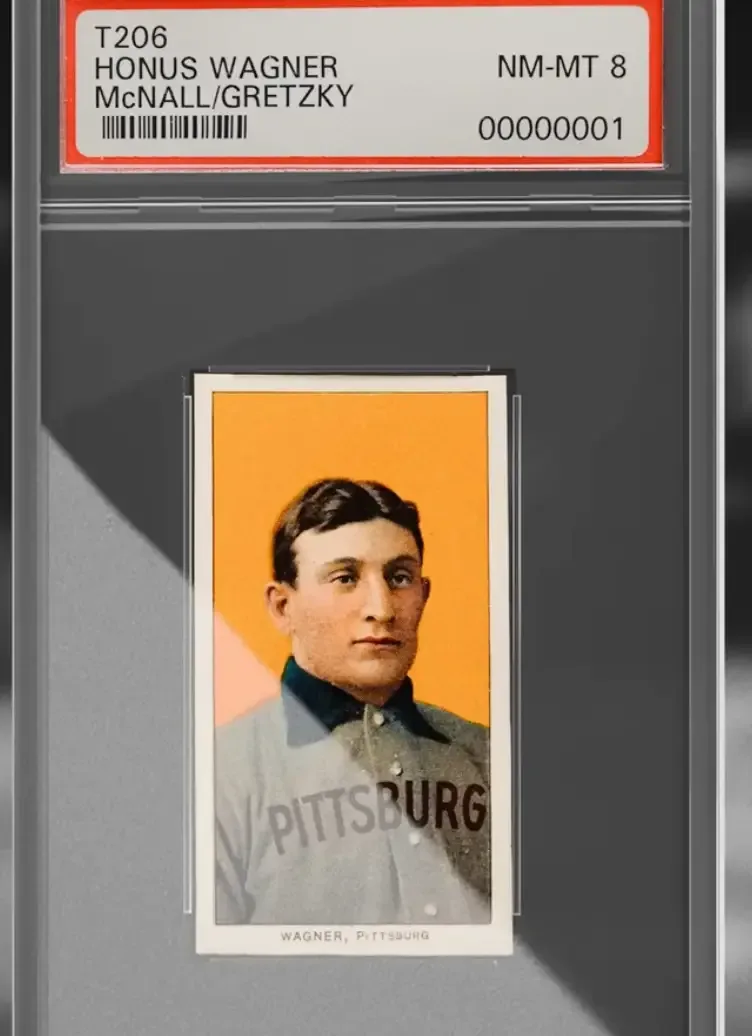
But “altered” is not synonymous with “worthless.” A T206 Honus Wagner once owned by Wayne Gretzky was PSA’s first graded card, carrying a PSA 8 with certification number 00000001. Bill Mastro later admitted trimming it before grading. Its place in hobby history and exceptional desirability nevertheless remain intact for many collectors.
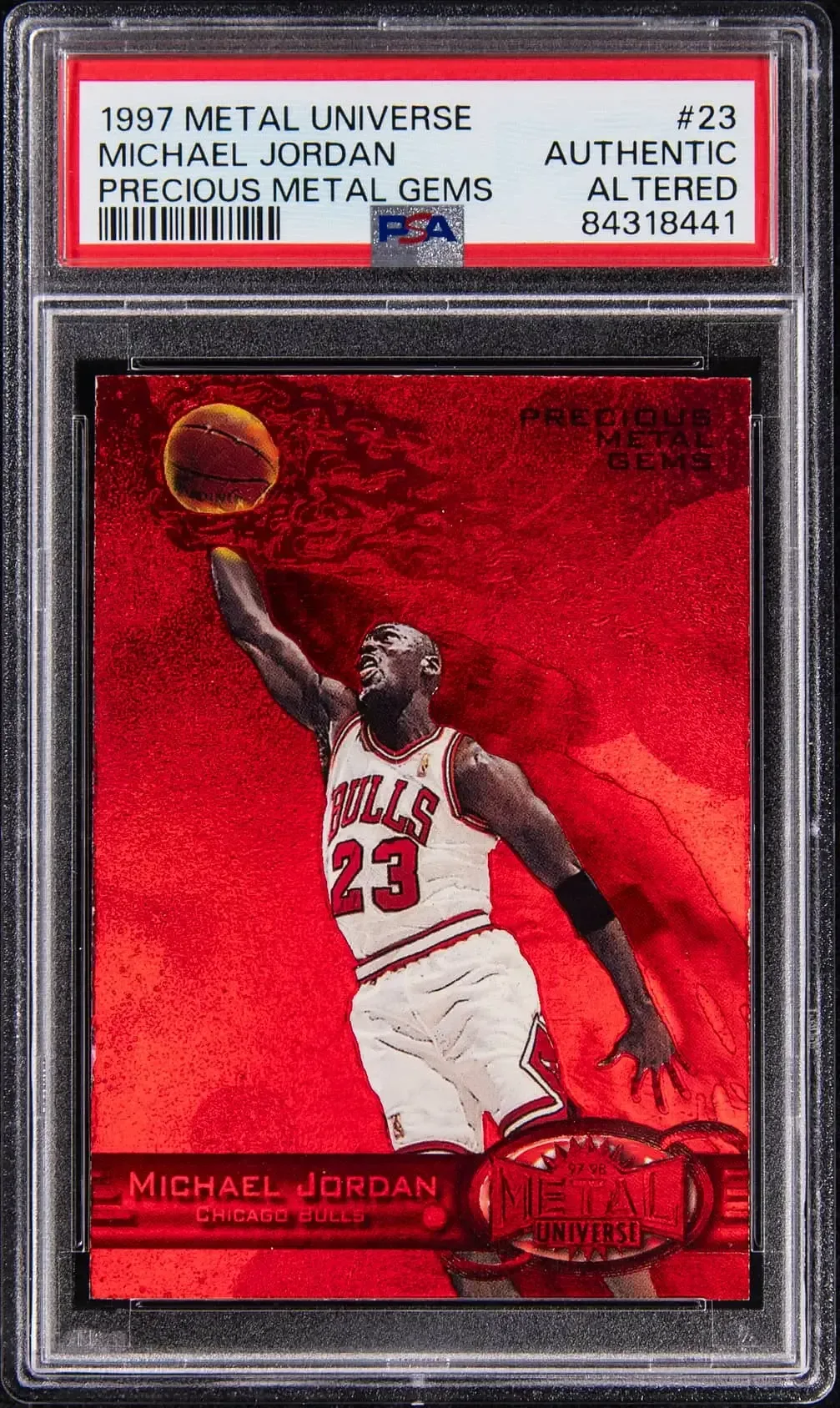
More recent sales underline the same point. A 1997 Metal Universe Michael Jordan Precious Metal Gems Red, numbered to 90, sold for $244,000 despite a PSA “Authentic Altered” label. A 1952 Topps Mickey Mantle with the same general designation sold for $130,000. An altered designation can limit a card’s audience and rule out a numerical grade, but rarity, player significance and demand can still carry substantial weight.
It is also important to understand what that label does not establish. An “Authentic Altered” designation identifies a problem under the grading company’s standards; it does not necessarily tell a buyer precisely what was done. Collectors should not assume every altered card was trimmed, nor assume that all alterations have equal implications.
Why pressing is treated differently across collectibles
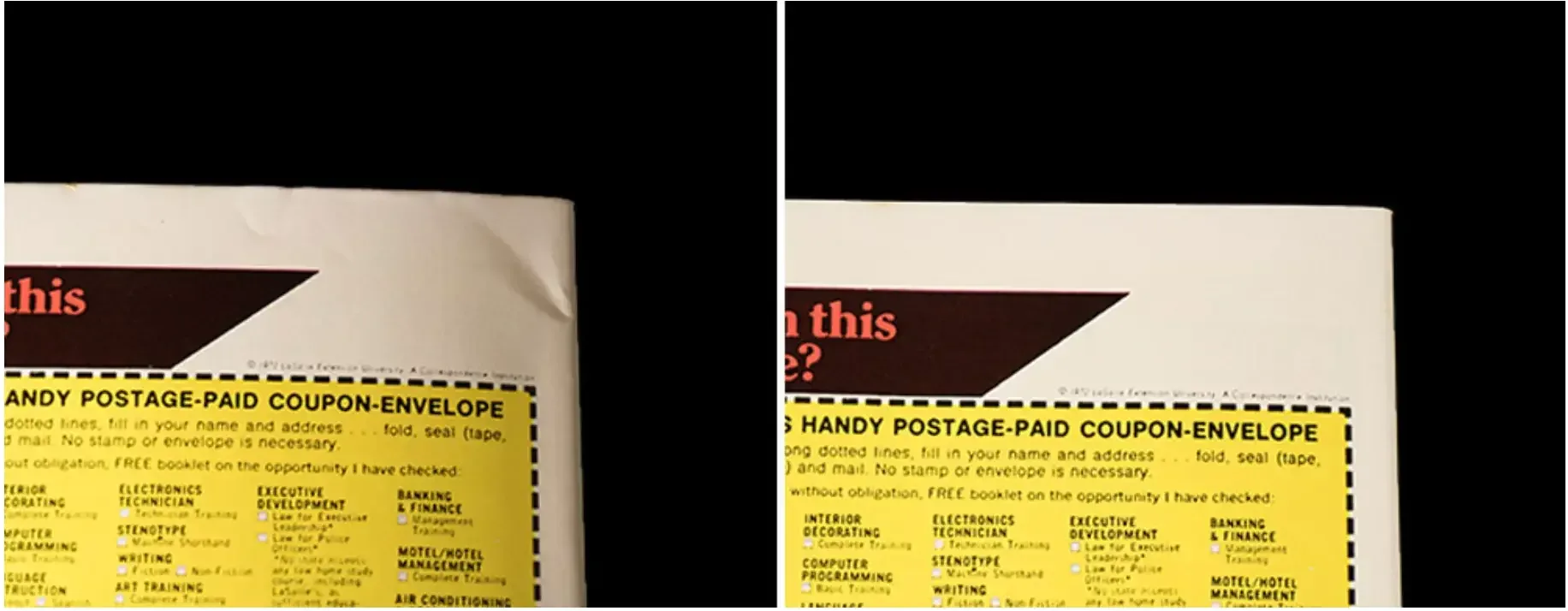
The comparison with comics and magazines makes the sports-card policy especially interesting. PSA offers professional cleaning and pressing for comics and magazines ahead of grading. Pressing may reduce visible waves, wrinkles, folds and related flaws, potentially improving how those collectibles present and, in some cases, their grade.
Related coverage includes Card Care or Card Alteration? The Grading Line Is Still Debated.
Sports cards operate under a different rulebook. PSA treats crease or wrinkle pressing as alteration for cards. Its explanation rests on both physical construction and collecting culture. Comics and magazines are thinner, and pressing can sometimes be performed without a visible trace. Thicker card stock may be more likely to have its dimensions changed by pressure. Meanwhile, sports-card collectors have traditionally placed a stronger premium on a card retaining its original state, whereas comic and magazine collectors have been more accepting of pressing.
Pressing, in this context, means applying pressure—sometimes alongside humidity—to reduce bends, waves, creases or indentations. That description alone explains why people disagree. A collector may see the process as correcting storage damage. A grading company may see a physical intervention that changes the card from the condition in which it arrived.
Neither perspective is frivolous. If a card curls or develops a lifted corner after years in storage, it is understandable to distinguish flattening it from removing part of it. Yet a grading standard has to be applied consistently across cards with unknown handling histories. The more treatments that can reshape stock or reduce defects, the more difficult it becomes to determine whether the graded condition reflects natural preservation or a successful intervention.
Card care and grading eligibility are separate questions
A major source of confusion is the assumption that “safe for my collection” must mean “acceptable for numerical grading.” It does not.
Some collectors keep cards raw by choice, particularly vintage material. For them, preventing residue from sitting on a card or removing an accidental mark may have nothing to do with a future submission. Their priority is maintaining the collection they own, not optimizing a number on a slab. That is a valid collecting goal.
Grading companies, however, must consider a different problem: whether the card can be assigned a grade that remains meaningful and defensible. PSA financially guarantees the grades it assigns. A treatment that makes a card look better now but wears away or reacts unpredictably with ink, coating or card stock years later creates a serious concern. The grade may no longer accurately represent the item PSA evaluated.
That concern becomes sharper with chemical cleaning. A microfiber wipe used to remove a fingerprint occupies a very different practical category from applying a substance to the surface. The latter can introduce uncertainty about residue, future discoloration, coating changes or other long-term effects. PSA standards indicate that certain cleaning products and treatments can result in a card being ineligible for a numerical grade.
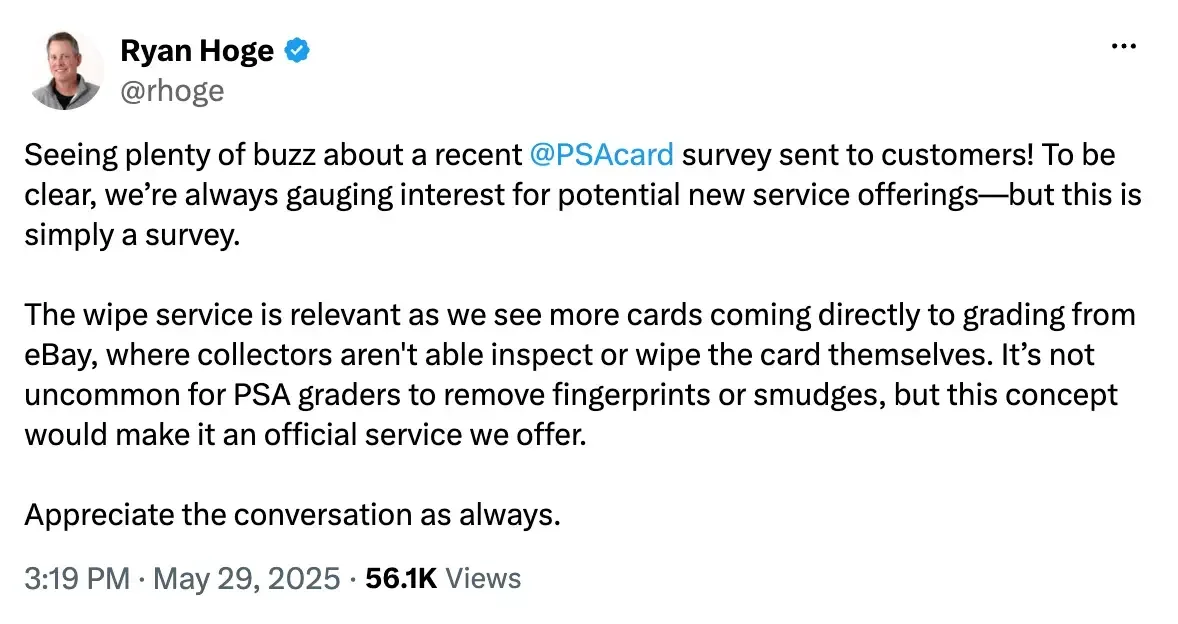
PSA has nonetheless explored a narrowly defined cleaning service. In a 2025 customer survey, the concept involved fingerprints, smudges and dirt; PSA President Ryan Hoge later clarified that graders already sometimes remove fingerprints and smudges, while the proposed service would formalize that limited practice. The distinction is meaningful: removing obvious surface contamination is not necessarily the same thing as chemically treating a card to improve its apparent condition.
The case for a narrower definition of alteration
One school of thought draws the line at what happens to the original card itself. Under that approach, adding color, cutting stock or replacing material is alteration because the card has been substantively changed. Removing dirt, residue or a substance that landed on the card later is viewed as cleaning rather than alteration. Reducing an indentation might similarly be considered an attempt to return a card closer to its prior state rather than create a new one.
Kurt of Kurt’s Card Care argues for this distinction and has emphasized that collectors can cause real damage when they use unsuitable products or techniques without understanding them. His position is not that every home treatment is harmless. It is that the quality of a product, the knowledge of the person applying it and the difference between foreign material and original card material all matter.
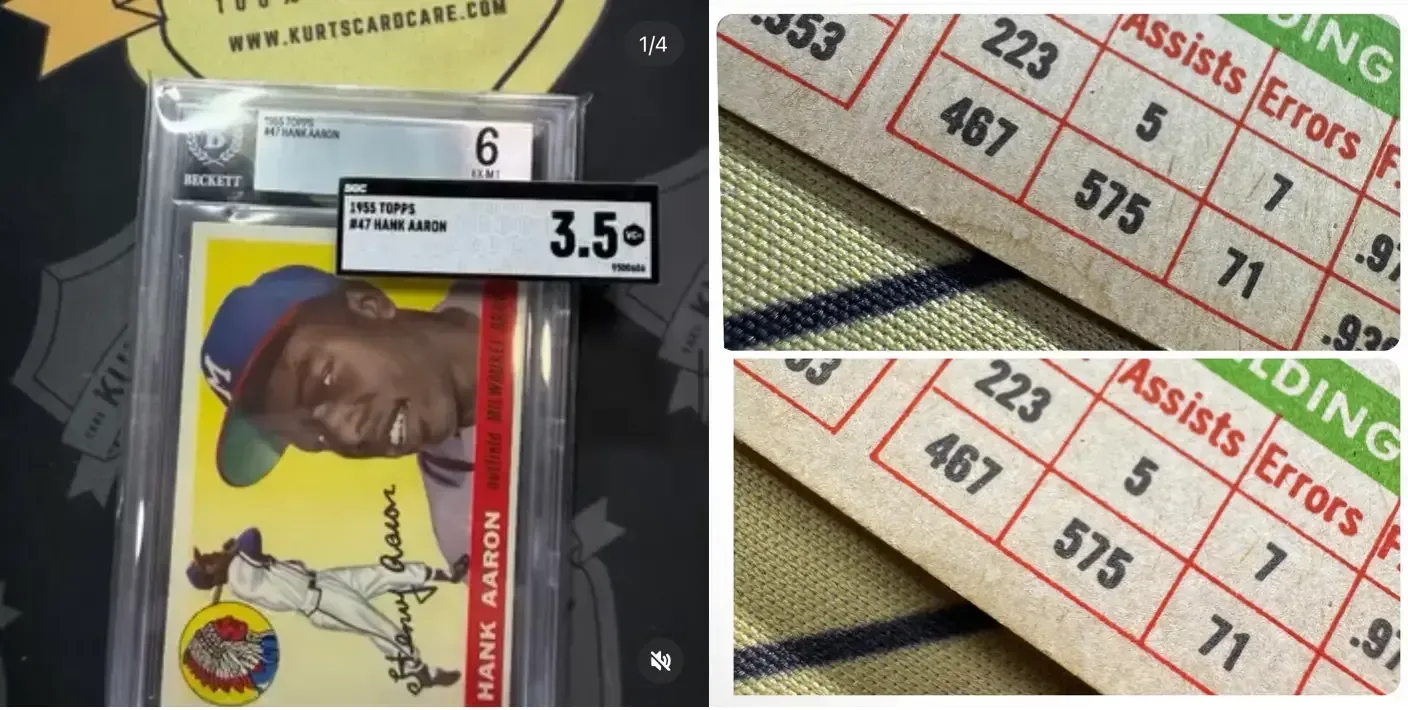
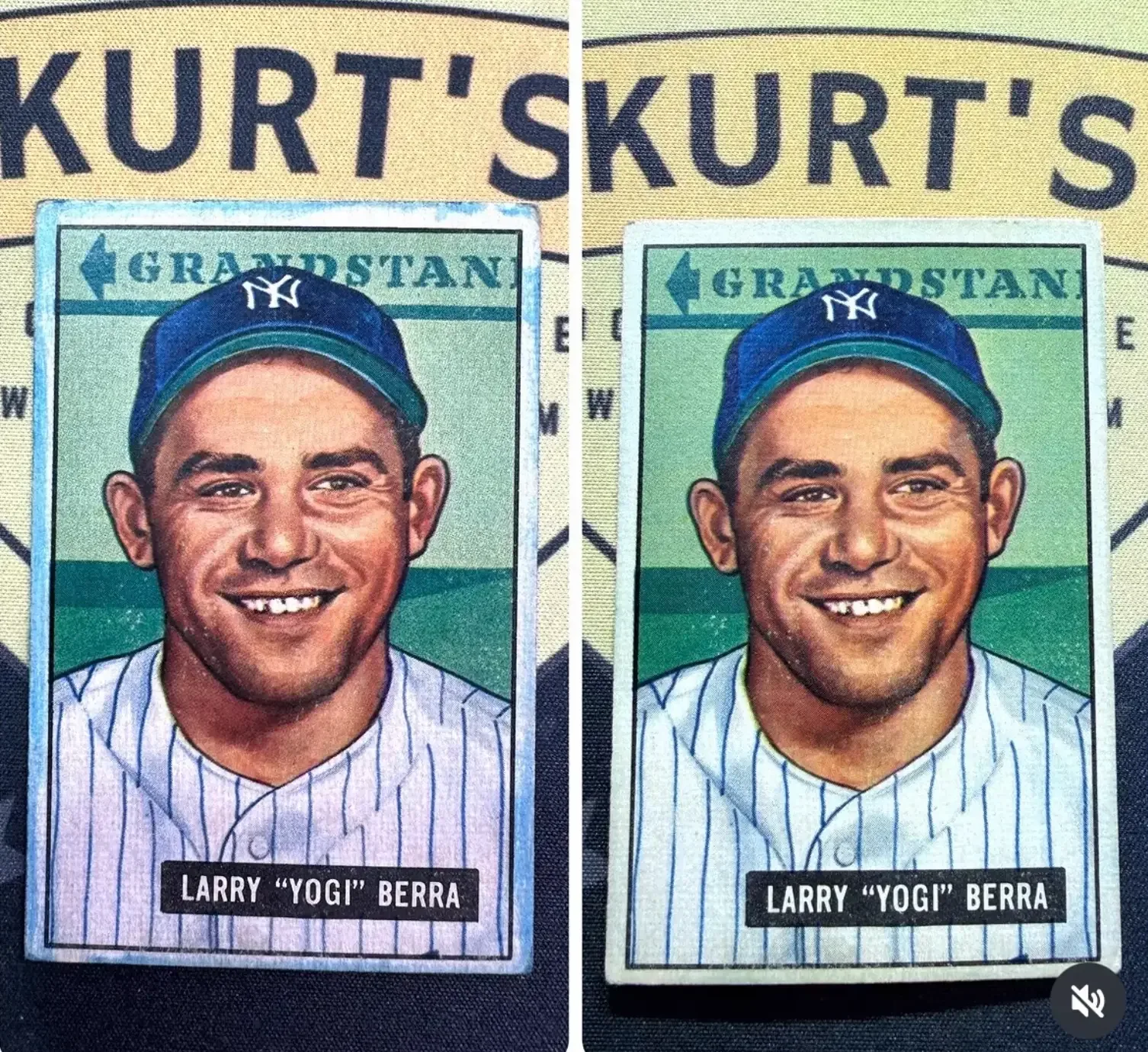
Examples cited in the debate show why this view has appeal. A 1955 Topps Hank Aaron previously graded SGC 3.5 was later graded BGS 6 after work addressing a visible crease, without an altered designation. Separately, blue marker was removed from a 1951 Bowman Yogi Berra before it received a BGS 4. In the card-care framing, the marker was foreign material rather than a feature of the original card.
Those individual outcomes should not be read as a universal promise. A result from one grading company, on one card, after one form of work does not create a blanket policy for every treatment or future submission. Grading decisions are necessarily card-specific, and collectors should expect uncertainty wherever alteration standards are involved.
Practical implications for collectors
The most useful approach is to decide what matters before any intervention. A raw personal collection, an eventual grading submission and a high-value card intended for resale do not carry the same tolerance for risk.
- If numerical grading is the priority: Treat any pressing, chemical application or corrective process as a potential risk. A card that appears improved may still receive an altered designation or be denied a numerical grade.
- If long-term preservation is the priority: Be cautious about unverified products and improvised methods. The immediate visual result does not answer questions about how a substance may interact with stock, ink or coatings over time.
- If buying an altered card: Focus on what is known, what the label communicates and why the card remains desirable. An altered designation is important information, but scarcity and historical significance can still support demand.
- If a card is especially valuable: Avoid treating grading precedents as guarantees. The potential downside is not only a lower grade; it may be a permanent designation that changes the buyer pool.
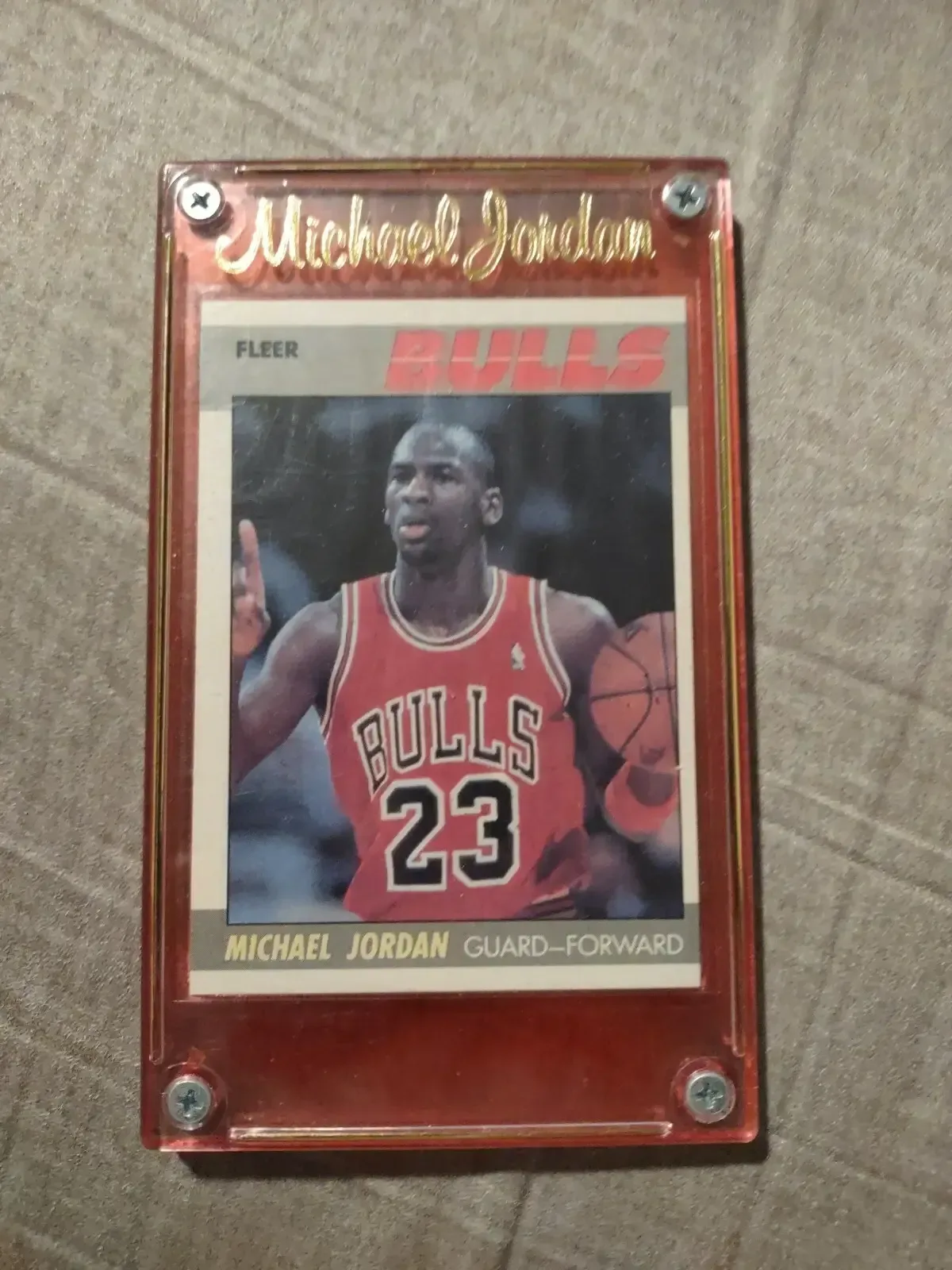
Storage also belongs in this conversation. Screw-down holders were once widely regarded as protection for important cards, but excessive pressure can flatten or compress card stock and may lead to an altered finding. The lesson is less about condemning any one holder than recognizing that preservation methods can themselves affect the object being preserved.
For collectors following the market side of the hobby, planning matters too. New products, such as the releases covered in Topps’ Bowman U Best Football, Cosmic Chrome Baseball and Inception Football preorder schedule, can generate excitement, but condition decisions on cards already owned deserve an equally deliberate approach.
A fair line may be clearer in principle than in practice
There is a persuasive ethical distinction between concealing or manufacturing condition and removing a later contaminant. Trimming is not the same as lifting dirt. Recoloring is not the same as wiping away a fingerprint. Rebuilding a corner is not the same as attempting to flatten a storage curl.
Yet grading companies are not only judging intent. They are managing consistency, physical uncertainty and the long-term credibility of the grade on the label. That explains why their definitions can be stricter than the personal standards of a collector caring for raw cards.
The practical takeaway is not that all card care is forbidden, or that all appearance improvements are ethically equivalent. It is that collectors should distinguish between their own view of restoration and a grading company’s eligibility rules. A treatment might feel like preservation to its owner while still posing a grading risk. Knowing that difference before touching the card is the most reliable way to avoid turning a care decision into an expensive surprise.