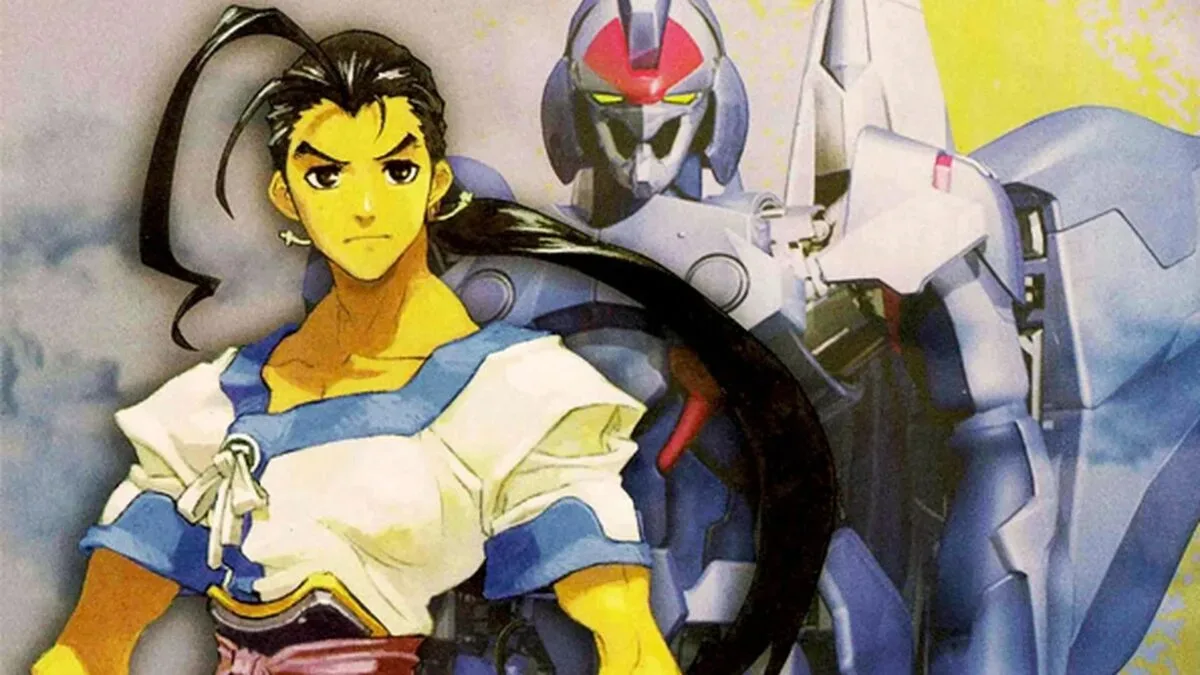
The original Sony PlayStation did not have one single definition of action. Its library includes direct combat, stealth, action-platforming, survival horror, exploratory 2D adventure and vehicular combat. This ranking uses that broad boundary, but excludes games whose primary identity is role-playing, strategy or compilation-based. That is why Final Fantasy, Lunar and Final Fantasy Tactics do not appear here, despite their presence in the supplied artwork references.
Every selection below had an original PlayStation release in at least one major territory: North America, Europe or Japan. Release dates, localization, edition names and bonus features could differ between regions, so the list treats the original PlayStation version as the boundary rather than combining it with later ports, remakes or compilations. That distinction matters especially for Resident Evil 2, Castlevania: Symphony of the Night, Metal Gear Solid and Tenchu.
The order weighs mechanical clarity, variety within the game, encounter and level design, meaningful use of PlayStation hardware, replay or completion incentives, historical identity and how tolerable each game’s limitations remain. These are editorial selections rather than objective scores. A smaller or rougher game can rank highly when its central idea is unusually clear, while a more ambitious game can fall when its controls or structure undermine its best systems.
10. Twisted Metal 2
Twisted Metal 2 earns its place by showing how broad PlayStation action could be when the character left the ground. Its arenas turn driving into combat: vehicles maneuver through enclosed battlefields, weapons are collected and fired, and environmental spaces become part of the attack plan. Different vehicles give the game a useful spread of handling and firepower, while tournament and single-match options make it easy to play in short sessions. Split-screen multiplayer is a major part of its lasting identity, particularly for players who want immediate competition rather than a long campaign.
The game is less successful when judged as a sustained narrative adventure. Its story is mostly a frame for the battles, arena readability can suffer, and period driving controls do not offer the precision expected from later action games. Difficulty can also spike when opponents combine weapons aggressively. Still, its central idea is unusually clear: choose a machine, read the arena, manage ammunition and create a moving firefight. It suits players who want compact, aggressive action and local multiplayer more than those seeking character progression or elaborate exploration.
The original PlayStation release is the relevant boundary here, rather than later franchise entries or modern re-releases. Regional packaging and release details can differ, but the appeal remains consistent: short, competitive vehicle battles with a strong local multiplayer identity.
- Best for short action sessions and split-screen competition.
- Expect arcade-style combat rather than deep driving simulation.
- The story and camera are less important than arena layout and weapon use.
9. MediEvil
MediEvil combines third-person melee combat, ranged weapons, environmental puzzles and collectible-driven progression in a gothic adventure. Sir Dan’s arsenal gradually gives encounters more texture than a simple sword-and-shield brawler. Enemies can be approached with different weapons, while rune stones open routes and chalices reward thorough combat. The result is a game that asks players to fight, search and interpret spaces rather than simply move from one enemy group to the next.
Its atmosphere remains one of its clearest strengths. The macabre setting is playful rather than relentlessly grim, and the environments give the campaign a recognizable visual identity. The limitations are equally visible: attacks can feel loose, the camera occasionally obscures threats and platforming is not always as precise as the surrounding presentation suggests. Collectible requirements can also turn a relaxed visit into a more methodical cleanup exercise.
MediEvil is best for players who enjoy old-fashioned action adventures with a strong setting and completion hooks. The original PlayStation release should not be confused with the substantially different 2019 remake. That later version may be a better fit for players who want modern controls, but it is outside this ranking’s system boundary.
- Best for gothic atmosphere, mixed combat and collectible exploration.
- Expect camera friction and uneven melee precision.
- Do not treat the 2019 remake as the same PlayStation release.
8. Syphon Filter
Syphon Filter is a more direct third-person action game than Metal Gear Solid. Missions provide objectives, weapons and movement challenges, while Gabe Logan can crouch, roll, climb and jump through spaces that are more active than a simple shooting gallery. The taser is especially important to the game’s identity: it creates a distinctive way to handle selected enemies and makes positioning part of the encounter rather than reducing every situation to gunfire.
The mission structure gives the campaign momentum. Players move between objectives, deal with hazards and switch weapons according to the situation. That variety helps it rank above a conventional corridor shooter, even though the original’s aiming and movement can feel stiff today. Enemy behavior is also less sophisticated than the mission presentation implies, and some objectives depend on learning the intended solution through failure. The game is at its best when movement, weapon choice and environmental danger reinforce one another.
The original Syphon Filter is the cleaner recommendation for a focused single-player experience. Syphon Filter 2 expands the formula with new locations, weapons and a two-player mode, but including both would give one series too much weight. Choose the first game if you want a readable introduction to its version of PlayStation espionage action.
- Best for players who want mission-based shooting with movement abilities.
- The taser is a meaningful mechanical distinction, not just another weapon.
- Expect rigid aiming and occasional trial-and-error objectives.
7. Tenchu: Stealth Assassins
Tenchu: Stealth Assassins makes avoidance and positioning the main event. The ninja characters approach targets through rooftops, alleys and guarded interiors, using wall-hugging, tools and silent attacks to control risk. A grappling hook creates routes that are not available to a straightforward action game, while mission scoring encourages players to think about detection rather than merely surviving a fight. Combat exists, but being seen changes the problem and often makes it much harder.
That focus separates Tenchu from both Syphon Filter and Metal Gear Solid. Metal Gear builds a broader dramatic system around surveillance, gadgets and set pieces, while Tenchu is more explicitly about assassination routes and patience. Its weaknesses are part of the period experience: controls take practice, detection rules can feel opaque and a discovered player may find the resulting fight awkward rather than thrilling. Camera limitations also make spatial judgment harder in tight spaces.
Tenchu works best for players willing to observe a level, test routes and accept that a failed approach may require a restart. It is not the ideal choice for anyone who wants constant action or forgiving stealth. The original PlayStation game received releases in multiple regions, but players should identify that edition rather than assuming every later Tenchu version has the same missions or mechanics.
- Best for deliberate stealth, silent attacks and route planning.
- Detection is a central failure state, not a minor inconvenience.
- Controls and camera behavior reward patience more than improvisation.
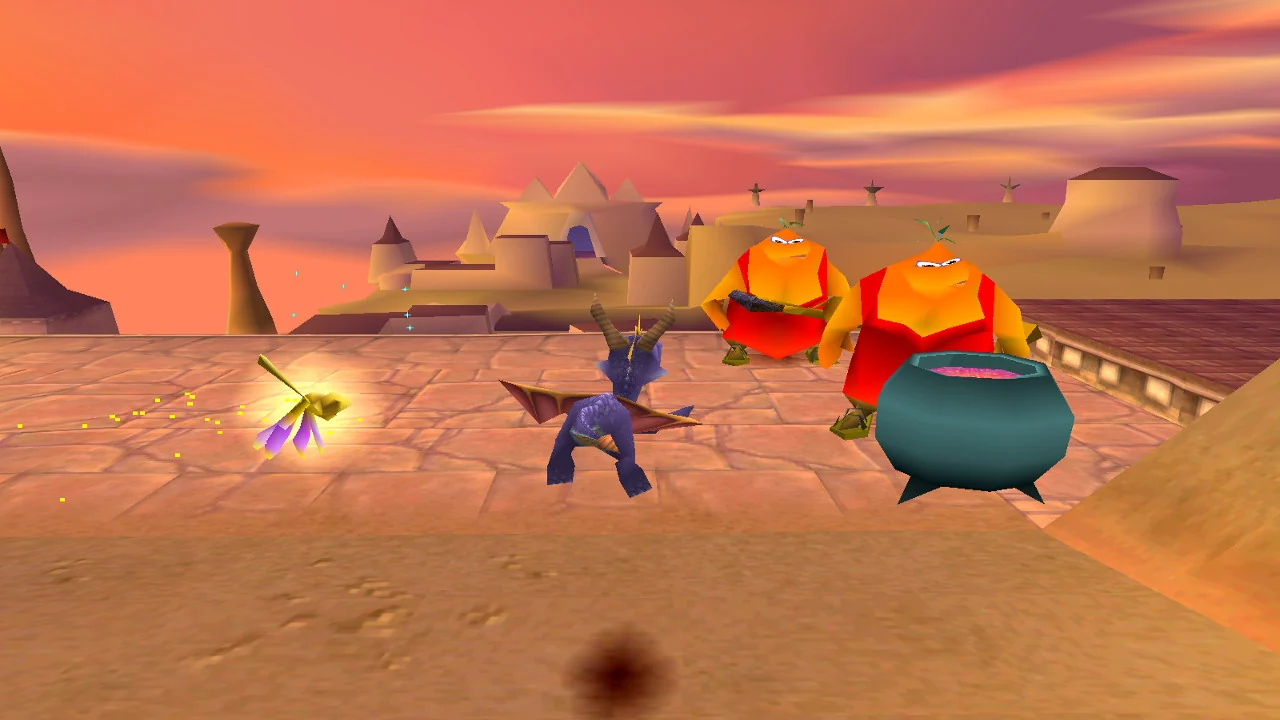
6. Spyro the Dragon
Spyro the Dragon gives action-platforming a gentler, more exploratory rhythm. Its hub worlds connect stages where players rescue dragons, gather gems, search for eggs and complete flight challenges. Spyro’s charge and flame attacks are simple, but their combination creates a readable movement language: some enemies are vulnerable to fire, others to charging, and the player must judge distance and direction quickly. The six-world structure also makes progress feel more like a tour through connected attractions than a sequence of isolated tests.
The completion design supplies much of the replay value. A first pass can focus on reaching the end, while later visits target missed gems, hidden spaces and optional challenges. That structure is welcoming for younger players and satisfying for completionists, although repeated cleanup can expose the limited depth of the combat. Flight stages also ask for a different pace from ordinary platforming, and some jumps depend on understanding Spyro’s momentum rather than reacting at the last second.
Spyro is a strong entry point for players who want colorful 3D action without the heavier pressure of survival horror or stealth. It is less suitable for someone seeking complex combat or demanding character builds. The original PlayStation game is distinct from later sequels and the Reignited Trilogy.
- Best for relaxed exploration, treasure collection and approachable platforming.
- Completion goals add replay value after the main route is clear.
- Combat is readable but not especially deep.
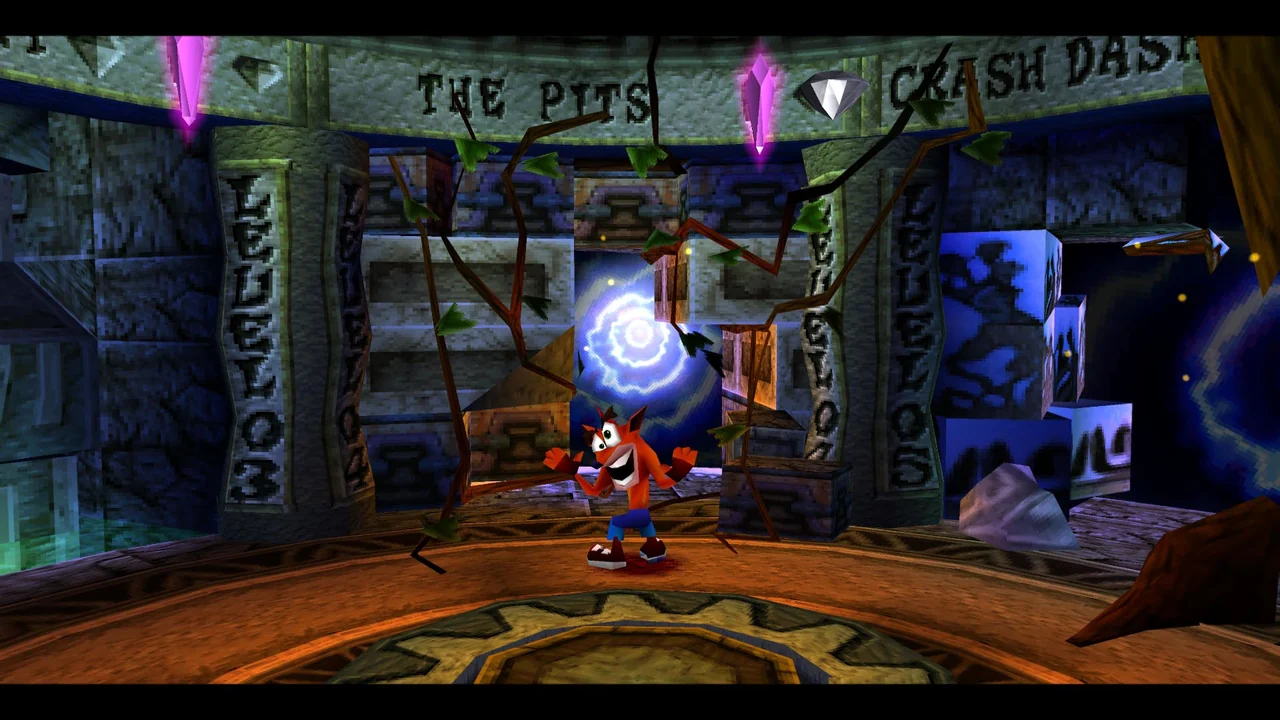
5. Crash Bandicoot 2: Cortex Strikes Back
Crash Bandicoot 2 is the strongest representative of the original Crash formula for this list because it balances direct movement with optional mastery. Its warp-room structure makes the campaign easy to understand, while alternate routes, hidden areas and gems reward players who return with better timing or a new approach. Sliding, body-slamming and the game’s changing stage hazards give Crash more expressive movement than the first entry, even though the core remains focused platforming rather than open-ended exploration.
The game also varies its rhythm with chase stages, vehicle sections and levels that alter how the player reads distance. Those diversions are not equally elegant, but they prevent the campaign from becoming a single repeated obstacle pattern. Its best levels make failure informative: the player can identify a missed jump, a poor landing or a risky shortcut and try again with a clearer plan. Blind drops, chase sequences and demanding completion goals expose the hardware-era design more sharply.
Players who want a concentrated platforming challenge should start here rather than with a role-playing-heavy PlayStation library. The original 1997 release is the subject, not later remastered collections. Crash Bandicoot: Warped is a defensible alternative, but choosing Crash 2 keeps this ranking from overloading one series and emphasizes the tighter foundational movement.
- Best for focused platforming and repeat attempts with clear goals.
- Optional routes and gems create meaningful replay value.
- Some chase stages and blind jumps remain notably unforgiving.
4. Ape Escape
Ape Escape is one of the clearest examples of hardware-specific action on the original PlayStation. The DualShock controller is not an accessory detail; the PlayStation version was designed around its analog movement and requires that controller feature. Catching monkeys is the central action puzzle, and the solution depends on movement, timing and gadget selection rather than simply defeating every enemy. Nets, slingshots and other tools change how players approach a target, turning each capture into a small spatial problem.
That design gives the game a distinctive personality. A monkey may flee, hide or force the player to manipulate distance before the net can connect. The gadgets also encourage revisiting earlier spaces with a new capability, giving the platforming a light exploratory structure. Aiming can be awkward, camera behavior occasionally fights the player and the controller requirement can be a genuine barrier for anyone using original hardware without DualShock support.
Ape Escape is the best pick here for players who want an action game built around an unusual control idea. It is not simply a mascot platformer with a novelty input device; the controller changes the way enemies, movement and objectives are understood. Check the specific PlayStation edition, since later versions and ports do not share precisely the same hardware relationship.
- Best for inventive controls and gadget-based action puzzles.
- The original PlayStation version requires DualShock support.
- Expect occasional camera and aiming awkwardness.
3. Resident Evil 2
Resident Evil 2 earns its high position by making combat, exploration and resource pressure work together. Fixed camera angles turn ordinary movement into suspense, while ammunition, healing items and weapon choices force players to consider whether every encounter is worth confronting. Puzzles break up the firefights, and the campaign’s scenario structure gives the setting more than one dramatic perspective. The game therefore qualifies as action without losing its survival-horror identity: shooting is essential, but the player’s larger problem is deciding how to move through a dangerous space with limited certainty.
The original controls and camera can be demanding, especially for players accustomed to modern aiming. Enemies may appear from angles that are difficult to read, and backtracking becomes part of the rhythm. Those limitations are not incidental; they create vulnerability, though they can also become frustrating when the player is trying to understand a room rather than survive it. The game’s replay value comes from scenario differences, item decisions and learning the environment rather than from an arcade-style score chase.
Edition boundaries matter. The Dual Shock release added features and alternate modes that are not present in every PlayStation version, so descriptions should not treat all discs as interchangeable. This ranking concerns the original PlayStation releases, not the 2019 remake, which substantially changes combat, presentation and level design.
- Best for horror atmosphere combined with real-time combat and puzzles.
- Identify the PlayStation edition before assuming Dual Shock extras are included.
- Fixed cameras and resource pressure are central to the experience.
2. Castlevania: Symphony of the Night
Castlevania: Symphony of the Night expands side-scrolling action into a connected castle full of locked routes, hidden rooms and ability-gated progression. Combat is immediate, but exploration gives it lasting structure: equipment, experience levels, money, magic and familiar transformations all change how the player reads a previously visited space. The castle rewards curiosity without abandoning the satisfying rhythm of striking enemies, learning patterns and moving through increasingly complicated rooms.
Its replay value comes from discovery as much as mastery. Players can experiment with weapons and abilities, search for secrets and reconsider routes after gaining new powers. That flexibility gives the game a stronger long-term identity than a straightforward stage-based action title. It is not flawless. The opening hours can feel easier than expected, some systems reduce the need for careful combat preparation and the late-game structure is best appreciated by players who enjoy searching rather than following a direct path.
The original PlayStation version is distinct from the Saturn release, which added areas and a playable character while changing some visual effects. Later ports and collections also have their own presentation and feature differences. Choose the PlayStation edition when the goal is to experience the version that established this particular blend of exploration, combat and progression.
- Best for exploratory 2D action with equipment and character progression.
- Expect secrets and backtracking rather than a purely linear stage order.
- Do not merge Saturn additions or later ports into the PlayStation version.
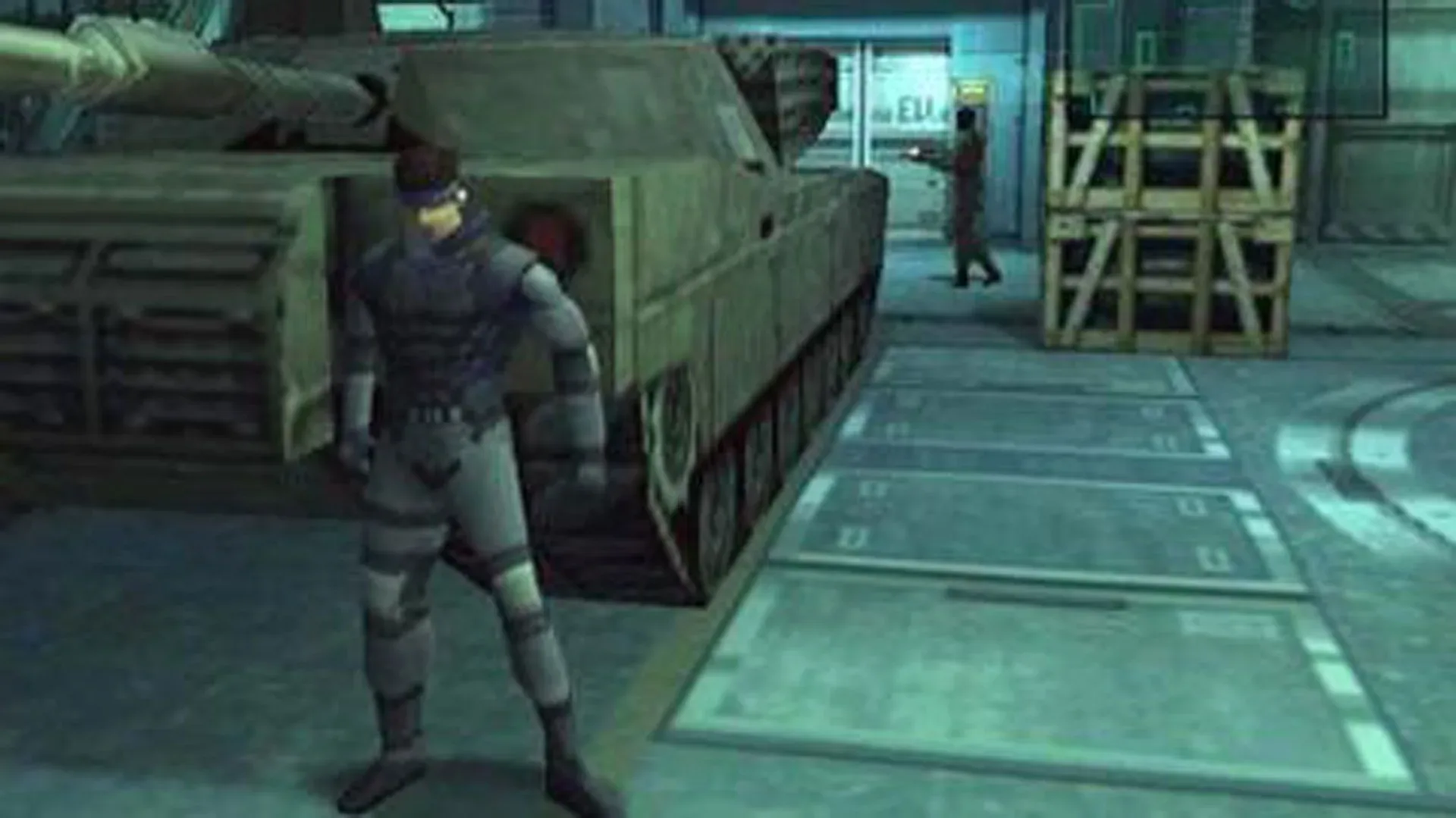
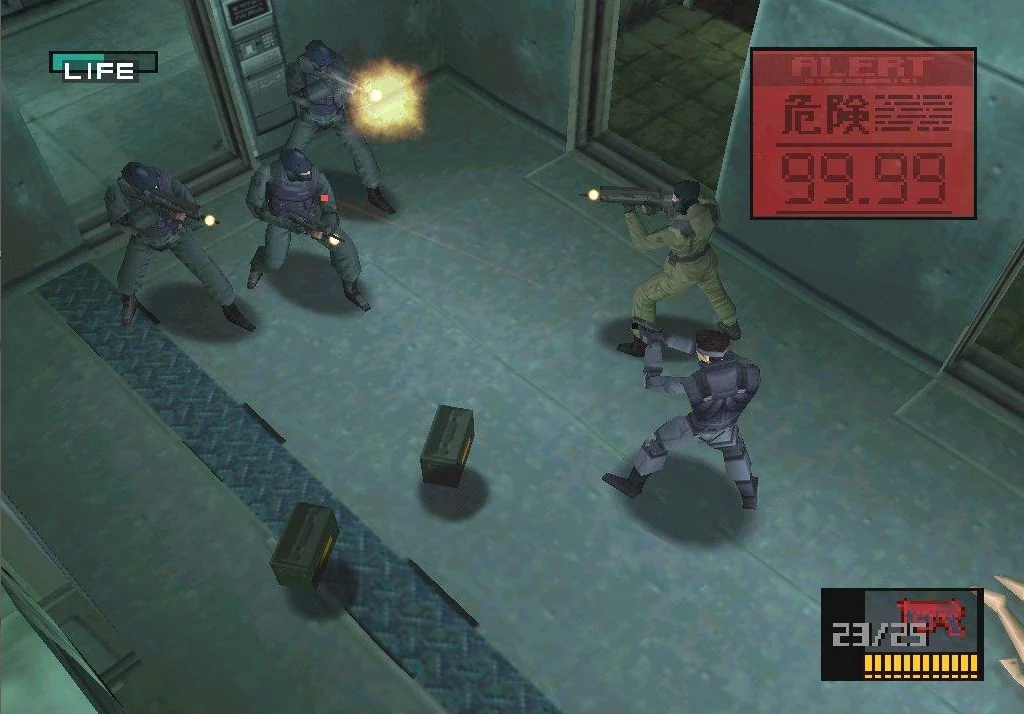
1. Metal Gear Solid
Metal Gear Solid is the strongest overall PlayStation action package because its mechanics reinforce one another. Infiltration depends on enemy awareness, equipment, positioning and the player’s willingness to observe before acting. When a plan fails, the game can become a firefight, but its most distinctive situations come from avoiding detection, manipulating patrols and using tools in context. Boss encounters and set pieces widen the rhythm without abandoning the central idea that information and preparation are forms of power.
Its identity also comes from the way the mechanics are presented. Codec conversations, cinematic scenes and dramatic confrontations give the campaign a strong sense of escalation, while optional VR missions provide a separate reason to practice movement and tactics. The game is not simply a story attached to stealth; its encounters repeatedly ask the player to understand surveillance, space and equipment. That combination gives it more variety than a pure shooter and more forward momentum than a slow, puzzle-first stealth experiment.
The limitations are familiar but meaningful. The camera is rigid, backtracking can interrupt momentum, codec conversations can be long and some controls feel constrained by the original hardware. Those rough edges do not erase the game’s clarity. They define a period design in which stealth, action and cinematic presentation were being combined at unusual scale. Start here if you want the broadest expression of PlayStation action, then move to Tenchu for purer assassination stealth or Syphon Filter for more direct shooting.
- Best for players who want stealth, gadgets, boss encounters and cinematic structure together.
- Expect backtracking, fixed viewpoints and lengthy codec interruptions.
- The original PlayStation release is the ranking’s boundary, not later ports or collections.
This ranking is less a single ladder of difficulty than a map of different action identities. Twisted Metal 2 is the quick competitive choice, Spyro is the gentlest route into 3D exploration, Crash 2 is the focused platformer, Ape Escape is the hardware experiment, and MediEvil is the gothic collectible adventure.
For broader campaigns, choose Resident Evil 2 for survival-horror tension, Tenchu for patient assassination, Syphon Filter for mission-based shooting, Symphony of the Night for exploratory 2D combat and Metal Gear Solid for the most complete mixture of stealth, action and presentation. The original PlayStation’s strength was not one perfect action formula, but how many different ones it could make memorable.